Tag: DTH

  • Centre and states have gained from TV digitization, viewers to get better viewing experience: Economic Survey

    Centre and states have gained from TV digitization, viewers to get better viewing experience: Economic Survey

    New Delhi: The Government has claimed that preliminary data shows that central and state governments have gained significantly because of digitization of cable television, as transparency in the subscriber base through digitization has led to increase in tax collections.

    While stating this, the Economic Survey for 2015-16 did not give any figures specifically relating to increase in revenues because of digitization. But it said digitization achieved by December-end 2016 would usher a new era in broadcasting, as it would enhance the viewing experience of the users and upgrade the service, the survey said.

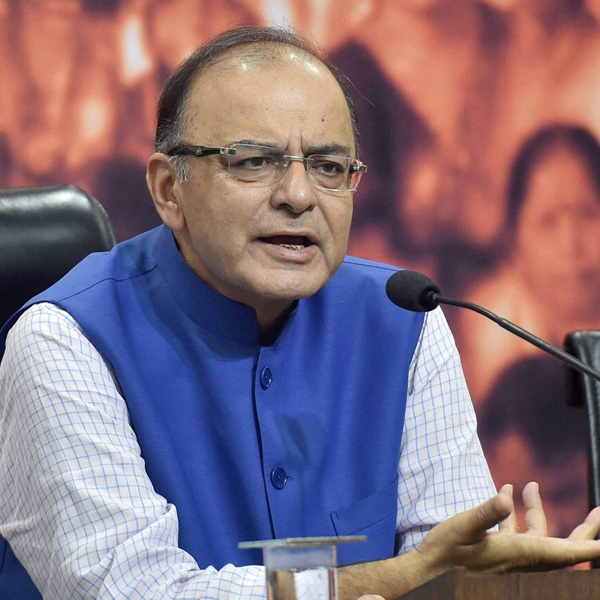
    The survey tabled by Finance Minister Arun Jaitley who also holds the Information and Broadcasting Ministry portfolio, said in order to achieve universal digitalization by 2017, the government is implementing the Broadcasting Infrastructure Network Development Scheme for modernization and upgradation of Prasar Bharati.

    He said India has been experiencing higher volume of content consumption due to increasing per capita consumption, media penetration and use of 3G devices.

    It was noted that India is the world’s second largest TV market after China with 168 million (16.8 crore) TV households, implying a TV penetration of 61 per cent.

    There are about 847 satellite television channels, 243 FM radio channels and 190 community radio stations operating in India.

    India’s broadcasting distribution network comprises 6,000 multi system operators (MSO) and seven direct to home (DTH) operators.

    At the outset, the survey said the Indian media and entertainment industry has recorded unprecedented growth over the last two decades, making it one of the fastest growing industries in India.

    According to a report by FICCI-KPMG, the Indian media and entertainment industry grew by 11.7 per cent to Rs 1026 billion(Rs 1,02,600 crore) in 2014 from Rs 918 billion  (Rs 91,800 crore) in 2013 and it is projected to grow at a CAGR of 13.9 per cent to reach Rs 1964 billion (1,96,400 crore) by 2019.

    DTH in India is also growing at a rate of about one million (10 lakh) subscribers per year. HITS (headend in the sky) technology will play a key role in achieving the goal of 100 per cent digital distribution in India. At present two HITS operators have been permitted by the Government to operate their set up.

  • Chrome DM report on ‘Cable Dark’ areas

    Chrome DM report on ‘Cable Dark’ areas

    MUMBAI: The transition from analogue to digital in Phase 3 (all urban areas excluding those that were part of Phase 1 and 2 – municipal corporations/municipalities) has caused certain areas of the country to become ‘cable dark’. 

    There are several factors that need to be taken into consideration when understanding why certain states are witnessing a higher amount of cable dark penetration than others. In Uttar Pradesh for example, the majority of cities use DTH, and due to the lack of a dominant MSO, cable penetration is low in this state. 

    Gujarat and Punjab are experiencing a more structured approach because they have a dominant player (GTPL and Fastway, respectively). On the other hand, a state such as Maharashtra does not have one defined player; but at the same time has been facing a shortage of set-top boxes – from where the stay has stemmed.

    Similarly, governments in the south support cable operators, so in Andhra Pradesh, cable still exists and despite the digitization mandate, cities still receive analog feeds; Tamil Nadu witnesses penetration of Arasu in most cities, but digitization boxes have not reached these areas either. ‘

    Alongside this, the size of the state also needs to be taken into account: Mizoram’s cable dark city is one which has a large population, thus resulting in more than half the population beingcable dark.

    Another hurdle that cable dark cities face is the fact that cable operators in some dark areas make cable available to consumers during prime timehours, to cater to a TV starved audience, Chrome Data Analytics& Media’s on-ground coverage reports.

    It is essential to understand that there is no fixed or systematic pattern according to which cable is out and different states are facing different factors.The state-wise percentage of cable dark population can be seen in the table below:

    “Each time a transition takes place, some kind of ‘switch off’ is inevitable – be it an electric transformer replacement in your colony or a human operation. We need to remember that digitization was mooted,  in the first place, to address four major broadcasting issues – taxation, transparency, choice for consumers and the quality of content. So dark outs, irrespective of the reason, should be taken as the minor issue they are when compared to the greater good digitization promises for Indian broadcasting”, says Chrome Data Analytics & Media founder and CEO Pankaj Krishna.

    Overall, digitization has brought with it several hurdles that all states must collectively overcome. One must collaboratively focus on the larger picture and be patient to reap the benefits of digitization in the long run.


  • Chrome DM report on ‘Cable Dark’ areas

    Chrome DM report on ‘Cable Dark’ areas

    MUMBAI: The transition from analogue to digital in Phase 3 (all urban areas excluding those that were part of Phase 1 and 2 – municipal corporations/municipalities) has caused certain areas of the country to become ‘cable dark’. 

    There are several factors that need to be taken into consideration when understanding why certain states are witnessing a higher amount of cable dark penetration than others. In Uttar Pradesh for example, the majority of cities use DTH, and due to the lack of a dominant MSO, cable penetration is low in this state. 

    Gujarat and Punjab are experiencing a more structured approach because they have a dominant player (GTPL and Fastway, respectively). On the other hand, a state such as Maharashtra does not have one defined player; but at the same time has been facing a shortage of set-top boxes – from where the stay has stemmed.

    Similarly, governments in the south support cable operators, so in Andhra Pradesh, cable still exists and despite the digitization mandate, cities still receive analog feeds; Tamil Nadu witnesses penetration of Arasu in most cities, but digitization boxes have not reached these areas either. ‘

    Alongside this, the size of the state also needs to be taken into account: Mizoram’s cable dark city is one which has a large population, thus resulting in more than half the population beingcable dark.

    Another hurdle that cable dark cities face is the fact that cable operators in some dark areas make cable available to consumers during prime timehours, to cater to a TV starved audience, Chrome Data Analytics& Media’s on-ground coverage reports.

    It is essential to understand that there is no fixed or systematic pattern according to which cable is out and different states are facing different factors.The state-wise percentage of cable dark population can be seen in the table below:

    “Each time a transition takes place, some kind of ‘switch off’ is inevitable – be it an electric transformer replacement in your colony or a human operation. We need to remember that digitization was mooted,  in the first place, to address four major broadcasting issues – taxation, transparency, choice for consumers and the quality of content. So dark outs, irrespective of the reason, should be taken as the minor issue they are when compared to the greater good digitization promises for Indian broadcasting”, says Chrome Data Analytics & Media founder and CEO Pankaj Krishna.

    Overall, digitization has brought with it several hurdles that all states must collectively overcome. One must collaboratively focus on the larger picture and be patient to reap the benefits of digitization in the long run.


  • Encourage greater indigenous STB production with tax holiday in budget for DAS to succeed

    Encourage greater indigenous STB production with tax holiday in budget for DAS to succeed

    NEW DELHI: With the Government hoping to achieve complete digitisation of the cable television sector by the end of this calendar year, it is imperative that the Union Budget for 2016-17 being presented on Monday has important concessions for the industry.

    Perhaps the most important step would be to give infrastructure status to the Broadcast, Cable and direct-to-home (DTH) sector so that it gets all the benefits and incentives available for infrastructure industry including the availability of finance at a concessional rate.

    Though the government claims more than 90 per cent seeding of set top boxes (STBs) in all urban areas covered under Phase III of digital addressable system (DAS) – a figure disputed by most private stakeholders, it is important that the budget should give some concessions that benefit the sector particularly as far as set top boxes go.

    While the Make in India or Digital India initiatives have failed to encourage many indigenous manufacturers of STBs, it is necessary not merely to give some tax concessions under these two schemes but also a tax holiday for some years for those who venture to beat the sale of Chinese STBs and encourage Indian STBs.

    Earlier, the Entertainment Wing of FICCI had said in a pre-budget memorandum to Finance Minister Arun Jaitley that the sector should be allowed tax concessions under Section 80-IA of the Income Tax Act.

    As the digitisation process and the deployment of STBs are heavy capital oriented sectors needing large investments, FICCI had said they should be allowed to set off accumulated losses and unabsorbed depreciation allowances to be carried forward as per Section 72 A of the Act.

    One way of giving greater encouragement to indigenous STBs is to give the broadcast industry the same benefits that the manufacturing sector gets.

    FICCI had in fact also said that the rate of taxes, which range from 30 – 70 per cent, especially the entertainment tax imposed by the states, over and above the service tax are punitive in nature. It is important that the overall taxation level is brought down for the sector as a whole.

    State Entertainment tax legislations levy high taxes on the subscription earned by cable operators and DTH operators. The non-availability of credit of central taxes against the state taxes and vice versa increases the tax burden on the entertainment industry.

    In addition to this, the Central Government has levied service tax at 14 per cent on the transfer of copyrights, which is already being taxed as ‘goods’ under the various state VAT legislations.

    There is therefore need to rationalise taxes or rush through the Goods and Service Tax (GST) Bill to bring parity and clear snags in taxation.

    With so many cases pending before TDSAT and the Telecom Regulatory Authority of India (TRAI) constantly being impleaded in such matters, the Government should provide a clarification that the payments made towards carriage fees are not in the nature of royalty or fees for technical services and TDS is required to be made on such payments as per section 194C of the Act.

    The Indian media and entertainment industry grew from Rs 918 billion in 2013 to Rs 1026 billion in 2014, registering an overall growth of 11.7 per cent. The industry is estimated to achieve a growth rate of 13 per cent in 2015 to touch Rs 1159 billion. The sector is projected to grow at a healthy CAGR of 13.9 per cent to reach Rs 1964 billion by 2019.

    The benefits of Phase I and II of DAS rollout, and continued Phase III rollout are expected to contribute significantly to strong continued growth in the TV sector revenues and its ability to invest in and monetise content. The sector is expected to grow at a CAGR of 15.5 per cent over the period 2015-2019.

  • Encourage greater indigenous STB production with tax holiday in budget for DAS to succeed

    Encourage greater indigenous STB production with tax holiday in budget for DAS to succeed

    NEW DELHI: With the Government hoping to achieve complete digitisation of the cable television sector by the end of this calendar year, it is imperative that the Union Budget for 2016-17 being presented on Monday has important concessions for the industry.

    Perhaps the most important step would be to give infrastructure status to the Broadcast, Cable and direct-to-home (DTH) sector so that it gets all the benefits and incentives available for infrastructure industry including the availability of finance at a concessional rate.

    Though the government claims more than 90 per cent seeding of set top boxes (STBs) in all urban areas covered under Phase III of digital addressable system (DAS) – a figure disputed by most private stakeholders, it is important that the budget should give some concessions that benefit the sector particularly as far as set top boxes go.

    While the Make in India or Digital India initiatives have failed to encourage many indigenous manufacturers of STBs, it is necessary not merely to give some tax concessions under these two schemes but also a tax holiday for some years for those who venture to beat the sale of Chinese STBs and encourage Indian STBs.

    Earlier, the Entertainment Wing of FICCI had said in a pre-budget memorandum to Finance Minister Arun Jaitley that the sector should be allowed tax concessions under Section 80-IA of the Income Tax Act.

    As the digitisation process and the deployment of STBs are heavy capital oriented sectors needing large investments, FICCI had said they should be allowed to set off accumulated losses and unabsorbed depreciation allowances to be carried forward as per Section 72 A of the Act.

    One way of giving greater encouragement to indigenous STBs is to give the broadcast industry the same benefits that the manufacturing sector gets.

    FICCI had in fact also said that the rate of taxes, which range from 30 – 70 per cent, especially the entertainment tax imposed by the states, over and above the service tax are punitive in nature. It is important that the overall taxation level is brought down for the sector as a whole.

    State Entertainment tax legislations levy high taxes on the subscription earned by cable operators and DTH operators. The non-availability of credit of central taxes against the state taxes and vice versa increases the tax burden on the entertainment industry.

    In addition to this, the Central Government has levied service tax at 14 per cent on the transfer of copyrights, which is already being taxed as ‘goods’ under the various state VAT legislations.

    There is therefore need to rationalise taxes or rush through the Goods and Service Tax (GST) Bill to bring parity and clear snags in taxation.

    With so many cases pending before TDSAT and the Telecom Regulatory Authority of India (TRAI) constantly being impleaded in such matters, the Government should provide a clarification that the payments made towards carriage fees are not in the nature of royalty or fees for technical services and TDS is required to be made on such payments as per section 194C of the Act.

    The Indian media and entertainment industry grew from Rs 918 billion in 2013 to Rs 1026 billion in 2014, registering an overall growth of 11.7 per cent. The industry is estimated to achieve a growth rate of 13 per cent in 2015 to touch Rs 1159 billion. The sector is projected to grow at a healthy CAGR of 13.9 per cent to reach Rs 1964 billion by 2019.

    The benefits of Phase I and II of DAS rollout, and continued Phase III rollout are expected to contribute significantly to strong continued growth in the TV sector revenues and its ability to invest in and monetise content. The sector is expected to grow at a CAGR of 15.5 per cent over the period 2015-2019.

  • Modi’s Mann ki Baat on 28 February will be the 17th consecutive broadcast

    Modi’s Mann ki Baat on 28 February will be the 17th consecutive broadcast

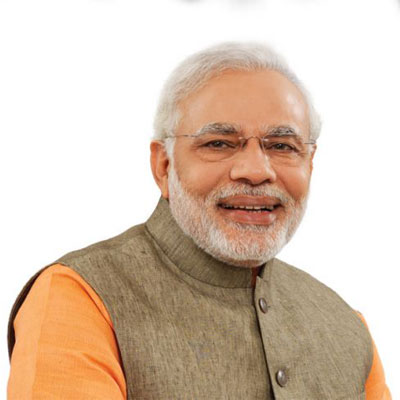
    NEW DELHI: The 17th instalment of Prime Minister Narendra Modi’s ‘Mann Ki Baat’ will be broadcast on 28 February, just a day before the presentation of the Union Budget for 2016-17 by Finance Minister Arun Jaitley.

    The broadcast will be at 11 am over the entire network of All India Radio. The broadcast will be relayed by all AIR stations, all AIR FM channels (FM Gold and FM Rainbow), local radio stations, Vividh Bharati Stations and five community radio stations. 

    The regional versions of the ‘Mann Ki Baat’ will be originated by the capital AIR stations in non-Hindi speaking zones at 8 pm on the same day. The regional versions will be relayed by all AIR stations including local radio stations in the respective states.

    It will also be broadcast by Doordarshan and other private TV and news channels in India and broadcast simultaneously.  Similarly, radio in private sector patches and all DTH operators will also carry it.

    It will also be streamed live for global audience and is accessible through mobile app All India Radio Live and on pmindia.nic.in.

  • Modi’s Mann ki Baat on 28 February will be the 17th consecutive broadcast

    Modi’s Mann ki Baat on 28 February will be the 17th consecutive broadcast

    NEW DELHI: The 17th instalment of Prime Minister Narendra Modi’s ‘Mann Ki Baat’ will be broadcast on 28 February, just a day before the presentation of the Union Budget for 2016-17 by Finance Minister Arun Jaitley.

    The broadcast will be at 11 am over the entire network of All India Radio. The broadcast will be relayed by all AIR stations, all AIR FM channels (FM Gold and FM Rainbow), local radio stations, Vividh Bharati Stations and five community radio stations. 

    The regional versions of the ‘Mann Ki Baat’ will be originated by the capital AIR stations in non-Hindi speaking zones at 8 pm on the same day. The regional versions will be relayed by all AIR stations including local radio stations in the respective states.

    It will also be broadcast by Doordarshan and other private TV and news channels in India and broadcast simultaneously.  Similarly, radio in private sector patches and all DTH operators will also carry it.

    It will also be streamed live for global audience and is accessible through mobile app All India Radio Live and on pmindia.nic.in.

  • Gemporia TV hops on to Tata Sky platform

    Gemporia TV hops on to Tata Sky platform

    MUMBAI: India’s live jewellery shopping channel Gemporia TV has hopped on to the Tata Sky direct to home (DTH) platform.

    The channel will be available on channel no. 155 in Tata Sky.

    It may be recalled that Indiantelevision.com had reported earlier this month that the channel was eyeing revenue of Rs 60 – 100 crore by the end of 2016 and was looking at expanding its presence in the market by launching on Tata Sky. The shopping platform has been available on other DTH operators like Dish TV and Videocon d2h since September 2015.

    With a market presence of 11 years in the UK, the channel has seen a rapid growth in the overall jewellery retail, and claims to achieve almost eight per cent market share of all hallmarked jewellery sold in the UK. The platform also claims to sell over nine million pieces worldwide all through e-commerce and television.

    Gemporia TV co-founder Manuj Goyal said, “In India, we bring you these exquisite pieces, directly from our factories to your home, eliminating all middlemen, bringing the costs lower and at direct-to-home prices. We are enlivened with Gemporia’s expanded audience base of over 50 million homes with the launch on Tata Sky, one of the leading DTH providers in India. Our intention is to be available across DTH platforms and gradually move our presence on cable.”

    He further added, “Our product size is constantly increasing to fit the business needs. The jewellery ranges from earrings to necklaces to charms to rings for women and men, in multiple styles. Our average item value has been Rs 4216. For Sterling Silver jewellery, our sweet spot is Rs 999. For Gold Jewellery, we have seen maximum sales in Rs 5000 to 8000 pricing category. Rings are currently 50 per cent of our sales, I guess as most retailers find it challenging to stock rings in different sizes. We keep a wide variety of gemstone jewellery – Rubies, Emeralds, Sapphires, Tanzanites, Pearls, Topaz, Opals, Amethyst, Citrines, Garnets, Onyxs, Tourmalines besides Diamonds. Our presence on Tata Sky brings a whole new audience with a completely different demographic. We are excited to see how these numbers will shift.”

  • Gemporia TV hops on to Tata Sky platform

    Gemporia TV hops on to Tata Sky platform

    MUMBAI: India’s live jewellery shopping channel Gemporia TV has hopped on to the Tata Sky direct to home (DTH) platform.

    The channel will be available on channel no. 155 in Tata Sky.

    It may be recalled that Indiantelevision.com had reported earlier this month that the channel was eyeing revenue of Rs 60 – 100 crore by the end of 2016 and was looking at expanding its presence in the market by launching on Tata Sky. The shopping platform has been available on other DTH operators like Dish TV and Videocon d2h since September 2015.

    With a market presence of 11 years in the UK, the channel has seen a rapid growth in the overall jewellery retail, and claims to achieve almost eight per cent market share of all hallmarked jewellery sold in the UK. The platform also claims to sell over nine million pieces worldwide all through e-commerce and television.

    Gemporia TV co-founder Manuj Goyal said, “In India, we bring you these exquisite pieces, directly from our factories to your home, eliminating all middlemen, bringing the costs lower and at direct-to-home prices. We are enlivened with Gemporia’s expanded audience base of over 50 million homes with the launch on Tata Sky, one of the leading DTH providers in India. Our intention is to be available across DTH platforms and gradually move our presence on cable.”

    He further added, “Our product size is constantly increasing to fit the business needs. The jewellery ranges from earrings to necklaces to charms to rings for women and men, in multiple styles. Our average item value has been Rs 4216. For Sterling Silver jewellery, our sweet spot is Rs 999. For Gold Jewellery, we have seen maximum sales in Rs 5000 to 8000 pricing category. Rings are currently 50 per cent of our sales, I guess as most retailers find it challenging to stock rings in different sizes. We keep a wide variety of gemstone jewellery – Rubies, Emeralds, Sapphires, Tanzanites, Pearls, Topaz, Opals, Amethyst, Citrines, Garnets, Onyxs, Tourmalines besides Diamonds. Our presence on Tata Sky brings a whole new audience with a completely different demographic. We are excited to see how these numbers will shift.”

  • Marathi news channel Maharashtra 1 set to beam on Tata Sky

    Marathi news channel Maharashtra 1 set to beam on Tata Sky

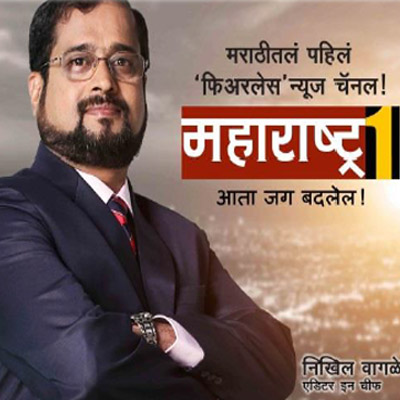
    MUMBAI: The Nikhil Waghle led 24×7 Marathi news channel Maharashtra 1, which started its service in September last year, is all set to hop on to the Tata Sky direct to home (DTH) platform.

    Tata Sky will be the first DTH platform that the channel will mark its presence on. 

    Maharashtra 1 will be a free-to-air channel available on channel number 802.

    “We are currently present on all the multi-system operators (MSOs) except UCN Nagpur. Now with a presence on Tata Sky, we have made a move towards DTH. We decided to go ahead with Tata Sky because it’s a premium platform and fits the bill for a premium channel like ours,” said a channel official.