Tag: DTH

  • FICCI Frames 2016: Digitization is a boon, but subject to how it is utilized by all stakeholders

    FICCI Frames 2016: Digitization is a boon, but subject to how it is utilized by all stakeholders

    MUMBAI: Even as a general consensus emerged on digitization being a boon, questions were raised at the ongoing FICCI FRAMES meet on whether the concept and advantages of the concept have been fully understood.

    Even as the TV industry has leapfrogged to more than 800 channels, and Indian Pay TV made the leap from analogue to digital and travelled from single to multi-platforms, the session on ‘Future Proofing Broadcast Distribution’ showed there are still some apprehensions on how the new technology can be used.

    The panelist included Times Network MD& CEO MK Anand, Ortel Communication CEO Bibhu Prasad Rath, Indusind Media and Communication MD & CEO Tony D Silva and Microsoft Corporation India Microsoft Azure and server business country head Srikanth Karnakota. The session was moderated by Zee Network president (Legal & Regulatory) Avnindra Mohan.

    Mohan set the ball rolling with a perplexing question on whether the industry had fully understood the implications of ditigization and convergence and whether stakeholders realized that they can use the same network for delivering different content through different modes of mediums. Thus, he said it shows a paradigm shift in the entire gambit of the distribution system.

    “Digitization has been a boon for the broadcast industry. From the broadcaster point of view, digitization started when the Direct to Home (DTH) system launched in 2003 in India. English news and other English general entertainment channels were being treated as the outsiders for the broadcast business. We had 65 million viewers in English from 2000 to 2005 whereas the total number of television viewers was 400 million. The number of English viewers has grown to 200 million now and that happened because of digitization,” says Anand.

    Anand added that in the next five to ten years, the English entertainment viewership should cross 300 million which is almost close to Hindi general entertainment channels viewership due to digitization.  “Times Now has a very strong and loyal audience in a month we cross the viewership of two and half crores but people don’t know that we have 13 crores of viewers on New Media platform,” informs Anand.

    Being a multi-system operator sharing views on the kind of business opportunities Ortel Communication can have in such a scenario, Rath felt India has grown in a unique fashion for the last two decades but the quality of the networks has been compromised. “The Set Top Box is not a solution to a network and we need to handle Phase III and IV in a different manner and not as Phase I and II”, he added.

    Noting that “we in India do not have one definition for Digitisation.It has been portrayed differently by others”, D’silva asked what the country wanted to achieve through digitization. “I believe there should a national objective about what they want to achieve from digitization. In most the industry today including DTH, 50 per cent of revenue goes in tax”. He felt progress was difficult unless the tax was supportive, but this was not going to happen. “It is the MSOs who are putting up the money and buying the STBs. So there has to be a logical regime of taxation. The STB is the only starting point of digitization. There should be an environment where technology and digitization should go hand in hand,” he felt.

  • “Our carriage bill is down 30-35%; subscription up 14-15%”: Nikhil Gandhi

    “Our carriage bill is down 30-35%; subscription up 14-15%”: Nikhil Gandhi

    2015 will be remembered as a memorable year for Disney India’s TV biz. The mouse house took its TV channel distribution in its own hands when it terminated its joint venture with the Viacom outfit Indiacast.  For several years it had experimented with other distribution partners like Sun Distribution Services to Star Den, both of which are non-existent now.

    A new venture Disney Media Networks was set up and media vet Nikhil Gandhi – who was responsibile for revenue and profitability across Disney India media channels comprising of youth channels – Bindass and kids channels – Disney Channel, Disney Junior, Disney XD and Hungama TV, movies channels – UTV Movies and UTV Action –  was given its charge.

    His challenge: to jiggle out distribution and subscription  revenues from India’s fragmented cable TV ecosystem, while keeping affiliate fees under control even as he ensured carriage of Disney India’s eight channel bouquet.

    Six months down the line, Gandhi seems to have done well, if one goes by this exclusive interview to indiantelevision.com’s Anirban Roy Choudhury.  He speaks about the challenges he has and continues to face, and why he is still optimistic.

    Excerpts:

    How has the journey been so far? What made Disney decide to distribute its TV channels on its own?

    It has been a fabulous six months. The market has been receptive to whatever we are doing, which has been a major boost for us. We have been in the business for over 10 years now and we have been distributing through different partners. We started with Star, then we went to Sun and then to IndiaCast, following which we were on an agency relationship with them. Therefore we needed to take a call on what we really wanted to do.

    I think our network is one to reckon with. We have six per cent viewership share which is probably five or six times compared to the one following us. So we are the fifth largest broadcast network. That’s why we thought we could go out and take the business in our hands and see what we could do at the distribution level.

    One, it was also important to get our carriage fee bill down, which each  broadcaster is trying his level best to do. Two and the most important one was to get the subscription business in order. 

    What are the challenges that you faced and how did you counter them?

    We had to inform the ecosystem – the MSOs’ and the DTH players about Disney Media Networks, that we have eigh channels, we have very high premium brands. We had to tell them what we are and what value we could add to them. I think that at certain point after our initial efforts, they did realise that they had never seen Disney as an entity in its own right. They began to understand the value that we brought to the table in terms of packaging. They realised we were the leaders in kids and youth channels and we had a sizeable movie business. We were not just another bouquet, we were leaders of sorts. The challenge was to communicate that and the team did a fantastic job.

    I think that the deals that we have struck are our biggest achievement. We have reached very big milestones in the first year itself. To begin with we have got our carriage bill down by 30 to 35 per cent and at the same time we have taken our subscription revenue up 14 to 15 per cent and it happened after rounds of negotiations and discussions with our carriage partners.

    When you talk about distribution success, do you mean a pan India success or is it a particular market?

    It is a pan India success for us. We are distributed nationally. Our channels reach east, west, north and south. And that is because of the fantastic work done by our teams on ground. We got a fantastic bunch of talented people from across different fields. They have successfully communicated what really Disney Media Networks stands for, and most of the negotiations are done by them. So whenever we talk about success or numbers, it is pan India that we are talking about, and not a particular market.

    What is your opinion about the CPS model? If rolled out properly, will it enhance your subscription revenue?

    CPS is there…and yet it’s not there as a whole. In phases I and II, we know what is going on. Phases III and IV will take shape with time. It’s good that we’ve digitized, now what really matters is how it is being addressed, how the CAF is filled up and how it is packaged. 

    It is a great move forward, and as a broadcaster and content provider, we can only add value to the process by giving superior content and a brand which will enhance ARPUs.

    CPS will happen as the progression of packaging happens and the progression of addressability happens.

    The MSO-LCO equation needs to change and become more mature. Yes, the moves are very positive, but we are still not there, there are areas where we need some amount of investor players to come and change the game at least from a mind-set point of view. CPS will go up with ARPU going up.  And when there is a transparent system in place that enables addressability, subscription revenue will move up in the right direction.

    What is your opinion on the regulators stand so far?

    The regulators have been very pro industry, which is a great thing. We have seen how there was a hard stance when it came to the phase III deadline. So I think it’s a very bold move, because for them also, it’s about getting the industry which is so big in size organised and deriving the maximum out of it in terms of entertainment tax and other revenue generating propositions. And an organised platform is always more transparent, and transparency is the need of the hour for the industry. So I think the regulator’s stand so far has been immensely pro industry.

    Do you think content, if paid for in India, will grow?

    ARPUs’ have been flat for last 10 years. So obviously India is not paying for content, but the moot point is that India is capable of paying more. We, at Disney, are manufacturers; we are content providers. There are platforms and there are wholesalers and retailers involved.  It is the retailers and the wholesalers who need to drive the ARPU and there are many elements on which it all depends.

    At a pricing level we are restricted by the RIO model, and then on the ground level there is the LCO who by no means is interested as it might hurt him. I think to drive payment for content, the LCO – MSO equation needs to change, DTH needs to play its role and it all needs to happen in a collaborated manner.

    I think there is a need for standard pricing similar to any other industry. You buy toothpaste the price is the same everywhere.  In India there is a legacy involved in the way it has been run. The legacy needs to change. It is changing, we expected it to change fast, but it’s actually changing at a snail’s pace.

    Can the broadcasters not play a role in ensuring higher ARPU?

    Look at what the broadcasters are offering these days. Look at the quality of the content. It’s premium content created with superior sophistication. There are HD channels offering HD content. A few of them have rolled out 4K channels.

     So while ARPU has remained same over the last 10 years, the investment on content did not stop. It kept on going. New formats, acquisitions, new and bold ways of storytelling have been explored, and then there are the additions in the number of channels every year.

    Rs 300 for 50 channels 10 years ago, has now become 250 channels of superior quality for the same old price. We have witnessed a few ARPU movements at least in the metros with DTH and a few MSOs, but these are minuscule movements. The movements need to happen much faster because that’s where the motivation is. From a broadcaster’s point of view, there is nothing that we can do but play the game as per the nature of the business.

    You spoke about collaboration, recently we witnessed switching off of signals, what is your opinion on such acts?  

    Firstly, the switching off of services and disturbing the consumer at a fundamental level is very unfair, it should not happen. There could be differences on the negotiation table, but that by no means should disturb the end consumer. 

    The fact that the consumer is deprived of a service in itself is very sad.  I don’t subscribe to such negotiations. We have also gone through highs and lows in our negotiation process but, at the end of the day, you cannot starve your consumer of superior content, or any content for that matter, because the consumer has subscribed for it. The ecosystem is such that the business is dependent on ad sales, and that is why the switch offs’ happen.

    What should lead the business, subscription or ad revenue?

    Ad sales should be an icing on the cake, subscription revenue should steer the business. Look at the mature markets – subscription revenue is leading the business, the negotiations that happen there are at a different level.

    Fundamentally the broadcast business has to be a subscription led business. You can have an advertising-based play that we are seeing with the FTA’s and that’s majorly because of the huge population of our country and the market size and the reach that TV offers. But a premium pay channel creating original superior content needs to be pay first.

    What is your take on the growing OTT business?

    At the heart of the OTT ecosystem is bandwidth and the bandwidth needs to improve.  What will be interesting to see is if it becomes subscription based (SVOD) or advertising based video on demand (AVOD). 

    Now if you are providing superior content for an AVOD model you are not creating a great environment as such. It’s all about how you form the habit. Consumers who consume OTT content are paying about Rs 1,000 for data, and we tend to think that the same consumer will not pay for  content. This mentality is not a long term one, we need to think 10 years ahead and then take steps.

    Smart TVs are in place; people are talking about 8K.  There are great leaps in terms of technology, but if we don’t take the correct steps, we won’t be able to get value out of the OTT business.

    Will you make yourself available on OTT platforms? Star has Hotstar, SPN has Sony Liv, ZEE has a couple of them and Viacom is launching VOOT. Is Disney also looking towards launching an OTT platform?

    Anywhere where consumption is there, we will make ourselves present. That’s the way forward for us. We do have plans, but we are at a very nascent stage as far as OTT is concerned. As a linear service we will be available on all OTT platforms, but when it comes to launching our own venture we will evaluate when the time is right.

    Where are you generating more subscription revenue from, DTH or cable?

    DTH has a slight edge over cable when it comes to our subscription revenue. We are gradually moving towards level contributions from both the platforms. Now with DAS phase III, I think the headroom for growth is massive in the case of cable. At this stage I think that DTH, given its organised and transparent nature, has the edge.

    Is it the bouquet mode of distribution that you are looking at, at this stage?

    Most of our deals are all bouquet offerings, if there is any platform that requires a youth offering or kids offering or a movie offering, such deals happen at a very high CPS price and we create those packages. We are there on a la carte as an offering, but there is a very small set of consumers who subscribe to the service. So it’s largely all bouquet.

    What is it that Disney Media Networks is looking for in the foreseeable future?

    I have mandated the team in Disney that the subscription business needs to overtake the ad sales business over the next three years’  and that will change the entire ecosystem. An MSO cannot then threaten me with a switch off and that’s what we are targeting. We were at about 65:35 ratio, now we have become 60:40 so we are moving towards that direction. Over time the target is to make it 40:60 or 30:70 for that matter.
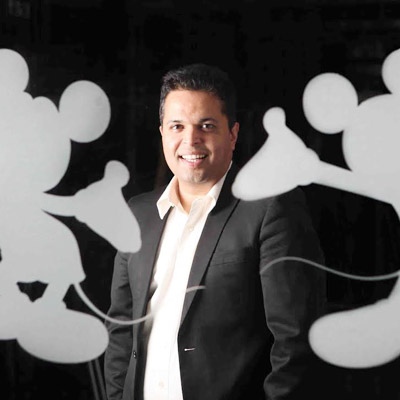
     

  • “Our carriage bill is down 30-35%; subscription up 14-15%”: Nikhil Gandhi

    “Our carriage bill is down 30-35%; subscription up 14-15%”: Nikhil Gandhi

    2015 will be remembered as a memorable year for Disney India’s TV biz. The mouse house took its TV channel distribution in its own hands when it terminated its joint venture with the Viacom outfit Indiacast.  For several years it had experimented with other distribution partners like Sun Distribution Services to Star Den, both of which are non-existent now.

    A new venture Disney Media Networks was set up and media vet Nikhil Gandhi – who was responsibile for revenue and profitability across Disney India media channels comprising of youth channels – Bindass and kids channels – Disney Channel, Disney Junior, Disney XD and Hungama TV, movies channels – UTV Movies and UTV Action –  was given its charge.

    His challenge: to jiggle out distribution and subscription  revenues from India’s fragmented cable TV ecosystem, while keeping affiliate fees under control even as he ensured carriage of Disney India’s eight channel bouquet.

    Six months down the line, Gandhi seems to have done well, if one goes by this exclusive interview to indiantelevision.com’s Anirban Roy Choudhury.  He speaks about the challenges he has and continues to face, and why he is still optimistic.

    Excerpts:

    How has the journey been so far? What made Disney decide to distribute its TV channels on its own?

    It has been a fabulous six months. The market has been receptive to whatever we are doing, which has been a major boost for us. We have been in the business for over 10 years now and we have been distributing through different partners. We started with Star, then we went to Sun and then to IndiaCast, following which we were on an agency relationship with them. Therefore we needed to take a call on what we really wanted to do.

    I think our network is one to reckon with. We have six per cent viewership share which is probably five or six times compared to the one following us. So we are the fifth largest broadcast network. That’s why we thought we could go out and take the business in our hands and see what we could do at the distribution level.

    One, it was also important to get our carriage fee bill down, which each  broadcaster is trying his level best to do. Two and the most important one was to get the subscription business in order. 

    What are the challenges that you faced and how did you counter them?

    We had to inform the ecosystem – the MSOs’ and the DTH players about Disney Media Networks, that we have eigh channels, we have very high premium brands. We had to tell them what we are and what value we could add to them. I think that at certain point after our initial efforts, they did realise that they had never seen Disney as an entity in its own right. They began to understand the value that we brought to the table in terms of packaging. They realised we were the leaders in kids and youth channels and we had a sizeable movie business. We were not just another bouquet, we were leaders of sorts. The challenge was to communicate that and the team did a fantastic job.

    I think that the deals that we have struck are our biggest achievement. We have reached very big milestones in the first year itself. To begin with we have got our carriage bill down by 30 to 35 per cent and at the same time we have taken our subscription revenue up 14 to 15 per cent and it happened after rounds of negotiations and discussions with our carriage partners.

    When you talk about distribution success, do you mean a pan India success or is it a particular market?

    It is a pan India success for us. We are distributed nationally. Our channels reach east, west, north and south. And that is because of the fantastic work done by our teams on ground. We got a fantastic bunch of talented people from across different fields. They have successfully communicated what really Disney Media Networks stands for, and most of the negotiations are done by them. So whenever we talk about success or numbers, it is pan India that we are talking about, and not a particular market.

    What is your opinion about the CPS model? If rolled out properly, will it enhance your subscription revenue?

    CPS is there…and yet it’s not there as a whole. In phases I and II, we know what is going on. Phases III and IV will take shape with time. It’s good that we’ve digitized, now what really matters is how it is being addressed, how the CAF is filled up and how it is packaged. 

    It is a great move forward, and as a broadcaster and content provider, we can only add value to the process by giving superior content and a brand which will enhance ARPUs.

    CPS will happen as the progression of packaging happens and the progression of addressability happens.

    The MSO-LCO equation needs to change and become more mature. Yes, the moves are very positive, but we are still not there, there are areas where we need some amount of investor players to come and change the game at least from a mind-set point of view. CPS will go up with ARPU going up.  And when there is a transparent system in place that enables addressability, subscription revenue will move up in the right direction.

    What is your opinion on the regulators stand so far?

    The regulators have been very pro industry, which is a great thing. We have seen how there was a hard stance when it came to the phase III deadline. So I think it’s a very bold move, because for them also, it’s about getting the industry which is so big in size organised and deriving the maximum out of it in terms of entertainment tax and other revenue generating propositions. And an organised platform is always more transparent, and transparency is the need of the hour for the industry. So I think the regulator’s stand so far has been immensely pro industry.

    Do you think content, if paid for in India, will grow?

    ARPUs’ have been flat for last 10 years. So obviously India is not paying for content, but the moot point is that India is capable of paying more. We, at Disney, are manufacturers; we are content providers. There are platforms and there are wholesalers and retailers involved.  It is the retailers and the wholesalers who need to drive the ARPU and there are many elements on which it all depends.

    At a pricing level we are restricted by the RIO model, and then on the ground level there is the LCO who by no means is interested as it might hurt him. I think to drive payment for content, the LCO – MSO equation needs to change, DTH needs to play its role and it all needs to happen in a collaborated manner.

    I think there is a need for standard pricing similar to any other industry. You buy toothpaste the price is the same everywhere.  In India there is a legacy involved in the way it has been run. The legacy needs to change. It is changing, we expected it to change fast, but it’s actually changing at a snail’s pace.

    Can the broadcasters not play a role in ensuring higher ARPU?

    Look at what the broadcasters are offering these days. Look at the quality of the content. It’s premium content created with superior sophistication. There are HD channels offering HD content. A few of them have rolled out 4K channels.

     So while ARPU has remained same over the last 10 years, the investment on content did not stop. It kept on going. New formats, acquisitions, new and bold ways of storytelling have been explored, and then there are the additions in the number of channels every year.

    Rs 300 for 50 channels 10 years ago, has now become 250 channels of superior quality for the same old price. We have witnessed a few ARPU movements at least in the metros with DTH and a few MSOs, but these are minuscule movements. The movements need to happen much faster because that’s where the motivation is. From a broadcaster’s point of view, there is nothing that we can do but play the game as per the nature of the business.

    You spoke about collaboration, recently we witnessed switching off of signals, what is your opinion on such acts?  

    Firstly, the switching off of services and disturbing the consumer at a fundamental level is very unfair, it should not happen. There could be differences on the negotiation table, but that by no means should disturb the end consumer. 

    The fact that the consumer is deprived of a service in itself is very sad.  I don’t subscribe to such negotiations. We have also gone through highs and lows in our negotiation process but, at the end of the day, you cannot starve your consumer of superior content, or any content for that matter, because the consumer has subscribed for it. The ecosystem is such that the business is dependent on ad sales, and that is why the switch offs’ happen.

    What should lead the business, subscription or ad revenue?

    Ad sales should be an icing on the cake, subscription revenue should steer the business. Look at the mature markets – subscription revenue is leading the business, the negotiations that happen there are at a different level.

    Fundamentally the broadcast business has to be a subscription led business. You can have an advertising-based play that we are seeing with the FTA’s and that’s majorly because of the huge population of our country and the market size and the reach that TV offers. But a premium pay channel creating original superior content needs to be pay first.

    What is your take on the growing OTT business?

    At the heart of the OTT ecosystem is bandwidth and the bandwidth needs to improve.  What will be interesting to see is if it becomes subscription based (SVOD) or advertising based video on demand (AVOD). 

    Now if you are providing superior content for an AVOD model you are not creating a great environment as such. It’s all about how you form the habit. Consumers who consume OTT content are paying about Rs 1,000 for data, and we tend to think that the same consumer will not pay for  content. This mentality is not a long term one, we need to think 10 years ahead and then take steps.

    Smart TVs are in place; people are talking about 8K.  There are great leaps in terms of technology, but if we don’t take the correct steps, we won’t be able to get value out of the OTT business.

    Will you make yourself available on OTT platforms? Star has Hotstar, SPN has Sony Liv, ZEE has a couple of them and Viacom is launching VOOT. Is Disney also looking towards launching an OTT platform?

    Anywhere where consumption is there, we will make ourselves present. That’s the way forward for us. We do have plans, but we are at a very nascent stage as far as OTT is concerned. As a linear service we will be available on all OTT platforms, but when it comes to launching our own venture we will evaluate when the time is right.

    Where are you generating more subscription revenue from, DTH or cable?

    DTH has a slight edge over cable when it comes to our subscription revenue. We are gradually moving towards level contributions from both the platforms. Now with DAS phase III, I think the headroom for growth is massive in the case of cable. At this stage I think that DTH, given its organised and transparent nature, has the edge.

    Is it the bouquet mode of distribution that you are looking at, at this stage?

    Most of our deals are all bouquet offerings, if there is any platform that requires a youth offering or kids offering or a movie offering, such deals happen at a very high CPS price and we create those packages. We are there on a la carte as an offering, but there is a very small set of consumers who subscribe to the service. So it’s largely all bouquet.

    What is it that Disney Media Networks is looking for in the foreseeable future?

    I have mandated the team in Disney that the subscription business needs to overtake the ad sales business over the next three years’  and that will change the entire ecosystem. An MSO cannot then threaten me with a switch off and that’s what we are targeting. We were at about 65:35 ratio, now we have become 60:40 so we are moving towards that direction. Over time the target is to make it 40:60 or 30:70 for that matter.
     

  • TRAI issues draft regulations on register of interconnect agreements, wants comments by 25 April

    TRAI issues draft regulations on register of interconnect agreements, wants comments by 25 April

    New Delhi: The Telecom Regulatory Authority of India today asked stakeholders to give their views on the periodicity and authenticity of the proposed register of interconnect agreements, apart from the format for such a register.

    Stakeholders have been asked to post their comments by 25 April with counter-comments, if any, by 5 May to a consultation paper and a draft of the Register of Interconnect Agreements (Broadcasting and Cable Services) Regulations 2016.

    The primary objective of register of interconnection regulations is to prescribe the contours of a reporting system to service providers to report interconnection agreement details to the Authority so as to enable it to maintain a register of interconnect agreements as per the provisions of TRAI Act. It is also useful for monitoring and analyzing market practices prevailing for interconnection agreements. Presently, the regulations mandate service providers to report the prescribed information annually.

    One clause of the draft register is for ‘Reporting of information, relating to interconnect agreements, by broadcaster of pay channel and the distributor of TV channel’. It says every broadcaster of pay channel and distributor of TV Channel shall report the information relating to all interconnect agreements entered into by them or modifications or amendments or addendums thereto which have been signed before and after coming into effect of the regulations that are valid as on the date of commencement of the regulations and shall be reported within one month for the previous ones and by tenth of the month for the new ones.

    A para on format of reports says: “Subject to the provisions contained in regulation 5 of the regulations, the broadcaster of pay channel and the distributor of TV Channel , as the case may be, shall furnish to the Authority, the information relating to the interconnect agreements in the formats specified in Schedule-I ( Format for broadcasters of pay channels), Schedule-II (Format for MSO and HITS Operator) or Schedule-III (Format DTH and IPTV Service provider) of the regulations as applicable.”

    Stakeholders have been asked to provide suggestions on this regulation of draft regulations and also the formats given in schedules and told that they can also suggest modified format for reporting to make it simple and easy to file.

    TRAI also wants comments on how it can be ensured that service providers report accurate details in compliance of regulations, and on digitally signed method of reporting the information.

    TRAI wants to know why all information including commercial portion of register should not be made accessible to any interested stakeholders, and if the commercial information is to be made accessible, in which way can this commercial information be made accessible to fulfill the objective of non-discrimination.

    If the commercial information is not made accessible to stakeholders, then in what form the provisions under clause (vii) and (viii) of Section 11 (1) (b) of TRAI Act be implemented in broadcasting and cable sector so that the objective of non-discrimination is also met simultaneously, the stakeholders have to state.

  • TRAI issues draft regulations on register of interconnect agreements, wants comments by 25 April

    TRAI issues draft regulations on register of interconnect agreements, wants comments by 25 April

    New Delhi: The Telecom Regulatory Authority of India today asked stakeholders to give their views on the periodicity and authenticity of the proposed register of interconnect agreements, apart from the format for such a register.

    Stakeholders have been asked to post their comments by 25 April with counter-comments, if any, by 5 May to a consultation paper and a draft of the Register of Interconnect Agreements (Broadcasting and Cable Services) Regulations 2016.

    The primary objective of register of interconnection regulations is to prescribe the contours of a reporting system to service providers to report interconnection agreement details to the Authority so as to enable it to maintain a register of interconnect agreements as per the provisions of TRAI Act. It is also useful for monitoring and analyzing market practices prevailing for interconnection agreements. Presently, the regulations mandate service providers to report the prescribed information annually.

    One clause of the draft register is for ‘Reporting of information, relating to interconnect agreements, by broadcaster of pay channel and the distributor of TV channel’. It says every broadcaster of pay channel and distributor of TV Channel shall report the information relating to all interconnect agreements entered into by them or modifications or amendments or addendums thereto which have been signed before and after coming into effect of the regulations that are valid as on the date of commencement of the regulations and shall be reported within one month for the previous ones and by tenth of the month for the new ones.

    A para on format of reports says: “Subject to the provisions contained in regulation 5 of the regulations, the broadcaster of pay channel and the distributor of TV Channel , as the case may be, shall furnish to the Authority, the information relating to the interconnect agreements in the formats specified in Schedule-I ( Format for broadcasters of pay channels), Schedule-II (Format for MSO and HITS Operator) or Schedule-III (Format DTH and IPTV Service provider) of the regulations as applicable.”

    Stakeholders have been asked to provide suggestions on this regulation of draft regulations and also the formats given in schedules and told that they can also suggest modified format for reporting to make it simple and easy to file.

    TRAI also wants comments on how it can be ensured that service providers report accurate details in compliance of regulations, and on digitally signed method of reporting the information.

    TRAI wants to know why all information including commercial portion of register should not be made accessible to any interested stakeholders, and if the commercial information is to be made accessible, in which way can this commercial information be made accessible to fulfill the objective of non-discrimination.

    If the commercial information is not made accessible to stakeholders, then in what form the provisions under clause (vii) and (viii) of Section 11 (1) (b) of TRAI Act be implemented in broadcasting and cable sector so that the objective of non-discrimination is also met simultaneously, the stakeholders have to state.

  • TS Panesar: We see ARPU growing by at least 30 per cent.

    TS Panesar: We see ARPU growing by at least 30 per cent.

    With an aim to redefine, transform business dynamics and further strengthen the role of the local cable operator (LCO) in the distribution chain, Hathway has launched a special initiative – Hathway Connect. Launched in Bangalore on 28 January, Hathway Connect is designed to make the lives of LCOs easy and convenient by providing technology and support through a dedicated online portal, which will have detailed features that will allow the LCO to run his business efficiently and effectively, in turn, offering better quality and high standard customer experience. In a tete-a-tete  Hathway Cable and Datacom Limited president-video business  T S Panesar speaks on the launch of its new portal  for LCOs ‘Hathway Connect’ and how it will shape the business in the coming days:

    Q:   What’s the idea behind Hathway Connect?

    TSP:  Digital technology is driving our lives, the whole world is moving towards technology enabled delivery and consumption. The cable TV industry in India is also moving towards complete digitization. Keeping in mind the changed environment, it is important for us to ensure that our entire cable TV distribution chain is technologically oriented and upgraded to keep with the current trends. We want our LCO partners to be empowered and be strengthened with technology to grow further and keep pace with the demands of the consumers.  Overall, the objective is to offer a value proposition to the customers and give them a best-in-class experience.

    Q:  How do you think it’s different and how will it impact the LCOs?

    TSP:  The entire distribution chain in cable still works heavily on a B2B model with almost 90 per cent of the business taking place through the local cable operator. Until now, there has been no real initiative to strengthen the LCOs’ business, provide them with tools to bring a change in operations and improve customer service. Hathway Connect is a breakthrough approach where we are building technology through a dedicated portal to give the LCO a window to compete with the consumer driven DTH business. It’s time that we recognize the role of the LCO in the cable value chain, the country’s geography is vast and it’s through the LCO, that customers get to watch the best entertainment and information on TV. We cannot deny this reality and hence, as a responsible market leader, we have taken the mantle of upgrading and enhancing the LCO as an entity and providing him full access to control his business through technology. We are confident that it will have a positive impact on LCOs and customers as well as prove to be a game changer in the cable industry.

    Q:   What are the key aspects of the Hathway Connect initiative?

    TSP:   More than just a portal, Hathway Connect is a transformational initiativeand a detailed foray into empowering our LCO partners and the business overall through technology. With this dedicated portal, the LCO will have a host of powerful features that will make his life easy and convenient. Some of the key aspects that the portal offers to the LCO are online activation of new customers (E-CAF), package management, account balance management including integration with Bill desk, customer prepaid option, sending customized notifications to subscribers, specialized LCO helpdesk, Self-care through mobile APP amongst many others, which will help them to upgrade operations, create efficient and seamless processes, aid in effective monitoring, improve customer service and build a more robust business down-the-line. Sitting in his office, the LCO can now control his operations with just a click, manage his entire customer base with utmost ease, thus, reducing operational costs. The E-KYC is technology mandate of TRAI and Hathway is the first MSO to comply and launch it to digitally store consumer data. Further, the LCO has the access to handle his customers with all possible data points, tools and incentives and communication which will enhance the standard of services to customers.

    Q:  How do you envision the LCO in the digital regime?

    TSP:  Since the advent of cable TV in India, the LCO has been the driving force in building this industry brick by brick over the past decade and a half. LCOs connect the length and breadth of the country in a way that even DTH cannot match. The LCOs interaction with consumers on a one-to-one level and the personal experience he offers goes a long way back which makes him the heart of our business. Despite several questions raised on the existence of the LCO post digitization regime and his role diminishing forward, he continues to be that vital cog for MSOs in covering the wide geography of the country and would be even more critical in DAS 3 and 4 implementation, which would cover the interiors and heartland of India. The LCO will continue to exist and grow and our endeavour is to support and strengthen them with technology.

    Q:   How are you marketing this new initiative to the LCO fraternity?

    TSP:  We are promoting ‘Hathway Connect’ in a big way across our LCO partners. A dedicated portal has been developed and aesthetically designed in sync with our corporate brand look with enhanced features available for usage. To orient the LCOs, we are doing orientation sessions and welcome initiatives to introduce the programme to them in the most effective manner. In addition, training sessions on the portal and various features are being conducted on one-on-one level. We launched Hathway Connect in Bangalore on 28 January 2016 amidst a gathering of top LCOs and the portal was made Live on 1 February. Going forward, we are planning to roll-out Hathway Connect in the western region on 1 April followed by rest of the regions to make a Pan-India impact.

    Q:   Do you think the LCO is ready for this change?

    TSP:  There is no option but to embrace technology and adopt it in the best possible manner. The environment around us is changing rapidly and becoming competitive. Cable has been in existence since the last decade and half and has pioneered this industry. Today, DTH poses a challenge built mainly on cutting-edge technology and superior customer service, however, cable with its vast geographical strength and connect with the last mile has a big advantage which is still not explore to the fullest. The LCO has to realise his strength and we as pioneers in the business have taken this step to change their mind set, approach and give them the solution to become more competitive.

    Let’s not forget, consumer demands are increasing, they are more informed and smart and technology and quality has to be top notch. If we need to be competitive and grow, change is required. We, at Hathway, have transformed our business significantly over the past couple of years which has taken us ahead of competition. It’s time for our LCO partners to upgrade and change to strengthen themselves.

    Q:  How do you see Cable growth in the coming year and how much of a role will ‘Hathway Connect’ play in this?

    TSP:  As I mentioned earlier, today as one of the leading MSO and broadband company, we reach over 1.2 crore cable subscribers with a digital base of over 96 lakh and 30 lakh broadband homes passed. Our business has evolved manifold and the kind of steps that we have taken in the last one year has clearly taken us notches ahead of competition, be it initiatives for implementing DAS, packaging foray and now Hathway Connect. Cable TV has the potential to grow profitably, provided the industry upgrades with technology to make processes and operations easy and convenient. We have always taken risks and introduced new steps to grow the revenue pie, Hathway Connect is also a big step in that direction.

    Today, the LCO is our biggest asset and if we can transform them, there is a robust business ahead of us and we see ARPU growing by at least 30 per cent.

  • TS Panesar: We see ARPU growing by at least 30 per cent.

    TS Panesar: We see ARPU growing by at least 30 per cent.

    With an aim to redefine, transform business dynamics and further strengthen the role of the local cable operator (LCO) in the distribution chain, Hathway has launched a special initiative – Hathway Connect. Launched in Bangalore on 28 January, Hathway Connect is designed to make the lives of LCOs easy and convenient by providing technology and support through a dedicated online portal, which will have detailed features that will allow the LCO to run his business efficiently and effectively, in turn, offering better quality and high standard customer experience. In a tete-a-tete  Hathway Cable and Datacom Limited president-video business  T S Panesar speaks on the launch of its new portal  for LCOs ‘Hathway Connect’ and how it will shape the business in the coming days:

    Q:   What’s the idea behind Hathway Connect?

    TSP:  Digital technology is driving our lives, the whole world is moving towards technology enabled delivery and consumption. The cable TV industry in India is also moving towards complete digitization. Keeping in mind the changed environment, it is important for us to ensure that our entire cable TV distribution chain is technologically oriented and upgraded to keep with the current trends. We want our LCO partners to be empowered and be strengthened with technology to grow further and keep pace with the demands of the consumers.  Overall, the objective is to offer a value proposition to the customers and give them a best-in-class experience.

    Q:  How do you think it’s different and how will it impact the LCOs?

    TSP:  The entire distribution chain in cable still works heavily on a B2B model with almost 90 per cent of the business taking place through the local cable operator. Until now, there has been no real initiative to strengthen the LCOs’ business, provide them with tools to bring a change in operations and improve customer service. Hathway Connect is a breakthrough approach where we are building technology through a dedicated portal to give the LCO a window to compete with the consumer driven DTH business. It’s time that we recognize the role of the LCO in the cable value chain, the country’s geography is vast and it’s through the LCO, that customers get to watch the best entertainment and information on TV. We cannot deny this reality and hence, as a responsible market leader, we have taken the mantle of upgrading and enhancing the LCO as an entity and providing him full access to control his business through technology. We are confident that it will have a positive impact on LCOs and customers as well as prove to be a game changer in the cable industry.

    Q:   What are the key aspects of the Hathway Connect initiative?

    TSP:   More than just a portal, Hathway Connect is a transformational initiativeand a detailed foray into empowering our LCO partners and the business overall through technology. With this dedicated portal, the LCO will have a host of powerful features that will make his life easy and convenient. Some of the key aspects that the portal offers to the LCO are online activation of new customers (E-CAF), package management, account balance management including integration with Bill desk, customer prepaid option, sending customized notifications to subscribers, specialized LCO helpdesk, Self-care through mobile APP amongst many others, which will help them to upgrade operations, create efficient and seamless processes, aid in effective monitoring, improve customer service and build a more robust business down-the-line. Sitting in his office, the LCO can now control his operations with just a click, manage his entire customer base with utmost ease, thus, reducing operational costs. The E-KYC is technology mandate of TRAI and Hathway is the first MSO to comply and launch it to digitally store consumer data. Further, the LCO has the access to handle his customers with all possible data points, tools and incentives and communication which will enhance the standard of services to customers.

    Q:  How do you envision the LCO in the digital regime?

    TSP:  Since the advent of cable TV in India, the LCO has been the driving force in building this industry brick by brick over the past decade and a half. LCOs connect the length and breadth of the country in a way that even DTH cannot match. The LCOs interaction with consumers on a one-to-one level and the personal experience he offers goes a long way back which makes him the heart of our business. Despite several questions raised on the existence of the LCO post digitization regime and his role diminishing forward, he continues to be that vital cog for MSOs in covering the wide geography of the country and would be even more critical in DAS 3 and 4 implementation, which would cover the interiors and heartland of India. The LCO will continue to exist and grow and our endeavour is to support and strengthen them with technology.

    Q:   How are you marketing this new initiative to the LCO fraternity?

    TSP:  We are promoting ‘Hathway Connect’ in a big way across our LCO partners. A dedicated portal has been developed and aesthetically designed in sync with our corporate brand look with enhanced features available for usage. To orient the LCOs, we are doing orientation sessions and welcome initiatives to introduce the programme to them in the most effective manner. In addition, training sessions on the portal and various features are being conducted on one-on-one level. We launched Hathway Connect in Bangalore on 28 January 2016 amidst a gathering of top LCOs and the portal was made Live on 1 February. Going forward, we are planning to roll-out Hathway Connect in the western region on 1 April followed by rest of the regions to make a Pan-India impact.

    Q:   Do you think the LCO is ready for this change?

    TSP:  There is no option but to embrace technology and adopt it in the best possible manner. The environment around us is changing rapidly and becoming competitive. Cable has been in existence since the last decade and half and has pioneered this industry. Today, DTH poses a challenge built mainly on cutting-edge technology and superior customer service, however, cable with its vast geographical strength and connect with the last mile has a big advantage which is still not explore to the fullest. The LCO has to realise his strength and we as pioneers in the business have taken this step to change their mind set, approach and give them the solution to become more competitive.

    Let’s not forget, consumer demands are increasing, they are more informed and smart and technology and quality has to be top notch. If we need to be competitive and grow, change is required. We, at Hathway, have transformed our business significantly over the past couple of years which has taken us ahead of competition. It’s time for our LCO partners to upgrade and change to strengthen themselves.

    Q:  How do you see Cable growth in the coming year and how much of a role will ‘Hathway Connect’ play in this?

    TSP:  As I mentioned earlier, today as one of the leading MSO and broadband company, we reach over 1.2 crore cable subscribers with a digital base of over 96 lakh and 30 lakh broadband homes passed. Our business has evolved manifold and the kind of steps that we have taken in the last one year has clearly taken us notches ahead of competition, be it initiatives for implementing DAS, packaging foray and now Hathway Connect. Cable TV has the potential to grow profitably, provided the industry upgrades with technology to make processes and operations easy and convenient. We have always taken risks and introduced new steps to grow the revenue pie, Hathway Connect is also a big step in that direction.

    Today, the LCO is our biggest asset and if we can transform them, there is a robust business ahead of us and we see ARPU growing by at least 30 per cent.

  • Fifteen cases for extension of Phase III DAS, Rathore says digitization nearly over in most parts

    Fifteen cases for extension of Phase III DAS, Rathore says digitization nearly over in most parts

    New Delhi: Parliament was told today that cases had been filed or were still pending in around fifteen cities or states seeking extension of the deadline of 31 December 2015 on the ground of shortage of set top boxes with regard to Phase III of Digitization Addressable System.

    Minister of State for Information and Broadcasting Rajyavardhan Rathore told the Rajya Sabha that courts in these places had either granted extension of two months or dismissed the petitions with the directions not to disconnect the cable TV network operated by the petitioners and allowed them to operate in analogue system for two to three months  

    These included Andhra Pradesh, Telangana, Nashik, Orissa, Chandigarh, Allahabad, Indore, Kerala, Chhattisgarh, Jaipur, Karnataka, Guwahati, Kolkata and Shimla etc.

    In its order, the Bombay high court had said: “Since the Andhra Pradesh high court and Sikkim high court have passed an order of status quo, in view of the observations made by the apex court in the case Kusum Ingots & Alloys Ltd. Vs. Union of India [(2004) 6 Supreme Court Cases 254] and more particularly, paragraph 22 of the said order, the question of grant of interim order does not arise in this case.”

    The Hyderabad high court in the Telangana and Andhra Pradesh cases further extended the stay for 4 weeks beyond 29 February.

    The minister said that the Government was defending all the cases and had also filed a transfer petition in the Supreme Court.

    Meanwhile, Rathore said digitization has almost been completed in the states of Arunachal Pradesh, Assam, Meghalaya, Bihar, Goa, Gujarat, Haryana, Himachal Pradesh, Kerala, Karnataka, Jammu & Kashmir, Maharashtra, Nagaland, Punjab, Sikkim, Uttrakhand, West Bengal and Andaman & Nicobar according to information received from stakeholders.

    The data provided by the multi system operators (MSOs), direct to home (DTH) and HITS operators shows that digitisation in Andhra Pradesh, Jharkhand, Chhattisgarh, Odisha, Rajasthan, Uttar Pradesh, and Dadra and Nagar Haveli is nearing completion. In other states and Union Territories it is yet to be fully achieved.

    He said that public awareness campaigns were launched in print and electronic media to ensure timely completion.

    Since involvement of state governments was crucial for the implementation of digitization, 13 orientation workshops for state and district level nodal officers were held at both central and regional levels. Twelve regional units were established for coordination. Toll free helpline was made operational. A management information system (MIS) was developed wherein MSOs, DTH and HITS operators were entering the details of area wise seeding of STBs at least once a week.

    A total of 727 MSOs had been issued registration till 21 February and regular monitoring of progress was made.

    Referring to earlier phases, he said it had been completed in Delhi, Kolkata, and Mumbai had been completed on 31 October 2012, except in Chennai since some court cases are pending there.

    Phase-II of the cable TV digitization which covered 38 cities having the population more than 10 lakh has been completed by 31 March 2013 except in Coimbatore where some court cases are pending.

  • Fifteen cases for extension of Phase III DAS, Rathore says digitization nearly over in most parts

    Fifteen cases for extension of Phase III DAS, Rathore says digitization nearly over in most parts

    New Delhi: Parliament was told today that cases had been filed or were still pending in around fifteen cities or states seeking extension of the deadline of 31 December 2015 on the ground of shortage of set top boxes with regard to Phase III of Digitization Addressable System.

    Minister of State for Information and Broadcasting Rajyavardhan Rathore told the Rajya Sabha that courts in these places had either granted extension of two months or dismissed the petitions with the directions not to disconnect the cable TV network operated by the petitioners and allowed them to operate in analogue system for two to three months  

    These included Andhra Pradesh, Telangana, Nashik, Orissa, Chandigarh, Allahabad, Indore, Kerala, Chhattisgarh, Jaipur, Karnataka, Guwahati, Kolkata and Shimla etc.

    In its order, the Bombay high court had said: “Since the Andhra Pradesh high court and Sikkim high court have passed an order of status quo, in view of the observations made by the apex court in the case Kusum Ingots & Alloys Ltd. Vs. Union of India [(2004) 6 Supreme Court Cases 254] and more particularly, paragraph 22 of the said order, the question of grant of interim order does not arise in this case.”

    The Hyderabad high court in the Telangana and Andhra Pradesh cases further extended the stay for 4 weeks beyond 29 February.

    The minister said that the Government was defending all the cases and had also filed a transfer petition in the Supreme Court.

    Meanwhile, Rathore said digitization has almost been completed in the states of Arunachal Pradesh, Assam, Meghalaya, Bihar, Goa, Gujarat, Haryana, Himachal Pradesh, Kerala, Karnataka, Jammu & Kashmir, Maharashtra, Nagaland, Punjab, Sikkim, Uttrakhand, West Bengal and Andaman & Nicobar according to information received from stakeholders.

    The data provided by the multi system operators (MSOs), direct to home (DTH) and HITS operators shows that digitisation in Andhra Pradesh, Jharkhand, Chhattisgarh, Odisha, Rajasthan, Uttar Pradesh, and Dadra and Nagar Haveli is nearing completion. In other states and Union Territories it is yet to be fully achieved.

    He said that public awareness campaigns were launched in print and electronic media to ensure timely completion.

    Since involvement of state governments was crucial for the implementation of digitization, 13 orientation workshops for state and district level nodal officers were held at both central and regional levels. Twelve regional units were established for coordination. Toll free helpline was made operational. A management information system (MIS) was developed wherein MSOs, DTH and HITS operators were entering the details of area wise seeding of STBs at least once a week.

    A total of 727 MSOs had been issued registration till 21 February and regular monitoring of progress was made.

    Referring to earlier phases, he said it had been completed in Delhi, Kolkata, and Mumbai had been completed on 31 October 2012, except in Chennai since some court cases are pending there.

    Phase-II of the cable TV digitization which covered 38 cities having the population more than 10 lakh has been completed by 31 March 2013 except in Coimbatore where some court cases are pending.

  • Centre and states have gained from TV digitization, viewers to get better viewing experience: Economic Survey

    Centre and states have gained from TV digitization, viewers to get better viewing experience: Economic Survey

    New Delhi: The Government has claimed that preliminary data shows that central and state governments have gained significantly because of digitization of cable television, as transparency in the subscriber base through digitization has led to increase in tax collections.

    While stating this, the Economic Survey for 2015-16 did not give any figures specifically relating to increase in revenues because of digitization. But it said digitization achieved by December-end 2016 would usher a new era in broadcasting, as it would enhance the viewing experience of the users and upgrade the service, the survey said.

    The survey tabled by Finance Minister Arun Jaitley who also holds the Information and Broadcasting Ministry portfolio, said in order to achieve universal digitalization by 2017, the government is implementing the Broadcasting Infrastructure Network Development Scheme for modernization and upgradation of Prasar Bharati.

    He said India has been experiencing higher volume of content consumption due to increasing per capita consumption, media penetration and use of 3G devices.

    It was noted that India is the world’s second largest TV market after China with 168 million (16.8 crore) TV households, implying a TV penetration of 61 per cent.

    There are about 847 satellite television channels, 243 FM radio channels and 190 community radio stations operating in India.

    India’s broadcasting distribution network comprises 6,000 multi system operators (MSO) and seven direct to home (DTH) operators.

    At the outset, the survey said the Indian media and entertainment industry has recorded unprecedented growth over the last two decades, making it one of the fastest growing industries in India.

    According to a report by FICCI-KPMG, the Indian media and entertainment industry grew by 11.7 per cent to Rs 1026 billion(Rs 1,02,600 crore) in 2014 from Rs 918 billion  (Rs 91,800 crore) in 2013 and it is projected to grow at a CAGR of 13.9 per cent to reach Rs 1964 billion (1,96,400 crore) by 2019.

    DTH in India is also growing at a rate of about one million (10 lakh) subscribers per year. HITS (headend in the sky) technology will play a key role in achieving the goal of 100 per cent digital distribution in India. At present two HITS operators have been permitted by the Government to operate their set up.