Tag: DTH

  • FY-16: Videocon d2h adds 16.8 lakh subs, Op Profit up 32.5 percent

    FY-16: Videocon d2h adds 16.8 lakh subs, Op Profit up 32.5 percent

    BENGALURU: Videocon d2h Limited (Videocon d2h) led by executive chairman Saurabh Dhoot reported 16.8 lakh net subscriber additions during the year ended 31 March 2016 (FY-16, current year). The company reported a subscriber base of 118.6 lakh at the end of the current year as compared to 101.8 at the end of the previous fiscal (FY-15), hence a growth of 16.5 percent in FY-16 as compared to FY-15. Gross subscribers increased by 26.5 lakh in FY-16. Incremental subscriber churn in the current year reduced by 7 basis points to 0.73 percent as compared to 0.80 percent in FY-16.The company claims to have added the largest number of subscribers amongst its peers in India for the sixth year in a row in FY-16.

    Videocon d2h reported simple EBIDTA (Operating Profit, Earnings before Interest-Depreciation-Tax-Amortisation) of Rs 789.52 crore (EBIDTA margin of 27.6 percent) for FY-16 which was 32.5 percent more than the Rs 595.64 crore (25.5 percent EBIDTA margin) in FY-16.

    Revenue in the current year increased 22.2 percent to Rs 2,855.86 crore from Rs 2,337.71 crore in the previous year. Subscription and Activation revenue in FY-16 grew 26.4 percent to Rs 2,607 crore compared to Rs 2,063 crore in FY-15.

    Note: The unit of currency in this report is the Indian rupee – Rs (also conventionally represented by INR). The Indian numbering system or the Vedic numbering system has been used to denote money values. The basic conversion to the international norm would be:

    (a) 100,00,000 = 100 lakh = 10,000,000 = 10 million = 1 crore.

    (b) 10,000 lakh = 100 crore = 1 arab = 1 billion.

    Average Revenue per User (ARPU) in FY-16 increased by Rs 11 from Rs 196 in the previous year to Rs 207 in FY-16.

    The DTH major reported a lower loss in FY-16 at Rs 92.21 crore as compared to a loss of Rs 272.66 crore in FY-15.

    Total Expenditure (TE) in FY-16 increased 17.8 percent to Rs 2,675.19 crore (93.7 percent of revenue) from Rs 2,270.75 crore (97.1 percent of revenue) in FY-15.

    Videocon d2h reported higher content costs for FY-16, which increased to 37.8 percent of revenue as compare to 36.2 percent of revenue in the previous year.

    Fourth Quarter of 2016 numbers

    The fourth quarter – quarter ended 31 March 2016 (Q4-16, current quarter), has been a great quarter for the company in terms of financial and operational performance.

    For Q4-16 Videocon d2h added 5.9 lakh net subscribers. The company reported 5.2 percent quarter-over-quarter (q-o-q) growth in subscribers for Q4-16 at 118.6 lakh as compared to 112.7 lakh in the immediate trailing quarter Q3-16. Gross subscribers increased by 7.9 lakh in Q4-16. Incremental subscriber churn in Q4-16 increased 16 basis points to 0.58 percent year-over-year (y-o-y) from 0.42 percent but declined 15 basis points q-o-q from 0.73 percent.

    Simple EBIDTA in the current quarter increased 33.7 percent y-o-y to Rs 216.20 crore (28 percent EBIDTA margin) from Rs 161.71 crore (25.9 percent margin) and increased 9.4 percent q-o-q from Rs 197.71 crore.

    Subscription and activation revenue in the current quarter grew 20.9 percent y-o-y to Rs 706 crore and grew 6.2 percent q-o-q from Rs 665 crore. SAC in the form of hardware subsidies at Rs 1,776 per subscriber during Q4-16 was higher than the Rs 1,726 in the immediate trailing quarter. SAC in FY-15 averaged Rs 1,984

    ARPU in the current quarter increased by Rs 12 y-o-y from Rs 202 in the corresponding year ago quarter to Rs 214 in Q4-16. ARPU in Q4-16 increased q-o-q by Rs 3 from Rs 211 in Q3-16.

    Videocon d2h reported lower y-o-y and q-o-q loss in Q4-16. Loss in the current quarter declined to Rs 21.18 crore as compared to a loss of Rs 75.74 crore in the corresponding year ago quarter and a loss of Rs 22.05 crore in the immediate trailing quarter.

    TE in Q4-16 increased 19.4 percent y-o-y to Rs 721.77 crore (93.6 percent of revenue) from Rs 605.55 crore (96.7 percent of revenue) and increased 5.4 percent q-o-q from Rs 684.58 crore (93.6 percent of revenue)

    Content cost in Q4-16 was lower in terms of percentage of revenue at 37.5 percent as compared to 38.4 percent in Q4-15 and 38.5 in Q3-16.

    Company speak

    Videocon d2h executive chairman Dhoot said, “Fiscal 2016 has been a landmark year for Videocon d2h, as it was the first fiscal year after our NASDAQ listing, and it has been a great journey. I am delighted to share that our strong net subscriber additions, rising revenue realization and operating leverage benefit resulted in 31.5 percent Adjusted EBITDA growth for fiscal 2016, in spite of increases in service tax rates and the implementation of a new ‘clean India initiative’ tax during the year.”

    “During the year, we accomplished numerous technological advancements, such as the development of HD Smart Connect Set Top Box, our new connected set-top box which allows customers to view normal DTH services as well as internet and over-the-top content and applications. This development demonstrates our expertise and innovation in creation, delivery and execution of technologically advanced products,” revealed Dhoot.

    Speaking on the business outlook for the DTH sector, Videocon d2h CEO Anil Khera said “There have been a series of industry developments in fiscal 2016, which we believe will provide for growth opportunities in the DTH sector in India. The implementation of Phase III digitization of the Digital Addressable Cable TV System program of the government of India that began in January 2016 was an example of such a development. It led to a surge in new subscriber additions for various distribution platforms. While the momentum slowed down as many state high courts issued a temporary stay order against digitization, we are still seeing higher subscriber additions from Phase III markets as compared to previous years.”

    “In addition, the deadline for Phase IV digitization is December 31, 2016, which we believe covers approximately 80 million (8 crore) television homes,” added Khera.
  • Tata Sky Kids’ Showcase service launched; features films from across globe

    Tata Sky Kids’ Showcase service launched; features films from across globe

    MUMBAI: Tata Sky, pioneer of innovative services in the DTH industry, will be launching an exclusive array of kids-based cinema from multiple countries with the launch of Tata Sky Kids’ Showcase service.

    Launched on 21 May, Kids’ Showcase features films from across the globe; including Denmark, Norway, France, Japan, Russia, Czech Republic, Finland, United Kingdom and United States of America apart from Indian movies. The bouquet of over 40 kids film on Kids’ Showcase will feature Indian, English, foreign feature & short films. 

    Tata Sky chief content and business development officer Paolo Agostinelli said, “With Kids’ Showcase, Tata Sky aims to create an opportunity for our kids to enjoy some unique, mostly unseen, high quality content, coming with different perspectives from India and around the world. Not just as some fun times, this could be an opportunity for them to share some quality time with their parents, hopefully stimulating reflections and discussions around a broad range of beautiful, diverse and meaningful stories.”

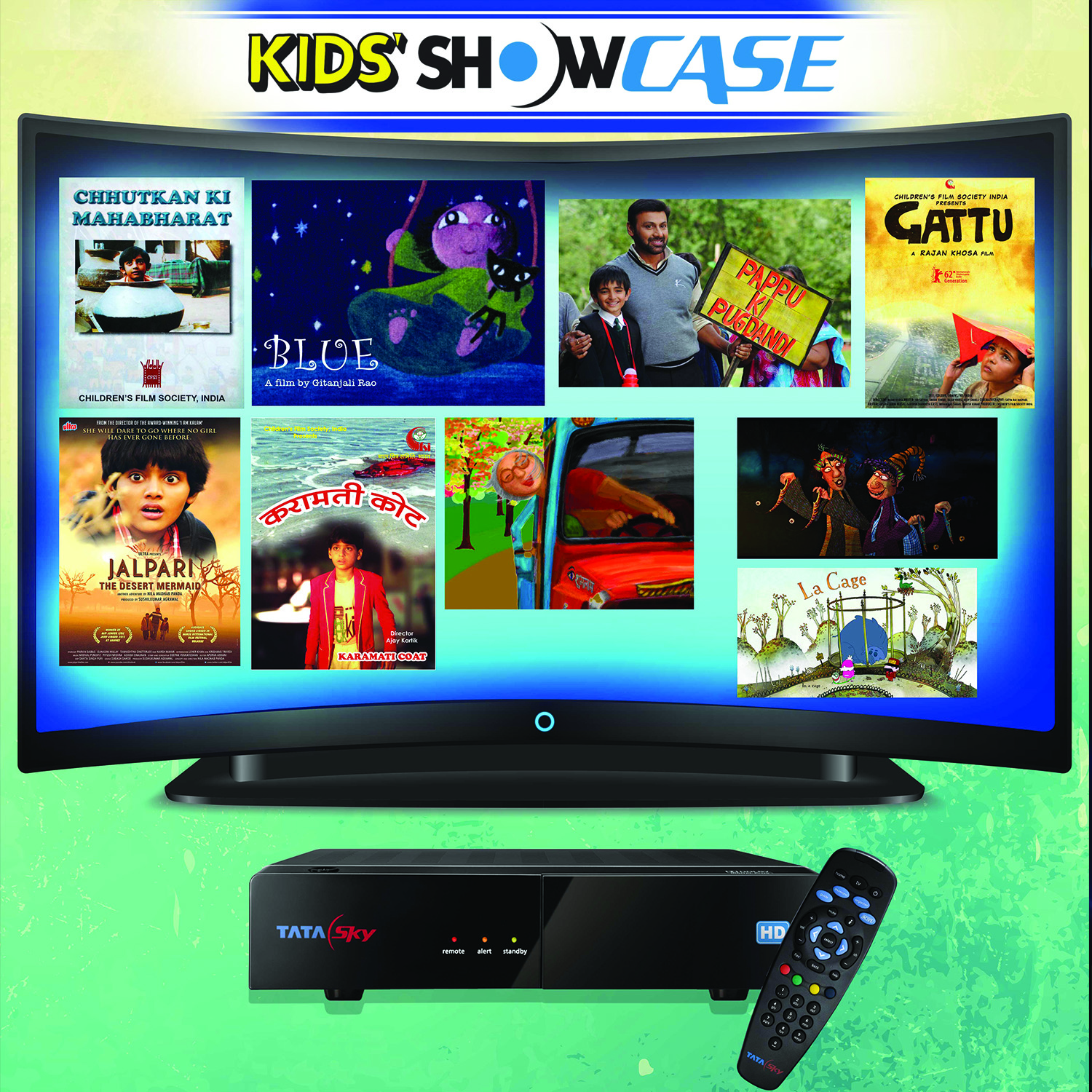
    Children can look forward to an exciting mix of award winning and nominated films, features and shorts from renowned studios such as Celluloid Dreams, Ghibli, Trust Nordisk, Folimage, Entertainment One and many more. Some of the movies acquired for the platform are The Nut Job, Labrinthus, Giraffada, Secret of Kells, Gattu, Jalpari, La Cage and many more.

    This new showcase service will air children’s films selected with the help of eminent children’s content curator, Monica Wahi, who is the founder of South Asian Children’s Cinema Forum and curated kids content at festivals such as The Mumbai Film Festival.

    Kids Showcase will run movies all day back-to-back and children can watch what they like on both the television and the Tata Sky Mobile App. With a bouquet of 21 kids channels, and 4 unique interactive services, Tata Sky has been continuously bolstering offerings for children.


  • Tata Sky Kids’ Showcase service launched; features films from across globe

    Tata Sky Kids’ Showcase service launched; features films from across globe

    MUMBAI: Tata Sky, pioneer of innovative services in the DTH industry, will be launching an exclusive array of kids-based cinema from multiple countries with the launch of Tata Sky Kids’ Showcase service.

    Launched on 21 May, Kids’ Showcase features films from across the globe; including Denmark, Norway, France, Japan, Russia, Czech Republic, Finland, United Kingdom and United States of America apart from Indian movies. The bouquet of over 40 kids film on Kids’ Showcase will feature Indian, English, foreign feature & short films. 

    Tata Sky chief content and business development officer Paolo Agostinelli said, “With Kids’ Showcase, Tata Sky aims to create an opportunity for our kids to enjoy some unique, mostly unseen, high quality content, coming with different perspectives from India and around the world. Not just as some fun times, this could be an opportunity for them to share some quality time with their parents, hopefully stimulating reflections and discussions around a broad range of beautiful, diverse and meaningful stories.”

    Children can look forward to an exciting mix of award winning and nominated films, features and shorts from renowned studios such as Celluloid Dreams, Ghibli, Trust Nordisk, Folimage, Entertainment One and many more. Some of the movies acquired for the platform are The Nut Job, Labrinthus, Giraffada, Secret of Kells, Gattu, Jalpari, La Cage and many more.

    This new showcase service will air children’s films selected with the help of eminent children’s content curator, Monica Wahi, who is the founder of South Asian Children’s Cinema Forum and curated kids content at festivals such as The Mumbai Film Festival.

    Kids Showcase will run movies all day back-to-back and children can watch what they like on both the television and the Tata Sky Mobile App. With a bouquet of 21 kids channels, and 4 unique interactive services, Tata Sky has been continuously bolstering offerings for children.


  • TRAI’s consultation on sharing infrastructure by TV distribution platforms

    TRAI’s consultation on sharing infrastructure by TV distribution platforms

    NEW DELHI: The Telecom Regulatory Authority of India wants to know from stakeholders what could be the operational, commercial, technical and regulatory issues which require to be addressed at the time of developing policy and regulatory framework for enabling infrastructure sharing in the broadcasting TV distribution space.

    In a pre-consultation paper on infrastructure sharing in broadcasting TV distribution sector for which it wants comments by 23 June, TRAI has also asked whether stakeholders envisage any requirement for change in the existing licensing/registration framework laid for DTH, DAS and HITS broadcasting services.

    It has also sought to know what could be the implications of allowing separation of network and service provider functions at distribution level and how can the responsibilities be divided between the network and service providers.

    The regulator wants to know what more can be shared by the distributor platform operators (MSOs, HITS, DTH) for better utilization of infrastructure.

    TRAI said the pre-consultation paper had been issued with an aim to solicit stakeholder’s views on issues related to sharing of infrastructure on voluntary basis and separation of network and service provider functions so as to reduce cost of distribution of services and enhance competition in respect of all type of TV distribution platforms.

    It has separate chapters on provides information on existing licensing framework for various kinds of TV distribution platforms; the probable scope, benefit & challenges for infrastructure sharing; and separation of network and service provider functions. 

  • TRAI’s consultation on sharing infrastructure by TV distribution platforms

    TRAI’s consultation on sharing infrastructure by TV distribution platforms

    NEW DELHI: The Telecom Regulatory Authority of India wants to know from stakeholders what could be the operational, commercial, technical and regulatory issues which require to be addressed at the time of developing policy and regulatory framework for enabling infrastructure sharing in the broadcasting TV distribution space.

    In a pre-consultation paper on infrastructure sharing in broadcasting TV distribution sector for which it wants comments by 23 June, TRAI has also asked whether stakeholders envisage any requirement for change in the existing licensing/registration framework laid for DTH, DAS and HITS broadcasting services.

    It has also sought to know what could be the implications of allowing separation of network and service provider functions at distribution level and how can the responsibilities be divided between the network and service providers.

    The regulator wants to know what more can be shared by the distributor platform operators (MSOs, HITS, DTH) for better utilization of infrastructure.

    TRAI said the pre-consultation paper had been issued with an aim to solicit stakeholder’s views on issues related to sharing of infrastructure on voluntary basis and separation of network and service provider functions so as to reduce cost of distribution of services and enhance competition in respect of all type of TV distribution platforms.

    It has separate chapters on provides information on existing licensing framework for various kinds of TV distribution platforms; the probable scope, benefit & challenges for infrastructure sharing; and separation of network and service provider functions. 

  • TRAI explores methodology for QoS under DAS regime

    NEW DELHI: As the country moves towards the final phase of digital addressable systems, the Telecom Regulatory Authority of India wants to know if there should be a uniform regulatory framework for quality of service and consumer protection across all digital addressable platforms.

    TRAI has also sought opinion of stakeholders on the standards and essential technical parameters for ensuring good quality of service for digital cable TV, direct-to-home (DTH), head-end in the sky (HITS) and Internet Protocol Television (IPTV).

    The opinion has been sought in a detailed consultation paper on ‘Issues related to quality of services in Digital Addressable Systems and consumer protection’, and stakeholders have been asked to send in their comments by17 June and counter-comments if any by 1 July.

    In over fifty questions posed to stakeholders, it wants to know the broad contours for quality of rervice regulatory framework for digital addressable systems.

    The regulator has asked if timelines relating to various activities to get new connection should be left to the Distribution Platform Operators (DPOs) to be transparently declared to the subscribers.  What should be the time limits for various activities including consumer application form and installation and activation of service for new connections, it wants to know.  

    Referring to a query often asked by stakeholders, the Regulator wants to know if the minimum essential information to be included in the CAF should be mandated through regulations to maintain basic uniformity.  Should the use of e-CAF be facilitated, encouraged or mandated, it has asked.

    It wants to know whether the minimum essential information to be included in the Manual of Practice be mandated through regulations to maintain basic uniformity and to ensure that consumers get all relevant information about the services being subscribed.

    TRAI wants to know if an initial subscription period can be charged while providing a new connection to protect the interest of subscribers as well as DPOs, and the protections for subscribers and DPOs during initial subscription period.

    TRAI wants to know the methodology of reduction in subscription charges be calculated in case of discontinuation of channel from DPOs platform.

    Stakeholders have been asked to give their opinion on the maximum permissible time of disruption beyond  which subscriber must be compensated if there is disruption due to technical fault on the DPO network or at the subscriber’s end; disruption due to technical fault of Consumer Premises Equipment at the subscriber’s end.

    The stakeholders have been asked why the uptake of mandated schemes for set top box (Outright purchase, hire purchase, and on rent) is so low at present and whether this is due to lack of consumer awareness and what other methods should be used for this.

    Opinion has also been sought on the billing cycle both for pre-paid and post-paid and whether deduction of maintenance related charges for CPE from the pre-paid subscription account should be prohibited.

    Comments have been sought on call centre availability hours, multiple languages in Interactive Voice Response, response time for answering IVR and voice to voice calls and  d. Sub menu and accessibility of customer care executive.

    What should be the innovative ways to develop a speedy user friendly complaint registering and redressal framework using Mobile Apps, SMS, online system etc., the regulator has asked.


  • TRAI explores methodology for QoS under DAS regime

    NEW DELHI: As the country moves towards the final phase of digital addressable systems, the Telecom Regulatory Authority of India wants to know if there should be a uniform regulatory framework for quality of service and consumer protection across all digital addressable platforms.

    TRAI has also sought opinion of stakeholders on the standards and essential technical parameters for ensuring good quality of service for digital cable TV, direct-to-home (DTH), head-end in the sky (HITS) and Internet Protocol Television (IPTV).

    The opinion has been sought in a detailed consultation paper on ‘Issues related to quality of services in Digital Addressable Systems and consumer protection’, and stakeholders have been asked to send in their comments by17 June and counter-comments if any by 1 July.

    In over fifty questions posed to stakeholders, it wants to know the broad contours for quality of rervice regulatory framework for digital addressable systems.

    The regulator has asked if timelines relating to various activities to get new connection should be left to the Distribution Platform Operators (DPOs) to be transparently declared to the subscribers.  What should be the time limits for various activities including consumer application form and installation and activation of service for new connections, it wants to know.  

    Referring to a query often asked by stakeholders, the Regulator wants to know if the minimum essential information to be included in the CAF should be mandated through regulations to maintain basic uniformity.  Should the use of e-CAF be facilitated, encouraged or mandated, it has asked.

    It wants to know whether the minimum essential information to be included in the Manual of Practice be mandated through regulations to maintain basic uniformity and to ensure that consumers get all relevant information about the services being subscribed.

    TRAI wants to know if an initial subscription period can be charged while providing a new connection to protect the interest of subscribers as well as DPOs, and the protections for subscribers and DPOs during initial subscription period.

    TRAI wants to know the methodology of reduction in subscription charges be calculated in case of discontinuation of channel from DPOs platform.

    Stakeholders have been asked to give their opinion on the maximum permissible time of disruption beyond  which subscriber must be compensated if there is disruption due to technical fault on the DPO network or at the subscriber’s end; disruption due to technical fault of Consumer Premises Equipment at the subscriber’s end.

    The stakeholders have been asked why the uptake of mandated schemes for set top box (Outright purchase, hire purchase, and on rent) is so low at present and whether this is due to lack of consumer awareness and what other methods should be used for this.

    Opinion has also been sought on the billing cycle both for pre-paid and post-paid and whether deduction of maintenance related charges for CPE from the pre-paid subscription account should be prohibited.

    Comments have been sought on call centre availability hours, multiple languages in Interactive Voice Response, response time for answering IVR and voice to voice calls and  d. Sub menu and accessibility of customer care executive.

    What should be the innovative ways to develop a speedy user friendly complaint registering and redressal framework using Mobile Apps, SMS, online system etc., the regulator has asked.


  • Parliamentary Committee hopes Prasar Bharati will plan better in 2016-17

    Parliamentary Committee hopes Prasar Bharati will plan better in 2016-17

    NEW DELHI: Noting that delay in Plan Expenditure has affected studio modernization, a Parliamentary Committee has expressed the hope that Prasar Bharati would resort to better planning during 2016-17 in execution of schemes for Doordarshan and All India Radio with available state of-the-art technology and gainfully utilize the allocated funds.

    The Parliamentary Standing Committee on Information Technology which goes into I and B issues took note of the assurance of the pubcaster’s chief executive officer Jawhar Sircar in this connection.

    Sircar told the Committee that the reason for under-utilization of Plan funds during 2015-16 as a policy decision was to avoid expenditure on obsolete technology such as analogue transmission, short wave and medium wave radio transmission etc.

    Observing there had been delay in procurement of Camera Chains, XD Cam, Recorders and digitisation of transmitters, the Committee said less utilization of funds is likely to result in spill over of schemes to the next year.

    The Committee noted that for the 12th Five Year Plan, the Government approved a total outlay of Rs 3,826 crore for Prasar Bharati – Rs 2,614.86 crore for Continuing Schemes and Rs 1,211.14 crore for New Schemes.

    The outlay for Broad schemes namely ‘Broadcasting and Infrastructure Network Development’ was Rs 3,500 crore, for ‘Content Development and Dissemination’ Rs 186 crore and for ‘Special Project’ Rs 140 crore.

    In addition, a separate outlay was being provided for ‘Kisan Channel’ – Rs 26 crore in 2014-15, Rs 45 crore in 2015-16 and Rs 60 crore for the year 2016-17.

    For the Annual Plan 2016-17, the total outlay is Rs 450 crore which includes Rs 60 crore for the Kisan Channel and Rs 390 crore for Schemes ‘Broadcasting Infrastructure Network Development’ and ‘Special Projects’.

    The Committee was told that there had been reduction in funds at the Revised Estimates stage as compared to the Broadcast Estimates given in 2015-16 for certain schemes as these were not expected to be executed by the Prasar Bharati during the remaining period of that  financial year. These pertained to Digital Terrestrial Television (DTT) transmitters, Direct to Home (DTH), Set Top Boxes (STBs), Digital Satellite News Gathering Vehicles (DSNGs) etc., in the case of DD. In the case of AIR, the requirement of funds was reduced, broadly because various schemes of AIR were reviewed in 2013-14 and 2014-15, and those found as having negative cost benefits were ordered to be ceased or tapered off.

    The Committee noted that the Ministry had released Rs 453.77 crore to Prasar Bharati during the year 2015-16 and this amount was construed as expenditure by the ministry. However, Prasar Bharati said out of this, an amount of Rs 246.42 crore had been actually booked as expenditure by them which includes Rs 220.17 crore on Plan Capital in AIR and DD and Rs 26.25 crore for Content Development and Dissemination for DD Kisan.

  • Parliamentary Committee hopes Prasar Bharati will plan better in 2016-17

    Parliamentary Committee hopes Prasar Bharati will plan better in 2016-17

    NEW DELHI: Noting that delay in Plan Expenditure has affected studio modernization, a Parliamentary Committee has expressed the hope that Prasar Bharati would resort to better planning during 2016-17 in execution of schemes for Doordarshan and All India Radio with available state of-the-art technology and gainfully utilize the allocated funds.

    The Parliamentary Standing Committee on Information Technology which goes into I and B issues took note of the assurance of the pubcaster’s chief executive officer Jawhar Sircar in this connection.

    Sircar told the Committee that the reason for under-utilization of Plan funds during 2015-16 as a policy decision was to avoid expenditure on obsolete technology such as analogue transmission, short wave and medium wave radio transmission etc.

    Observing there had been delay in procurement of Camera Chains, XD Cam, Recorders and digitisation of transmitters, the Committee said less utilization of funds is likely to result in spill over of schemes to the next year.

    The Committee noted that for the 12th Five Year Plan, the Government approved a total outlay of Rs 3,826 crore for Prasar Bharati – Rs 2,614.86 crore for Continuing Schemes and Rs 1,211.14 crore for New Schemes.

    The outlay for Broad schemes namely ‘Broadcasting and Infrastructure Network Development’ was Rs 3,500 crore, for ‘Content Development and Dissemination’ Rs 186 crore and for ‘Special Project’ Rs 140 crore.

    In addition, a separate outlay was being provided for ‘Kisan Channel’ – Rs 26 crore in 2014-15, Rs 45 crore in 2015-16 and Rs 60 crore for the year 2016-17.

    For the Annual Plan 2016-17, the total outlay is Rs 450 crore which includes Rs 60 crore for the Kisan Channel and Rs 390 crore for Schemes ‘Broadcasting Infrastructure Network Development’ and ‘Special Projects’.

    The Committee was told that there had been reduction in funds at the Revised Estimates stage as compared to the Broadcast Estimates given in 2015-16 for certain schemes as these were not expected to be executed by the Prasar Bharati during the remaining period of that  financial year. These pertained to Digital Terrestrial Television (DTT) transmitters, Direct to Home (DTH), Set Top Boxes (STBs), Digital Satellite News Gathering Vehicles (DSNGs) etc., in the case of DD. In the case of AIR, the requirement of funds was reduced, broadly because various schemes of AIR were reviewed in 2013-14 and 2014-15, and those found as having negative cost benefits were ordered to be ceased or tapered off.

    The Committee noted that the Ministry had released Rs 453.77 crore to Prasar Bharati during the year 2015-16 and this amount was construed as expenditure by the ministry. However, Prasar Bharati said out of this, an amount of Rs 246.42 crore had been actually booked as expenditure by them which includes Rs 220.17 crore on Plan Capital in AIR and DD and Rs 26.25 crore for Content Development and Dissemination for DD Kisan.

  • French channel TV5Monde Asie ties up with Tata Sky to enter Indian market

    French channel TV5Monde Asie ties up with Tata Sky to enter Indian market

    MUMBAI: French language channel TV5Monde Asie is now available in India on Tata Sky. 
    The French-language network is accessible  to Tata Sky subscribers through its English news pack on channel No. 537.

    With this move, the channel has aimed to extend its reach to additional 15 million homes in India. The network’s current reach is over 75 million subscribers in Asia-Pacific and 300 million homes worldwide.

    TV5Monde APAC MD Alexandre Muller said, “Thanks to Tata Sky, we are not only strengthening the availability of TV5Monde Asie all over India, but also providing more options to viewers in the country. This new partnership will entitle French language ‘’addicts’’ and Francophiles to benefit from our exclusive content. “

    The deal was completed by TV5Monde’s India representative, Catvision Ltd, who has been representing the French-speaking channel since 1998.

    The channel offers a wide variety of exclusive subtitled prime time films, world-class sports events, high-quality documentaries, kids’ programs, cooking and design lessons, as well as exciting game shows and in-depth coverage of international news.