Tag: DTH

  • Research and  Markets’ World DTH TV Update for 2015

    Research and Markets’ World DTH TV Update for 2015

    MUMBAI: What’s driving DTH subscriber growth globally? According to research firm, Research and Markets’ (R&M’s) latest report, World DTH Market End 2015, almost one third of pay TV satellite growth is a result of telecom companies making DTH offers.

    Telecoms players’ foray into extending their current portfolios along with strategy of selling bundles is the reason behind this..

    The market research outfit says that DTH television is growing in all regions, excepting in the US where it has gone down. Latin America has added the maximum DTH subs growing from 14 million in 2010 to 35 million in 2015 – a compounded annual growth rate of 20 per cent.

    Next to Latin America the other region growing fast is APAC at a CAGR of 17 per cent followed by Middle-East Africa (MEA) at a CAGR of 15 per cent. Europe has grown at a CAGR of 5 per cent for 2010-15.

    The author has tracked tracks TV subscribers quarterly based on technology type – Cable, DTT, IPTV and DTH. The report analyses the DTH pay TV subscribers globally and the share of telecom operators in the DTH space.

  • TRAI open house on DAS interconnect opens up differences amongst stakeholders

    TRAI open house on DAS interconnect opens up differences amongst stakeholders

    NEW DELHI: An Open House Discussion (OHD), organised by regulator TRAI on inter-connection framework for broadcasting TV services distributed through addressable systems (DAS), brought out the fact that yawning gaps still exist between broadcasters and distribution platforms.

    The OHD, organised on Wednesday to garner final viewpoints of stakeholders after they have already submitted their stand on the issue, highlighted that the industry is still fighting for short to medium term gains instead of seeing the big picture.

    While the broadcasting fraternity stood its ground saying, by and large, that interconnect agreements are private matters between two parties after mutually agreeing on certain terms, distribution platforms maintained that “more transparency is needed.”

    “How can it be that a matter related to a broadcaster is private and nobody can ask about them, while those relating to us (distribution platforms) are supposed to be made public?” Jawahar Goel, managing director, Dish TV asked.

    Goel’s probing query came after Star India, quoting various laws and regulations, said that the regulator should not encroach upon or erode broadcasters’ “right to freedom of contract in negotiating with distribution platform operators (DPOs).”

    In its submission Star India had said, “The proposed regulations must allow freedom to negotiate to broadcasters so as to meet the peculiar demands of the market. Universal treatment to all seekers of signals— despite intelligible differences — is not an obligation imposed by law nor is it desirable.”

    Issue like discounts offered by broadcasters, pay channels turning FTA, cloning of existing content to start another TV channel, regulation of OTT platforms managed and owned by broadcasters, cost of spectrum charges paid by consumers for accessing OTT services, the vagueness of interconnect agreements without geographical locations mentioned and the pitfalls of a proposed Interconnect Management System (IMS) whereby commercial data and information could be put in an encrypted form in limited public domain were amongst many issues brought up by stakeholders.

    Pointing out broadcasters “impose stringent packaging restrictions” on DPOs, Videocon d2h, expressed its concerns on HD channels and their pricing, highlighting the fact that the difference in cost of the same content in standard definition and high-definition is hard to explain to price-sensitive consumers.

    While TRAI chairman RS Sharma in the beginning observed that transparency, non-discrimination and consumer interests were paramount, amongst other things, when the regulator proposes a regulation, some MSOs and LCOs (led by a vocal Roop Sharma of Cable Operators’ Federation of India) vociferously said it’s transparency that’s lacking.

    Dish TV also highlighted the discrimination between the licensing regime of DTH operators and cable ops — DTH licensee pays an annual fee, while a cable op doesn’t pay any licence fee on registration .

    Bharti Telemedia, part of the telecoms-to-media giant Bharti group, reiterated Dish TV’s point on DTH ops being treated differently saying a “non-level playing field amongst the various types of service providers” exists.

    In its submission to the TRAI earlier, Bharti had stated that DTH operators pay a higher tax of 34.5% and have a transparent business operation, while “digital cable operators, who have a similar nature of business, are not transparent and are also not liable to pay any licence fee.”

    Though global trends indicate there’s convergence of services and service providers, in India there seems to be hardly any convergence of ideas or consensus amongst the various stakeholders and this would make any regulator’s job that much tougher. Unless one leaves market dynamics to take care of many issues that were raised at the OHD.
  • TRAI open house on DAS interconnect opens up differences amongst stakeholders

    TRAI open house on DAS interconnect opens up differences amongst stakeholders

    NEW DELHI: An Open House Discussion (OHD), organised by regulator TRAI on inter-connection framework for broadcasting TV services distributed through addressable systems (DAS), brought out the fact that yawning gaps still exist between broadcasters and distribution platforms.

    The OHD, organised on Wednesday to garner final viewpoints of stakeholders after they have already submitted their stand on the issue, highlighted that the industry is still fighting for short to medium term gains instead of seeing the big picture.

    While the broadcasting fraternity stood its ground saying, by and large, that interconnect agreements are private matters between two parties after mutually agreeing on certain terms, distribution platforms maintained that “more transparency is needed.”

    “How can it be that a matter related to a broadcaster is private and nobody can ask about them, while those relating to us (distribution platforms) are supposed to be made public?” Jawahar Goel, managing director, Dish TV asked.

    Goel’s probing query came after Star India, quoting various laws and regulations, said that the regulator should not encroach upon or erode broadcasters’ “right to freedom of contract in negotiating with distribution platform operators (DPOs).”

    In its submission Star India had said, “The proposed regulations must allow freedom to negotiate to broadcasters so as to meet the peculiar demands of the market. Universal treatment to all seekers of signals— despite intelligible differences — is not an obligation imposed by law nor is it desirable.”

    Issue like discounts offered by broadcasters, pay channels turning FTA, cloning of existing content to start another TV channel, regulation of OTT platforms managed and owned by broadcasters, cost of spectrum charges paid by consumers for accessing OTT services, the vagueness of interconnect agreements without geographical locations mentioned and the pitfalls of a proposed Interconnect Management System (IMS) whereby commercial data and information could be put in an encrypted form in limited public domain were amongst many issues brought up by stakeholders.

    Pointing out broadcasters “impose stringent packaging restrictions” on DPOs, Videocon d2h, expressed its concerns on HD channels and their pricing, highlighting the fact that the difference in cost of the same content in standard definition and high-definition is hard to explain to price-sensitive consumers.

    While TRAI chairman RS Sharma in the beginning observed that transparency, non-discrimination and consumer interests were paramount, amongst other things, when the regulator proposes a regulation, some MSOs and LCOs (led by a vocal Roop Sharma of Cable Operators’ Federation of India) vociferously said it’s transparency that’s lacking.

    Dish TV also highlighted the discrimination between the licensing regime of DTH operators and cable ops — DTH licensee pays an annual fee, while a cable op doesn’t pay any licence fee on registration .

    Bharti Telemedia, part of the telecoms-to-media giant Bharti group, reiterated Dish TV’s point on DTH ops being treated differently saying a “non-level playing field amongst the various types of service providers” exists.

    In its submission to the TRAI earlier, Bharti had stated that DTH operators pay a higher tax of 34.5% and have a transparent business operation, while “digital cable operators, who have a similar nature of business, are not transparent and are also not liable to pay any licence fee.”

    Though global trends indicate there’s convergence of services and service providers, in India there seems to be hardly any convergence of ideas or consensus amongst the various stakeholders and this would make any regulator’s job that much tougher. Unless one leaves market dynamics to take care of many issues that were raised at the OHD.
  • Open House on Interconnect agreements aims at expediting framework

    Open House on Interconnect agreements aims at expediting framework

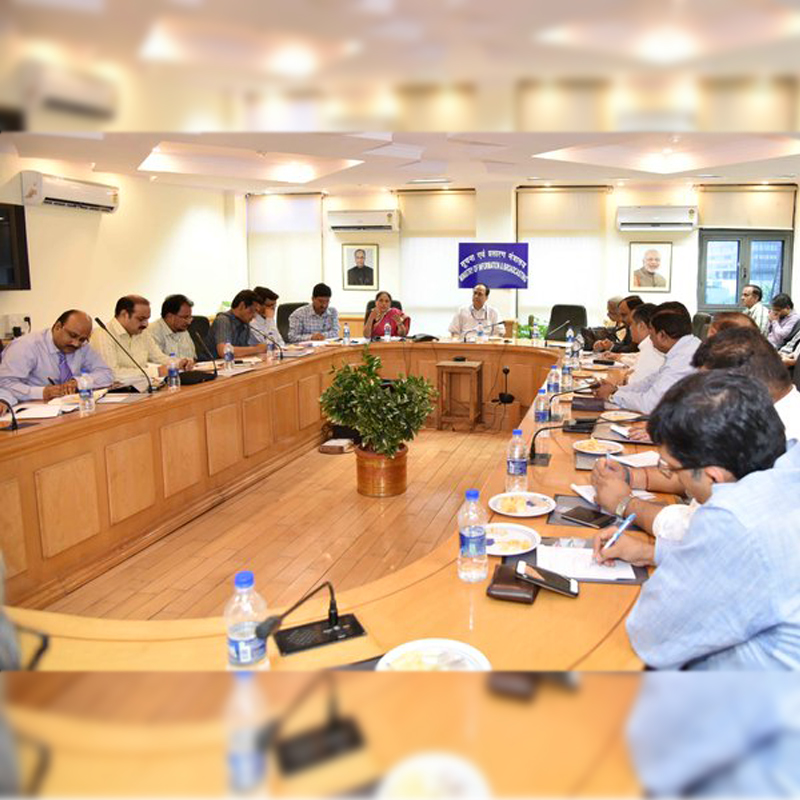
    NEW DELHI: Picking up momentum even as the deadline for the final phase of digital addressable system is less than six month away, an Open House discussion is being held on the Telecom Regulatory Authority of India’s consultation paper on Interconnection framework for Broadcasting TV Services distributed through DAS.

    This meeting, being held in Delhi on 13 July, comes just over a month after an earlier meeting on Register of Interconnection Agreements dated26May, which had thrown up diverse opinions and led to extension of the date for receiving comments of stakeholders to 10 June on its Consultation Paper.

    In the paper issued on 4 May on Interconnection framework for Broadcasting TV Services, TRAI noted that the exceptional growth of the number of TV channels combined with the inherent limitations of analogue cable TV systems had posed several challenges, mainly due to capacity constraints and non-addressable nature of the network. The evolution of technology paved way for bringing about digitization with addressability in the cable TV sector. For implementation of digital addressable systems in the cable TV sector, the Central Government notified the Cable Television Networks (Amendment) Rules 2012 on 28 April 2012. Immediately after the notification of the Cable TV Rules 2012, the Authority notified the Telecommunication (Broadcasting and Cable Services) Interconnection (Digital Addressable Cable Television Systems) Regulations 2012 on 30th April 2012.

    These regulations are specifically applicable for DAS whereas the Interconnection Regulations 2004 were applicable for non-addressable cable TV systems and also for other addressable systems such as DTH, HITS and IPTV. The basic features of the Interconnection Regulations 2012 are similar to the basic features of the Interconnection Regulations 2004.

    With implementations of DAS, there has been a marked increase in the number of subscribers receiving TV channels through addressable platforms. The number of subscribers being served by the DTH services has also gone up significantly. HITS platforms are also expected to make fast penetration in making available digital broadcasting TV services in the country. Now majority of the subscribers in India are receiving TV signals through digital addressable systems.

    TRAI said the interconnection regulations ought to evolve to keep pace with new developments in the sector, while sustaining the fundamental underlying principles of non-discrimination and level playing field. The commercial parameters for revenue share between service providers primarily depend upon the number of subscribers subscribing to channels/ bouquets. The numbers of subscribers in each type of addressable platform are verifiable. To ensure non-discrimination and level playing field amongst the distributors using different digital addressable systems such as DTH, IPTV, HITS, and DAS, it would be in the fitness of things that all these service providers are regulated using the common regulatory framework.

    Therefore, the consultation paper was aimed at providing a regulatory framework for interconnection that ensures a level playing field to all types of DAS systems. The consultation paper also discussed issues that the Authority noticed and plausible ways of dealing with those issues in respect of digital addressable systems. The review of the existing regulatory framework is being done with the objective of fostering competition, increase trust amongst service providers, ease of doing business, reduce disputes, improve transparency and efficiency, promote sustainable, orderly growth and effective choice to consumers.

  • Open House on Interconnect agreements aims at expediting framework

    Open House on Interconnect agreements aims at expediting framework

    NEW DELHI: Picking up momentum even as the deadline for the final phase of digital addressable system is less than six month away, an Open House discussion is being held on the Telecom Regulatory Authority of India’s consultation paper on Interconnection framework for Broadcasting TV Services distributed through DAS.

    This meeting, being held in Delhi on 13 July, comes just over a month after an earlier meeting on Register of Interconnection Agreements dated26May, which had thrown up diverse opinions and led to extension of the date for receiving comments of stakeholders to 10 June on its Consultation Paper.

    In the paper issued on 4 May on Interconnection framework for Broadcasting TV Services, TRAI noted that the exceptional growth of the number of TV channels combined with the inherent limitations of analogue cable TV systems had posed several challenges, mainly due to capacity constraints and non-addressable nature of the network. The evolution of technology paved way for bringing about digitization with addressability in the cable TV sector. For implementation of digital addressable systems in the cable TV sector, the Central Government notified the Cable Television Networks (Amendment) Rules 2012 on 28 April 2012. Immediately after the notification of the Cable TV Rules 2012, the Authority notified the Telecommunication (Broadcasting and Cable Services) Interconnection (Digital Addressable Cable Television Systems) Regulations 2012 on 30th April 2012.

    These regulations are specifically applicable for DAS whereas the Interconnection Regulations 2004 were applicable for non-addressable cable TV systems and also for other addressable systems such as DTH, HITS and IPTV. The basic features of the Interconnection Regulations 2012 are similar to the basic features of the Interconnection Regulations 2004.

    With implementations of DAS, there has been a marked increase in the number of subscribers receiving TV channels through addressable platforms. The number of subscribers being served by the DTH services has also gone up significantly. HITS platforms are also expected to make fast penetration in making available digital broadcasting TV services in the country. Now majority of the subscribers in India are receiving TV signals through digital addressable systems.

    TRAI said the interconnection regulations ought to evolve to keep pace with new developments in the sector, while sustaining the fundamental underlying principles of non-discrimination and level playing field. The commercial parameters for revenue share between service providers primarily depend upon the number of subscribers subscribing to channels/ bouquets. The numbers of subscribers in each type of addressable platform are verifiable. To ensure non-discrimination and level playing field amongst the distributors using different digital addressable systems such as DTH, IPTV, HITS, and DAS, it would be in the fitness of things that all these service providers are regulated using the common regulatory framework.

    Therefore, the consultation paper was aimed at providing a regulatory framework for interconnection that ensures a level playing field to all types of DAS systems. The consultation paper also discussed issues that the Authority noticed and plausible ways of dealing with those issues in respect of digital addressable systems. The review of the existing regulatory framework is being done with the objective of fostering competition, increase trust amongst service providers, ease of doing business, reduce disputes, improve transparency and efficiency, promote sustainable, orderly growth and effective choice to consumers.

  • Assam revises entertainment tax on DTH & Cable TV

    Assam revises entertainment tax on DTH & Cable TV

    MUMBAI: Watching television is set to become very expensive in homes in Assam. Reason: the state government earlier this month revised entertainment tax that’s levied on DTH and cable TV services such as Airtel, Tata Sky, Videcond2h, Dish TV, Sun TV, Reliance Big DTH, Manthan, Sitcable among others.

    The Assam governor earlier this month issued a notification under which the rate of entertainment tax has been revised from Rs 25 per home to Rs 30 per subscriber for DTH services. That’s a 20 per cent jump in the tax rates.

    Another executive order was issued under which tax on cable TV services was revised from Rs 10 per subscriber to Rs 20 per residential subscriber. That’s a massive 100 per cent jump in tax tariffs.

    The Assam government has not touched the rate that hotels fork out per subscriber for both cable TV and DTH services. It has stayed constant at Rs 50 per subscriber.

    Will this extra burden turn viewers away from both cable & satellite TV and DTH? The jury is out, but most media watchers say that they don’t think it will have much of an impact.

  • Assam revises entertainment tax on DTH & Cable TV

    Assam revises entertainment tax on DTH & Cable TV

    MUMBAI: Watching television is set to become very expensive in homes in Assam. Reason: the state government earlier this month revised entertainment tax that’s levied on DTH and cable TV services such as Airtel, Tata Sky, Videcond2h, Dish TV, Sun TV, Reliance Big DTH, Manthan, Sitcable among others.

    The Assam governor earlier this month issued a notification under which the rate of entertainment tax has been revised from Rs 25 per home to Rs 30 per subscriber for DTH services. That’s a 20 per cent jump in the tax rates.

    Another executive order was issued under which tax on cable TV services was revised from Rs 10 per subscriber to Rs 20 per residential subscriber. That’s a massive 100 per cent jump in tax tariffs.

    The Assam government has not touched the rate that hotels fork out per subscriber for both cable TV and DTH services. It has stayed constant at Rs 50 per subscriber.

    Will this extra burden turn viewers away from both cable & satellite TV and DTH? The jury is out, but most media watchers say that they don’t think it will have much of an impact.

  • Govt examining proposal to relax FDI norms in Print Media

    Govt examining proposal to relax FDI norms in Print Media

    NEW DELHI: After a recent slew of relaxations relating to foreign investment norms, the PM Narendra Modi-led government is said to be considering a proposal to liberalise investment levels in print media.

    Quoting unnamed Finance Ministry officials, Bloomberg reported that the ministry is of the view that foreign investment norms in India’s print media could be raised from the present 26 per cent to 49 per cent, bringing it at par with norms for TV news segment.

    The Department of Industrial Policy and Promotion (DIPP) under the Commerce Ministry will take a final call on the matter, the Bloomberg report quoted the government officials as saying.

    Though, foreign investment in India’s print media sector is limited, but from time to time global giants like News Corp, having widespread interest in media, have evinced interest in investing here but stopped short because of restrictive policies and an inherent opposition from big Indian media groups.

    In June 2016, the government had liberalised foreign investment norms in many sectors including airlines, retail, defence and TV broadcast carriage services like DTH, HITS, teleports, etc.

    Recently, a delegation of  US-India Business Council (USIBC), which included some broadcast companies, had petitioned the Commerce Ministry to relax foreign investment levels in electronic news media that stands at 49 per cent at present, but just shy of giving majority controlling stake to any foreign entity.

    Interestingly, in January 2015, the then Minister of Information and Broadcasting (MIB) and present Finance Minister Arun Jaitley had opined that restrictions on foreign investment limit in print media need to be debated afresh.

    Delivering the inaugural JS Verma memorial lecture, organised by News Broadcasters’ Association (NBA), Jaitley had said the practicality of FDI norms in print media should be examined anew in a spreading digital age when such limits are becoming irrelevant as news products are increasingly being made available on the Internet.

    Finance Minister Jaitley’s forward-looking views on foreign investment norms in India’s print sector — and media in general — could be viewed at

    and 

    Are such proposals under study a precursor to relaxations for TV news channels too?

    ALSO READ
    Stakeholders welcome easing of FDI norms for broadcasting; want DAS to move faster