Tag: DTH

  • Tata Sky and Visa to collaborate for DTH recharge options

    Tata Sky and Visa to collaborate for DTH recharge options

    Mumbai: Tata Sky and Visa have collaborated to offer Tata Sky subscribers a unique QR code based mobile payment solution, powered by mVisa. Tata Sky subscribers can now recharge their account by scanning the QR code through their mobile phones directly from the TV screen or online on mytatasky.com.

    Visa Group country manager, India and South Asia T.R. Ramachandran said, “Visa is focused on digital innovation to accelerate the development of next generation platforms and solutions that will shape digital commerce. mVisa enables secure, digital commerce through the mobile phone, which today has become the single point of access to technology for consumers. The mVisa solution for Tata Sky subscribers will cater to a large user base across India; we will continue to build more such use cases across online and offline channels to accelerate the adoption digital payments.”

    Tata Sky MD and CEO Harit Nagpal said ”One of our most important pillars of business at Tata Sky is that Innovation has to be Simple and Easy to Use for all. Convenience to use any new technology is the key to ensuring its mass utility and success. We believe mVisa will help subscribers across India with this payment solution from the comfort of their homes.”

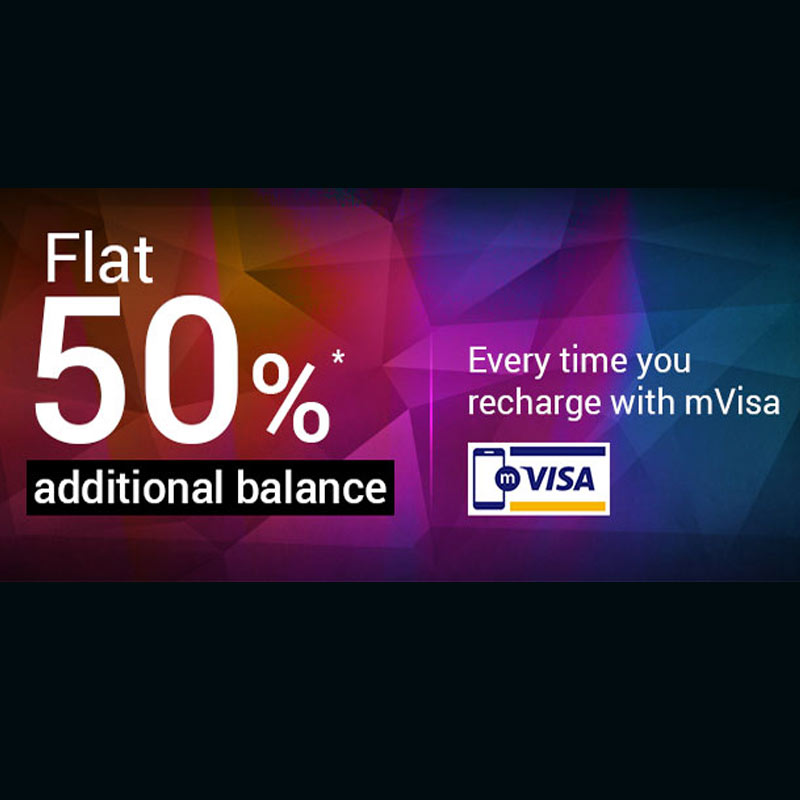
    As an introductory offer, subscribers will get 50% additional credit up to a maximum of Rs. 200 on recharge using mVisa. This offer can be availed three times in a calendar month.

    India is currently the 2nd largest smartphone market in the world, with over a billion smartphones expected to be sold in the next five years. The increasing popularity and adoption of mobile devices presents a huge opportunity for the growth of mobile-based digital commerce. The mVisa payment solution on Tata Sky will empower over 17 million subscribers spread across Indian cities, towns and villages, to make payments without having to use cash, debit or credit cards and from the comfort of their homes.

    In order to make payments, customers simply need to open their bank’s mobile application, select the mVisa option, which will activate their smartphone’s camera. The unique QR code on the TV screen (appears on clicking the home or yellow button on the Tata Sky remote control) will prompt for the payment amount, followed by entering the mPIN, to complete the transaction. It is a card-less solution which facilitates payments by scanning the merchant/service provider’s QR code. Subscribers can also log on to mytatasky.com and recharge their account online using the mVisa payment option.

    India is the first market globally where mVisa has been introduced to support the migration from cash to electronic commerce. mVisa is available on the following apps – Axis Bank Mobile Banking App, Bank of Baroda M CLIP App, Bank of India mVisaApp, Pockets by ICICI Bank, HDFC Bank PayZapp andState Bank Anywhere App. Any bank’s mVisa customer can transact on any mVisa merchant.
  • Q1-17: Videocon d2h reports PAT, 15.5percent subscriber growth

    Q1-17: Videocon d2h reports PAT, 15.5percent subscriber growth

    BENGALURU: Videocon d2h is the second listed Indian DTH player to report a profit after tax (PAT), after the Essel group’s Dish TV that turned the numbers black last year. Videocon d2h reported PAT of Rs 2.7 crore for the quarter ended 30 June 2016 (Q1-17, current quarter). For the corresponding year ago quarter (Q1-16), the company had reported a loss of Rs 24.4 crore and for the immediate trailing quarter (Q4-16) reported loss was Rs 21.2 crore.

    The DTH major also reported 15.5 percent year-over-year (y-o-y) growth in net subscriber number growth at 122.9 lakh for Q1-17 as compared to 106.4 lakh and a 3.6 percent quarter-over-quarter (q-o-q) growth from118.6 lakh. Average revenue per user (ARPU) in the current quarter increased to Rs 219 from Rs 205 in Q1-16 and from Rs 214 in the immediate trailing quarter.

    Subscriber acquisition cost (SAC) in Q1-17 was higher at Rs 1,872 as compared to Rs 1,793 in Q1-16 and Rs 1,776 in Q4-16.

    Subscriber monthly churn in the current quarter was 0.49 percent; in Q1-16 it was slightly lower at 0.46 percent, while in the immediate trailing quarter it was much higher at 0.58 percent.

    Videocon d2h reported 23.5 percent y-o-y growth in total revenue from operations for Q1-17 at Rs 818.5 crore as compared to Rs 662.8 crore and a 6.1 percent q-o-q growth from Rs 771.5 crore.

    DAS III and IV are sunshine periods for the television carriage industry. Activation revenues have been adding to the top lines and bottom lines of most of the players. Videocon d2h subscription and activation revenue in the current quarter increased 23.9 percent y-o-y to Rs 752.3 crore from Rs 607.3 crore and increased 6.6 percent q-o-q from Rs 705.6 crore.

    Commenting on the results and company outlook, Videocon d2h executive chairman Saurabh Dhoot, said, “I’m delighted to share that the first quarter of fiscal 2017 has been a landmark quarter for our Company in its enduring journey. In this quarter, we have had a positive profit after tax and achieved free cash flow breakeven. This is a great achievement.

    “In line with our focus on paying down term loans, the Company recently pre-paid further term loans, strengthening our balance sheet further. We have significantly de-levered our balance sheet and become a stronger company going from strength to strength, reducing term loans by around $200 million since our IPO, with over $ 55 million repaid in the current fiscal year.”

    Speaking on the results, Videocon d2h CEO Anil Khera said, “We are happy to report that Adjusted EBITDA for the first quarter of fiscal year 2017 grew 32.4 percent year on year, which is primarily a result of strong subscriber growth, higher revenue realizations and better operating margins. During the quarter, we expanded our retail network in areas that come under India’s Phase III and Phase IV Digitalization program. We are happy to announce our strategic tie-up with Vodafone to enable recharge using their well-established m-pesa digital wallet and at Vodafone outlets, as it will give our customers an easy and efficient way to recharge their d2h account at their convenience.”

    Let us look at some of the other metrics reported by Videocon d2h

    Adjusted EBIDTA grew 32.4 percent y-o-y to Rs 251.9 crore (30.8 percent margin) from Rs 190.3 crore (28.7 percent margin) and grew 15 percent q-o-q from Rs 219.1 crore (28.4 percent margin). Videocon d2h reports that EBIDTA per subscriber has increased to Rs 70 in Q1-17 from Rs 61 in Q1-16 and from Rs 63 in Q4-16.

    Content costs margin in Q1-17 has reduced to 36.1 percent as compared to 37 percent in the corresponding year ago quarter and 37.5 percent in the immediate trailing quarter.

    Total expense in Q1-17 increased 19.7 percent y-o-y to Rs 739.8 crore from Rs 618.1 crore and increased 3.8 percent from Rs 721.8 crore.

    Selling and distribution expense in the current quarter increased 25.7 percent y-o-y to Rs 64 crore from Rs 50.9 crore, but declined 3.6 percent q-o-q from Rs 66.4 crore.

    Employee benefit expense in Q1-17 was 4 percent higher at Rs 32.2 crore as compared to Rs 30.9 crore in Q1-16 and 10.7 percent more than the Rs 29.1 crore in Q4-16.

    Net finance cost in Q1-17 was Rs 75.9 crore (9.3 percent of revenue from operations); in Q1-16 net finance cost was Rs 76.5 crore (11.5 percent of revenue from operations) and in Q4-16 it was Rs 77.8 crore (10.1 percent of revenue from operations).

    The company had term loans of Rs 2,187 crore and total cash and short term investments of Rs 612 crore as of June 30, 2016. Videocon d2h says that it has repaid term loans amounting to Rs 387 crore in the current fiscal year. With this, it has reduced total term loans by over Rs 1,300 crore since its IPO.

  • Q1-17: Videocon d2h reports PAT, 15.5percent subscriber growth

    Q1-17: Videocon d2h reports PAT, 15.5percent subscriber growth

    BENGALURU: Videocon d2h is the second listed Indian DTH player to report a profit after tax (PAT), after the Essel group’s Dish TV that turned the numbers black last year. Videocon d2h reported PAT of Rs 2.7 crore for the quarter ended 30 June 2016 (Q1-17, current quarter). For the corresponding year ago quarter (Q1-16), the company had reported a loss of Rs 24.4 crore and for the immediate trailing quarter (Q4-16) reported loss was Rs 21.2 crore.

    The DTH major also reported 15.5 percent year-over-year (y-o-y) growth in net subscriber number growth at 122.9 lakh for Q1-17 as compared to 106.4 lakh and a 3.6 percent quarter-over-quarter (q-o-q) growth from118.6 lakh. Average revenue per user (ARPU) in the current quarter increased to Rs 219 from Rs 205 in Q1-16 and from Rs 214 in the immediate trailing quarter.

    Subscriber acquisition cost (SAC) in Q1-17 was higher at Rs 1,872 as compared to Rs 1,793 in Q1-16 and Rs 1,776 in Q4-16.

    Subscriber monthly churn in the current quarter was 0.49 percent; in Q1-16 it was slightly lower at 0.46 percent, while in the immediate trailing quarter it was much higher at 0.58 percent.

    Videocon d2h reported 23.5 percent y-o-y growth in total revenue from operations for Q1-17 at Rs 818.5 crore as compared to Rs 662.8 crore and a 6.1 percent q-o-q growth from Rs 771.5 crore.

    DAS III and IV are sunshine periods for the television carriage industry. Activation revenues have been adding to the top lines and bottom lines of most of the players. Videocon d2h subscription and activation revenue in the current quarter increased 23.9 percent y-o-y to Rs 752.3 crore from Rs 607.3 crore and increased 6.6 percent q-o-q from Rs 705.6 crore.

    Commenting on the results and company outlook, Videocon d2h executive chairman Saurabh Dhoot, said, “I’m delighted to share that the first quarter of fiscal 2017 has been a landmark quarter for our Company in its enduring journey. In this quarter, we have had a positive profit after tax and achieved free cash flow breakeven. This is a great achievement.

    “In line with our focus on paying down term loans, the Company recently pre-paid further term loans, strengthening our balance sheet further. We have significantly de-levered our balance sheet and become a stronger company going from strength to strength, reducing term loans by around $200 million since our IPO, with over $ 55 million repaid in the current fiscal year.”

    Speaking on the results, Videocon d2h CEO Anil Khera said, “We are happy to report that Adjusted EBITDA for the first quarter of fiscal year 2017 grew 32.4 percent year on year, which is primarily a result of strong subscriber growth, higher revenue realizations and better operating margins. During the quarter, we expanded our retail network in areas that come under India’s Phase III and Phase IV Digitalization program. We are happy to announce our strategic tie-up with Vodafone to enable recharge using their well-established m-pesa digital wallet and at Vodafone outlets, as it will give our customers an easy and efficient way to recharge their d2h account at their convenience.”

    Let us look at some of the other metrics reported by Videocon d2h

    Adjusted EBIDTA grew 32.4 percent y-o-y to Rs 251.9 crore (30.8 percent margin) from Rs 190.3 crore (28.7 percent margin) and grew 15 percent q-o-q from Rs 219.1 crore (28.4 percent margin). Videocon d2h reports that EBIDTA per subscriber has increased to Rs 70 in Q1-17 from Rs 61 in Q1-16 and from Rs 63 in Q4-16.

    Content costs margin in Q1-17 has reduced to 36.1 percent as compared to 37 percent in the corresponding year ago quarter and 37.5 percent in the immediate trailing quarter.

    Total expense in Q1-17 increased 19.7 percent y-o-y to Rs 739.8 crore from Rs 618.1 crore and increased 3.8 percent from Rs 721.8 crore.

    Selling and distribution expense in the current quarter increased 25.7 percent y-o-y to Rs 64 crore from Rs 50.9 crore, but declined 3.6 percent q-o-q from Rs 66.4 crore.

    Employee benefit expense in Q1-17 was 4 percent higher at Rs 32.2 crore as compared to Rs 30.9 crore in Q1-16 and 10.7 percent more than the Rs 29.1 crore in Q4-16.

    Net finance cost in Q1-17 was Rs 75.9 crore (9.3 percent of revenue from operations); in Q1-16 net finance cost was Rs 76.5 crore (11.5 percent of revenue from operations) and in Q4-16 it was Rs 77.8 crore (10.1 percent of revenue from operations).

    The company had term loans of Rs 2,187 crore and total cash and short term investments of Rs 612 crore as of June 30, 2016. Videocon d2h says that it has repaid term loans amounting to Rs 387 crore in the current fiscal year. With this, it has reduced total term loans by over Rs 1,300 crore since its IPO.

  • Govt earns over Rs 2,400 crore as licence fee from DTH players in 3 years: Rathore

    Govt earns over Rs 2,400 crore as licence fee from DTH players in 3 years: Rathore

    NEW DELHI: A sum of Rs 2400.45 crore has been earned by the government from licence fee from the six private direct-to-home players in the last three years.

    Lok Sabha was told in a written reply by Minister of State for Ministry of Information and Broadcasting (MIB) that while “there is no restriction on the total number of DTH licenses, no new application has been received in the Ministry for grant of DTH license.”

    He said that a sum of Rs Rs.836.52 crores was earned in 2014-15, while the revenue from licence for 2015-16 was Rs.816.15 crores and for 2016-17 was Rs.747.78 crores.

    The Ministry has granted license to six private companies: Dish TV India Limited; Tata Sky Limited; Sun Direct TV Pvt. Limited; Reliance BIG TV Limited; Bharti Telemedia Limited and Videocon d2h Limited

    In addition, pubcaster Doordarshan provides a free-to-air DTH services in the country from its platform Freedish, which only requires a one-time investment in purchasing the dish and linked set-top-box.

    DTH licenses, under the DTH guidelines, are granted to those companies which fulfill the eligibility criteria, terms and conditions and are subject to security clearance and technical clearances by the appropriate authorities of the government. The details are available on the website of this Ministry at www.mib.gov.in.

    In a related development, broadcast carriage regulator TRAI has set in motion a consultation process to explore whether the private DTH operators and other distribution platforms can share infrastructure so as to optimise their usage and reduce overall cost.

    The TRAI proposal has elicited mixed response from DTH operators till now, while Hong Kong-based Asian pay TV industry organisation CASBAA has opposed any government or regulator mandated sharing on the ground that consumers will not benefit ultimately, apart from other reasons.

  • Govt earns over Rs 2,400 crore as licence fee from DTH players in 3 years: Rathore

    Govt earns over Rs 2,400 crore as licence fee from DTH players in 3 years: Rathore

    NEW DELHI: A sum of Rs 2400.45 crore has been earned by the government from licence fee from the six private direct-to-home players in the last three years.

    Lok Sabha was told in a written reply by Minister of State for Ministry of Information and Broadcasting (MIB) that while “there is no restriction on the total number of DTH licenses, no new application has been received in the Ministry for grant of DTH license.”

    He said that a sum of Rs Rs.836.52 crores was earned in 2014-15, while the revenue from licence for 2015-16 was Rs.816.15 crores and for 2016-17 was Rs.747.78 crores.

    The Ministry has granted license to six private companies: Dish TV India Limited; Tata Sky Limited; Sun Direct TV Pvt. Limited; Reliance BIG TV Limited; Bharti Telemedia Limited and Videocon d2h Limited

    In addition, pubcaster Doordarshan provides a free-to-air DTH services in the country from its platform Freedish, which only requires a one-time investment in purchasing the dish and linked set-top-box.

    DTH licenses, under the DTH guidelines, are granted to those companies which fulfill the eligibility criteria, terms and conditions and are subject to security clearance and technical clearances by the appropriate authorities of the government. The details are available on the website of this Ministry at www.mib.gov.in.

    In a related development, broadcast carriage regulator TRAI has set in motion a consultation process to explore whether the private DTH operators and other distribution platforms can share infrastructure so as to optimise their usage and reduce overall cost.

    The TRAI proposal has elicited mixed response from DTH operators till now, while Hong Kong-based Asian pay TV industry organisation CASBAA has opposed any government or regulator mandated sharing on the ground that consumers will not benefit ultimately, apart from other reasons.

  • Dish TV to introduce card-less set top boxes

    Dish TV to introduce card-less set top boxes

    MUMBAI: Dish TV India is looking at moving away from set top boxes requiring smart cards for subscribers to its satellite pay TV service. This is likely to take place over the next three or four months.

    Last weekend, India’s largest DTH provider announced that it had selected Rambus’ Cryptomedia security platform for use in its pay TV satellite system. The platform, which includes a hardware root-of-trust embedded in the set-top box chipset, ensures secure distribution of premium content for cable and satellite operators while eliminating the need for a smart card and enhancing usability of the set-top box.

    “As we look to grow our customer base from the current 13 million subscribers, the demand for cost-effective and robust content protection solutions becomes increasingly important for consumers seeking premium content,” said Dish TV India managing director Jawahar Goel. “By leveraging the embedded CryptoMedia core, we no longer need a smart card to provide secure access to premium content, significantly reducing the cost and improving the security of the set-top box.”

    The CryptoMedia Content Protection Core, developed by Rambus Cryptography Research, is one of several new security elements to be integrated in Dish TV India’s latest set-top boxes. Together with the CryptoMedia operator services, the solution provides a flexible security foundation that allows Dish TV India to easily update and reconfigure software and hardware security throughout the lifecycle of the set-top box. Dish TV India will launch the new platform in broad commercial operation later this year.

    “By using the CryptoMedia Content Protection Core, Dish TV India recognizes the value of enabling another level of protection in the set-top box chipset alongside security elements provided by CAS vendors,” said Martin Scott, senior vice president and general manager of the Security Division at Rambus. “Our CryptoMedia Security Platform provides Dish TV India with extra protection for the delivery of content, utilizing our expertise in both embedded security and ecosystem enablement.”

    Formerly part of the CryptoFirewall family, the CryptoMedia Content Protection Core is designed to provide strong security and superior system design flexibility for premium content distribution. The solution minimizes the risk of security failure and helps simplify product development. The core is available in a broad range of set-top box and smart TV chipsets and is compatible with the leading CAS and DRM systems to prevent unauthorized access to content and services, including features like pay-per-view and service-tier upgrades.

  • Dish TV to introduce card-less set top boxes

    Dish TV to introduce card-less set top boxes

    MUMBAI: Dish TV India is looking at moving away from set top boxes requiring smart cards for subscribers to its satellite pay TV service. This is likely to take place over the next three or four months.

    Last weekend, India’s largest DTH provider announced that it had selected Rambus’ Cryptomedia security platform for use in its pay TV satellite system. The platform, which includes a hardware root-of-trust embedded in the set-top box chipset, ensures secure distribution of premium content for cable and satellite operators while eliminating the need for a smart card and enhancing usability of the set-top box.

    “As we look to grow our customer base from the current 13 million subscribers, the demand for cost-effective and robust content protection solutions becomes increasingly important for consumers seeking premium content,” said Dish TV India managing director Jawahar Goel. “By leveraging the embedded CryptoMedia core, we no longer need a smart card to provide secure access to premium content, significantly reducing the cost and improving the security of the set-top box.”

    The CryptoMedia Content Protection Core, developed by Rambus Cryptography Research, is one of several new security elements to be integrated in Dish TV India’s latest set-top boxes. Together with the CryptoMedia operator services, the solution provides a flexible security foundation that allows Dish TV India to easily update and reconfigure software and hardware security throughout the lifecycle of the set-top box. Dish TV India will launch the new platform in broad commercial operation later this year.

    “By using the CryptoMedia Content Protection Core, Dish TV India recognizes the value of enabling another level of protection in the set-top box chipset alongside security elements provided by CAS vendors,” said Martin Scott, senior vice president and general manager of the Security Division at Rambus. “Our CryptoMedia Security Platform provides Dish TV India with extra protection for the delivery of content, utilizing our expertise in both embedded security and ecosystem enablement.”

    Formerly part of the CryptoFirewall family, the CryptoMedia Content Protection Core is designed to provide strong security and superior system design flexibility for premium content distribution. The solution minimizes the risk of security failure and helps simplify product development. The core is available in a broad range of set-top box and smart TV chipsets and is compatible with the leading CAS and DRM systems to prevent unauthorized access to content and services, including features like pay-per-view and service-tier upgrades.

  • DTH channels being launched by September to impart education: Javadekar

    DTH channels being launched by September to impart education: Javadekar

    NEW DELHI: Even as there is little possibility of Gyan Darshan getting revived on the television screen, 32 Direct to Home (DTH) Television Channels are to be used for providing high quality educational content to all teachers, students and citizens across the country interested in lifelong learning.

    The 32 channels are proposed to be launched before September 2016. Initially the programmes will be in English but with the passage of time the programmes will be launched in regional languages as well.

    Human Resource Development Minister Prakash Javadekar told the Lok Sabha today that the Government has approved a project to launch the ‘SWAYAM Prabha.’ There will be new content of four hours every day, which would be telecast six times a day allowing the student to choose the time of his/her convenience.

    The main features of SWAYAM Prabha would be curriculum based course contents covering diverse disciplines such as arts, science, commerce, performing arts, social sciences and humanities subjects, engineering, technology, law, medicine, agriculture etc.

    It would also cover all level of education: School education, undergraduate, postgraduate, engineering, out of school children, vocational courses and teacher training.

    Gyan Darshan and Gyan Vani had been stopped on Doordarshan and All India Radio respectively when the Indira Gandhi National Open University failed to clear huge dues to the pubcaster for these channels.

    However, these channels were later launched on the web, which was felt to be a bad alternative as the majority did not have access to internet.

    IGNOU owed more than Rs 21.6 crore to All India Radio when it was shut on 30 September after the university failed to pay the outstanding dues for three years (for their 37 stations).

    Gyan Darshan had been stopped even earlier in the beginning of 2014. It was also learnt byindiantelevision.com that IGNOU had applied to WPC for a licence to run television channels, but had been refused by the Department of Telecom which had told them that only Doordarshan can apply for such a channel. DD had refused to apply for the channel on behalf of IGNOU in view of the report by the Telecom Regulatory Authority of India which bars allotment of licences to government bodies to start their own channels.

  • DTH channels being launched by September to impart education: Javadekar

    DTH channels being launched by September to impart education: Javadekar

    NEW DELHI: Even as there is little possibility of Gyan Darshan getting revived on the television screen, 32 Direct to Home (DTH) Television Channels are to be used for providing high quality educational content to all teachers, students and citizens across the country interested in lifelong learning.

    The 32 channels are proposed to be launched before September 2016. Initially the programmes will be in English but with the passage of time the programmes will be launched in regional languages as well.

    Human Resource Development Minister Prakash Javadekar told the Lok Sabha today that the Government has approved a project to launch the ‘SWAYAM Prabha.’ There will be new content of four hours every day, which would be telecast six times a day allowing the student to choose the time of his/her convenience.

    The main features of SWAYAM Prabha would be curriculum based course contents covering diverse disciplines such as arts, science, commerce, performing arts, social sciences and humanities subjects, engineering, technology, law, medicine, agriculture etc.

    It would also cover all level of education: School education, undergraduate, postgraduate, engineering, out of school children, vocational courses and teacher training.

    Gyan Darshan and Gyan Vani had been stopped on Doordarshan and All India Radio respectively when the Indira Gandhi National Open University failed to clear huge dues to the pubcaster for these channels.

    However, these channels were later launched on the web, which was felt to be a bad alternative as the majority did not have access to internet.

    IGNOU owed more than Rs 21.6 crore to All India Radio when it was shut on 30 September after the university failed to pay the outstanding dues for three years (for their 37 stations).

    Gyan Darshan had been stopped even earlier in the beginning of 2014. It was also learnt byindiantelevision.com that IGNOU had applied to WPC for a licence to run television channels, but had been refused by the Department of Telecom which had told them that only Doordarshan can apply for such a channel. DD had refused to apply for the channel on behalf of IGNOU in view of the report by the Telecom Regulatory Authority of India which bars allotment of licences to government bodies to start their own channels.

  • Research and  Markets’ World DTH TV Update for 2015

    Research and Markets’ World DTH TV Update for 2015

    MUMBAI: What’s driving DTH subscriber growth globally? According to research firm, Research and Markets’ (R&M’s) latest report, World DTH Market End 2015, almost one third of pay TV satellite growth is a result of telecom companies making DTH offers.

    Telecoms players’ foray into extending their current portfolios along with strategy of selling bundles is the reason behind this..

    The market research outfit says that DTH television is growing in all regions, excepting in the US where it has gone down. Latin America has added the maximum DTH subs growing from 14 million in 2010 to 35 million in 2015 – a compounded annual growth rate of 20 per cent.

    Next to Latin America the other region growing fast is APAC at a CAGR of 17 per cent followed by Middle-East Africa (MEA) at a CAGR of 15 per cent. Europe has grown at a CAGR of 5 per cent for 2010-15.

    The author has tracked tracks TV subscribers quarterly based on technology type – Cable, DTT, IPTV and DTH. The report analyses the DTH pay TV subscribers globally and the share of telecom operators in the DTH space.