Tag: DTH

  • Lower e-commerce spending slows down TV ad growth: Madison

    Lower e-commerce spending slows down TV ad growth: Madison

    MUMBAI: H1 2016 has not been a good time for the advertising industry – TV specially – according to leading Indian ad agency Madison Media.

    Against the projected 20 per cent TV ad growth for the full year, only 11 per cent growth has been achieved in H1 2016. This compares poorly with the gee-whiz 35 per cent growth rate achieved in H1 2015 over H1 2014 on the back of a substantial increase in e-commerce spends and the ICC World Cup.

    The drop in the TV ad growth rate is also the main reason why the total ad market growth in H1 2016 has only been 12.9 per cent, says Madison Media. This has led to a downgrade of the earlier projected growth rate for 2016 from 16.8 per cent to 13.2 per cent. The drop in value of advertising growth has been accompanied by a reduction in the volumes of adverts on most TV programming genres, with the exception of Hindi movie and Kannada channels.

    The Madison-Pitch report says that the TV industry attracted around Rs 10,198 crore in ad spending in H1 2016 as compared to Rs 9186 crore in H12015. FMCG advertisers splurged 16 per cent more in H1 2016 at Rs 5,346 crore (Rs 4,622 crore in H1 2015) but contributed 72 per cent to the growth rate of the industry. E-commerce as a category shaved spending by 37 per cent as it fell from Rs 629 crore in H1 2015 to Rs 394 crore in H1 2016.

    “The drop in growth rates in TV is led by a lower contribution of e-commerce which is a category known to pick and choose high priced inventory / impact programmes and substituted by FMCG users who resort to everyday advertising and seek high value for money,” explained Madison Media & OOH CEO Mr Vikram Sakhuja.

    Clothing fashion and jewelry ad spending also slipped into the negative zone with a 22 per cent plunge from Rs 308 crore in H1 2015 to Rs 241 crore in H1 2016.

    The telco internet and DTH segment, however, maintained its growth of last year with spends of Rs Rs 1198 crore (Rs 1068 crore in H1 2015),

    In a release sent out last week, Madison Media said it expects this trend to continue and if it does, the overall ad industry should be on course to hit a spend of Rs 50,000 crore by end 2016. However, the agency says it is culling down its TV growth rate number from 20 per cent to 11 per cent.

    Which Madison World chairman Sam Balsara says is not good news at all. “The drop in growth rate of TV advertising does not augur well for the economy as generally a spurt in ad spends leads to higher GDP growth.”

  • Airtel to dole out 5GB free bandwidth for post-paid & DTH customers

    Airtel to dole out 5GB free bandwidth for post-paid & DTH customers

    MUMBAI: It’s party time for Bharati Airtel’s broadband customers. India’s largest telco announced on 10 August that it would be doling out an extra 5GB of data bandwidth for every other Airtel service connection – postpaid mobile or digital TV (DTH) – within the family. The press note says the more the connections in a home, the more the free data on offer.

    Customers can avail this exciting offer for their existing as well as new Airtel postpaid mobile and digital TV connections.As an illustration, if a home has two mobile post paid connections, and an Airtel Digital TV (DTH) connection, then a further free 15GB of bandwidth will be added to its broadband account every month.

    Bharati Airtel (India) CEO- Homes Hemanth Kumar Guruswamy said that it is a move to delight its customers. “This is a gesture from us to thank our broadband customers for giving us an opportunity to serve them. Along with the unlimited free calling benefit on our landline, customers can now make the most of their Airtel broadband with the free additional data benefits.”

    Being dished out under its newly launched ‘myHome Rewards programme, the offer can be availed of through the myAirtel app or by registering one’s connection at www.airtel.in/myhome. Last year, the company had offered its customers free data under its Airtel surprises programme.

    Observers however see a pre-emptory tactic against Reliance Jio as it gets ready to launch its 4G services in a full-fledged manner. Jio is expected to disrupt the data pricing structure in India when it rolls out both its wireless and wired broadband services in the coming few months.

    In the past couple of months, most of the telcos have announced price cuts for data for their pre-paid packs.

  • Airtel to dole out 5GB free bandwidth for post-paid & DTH customers

    Airtel to dole out 5GB free bandwidth for post-paid & DTH customers

    MUMBAI: It’s party time for Bharati Airtel’s broadband customers. India’s largest telco announced on 10 August that it would be doling out an extra 5GB of data bandwidth for every other Airtel service connection – postpaid mobile or digital TV (DTH) – within the family. The press note says the more the connections in a home, the more the free data on offer.

    Customers can avail this exciting offer for their existing as well as new Airtel postpaid mobile and digital TV connections.As an illustration, if a home has two mobile post paid connections, and an Airtel Digital TV (DTH) connection, then a further free 15GB of bandwidth will be added to its broadband account every month.

    Bharati Airtel (India) CEO- Homes Hemanth Kumar Guruswamy said that it is a move to delight its customers. “This is a gesture from us to thank our broadband customers for giving us an opportunity to serve them. Along with the unlimited free calling benefit on our landline, customers can now make the most of their Airtel broadband with the free additional data benefits.”

    Being dished out under its newly launched ‘myHome Rewards programme, the offer can be availed of through the myAirtel app or by registering one’s connection at www.airtel.in/myhome. Last year, the company had offered its customers free data under its Airtel surprises programme.

    Observers however see a pre-emptory tactic against Reliance Jio as it gets ready to launch its 4G services in a full-fledged manner. Jio is expected to disrupt the data pricing structure in India when it rolls out both its wireless and wired broadband services in the coming few months.

    In the past couple of months, most of the telcos have announced price cuts for data for their pre-paid packs.

  • GST: Both good and bad for the Indian cable TV sector

    GST: Both good and bad for the Indian cable TV sector

    MUMBAI: India’s most ambitious indirect tax reform, the Goods and Service Tax (GST) got the green flag from the Lok Sabah on 8 August.

    While, taxation rates under the GST regime are yet to be finalised, an indicative figure of 18 per cent is being talked of in various circles.

    Indiantelevision.com has already postulated that DTH companies like Dish TV could be beneficiaries when GST goes live. Broadcasters, however, could be slapped on their wrists as GST is likely to result in their tax payment going up.

    However, cable TV distribution sector is going to benefit like its country cousin – the DTH segment. Estimates are that multisystem operators could end up saving around five to 10 per cent in taxes in many Indian states. However, in some the tax payouts could likely go up courtesy GST.

    MSOs operating in states like Punjab (with up to Rs 15000 annual entertainment tax), and Gujarat (Rs 6 per cable TV sub per month), Harayana (no tax), Kerala (Rs 5), Orissa (Rs 3) are going to be impacted negatively with their tax bill climbing up once GST becomes applicable. Other states like Maharashtra (Rs 45 per month subscriber), Jharkhand with Rs 30-50 per month per subscriber, Rs 20 in Delhi, Bihar Rs 15 per month per subscriber, will see a lightening of their tax burden.

    Says a cable TV industry observer: “Cable operators normally maintain three sets of books. One for the tax folks, one for the content providers, and one which has the real facts about their business. Many of them are not tax payers at all. Under the new regime, they will have to clean up their acts, get their registration done, get their subscriber information all in order. And then pay their GST. That’s even if their margins keep coming under pressure on account of this.”

    Keep watching this space for further updates!

  • GST: Both good and bad for the Indian cable TV sector

    GST: Both good and bad for the Indian cable TV sector

    MUMBAI: India’s most ambitious indirect tax reform, the Goods and Service Tax (GST) got the green flag from the Lok Sabah on 8 August.

    While, taxation rates under the GST regime are yet to be finalised, an indicative figure of 18 per cent is being talked of in various circles.

    Indiantelevision.com has already postulated that DTH companies like Dish TV could be beneficiaries when GST goes live. Broadcasters, however, could be slapped on their wrists as GST is likely to result in their tax payment going up.

    However, cable TV distribution sector is going to benefit like its country cousin – the DTH segment. Estimates are that multisystem operators could end up saving around five to 10 per cent in taxes in many Indian states. However, in some the tax payouts could likely go up courtesy GST.

    MSOs operating in states like Punjab (with up to Rs 15000 annual entertainment tax), and Gujarat (Rs 6 per cable TV sub per month), Harayana (no tax), Kerala (Rs 5), Orissa (Rs 3) are going to be impacted negatively with their tax bill climbing up once GST becomes applicable. Other states like Maharashtra (Rs 45 per month subscriber), Jharkhand with Rs 30-50 per month per subscriber, Rs 20 in Delhi, Bihar Rs 15 per month per subscriber, will see a lightening of their tax burden.

    Says a cable TV industry observer: “Cable operators normally maintain three sets of books. One for the tax folks, one for the content providers, and one which has the real facts about their business. Many of them are not tax payers at all. Under the new regime, they will have to clean up their acts, get their registration done, get their subscriber information all in order. And then pay their GST. That’s even if their margins keep coming under pressure on account of this.”

    Keep watching this space for further updates!

  • What really happened at the 16th DAS Task Force meeting

    What really happened at the 16th DAS Task Force meeting

    NEW DELHI: Even as the government has once again reiterated that it is firm on Phase IV of digital addressable systems for cable television to commence on 31 December this year, the Information and Broadcasting Ministry (MIB) has for the first time admitted that the Law Ministry had observed that the order passed by the Andhra Pradesh High Court staying Phase III “appears to have all lndia applicability”.

    (The Ministry had sought this opinion in view of the Mumbai high court making a reference to the Kusum Ingots case which had said that if one high court gives an order, others can give similar orders if similar circumstances exist. indiantelevision.com had reported in January this year that the MIB had told the Punjab and Haryana high court that it had ‘decided not to press the requirement of having a STB as for now till the decision of the cases which are pending before various other high courts’).

    The MIB affirmed this at the 16th DAS IV Task Force meeting held on 26 July in Delhi. MIB secretary Ajay Mittal who presided over the meeting said digitisation is a process which cannot be stopped. He said that Ministry has been proactive in the matter of dealing with all the court cases filed by some MSOs for extension of cut-off date for phase lll. He suggested that the stakeholders should supplement the efforts made by Ministry to dispose off these cases.

    He cautioned that MSOs and LCOs should desist from transmitting or re-transmitting un-authorized TV channels which are not permitted by the Ministry. He informed that Ministry has written to all the district collectors/magistrates in this regard to take action under the law against those who are violating the law.

    Advisor DAS Yogendra Pal told the Task Force Meeting for DAS that there were no cases in twenty states but the MIB was not in a position to issue orders in view of the advice given by the law ministry.

    However, he said following the decision to transfer all DAS cases to the Delhi high court following a petition in the Supreme Court by the MIB, 29 cases have so far been transferred by various courts to Delhi and 18 cases are still left to be transferred.

    He said 62 cases had been filed by some multi-system operators (MSOs) in various courts in the country for extension in the deadline of Phase lll. Out of these 62 cases, 12 cases had been disposed off by respective courts and 3 cases had been withdrawn by the petitioners. Two months extension in the deadline was granted by the Andhra Pradesh high court. Both Mumbai high court and the Aurangabad Branch of that court had passed orders to the effect that the order passed by the Telengana bench of the high court of Andhra Pradesh had all India applicability in view of the Supreme Court judgment in Kusum Ingots case.

    Two cases are scheduled for hearing by the Delhi High Court on 13 September 2016. He added that the MIB as approached the Solicitor General to defend the cases and for an early hearing of the cases in Delhi high court. He added that a special leave petition (SLP) is also being drafted against the order of Aurangabad Branch of Mumbai high court.

    The Ministry had recently conducted one workshop with state level nodal officers in Delhi and three regional workshops with state and district level Nodal Officers at Dehradun, Shimla and lmphal.

    The Joint Secretary said that there were a reported 6000 MSOs in the country but only 965 MSO had got registrations so far and about 200 applications are under process in the Ministry.

    She requested the Indian Broadcasting Foundation, the News Broadcasters Association, and the ARTBI to tell their member broadcasters to check with all MSOs with whom they have interconnect agreements whether they were registered and if they have not applied for it so far, advise them to do so immediately. She said that broadcasters should be having the details of all MSOs operating in phase lV areas in their data base which can be crosschecked with the list of registered MSOs on MIB website to identify the MSOs who have not applied for registration so far. She asked the representatives of broadcasters to send a list of these MSOs operating in phase lV areas but who have not applied for MSO registration to Ministry by 7 August 2016. She added that as a next step the broadcasters should communicate with these MSOs and ask them to apply for MSO registration if they want to continue to operate as MSOs in DAS notified areas.

    A representative of the Telecom Regulatory Authority of India emphasized that broadcasters should start entering into interconnect agreements with MSOs and likewise MSOs should enter into interconnect agreements with LCOs for phase lV areas. He said that broadcasters should collect STB requirements from local cable operators in phase lV areas.

    The representative of IMCL said broadcasters have offered separate digital and analogue rates in phase lV market and suggested that TRAI may issue an advisory/directive that there should be only analogue rate till 31 December 2016.

    TRAI said no such advisory which is outside the regulations can be issued. He said put of 900 TV channels, about 600 channels are free to air (FTA) channels and operate through about 2000 LCOs from their head ends. He suggested that in their case the State Governments can asks these LCOs to apply for MSO registration.

    Joint secretary Jaya said MSOs had sought an extension from the courts on the plea that broadcasters had not signed interconnect agreement with them. She said agreements between broadcasters important for further signing of agreements between MSOs and LCOs. She said that broadcasters, MSOs and LCOs should prioritize this issue everywhere and make concerted efforts to seal the agreements for phase lV areas by August 2016.

    TRAI said all MSOs who have any issue with broadcasters with regard to signing of interconnect agreements should write to the TRAI. He added that TRAI would review the situation in this regard from time to time.

    A representative of a cable operator association from Maharashtra (MocF) mentioned that about 200 LCos have signed interconnect agreements with Hathway in Maharashtra. He suggested that other large MSOs like IMCL & Siticable may also enter into agreements with LCos there on the basis of model inter-connect agreement.

    He complained that the post offices in Maharashtra were asking for no objection certificates from the offices of the district magistrate for renewal of registration to LCOs. He was told that with regard to this issue, which was raised in the last meeting also, proper reference with details should be sent to MIB He also wanted to know whether an MSO registered with MIB and operating as an LCO also is required to obtain the LCO registration from local the post office.

    A representative of CEAMA mentioned that orders for STBs had peaked in October 2015. Thereafter, except for supply orders from DTH operators and some small MSOs, no major orders have been received by them. He suggested that the MSOs planning for procurement for phase lV should place the orders now for timely delivery of STBs. He re-confirmed that they have the capacity to meet the complete requirements of phase lV.

    Representatives of state nodal officers from the Himachal Pradesh, Telengana, UP, Uttarakhand, MP, Karnataka, Bihar and J & K briefed about the various measures undertaken by them to implement the last phase of digitisation in their states. Most of them confirmed that monitoring committees have been set up and they are holding regular meetings to monitor the progress.

  • What really happened at the 16th DAS Task Force meeting

    What really happened at the 16th DAS Task Force meeting

    NEW DELHI: Even as the government has once again reiterated that it is firm on Phase IV of digital addressable systems for cable television to commence on 31 December this year, the Information and Broadcasting Ministry (MIB) has for the first time admitted that the Law Ministry had observed that the order passed by the Andhra Pradesh High Court staying Phase III “appears to have all lndia applicability”.

    (The Ministry had sought this opinion in view of the Mumbai high court making a reference to the Kusum Ingots case which had said that if one high court gives an order, others can give similar orders if similar circumstances exist. indiantelevision.com had reported in January this year that the MIB had told the Punjab and Haryana high court that it had ‘decided not to press the requirement of having a STB as for now till the decision of the cases which are pending before various other high courts’).

    The MIB affirmed this at the 16th DAS IV Task Force meeting held on 26 July in Delhi. MIB secretary Ajay Mittal who presided over the meeting said digitisation is a process which cannot be stopped. He said that Ministry has been proactive in the matter of dealing with all the court cases filed by some MSOs for extension of cut-off date for phase lll. He suggested that the stakeholders should supplement the efforts made by Ministry to dispose off these cases.

    He cautioned that MSOs and LCOs should desist from transmitting or re-transmitting un-authorized TV channels which are not permitted by the Ministry. He informed that Ministry has written to all the district collectors/magistrates in this regard to take action under the law against those who are violating the law.

    Advisor DAS Yogendra Pal told the Task Force Meeting for DAS that there were no cases in twenty states but the MIB was not in a position to issue orders in view of the advice given by the law ministry.

    However, he said following the decision to transfer all DAS cases to the Delhi high court following a petition in the Supreme Court by the MIB, 29 cases have so far been transferred by various courts to Delhi and 18 cases are still left to be transferred.

    He said 62 cases had been filed by some multi-system operators (MSOs) in various courts in the country for extension in the deadline of Phase lll. Out of these 62 cases, 12 cases had been disposed off by respective courts and 3 cases had been withdrawn by the petitioners. Two months extension in the deadline was granted by the Andhra Pradesh high court. Both Mumbai high court and the Aurangabad Branch of that court had passed orders to the effect that the order passed by the Telengana bench of the high court of Andhra Pradesh had all India applicability in view of the Supreme Court judgment in Kusum Ingots case.

    Two cases are scheduled for hearing by the Delhi High Court on 13 September 2016. He added that the MIB as approached the Solicitor General to defend the cases and for an early hearing of the cases in Delhi high court. He added that a special leave petition (SLP) is also being drafted against the order of Aurangabad Branch of Mumbai high court.

    The Ministry had recently conducted one workshop with state level nodal officers in Delhi and three regional workshops with state and district level Nodal Officers at Dehradun, Shimla and lmphal.

    The Joint Secretary said that there were a reported 6000 MSOs in the country but only 965 MSO had got registrations so far and about 200 applications are under process in the Ministry.

    She requested the Indian Broadcasting Foundation, the News Broadcasters Association, and the ARTBI to tell their member broadcasters to check with all MSOs with whom they have interconnect agreements whether they were registered and if they have not applied for it so far, advise them to do so immediately. She said that broadcasters should be having the details of all MSOs operating in phase lV areas in their data base which can be crosschecked with the list of registered MSOs on MIB website to identify the MSOs who have not applied for registration so far. She asked the representatives of broadcasters to send a list of these MSOs operating in phase lV areas but who have not applied for MSO registration to Ministry by 7 August 2016. She added that as a next step the broadcasters should communicate with these MSOs and ask them to apply for MSO registration if they want to continue to operate as MSOs in DAS notified areas.

    A representative of the Telecom Regulatory Authority of India emphasized that broadcasters should start entering into interconnect agreements with MSOs and likewise MSOs should enter into interconnect agreements with LCOs for phase lV areas. He said that broadcasters should collect STB requirements from local cable operators in phase lV areas.

    The representative of IMCL said broadcasters have offered separate digital and analogue rates in phase lV market and suggested that TRAI may issue an advisory/directive that there should be only analogue rate till 31 December 2016.

    TRAI said no such advisory which is outside the regulations can be issued. He said put of 900 TV channels, about 600 channels are free to air (FTA) channels and operate through about 2000 LCOs from their head ends. He suggested that in their case the State Governments can asks these LCOs to apply for MSO registration.

    Joint secretary Jaya said MSOs had sought an extension from the courts on the plea that broadcasters had not signed interconnect agreement with them. She said agreements between broadcasters important for further signing of agreements between MSOs and LCOs. She said that broadcasters, MSOs and LCOs should prioritize this issue everywhere and make concerted efforts to seal the agreements for phase lV areas by August 2016.

    TRAI said all MSOs who have any issue with broadcasters with regard to signing of interconnect agreements should write to the TRAI. He added that TRAI would review the situation in this regard from time to time.

    A representative of a cable operator association from Maharashtra (MocF) mentioned that about 200 LCos have signed interconnect agreements with Hathway in Maharashtra. He suggested that other large MSOs like IMCL & Siticable may also enter into agreements with LCos there on the basis of model inter-connect agreement.

    He complained that the post offices in Maharashtra were asking for no objection certificates from the offices of the district magistrate for renewal of registration to LCOs. He was told that with regard to this issue, which was raised in the last meeting also, proper reference with details should be sent to MIB He also wanted to know whether an MSO registered with MIB and operating as an LCO also is required to obtain the LCO registration from local the post office.

    A representative of CEAMA mentioned that orders for STBs had peaked in October 2015. Thereafter, except for supply orders from DTH operators and some small MSOs, no major orders have been received by them. He suggested that the MSOs planning for procurement for phase lV should place the orders now for timely delivery of STBs. He re-confirmed that they have the capacity to meet the complete requirements of phase lV.

    Representatives of state nodal officers from the Himachal Pradesh, Telengana, UP, Uttarakhand, MP, Karnataka, Bihar and J & K briefed about the various measures undertaken by them to implement the last phase of digitisation in their states. Most of them confirmed that monitoring committees have been set up and they are holding regular meetings to monitor the progress.
  • DD in process of strengthening its coverage in J and K, to be completed in 2017-18: Naidu

    DD in process of strengthening its coverage in J and K, to be completed in 2017-18: Naidu

    NEW DELHI: Projects to set up five new High Power TV transmitters in Jammu and Kashmir are presently at various stages of implementation and are targeted for completion during 2017-18.

    Stating this, Information and Broadcasting Minister M Venkaiaih Naidu told the Rajya Sabha that Doordarshan at present has 243 TV transmitters of varying power functioning in border districts of the country.

    Strengthening of the terrestrial coverage of AIR and Doordarshan to counter foreign broadcast signal along border areas is a priority of Government and is an ongoing process.

    Special packages for expansion and improvement of Doordarshan and AIR services in the border areas have been formulated from time to time, the Mnister said.

    All the areas uncovered by terrestrial transmission (including those in border areas) alongwith rest of the country, have been provided with multi-channel TV coverage through Doordarshan’s free to air DTH service DD Freedish.

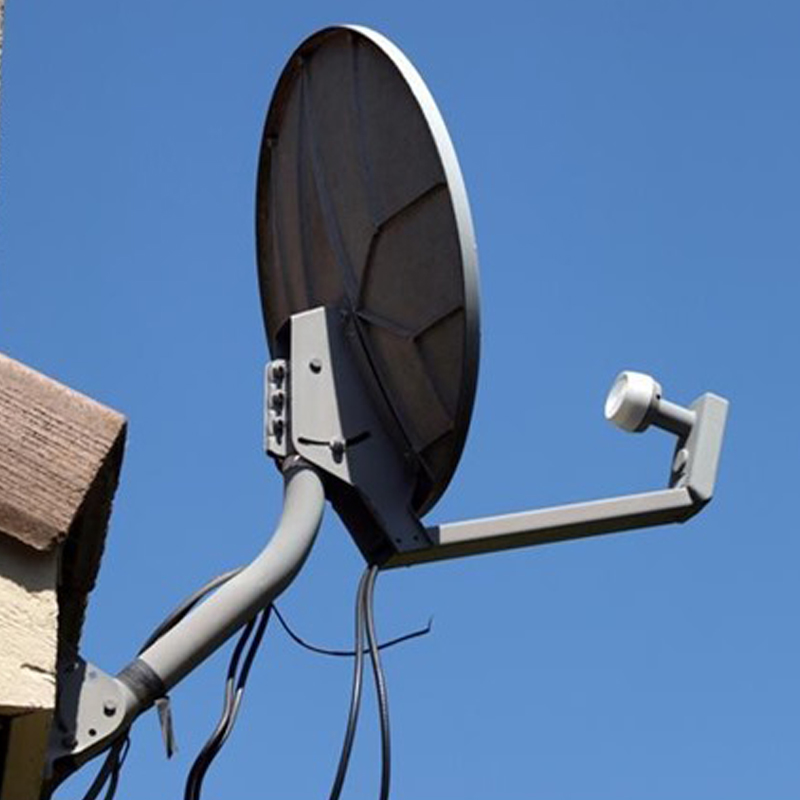
    DTH signals can be received anywhere in the country including border areas with the help of small sized dish receive units.

    Freedish is now installing Indian Conditional Access System (iCAS) to keep track of the number of subscribers, and is also moving from MPEG 2 to MPEG 4 to enable it to increase the number of channels that can be carried by Freedish.

  • DD in process of strengthening its coverage in J and K, to be completed in 2017-18: Naidu

    DD in process of strengthening its coverage in J and K, to be completed in 2017-18: Naidu

    NEW DELHI: Projects to set up five new High Power TV transmitters in Jammu and Kashmir are presently at various stages of implementation and are targeted for completion during 2017-18.

    Stating this, Information and Broadcasting Minister M Venkaiaih Naidu told the Rajya Sabha that Doordarshan at present has 243 TV transmitters of varying power functioning in border districts of the country.

    Strengthening of the terrestrial coverage of AIR and Doordarshan to counter foreign broadcast signal along border areas is a priority of Government and is an ongoing process.

    Special packages for expansion and improvement of Doordarshan and AIR services in the border areas have been formulated from time to time, the Mnister said.

    All the areas uncovered by terrestrial transmission (including those in border areas) alongwith rest of the country, have been provided with multi-channel TV coverage through Doordarshan’s free to air DTH service DD Freedish.

    DTH signals can be received anywhere in the country including border areas with the help of small sized dish receive units.

    Freedish is now installing Indian Conditional Access System (iCAS) to keep track of the number of subscribers, and is also moving from MPEG 2 to MPEG 4 to enable it to increase the number of channels that can be carried by Freedish.

  • GST Bill, DTH and broadcasting

    GST Bill, DTH and broadcasting

    MUMBAI: When the The Constitution (122nd Amendment) Bill, 2014 was passed in the Rajya Sabha late Wednesday night, it heralded the rollout of the goods and service tax era in India. In the making for nearly 16 years it is estimated to inject an additional one to two points in growth to the world’s fastest growing economy.

    GST, as envisaged by the government, is one indirect tax for the whole nation, which will make India one unified common market. It will subsume central excise duty, additional excise duty, service tax, additional customs duty commonly known as countervailing duty, and special additional duty of customs at the Central level. GST will also subsume state value added tax/sales tax, entertainment tax, central sales tax, octroi and entry tax, and purchase tax at the state level.

    Last year when finance minister Arun Jaitley had tabled the Bill then for debate, indiantelevision.com had spoken to industry stalwarts. Videocon D2H CEO Anil Khera had at that stage opined: “GST is a welcome move. It will help the DTH sector to prosper. DTH is the biggest victim of multiple taxation policy and GST will simplify that. The industry needs a uniform taxation system and the sooner it comes the better it is.”

    Speaking to CNBC TV18 on 2 August Dish TV chairman and managing director Jawahar Goel had said that the passage of the GST amendments would benefit his company to the tune of three to four per cent initially and this would likely improve to four to five per cent going forward.

    “Currently our outgo on indirect taxes is roughly around 23 percent and then for tax administration also, our expenditure is almost 1-1.5 percent, for managing our logistics in each of the states. The savings should go directly to our bottomline,” he had shared with the business news channel.

    Broadcasters would likely be impacted too as the indirect taxes that they pay currently are around 14-15 per cent. Observers expected the outgo for them could rise to about 18-20 per cent the introduction of GST.

    (Because this is a developing story, more facts may emerge as we go along. Hence it will be updated with new viewpoints then.)