Tag: DTH

  • Q2-17: Dish TV adds 2.59 lakh subscribers

    Q2-17: Dish TV adds 2.59 lakh subscribers

    BENGALURU: Indian direct to home (DTH) company Dish TV India Limited (Dish TV) has reported growth across important financial and operational parameters including operating revenues (TIO) , EBIDTA and subscription numbers. The company reported addition of 2.59 lakh net subscribers for the quarter ended 30 September 2016 (Q2-17, current). It closed the quarter with 151 lakh subscribers. Average revenue per user (ARPU) for Q2-17 was Rs 162 in the current quarter versus Rs 161 in the corresponding year ago quarter..

    Dish TV reported 11.9 per cent higher y-o-y subscription revenue of Rs 728.8 crore for Q2-17, as compared to Rs 651.4 crore. Operating revenue in the current quarter increased 9.6 per cent y-o-y to Rs 779.6 crore from Rs 711.2 crore in the corresponding quarter of the previous year. (Refer Note 2.1 and 2.2 below)

    Segment Revenue

    Three segments contribute to Dish TV’s numbers – DTH; Infra Support Services; and ‘Others’.

    DTH segment revenue in Q2-17 declined 14.2 per cent to Rs 509.55 crore from Rs 594.16 crore in Q2-16. The segment reported 15.5 per cent lower operating profit in the current quarter at Rs 86.43 crore as compared to Rs 102.24 crore in the corresponding year ago quarter.

    Infra Support services segment reported 13.7 higher y-o-y revenue of Rs 280.65 crore in Q2-17 vis-à-vis Rs 246.91 crore in Q2-16. The segment’s operating profit declined 39.3 per cent in the current quarter to Rs 12.30 crore from Rs 20.26 crore in the corresponding year ago quarter.

    ‘Others’ segment revenue increased 3.5 per cent in Q2-17 to Rs 5.59 crore from Rs 5.40 crore in Q2-16. The segment’s operating profit grew 5.3 per cent in the current quarter to Rs 2.80 crore from Rs 2.6 6 crore in Q2-16.

    A look at the other numbers reported by Dish TV

    Dish TV reported PAT of Rs. 70.1 crore in Q2-17, down 19.4 per cent as compared to Rs 87 crore in Q2-16.

    EBIDTA in the current quarter increased 3.6 per cent to Rs 264.2 crore from Rs 255 crore in Q2-16.

    Expense in the current quarter increased 12.9 per cent y-o-y to Rs 51.51 crore from Rs 456.2 crore. Employee Benefits Expense increased 23.1 per cent y-o-y to Rs 36.4 crore from Rs 29.58 crore. Other operating expenses in the current quarter declined 30.8 per cent to Rs 70.14 crore from Rs 101.30 crore in Q2-16..

    Licensing fees in the current quarter increased 1.3 per cent to Rs 54.52 crore from Rs 53.81 crore in Q2-17. Programming/Content and other costs in Q2-17 increased 17.4 per cent to Rs 238.92 crore from Rs 203.54 crore in Q2-16.

    Dish TV managing director Jawahar Goel said, “Torrential rains in many parts of the country often force consumers to defer buying a new DTH connection while the existing ones may delay recharging if the going gets too tough. Both sales and recharge however normalize subsequently if the festival season hits early. Targeting phase 3 & 4 markets, our subscriber additions during the quarter remained in-line with expectations.”

    Expressing his views on the regulatory developments, Goel, said, “While the draft Regulations have been formulated with an intention of subscriber welfare, there are certain omissions, optimistic presumptions as well as unanswered questions that would hopefully be addressed once the final orders see the light of the day. We appreciate the spirit of transparency and non-discrimination that have been the guiding force behind these draft orders and hope that DTH would soon get the level playing field that it has been seeking. Restrictions placed on carriage fees should go a long way in correcting the industry macro environment.”

    “We continue to remain positive about other regulatory interventions including the proposed new license regime for the DTH sector and the impending nationwide roll-out of Goods and Services Tax (GST). The centre proposing 12 per cent and 18 per cent as the standard rates for majority of the taxable goods is a welcome step,” he added.

    Discussing the results, Goel said, “Healthy subscriber additions led to a 11.9% y-o-y growth in subscription revenues. EBITDA margin was 33.9 per cent. Net Profit for the quarter was Rs. 701 million (Rs 70.1 crore) and positive Free Cash Flow was Rs. 791 million (Rs 79.1 crore).”

    Notes:The unit of currency in this report is the Indian rupee – Rs (also conventionally represented by INR). The Indian numbering system or the Vedic numbering system has been used to denote money values. The basic conversion to the international norm would be:
    (a) 100,00,000 = 100 lakh = 10,000,000 = 10 million = 1 crore.
    (b) 10,000 lakh = 100 crore = 1 arab = 1 billion.
  • Times Network in 100 countries now; launches two channels in Europe

    Times Network in 100 countries now; launches two channels in Europe

    CANNES: Times Network, a part of India’s largest media conglomerate, The Times Group, is set to launch two of its channels in Europe, marking its presence in over 100 countries.

    The network will launch Times Now, India’s most popular English News Channel and Zoom — India’s No. 1 Bollywood channel, on the Bobbles Media GmbH DTH and OTT platforms in Europe. This will enable them to reach into territories like Europe including Austria, Belgium, Bulgaria, Croatia, the Czech Republic, Finland, Germany, Greece, France, Hungary, Ireland, Italy, Latvia, Liechtenstein, Lithuania, Luxembourg, Malta, the Netherlands, Norway, Poland, Portugal, Romania, Slovakia, Slovenia, Spain, Sweden and Switzerland.

    Backed by Bennett, Coleman & Co, the Times Networks’s International Business recently received the ‘Porter Prize 2016’ for ‘Creating Distinctive Value’. It will be the fastest Indian TV network to cross the 100 country mark in under five years. Within under a year of its launch in the UK, where it reaches Engliand’s 1.4m Indians, the network is all geared up for further expansion in Europe.

    Times Network head, international business, Naveen Chandra, said, “From Times Now’s commercial launch in Australia in early 2011 to its launch in Western Europe this month has been an incredible journey for the Network. We now reach over 10mn Indians globally. We are also all set to launch our first local content initiatives in Europe and look forward to growing aggressively in the region.”

    Times Now commands 43% market share in the English News category, and 58% overall market share during prime time English News, according to Broadcast Audience Research Council (BARC) India.

    Zoom, a trendsetter in its genre, is available across five continents and 83 countries worldwide and also has a wide presence in the social media space.

    Times Network houses upscale brands including; Times Now, ET Now, Magicbricks Now, Moview Now, MN+ – The Gold class of Hollywood; Romedy Now. The network delivers segmented and differentiated content under one umbrella. It informs, entertains and engages over 100 million urban affluent viewers in India and is available in over 82 countries across the globe.

  • Times Network in 100 countries now; launches two channels in Europe

    Times Network in 100 countries now; launches two channels in Europe

    CANNES: Times Network, a part of India’s largest media conglomerate, The Times Group, is set to launch two of its channels in Europe, marking its presence in over 100 countries.

    The network will launch Times Now, India’s most popular English News Channel and Zoom — India’s No. 1 Bollywood channel, on the Bobbles Media GmbH DTH and OTT platforms in Europe. This will enable them to reach into territories like Europe including Austria, Belgium, Bulgaria, Croatia, the Czech Republic, Finland, Germany, Greece, France, Hungary, Ireland, Italy, Latvia, Liechtenstein, Lithuania, Luxembourg, Malta, the Netherlands, Norway, Poland, Portugal, Romania, Slovakia, Slovenia, Spain, Sweden and Switzerland.

    Backed by Bennett, Coleman & Co, the Times Networks’s International Business recently received the ‘Porter Prize 2016’ for ‘Creating Distinctive Value’. It will be the fastest Indian TV network to cross the 100 country mark in under five years. Within under a year of its launch in the UK, where it reaches Engliand’s 1.4m Indians, the network is all geared up for further expansion in Europe.

    Times Network head, international business, Naveen Chandra, said, “From Times Now’s commercial launch in Australia in early 2011 to its launch in Western Europe this month has been an incredible journey for the Network. We now reach over 10mn Indians globally. We are also all set to launch our first local content initiatives in Europe and look forward to growing aggressively in the region.”

    Times Now commands 43% market share in the English News category, and 58% overall market share during prime time English News, according to Broadcast Audience Research Council (BARC) India.

    Zoom, a trendsetter in its genre, is available across five continents and 83 countries worldwide and also has a wide presence in the social media space.

    Times Network houses upscale brands including; Times Now, ET Now, Magicbricks Now, Moview Now, MN+ – The Gold class of Hollywood; Romedy Now. The network delivers segmented and differentiated content under one umbrella. It informs, entertains and engages over 100 million urban affluent viewers in India and is available in over 82 countries across the globe.

  • Indian teleshopping to show robust growth through to 2021: TechSci Research

    Indian teleshopping to show robust growth through to 2021: TechSci Research

    MUMBAI: It’s spending time on the home shopping TV genre in India. Global research firm TechSci Reaearch has predicted that expanding television viewers base, increasing penetration, coupled with growing inclination of the people towards more convenient ways of shopping and rising purchasing power are trends that are going to give a leg-up to the teleshopping segment in India from now, and going up to 2021.

    The firm has published a report titled “India Teleshopping Market,” in which it has forecast that the segment will have a compounded annual growth rate (CAGR) of 17.20 per cent during 2016-2021 in India, owing to wide reach of television broadcasting in India, increasing number of people viewing television, coupled with changing lifestyle and growing preference of the people towards more convenient ways of shopping.

    At present, there are over 60 infomercial channels and 10 dedicated channels operating in the television shopping market in India, which is further expected to increase in the coming years majorly, due to growing teleshopping market in India. Moreover, number of private satellite channels in India increased from 826 in 2014 to 847 in 2015, thereby widening scope for television shopping companies in India. In terms of active DTH subscribers in India, there has been a substantial increase in subscription from 40.54 million subscribers in 2014 to 55.98 million subscribers in 2015. Therefore, increasing subscription, rising television viewer base and growing internet penetration to drive India television market through 2021.

    The Indian teleshopping market has been segmented into two categories namely, infomercials and dedicated channels. Dedicated channels dominated India teleshopping market in 2015, and are anticipated to maintain their dominance in the coming years as well, owing to 24 hours telecast, continuous announcement of various cashbacks/ discounts offers and offering branded products.

    Moreover, Homeshop18, Naaptol, and Shop CJ were the leading players in India teleshopping market in 2015, and they are further anticipated to dominate the market through 2021, on account of their increasing penetration, as they have been for longer time in the market as compared to other players. Furthermore, these companies also offer quality products with attractive offers and discounts, which is further anticipated to fuel their dominance in the market during the forecast period,

    “Expanding television viewer base both in urban and rural area, is one of the major driver for India teleshopping market. Growing digitization in semi-urban and rural areas of the country has also propelled the market for teleshopping in the country. Moreover, companies operating in India teleshopping market are now focusing on launching branded products to attract more customers and increase their penetration in the teleshopping market in India. Furthermore, increasing number of discounts and convenience of shopping through television is further anticipate to drive India teleshopping market through 2021,” said TechSci Research director Karan Chechi.

    “India Teleshopping Market By Operation Type, By Region & By Company Forecast and Opportunities, 2011-2021” has evaluated future growth potential of the teleshopping market in India and provides statistics and information on market structure, size, share and future growth in India Teleshopping market. The report is intended to provide cutting-edge market intelligence and help decision makers take sound investment evaluation. Besides, the report also identifies and analyses emerging trends along with essential drivers, challenges and opportunities in the India Teleshopping market.

  • Indian teleshopping to show robust growth through to 2021: TechSci Research

    Indian teleshopping to show robust growth through to 2021: TechSci Research

    MUMBAI: It’s spending time on the home shopping TV genre in India. Global research firm TechSci Reaearch has predicted that expanding television viewers base, increasing penetration, coupled with growing inclination of the people towards more convenient ways of shopping and rising purchasing power are trends that are going to give a leg-up to the teleshopping segment in India from now, and going up to 2021.

    The firm has published a report titled “India Teleshopping Market,” in which it has forecast that the segment will have a compounded annual growth rate (CAGR) of 17.20 per cent during 2016-2021 in India, owing to wide reach of television broadcasting in India, increasing number of people viewing television, coupled with changing lifestyle and growing preference of the people towards more convenient ways of shopping.

    At present, there are over 60 infomercial channels and 10 dedicated channels operating in the television shopping market in India, which is further expected to increase in the coming years majorly, due to growing teleshopping market in India. Moreover, number of private satellite channels in India increased from 826 in 2014 to 847 in 2015, thereby widening scope for television shopping companies in India. In terms of active DTH subscribers in India, there has been a substantial increase in subscription from 40.54 million subscribers in 2014 to 55.98 million subscribers in 2015. Therefore, increasing subscription, rising television viewer base and growing internet penetration to drive India television market through 2021.

    The Indian teleshopping market has been segmented into two categories namely, infomercials and dedicated channels. Dedicated channels dominated India teleshopping market in 2015, and are anticipated to maintain their dominance in the coming years as well, owing to 24 hours telecast, continuous announcement of various cashbacks/ discounts offers and offering branded products.

    Moreover, Homeshop18, Naaptol, and Shop CJ were the leading players in India teleshopping market in 2015, and they are further anticipated to dominate the market through 2021, on account of their increasing penetration, as they have been for longer time in the market as compared to other players. Furthermore, these companies also offer quality products with attractive offers and discounts, which is further anticipated to fuel their dominance in the market during the forecast period,

    “Expanding television viewer base both in urban and rural area, is one of the major driver for India teleshopping market. Growing digitization in semi-urban and rural areas of the country has also propelled the market for teleshopping in the country. Moreover, companies operating in India teleshopping market are now focusing on launching branded products to attract more customers and increase their penetration in the teleshopping market in India. Furthermore, increasing number of discounts and convenience of shopping through television is further anticipate to drive India teleshopping market through 2021,” said TechSci Research director Karan Chechi.

    “India Teleshopping Market By Operation Type, By Region & By Company Forecast and Opportunities, 2011-2021” has evaluated future growth potential of the teleshopping market in India and provides statistics and information on market structure, size, share and future growth in India Teleshopping market. The report is intended to provide cutting-edge market intelligence and help decision makers take sound investment evaluation. Besides, the report also identifies and analyses emerging trends along with essential drivers, challenges and opportunities in the India Teleshopping market.

  • DD FreeDish e-auction put off due to technical errors

    DD FreeDish e-auction put off due to technical errors

    MUMBAI: In probably what is a first, DD FreeDish’s e-auction was scrapped yesterday. The reason: technical glitches on the site of the auctioneer C1 India Pvt Ltd.

    DD has made this announcement on its website admitting that, since bidders were experiencing problems, the bidding process was being put off until C1 India rectifies the errors.

    DD FreeDish had announced 5 October as the 31st e-auction date last month. It had put the reserve price for the vacant slot at Rs 4.3 crore despite the bid amount touching Rs 5.2 crore in the previous 30th e-auction. It had also urged private channels whose agreement with the free DTH was expiring on 31 December 2016 needed to take part in the e-auction to continue to be distributed by it.

    DD said it would keep bidders informed about the resumption date.

    The free TV service is gearing up to expand its capacity to 104 channels and then to 250 by 2018. It has started rolling out MPEG4 boxes with iCAS, in place of the earlier MPEG2 ones.

    DD FreeDish has come as a boon of sorts, helping India’s broadcasters to generate good revenues from old library and catalogue channels. Channels such as Zee Anmol, Sony Pal, Star Utsav – tenants of DD FreeDish — which show reruns of old TV shows and films have suddenly become the eye candy of the advertising community as they offer them reach in rural areas that channels distributed by cable TV and private DTH cannot.

  • DD FreeDish e-auction put off due to technical errors

    DD FreeDish e-auction put off due to technical errors

    MUMBAI: In probably what is a first, DD FreeDish’s e-auction was scrapped yesterday. The reason: technical glitches on the site of the auctioneer C1 India Pvt Ltd.

    DD has made this announcement on its website admitting that, since bidders were experiencing problems, the bidding process was being put off until C1 India rectifies the errors.

    DD FreeDish had announced 5 October as the 31st e-auction date last month. It had put the reserve price for the vacant slot at Rs 4.3 crore despite the bid amount touching Rs 5.2 crore in the previous 30th e-auction. It had also urged private channels whose agreement with the free DTH was expiring on 31 December 2016 needed to take part in the e-auction to continue to be distributed by it.

    DD said it would keep bidders informed about the resumption date.

    The free TV service is gearing up to expand its capacity to 104 channels and then to 250 by 2018. It has started rolling out MPEG4 boxes with iCAS, in place of the earlier MPEG2 ones.

    DD FreeDish has come as a boon of sorts, helping India’s broadcasters to generate good revenues from old library and catalogue channels. Channels such as Zee Anmol, Sony Pal, Star Utsav – tenants of DD FreeDish — which show reruns of old TV shows and films have suddenly become the eye candy of the advertising community as they offer them reach in rural areas that channels distributed by cable TV and private DTH cannot.

  • ‘Love Cinema Live Cinema’ with Tata Sky’s new service

    ‘Love Cinema Live Cinema’ with Tata Sky’s new service

    MUMBAI: If you are a passionate movie-lover but miss screenings or are closely related to some aspect of filmmaking which only few are privy to, you need not worry at all as Tata Sky has brought in a solution. After brainstorming for a year, the DTH player has launched a first-of-its-kind service in cooperation with the Jio MAMI Festival with Star. Purpose: To retain and make their existing subscribers happy. This comes after a successful run of its kids showcase which will now be replaced with this new initiative. 

    An ad-free service, Tata Sky Mumbai Film Festival will not just cheer up the movie buffs but will also highlight the efforts that are invested during the film festival.

    With no additional cost, this service is available to all the subscribers irrespective of their package, set top box, demography and geography.  Despite having a very good story line, made in high quality, movies sometimes do not find their way to the public. The idea with this initiative is to give niche movies a boost by screening them on TV.

    Starting from 7 October, the service will be available on channel no 302 &302 in both SD and HD. The temporary service will complement the new edition of the film festival and will also be a catch-up for all the movies that were premiered in the previous editions. It  will run three films on a daily basis and already has 20+ movies to air from renowned Indian and international directors in multiple languages.

    Silent films, movies made in Hindi, English, Assamese, Marathi, Malayalam, Punjabi, Arabic, Russian, French, etc will be featured on this service for the subscribers.  They can also enjoy works of directors like Hansal Mehta, Anup Singh, Ravi Jadav, Bikas Mishra, Pan Nalin, Nitin Kakkar, Lea Hjort Mathiesen.

    “We are not selling this service. We care enough to curate and create a mix of some popular and some hidden gems from the field of film-making for our viewers from the last few editions of the Mumbai Film Festival. We have several people who pay us on a monthly basis. We are in the business of acquiring subscribers but we also have to retain them. Sometimes you do things because you want to make them happy. The monetizing cannot always be direct and immediate. The ambition and aspiration with this is that people will be more loyal to us after this,” asserts  Tata Sky chief content and business development officer Paolo Agostinelli.

    Agostinelli further adds, “We have talked to the producers and have bought rights for selective titles. We did not want them exclusively with us. A person can still put it on his/her digital platform, we are just giving them one extra opportunity. Technology is only going to make good stories available to people who deserve and want to watch them.”

    Through this unsponsored yet innovative initiative, subscribers can look forward to an exciting mix of award winning and nominated features, short films, documentaries, animations covering varied genres of comedy, drama, thriller, mystery, crime and adventure. The promising star casts include names such as Sanjay Suri, Irfan Khan, Seema Biswas, Atul Kulkarni, Tisca Chopra, Soham Maitra, Manoj Bajpai, Rajkummar Rao, etc.

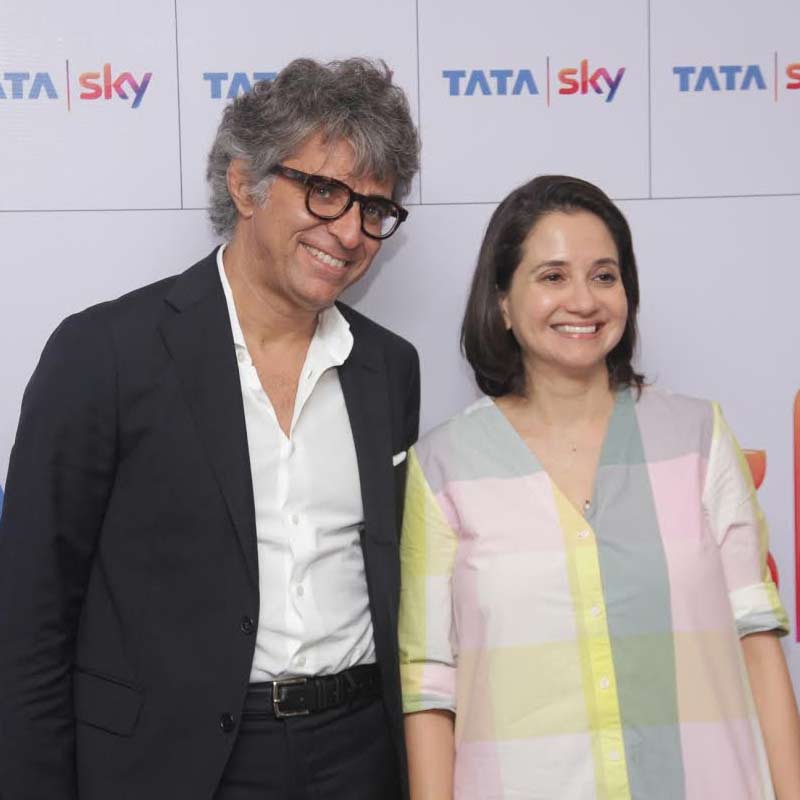
    MAMI Festival director Anupama Chopra added, “We were delighted when Tata Sky extended their support and suggested taking these curated films from both Indian and international to viewers living across the country. This unique and unconventional approach just goes to prove that the entertainment and media industry needs to come together for the benefit of the extraordinary passion and talent of movie makers and lovers in India.”

    Research was done to make good movies available for people at a different level. This service will bring a selection of movies from the film festival on TV giving them exposure at a different level.

    “The fact that this MAMI Festival needs to be promoted and needs awareness is what we are working for. India is the most prolific and probably the most receptive movie country in the world. The number of people who are passionate about movies and the number  of people working in the film industry  are enormous. So, people care about movies here.”

    Several DTH players have expanded their services to rural India which is only expanding. Agostinelli is of the opinion that the people living in rural areas were sometimes more educated about movies than urban. He said, “Rural market is definitely a huge market and is expanding enormously. People there are equally passionate and love entertainment as in cities. So, we aim to serve also this potential subscribers.”

    The initiative will be promoted through direct marketing  via its various other channel. They will also leverage social media. All the normal modes through which their subscriber is in touch will be used. Agostinelli is also of the opinion that the DTH industry has place for more players. “There is enough space for many players to serve this industry.” 

    Tata Sky will continue to explore new ideas and take up various initiatives to make a difference in this competitive industry. They might look at other festivals depending on the success  with this one. 

    With such initiatives in its kitty and presence in 1.5 lakh towns, it only plans to expand in the future. It currently has 418 SD, 77 HD channels, 15 interactive service, 6 SD, 6 HD movie showcase platforms and several interactive services.

    http://www.indiantelevision.com/sites/drupal7.indiantelevision.co.in/files/styles/large/public/tata-sky.jpg?itok=DrjyssM8

  • ‘Love Cinema Live Cinema’ with Tata Sky’s new service

    ‘Love Cinema Live Cinema’ with Tata Sky’s new service

    MUMBAI: If you are a passionate movie-lover but miss screenings or are closely related to some aspect of filmmaking which only few are privy to, you need not worry at all as Tata Sky has brought in a solution. After brainstorming for a year, the DTH player has launched a first-of-its-kind service in cooperation with the Jio MAMI Festival with Star. Purpose: To retain and make their existing subscribers happy. This comes after a successful run of its kids showcase which will now be replaced with this new initiative. 

    An ad-free service, Tata Sky Mumbai Film Festival will not just cheer up the movie buffs but will also highlight the efforts that are invested during the film festival.

    With no additional cost, this service is available to all the subscribers irrespective of their package, set top box, demography and geography.  Despite having a very good story line, made in high quality, movies sometimes do not find their way to the public. The idea with this initiative is to give niche movies a boost by screening them on TV.

    Starting from 7 October, the service will be available on channel no 302 &302 in both SD and HD. The temporary service will complement the new edition of the film festival and will also be a catch-up for all the movies that were premiered in the previous editions. It  will run three films on a daily basis and already has 20+ movies to air from renowned Indian and international directors in multiple languages.

    Silent films, movies made in Hindi, English, Assamese, Marathi, Malayalam, Punjabi, Arabic, Russian, French, etc will be featured on this service for the subscribers.  They can also enjoy works of directors like Hansal Mehta, Anup Singh, Ravi Jadav, Bikas Mishra, Pan Nalin, Nitin Kakkar, Lea Hjort Mathiesen.

    “We are not selling this service. We care enough to curate and create a mix of some popular and some hidden gems from the field of film-making for our viewers from the last few editions of the Mumbai Film Festival. We have several people who pay us on a monthly basis. We are in the business of acquiring subscribers but we also have to retain them. Sometimes you do things because you want to make them happy. The monetizing cannot always be direct and immediate. The ambition and aspiration with this is that people will be more loyal to us after this,” asserts  Tata Sky chief content and business development officer Paolo Agostinelli.

    Agostinelli further adds, “We have talked to the producers and have bought rights for selective titles. We did not want them exclusively with us. A person can still put it on his/her digital platform, we are just giving them one extra opportunity. Technology is only going to make good stories available to people who deserve and want to watch them.”

    Through this unsponsored yet innovative initiative, subscribers can look forward to an exciting mix of award winning and nominated features, short films, documentaries, animations covering varied genres of comedy, drama, thriller, mystery, crime and adventure. The promising star casts include names such as Sanjay Suri, Irfan Khan, Seema Biswas, Atul Kulkarni, Tisca Chopra, Soham Maitra, Manoj Bajpai, Rajkummar Rao, etc.

    MAMI Festival director Anupama Chopra added, “We were delighted when Tata Sky extended their support and suggested taking these curated films from both Indian and international to viewers living across the country. This unique and unconventional approach just goes to prove that the entertainment and media industry needs to come together for the benefit of the extraordinary passion and talent of movie makers and lovers in India.”

    Research was done to make good movies available for people at a different level. This service will bring a selection of movies from the film festival on TV giving them exposure at a different level.

    “The fact that this MAMI Festival needs to be promoted and needs awareness is what we are working for. India is the most prolific and probably the most receptive movie country in the world. The number of people who are passionate about movies and the number  of people working in the film industry  are enormous. So, people care about movies here.”

    Several DTH players have expanded their services to rural India which is only expanding. Agostinelli is of the opinion that the people living in rural areas were sometimes more educated about movies than urban. He said, “Rural market is definitely a huge market and is expanding enormously. People there are equally passionate and love entertainment as in cities. So, we aim to serve also this potential subscribers.”

    The initiative will be promoted through direct marketing  via its various other channel. They will also leverage social media. All the normal modes through which their subscriber is in touch will be used. Agostinelli is also of the opinion that the DTH industry has place for more players. “There is enough space for many players to serve this industry.” 

    Tata Sky will continue to explore new ideas and take up various initiatives to make a difference in this competitive industry. They might look at other festivals depending on the success  with this one. 

    With such initiatives in its kitty and presence in 1.5 lakh towns, it only plans to expand in the future. It currently has 418 SD, 77 HD channels, 15 interactive service, 6 SD, 6 HD movie showcase platforms and several interactive services.

    http://www.indiantelevision.com/sites/drupal7.indiantelevision.co.in/files/styles/large/public/tata-sky.jpg?itok=DrjyssM8

  • Colors Naagin II  to slither in on 8 October

    Colors Naagin II to slither in on 8 October

    MUMBAI: Who ever thought that the traditional age-old contrived tale of snakes taking human form to avenge their parents death? Well Ekta Kapoor, Raj Nayak and Manisha Sharma did. And the trio had a runaway Naagin on their hands last year on Colors, which ran on weekends on the channel for eight months. So much so that it reached numero uno status even in Pakistan.

    Nayak and Sharma decided to give it a break to accommodate other weekend programmes. Three months later, it is ready to make a comeback in Naagin season II on 8 October at 8 pm.. Season I saw it became the No1 show across television channels within 30 episodes of debut. The show proved to be a game-changer for Colors.

    In the first week of the launch itself, the fiction show ‘Naagin’ overtook the top five programmes on Hindi general entertainment channels (GECs). Additionally, ‘Naagin’ also became one of the first weekend shows which totted more ratings than the top-rated weekday shows.

    Says Colors CEO Raj Nayak: “Naagin has been a gloriously successful proposition for us, whose precise casting, gripping narrative and flawless execution has found appeal with audiences across the country, and has redefined the 8pm slot on weekends. As content creators, our challenge with a show like this was to weave the perfect narrative connecting childhood folklore to its real-life projection on screen, thus making Naagin a landmark show. It has been the numero uno show amongst Hindi GECs, and the feedback that the rushes have received gives us confidence that the second edition will surpass all previously set benchmarks.”

    Naagin, in its first season, highlighted a saga of love laced with revenge. As the story drew to a close, Naagin claimed triumph over evil. Ritik (Arjun Bijlani) and Shivanya became parents to a young girl, Shivangi. And, as time passes, Naagin 2 will progress by 24 years, now focusing on Shivangi’s life as she blossoms into a young woman, against the scenic backdrop of Dehradun.

    Says Colors programming head Manisha Sharma: “With Naagin, we opened up another genre of entertainment for the viewers. Naagin created history with its compelling storyline to become the unprecedented No 1 show on Indian television. And now, as we kick off Naagin 2, here’s another tale with a shape shifting snake at its helm that will once again make fantastical characters television’s newest stars.”

    Balaji Telefilms producer Ekta Kapoor adds: “Naagin is a very special show for me. The show marked my first foray in the mystical genre, and empowered us to explore a different kind of storytelling altogether. As we march ahead, we bring together not only the show’s original cast, but also a volley of newer faces who will narrate Shivangi’s tale, as she takes the mantle of being the Nagmani’s protector forward. This season we are raising the bar on visual effects to incorporate newer technologies, and will put together a tight and engrossing narrative to heighten viewer experience and build intrigue like never before.”

    To promote Naagin 2, Colors has devised an extensive integrated marketing campaign across mediums including print, cable and DTH, radio, news channels, OOH, cinema, etc. This will be complemented by a robust digital campaign incorporating multiple social media platforms like Facebook, Twitter, Instagram. . The channel has also planned on-ground activations aligned with the Colors Golden Petal Club across multiple markets. Sources indicate that a marketing budget of round Rs 2 crore has been kept aside for the show.