Tag: DTH

  • Cancel DTH licence auction, cable operators urge PEMRA

    Cancel DTH licence auction, cable operators urge PEMRA

    MUMBAI: Pakistan Electronic Media Regularity Authority (PEMRA) has been urged to cancel the auction of Direct-to-Home (DTH) licence and postpone launch of the services for three years. PEMRA was scheduled to auction DTH license on 23 November, adding that this decision would affect several thousand cable operators across Pakistan.

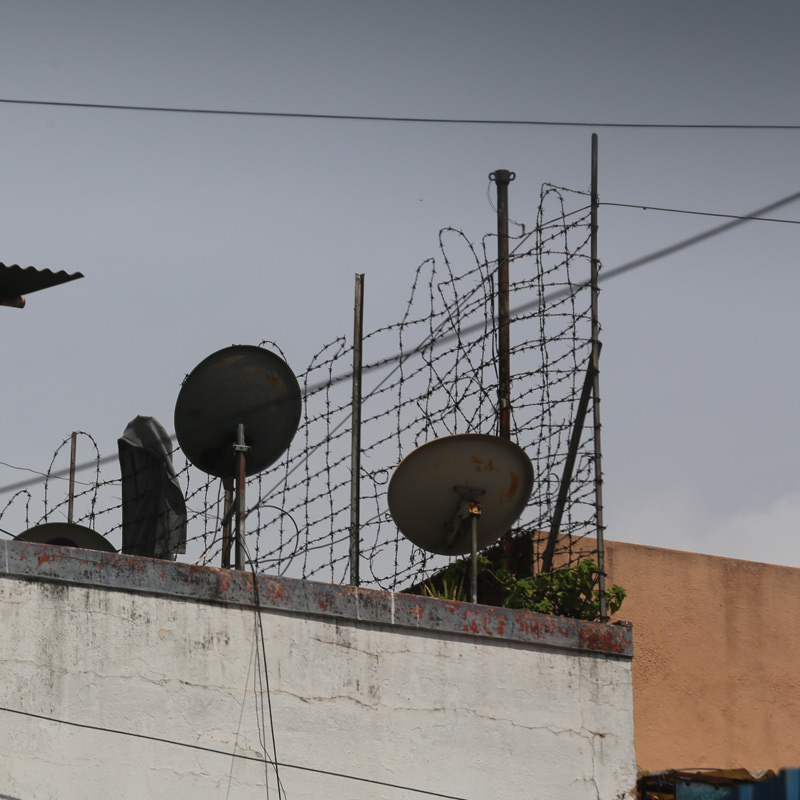
    Peshawar chapter cable operators of Khyber Pakhtunkhwa in Pakistan have urged Pemra to cancel the auction and postpone the launch.

    The Cable Operators Association of Pakistan (COAP) Peshawar chapter also sought take strict action against those providing non-permitted services of operating Indian TV and C-Line across Peshawar. They also sought removal of Indian television channels from all broadcast sources.

    Around 14,000 operators having legal cable license were operating cable system across the country, of which 200 had been operating in Khyber-Pakhtunkhwa. In Peshawar alone, around 45 operators are delivering cable services.

    Cable Operators Federation of Pakistan coordinator Ali Raza Khan said that they would raise their voice at every forum and would stage protests. Khan said that PEMRA was soon scheduled to auction DTH license.

    Khan told journalists at a conference that the cable operators had put in billions in the digital system on the orders of PEMRA but neither the DTH nor the digital policy was clear to the operators since 2000.

    Cable TV in Pakistan was earlier operated on the analogue system but later switched to digital cable system for which operators invested huge sums. Khan complained against authorities who were planning to launch DTH system.

    PEMRA, Khan said, had received billions as taxes from the operators,. COAP expected that the authorities, instead of adopting dual policy, formulate separate policies for DTH and the digital system. The coordinator added that the sale of C-Line and Dish TV had already multiplied in Pakistan.

    Khan urged the Chief of Army Staff to launch an operation against the illicit sale of C-line and Dish TV, bemoaning that they had met Pemra authorities to seek a solution to the issue, but it did not yield results.

  • Goel & Dhoot speak Dish TV-Videocon d2h merger

    Goel & Dhoot speak Dish TV-Videocon d2h merger

    MUMBAI: It was earlier this year that mainstream media was going berserk with the speculation that India’s largest pay TV operator Dish TV was going to acquire the the Dhoot family run rival DTH service Videocon d2h. Repeated denials by Dish TV did nothing to restrain hacks from reporting that an acquisition was almost done. But the facts are out now. Speaking to CNBC TV18 last weekend Dish TV India managing director Jawahar Goel said that “the arrangement of the scheme is merger and we never envisaged a buyout.” Which is probably why most journos got it wrong.

    Goel informed CNBC TV18 that he would be chairman & managing director of the new entity, while Saurabh Dhoot will be the deputy managing director. The Dhoot family can also appoint another nominee as vice-chairman of the board. The merger will result in a new pay TV operator with 27.6 million subscribers, commanding 16 per cent or so of the Indian pay TV market.

    “The two brands Dish TV and Videocon d2h will continue to operate as distinct brands in the market,” Dhoot clarified to the business news channel.

    He added that “both the families – the Goel family and the Dhoot family are very closely associated since a decade, this is really a family affair.”

    Post the merger, Dish TV and the public will end up with 36 per cent equity each, while Videocon d2h will have 28 per cent of the equity of Dish TV Videocon. Dhoot further clarified that “Dish TV shareholders would comprise of in terms of ownership of the new entity of 55.4 percent and so around 45 percent would be owned by Videocon D2H shareholders. Dish TV shareholders would own something like 1066 million shares, Videocon d2hshareholders would own 857 million shares and this is an all stock combination swap ratio reflecting the relative values of each business across operating like financial and trading metrics. So subscribers and subscriber addition is factored in, revenue, earnings before interest, taxes, depreciation, and amortization (EBITDA) and growth is factored in and trading metrics are also factored in, so the combination combine Dish’ scale and profitability with d2h scale and growth and the scale and efficiency benefit emanating from such a combination will be a win-win for all stakeholders.”

    Goel pointed out that the merger will likely take around seven to eight months and the benefits of the reasonably debt cost that Dish TV enjoys will be passed on to the merged entity. Said he: (The debt) will be around Rs 2,100 crore and EBITDA as reported in the last financial numbers in the past it is around Rs 1,800-1,900 crore…. and the debt will definitely will be the Dish TV debt, which will be coming at the same price or a better price going forward – – so the problem of high cost of debt should not be there.”

    But, most importantly, added Dhoot that “the merger would lead to significant cost synergies as well as enhance our ability to grow alternate revenue streams like carriage, advertising, value added services, new channel launches and these are all highly margin accretive. So the proposed combination shall create scale benefits for all stakeholders. There will be better growth opportunities for employees, sales and service networks, larger distribution network, but from an economic standpoint for our shareholders, which includes the existing Dish TV and Videocon D2H shareholders the merged entity will drive value unlocking from combine sourcing, purchasing, product development, improved distribution, customer service and net support, network and infrastructure consolidation and capex. “

    Clearly, one plus one could end up being more than two in this case.

  • Goel & Dhoot speak Dish TV-Videocon d2h merger

    Goel & Dhoot speak Dish TV-Videocon d2h merger

    MUMBAI: It was earlier this year that mainstream media was going berserk with the speculation that India’s largest pay TV operator Dish TV was going to acquire the the Dhoot family run rival DTH service Videocon d2h. Repeated denials by Dish TV did nothing to restrain hacks from reporting that an acquisition was almost done. But the facts are out now. Speaking to CNBC TV18 last weekend Dish TV India managing director Jawahar Goel said that “the arrangement of the scheme is merger and we never envisaged a buyout.” Which is probably why most journos got it wrong.

    Goel informed CNBC TV18 that he would be chairman & managing director of the new entity, while Saurabh Dhoot will be the deputy managing director. The Dhoot family can also appoint another nominee as vice-chairman of the board. The merger will result in a new pay TV operator with 27.6 million subscribers, commanding 16 per cent or so of the Indian pay TV market.

    “The two brands Dish TV and Videocon d2h will continue to operate as distinct brands in the market,” Dhoot clarified to the business news channel.

    He added that “both the families – the Goel family and the Dhoot family are very closely associated since a decade, this is really a family affair.”

    Post the merger, Dish TV and the public will end up with 36 per cent equity each, while Videocon d2h will have 28 per cent of the equity of Dish TV Videocon. Dhoot further clarified that “Dish TV shareholders would comprise of in terms of ownership of the new entity of 55.4 percent and so around 45 percent would be owned by Videocon D2H shareholders. Dish TV shareholders would own something like 1066 million shares, Videocon d2hshareholders would own 857 million shares and this is an all stock combination swap ratio reflecting the relative values of each business across operating like financial and trading metrics. So subscribers and subscriber addition is factored in, revenue, earnings before interest, taxes, depreciation, and amortization (EBITDA) and growth is factored in and trading metrics are also factored in, so the combination combine Dish’ scale and profitability with d2h scale and growth and the scale and efficiency benefit emanating from such a combination will be a win-win for all stakeholders.”

    Goel pointed out that the merger will likely take around seven to eight months and the benefits of the reasonably debt cost that Dish TV enjoys will be passed on to the merged entity. Said he: (The debt) will be around Rs 2,100 crore and EBITDA as reported in the last financial numbers in the past it is around Rs 1,800-1,900 crore…. and the debt will definitely will be the Dish TV debt, which will be coming at the same price or a better price going forward – – so the problem of high cost of debt should not be there.”

    But, most importantly, added Dhoot that “the merger would lead to significant cost synergies as well as enhance our ability to grow alternate revenue streams like carriage, advertising, value added services, new channel launches and these are all highly margin accretive. So the proposed combination shall create scale benefits for all stakeholders. There will be better growth opportunities for employees, sales and service networks, larger distribution network, but from an economic standpoint for our shareholders, which includes the existing Dish TV and Videocon D2H shareholders the merged entity will drive value unlocking from combine sourcing, purchasing, product development, improved distribution, customer service and net support, network and infrastructure consolidation and capex. “

    Clearly, one plus one could end up being more than two in this case.

  • Dish TV Videocon: Building a DTH powerhouse of global reckoning

    Dish TV Videocon: Building a DTH powerhouse of global reckoning

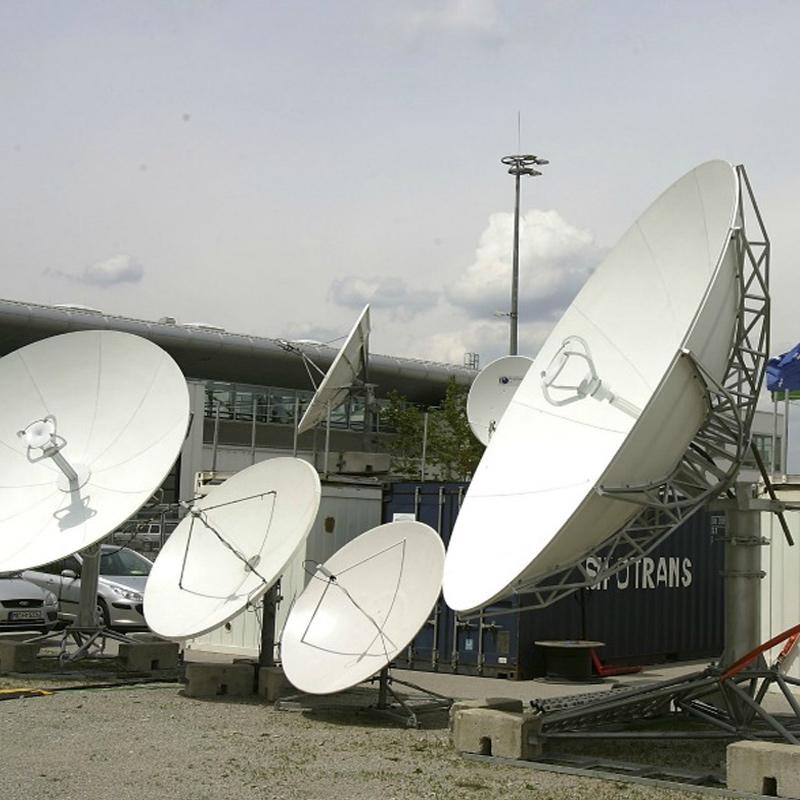
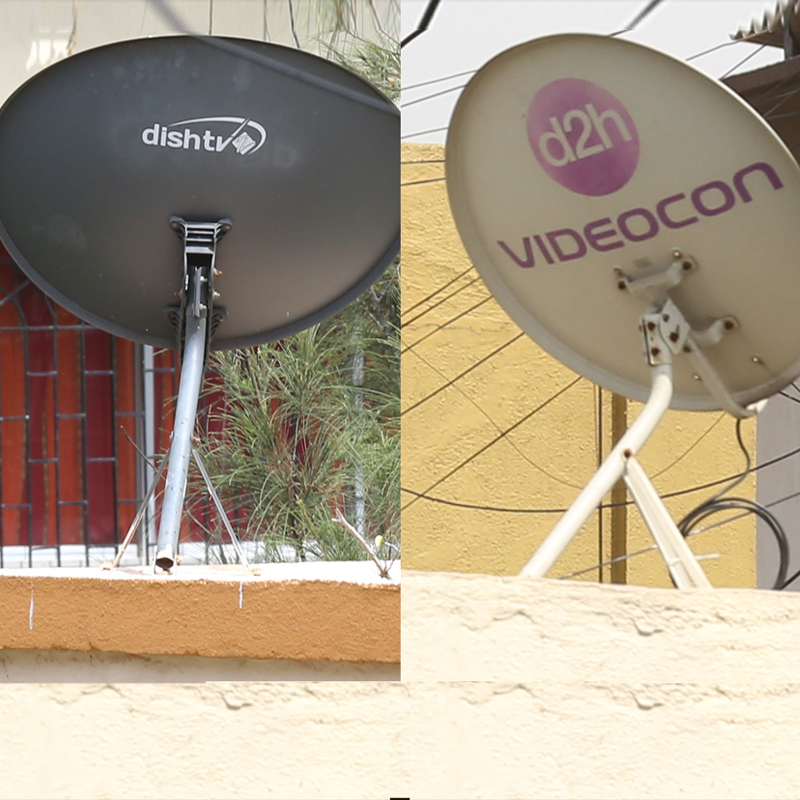
    MUMBAI: It’s a reflection of what’s hitting the corporate world globally – consolidate and build global scale. And scale is important in television distribution – whether cable, satellite or terrestrial or direct to home (DTH). Yesterday’s announcement of — what was speculated for nearly a year – the merger of India’s No 1 DTH operator Dish TV India with India’s fastest growing DTH player Videocon d2h – is a reflection of that trend and the building of a DTH powerhouse and pay TV operator.

    The merger has created a pay TV behemoth unrivalled in TV  distribution in the Indian market (let’s discount the public service terrestrial broadcaster Doordarshan and its satellite service FreeDish). The next Indian private DTH provider is less than half the size of the merged entity’s  size in pure net subscriber terms.

    A collective 27.6 million subs  for the combo firm Dish TV Videocon places it just behind the US-based DirecTV (which is now owned by AT&T) with its 37.6 million subs.  That’s a number which is hard to ignore. Much senior players such as Sky in the UK and dishnetwork in the US have just 21 million subs and 13.6 million subs, respectively.

    Of course, one may argue that ARPUs in India are wafer thin at about $3 or so per subscriber and revenues too are minuscule for the DTH operators.  ARPUs for Sky which is so much smaller than Dish TV Videocon are around pounds sterling 47 while these are at $111 at DirecTV which is far bigger.

    Team Dish TV led by Jawahar Goel and his CEO Arun Kapoor have reason to celebrate. For the fusion of the two players has created an enterprise that probably has overtaken his elder brother Subhash Chandra’s Zee Entertainment Enterprises in terms of EBIDTA and in revenue.  And what must be even more pleasing is that Dish TV has been operational for fewer years than Zee Entertainment which has led the cable and satellite TV revolution in India since the early nineties.

    Ditto for team Videocon d2h that is led by the executive chairman Saurabh Pradeep Kumar Dhoot and CEO Anil Khera. The last entrant in the DTH game, the merger has catapulted it into the leadership position in India.

    True, the market capitalization of Dish TV  (alone) is  Rs 9,321.1 crore  and Videocon d2h is being merged at an equity valuation of around Rs 7,200 crore and at an enterprise value of around  Rs 9,000-odd crore (as per reports) as compared to Zee Entertainment’s Rs 46,284 crore and Sun TV’s Rs 19,747 crore . The market capitalization value of  Dish TV Videocon has yet to be calculated at the time of writing but there’s no doubt it will skyrocket substantially post the completion of the merger in the next six to seven months.

    What does the fusion mean for DishTV Videocon?

    For one, lower costs. On almost every front.

    Imagine the negotiating power it will have with broadcasters on content pricing. Carriage and placement fees will end up being substantial. It  will be in a position to get better rates on hardware, middleware, ERP software, consumer premise equipment. And then, the two companies’ administration and sales teams could also be streamlined to form a formidable lean and mean sales force. Both have vast and deep distribution strengths. While Dish TV has 2,268 distributors, 244,688 dealers and 1090 service franchises across 9322 towns, Videocon d2h has 2280 distributors and direct dealers, 230,000 dealers/retailers and 320 direct service centres nationally. A consolidation of this could also yield cost benefits.

    A PhillipCapital estimate to CNBC TV18 was that the synergy benefit at the EBIDTA level would be between Rs 300 crore to 350 crore from year two onwards.

    The lower costs could allow Dish TV Videocon to also pass on the benefits to consumers and possibly start a price war, should it choose to, and thus attracting subscribers from cable TV or other DTH providers, in the process scaling up even further.

    Dish TV Videocon’s value-added services (VAS) will get a collective boost as these could be cross-promoted between the platforms. Its scale will allow it to negotiate better advertising deals for the two services opening screens, sponsorships and on TVCs.

    Most importantly, the combined entity will end up with a robust financial report card with revenues of Rs 5,915.8 crore ($883 million) for the year ended 31 March 2016.  The figure for the first half of the current fiscal (H1-2017) is at Rs 3,100 crore. That means one can expect it to cross the $1 billion topline milestone either by end this year or mid next.

    Dish TV Videocon’s EBIDTA margins too look  healthy at 31 per cent and absolute last-fiscal-year figures of Rs 1,826 crore ($274 million). The figure for H12017 is at Rs 1,040 crore. EBIDTA minus capex stands at a puny Rs 195 crore ($29 million) but that’s significantly higher than the Rs 116.5 crore of DishTV and Rs 78.5 crore of Videocon d2h, individually. In H12017, that figure had already climbed to Rs 190 crore. The merged entity will have a net debt load of Rs 2161 crore ($323 million). H1 2017, however,  saw that climb to Rs 2660 crore.

    How Dish TV Videocon will service this higher debt – whether it will be through internal accruals or through an external cash infusion – is a question. Both the firms have to also grapple with subscriber acquisition costs  – at around Rs 1500 for Dish TV at the end of March 2016 and at Rs 1,869 for Videocon d2h at the end of 30 September 2016. But, the good part is that both have generated net profits and free cash flows.

    The combined entity will end up with close to 2.8 million HD subscribers, which is around 10 per cent of the overall subscribers. These higher ARPU customers are also growing rapidly, forming around 50 per cent of the net adds.

    Now, one does not know the ambitions that the Goel and Dhoot families are harbouring. Will they go for further scale in a few years once the merger gets digested? Will they acquire other Indian DTH players as competitive forces compel further consolidation? Will they go outside and look for opportunities elsewhere in more mature and developed pay TV markets?

    It appears as if  the road to that journey may have just begun.

    Also read:

    http://www.indiantelevision.com/dth/dth-operator/videocon-d2h-to-merge-with-dish-tv-create-leading-cable-satellite-distribution-platform-in-india-161111


  • Dish TV Videocon: Building a DTH powerhouse of global reckoning

    Dish TV Videocon: Building a DTH powerhouse of global reckoning

    MUMBAI: It’s a reflection of what’s hitting the corporate world globally – consolidate and build global scale. And scale is important in television distribution – whether cable, satellite or terrestrial or direct to home (DTH). Yesterday’s announcement of — what was speculated for nearly a year – the merger of India’s No 1 DTH operator Dish TV India with India’s fastest growing DTH player Videocon d2h – is a reflection of that trend and the building of a DTH powerhouse and pay TV operator.

    The merger has created a pay TV behemoth unrivalled in TV  distribution in the Indian market (let’s discount the public service terrestrial broadcaster Doordarshan and its satellite service FreeDish). The next Indian private DTH provider is less than half the size of the merged entity’s  size in pure net subscriber terms.

    A collective 27.6 million subs  for the combo firm Dish TV Videocon places it just behind the US-based DirecTV (which is now owned by AT&T) with its 37.6 million subs.  That’s a number which is hard to ignore. Much senior players such as Sky in the UK and dishnetwork in the US have just 21 million subs and 13.6 million subs, respectively.

    Of course, one may argue that ARPUs in India are wafer thin at about $3 or so per subscriber and revenues too are minuscule for the DTH operators.  ARPUs for Sky which is so much smaller than Dish TV Videocon are around pounds sterling 47 while these are at $111 at DirecTV which is far bigger.

    Team Dish TV led by Jawahar Goel and his CEO Arun Kapoor have reason to celebrate. For the fusion of the two players has created an enterprise that probably has overtaken his elder brother Subhash Chandra’s Zee Entertainment Enterprises in terms of EBIDTA and in revenue.  And what must be even more pleasing is that Dish TV has been operational for fewer years than Zee Entertainment which has led the cable and satellite TV revolution in India since the early nineties.

    Ditto for team Videocon d2h that is led by the executive chairman Saurabh Pradeep Kumar Dhoot and CEO Anil Khera. The last entrant in the DTH game, the merger has catapulted it into the leadership position in India.

    True, the market capitalization of Dish TV  (alone) is  Rs 9,321.1 crore  and Videocon d2h is being merged at an equity valuation of around Rs 7,200 crore and at an enterprise value of around  Rs 9,000-odd crore (as per reports) as compared to Zee Entertainment’s Rs 46,284 crore and Sun TV’s Rs 19,747 crore . The market capitalization value of  Dish TV Videocon has yet to be calculated at the time of writing but there’s no doubt it will skyrocket substantially post the completion of the merger in the next six to seven months.

    What does the fusion mean for DishTV Videocon?

    For one, lower costs. On almost every front.

    Imagine the negotiating power it will have with broadcasters on content pricing. Carriage and placement fees will end up being substantial. It  will be in a position to get better rates on hardware, middleware, ERP software, consumer premise equipment. And then, the two companies’ administration and sales teams could also be streamlined to form a formidable lean and mean sales force. Both have vast and deep distribution strengths. While Dish TV has 2,268 distributors, 244,688 dealers and 1090 service franchises across 9322 towns, Videocon d2h has 2280 distributors and direct dealers, 230,000 dealers/retailers and 320 direct service centres nationally. A consolidation of this could also yield cost benefits.

    A PhillipCapital estimate to CNBC TV18 was that the synergy benefit at the EBIDTA level would be between Rs 300 crore to 350 crore from year two onwards.

    The lower costs could allow Dish TV Videocon to also pass on the benefits to consumers and possibly start a price war, should it choose to, and thus attracting subscribers from cable TV or other DTH providers, in the process scaling up even further.

    Dish TV Videocon’s value-added services (VAS) will get a collective boost as these could be cross-promoted between the platforms. Its scale will allow it to negotiate better advertising deals for the two services opening screens, sponsorships and on TVCs.

    Most importantly, the combined entity will end up with a robust financial report card with revenues of Rs 5,915.8 crore ($883 million) for the year ended 31 March 2016.  The figure for the first half of the current fiscal (H1-2017) is at Rs 3,100 crore. That means one can expect it to cross the $1 billion topline milestone either by end this year or mid next.

    Dish TV Videocon’s EBIDTA margins too look  healthy at 31 per cent and absolute last-fiscal-year figures of Rs 1,826 crore ($274 million). The figure for H12017 is at Rs 1,040 crore. EBIDTA minus capex stands at a puny Rs 195 crore ($29 million) but that’s significantly higher than the Rs 116.5 crore of DishTV and Rs 78.5 crore of Videocon d2h, individually. In H12017, that figure had already climbed to Rs 190 crore. The merged entity will have a net debt load of Rs 2161 crore ($323 million). H1 2017, however,  saw that climb to Rs 2660 crore.

    How Dish TV Videocon will service this higher debt – whether it will be through internal accruals or through an external cash infusion – is a question. Both the firms have to also grapple with subscriber acquisition costs  – at around Rs 1500 for Dish TV at the end of March 2016 and at Rs 1,869 for Videocon d2h at the end of 30 September 2016. But, the good part is that both have generated net profits and free cash flows.

    The combined entity will end up with close to 2.8 million HD subscribers, which is around 10 per cent of the overall subscribers. These higher ARPU customers are also growing rapidly, forming around 50 per cent of the net adds.

    Now, one does not know the ambitions that the Goel and Dhoot families are harbouring. Will they go for further scale in a few years once the merger gets digested? Will they acquire other Indian DTH players as competitive forces compel further consolidation? Will they go outside and look for opportunities elsewhere in more mature and developed pay TV markets?

    It appears as if  the road to that journey may have just begun.

    Also read:

    http://www.indiantelevision.com/dth/dth-operator/videocon-d2h-to-merge-with-dish-tv-create-leading-cable-satellite-distribution-platform-in-india-161111


  • France 24 now in HD in Asia-Pacific region

    France 24 now in HD in Asia-Pacific region

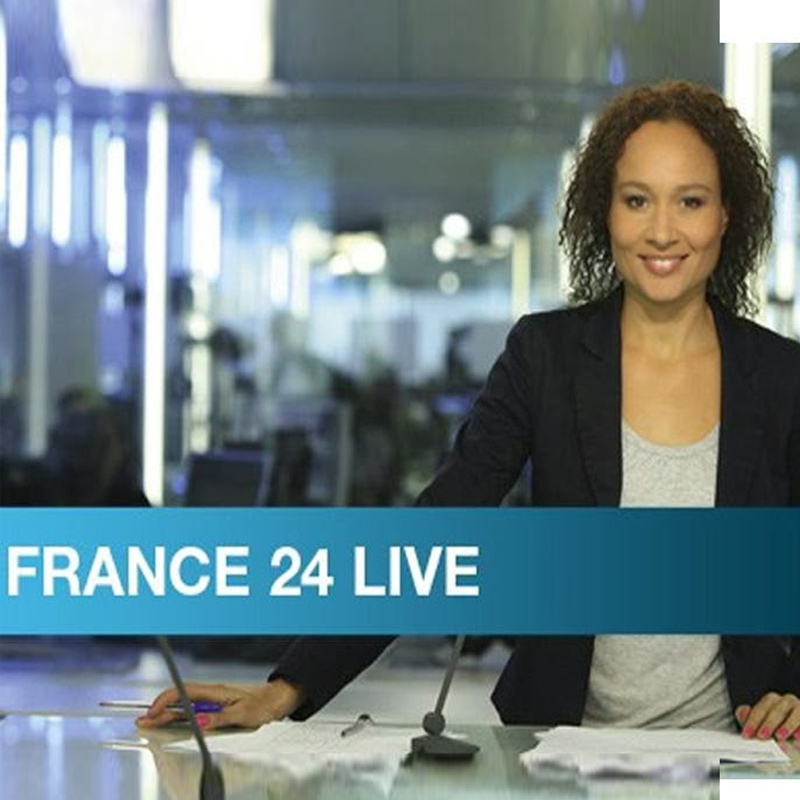
    France 24 has signed a distribution agreement with satellite operator AsiaSat, making its English channel available in HD via AsiaSat 5.

    France 24 English HD is currently available exclusively in the Asia-Pacific region and this launch marks an important new step in the channel’s development.

    This agreement reinforces the attractiveness of the channel for cable operators, DTH and IPTV as well as for major hotel chains.

    Thanks to recent distribution deals in South Korea and the granting of a broadcast license in Vietnam, France 24 is now available to 60 million TV households and more than 300,000 hotel rooms across the Asia-Pacific region.

    For further information about how to include France 24 English HD in your offer, please contact Brice Bertrand and David Couret attending CASBAA Convention 2016:

  • France 24 now in HD in Asia-Pacific region

    France 24 now in HD in Asia-Pacific region

    France 24 has signed a distribution agreement with satellite operator AsiaSat, making its English channel available in HD via AsiaSat 5.

    France 24 English HD is currently available exclusively in the Asia-Pacific region and this launch marks an important new step in the channel’s development.

    This agreement reinforces the attractiveness of the channel for cable operators, DTH and IPTV as well as for major hotel chains.

    Thanks to recent distribution deals in South Korea and the granting of a broadcast license in Vietnam, France 24 is now available to 60 million TV households and more than 300,000 hotel rooms across the Asia-Pacific region.

    For further information about how to include France 24 English HD in your offer, please contact Brice Bertrand and David Couret attending CASBAA Convention 2016:

  • Digital India: IITians to coach students via free DTH

    Digital India: IITians to coach students via free DTH

    MUMBAI: It is not just for entertainment. It’s for education too. Professors from the Indian Institute of Technology (IIT) will be giving coaching classes to engineering aspirants through four DTH channels from January 1, taking the concept of Digital India to another level and reducing the dependency on coaching institutes.

    These channels will be available free of cost through Doordarshan’s FreeDish DTH platform, and the aspirants will only have to secure a Set-Top Box to watch these channels, PTI has reported.

    IIT-PAL (Professor Assisted Learning) initiative will reduce dependence on coaching centres and also reach out to the students who are living in rural areas and cannot afford to pay the fee for expensive crash courses.

    IIT Delhi Director V Ramgopal Rao said that a team of 40 professors from various IITs had compiled 200-hour lectures for each subject covering the entire syllabus of Joint Entrance Examination (JEE). There were several coaching institutes claiming to be providing easy tricks to crack the exam and not every aspirant could afford to join them, he added.

    He added that the faculty members would be joined by teachers from various Kendriya Vidyalyas in imparting these lessons to the aspirants and the focus will be more on concepts.

  • Digital India: IITians to coach students via free DTH

    Digital India: IITians to coach students via free DTH

    MUMBAI: It is not just for entertainment. It’s for education too. Professors from the Indian Institute of Technology (IIT) will be giving coaching classes to engineering aspirants through four DTH channels from January 1, taking the concept of Digital India to another level and reducing the dependency on coaching institutes.

    These channels will be available free of cost through Doordarshan’s FreeDish DTH platform, and the aspirants will only have to secure a Set-Top Box to watch these channels, PTI has reported.

    IIT-PAL (Professor Assisted Learning) initiative will reduce dependence on coaching centres and also reach out to the students who are living in rural areas and cannot afford to pay the fee for expensive crash courses.

    IIT Delhi Director V Ramgopal Rao said that a team of 40 professors from various IITs had compiled 200-hour lectures for each subject covering the entire syllabus of Joint Entrance Examination (JEE). There were several coaching institutes claiming to be providing easy tricks to crack the exam and not every aspirant could afford to join them, he added.

    He added that the faculty members would be joined by teachers from various Kendriya Vidyalyas in imparting these lessons to the aspirants and the focus will be more on concepts.

  • Q2-17: Dish TV adds 2.59 lakh subscribers

    Q2-17: Dish TV adds 2.59 lakh subscribers

    BENGALURU: Indian direct to home (DTH) company Dish TV India Limited (Dish TV) has reported growth across important financial and operational parameters including operating revenues (TIO) , EBIDTA and subscription numbers. The company reported addition of 2.59 lakh net subscribers for the quarter ended 30 September 2016 (Q2-17, current). It closed the quarter with 151 lakh subscribers. Average revenue per user (ARPU) for Q2-17 was Rs 162 in the current quarter versus Rs 161 in the corresponding year ago quarter..

    Dish TV reported 11.9 per cent higher y-o-y subscription revenue of Rs 728.8 crore for Q2-17, as compared to Rs 651.4 crore. Operating revenue in the current quarter increased 9.6 per cent y-o-y to Rs 779.6 crore from Rs 711.2 crore in the corresponding quarter of the previous year. (Refer Note 2.1 and 2.2 below)

    Segment Revenue

    Three segments contribute to Dish TV’s numbers – DTH; Infra Support Services; and ‘Others’.

    DTH segment revenue in Q2-17 declined 14.2 per cent to Rs 509.55 crore from Rs 594.16 crore in Q2-16. The segment reported 15.5 per cent lower operating profit in the current quarter at Rs 86.43 crore as compared to Rs 102.24 crore in the corresponding year ago quarter.

    Infra Support services segment reported 13.7 higher y-o-y revenue of Rs 280.65 crore in Q2-17 vis-à-vis Rs 246.91 crore in Q2-16. The segment’s operating profit declined 39.3 per cent in the current quarter to Rs 12.30 crore from Rs 20.26 crore in the corresponding year ago quarter.

    ‘Others’ segment revenue increased 3.5 per cent in Q2-17 to Rs 5.59 crore from Rs 5.40 crore in Q2-16. The segment’s operating profit grew 5.3 per cent in the current quarter to Rs 2.80 crore from Rs 2.6 6 crore in Q2-16.

    A look at the other numbers reported by Dish TV

    Dish TV reported PAT of Rs. 70.1 crore in Q2-17, down 19.4 per cent as compared to Rs 87 crore in Q2-16.

    EBIDTA in the current quarter increased 3.6 per cent to Rs 264.2 crore from Rs 255 crore in Q2-16.

    Expense in the current quarter increased 12.9 per cent y-o-y to Rs 51.51 crore from Rs 456.2 crore. Employee Benefits Expense increased 23.1 per cent y-o-y to Rs 36.4 crore from Rs 29.58 crore. Other operating expenses in the current quarter declined 30.8 per cent to Rs 70.14 crore from Rs 101.30 crore in Q2-16..

    Licensing fees in the current quarter increased 1.3 per cent to Rs 54.52 crore from Rs 53.81 crore in Q2-17. Programming/Content and other costs in Q2-17 increased 17.4 per cent to Rs 238.92 crore from Rs 203.54 crore in Q2-16.

    Dish TV managing director Jawahar Goel said, “Torrential rains in many parts of the country often force consumers to defer buying a new DTH connection while the existing ones may delay recharging if the going gets too tough. Both sales and recharge however normalize subsequently if the festival season hits early. Targeting phase 3 & 4 markets, our subscriber additions during the quarter remained in-line with expectations.”

    Expressing his views on the regulatory developments, Goel, said, “While the draft Regulations have been formulated with an intention of subscriber welfare, there are certain omissions, optimistic presumptions as well as unanswered questions that would hopefully be addressed once the final orders see the light of the day. We appreciate the spirit of transparency and non-discrimination that have been the guiding force behind these draft orders and hope that DTH would soon get the level playing field that it has been seeking. Restrictions placed on carriage fees should go a long way in correcting the industry macro environment.”

    “We continue to remain positive about other regulatory interventions including the proposed new license regime for the DTH sector and the impending nationwide roll-out of Goods and Services Tax (GST). The centre proposing 12 per cent and 18 per cent as the standard rates for majority of the taxable goods is a welcome step,” he added.

    Discussing the results, Goel said, “Healthy subscriber additions led to a 11.9% y-o-y growth in subscription revenues. EBITDA margin was 33.9 per cent. Net Profit for the quarter was Rs. 701 million (Rs 70.1 crore) and positive Free Cash Flow was Rs. 791 million (Rs 79.1 crore).”

    Notes:The unit of currency in this report is the Indian rupee – Rs (also conventionally represented by INR). The Indian numbering system or the Vedic numbering system has been used to denote money values. The basic conversion to the international norm would be:
    (a) 100,00,000 = 100 lakh = 10,000,000 = 10 million = 1 crore.
    (b) 10,000 lakh = 100 crore = 1 arab = 1 billion.