Tag: DTH

  • Shemaroo to further focus on digital

    Shemaroo to further focus on digital

    MUMBAI: Content aggregation and distribution company Shemaroo Entertainment is going into an overdrive on the digital ecosystem. And it’s working for the firm which is quoting currently at Rs 382 (on Wednesday 03pm) on the Bombay stock exchange.

    In an interview with CNBC TV18 on 20 December, Shemaroo’s wholetime director and CFO Hiren Gada said, “Digital is currently contributing 20 per cent of its top line revenues,” and growth has been at a healthy 50 per cent and more.

    Gada further elaborated that around Rs 24 crore of its previous quarter’s revenues of around Rs 100 crore came courtesy digital or new media. He was specially buoyant about the 4.5 million views per day that its channels on YouTube were generating. Its mother channel Shemaroo had 2.28 million subscribers, Filmi Gaane had 1.8 million subscribers, Shemaroo Movies had 431,579 subscribers, and Shemaroo Kids had 281,000 subscribers cumulatively generating 1.42 billion views, 1.26 billion views, 142 million views and 186 million views, respectively.

    “So, that kind of bears out as a strategy and conviction that the content strategy that we are following is getting tremendous traction with the audience,” he said.

    Gada disclosed that telcos such as Vodafone, Idea and Airtel which it has partnered are already adding a “large component of revenues” to the company’s topline. “Then, there are all these (platforms) which are the next level of services, some of which are nascent or new like Reliance Jio or Hotstar or iTunes or any other international platforms. They hold tremendous potential.”

    Gada added that the company’s content is unmissable. “.. given the kind of content we are sitting on, no one can run a meaningful Bollywood service without some content from Shemaroo. So, to that extent, we are either in talks or already deployed on many of the platforms that are already operating.”

    Gada was hopeful of maintaining or hiking the revenue growth levels of 50 per cent that its new media focus has been generating over the next quarter as well. He also highlighted that margins for this segment were also higher than for the company as a whole as operating costs are being kept in check.

    Shemaroo has also tied up with DTH operators such as Tata Sky, Dish TV and Airtel to run specialised value added services for them covering movies, comedy, religious songs.

  • Only Dish TV carrying HRD ministry’s educational TV channels

    Only Dish TV carrying HRD ministry’s educational TV channels

    NEW DELHI: Only Dish TV is carrying 32 educational television channels of the human resource development ministry in spite of appeals by ministry to all the private DTH operators.

    An information and broadcasting ministry source told indiantelevision.com that the department of higher education of the HRD Ministry had approved the launch of ‘Swayam Prabha’ — a project for operationalising 32 Direct to Home (DTH) television channels for providing high quality educational content to all teachers, students and citizens across the country interested in lifelong learning.

    However, Doordarshan’s FreeDish had not taken any channels as yet as it had space for only eighty channels and would consider adding new channels when it switches from MPEG 2 to MPEG4.

    There will be new content of four hours every day in these channels, which would be telecast 6 times a day allowing the student to choose the time of his/her convenience.

    The soft launch of the channels has already been done and all private DTH operators had been requested to carry the channels.

    The HRD Ministry had also requested cable operators to carry these educational channels but with no success so far, the source said.

    (This report had earlier erroneously stated that only three educational channels of the HRD ministry are being carried by Dish TV. It was an inadvertent error and it is regretted – Editor)

  • Only Dish TV carrying HRD ministry’s educational TV channels

    Only Dish TV carrying HRD ministry’s educational TV channels

    NEW DELHI: Only Dish TV is carrying 32 educational television channels of the human resource development ministry in spite of appeals by ministry to all the private DTH operators.

    An information and broadcasting ministry source told indiantelevision.com that the department of higher education of the HRD Ministry had approved the launch of ‘Swayam Prabha’ — a project for operationalising 32 Direct to Home (DTH) television channels for providing high quality educational content to all teachers, students and citizens across the country interested in lifelong learning.

    However, Doordarshan’s FreeDish had not taken any channels as yet as it had space for only eighty channels and would consider adding new channels when it switches from MPEG 2 to MPEG4.

    There will be new content of four hours every day in these channels, which would be telecast 6 times a day allowing the student to choose the time of his/her convenience.

    The soft launch of the channels has already been done and all private DTH operators had been requested to carry the channels.

    The HRD Ministry had also requested cable operators to carry these educational channels but with no success so far, the source said.

    (This report had earlier erroneously stated that only three educational channels of the HRD ministry are being carried by Dish TV. It was an inadvertent error and it is regretted – Editor)

  • ‘Vardah’: Cables uprooted; antennae warped: Chennai MSO, DTH most affected

    ‘Vardah’: Cables uprooted; antennae warped: Chennai MSO, DTH most affected

    MUMBAI: It seemed that the month of December was not so favourable for the Indian state Tamil Nadu. We can recall that, last year, Tamil Nadu was badly affected by floods which caused damages to the tune of around Rs 9000 crore and hundreds of deaths. The more recent catastrophe is the cyclone Vardah, an intense storm to have hit the state again, which left at least 12 dead in TN and Andhra Pradesh.

    According to news reports, the severe cyclonic storm affected electricity, communication lines and put rail, road and air traffic in disarray as it crossed the coast, pounding Tiruvallur, Chennai, and Kanchipuram with heavy rain and squall.

    Also Tamil Nadu, being a broadcasting hub was badly affected by the calamity. Not only the broadcast industry but the MSOs, LCOs and DTH players too were terribly hit by the cyclone.

    Speaking to Indiantelevision.com, Raj TV vice-president programming and production vice-president Amit Bose said, “No one could do much to ease the situation because of power failure and heavy roadblocks due to uprooting of trees throughout the city. Internet and phones were out of system, and hence communication and mobility were affected.

    Bose added, “Productions were disrupted and TV viewing was not possible for the people of Chennai. DTH and cable connections were thrown out of gear and even for the people who had inverters and cable homes deserted on a powerless mode. Power backups could not sustain for a long time. This calamity might have affected Chennai’s viewership more than rest of the markets. On the whole, I apprehend the broadcasters, MSOs and viewers suffered the most.”

    Polimer TV creative consultant Mathivannan Raju said, “Failure of power is the major issue right now. Also, the antennae of houses with a DTH connection have been destroyed, and there is no way to watch television. The issue is on the path to rectification.”

    Raju added, “Of course, viewership will be affected due to the unfortunate event, which will eventually affect revenue as well but it is something beyond control. As this wasn’t our strategic plan, I am unsure how its actual impact on revenues. But, the MSOs and DTH industry has been majorly affected.”

    Commenting on the cable industry, Raju said, “At present, cables used for delivering television content have been washed away in Chennai. Almost 99 per cent cables switched off. To recover the lost ground, we need to establish the complete network again. Most of the dish antennae that MSOs had installed have been dislocated, and we need to reinstall them.” “Moreover, on the LCOs front, cables from their office to the consumer’s houses/offices have been eroded. Most of the fibre cable severed into pieces; a new network of cables will now be required,” Raju lamented.

    On the MSOs front, Chennai Metro Cable Operators Association general secretary MR Srinivasan said that there was a short supply of fibre cable and other equipment; that’s another problem that the cable industry was facing. In next 10-12 days, the association believes, everything will come to normal.”

    As there was negligible electricity in the state, Srinivasan said, it was difficult to check whether DTH antennae were working properly.

    From 15 December, the electricity will hopefully be reinstated; and only then people will come to know about the actual conditions vis-a-vis entertainment. With 120 km of wind speed, the antenna might have dislocated from their places, they need to be realigned.

    On the DTH front, Tata Sky CEO Harit Nagpal said that the cyclone had not affected the DTH industry in any way. The dish antennae at the residences of some subscribers might have tilted because of the strong winds, and this might have had temporarily affected reception, but this was set right by the subscribers themselves, and so there were no complaints of any disruption.

    Another MSO from Chennai informed that it would take another week for the cable industry to get to normal functioning in Chennai and other parts of the state. The state and local government will step in to clear fallen trees and restore wires.

  • ‘Vardah’: Cables uprooted; antennae warped: Chennai MSO, DTH most affected

    ‘Vardah’: Cables uprooted; antennae warped: Chennai MSO, DTH most affected

    MUMBAI: It seemed that the month of December was not so favourable for the Indian state Tamil Nadu. We can recall that, last year, Tamil Nadu was badly affected by floods which caused damages to the tune of around Rs 9000 crore and hundreds of deaths. The more recent catastrophe is the cyclone Vardah, an intense storm to have hit the state again, which left at least 12 dead in TN and Andhra Pradesh.

    According to news reports, the severe cyclonic storm affected electricity, communication lines and put rail, road and air traffic in disarray as it crossed the coast, pounding Tiruvallur, Chennai, and Kanchipuram with heavy rain and squall.

    Also Tamil Nadu, being a broadcasting hub was badly affected by the calamity. Not only the broadcast industry but the MSOs, LCOs and DTH players too were terribly hit by the cyclone.

    Speaking to Indiantelevision.com, Raj TV vice-president programming and production vice-president Amit Bose said, “No one could do much to ease the situation because of power failure and heavy roadblocks due to uprooting of trees throughout the city. Internet and phones were out of system, and hence communication and mobility were affected.

    Bose added, “Productions were disrupted and TV viewing was not possible for the people of Chennai. DTH and cable connections were thrown out of gear and even for the people who had inverters and cable homes deserted on a powerless mode. Power backups could not sustain for a long time. This calamity might have affected Chennai’s viewership more than rest of the markets. On the whole, I apprehend the broadcasters, MSOs and viewers suffered the most.”

    Polimer TV creative consultant Mathivannan Raju said, “Failure of power is the major issue right now. Also, the antennae of houses with a DTH connection have been destroyed, and there is no way to watch television. The issue is on the path to rectification.”

    Raju added, “Of course, viewership will be affected due to the unfortunate event, which will eventually affect revenue as well but it is something beyond control. As this wasn’t our strategic plan, I am unsure how its actual impact on revenues. But, the MSOs and DTH industry has been majorly affected.”

    Commenting on the cable industry, Raju said, “At present, cables used for delivering television content have been washed away in Chennai. Almost 99 per cent cables switched off. To recover the lost ground, we need to establish the complete network again. Most of the dish antennae that MSOs had installed have been dislocated, and we need to reinstall them.” “Moreover, on the LCOs front, cables from their office to the consumer’s houses/offices have been eroded. Most of the fibre cable severed into pieces; a new network of cables will now be required,” Raju lamented.

    On the MSOs front, Chennai Metro Cable Operators Association general secretary MR Srinivasan said that there was a short supply of fibre cable and other equipment; that’s another problem that the cable industry was facing. In next 10-12 days, the association believes, everything will come to normal.”

    As there was negligible electricity in the state, Srinivasan said, it was difficult to check whether DTH antennae were working properly.

    From 15 December, the electricity will hopefully be reinstated; and only then people will come to know about the actual conditions vis-a-vis entertainment. With 120 km of wind speed, the antenna might have dislocated from their places, they need to be realigned.

    On the DTH front, Tata Sky CEO Harit Nagpal said that the cyclone had not affected the DTH industry in any way. The dish antennae at the residences of some subscribers might have tilted because of the strong winds, and this might have had temporarily affected reception, but this was set right by the subscribers themselves, and so there were no complaints of any disruption.

    Another MSO from Chennai informed that it would take another week for the cable industry to get to normal functioning in Chennai and other parts of the state. The state and local government will step in to clear fallen trees and restore wires.

  • Overhaul and strengthening of DD in full swing

    Overhaul and strengthening of DD in full swing

    NEW DELHI: Twenty studio centres of Doordarshan are being renovated with replacement of old ageing equipment as part of the 12th Plan Schemes, the Parliament has been told.

    In addition, old 100 W Low Power Transmitters (LPTs) are being replaced by 500W Automode LPTs, and upgradation is underway of 18 existing Earth Stations and replacement of Digital Satellite News Gathering System (DSNG).

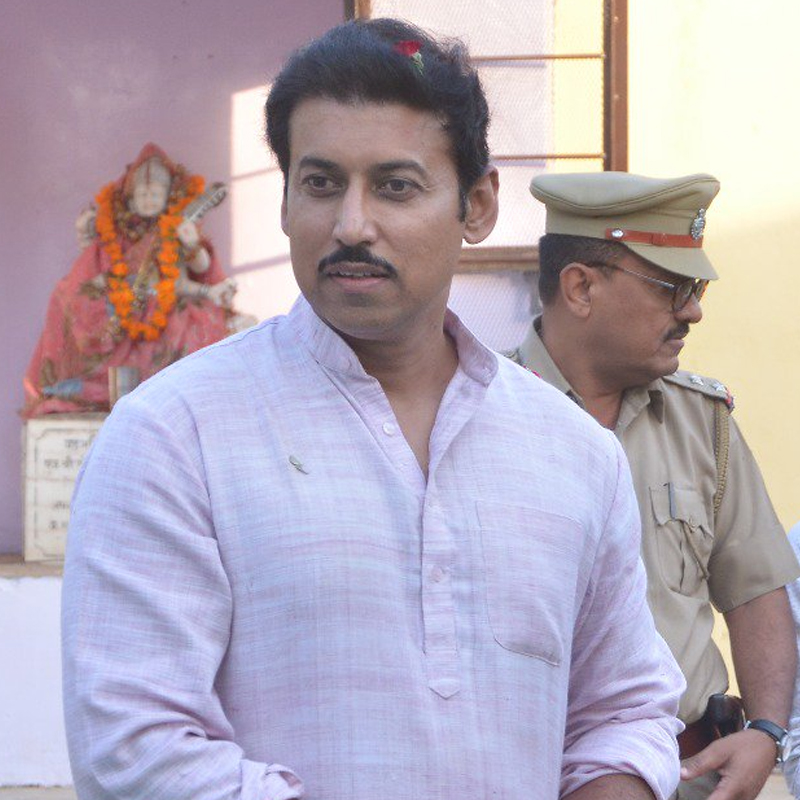
    The minister of state for information and broadcasting Rajyavardhan Rathore said in reply to a series of questions that these are part of some schemes of modernisation/ upgradation of Studios, Transmitters and Satellite Broadcast equipment which have been approved.

    Replacement of old transmitters (LPT & HPT) has enhanced the system’s reliability & performance quality of Doordarshan.

    Rathore said digital transmission has enabled the viewers to receive multiple TV channels in their fixed/mobile receive sets with suitable additional hardware.

    With the induction of digital equipment, technical quality of programme production and post production has improved.

    Doordarshan has 228 High Power Transmitters (HPTs) and 806 Low Power Transmitters (LPTs) in its terrestrial TV network.

    Doordarshan has been assigning priority to strengthen TV coverage in border areas of the country. Special packages for expansion and improvement of Doordarshan services in the border areas have been formulated from time to time.

    Doordarshan’s FreeDish DTH signals can be received anywhere in the country including border areas with the help of small sized dish receiving units.

    The Minister said the technical quality of Doordarshan transmission both in satellite and terrestrial mode along the border areas is quite satisfactory.

    As part of continuing schemes of the 12th Plan, transmitter projects approved for implementation in Jammu and Kashmir are High Power Transmitters (HPTs) at Green Ridge; at Himbotingla, Natha Top (Patnitop), and at Rajouri (for DD National and DD News).

    The target to complete these projects in phased manner has been set for about two years.

    In Gujarat, three transmitters HPT Bhuj, LPT Punandhro and LPT Rapar are in operation in Kutch district. Parts of the district are covered by HPT Radhanpur. An old ageing HPT at Bhuj was replaced by new 10 KW HPT in 2015.

  • Overhaul and strengthening of DD in full swing

    Overhaul and strengthening of DD in full swing

    NEW DELHI: Twenty studio centres of Doordarshan are being renovated with replacement of old ageing equipment as part of the 12th Plan Schemes, the Parliament has been told.

    In addition, old 100 W Low Power Transmitters (LPTs) are being replaced by 500W Automode LPTs, and upgradation is underway of 18 existing Earth Stations and replacement of Digital Satellite News Gathering System (DSNG).

    The minister of state for information and broadcasting Rajyavardhan Rathore said in reply to a series of questions that these are part of some schemes of modernisation/ upgradation of Studios, Transmitters and Satellite Broadcast equipment which have been approved.

    Replacement of old transmitters (LPT & HPT) has enhanced the system’s reliability & performance quality of Doordarshan.

    Rathore said digital transmission has enabled the viewers to receive multiple TV channels in their fixed/mobile receive sets with suitable additional hardware.

    With the induction of digital equipment, technical quality of programme production and post production has improved.

    Doordarshan has 228 High Power Transmitters (HPTs) and 806 Low Power Transmitters (LPTs) in its terrestrial TV network.

    Doordarshan has been assigning priority to strengthen TV coverage in border areas of the country. Special packages for expansion and improvement of Doordarshan services in the border areas have been formulated from time to time.

    Doordarshan’s FreeDish DTH signals can be received anywhere in the country including border areas with the help of small sized dish receiving units.

    The Minister said the technical quality of Doordarshan transmission both in satellite and terrestrial mode along the border areas is quite satisfactory.

    As part of continuing schemes of the 12th Plan, transmitter projects approved for implementation in Jammu and Kashmir are High Power Transmitters (HPTs) at Green Ridge; at Himbotingla, Natha Top (Patnitop), and at Rajouri (for DD National and DD News).

    The target to complete these projects in phased manner has been set for about two years.

    In Gujarat, three transmitters HPT Bhuj, LPT Punandhro and LPT Rapar are in operation in Kutch district. Parts of the district are covered by HPT Radhanpur. An old ageing HPT at Bhuj was replaced by new 10 KW HPT in 2015.

  • DTH subscriber growth retards in Q1-16 as per TRAI data

    DTH subscriber growth retards in Q1-16 as per TRAI data

    BENGALURU: We at www.indiantelevision.com had noted and said thatContrary to expectations that the sunset date of 31 December 31, 2015 (Q3-16 in financial terms in India) would rake in good numbers for the DTH industry for Q4-16 the subscriber base growth just did not happen.At that time, results declared by three of India’s seven DTH players whose results are available un public domain did notshow much of a change.Further, at that time, though Airtel Digital TV and Videocon d2h had both shown a small spike in subscriber additions between Q2-2016 and Q3-2016, overall taking the combined addition in subscription numbers by all the three, the change was just 3.59per cent. In the case of the third player-Dish TV, it witnessed the lowest growth over a five quarter period starting Q3-2015 until Q3-16 at 2.19 per cent.

    Results for Q4-16 (quarter ended 31 March 2016) showed a reversal of sorts in that trend. Dish TV announced that it had added 5 lakh subscribers – the highest additions in fiscal 2016. Airtel DTH and Videocon d2h added 6.19 lakh and 5.9 lakh subscribers respectively and each reported approximately 11 percent quarter-over-quarter (q-o-q) growth in operating profits in that quarter.It may be noted that TRAI (Telecom Regulatory Authority Regulatorreports for Q3-16 (quarter ended 31 December 2015) of the net active subscriber base included temporarily suspended subscribers that have been inactive for not more than 120 days – hence reflecting a huge 36 percent growth in active subscribers for that quarter.

    Besides Airtel DTH, Dish TV and Videocon d2h, there are three other private DTH players in India – Reliance, Sun Direct and Tata Sky, and the government’s FreeDish. Airtel DTH, Dish TV and Videocon d2h (the three players in this report) represent about 65 percent of the private DTH active subscriber universe in India. Please refer to Fig A below:

    public://image1.jpg

    FreeDish DTH service – the largest DTH player by far in terms of subscribers with an estimated 15 million or 1.5 crore subscribers in 2015 as per the KPMG-FICCI Indian Media and Entertainment Industry Report 2016 (KPMG-FICCI M&E Report 2016) titled The Future: Now streaming. It must however be noted that an exact number for registered or active subscribers is not available since this is a free DTH service. The proposed merger of Videocon d2h with Dish TV will create the largest private television carriage player in India and the second largest in the world, be it cable, internet television or DTH or any other.

    As per numbers released by TRAI for Q4-16 and the quarter ended 30 June 2016 (Q1-17), the growth of registered and active DTH subscribers has reduced from 4.5 percent and 4.6 percent in Q4-16 to 3.3 percent and 3.4 percent respectively in Q1-17. Overall, DTH active subscribers grew by 19.7 lakh or 8.06 percent q-o-q in Q1-17 to 605 lakh active subscribers (66 percent of registered subscribers) from 585.3 lakh (also 66 percent of registered subscribers) in Q4-16. The three players in this report contributed a combined 12.95 lakh or 65.74 percent in subscriber growth. Registered subscriber numbers were 915.3 lakh and 886.4 lakh in Q1-17 and Q4-16 respectively. In Q3-16, registered subscribers were 848 lakh.

    In Q1-17, 4.65 lakh (3.97 percent growth), 4 lakh (2.76 percent growth) and 4.3 lakh (3.6 percent growth) were added q-o-q by Airtel DTH, Dish TV and Videocon d2h respectively.

    Among the three, Airtel DTH added more net subscribers in absolute numbers in FY-16 than in FY-15, Dish TV added approximately the same number of net subscribers in both FY-15 and FY-16, while Videocon d2h saw slightly lower absolute net subscribers increment in FY-16 as compared to FY-15. Airtel DTH added 55.6 percent more subscribers in FY-16 – 16.52 lakh to reach net subscriber base of 117.52 lakh as compared to 10.62 lakh in FY-15; Dish TV added 15 lakh subscribers in FY-16 as well as in the previous year; Dish TV’s subscriber base was 145 lakh in FY-16; Videocon d2h added 16.8 lakh subscribers in FY-16 to reach a subscriber base of 118.6 lakh as compared to 17.4 lakh subscriber additions in FY-15. The above numbers are based on the financial results/investor presentations reported by the three DTH entities.

    Please refer to Fig B below.

    public://image2.jpg

    ARPU has been steadily increasing in the case of Airtel DTH and Videocon d2h, while it has was constant in the case of Dish TV at Rs 174 in Q4-16 as well as Q1-17. In Q2-17, however, Dish TV’s ARPU has dipped q-o-q by a huge Rs 12 to Rs 162.

    For the first time in Q1-17, despite having the largest subscriber base amongst the top three, Dish TV’s revenues have been the lowest. In Q2-17, Airtel DTH reported the highest revenue amongst the three followed by Dish TV, with Videocon d2h’s revenue lower by just a few crore rupees. This could be mainly because Dish TV is more of a value player, whilst the other two are premium players.  It may be noted Videocon d2h’s ARPU in Q2-17 has also dipped q-o-q by Rs 10 to Rs 209. Please refer to Fig C below for revenue and ARPU trends (Revenue numbers have been rounded off to the nearest Rs crore, ARPU numbers are in Indian Rupees, Rs)

    public://IMAGE3.jpg

    Let us see how the three have performed in Q1-17

    Airtel DTH

    Revenue from Airtel’s DTH segment in Q1-17 increased 22.2 per cent to Rs 836.9 crore as compared to Rs 684.8 crore in the corresponding quarter of the previous year. Airtel’s DTH segment reported EBIT (Earnings before interest and tax) of Rs 121.9 crore (14.6 per cent operating margin) in Q1-17 as compared to EBIT of Rs 41.5 crore (6.1 percent operating margin) in Q1-16.

    Airtel DTH added 4.24 lakh net subscribers in Q1-17 to bring its subscriber base to 121.9 lakh from 117.25 lakh in the previous quarter. Average revenue per user (ARPU) increased to Rs 233 from Rs 229 in the immediate trailing quarter. Airtel DTH reported a monthly subscriber churn of 0.8 percent in Q1-17, same as the churn in Q1-16 and Q4-16.

    Dish TV

    Dish TV reported 6.7 percent higher y-o-y subscription revenue of Rs 728.2 crore for Q1-17, as compared to Rs 682.8 crore. Operating revenue in Q1-17 increased 5.7 percent y-o-y to Rs 778.6 crore from Rs 736.7 crore in the corresponding quarter of the previous year.

    Dish TV says that:
    (1.1) For Q1-17, subscription revenue, on a like-to-like basis, was Rs 766.9 crore, a growth of 12.3 percent y-o-y.
    (1.2) For Q1-17 operating revenue, on a like-to-like basis, was Rs 817.2 crore, a growth of 10.9 percent y-o-y.

    Dish TV reported PAT of Rs. 40.9 crore in Q1-17, down 24.5 percent as compared to Rs 54.2 crore in Q1-16.

    EBIDTA in the Q1-17 increased 12.2 percent to Rs 264.6 crore from Rs 235.7 crore in Q1-16.

    The company reported addition of 4.02 lakh net subscribers for Q1-17. It closed the quarter with 149 lakh subscribers. Average revenue per user (ARPU) for Q1-17 remained the same year-over-year (y-o-y) and quarter-over-quarter (q-o-q) at Rs 174.

    Videocon d2h

    Videocon d2h is the second listed Indian DTH player to report a profit after tax (PAT), after the Essel group’s Dish TV that turned the numbers black last year. Videocon d2h reported PAT of Rs 2.7 crore for Q1-17. For the corresponding year ago quarter (Q1-17), the company had reported a loss of Rs 24.4 crore and for the immediate trailing quarter (Q4-16) reported loss was Rs 21.2 crore.

    Videocon d2h subscription and activation revenue in Q1-17 increased 23.9 percent y-o-y to Rs 752.3 crore from Rs 607.3 crore and increased 6.6 percent q-o-q from Rs 705.6 crore.

    The DTH major also reported 15.5 percent year-over-year (y-o-y) growth in net subscriber number growth at 122.9 lakh for Q1-17 as compared to 106.4 lakh and a 3.6 percent quarter-over-quarter (q-o-q) growth from118.6 lakh. Average revenue per user (ARPU) in Q1-17 increased to Rs 219 from Rs 205 in Q1-16 and from Rs 214 in the immediate trailing quarter.

    Subscriber monthly churn in the current quarter was 0.49 percent; in Q1-16 it was slightly lower at 0.46 percent, while in the immediate trailing quarter it was much higher at 0.58 percent.

    Comments

    There is not much of a change in the comments and conclusions drawn by us for FY-16 numbers. Overall, the pay DTH industry is turning profitable as is obvious from the results.

    DAS III and IV were/are sunshine periods for the television carriage industry. Activation revenues have been adding to the top lines and bottom lines of most of the players. Have they been able to optimise the opportunity that DAS has offered? Not fully! At present the focus of a majority of the players is more investor oriented, not viewer oriented. This has to change. DTH has the potential to grow even more than the predictions of the industry pundits, provided they get their act together in coming out with packaging – as has Dish TV to a limited extent. India is a price sensitive market, offer the viewers what they want at a reasonable price and the sheer volumes will bring in more and more moolah.And what happens to profits once the activation fee component goes down?
     

  • DTH subscriber growth retards in Q1-16 as per TRAI data

    DTH subscriber growth retards in Q1-16 as per TRAI data

    BENGALURU: We at www.indiantelevision.com had noted and said thatContrary to expectations that the sunset date of 31 December 31, 2015 (Q3-16 in financial terms in India) would rake in good numbers for the DTH industry for Q4-16 the subscriber base growth just did not happen.At that time, results declared by three of India’s seven DTH players whose results are available un public domain did notshow much of a change.Further, at that time, though Airtel Digital TV and Videocon d2h had both shown a small spike in subscriber additions between Q2-2016 and Q3-2016, overall taking the combined addition in subscription numbers by all the three, the change was just 3.59per cent. In the case of the third player-Dish TV, it witnessed the lowest growth over a five quarter period starting Q3-2015 until Q3-16 at 2.19 per cent.

    Results for Q4-16 (quarter ended 31 March 2016) showed a reversal of sorts in that trend. Dish TV announced that it had added 5 lakh subscribers – the highest additions in fiscal 2016. Airtel DTH and Videocon d2h added 6.19 lakh and 5.9 lakh subscribers respectively and each reported approximately 11 percent quarter-over-quarter (q-o-q) growth in operating profits in that quarter.It may be noted that TRAI (Telecom Regulatory Authority Regulatorreports for Q3-16 (quarter ended 31 December 2015) of the net active subscriber base included temporarily suspended subscribers that have been inactive for not more than 120 days – hence reflecting a huge 36 percent growth in active subscribers for that quarter.

    Besides Airtel DTH, Dish TV and Videocon d2h, there are three other private DTH players in India – Reliance, Sun Direct and Tata Sky, and the government’s FreeDish. Airtel DTH, Dish TV and Videocon d2h (the three players in this report) represent about 65 percent of the private DTH active subscriber universe in India. Please refer to Fig A below:

    public://image1.jpg

    FreeDish DTH service – the largest DTH player by far in terms of subscribers with an estimated 15 million or 1.5 crore subscribers in 2015 as per the KPMG-FICCI Indian Media and Entertainment Industry Report 2016 (KPMG-FICCI M&E Report 2016) titled The Future: Now streaming. It must however be noted that an exact number for registered or active subscribers is not available since this is a free DTH service. The proposed merger of Videocon d2h with Dish TV will create the largest private television carriage player in India and the second largest in the world, be it cable, internet television or DTH or any other.

    As per numbers released by TRAI for Q4-16 and the quarter ended 30 June 2016 (Q1-17), the growth of registered and active DTH subscribers has reduced from 4.5 percent and 4.6 percent in Q4-16 to 3.3 percent and 3.4 percent respectively in Q1-17. Overall, DTH active subscribers grew by 19.7 lakh or 8.06 percent q-o-q in Q1-17 to 605 lakh active subscribers (66 percent of registered subscribers) from 585.3 lakh (also 66 percent of registered subscribers) in Q4-16. The three players in this report contributed a combined 12.95 lakh or 65.74 percent in subscriber growth. Registered subscriber numbers were 915.3 lakh and 886.4 lakh in Q1-17 and Q4-16 respectively. In Q3-16, registered subscribers were 848 lakh.

    In Q1-17, 4.65 lakh (3.97 percent growth), 4 lakh (2.76 percent growth) and 4.3 lakh (3.6 percent growth) were added q-o-q by Airtel DTH, Dish TV and Videocon d2h respectively.

    Among the three, Airtel DTH added more net subscribers in absolute numbers in FY-16 than in FY-15, Dish TV added approximately the same number of net subscribers in both FY-15 and FY-16, while Videocon d2h saw slightly lower absolute net subscribers increment in FY-16 as compared to FY-15. Airtel DTH added 55.6 percent more subscribers in FY-16 – 16.52 lakh to reach net subscriber base of 117.52 lakh as compared to 10.62 lakh in FY-15; Dish TV added 15 lakh subscribers in FY-16 as well as in the previous year; Dish TV’s subscriber base was 145 lakh in FY-16; Videocon d2h added 16.8 lakh subscribers in FY-16 to reach a subscriber base of 118.6 lakh as compared to 17.4 lakh subscriber additions in FY-15. The above numbers are based on the financial results/investor presentations reported by the three DTH entities.

    Please refer to Fig B below.

    public://image2.jpg

    ARPU has been steadily increasing in the case of Airtel DTH and Videocon d2h, while it has was constant in the case of Dish TV at Rs 174 in Q4-16 as well as Q1-17. In Q2-17, however, Dish TV’s ARPU has dipped q-o-q by a huge Rs 12 to Rs 162.

    For the first time in Q1-17, despite having the largest subscriber base amongst the top three, Dish TV’s revenues have been the lowest. In Q2-17, Airtel DTH reported the highest revenue amongst the three followed by Dish TV, with Videocon d2h’s revenue lower by just a few crore rupees. This could be mainly because Dish TV is more of a value player, whilst the other two are premium players.  It may be noted Videocon d2h’s ARPU in Q2-17 has also dipped q-o-q by Rs 10 to Rs 209. Please refer to Fig C below for revenue and ARPU trends (Revenue numbers have been rounded off to the nearest Rs crore, ARPU numbers are in Indian Rupees, Rs)

    public://IMAGE3.jpg

    Let us see how the three have performed in Q1-17

    Airtel DTH

    Revenue from Airtel’s DTH segment in Q1-17 increased 22.2 per cent to Rs 836.9 crore as compared to Rs 684.8 crore in the corresponding quarter of the previous year. Airtel’s DTH segment reported EBIT (Earnings before interest and tax) of Rs 121.9 crore (14.6 per cent operating margin) in Q1-17 as compared to EBIT of Rs 41.5 crore (6.1 percent operating margin) in Q1-16.

    Airtel DTH added 4.24 lakh net subscribers in Q1-17 to bring its subscriber base to 121.9 lakh from 117.25 lakh in the previous quarter. Average revenue per user (ARPU) increased to Rs 233 from Rs 229 in the immediate trailing quarter. Airtel DTH reported a monthly subscriber churn of 0.8 percent in Q1-17, same as the churn in Q1-16 and Q4-16.

    Dish TV

    Dish TV reported 6.7 percent higher y-o-y subscription revenue of Rs 728.2 crore for Q1-17, as compared to Rs 682.8 crore. Operating revenue in Q1-17 increased 5.7 percent y-o-y to Rs 778.6 crore from Rs 736.7 crore in the corresponding quarter of the previous year.

    Dish TV says that:
    (1.1) For Q1-17, subscription revenue, on a like-to-like basis, was Rs 766.9 crore, a growth of 12.3 percent y-o-y.
    (1.2) For Q1-17 operating revenue, on a like-to-like basis, was Rs 817.2 crore, a growth of 10.9 percent y-o-y.

    Dish TV reported PAT of Rs. 40.9 crore in Q1-17, down 24.5 percent as compared to Rs 54.2 crore in Q1-16.

    EBIDTA in the Q1-17 increased 12.2 percent to Rs 264.6 crore from Rs 235.7 crore in Q1-16.

    The company reported addition of 4.02 lakh net subscribers for Q1-17. It closed the quarter with 149 lakh subscribers. Average revenue per user (ARPU) for Q1-17 remained the same year-over-year (y-o-y) and quarter-over-quarter (q-o-q) at Rs 174.

    Videocon d2h

    Videocon d2h is the second listed Indian DTH player to report a profit after tax (PAT), after the Essel group’s Dish TV that turned the numbers black last year. Videocon d2h reported PAT of Rs 2.7 crore for Q1-17. For the corresponding year ago quarter (Q1-17), the company had reported a loss of Rs 24.4 crore and for the immediate trailing quarter (Q4-16) reported loss was Rs 21.2 crore.

    Videocon d2h subscription and activation revenue in Q1-17 increased 23.9 percent y-o-y to Rs 752.3 crore from Rs 607.3 crore and increased 6.6 percent q-o-q from Rs 705.6 crore.

    The DTH major also reported 15.5 percent year-over-year (y-o-y) growth in net subscriber number growth at 122.9 lakh for Q1-17 as compared to 106.4 lakh and a 3.6 percent quarter-over-quarter (q-o-q) growth from118.6 lakh. Average revenue per user (ARPU) in Q1-17 increased to Rs 219 from Rs 205 in Q1-16 and from Rs 214 in the immediate trailing quarter.

    Subscriber monthly churn in the current quarter was 0.49 percent; in Q1-16 it was slightly lower at 0.46 percent, while in the immediate trailing quarter it was much higher at 0.58 percent.

    Comments

    There is not much of a change in the comments and conclusions drawn by us for FY-16 numbers. Overall, the pay DTH industry is turning profitable as is obvious from the results.

    DAS III and IV were/are sunshine periods for the television carriage industry. Activation revenues have been adding to the top lines and bottom lines of most of the players. Have they been able to optimise the opportunity that DAS has offered? Not fully! At present the focus of a majority of the players is more investor oriented, not viewer oriented. This has to change. DTH has the potential to grow even more than the predictions of the industry pundits, provided they get their act together in coming out with packaging – as has Dish TV to a limited extent. India is a price sensitive market, offer the viewers what they want at a reasonable price and the sheer volumes will bring in more and more moolah.And what happens to profits once the activation fee component goes down?


  • No BIS specification yet for interoperable DTH boxes

    No BIS specification yet for interoperable DTH boxes

    NEW DELHI: The Bureau of Indian Standards (BIS) had so far failed to come out with specifications with regard to interoperability of STBs (set-top boxes) meant for DTH (direct-to-home) platforms.

    An information and broadcasting ministry source was answering a question by indiantelevision.com in response to a reply in the Parliament given by the minister of state Rajyavardhan Rathore.

    The minister had said the ministry had accepted recommendations of the Telecom Regulatory Authority of India (TRAI) that it should work with the BIS and the Department of Electronics and IT to ensure such set-top boxes.

    TRAI, in July 2014, on “Issues relating to New DTH Licenses” said: “The Open Architecture (Non-proprietary) Set Top Box (STB), which will ensure technical compatibility and effective interoperability among different DTH service providers, shall have such specifications as laid down by the Government from time to time” with “The Set Top Box offered by a DTH service provider shall have such specifications as laid down by the Bureau of Indian Standard (BIS) from time to time.”

    TRAI recommended that BIS should come out with updated specifications for STBs from time to time and while doing so, BIS will consult TRAI and that the license conditions should mandate the licensee to comply with the tariff order/scheme prescribed by TRAI for commercial interoperability.

    In the paper, the Authority had said that STB interoperability was not possible because of the different technologies adopted by the operators due to them entering the market at different times. TRAI thus asked the BIS to regularly keep updating the standard of STB technology.

    Then I&B Minister Prakash Javadekar had told the Parliament on 24 July 2014 that the interoperability of DTH customer premises equipment has not so far proved to be effective due to various techno-economic reasons. The interoperability had been envisaged in the DTH licence conditions, he said.

    The portability in DTH service can be achieved through technical interoperability or through commercial interoperability.