Tag: DTH

  • The growth of DTH in India

    The growth of DTH in India

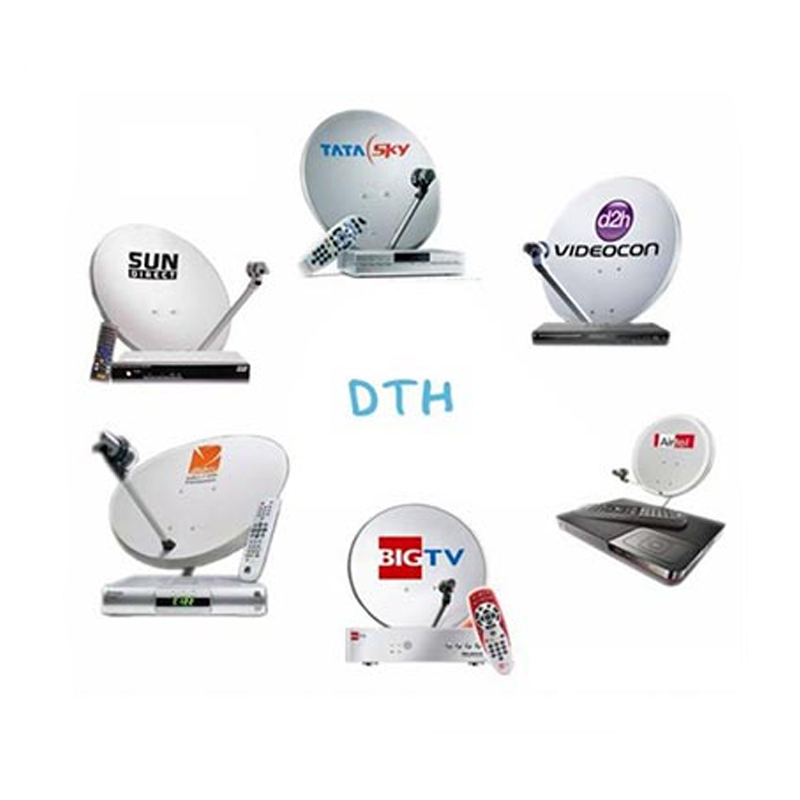
    MUMBAI: Dish TV, Videocon d2h and FreeDish. These were the three names that dominated India’s DTH sector headlines in 2016. The Essel Group’s Dish TV India is likely to forge the mother of a merger, (if permitted by shareholders and government departments) with another fast-growing rival — the Dhoot family led Videocon d2h even after denying it throughout the year.

    Further Vidoecon d2h was the second player in the Indian television carriage ecosystem that reported a net profit after tax or PAT– this was for the quarter ended 30 September 2016 or Q2-17.  The other player that had started reporting PAT much earlier was Dish TV.

    And, the public broadcaster Prasar Bharti-owned FreeDish increased its capacity allowing the number of channels to grow from 80 to 120 to reach India’s hinterlands and hence generate larger subscription numbers.

    As per the last available exact data from a government website, the total number of active DTH subscribers in India was 55,981,376 as on 31 December 2015. The number of active DTH subscribers of Airtel was 11,343,424 with a market share of 20.26 per cent of the total number of active DTH subscribers in the entire country;  the number of active DTH subscribers of Dish TV was 13,952,866 with a market share of 24.92 per cent of the total number of active DTH subscribers in the entire country. Among all the pay DTH Operators in India, Dish TV had the largest number of DTH subscribers as on 31 December 2015 and was the market leader.

    The number of active DTH subscribers of Reliance was 1,786,705 as on 31 December 2015 and its market share was 3.19 per cent of the total number of active DTH subscribers in the country. Among all the DTH Operators in India, Reliance had the smallest number of DTH subscribers.

    The number of active DTH subscribers of Sun Direct was 5,698,544 as on 31 December 2015 and Sun direct had a market share of 10.18 per cent; the number of active DTH subscribers of Tata Sky was 12,045,410 which had a market share of Tat Sky was 21.52 per cent; the number of active DTH subscribers of Videocon D2H was 11,154,427 and its market share was 19.93 per cent of the total number of active DTH subscribers in India

    With rise in disposable income and increasing number of digital pay-TV households, India is the most compelling market for DTH services. With around 28 lakh or 2.8 million subscribers added in the first quarter of fiscal 2017 (Q1-17), DTH households at a gross level crossed over 9 crore or 90 million by 30 June 2016 as per TRAI data.

    The DTH industry in India has added about 14 lakh (1.4 million) active subscribers in the quarter ended 30 September 2016 (Q2-17, current quarter) as compared to the immediate trailing quarter (Q1-17). The number of active DTH subscribers in the country increased to 6.19 crore (61.9 million) as compared to 6.05 crore (60.5 million) in Q1-7. TRAI had reported 4.05 crore (40.5 million) active subscribers for the corresponding year ago quarter Q2-16.

    The highly fragmented Indian television carriage industry witnessed a consolidation of sorts. The proposed Dish TV and Videocon d2h merger seems to indicate the way ahead in the DTH space. The merged entity would have some 2.64 crore or 26.4 million subscribers, which is approximately 45 per cent of active Indian DTH subscribers. Long-term benefits of the merger synergies could negate potential short-term apprehensions, analysts felt.

    The growth of OTT and VOD services on the other hand has been modifying the dynamics at the higher end of the home entertainment segment. Of the 16.8 crore or 168 million TV households, only around 9 lakh or nine million Indians are HD subscribers. Services such as Amazon Prime, Netflix, Hotstar, Voot and Eros Now, etc may attract DTH subscribers owing to competitive prices for wider and better content including international dramas and shows.

    On the whole, however, the DTH sector slackened in subscriber numbers with the government’s mandate to push ahead with digitisation of television not being adhered to by cable TV operators who stalled its progress with legal challenges.  Looking at the status quo, the powers that be were left with no option but to push back the sunset for the final phase of digitisation (DAS IV) by three months from 31 December 2016 to 31 March 2017. A few industry experts feel that this could be pushed back further to 30 June 2017 and maybe even to the end of calendar year 2017. Delays will only result in retardation of growth of the carriage industry and hence affect the rate of implementation of improved services for the viewers.

    The I&B ministry had broadly accepted TRAI recommendations to increase DTH licence duration to 20 years and for paring the annual fee to eight per cent of adjusted gross revenue (AGR). Some of the regulator’s ideas however lead to consternation. DTH and Cable TV operators had opposed a very appropriate TRAI move to introduce interoperable set-top boxes allowing users to change their service providers without having to change their dishes or STBs. Despite the expected churn that such recommendations are sure to usher in, over the long run, customer satisfaction is likely to be the only yardstick that will determine growth or fall of a service provider.

    But is inter-operability possible? Here is the DTH players take on this: DTH players, six of whom pay government Rs 800 crore as licence fee per year in addition to non-refundable entry fee of Rs.10 crore, said that it was not feasible DTH players have invested around Rs 20,000 crore in STBs. Asia’s industry body CASBAA said that even full STB interoperability cannot ensure technical interoperability of services. It also believes that regulator-imposed technical interoperability requirements will impose large burden on Indian consumers and industry players and risk stifling innovation in development of new features.

    Let us see how these players are placed in the ecosystem, how they have performed, while bearing in mind that TRAI has released numbers only up to 30 June 2016. Publically available information is limited to three entities that have reported their numbers until 30 September 2016 at the time of filing this report. In alphabetical order, they are: Airtel Digital TV services or Airtel DTH, a segment of the Indian Telecom major Bharti Airtel Limited, Dish TV India Limited (Dish TV) and Videocon d2h Limited or Videocon d2h.

    As mentioned above, the market share in terms of subscribers of the DTH leader Dish TV as 2016 dawned was 24.92 per cent, whereas that of Airtel was 20.26 per cent of the total active DTH subscribers in India, followed by Videocon d2h’s 19.93 per cent.  The three operators’ combined subscriber additions for the annual period ended 31 March 2016 as compared to the previous year increased by 12.3 per cent. Though Videocon d2h and Airtel Digital TV had both shown a little spike in subscriber addition between Q2-2016 and Q3-2016, the combined addition by the three showed a change of just 3.59 per cent.

    In the first half year period of the current fiscal (H1-17) all the three players showed about 17 per cent increase in subscriber numbers. Airtel DTH, Dish TV and Videocon d2h added 6.8 lakh, 6 lakh and 6.6 lakh subscribers respectively, or total of 19,2 lakh, a shade lower than the 19.63 subscribers added in the first half year of the previous year (H1-16).

    As per the latest TRAI data publically available, the country’s total DTH homes are around 9.15 crore or 91.5 million.  However, the growth in active as well as inactive subscribers remained similar over the past three quarter-year periods in 2016.  TRAI data shows that over a third of these subscribers were inactive. However, the regulator observed that active subscribers grew 3.36 per cent in the quarter-year to 31 March (to a total of 6.05 crore or 60.5 million). But at the same time inactive subscribers also increased at 3.05 per cent to 3.01 crore or 30.1 million, the conclusion being tardy growth.

    Of late, TRAI has modified its calculation method for inactive subscribers. It now considers even subscribers that have been disconnected for less than 120 days as ‘active’.

    Regulatory processes in the broadcast and distribution business saw acceleration around mid-year. The draft Interconnection Regulations, 2016 and the draft Quality of Service and Consumer Protection Regulations, 2016, were released by TRAI seeking comments from stakeholders.

    DTH operators however felt there were some omissions, optimistic presumptions as well as unanswered questions in the drafts, but they largely appreciated TRAI’s spirit of transparency and non-discrimination leading to DTH getting the level playing field it sought. Restrictions on the carriage fee could correct the industry’s macro environment, they felt.

    DTH companies brought in various schemes to prod up their sagging fortunes. Dish TV unveiled an all new High Definition (HD) campaign. It also aligned its efforts to train an efficient workforce of DTH technicians with the PM scheme. Dish TV also added 32 new educational channels launched by the HRD Ministry on its platform.

    During this time Prasar Bharti was actively moving towards business. As pay channels Aajtak and Big Magic came on DD FreeDish, possibilities opened up for more as DD prepared migration to MPEG-4, taking its capacity to 112. Now, as mentioned above, FreeDish capacity has reached 120 channels. As BARC indicated the importance of FreeDish in reaching out to rural India, channels started making a beeline to be on DD’s FTA platform. Further, 100 per cent FDI has been allowed for broadcast carriage services like cable services, teleport, and head-end-in-the-sky (HITS).

    Airtel DTH revenues have been on the rise and despite its lower subscriber base. It has now overtaken Dish TV in terms of revenue. In H1-17, Airtel DTH reported revenue of Rs 1,691.40 crore, 21.5 per cent higher than the Rs 1,391.6 crore in H1-16. Operating profit (EBIDTA) in H-17 was 27.2 per cent higher at Rs 626.1 crore as compared to Rs 514 crore in H1-16. Airtel DTH’s capex in H1-17 was almost flat (0.9 per cent lower) at Rs 457.1 crore as compared to Rs 461.40 crore in H1-16.

    Dish TV, as Asia Pacific’s largest DTH company in terms of subscriber numbers, has on its platform more than 545 channels and services including 22 audio channels and over 50 HD channels. It has a vast distribution network of over 2,297 distributors in 9,350 towns.

    Dish TV managing director Jawahar Goel said, “Buoyed by digitisation, notwithstanding the relative seasonal weakness in 1Q, the industry collectively added around 15 per cent higher subscribers compared to the same quarter last fiscal. Dish TV maintained its lead in incremental subscriber additions during the quarter.  About the regulatory overhangs, Goel said that the resolution of the DTH license fee matter should go a long way in ensuring non-discrimination amongst various distribution platforms.  Goel is hoping for a logical outcome of the TRAI paper on Interconnection Framework for Broadcasting TV Services Distributed through Addressable Systems.

    Videocon d2h subscribers have access to over 550 national and international channels and services, including approximately 45 high definition (HD) channels and services, and over 42 audio and video services through its Music Channel Services through several subscription packages, as well as the option of choosing add-ons and a la carte channels.

    In H1-17, Videocon d2h revenue increased 13.8 per cent to Rs 1,539.4 crore from Rs 1,352.9 crore in H1-16. Adjusted EBIDTA in H1-17 increased 34.8 per cent to Rs 510.2 crore from Rs 378.6 crore in H1-16. Capex in H1-17 was 16 per cent lower at Rs 335 crore as compared to Rs 399 crore in H1-16.

    ARPU’s have been increasing over time, slowly but steadily. Airtel DTH has the highest reported ARPU among the three. Its ARPU in Q2-17 was Rs 232, Rs 8 higher than the Rs 224 in Q2-16, and Re 1 lower than the Rs 233 in the immediate trailing quarter. Dish TV APRU (net of taxes) was Rs 162 in Q2-17 as compared to Rs 161 in Q2-16. Videocon d2h ARPU in Q2-17 was Rs 219 as compared to Rs 205 in Q2-16 and Rs 214 in Q1-17. It may be noted that Dish TV ARPU numbers according to IND AS don’t include service tax hence comparing the ARPU between players will not be an apples to apples comparison.

    End points

    The merger between Dish TV and Videocon d2h will turn the game into a three corner fight from four corner one – the other major protagonist in the game being TataSky. Reliance DTH and Sun Direct are marginal players and DTH seems for now a small forgotten part of the overall business of their leaders. It is quite likely that they may be sold off or merged with bigger players in the carriage eco-system.

    The Dish TV-Videocon d2h merger will make the Essel group that controls Dish TV, as the largest player in the world in terms of subscriber numbers once its cable TV company Siti Networks Limited are reckoned.

    The carriage industry in India is evolving. It has travelled some distance, but has a long way ahead. The players are more focused towards investors and not consumer oriented. Some players such as Dish TV have realised the importance of consumers and have started offering packages across price ranges. This can happen only at the cost of ARPUs’, that fact is amply demonstrated by the fact that despite a lower consumer base, Airtel DTH (and probably Tata Sky) has higher revenues than Dish TV. By the time the Dish TV – Videocon d2h merger is complete, it is quite likely that the latter’s revenues will exceed the formers. But over a long period of time, once subscriber bases are stable to an extent, it is also quite likely that Dish TV will be numero uno on that count too.
  • MSO flat fee a hurdle, says CTMA while backing TRAI & WB’s underground cable

    MSO flat fee a hurdle, says CTMA while backing TRAI & WB’s underground cable

    MUMBAI: The West Bengal government is preparing to build an underground network of cable TV lines in an attempt to keep the city clean, a state minister has said. Urban development minister Firhad Hakim said, in New Town, they had done it and would start soon in Bidhannagar. In Kolkata, they would as early as possible start a pilot project for underground laying of cable TV lines.

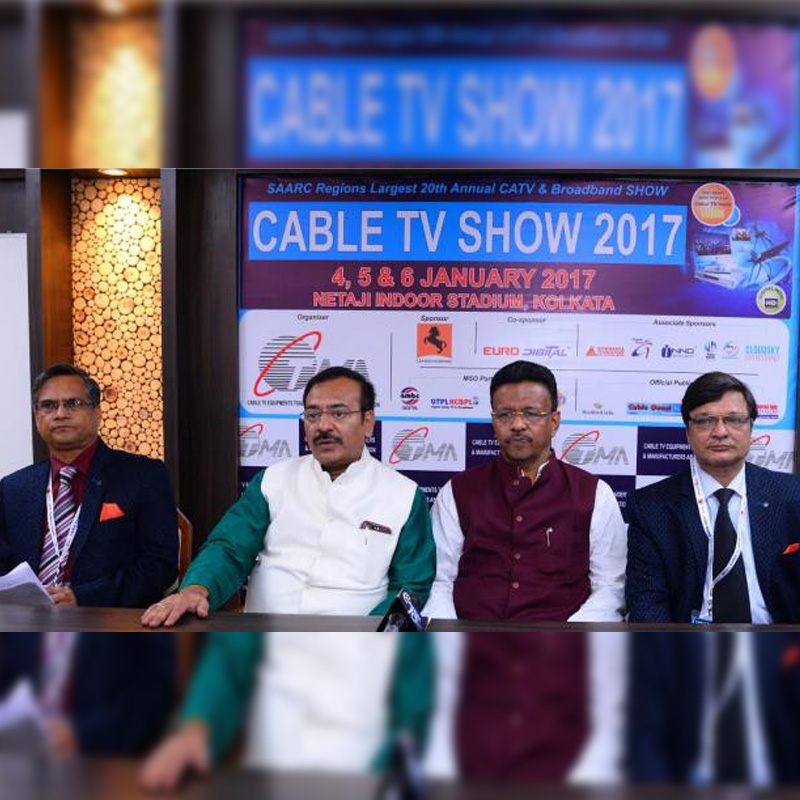
    It was part of a plan by the chief minister Mamata Banerjee who wants the city to look more beautiful without wires, Hakim said while inaugurating a three-day Cable TV Show 2017 from 4 January 4 — the 20th annual show arranged by the Kolkata-based Cable TV Equipment Traders & Manufacturers Association (CTMA).

    Over 10,000 cable operators, manufacturers, traders, channel partners, broadcasters, distributors, and multi-system operators (MSOs) from India and abroad are participating in the show.

    CTMA secretary K K Binani said the plan would minimise possibilities of outside disturbances in connectivity as sometimes wires get damaged during calamities. The industry body said that flat licence fees for multi-system operators had become an entry barrier for small entrepreneurs.

    Cable TV Show 2017 Kolkata, one of the biggest shows on satellite and cable television & broadband in India, was flagged off at the Netaji Indoor Stadium. Hakim inaugurated the event in the presence of minister-in-charge, housing & youth affairs, West Bengal, Aroop Biswas. There are 20 pavilions and 70 stalls erected this year for showcasing a wide range of state-of-the-art products and services related to the cable industry.

    CTMA treasurer & chairman -exhibition Pawan Jajodia said, with the steady digitization of cable television sector and the Digital India campaign, the scope and importance of Cable Television (CATV) had increased manifold. The CATV sector had come a long way to become an organised sector and one that was an important player in promoting digitalisation through the spread of broadband Internet services.

    This event has been sponsored by Darkhorse, and Euro Digital is the co-sponsor. Aishwarya Technologies, Inno Instrument, Globetek Infoway, RailTel, Meghbala, Cloudsky Broadband are associate sponsors.

    Binani said that digitisation of delivery of Cable TV service through set-top box was now in its final and crucial lap as the whole of India would be covered in Phase IV by 31 March 2017. The digital-delivery-enabled networks were now ready to be taken to the next level of delivering value-added services such as broadband internet service, movies on demand, games, pay per view channels, and education etc.

    Binani added that cable TV sector was ready for some sweeping transformation under regulatory intervention. The draft tariff order under consultation by TRAI would bring the addressable services from all delivery platforms such as HITS, MSO, DTH and IPTV under common regulation. The viewer might pay for only the channels that he wished to view/subscribe. Pay channel broadcasters would have to announce a genre and MRP for each of the channels. They must provide channels on terms universal to all delivery platforms. This would make the entry of new entrants feasible. Carriage fee was also proposed to be regulated, Binani said.

    CTMA president Rajesh Doshi said that digitisation has been a game-changer that has transformed the cable sector. The number of licenses issued for downlinking satellite channels into the country crossed 850 channels and the viewer was spoiled for choice with most of the MSOs providing 400 plus channels covering a wide genre and languages. The Cable TV networks in India were ready to play a significant role in helping Internet penetration across India, Doshi added.

  • MSO flat fee a hurdle, says CTMA while backing TRAI & WB’s underground cable

    MSO flat fee a hurdle, says CTMA while backing TRAI & WB’s underground cable

    MUMBAI: The West Bengal government is preparing to build an underground network of cable TV lines in an attempt to keep the city clean, a state minister has said. Urban development minister Firhad Hakim said, in New Town, they had done it and would start soon in Bidhannagar. In Kolkata, they would as early as possible start a pilot project for underground laying of cable TV lines.

    It was part of a plan by the chief minister Mamata Banerjee who wants the city to look more beautiful without wires, Hakim said while inaugurating a three-day Cable TV Show 2017 from 4 January 4 — the 20th annual show arranged by the Kolkata-based Cable TV Equipment Traders & Manufacturers Association (CTMA).

    Over 10,000 cable operators, manufacturers, traders, channel partners, broadcasters, distributors, and multi-system operators (MSOs) from India and abroad are participating in the show.

    CTMA secretary K K Binani said the plan would minimise possibilities of outside disturbances in connectivity as sometimes wires get damaged during calamities. The industry body said that flat licence fees for multi-system operators had become an entry barrier for small entrepreneurs.

    Cable TV Show 2017 Kolkata, one of the biggest shows on satellite and cable television & broadband in India, was flagged off at the Netaji Indoor Stadium. Hakim inaugurated the event in the presence of minister-in-charge, housing & youth affairs, West Bengal, Aroop Biswas. There are 20 pavilions and 70 stalls erected this year for showcasing a wide range of state-of-the-art products and services related to the cable industry.

    CTMA treasurer & chairman -exhibition Pawan Jajodia said, with the steady digitization of cable television sector and the Digital India campaign, the scope and importance of Cable Television (CATV) had increased manifold. The CATV sector had come a long way to become an organised sector and one that was an important player in promoting digitalisation through the spread of broadband Internet services.

    This event has been sponsored by Darkhorse, and Euro Digital is the co-sponsor. Aishwarya Technologies, Inno Instrument, Globetek Infoway, RailTel, Meghbala, Cloudsky Broadband are associate sponsors.

    Binani said that digitisation of delivery of Cable TV service through set-top box was now in its final and crucial lap as the whole of India would be covered in Phase IV by 31 March 2017. The digital-delivery-enabled networks were now ready to be taken to the next level of delivering value-added services such as broadband internet service, movies on demand, games, pay per view channels, and education etc.

    Binani added that cable TV sector was ready for some sweeping transformation under regulatory intervention. The draft tariff order under consultation by TRAI would bring the addressable services from all delivery platforms such as HITS, MSO, DTH and IPTV under common regulation. The viewer might pay for only the channels that he wished to view/subscribe. Pay channel broadcasters would have to announce a genre and MRP for each of the channels. They must provide channels on terms universal to all delivery platforms. This would make the entry of new entrants feasible. Carriage fee was also proposed to be regulated, Binani said.

    CTMA president Rajesh Doshi said that digitisation has been a game-changer that has transformed the cable sector. The number of licenses issued for downlinking satellite channels into the country crossed 850 channels and the viewer was spoiled for choice with most of the MSOs providing 400 plus channels covering a wide genre and languages. The Cable TV networks in India were ready to play a significant role in helping Internet penetration across India, Doshi added.

  • TRAI to meet b’casters, MSOs, DTH ops, telcos on ’17 roadmap

    TRAI to meet b’casters, MSOs, DTH ops, telcos on ’17 roadmap

    NEW DELHI: As promised by TRAI chairman RS Sharma, the regulator is getting pro-active. It has scheduled meetings with top executives of telecom, broadcasting, DTH and MSO companies over the next one week starting 6 January, 2017 to seek their opinion on issues to be taken up during 2017.

    The first of these high-level meetings would take place Friday when TRAI Chairman and other officials would interact with CEOs of all telecom companies, including Bharti, Vodafone and Reliance Jio, to discuss and identify important issues that need to be taken up during the year, PTI reported.

    A similar meeting is slated with top executives of cable, broadcasting, MSO and DTH companies on January 10, 2017, PTI quoted TRAI sources as saying.

    “We have invited the CEOs of all telecom companies, including Bharti Airtel, Vodafone, Idea Cellular, Reliance Jio and others for a discussion on January 6. Similarly, we have invited top executives of broadcasting companies, MSOs, and DTH companies on January 10,” the PTI report quoted sources as saying.

    TRAI’s latest initiatives are in line with what Chairman RS Sharma had told indiantelevision.com in a year-end interview middle of December 2016 on charting a roadmap for 2017.

    “What we plan to do in 2017 is something interesting. While there will be always issues that will need TRAI’s urgent attention — for example, the government may ask for advice on spectrum prices — we are trying to create a calendar for the next year…. highlighting the works that need to be taken up in 2017 and which will act as a roadmap,” Sharma had told indiantelevision.com.

    Asked about the issues likely to be taken up by TRAI in2017, in consultation with the industry, Sharma had indicated it could involve data and consumer protection, Internet of Things (IoT), digital terrestrial broadcasting and other issues related to emerging technologies.

    ALSO READ

    “There would be a lot on TRAI’s plate in 2017” – RS Sharma

  • TRAI to meet b’casters, MSOs, DTH ops, telcos on ’17 roadmap

    TRAI to meet b’casters, MSOs, DTH ops, telcos on ’17 roadmap

    NEW DELHI: As promised by TRAI chairman RS Sharma, the regulator is getting pro-active. It has scheduled meetings with top executives of telecom, broadcasting, DTH and MSO companies over the next one week starting 6 January, 2017 to seek their opinion on issues to be taken up during 2017.

    The first of these high-level meetings would take place Friday when TRAI Chairman and other officials would interact with CEOs of all telecom companies, including Bharti, Vodafone and Reliance Jio, to discuss and identify important issues that need to be taken up during the year, PTI reported.

    A similar meeting is slated with top executives of cable, broadcasting, MSO and DTH companies on January 10, 2017, PTI quoted TRAI sources as saying.

    “We have invited the CEOs of all telecom companies, including Bharti Airtel, Vodafone, Idea Cellular, Reliance Jio and others for a discussion on January 6. Similarly, we have invited top executives of broadcasting companies, MSOs, and DTH companies on January 10,” the PTI report quoted sources as saying.

    TRAI’s latest initiatives are in line with what Chairman RS Sharma had told indiantelevision.com in a year-end interview middle of December 2016 on charting a roadmap for 2017.

    “What we plan to do in 2017 is something interesting. While there will be always issues that will need TRAI’s urgent attention — for example, the government may ask for advice on spectrum prices — we are trying to create a calendar for the next year…. highlighting the works that need to be taken up in 2017 and which will act as a roadmap,” Sharma had told indiantelevision.com.

    Asked about the issues likely to be taken up by TRAI in2017, in consultation with the industry, Sharma had indicated it could involve data and consumer protection, Internet of Things (IoT), digital terrestrial broadcasting and other issues related to emerging technologies.

    ALSO READ

    “There would be a lot on TRAI’s plate in 2017” – RS Sharma

  • DTH adds 14 lakh active subscribers in Q2-17 as per TRAI data

    DTH adds 14 lakh active subscribers in Q2-17 as per TRAI data

    BENGALURU: The DTH industry in India has added about 14 lakh (1.4 million) active subscribers in the quarter ended 30 September 2016 (Q2-17, current quarter) as compared to the immediate trailing quarter (Q1-17). The number of active DTH subscribers in the country increased to 6.19 crore (61.9 million) as compared to 6.05 crore (60.5 million) in Q1-7. TRAI had reported 4.05 crore (40.5 million) active subscribers for the corresponding year ago quarter Q2-16. . It may be noted that TRAI (Telecom Regulatory Authority Regulator has been reportingthe net active subscriber base included temporarily suspended subscribers that have been inactive for not more than 120 dayssince Q3-16 (quarter ended 31 December 2015).

    The growth seems to have slowed in Q2-17 down despite the extended sunset date for DAS IV nearing. In the previous quarter, the industry had added 19.7 lakh (1.97 million), 25.5 lakh (2.55 million) in the quarter ended 31 March 2016 (Q4-16). Further, the industry has witnessed a faster growth of inactive subscribers as compared to active subscribers in Q2-17. Total number of registered subscribers grew 2.9 percent in the current quarter, while active subscribers grew by just 2.3 percent. In Q1-17 TRAI had reported 9.153 crore or 91.53 million registered subscribers, which grew to 9.416 crore or 94.16 million or a growth of 26.3 lakh (2.63 million) registered subscribers. As mentioned above active subscribers grew by just 14 lakh or 1.4 million in the same period.

    Of the six private players in the Indian DTH ecosystem, three are publically listed and their numbers are available in the public domain – They are in alphabetical order: Airtel Digital TV Services or Airtel DTH which is a small segment/division of Indian telecom major Bharti Airtel Limited; Dish TV, the largest DTH player in the country in terms of number of subscribers; and Videocon d2h. These three have about two thirds of market share of the DTH universe in India. Of the other three players, Tata Sky is a major player and should have a market share about equal to Airtel DTH or Videocon d2h (about 20 percent). The other players – Reliance DTH and Sun Direct have a combined market share between 13 to 15 percent in terms of subscribers. It may be noted that at present probably the largest DTH player in India is the government’s FreeDish, but since it is a free service, no subscriber data is available even with PrasarBharati.

    Please refer to Fig A below for DTH subscriber growth.

    public://F1_0.jpg

    For Q2-17, the growth of the three major players was even slower than the industry – their combined subscriber base grew just 1.9 percent quarter-over-quarter (q-o-q) by just 7.45 lakh (0.625 million) to 400.25 lakh (40.025 million) from 392.8 lakh (39.28 million) in the immediate trailing quarter.

    Fig B below indicates the approximate market share in terms of subscribers of the six private DTH players in the country.

    public://F2_0.jpg

    Let us see how they performed during the current quarter (Q2-17)

    Airtel Digital TV Services or Airtel DTH

    Airtel DTH reported 21.9 percent year-over-year (y-o-y) increase in operating revenues to RsRs 854.5 crore in Q2-17 as compared to Rs 706.8 crore in Q2-16. The segment’s operating profit (EBIT) more than quadrupled y-o-y to Rs 69.8 crore from Rs 17 crore, but declined 42.7 percent q-o-q from Rs 121.9 crore.

    Airtel’s DTH segment added 18.29 lakh subscribers between Q2-16 and Q2-17, or a 17.3 percent y-o-y increase. The company says that this is the highest growth in percentage terms over seventeen quarters. It had 124.05 lakh subscribers as on 30 September 2016. Q-o-q, the segment witnessed a 2.1 percent growth (2.56 lakh adds) in subscribers from 121.49 lakh in Q1-17.

    ARPU in Q2-17 increased to Rs 232 from Rs 224 in the corresponding year ago quarter, but declined marginally (by Re 1) from Rs 233 in the immediate trailing quarter.

    Dish TV

    Three segments contribute to Dish TV’s numbers – DTH; Infra Support Services; and ‘Others’.

    Dish TV’s DTH segment revenue in Q2-17 declined 14.2 percent to Rs 509.55 crore from Rs 594.16 crore in Q2-16. The segment reported 15.5 percent lower operating profit in the current quarter at Rs 86.43 crore as compared to Rs 102.24 crore in the corresponding year ago quarter.

    The company reported addition of 2.59 lakh net subscribers for Q2-17. It closed the quarter with 151 lakh subscribers. Average revenue per user (ARPU) for Q2-17 was Rs 162 in the current quarter versus Rs 161 in the corresponding year ago quarter. It may be noted that as of this fiscal, Dish TV has been reporting ARPU number net of service tax and hence comparison with the other players is inappropriate.

    Dish TV reported 11.9 percent higher y-o-y subscription revenue of Rs 728.8 crore for Q2-17, as compared to Rs 651.4 crore. Operating revenue in the current quarter increased 9.6 percent y-o-y to Rs 779.6 crore from Rs 711.2 crore in the corresponding quarter of the previous year.

    Dish TV reported PAT of Rs. 70.1 crore in Q2-17, down 19.4 percent as compared to Rs 87 crore in Q2-16. EBIDTA in the current quarter increased 3.6 percent to Rs 264.2 crore from Rs 255 crore in Q2-16.

    Videocon d2h

    Videocon d2h reported 12.5 percent y-o-y growth in total revenue from operations for Q2-17 at Rs 776.16 crore as compared to Rs 690.08 crore and a 1.7 percent q-o-q growth from Rs 763.25 crore.

    Videocon d2h reported PAT of Rs 6.32 crore (0.8 percent margin) Q2-17, current. For the corresponding year ago quarter (Q2-17), the company had reported a loss of Rs 24.59 crore while for the immediate trailing quarter (Q1-17) the company had reported profit of Rs 2.66 crore (0.3 percent margin).

    The DTH major also reported 15.5 percent year-over-year (y-o-y) growth in net subscriber numbers at 125.2 lakh for Q2-17 as compared to 108.4 lakh and a 1.9 percent quarter-over-quarter (q-o-q) growth from122.9 lakh. Monthly Average revenue per user (ARPU) in the current quarter increased to Rs 209 from Rs 201 in Q2-16 but declined by Rs 2 from Rs 211 in the immediate trailing quarter.

  • DTH adds 14 lakh active subscribers in Q2-17 as per TRAI data

    DTH adds 14 lakh active subscribers in Q2-17 as per TRAI data

    BENGALURU: The DTH industry in India has added about 14 lakh (1.4 million) active subscribers in the quarter ended 30 September 2016 (Q2-17, current quarter) as compared to the immediate trailing quarter (Q1-17). The number of active DTH subscribers in the country increased to 6.19 crore (61.9 million) as compared to 6.05 crore (60.5 million) in Q1-7. TRAI had reported 4.05 crore (40.5 million) active subscribers for the corresponding year ago quarter Q2-16. . It may be noted that TRAI (Telecom Regulatory Authority Regulator has been reportingthe net active subscriber base included temporarily suspended subscribers that have been inactive for not more than 120 dayssince Q3-16 (quarter ended 31 December 2015).

    The growth seems to have slowed in Q2-17 down despite the extended sunset date for DAS IV nearing. In the previous quarter, the industry had added 19.7 lakh (1.97 million), 25.5 lakh (2.55 million) in the quarter ended 31 March 2016 (Q4-16). Further, the industry has witnessed a faster growth of inactive subscribers as compared to active subscribers in Q2-17. Total number of registered subscribers grew 2.9 percent in the current quarter, while active subscribers grew by just 2.3 percent. In Q1-17 TRAI had reported 9.153 crore or 91.53 million registered subscribers, which grew to 9.416 crore or 94.16 million or a growth of 26.3 lakh (2.63 million) registered subscribers. As mentioned above active subscribers grew by just 14 lakh or 1.4 million in the same period.

    Of the six private players in the Indian DTH ecosystem, three are publically listed and their numbers are available in the public domain – They are in alphabetical order: Airtel Digital TV Services or Airtel DTH which is a small segment/division of Indian telecom major Bharti Airtel Limited; Dish TV, the largest DTH player in the country in terms of number of subscribers; and Videocon d2h. These three have about two thirds of market share of the DTH universe in India. Of the other three players, Tata Sky is a major player and should have a market share about equal to Airtel DTH or Videocon d2h (about 20 percent). The other players – Reliance DTH and Sun Direct have a combined market share between 13 to 15 percent in terms of subscribers. It may be noted that at present probably the largest DTH player in India is the government’s FreeDish, but since it is a free service, no subscriber data is available even with PrasarBharati.

    Please refer to Fig A below for DTH subscriber growth.

    public://F1_0.jpg

    For Q2-17, the growth of the three major players was even slower than the industry – their combined subscriber base grew just 1.9 percent quarter-over-quarter (q-o-q) by just 7.45 lakh (0.625 million) to 400.25 lakh (40.025 million) from 392.8 lakh (39.28 million) in the immediate trailing quarter.

    Fig B below indicates the approximate market share in terms of subscribers of the six private DTH players in the country.

    public://F2_0.jpg

    Let us see how they performed during the current quarter (Q2-17)

    Airtel Digital TV Services or Airtel DTH

    Airtel DTH reported 21.9 percent year-over-year (y-o-y) increase in operating revenues to RsRs 854.5 crore in Q2-17 as compared to Rs 706.8 crore in Q2-16. The segment’s operating profit (EBIT) more than quadrupled y-o-y to Rs 69.8 crore from Rs 17 crore, but declined 42.7 percent q-o-q from Rs 121.9 crore.

    Airtel’s DTH segment added 18.29 lakh subscribers between Q2-16 and Q2-17, or a 17.3 percent y-o-y increase. The company says that this is the highest growth in percentage terms over seventeen quarters. It had 124.05 lakh subscribers as on 30 September 2016. Q-o-q, the segment witnessed a 2.1 percent growth (2.56 lakh adds) in subscribers from 121.49 lakh in Q1-17.

    ARPU in Q2-17 increased to Rs 232 from Rs 224 in the corresponding year ago quarter, but declined marginally (by Re 1) from Rs 233 in the immediate trailing quarter.

    Dish TV

    Three segments contribute to Dish TV’s numbers – DTH; Infra Support Services; and ‘Others’.

    Dish TV’s DTH segment revenue in Q2-17 declined 14.2 percent to Rs 509.55 crore from Rs 594.16 crore in Q2-16. The segment reported 15.5 percent lower operating profit in the current quarter at Rs 86.43 crore as compared to Rs 102.24 crore in the corresponding year ago quarter.

    The company reported addition of 2.59 lakh net subscribers for Q2-17. It closed the quarter with 151 lakh subscribers. Average revenue per user (ARPU) for Q2-17 was Rs 162 in the current quarter versus Rs 161 in the corresponding year ago quarter. It may be noted that as of this fiscal, Dish TV has been reporting ARPU number net of service tax and hence comparison with the other players is inappropriate.

    Dish TV reported 11.9 percent higher y-o-y subscription revenue of Rs 728.8 crore for Q2-17, as compared to Rs 651.4 crore. Operating revenue in the current quarter increased 9.6 percent y-o-y to Rs 779.6 crore from Rs 711.2 crore in the corresponding quarter of the previous year.

    Dish TV reported PAT of Rs. 70.1 crore in Q2-17, down 19.4 percent as compared to Rs 87 crore in Q2-16. EBIDTA in the current quarter increased 3.6 percent to Rs 264.2 crore from Rs 255 crore in Q2-16.

    Videocon d2h

    Videocon d2h reported 12.5 percent y-o-y growth in total revenue from operations for Q2-17 at Rs 776.16 crore as compared to Rs 690.08 crore and a 1.7 percent q-o-q growth from Rs 763.25 crore.

    Videocon d2h reported PAT of Rs 6.32 crore (0.8 percent margin) Q2-17, current. For the corresponding year ago quarter (Q2-17), the company had reported a loss of Rs 24.59 crore while for the immediate trailing quarter (Q1-17) the company had reported profit of Rs 2.66 crore (0.3 percent margin).

    The DTH major also reported 15.5 percent year-over-year (y-o-y) growth in net subscriber numbers at 125.2 lakh for Q2-17 as compared to 108.4 lakh and a 1.9 percent quarter-over-quarter (q-o-q) growth from122.9 lakh. Monthly Average revenue per user (ARPU) in the current quarter increased to Rs 209 from Rs 201 in Q2-16 but declined by Rs 2 from Rs 211 in the immediate trailing quarter.

  • Indian OTT/VOD  will not impact cable TV and DTH: Edelweiss Capital

    Indian OTT/VOD will not impact cable TV and DTH: Edelweiss Capital

    MUMBAI: Financial services firm Edelweiss Capital’s research division’s latest report on the impact of OTT on television in India is surely going to delight the cockles of executives in broadcasting companies and probably raise the hackles of those in the video on demand space. The report says that, even as consumers are bound to increase their spends and time spent on video – either on handheld devices or on their smart TVs or their laptops, this will have a negligible impact on traditional linear TV’s fortunes.

    Cord cutting or cord shaving which has been rampant in the US as cable TV and DTH viewers shift from their expensive services to cheaper VOD options or to cheaper TV packages is not something that is going to pop up in a hurry in India, says the Edelweiss report. The Indian cable TV and DTH segments are marked by low monthly rentals of Rs 300-450 as compared to the US where DTH and cable TV fees have soared.

    “The Indian OTT market is at a nascent stage and is quite like the US was seven years ago,” it points out.

    However, it is optimistic about the growth of the OTT sector. Currently, the challenge is broadband speed, the report points out, with the average home clocking 3.5 mbps, which is not enough to offer lag-free HD video streaming. It reveals that this will change with cheaper data and broadband options fueling VOD and OTT taking consumption of video content up from 3.5 hours to five hours daily.

    Consumers are going to open their wallets and spend Rs 600-700 per month from the current Rs 300-450 per month to view video content across various platforms in the next five years, the report says. “In the case of India, it is largely a single-TV home market where not everyone in the family gets to watch what they want during prime time which will aid the OTT space,” the report adds.

    But, VOD and OTT is only going to complement traditional television and not erode it is the report’s guidance.

    The brokerage house is quite clear that TV advertising is also going to hold its ground because its viewership is going to continue to be steady. And, there is going to be no loss in revenues on account of VOD/OTT and the heady growths in digital video consumption and digital advertising.

  • Indian OTT/VOD  will not impact cable TV and DTH: Edelweiss Capital

    Indian OTT/VOD will not impact cable TV and DTH: Edelweiss Capital

    MUMBAI: Financial services firm Edelweiss Capital’s research division’s latest report on the impact of OTT on television in India is surely going to delight the cockles of executives in broadcasting companies and probably raise the hackles of those in the video on demand space. The report says that, even as consumers are bound to increase their spends and time spent on video – either on handheld devices or on their smart TVs or their laptops, this will have a negligible impact on traditional linear TV’s fortunes.

    Cord cutting or cord shaving which has been rampant in the US as cable TV and DTH viewers shift from their expensive services to cheaper VOD options or to cheaper TV packages is not something that is going to pop up in a hurry in India, says the Edelweiss report. The Indian cable TV and DTH segments are marked by low monthly rentals of Rs 300-450 as compared to the US where DTH and cable TV fees have soared.

    “The Indian OTT market is at a nascent stage and is quite like the US was seven years ago,” it points out.

    However, it is optimistic about the growth of the OTT sector. Currently, the challenge is broadband speed, the report points out, with the average home clocking 3.5 mbps, which is not enough to offer lag-free HD video streaming. It reveals that this will change with cheaper data and broadband options fueling VOD and OTT taking consumption of video content up from 3.5 hours to five hours daily.

    Consumers are going to open their wallets and spend Rs 600-700 per month from the current Rs 300-450 per month to view video content across various platforms in the next five years, the report says. “In the case of India, it is largely a single-TV home market where not everyone in the family gets to watch what they want during prime time which will aid the OTT space,” the report adds.

    But, VOD and OTT is only going to complement traditional television and not erode it is the report’s guidance.

    The brokerage house is quite clear that TV advertising is also going to hold its ground because its viewership is going to continue to be steady. And, there is going to be no loss in revenues on account of VOD/OTT and the heady growths in digital video consumption and digital advertising.

  • Shemaroo to further focus on digital

    Shemaroo to further focus on digital

    MUMBAI: Content aggregation and distribution company Shemaroo Entertainment is going into an overdrive on the digital ecosystem. And it’s working for the firm which is quoting currently at Rs 382 (on Wednesday 03pm) on the Bombay stock exchange.

    In an interview with CNBC TV18 on 20 December, Shemaroo’s wholetime director and CFO Hiren Gada said, “Digital is currently contributing 20 per cent of its top line revenues,” and growth has been at a healthy 50 per cent and more.

    Gada further elaborated that around Rs 24 crore of its previous quarter’s revenues of around Rs 100 crore came courtesy digital or new media. He was specially buoyant about the 4.5 million views per day that its channels on YouTube were generating. Its mother channel Shemaroo had 2.28 million subscribers, Filmi Gaane had 1.8 million subscribers, Shemaroo Movies had 431,579 subscribers, and Shemaroo Kids had 281,000 subscribers cumulatively generating 1.42 billion views, 1.26 billion views, 142 million views and 186 million views, respectively.

    “So, that kind of bears out as a strategy and conviction that the content strategy that we are following is getting tremendous traction with the audience,” he said.

    Gada disclosed that telcos such as Vodafone, Idea and Airtel which it has partnered are already adding a “large component of revenues” to the company’s topline. “Then, there are all these (platforms) which are the next level of services, some of which are nascent or new like Reliance Jio or Hotstar or iTunes or any other international platforms. They hold tremendous potential.”

    Gada added that the company’s content is unmissable. “.. given the kind of content we are sitting on, no one can run a meaningful Bollywood service without some content from Shemaroo. So, to that extent, we are either in talks or already deployed on many of the platforms that are already operating.”

    Gada was hopeful of maintaining or hiking the revenue growth levels of 50 per cent that its new media focus has been generating over the next quarter as well. He also highlighted that margins for this segment were also higher than for the company as a whole as operating costs are being kept in check.

    Shemaroo has also tied up with DTH operators such as Tata Sky, Dish TV and Airtel to run specialised value added services for them covering movies, comedy, religious songs.