Tag: DTH

  • PEMRA petition in DTH case admitted in Pak SC

    MUMBAI: The apex court of Pakistan on Thursday admitted for hearing an appeal filed by the Pakistan Electronic Media Regulatory Authority challenging a Lahore High Court order of 28 December 2016, that had set aside PEMRA regulations prohibiting television broadcasters from entering the Direct to Home (DTH) market.

    SC’s five-judge bench headed by Justice Gulzar Ahmed granted leave to appeal after hearing the arguments of PEMRA counsel Salman Akram Raja, the Dawn reported.

    Advocate Raja argued that Pakistan’s television broadcast market is dominated by 10 television channels out of a total of 90, in terms of market share and advertising revenue. On 24 November, 2016, PEMRA had auctioned three DTH licences for PKR 14.69 billion with the aim of stopping the proliferation of ‘illegal’ Indian DTH broadcasts which were causing an annual loss of billions of rupees to the national exchequer. The highest bid was raised by Mag Entertainment for PKR 4.91 billion, respectively followed by M/s. Shahzad Sky for PKR 4.90 billion and M/s. Star Time for Rs 4.89 billion. PEMRA had issued non-exclusive licences for 15 years to the three companies.

    PEMRA argued that if the broadcasters were to be allowed to enter the DTH market, one or more of the larger broadcast channels would end up controlling the distribution of the content while monopolising one-third or more.

    Earlier, the Lahore High Court has requested PEMRA to start the bidding process for direct-to-home (DTH) licences again, after it declared the auction void.

    Pakistani DTH services would have countered the sale of Indian DTH services in Pakistan, which leads to annual transfer of between US$ 200 million to US$ 350 million to India on account of subscription fee.

    Also read:

    Pak DTH: Mag, Shahzad & Star Time to start ops in a year

    Pakistan gets tough on Indian DTH & content

    Pak DTH licence bidding stayed

  • Netflix to set shop in Mumbai, invest in local content

    MUMBAI: US California-based video streaming service provider Netflix has plans to establish an office in India aimed at stepping up its game in India, according to a National US-India Chamber of Commerce news release. The India office is expected to be based in Mumbai — the company’s fourth in Asia, after Tokyo, Singapore and Taiwan.

    Netflix recently announced that its service will now be available on the DTH platforms of Bharti Airtel and Videocon. It also entered into a carrier billing agreement with Vodafone India.

    Also, the streaming service is planning to invest in making new content for the Indian market, and also come up with new payment platforms, the release stated.

    The NUICC release, citing Netflix chief executive Reed Hastings, said the Mumbai office will be as big as Tokyo within a few years. Hastings added that India had seen the highest growth among all Asian markets for Netflix’s offering, and targets to be among the top five apps on a consumer’s phone.

    Netflix at present has around 94 million users, among which 44 million are outside the US market, according to the NUICC statement.

    The expansion move comes when the company is attempting to be the first to eliminate buffering while at the same time working on technology that enables content to stream at speeds of 100 kbps. Such a move could boost the company in markets like India, the world’s fastest growing smartphone market, where network speeds are among the slowest in the world, the NUICC said.

    Also Read :

    Futureworks implements HDR and ACES

    Amazon Prime subs may get Fire TV device for Rs 1999 this month

    Airtel launches hybrid DTH STB, to have 500+ channels, Netflix & YouTube preloaded

  • MIB cracks whip on illegal analogue signals, states asked to ensure compliance

    MIB cracks whip on illegal analogue signals, states asked to ensure compliance

    NEW DELHI: Exactly three weeks into the new era of digital addressable system for cable television in the country, the government has requested state government officers to ensure that no analogue signals are transmitted by any cable operator.

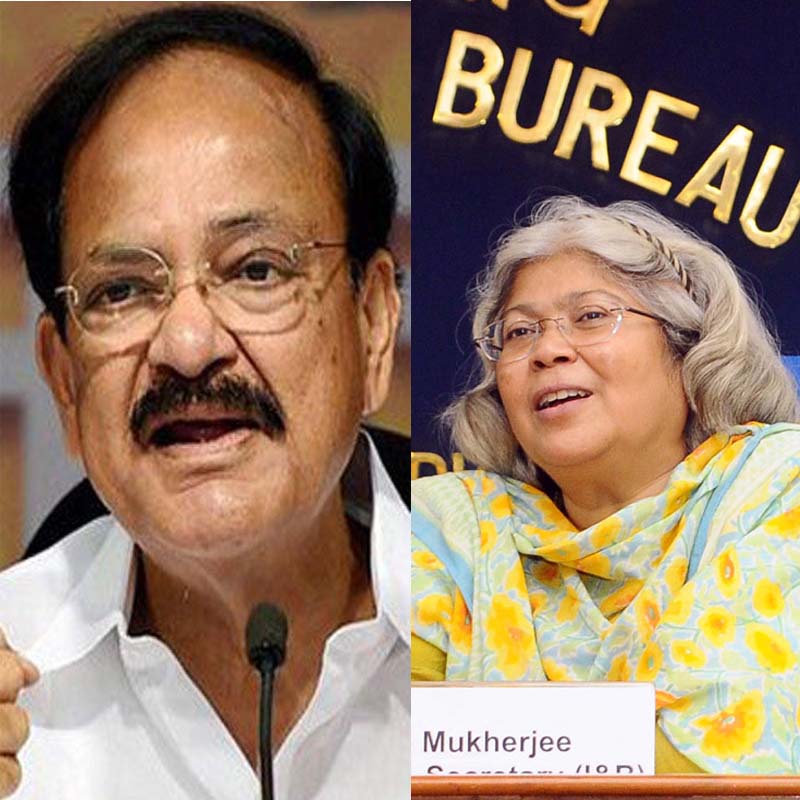
    In an advisory sent to the designated officers in state governments, information and broadcasting ministry additional secretary Jayashree Mukherjee said that, in case any MSOs/cable operators is not complying with these directions/orders, action can be initiated under Section 11 of the Cable TV Networks (Regulation) Act for  violating Section 4A of the Cable TV Act, under intimation to the Ministry.

    She added that some complaints for carriage of analogue signals are being received in the Ministry and these are being sent to the respective Authorised officers separately for taking action.

    However, conflicting reports continue to come in -particularly from Phase IV areas – of non-compliance with DAS and the continuation of analogue signals. The DTH operators have also stepped up their marketing campaigns to net the customers in these areas.

    The Ministry on 23 December 2016 had extended the cut-off date of switch over to digital in Phase IV areas to 31 March 2017 and a circular was issued on 30 March 2017 to ensure switch off of analog signals in Phase IV areas by 1 April 2017.

    Under Section 4A of the Cable Television Network (Regulation) Act 1995, it is obligatory for every cable operator to transmit or re-transmit programmes of any channel in an encrypted form through a digital addressable system with effect from the dates as may be specified or notified by the Ministry from time to time. Section 2 of the Act says the DM, SDM and CP are the authorised officers who have powers under Section 11 to seize the equipment used for operating Cable TV Network if there are violations of provisions of the Cable Act, including Section 4A.

    Also Read :

    DAS: Even official figures show cable TV digitisation is incomplete

    DAS: MSOs, LCOs give low figure of STB seeding, official sources admit it’s under 80%

    Analogue signals: MIB to take action against defaulters

    Action to be taken against analogue-using  MSOs / LCOs in urban areas

  • TRAI seeks ideas on ease of doing b’cast business

    NEW DELHI: With the fast changing regulatory framework for the media and entertainment sector, which in India is one of the fastest growing sectors, the Telecom Regulatory Authority of India has embarked on a major exercise to find out easier ways of doing business and cause least harassment to entrepreneurs. In short, try to examine where all procedural delays can be shaved off and what all could be made redundant.

    It has now issued a pre-consultation paper on the ease of doing business in broadcasting, which comes just a few months after a similar paper on telecoms. In the new era of convergence, the two sectors are expected to complement each other.

    public://tr1.jpg

    TRAI, which has raised questions about all sectors in the electronic media, has asked stakeholders to respond with their comments by 8 May 2017.

    The Authority has on its own decided to go for a pre-consultation with the stakeholders on ease of doing business in the broadcasting sector, taking a cue from PM Modi-led government’s efforts to ease doing businesses in India. It hopes to review various policy issues related to the broadcasting sector with a view to create a conducive and business friendly environment in the sector and identify procedural bottlenecks that affect ease of doing business in the broadcasting sector and recommend measures for simplifying the rules, regulations and bring more transparency and clarity in policies/ framework of the broadcasting sector. 

    public://tr2.jpg

    The aim is also to remove entry barriers by laying down well defined and transparent procedures and processes thereby creating level playing field and competition in the sector and to facilitate innovation and technology adoption for providing better quality of services to the consumers to steer further growth of the sector by attracting investment through investor friendly policies 

    Subjects to be covered in the pre-consultation before a final consultation paper is issued are related to processes and procedures for obtaining permission/license/registration for the following broadcasting services and subsequent compliance connected with these permissions. The fields include:

    (a) Uplinking of TV channels 
    (b) Downlinking of TV channels 
    (c) Teleport services 
    (d) Direct-to-home services 
    (e) Private FM services 
    (f) Headend-in-the sky services 
    (g) Local Cable Operators 
    (h) Multi System Operators 
    (i) Community Radio Stations 

    The consultation will include allocation of broadcasting spectrum; clearance from Department of Space; WPC clearance for broadcasting services; SACFA Clearance Process; and Clearance from Network Operations Control Center (NOCC).

    For DTH, the issues include disaster Recovery Site for DTH Operator; and transmission of radio services over DTH platform.

    public://tr3.jpg

    Other issues are Right of Way for cable operators; Broadband through cable TV; Open sky policy for KU band; Rationalization of FDI policy in broadcasting sector, developing India as a teleport hub, Skilled manpower in broadcasting sector, and Indigenous manufacturing of broadcasting equipment.

    While the broadcasting sector so far has been replete with success, the Authority feels that this sector has immense potential to move on higher trajectory of growth if more conducive business environment could be created by simplifying existing provisions of policy framework related to broadcasting sector. It has also been noted that certain existing provisions may require a re-look in view of the technological changes that have taken place in the broadcasting sector.

    The Authority is of the view that the attractiveness of business proposition  is the prime mover and creates the potential for investments, but ease of doing business enables greater realization of this potential. Therefore, taking a cue from the Government’s efforts towards ease of doing business

  • ISRO’s ‘South Asia Satellite’ to carry 12 ku-band transponders

    MUMBAI: India has planned to launch the ‘South Asia Satellite’ on 5 May which will benefit all the neighbouring countries, except Pakistan, which is not a part of the project. Indian Space Research Organisation (ISRO) chairman A S Kiran Kumar told PTI that the launch would take place in the first week of May.

    ISRO scripted history in February 2017 by launching 104 satellites, including India’s weather observation Cartosat-2 Series, in a single mission onboard its dependable Polar rocket. So far, ISRO has launched 226 satellites, including 179 belonging to foreign countries.

    ISRO sources said that the launch of this communication satellite (GSAT-9) has been scheduled on board the space agency’s rocket GSLV-09 from Sriharikota spaceport. Kumar said, the satellite, with a lift-off mass of 2,195 kg, would carry 12 ku-band transponders. Sources said the satellite has been designed for a mission life of more than 12 years.

    The satellite is meant for providing communication and disaster support, connectivity among states (countries of South Asia region). It will provide a significant capability to each of these participating states in terms of DTH, certain VSAT capacity plus linking among the states for both disaster information transfer and also in terms of library type of things.

    “So, there is a significant amount of inter-linking possible among the states (countries),” Kumar added. According to ISRO officials, there is a potential for each participating country to use a dedicated transponder with a capacity of 36 to 54 Mhz for its own internal use. Each country would be responsible for content generation and its use, the officials said.

    Also Read:

    MIB: No DPO request for infra sharing, DTH ops’ transponder demand up

    ISRO ready for nexGen vehicle, GSLV can launch 2.2 tonne satellites to GTO

    ISRO world record in 104-satellite launches on a single flight    


  • Dish TV expects significant growth from DAS P III & IV markets

    MUMBAI: Even as India’s consolidating MSOs race ahead to digitise India’s cable TV infrastructure — albeit in fits and starts — in smaller towns and villages, direct to home platform (DTH) owners expect to capture a slice of the action there. Amongst those who have been pushing in the heartlands include state-owned pubcaster’s DD FreeDish. And, it has registered some gains there. Dish TV — which is slated to complete its merger with Videocon d2h later this year — is also hoping to partake the TV subscriber harvest in heartland India.

    “We are anticipating that 70 per cent of the new connections over the next two years would come from those living in small towns and rural markets,” Dish TV CEO Arun Kapoor told PTI, adding that, “it would be primarily because of implementation of Digital Addressable System (DAS) in Phase III and IV.” Of Dish TV’s 15.5 million subscriber base at present, around 35 per cent are from top 100 cities, and the remainder from small towns and rural markets.

    Dish TV is expecting the Average Revenue Per User (ARPU) of the DTH industry to grow over two-fold in the next five years to Rs. 450-500. ARPU would increase from the current industry average of Rs. 150-160. This would be primarily driven by growth in number of HD channels, Value Added Services on DTH platform and implementation of DAS,” Kapoor added.

    Dish TV, the Zee group DTH service arm, is hoping to formally complete the merger with Videocon Group’s DTH arm Videocon d2h by October 2017 after receiving the required regulatory approvals. The merged company would have a subscriber base of 27.2 million, making it the largest DTH service provider in the industry. The merged entity will be renamed as Dish TV Videocon Ltd., the total revenue of Dish TV and Videocon d2h together was Rs. 5,915.8 crore on a pro-forma basis for the fiscal ended 31 March, 2016.

    Dish TV has an active subscriber base of 15.5 million, while that of Videocon d2h stands at around 12.2 million. The DTH industry has around 62 million active subscribers.

    Kapoor said it was soon expecting approvals from regulatory bodies such as National Company Law Tribunal, the Competition Commission of India, and stock exchanges.

    According to Kapoor, the DTH industry, which has players such as Sun Direct, TataSky, Airtel digital TV, Reliance Digital, has a current growth rate of 10 to 12 per cent.

    Also Read  :

    Migrate registration to GST regime, DishTV persuades distributors & trade partners

    DishTV expands its portfolio by 23 channels

    Active DTH subscriber growth subdued in Oct-Dec’16 quarter

  • Amazon Prime subs may get Fire TV device for Rs 1999 this month

    MUMBAI: Giving competition to Roku, Google Chrome Cast and similar streaming devices, Amazon Fire TV streaming gadget may be about to be launched in India this month. Reports have come in that the device will be available for Prime members at a starting price of Rs 1999.00, and for Rs 3999.00 for other subscribers. 

    Officially, Amazon neither confirmed nor denied the development when indiantelevision.com called up.

    Airtel last week launched its first Internet TV set-top box at Rs 4999 with three months complimentary primary subscription. Reports of Reliance Jio planning to launch internet TV STB are also out. 

    Although Fire TV may not replace your DTH, Fire stick users will be able to access apps such as Youtube, Netflix, and of course Prime video. Prime subscribers will get unlimited access to the Amazon prime videos, shows and movies. 

    Besides Amazon, Reliance Digital and Croma will reportedly stock this product in chosen cities initially, and distribution is planned to expand to other cities step by step. Fire TV products are sold in stick or a TV box forms.

    Fire stick’s main OS is a tweaked version of Android with Amazon UI added in. This gadget is powered by 1GB RAM and a Quad-core processor and the primary feature is a Alex-backed voice command so that it could be operated by a remote. 

    The stick measures 85.9 x 30.0 x 12.6mm, and is shaped to plug directly into an HDMI port on the back of the TV. Amazon’s hardware is a bit wider than a standard HDMI cable. On the side of the stick is a micro USB port for powering the device. Amazon also adds in a power adaptor in the box, and its USB cable is generally longer, so as to reach the power strip. The device has seen some upgradation Wi-Fi has been upgraded to 802.11ac standard, which would help content to buffer faster. 

    Among the cons are — the device isn’t smart enough to know which streaming service a particular show is available on. Resolution is limited to around 1080p, although this could be understandable in a limited budget.

    Also Read:

    Netflix confirms seven million subs; picks up Amazon gauntlet

    Amazon Fire TV: Autism channel now available free

  • DD FreeDish poised to increase channel capacity to 250

    NEW DELHI: Doordarshan DTH platform FreeDish, which already has a capacity of 124 channels including HD channels, will soon getting approval to increase this capacity to 250 channels over the next two years. The minister of state for information and broadcasting Rajyavardhan Rathore told the Parliament that Doordarshan’s DD National Channel has been uplinked in the High Definition (HD) format since 1 January this year.

    With analogue having been largely switched off, many stakeholders feel that FreeDish is the best option in Phase IV which covers rural India. The Ministry had itself said  in the Parliament last month that HITS (Head-end In The Sky), private DTH and DD FreeDish are the options in remote rural areas while discussing the issue of the concerns expressed by operators that over 20 per cent of rural and remote areas were not financially and technically viable.

    The only free-to-air DTH platform in the country, FreeDish – which conducted its 33rd auction this week – earned Rs 2.8665 billion through auction of 54 slots in six auctions from 30 March 2016 to 14 February 2017. In comparison, DD had earned Rs 1.8034 billion in 2015-16. The last e-auction – the 32nd e-Auction – on 14 February 2017 fetched Rs. 655 million.

    Despite the reserve price of Rs 48 million, the highest bid for a slot was Rs 73 million for Sony Pal. The reserve price in the first five auctions was Rs 43 million and was raised to Rs 48 million in the 32nd auction. The reserve price for the 33rd auction was Rs 80 million.

    A new era begun with the adoption of MPEG4 helping FreeDish take the first major step to mark towards its target of 104 television channels by March end with its 32nd e-auction which helped it cross the capacity of eighty channels. FreeDish touched the figure of 104 with its 32nd Auction.

    In line with the ‘Digital India’ and ‘Make in India’, DD has decided to implement Indian CAS (iCAS) on DD Free Dish Platform. iCAS (which is an initiative of the central government) is being introduced in 24 MPEG-4 channels. The introduction of iCAS will provide enhanced viewing experience.

    DD officials said these additional 24 MPEG-4 SDTV channels will be available to viewers in FTA mode. The existing viewers will continue to get 80 SDTV channels, but will have to obtain iCAS-enabled authorised set-top boxes for accessing all 104 channels.

    Although FreeDish will remain free to air with no monthly or periodic fee, the viewers will be required to register with DD FreeDish on getting the new STB from Doordarshan authorised STB dealers.

    DD earned Rs 980 million in 2014-15, Rs 1800 million in 2015-16, and Rs 1040 million till September in 2016-17.

    FreeDish was launched with a modest bouquet of 33 channels in December 2004, and now carries eighty TV channels and 32 radio channels. This includes 22 Doordarshan channels and two parliamentary channels, seven general entertainment channels, 18 movie channels, 13 news channels, seven music channels, three religious channels and eight channels of other genres. All All India Radio stations also piggy-back on the platform.

    Also read

    MIB favours switching to DTH if consumers have problems with MSOs or LCOs

    FreeDish aims to reach 150 channels, earned Rs 3 bn in a year

  • MIB: No DPO request for infra sharing, DTH ops’ transponder demand up

    NEW DELHI: Though there is a committed demand from DTH service providers for 68 more satellite transponders, Ministry of Information and Broadcasting (MIB) hasn’t yet received any proposal from any players to share amongst themselves satellite capacity or other distribution infrastructure.

    MIB minister M Venkaiah Naidu yesterday informed Parliament that DTH operators were presently using 104 Ku-band transponders, while there were additional needs as, according to Department of Space, demand for transponder capacity for DTH services has gone up with increase in introduction of high definition (HD) TV channels.

    The growth of usage of satellite transponders by DTH service providers in India, as listed out by MIB, over the last five years is as follows: March 2013 — 76; March 2014 — 77; March 2015 — 78; March 2016 — 87 March 2017 — 104.

    The Minister, acknowledging that sector regulator TRAI had given a set of recommendations on sharing of broadcasting infrastructure amongst players on a voluntary basis by tweaking certain rules, added that his ministry had not received any proposal from platform operators for sharing of satellite transponders and/or earth station facilities.

    The Telecom Regulatory Authority of India issued recommendations on sharing of infrastructure in television broadcasting distribution sector on 29 March 2017. These recommendations are available on TRAI’s website www.trai.gov.in.

    The objectives of these recommendations are to enable a policy environment for facilitating sharing of infrastructure in TV broadcasting distribution sector, on a voluntary basis. The sharing of the infrastructure is expected to enhance available distribution network capacities leading to reduction in capital and operative expenditure for the service providers, thereby bringing down the price of broadcasting services to subscribers.

    In addition, it would lower the entry barriers for new service providers and provide more space on broadcasting distribution networks for niche channels.

    India’s six private-sector DTH operators uplink signals of TV channels to different Indian and foreign satellites located at different orbital slots. Majority of the channels transmitted by operators are replicated across multiple platforms. This creates capacity constraints and also is a significant cost for each operator, thus making the service expensive, TRAI had observed while pushing for infrastructure sharing amongst distribution platforms.

    Hong Kong-based media industry advocacy group CASBAA in a report, issued in March 2016, had pointed that the DTH sector in India would grow in coming years as would demand for KU-band transponders and, while ISRO has been doing a commendable job, it’s unlikely to meet the market demands on Indian satellites, which will have to be provided for on foreign satellites.

    In the report, titled `Capacity crunch continues: Assessment of satellite transponders’ capacity for the Indian broadcast and broadband market’, CASBAA, amongst other things, had observed that to keep the vibrancy in the Indian broadcast sector alive, foreign transponder contracts need to be of longer durations (10–15 years) to allow Indian companies to leverage on cost economics and provide cost protection to DTH operators and allowing direct contracting for DTH operators to secure incremental capacity with existing satellite providers already authorized (by ITU and ISRO) to provide them service.

  • Four original, Indian, animated shows to start with: ‘Local’ to be Sony Yay! USP

    MUMBAI: Sony Pictures Network India is getting bigger and better with time. In just four months, the network has reached up to nine new channels.

    Started with acquiring ZEEL’s Ten Sports bouquet, the network launched music channel Sony Rox HD, Sony BBC Earth, Sony BBC Earth HD, and now the kids channel — Sony Yay!

    With the launch of Sony Yay!, the network has added 29th channel to its growing family. The channel, which will go live on 18 April, will be available in Hindi, Tamil and Telugu languages across direct-to-home (DTH) and digital cable platforms.

    Promising to be the ‘Destination for Unlimited Happiness’ for kids, the channel has roped in the young cinestar, Tiger Shroff, who has become a phenomenon with kids across the country, as its brand ambassador.

    Targeted towards bringing more happiness to kids between 2 and 14 years of age, Sony Yay! will go live with four original, locally produced, animated shows, a first for any channel in this genre.

    Sony Pictures Networks (SPNI) CEO NP Singh said, “It goes without saying that the Indian television industry is at the interesting crossroads, with the kids genre being a frontrunner in demanding innovation and freshness. Our kids channel, Sony YAY! with its original programming will excite and engage the young audience and leave a lasting impact on their hearts and minds. With the launch of Sony Yay!, the network now offers tailor-made propositions for every member of the family.”

    Broadcasters have been on the continuous lookout to have more channels and programmes for kids in their portfolio. As per the FICCI KPMG report of 2017, there are 15 kids channel which are run by four major broadcasters, that is Disney (Disney, Disney XD, Disney Junior, Hungama), Viacom 18 ( Nickelodeon, Sonic, Teen Nick, Nick Jr), Turner ( Cartoon Network, Pogo, Toonami) and Sun TV (Chutti TV, Kochu TV, Chintu TV, Kushi TV).

    As per BARC data, Nick has been the leader of the genre followed by Pogo TV, Disney, Hungama and Cartoon Network. “Its a highly competitive genre, and, to begin with, being in top five will be the target of this year, and, by next year, the target will be: to be in the top three,” Singh said.

    Talking about the original content, Sony Yay business head Leena Lele Dutta informed, “We are launching the channel with the four original shows. We are looking at 80 per cent of slots to be filled with local shows.”

    The channel is promoting 7am to 10am time band. “Each show is of 22 minutes in which two stories will be shown of 11 mins each. We will have shows play out differently in the morning, a variety of stories at 1pm, and it will be different for the 4pm slot, as well. By the end of the year, we will have 52 episodes of 104 stories each. In October, we will have two more show launches.”

    Dutta further added, “We have done our research before launching the channel. We found that there is dearth of differentiated local content, and our aim is to reach out to the kids, and give them what is missing from their staple diet.”

    Cosmos Maya, Toonz Animation, Frisbee Animation and Softtools are the studios working on these shows.

    A first-of-its-kind musical comedy titled Guru Aur Bhole Mon – Fri at 10am, Sab Jholmaal Hai – A world full of pets that’s nothing short of mischief, mayhem, madness, Mon – Fri at 9am, a classic tale of venturesome friendship Prince Jai Aur Dumdaar Viru Mon – Fri at 11am and a unique laugh-out-loud Ghost Comedy Paap-O-Meter Sat – Sun at 12pm will form the key programming mix of the channel at the time of launch.

    The shows promise to bring unlimited laughter and uninterrupted volumes of fun into the lives of our young generation. Each show explores a different genre in comedy and guarantees uniqueness in terms of its characterisation and narrative, giving the little ones an experience they have not witnessed so far on their television screens.