Tag: DTH

  • Disney star launches the #KhushiyonKePeeche campaign

    Disney star launches the #KhushiyonKePeeche campaign

    Mumbai: On the occasion of World Television Day, Disney Star Network launched a new campaign called “#KhushiyonKePeeche” to recognise India’s cable and DTH operators. The campaign highlights the operators’ consistent efforts to provide a seamless TV viewing experience for consumers, as well as the enormous value they add to a TV household across the country.

    “#KhushiyonKePeeche” is an extension of the previous “#DisneyStarKaNaman” campaign launched by Disney Star Network to highlight the role of cable and DTH operators.

    As a tribute, the campaign portrays cable operators as ‘caring and outstanding saathi’ and DTH operators as those who open the ‘door to happiness.’

    In a country where television is the primary source of entertainment, the film depicts the operators as the true source of joy, working behind the scenes to bring entertainment closer to every television home.

    Disney Star Distribution and International, India head Gurjeev Singh Kapoor said, “Every day the cable and DTH affiliates ensure that there is no disruption in content delivery to millions of TV households across the nation; they truly are the backbone of the distribution system. Their endeavour to go out of the way to ensure uninterrupted services to the consumers with an enhanced TV viewing experience is truly commendable.”

    “We at Disney Star Network can reach our audiences from every corner of the nation thanks to the persistent spirit of the 900+ cable and DTH affiliates we work with. We take pride in having forged strong relationships with each of them over the last three decades, which helps us work together as one team with the common goal of delivering high-quality entertainment to our TV viewers. This campaign is a token of our appreciation to recognise their relentless efforts in ensuring continuous service across the nation,” he added.

    The brand film is based on the life of a cable and DTH operator, ensuring that viewers have an uninterrupted viewing experience. It all starts with a cable operator getting on his bike to start the day and a DTH operator adjusting an antenna at home. They witness various emotions at various locations as they continue to do their jobs throughout the day.

    They see a child watching cartoons with her father, a family watching an emotional drama together, and a group of friends cheering on a cricket match. The film concludes with Disney Star Network’s top stars thanking each cable and DTH provider, emphasising “Aap hain toh hum hain.”

    The campaign will be aired across the Disney Star Network on entertainment, movies, sports, and regional channels on 20, 21 and 22 of November in Hindi and seven regional languages (Bengali, Kannada, Malayalam, Marathi, Odiya, Tamil, and Telugu).

  • Trai has to play a balancing role: advisor of broadcasting & TCSR DG Anil Bhardwaj

    Trai has to play a balancing role: advisor of broadcasting & TCSR DG Anil Bhardwaj

    Mumbai: In an interaction with independent consultant Anuj Gandhi at Ficci Frames Fasttrack 2022, Trai advisor (broadcasting) and TCSR DG Anil Bhardwaj said that the regulator has to play a balancing role. He compared it to making a decision about what to do with a screw. One either loosens or tightens it, he said.

    In addition, he also mentions that a consultation process is going on regarding NTO 2.0. One side wants everything controlled, while the other does not want the regulator to control anything at all. The industry, he said, needs a regulator because they cannot sort out their issues. The aim is to have as light a touch of regulation as possible. That is Trai’s ethos.

    While saying that Trai has done some good things, he admitted that some bad things may have been done. But Trai is willing to review, consult, and come back. He also noted that while content is king, distribution remains extremely important. For the linear TV ecosystem to sustain, the stakeholders have to nurture and support each other. There are 1,00,000 LCOs in the country. Each has two to three people on the ground. That is the kind of distribution power available. “Ignore them at your own peril. Everybody is at a crossroads with everybody else. A linear TV channel needs a content creator, an aggregator, or a broadcaster. You need an integrator and then the last mile operators. If someone is dying and someone else is making money as a result, ultimately, who will suffer? Linear will be dead if one arm starts killing the other. Linear TV will grow if people are willing to nurture and sustain each other,” he noted.

    He said that regulation does not put a cap on pricing. One can charge Rs 100 for a channel. What he is against is the mirage of pricing that happens with bundling. That results in consumers being misled, which is what Trai is completely against. Certain channels, he said, are sold at Rs 6 through reverse deals and have fixed the MRP (maximum retail price) at Rs 19. Privately, he has asked them why this is being done. As a regulator, data is obtained and almost everything comes to Trai. The reason given is that the channel level will go down if it is not priced at that rate. “This is the mentality of the distribution head of one of the largest broadcasters in our country. In that situation, you need a regulator. We have not asked a niche English channel not to price themselves at Rs 50 or Rs 100. They have shut down because they could not sustain their model. They were showing ads and they also wanted to charge a certain fee. Previously, this was being driven through deals done with the distributor, which today is not possible because there is transparency in the system. For bundling, we said a mirage of price was created. So we will have some semblance. We tried Rs 19. We thought of Rs 12. The purpose is not to tell the industry what to fix. It is to avoid misleading the consumer. We are again reviewing that in the consultation. We have kept postponing the implementation of NTO 2.0 till we are through with this consultation process. We want to know if the price of Rs 12 is okay or not.”

    He further said, “We have done certain good things. Maybe we have done some bad things. That is why nothing is cast in stone. We are willing to come back and consult. We are willing to forego regulation provided the market matures. If we reduce or remove regulation, we will find that the market is not functioning as it should.” He noted that in the current consultation, one side says control everything and the other side says do not control anything. One side desires a minimum level of assurance regarding distribution effort. So a balancing role has to be played by Trai. The market is not mature. There are issues, he noted, with broadcasting, with channels shutting down. He also noted that channels are sometimes shut down by distribution as a certain show or content might cause a problem for some people. “This is the kind of country that we live in.”

    He said that as a regulator, Trai has to act strongly, but it cannot be done tomorrow or people will complain of high-handedness. The market has to mature to a level where certain things are known and numbers and facts are known. He gave the example of hundreds of MSOs getting audits done themselves by one of the 52 auditors chosen by Trai. That is, until you reach a certain place. “Without distribution, no ecosystem can survive.” On the content front, he said that Arpu is Rs 273. The ecosystem decides this, not the regulator. “If the industry is dying, please raise prices. Content is king, which is why digital media is paying five times more for content production compared to linear broadcast. So, if broadcasters need more revenue for content investment, then please review your models. Trai has never said not to invest in content. Broadcasters should make models in such a way that the money invested comes back. We will not stop you. Please make good content.”

    He added that numbers for the broadcasting industry are coming down, which could be due to a combination of factors, including OTT, DD Freedish, and Covid. Today, there are 900 or so TV channels. There are 1,000 odd MSOs. DTH is 70 million homes, and cable is not at 70 million. The balance is DD Freedish, which is growing. “Linear TV is finding its own new paradigm, new place. The punch is with OTT. It is important to understand why. Content is king, but distribution remains extremely important,” he said.

    He stated that some consumers believe that content is better on digital or OTT apps. That is why some have cut the cord. A broadcaster should allow a user to have five screens at the same cost or at a much lower cost than what is charged for linear TV. Then users will not go elsewhere. There are millions of smart connected TVs today.

    He also noted that India is unique in many ways. He gave the example of the mandatory content sharing bill for events of national importance. That applies to some sports events, even if the acquisition price is high. The aim is to have the events seen by the masses, and it goes beyond the ambit of commercial deals done. This is something that the Supreme Court has agreed with. “We are a very different country. It is an evolution. I am not saying that we are 100 per cent correct or that the US is correct,” he concluded.

  • Dish TV’s Jawahar Lal Goel resigns from the board

    Dish TV’s Jawahar Lal Goel resigns from the board

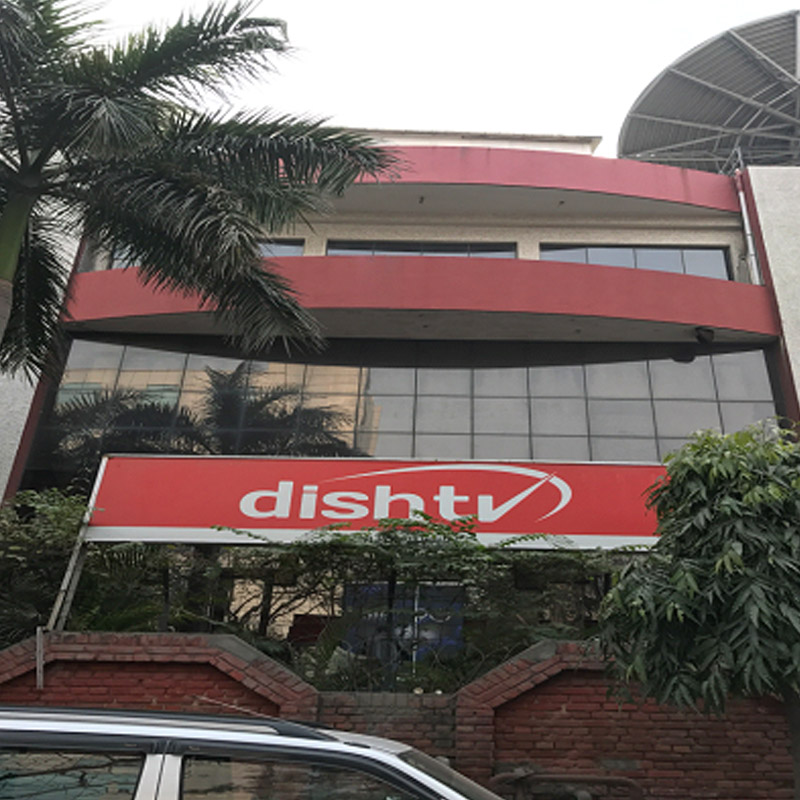
    MUMBAI: Dish TV, the DTH service provider has announced that director Jawahar Lal Goel has resigned from the board of the company. “Jawahar Lal Goel, Director…. has tendered his resignation from the company’s board of directors and committee/s thereof with effect from the close of business hours of September 19, 2022,” Dish TV informed in a regulatory filing.

    He is no longer the chairman of the company. Goel will vacate his position at the upcoming company’s AGM on 26 September, 2022.

    After the announcement, the share price rose by 10 per cent and hit the upper circuit.

    In June, over 75 per cent of shareholders voted against the reappointment of Goel as board’s managing director at the company’s extraordinary general meeting. After it happened, Goel had agreed to resign as Dish TV chairman ahead of the AGM.

    Yes Bank holds around 25 per cent stake in the company. It had been pushing for a board reconstitution and wanted the promoter family led by Goel to be removed. Yes Bank had cited corporate governance issues and Goel stepped down after engaging in a legal battle for a long time with Yes Bank.

    Earlier this month, Dish TV had agreed to appoint three of the seven independent directors, which were proposed by Yes Bank.

    The Goels own a six per cent stake in the company. They lost control over the company after banks seized the promoter’s pledged shares.

  • Joy Chakraborthy: The TV news executive who loves a slugfest

    Joy Chakraborthy: The TV news executive who loves a slugfest

    Mumbai: At first sight, you would probably assume that Zee Media chief business officer Joy Chakraborthy has been a pugilist at some time in his life. With hefty arms, a broad stocky physique, he normally strides across the room like a man with a mission, with a purpose.

    Always ready for a good scrap, he has got into it by jumping back into the highly competitive TV news business at the invitation of media innovator and promoter Subhash Chandra when he joined the Zee news network six weeks ago to get its cash coffers overflowing once again.

    “I’ve spent a large part of my working life being in the news business. I was on the founding team of Star News, I worked in TV Today, Network18,” says the dimpled Chakraborthy with a huge smile. “There is no better place than Zee to work at. To come back to Zee which is like home to me and to work with a boss who gives me so much freedom to work, it’s a delight.”

    With his revenue portfolio covering digital, linear, marketing, and distribution (international & domestic), Chakraborthy has since joining been making whistle stop visits to advertising agencies, marketing clients, digital outfit and distribution partners across India.

    “I like to lead from the front, meet everyone and tell them about what we plan to do on our FPC, programming, advertising packaging, and branded solutions. I have been to Mumbai, Ahmedabad, Kolkata and Delhi,” he says. “My meetings have also led me getting a lot of feedback.”

    Chakraborthy says the agencies and brands are telling him that the TV news industry is in a bit of a mess as far as their perception of it is concerned.

    “The news genre is under stress in terms of evaluation. The marketer is beginning to wonder who is really No 1 as every channel is claiming it is No 1,” reveals Chakraborthy. “Brand custodians don’t slice and dice viewership for news as we are doing. Yes, they put in some numbers like the affinity index but they buy the genre differently as it is bought for frequency/OTS and for a B2B connect.”

    According to him, this No 1 claiming syndrome has led to confusion amongst brands leading to most of the news channels filling up their advertising inventory to the tune of only 65-70 per cent as recently as a few weeks ago. “In all the years I have been in the industry, news channels have been overflowing with inventory, unlike today. We as an industry have to get together to put a halt to this ‘I’m No 1’ claiming itch,” he emphasises.

    He adds that even as certain players are claiming the numero uno status, they are still selling airtime at very low prices compared to the legacy players. “This phenomenon is dragging the news genre down instead of increasing the yield to delivery ratio. I’d like to see their No 1 claims being reflected in their airtime rates and revenues.”

    Additionally, what’s irking him is the rampant misuse of landing pages on cable TV and DTH platforms by TV news broadcasters, and the measurement and reporting of this “rogue” viewership by Broadcast Audience Research Council (Barc).  

    “There’s a lot of load shedding in places in the Hindi speaking heartlands of India. If a viewer is watching say X channel and the power goes off and when it comes back, he or she is forced to watch the landing page channel before switching to his or her favorite news channel. Now if this process takes 10 or 35 seconds, his viewing is measured and reported because of Barc’s basic rules that anyone watching for within a minute is considered a viewer, is what I understand,” explains Chakraborthy. “The agency needs to increase the viewing time to two to three minutes for a person to be considered a viewer. Otherwise all the landing page viewing adds up to significant numbers and skews the ratings.”

    Another disturbing trend that has developed amongst news channels is the fact that some of them are running break-free content and news to gain viewership, he says. “The irony is that the advertiser is buying spots on the channel based on the ratings derived from break-free content,” he elucidates.

    He believes that Zee News has a great portfolio of offerings in terms of languages and regional channels serving as a great outreach platform for brands.

    “Zee is a very strong brand name,” he highlights. “Almost every famous face who is on other news channels has worked for some time at Zee. We lead in certain markets. We have great teams in place. What I have created is the Zee News Plus offering wherein the sales people are selling us as a network. They can package national with other regional channels to present a better solution to agencies and brands. Nobody has a network like we do. For me as a revenue leader, I have always taken the targets. However, success is my team’s and failure is mine.”

    With that kind of an attitude, Joy is sure to bring a lot of glee to the Zee News bottom line.

  • Fawad Khan, Mahira Khan is back on Indian screen after Airtel & Zindagi announce partnership

    Fawad Khan, Mahira Khan is back on Indian screen after Airtel & Zindagi announce partnership

    Mumbai: The popular Pakistani channel Zindagi is set to launch as a special service on Airtel from 15 September, 2022.

    Zindagi will aim to bring audiences a plethora of unique and entertaining offerings. The channel has consistently been at the forefront of bringing thought-provoking and distinct stories to the masses.This service will be free of charge on Airtel for the first 10 days, followed by Rs 2.5 per day.

    The night started with Dumpukht Aatish-e-Ishq at 7 p.m., starring the talented Nauman Ijaz, Bilal Abbas Khan and Sonia Mishal, followed by Digest Writer at 8.30 p.m., starring actor Saba Qamar. Besides, another power-packed line-up for September includes Mann Mayal, starring actors Maya Ali and Hamza Ali Abbasi; the show will air on 19 September at 5:30 p.m. Tracing the journey of a single mother, the teleplay Behadd, starring actors Fawad Khan, Nadia Jamil, and Sajal Ali, will air on 25 September at 8 p.m.

    Speaking of the launch of this channel on Airtel, Zee special projects chief creative officer Shailja Kejriwal said, “We are elated to have received immense love and support from our audiences across the globe. It is a proud moment for us as we announce Zindagi’s association with Airtel and partner with them to provide audiences with stories they can resonate with. We continue to reinstate our belief in growing together and reaching out to a larger audience base. Launching on Airtel as a special service drives us to inspire our audiences as we work towards making Zindagi a part of every household.”

    Zindagi has been widely appreciated by the audience for showcasing stories that are relevant, relatable, and impactful.

  • Consumers have been spoiled for choice with over 850 channels in the linear space and 40+ OTT platforms: Dish TV group CEO Anil Kumar Dua

    Consumers have been spoiled for choice with over 850 channels in the linear space and 40+ OTT platforms: Dish TV group CEO Anil Kumar Dua

    Mumbai: In his company’s annual report, DTH operator Dish TV group CEO Anil Kumar Dua has maintained that the bigger picture remains intact in a market where the consumer is spoiled for choice. The popularity of DTH as an all-encompassing, budget-friendly option is well maintained despite the many emerging alternatives in the market. “Dish TV appreciates the changing tastes and preferences of consumers and is on track to leverage these emerging trends considering that technology-driven evolution and related growth of the sector is inevitable.”

    He noted that the DTH industry is maintaining its popularity at a time when the media and entertainment space in India is witnessing a change in the landscape with a growing number of content delivery platforms and viewing options available to consumers. “Consumers have been spoiled for choice with over 850 channels in the linear space and 40+ big and small OTT platforms laden with movies, TV shows, web-series, time-shifted content, etc. Entertainment watching has spiked to almost 4.5 hours per day per user as against 3.6 hours in 2018,” he added.

    He further highlighted that, “Competition has also increased from free-to-air government-run distribution platforms and telcos. The fall in subscriber numbers is due to top-end subscribers alternating between DTH and streaming content, and bottom-end subscribers often choosing free-to-air DTH over pay DTH.”

    He said that fiscal 2022 was certainly not the smoothest year for Dish TV. “Challenges, both on the corporate and business front, kept us engaged but never to the extent of losing focus on business. Notwithstanding difficulties, the company continues to keep up with the times and remains optimistic about its capabilities to stay as one of the most relevant players in the content delivery space in India. The company is actively looking beyond its contemporary offerings of hybrid boxes and OTT platforms and is exploring new possibilities that would make its service bouquet more appealing to an even wider set of audience.”

    “Our company is expected to be one of the biggest beneficiaries of the government’s strong focus on vaccination, rural electrification, rural income, make in India, road and highway construction, and housing for all, all of which are expected to be instrumental in increasing the share of pay television viewers by helping create overall rural infrastructure and employment in the days to come,” he added.

    Dish TV, he said, has played a significant role in changing the Indian television landscape through the use of DTH technology. “Dish TV is the only media company that is CMMI-certified. Our company has constantly strived to take television viewing to the next level as it supports various futuristic features, providing consumers with easy accessibility and a wide variety of digital content. Its vast distribution network is spread across the length and breadth of the country. Our company enjoys strong brand equity with a large number of SD and HD channels, value-added services, and multiple offerings spanning across price points. Customer centricity being at the heart of its operations, the company strives to offer superior quality at competitive prices.”

    “The home-grown OTT platform of Dish TV India has been steadily growing its reach and crossed the 50 million downloads mark at the end of the fiscal, doubling its subscribers during the year. The platform debuted several new web series to gain strength as an OTT platform with a strong semi-urban presence in addition to meaningful tier-1 visibility. The platform is poised to become the medium to carry Dish TV India to the next level by being a critical connection between the company and its younger audience.”

    He also said that during the fiscal, subscription revenues were lower as compared to the last fiscal, primarily due to volatile viewing habits, the emergence of the second and third waves of the pandemic in the country, high inflation, and conservative spending.

    While the fiscal started with a renewed sense of optimism, he added, the optimism, however, was short-lived as the first quarter itself witnessed the worst of the pandemic attack, bringing, once again, life to a grinding standstill, both for businesses and individuals. “Fortunately, learning from the first curve of the pandemic kept the business organised and we were determined to serve the community, not only by fulfilling our obligation to entertain but in every other manner we could. Dish TV extended its support to encourage vaccination amongst individuals by offering a day’s worth of complimentary television viewing for anyone who got vaccinated and uploaded their vaccination certificate. A day of extra subscription was also credited to all hospitals and medical facilities with a DTH connection as a mark of gratitude and support.”

    “As post pandemic normalisation dawned in the latter part of the second quarter, consumerism picked up though rural demand remained largely depressed. The third quarter witnessed higher marketing spending in anticipation of higher demand, but consumer spending fell below par once the pent-up demand was exhausted. Overall, the cloud of Covid-19 obstructed any meaningful increase in consumer confidence and spending.”

    “With the worst of Covid behind us and normalcy expected, India is set to remain one of the fastest-growing economies in the world in FY 2022–23. Strong fiscal, monetary, and budgetary interventions initiated by the government are expected to keep the country on track to becoming a five-trillion dollar economy. The government is focused on making India a digital economy with technology-enabled development, energy transition, and climate action for a more sustainable future. Though India continues to tread the growth path, inflationary pressures led by global supply chain bottlenecks and the ongoing geopolitical conflict pose a challenge to this forward march. Mounting inflationary pressures have necessitated a gradual and controlled rate hike that could be mildly recessive in the medium term but will certainly have a longer term progressive upside for the economy.”

  • Trai extends deadline for implementation of new tariff order to February next year

    Trai extends deadline for implementation of new tariff order to February next year

    Mumbai: Telecom Regulatory Authority of India (TRAI) has decided to extend the deadline for implementation of the new tariff order (NTO 2.0) from 30 November 2022 to 28 February 2023.

    As per the regulatory filing, the authority said, “All the distributors of television channels shall ensure that services to the subscribers, with effect from 28 February 2023, are provided as per the bouquets or channels opted by them.”

    Several representations have also been received from the stakeholders requesting an extension of the time limit for implementation of the New Regulatory Framework 2020. According to Trai’s recent notice, it stated, “All the broadcasters shall report any change in name, nature, language, MRP per month of channels, and composition and MRP of bouquets of channels by 30 November 2022, and simultaneously publish such information on their websites,” it stated.

    “The broadcasters who have already submitted their reference interconnect offers (RIO) in compliance with the New Regulatory Framework 2020 may also revise their RIOs by 30 November 2022,” it further added.

    In addition to it, Trai also said, “All distribution platform operators (DPOs) will need to submit their distributor retail price (DRP) of pay channels and bouquets & composition of bouquets of pay and free-to-air channels, by 31 December 2022 to Trai.”  

    The authority further, in compliance with the New Regulatory Framework 2020, asked DPOs to revise their already-submitted RIOs by 31 December 2022. 

    After receiving comments and counter comments from the stakeholders on the consultation paper, TRAI was to conduct an open house discussion (OHD) on 21 July 2022, which is now scheduled to take place on 8 September 2022.

    New Tariff Order

    When NTO was first introduced and gave customers the option to select channels à la carte, the price of entertainment increased, forcing Trai to modify its order. In January 2020, NTO 2.0 was introduced, capping the price of a bouquet channel at Rs 12 as opposed to Rs 19. This was not supported by any logical justification or consumer insight, according to the Indian Broadcasting Digital Foundation (IBDF), a unified representative body of Indian television broadcasters.

    Broadcasters have resisted the new tariff order vigorously and reacted by removing premium channels from bouquets and increasing their prices from Rs 20 to Rs 30 after losing the legal battle to overturn the Trai order in both the Bombay High Court and the Supreme Court.

    Cable operators were compelled to ask the regulator to postpone the implementation of NTO 2.0 as a result of major broadcasters like Star, Zee, Sony, and Viacom18 choosing to raise the MRP of their well-liked channels and keep them out of bouquets. For instance, the All India Digital Cable Federation had urged Trai to reconsider the order’s provisions in light of the sustainability aspect of putting this framework into place.

  • Dish TV appoints Rakesh Mohan as non- executive independent director

    Dish TV appoints Rakesh Mohan as non- executive independent director

    Mumbai: DTH operator Dish TV has announced that the board of directors at their meeting held on Friday, i.e. 29 July, 2022 has inter-alia, upon receipt of requisite approval from the ministry of information and broadcasting and on the recommendation of the nomination and remuneration committee, approved the appointment of Rakesh Mohan as a non-executive independent director. The appointment has come into effect from 29 July, 2022 and is for a term of five consecutive years.

    The appointment is subject to the approval of the shareholders of the company.

    Mohan is a retired senior bureaucrat. He joined the Indian Administrative Service in 1978. He has held various positions in his long professional career. To mention a few, he worked as deputy collector in Goa; deputy commissioner and then secretary to the governor in Arunachal Pradesh; additional general manager in the erstwhile DESU, Government of Delhi; and principal secretary in the public works department in the government of Delhi. For five years, he was an additional commissioner in the Municipal Corporation of Delhi, and he worked for the government of India in the ministries of energy (department of power) and commerce. In addition, he was also a joint secretary in the government of India’s ministry of information and broadcasting. He was principal secretary (education) in the Delhi Administration. After his retirement, he devoted his time to serving as a volunteer at the Sri Aurobindo Ashram, Delhi Branch.

  • Prasar Bharati sets a higher reserve price for Hindi movies & devotional channels in its 61st e-auction

    Prasar Bharati sets a higher reserve price for Hindi movies & devotional channels in its 61st e-auction

    Mumbai: Public broadcaster Prasar Bharati has invited applications for allotment of vacant MPEG-2 slots of the DD Free Dish free direct-to-home (DTH) platform for the period 17 August 2022 to 31 March 2023. The 61st e-auction process will be tentatively held on 10 August.

    The public broadcaster has categorized the vacant MPEG-2 slots under six buckets including Bucket A for all Hindi movie channels, Bucket R1 for devotional channels, Bucket A+ for all Hindi general entertainment (GEC) channels, Bucket B for all Hindi music channels, Hindi sports channels, Bhojpuri GECs, Bhojpuri movies and Hindi teleshopping channels, Bucket C for Hindi, English and Punjabi news and current affairs channels and Bucket D for remaining genre language channels.

    The reserve price of the MPEG-2 slots is set as high as Rs 14.37 crore and as low as Rs 4.40 crore. Notably, the prices for Hindi movie channels and devotional channels are the highest while Hindi GECs and news and current affairs channels are low-priced in comparison.

    Prasar Bharati recently concluded its 60th e-auction where it allotted two MPEG-4 slots to the channels Swaraj Express SMBC and Sanskriti 24×7 for the period 5 July 2022 to 31 March 2023.

    In a recent interview, former Prasar Bharati CEO Shashi Shekhar Vempati revealed that the public broadcaster earned as much as ~Rs 750 crore from the sale of vacant DD Free Dish slots in 2021.

    With an estimated reach of 50 million viewers, DD Free Dish is the largest DTH platform in the country. The platform has 167 TV channels including 145 channels in standard definition (SD) MPEG-2, 21 channels in SD MPEG-4 and one channel in high-definition (HD) MPEG-4. The public broadcaster intends to expand its overall number of channels to 200.

    Also Read: Prasar Bharati has seen a big change in its revenue in the last five years, says former CEO Shashi Shekhar Vempati

  • ZEE Entertainment launched ‘Aap Fit Toh Manoranjan Hit’ on International Yoga Day

    ZEE Entertainment launched ‘Aap Fit Toh Manoranjan Hit’ on International Yoga Day

    Mumbai: ZEE Entertainment Enterprises Limited (ZEEL) has rolled out a campaign on the occasion of International Yoga Day with a unique initiative – ‘Aap Fit Toh Manoranjan Hit’. 

    ZEE also launched a microsite, where partners from across the country could register themselves and upload videos practicing Yoga, performing asanas as part of the daily challenge. The company has announced 450 lucky winners, rewarding them with fitness bands and yoga mats. Giving this activity a quirky angle, ZEE Entertainment coined the tagline – ‘Aap Fit Toh Manoranjan Hit’, paying an ode to the unmatchable contribution and support of the Cable and DTH industry.

    The first-of-its-kind campaign launched on 15 June 2022, witnessed the company’s distribution partners take up the seven day Yoga Challenge, wherein each day the partners participated to practice a new Yoga pose. Through this initiative, the company aims to emphasize on the importance of health as well as spread awareness about Yoga among the masses.

    The fitness challenge garnered massive support from partners and larger community across the country, who shared videos and posts across social media platforms, using the campaign hashtag #YogaWithZEE. Dedicating the week-long campaign towards health and fitness as well as the well-being of over nine hundred partners, the company has been consistently engaging with partner offices and other stakeholders through such on-ground activations and pioneering initiatives.

    Speaking on the campaign, ZEEL chief revenue officer- affiliate sales Atul Das said, “We are delighted with the huge response received from partner offices for this first-of-its-kind initiative. At ZEE, we firmly believe in promoting healthy lifestyle habits and work-life balance among employees as well as other stakeholders, which includes our distribution partners from Cable and DTH industry. Through this campaign, we wanted to spread awareness about the benefits of Yoga as well as urge our partners to include yoga as part of their daily lives, just the way they ensure an uninterrupted dose of entertainment to our viewers. As an industry and an ecosystem, it is imperative for us to ensure that each and every member of the stakeholder community gives priority to their health and makes physical fitness regime an integral part of daily routine.”

    The ‘Aap Fit Toh Manoranjan Hit’ campaign is a tribute to the entire entertainment distribution ecosystem which has efficiently been able to deliver entertainment to the Indian audiences, even when the country was going through turbulent times. ZEE took this initiative to award this spirit by taking care of its partners’ health. 

    The winners have been announced on the company’s micro-site and social media pages.