Tag: DTH

  • TRAI bats for issuing DTH licences for 20 years

    TRAI bats for issuing DTH licences for 20 years

    MUMBAI: The Telecom Regulatory Authority of India (TRAI) has reiterated its recommendation to the Ministry of Information and Broadcasting (MIB) that direct-to-home licences be issued for a period of 20 years and then renewed for 10 years, and a one-time entry fee of Rs 10 crore be charged in the new DTH licensing regime.

    In July 2014, the TRAI had made a number of recommendations regarding the issues related to the new DTH licensing regime.

    However, the MIB had proposed, after considering comments from other ministries and departments, to grant DTH license for an initial period of 10 years and thereafter, renewal of license after 10 years.

    The ministry had sought TRAI’s views on the proposal.

    In its response yesterday, the telecom regulator said, “It is felt that a longer licence period would provide certainty in the market.

    Keeping a short license period may adversely affect the potential investment in the sector and would also negate the efforts of the government, inter alia, including the liberalisation of the FDI regime”.

    Stating that a longer duration of license helps in better futuristic business planning, the TRAI noted that in the telecom sector, the license period under the Unified License (UL) regime is 20 years and renewal is 10 years at a time.

    “In view of the growing convergence between the broadcasting and telecom sectors, it is logical to align the license period for DTH sector with that in the telecom sector under the UL.

    In view of above, TRAI reiterates its earlier recommendations,” it said.

    Under the UL, operators are free to provide all telecom services with one licence.

    Currently, the license is valid for 10 years.

    The TRAI also reiterated its recommendation of one-time entry fee of Rs 10 crore to be charged in the new DTH licensing regime.

    The MIB, however, proposed to increase the one-time entry fee to Rs 25 crore for the license period of 10 years.

    In its response, the TRAI said, “In order to encourage more entrants in the DTH industry, and to compete with the cable industry, wherein there is no entry fee, the TRAI recommends to retain the entry fee to Rs 10 crore”.

    Currently, the DTH operators also need to pay an initial entry fee of Rs 10 crore.

  • Dish TV promoter cos offer to buy 26% from public shareholders

    Dish TV promoter cos offer to buy 26% from public shareholders

    NEW DELHI: The promoter group entities of Dish TV India Ltd (Dish TV) have made an offer to buy an additional 26 per cent equity stake from public shareholders of the direct-to-home (DTH) operator for Rs 3,701 crore.

    According to a release issued to the BSE today, Dish TV promoter entities World Crest Advisors LLP, along with Veena Investments Pvt Ltd and Direct Media Distribution Venture Pvt Ltd, announced an offer to acquire shares of Dish TV at a price of Rs 74 per share.

    The offer is being made to all the shareholders of Dish TV to acquire up to 50.01 crore shares of the company that form 26 per cent of the emerging share capital, payable in cash.

    Last month, the long drawn out merger of Dish TV and Videocon d2h Ltd (Videocon d2h) finally came to pass. The combined entity, to be named Dish TV Videocon, will have approximately 29 million subscribers, making it the second largest DTH company in the world. There was a halt in the merger scheme about three months ago when Dish TV wanted Videocon d2h to clarify some of the insolvency proceedings against it.

    Also Read:

    Videocon d2h, Dish TV merger comes to fruition

    Dish TV announces fresh Videocon d2h Nasdaq delisting date

  • TDSAT allows broadcasters to disconnect signals to RBTV

    TDSAT allows broadcasters to disconnect signals to RBTV

    MUMBAI: The Telecom Disputes Settlement and Appellate Tribunal (TDSAT) has withdrawn the interim protection granted to direct-to-home (DTH) operator Reliance Big TV (RBTV) by allowing broadcasters to disconnect signals for non-payment of dues.

    The TDSAT order comes as a big blow for the DTH operator, which is already facing the threat of disconnection of feeds to RBTV by Antrix Corporation, which leases satellite capacity on behalf of the Indian Space Research Organisation (ISRO), on April 14th unless its bills are met

    Star India, ZEEL and Sun TV Network have already disconnected signals to RBTV as it has failed to the clear the outstanding dues for months.

    The tribunal’s order means that other broadcasters involved in the matter can disconnect signals to Reliance Big TV in light of the withdrawal of the interim protection.

    The other broadcasters involved in the matter include Discovery Communications India, Sony Pictures Networks Distribution India, India Cast Media Distribution, ABP News Network, and Bennett Coleman & Company Ltd (BCCL).

    “In view of earlier orders giving repeated opportunities to the respondent, we are of the considered view that it may not be in the interest of justice to continue the interim direction against the petitioners. If such interim directions are continued, the amount of dues will be in excess of the amounts for which the petitioner had approached this Tribunal. Hence, the interim protection in favour of the respondents stands withdrawn,” the TDSAT said in its order.

    The tribunal further noted that it will be open for the broadcasters to continue or not to continue with the supply of signals to the DTH operator on the basis of their individual understanding.

    “If there is any remarkable change in the situation, parties will be at liberty to seek interim direction otherwise all these petitions shall be made ready for hearing on the issue of recovery of the money claims,” the tribunal stated.

    It also asked the DTH company to file their reply in all the claims for recovery within five weeks. Time for rejoinder will be considered on the next date. The matter has been posted under the same head on 11 May.

    The DTH operator had assured the tribunal in February that it will settle the claims of all the broadcasters within four weeks. It owes more than Rs 100 crore to multiple broadcasters.

  • MIB says ISRO upping capacity to facilitate migration from foreign satellites

    MIB says ISRO upping capacity to facilitate migration from foreign satellites

    NEW DELHI: The Indian government has admitted that inadequate capacity on Indian satellites has compelled domestic direct to home (DTH) operators to use a large number of transponders on foreign satellites and that India’s space agency Indian Space Research Organisation (ISRO) is gearing up to meet growing demands owing to proliferation of HD TV channels.

    “Presently DTH services are being supported by 42 transponders on indigenous satellites (INSAT/GSAT) and about 69 transponders on foreign satellites. There is a registered demand of additional about 64 transponders for immediate future,” junior minister at Ministry of Information and Broadcasting (MIB) Rajyavardhan Rathore informed fellow parliamentarians in Lok Sabha or the Lower House of Parliament recently.

    Without stating it in so many words though, Rathore said that as ISRO increases its satellite capacity to be able to meet the demands of Indian DTH operators, a migration from foreign satellites would become a reality — a move that MIB and Department of Space are slowly implementing to nudge users of satellite services, especially TV channels, to move away from non-Indian birds.

    “It is expected that over a period of next three years adequate capacity would be added through Indian satellites to facilitate migration of foreign capacity to Indian [satellite] capacity,” the minister said, adding, according to Telecom Regulatory Authority of India (TRAI) data, there has been a significant growth in the number of high definition (HD) satellite TV channels. The number has grown from three in 2010 to 83 in 2017.

    Dwelling on TRAI’s recommendations on sharing of infrastructure on a voluntary basis, Rathore clarified that till date MIB has not received any proposal from DTH operators for sharing of satellite transponders and earth station facilities with another such player or distribution platforms. “Enabling sharing of infrastructure may address the issue of demand-supply mismatch and reduce capital and operating expenditure of the service provider to an appreciable extent,” he added.

    Meanwhile, addressing another set of queries raised by parliamentarians relating to DTH, the minister said a total number of 1922 complaints/grievances against private DTH service providers were received through monitoring systems of the government and TRAI over the last three years on various issues ranging from technical/financial/policy matters to delay or improper installation, malfunctioning of STBs, issues of interoperability, disruption of signals during bad weather, improper billing, channel packaging, FTA channels, etc. As many as 1811 complaints were addressed by MIB till date.

    As soon as complaints are received, they are brought to the attention of the DTH operator concerned and later a follow-up action too is undertaken to evaluate compliance and whether the problems were resolved or not, the minister explained.

    According to the minister, sector regulator TRAI had issued last year a set of tariff guidelines to boost healthy competition among DTH service providers and bring down the subscription prices for consumers. The guidelines were legally contested by some stakeholders and are awaiting judicial advice, he added.

    ALSO READ:

    MIB admits no DTH infra sharing permission sought

    MIB, DoS nudge TV channel to use Indian satellites

    MIB to collect data on satellite capacity needs, digital chatter

    MIB, TRAI allay industry fears on sat capacity leasing & content regulations


  • Tata Sky aims to drive up ARPU with international content

    Tata Sky aims to drive up ARPU with international content

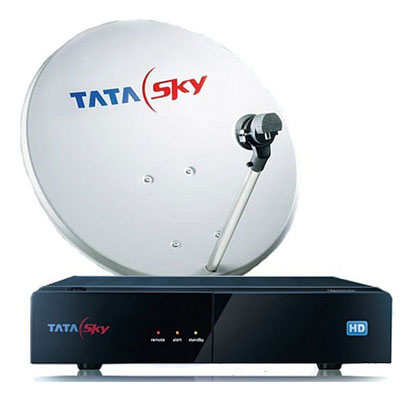
    MUMBAI: Direct-to-home (DTH) service Tata Sky has launched its newest offering, Tata Sky World Screen—a handpicked bouquet of international entertainment content available from 16 March 2018. 

    Tata Sky World Screen will feature prime content from across geographies and multiple languages (Arabic, Russian, Spanish, Belgium, Israel, Cuba, German, French, Italian, Portuguese, Hindi, Swahili, Japanese, Chinese and Korean). Non-English content will have subtitles and some will also be dubbed in English. The ad-free service will allow subscribers to view select series and movies from across the world round the clock. 

    “Content like this is not just interesting to tier 1 and 2 cities but also to tier 3 and 4. People are willing to pay if they get the right product. The way we distribute our content has a greater chance of reaching hinterlands as well. Digital is more relevant in promoting this content than any other product,” said Tata Sky chief content officer Arun Unni.

    “We focus on both ARPU (average revenue per user) as well as increasing the subscriber base. The average industry ARPU is Rs 270-300, our ARPU is a bit higher than the industry figure,” he added.

    Priced at Rs 75 a month, the content will be available to subscribers on their TV sets through the set top box, mobile app and the web app of Tata Sky.

    “Our analysis indicates that consumption patterns are evolving, and there is an audience looking for exciting and diverse content, unconstrained by language. The objective here is to give consumers the content that is not easy to discover and consume. Our handpicked list includes some of the most popular and critically acclaimed movies and TV shows across the world, a lot of which has never been seen on TV before in India,” added Unni.

    Amongst the TV series premieres will be the acclaimed thriller Wallander, Happy Valley, Code 37, Team Chocolate, Prisoners of War and Babylon Berlin. There will also be two movie premieres a month from world cinema. 

    In another partnership, India’s premier youth entertainment portal 101India.com partnered with Toronto based media giant QYOU Media for its newly launched service on Tata Sky, The Q India. The localised service will showcase premium digital content curated from popular content creators and broadcast it on TV.

    Also Read :

    Tata Sky woos new customers with free Star Sports channels

    The party continues on Tata Sky Mobile app

  • DTH focus shifts to ARPU from subscriber numbers

    DTH focus shifts to ARPU from subscriber numbers

    MUMBAI: In the last six months, the direct-to-home (DTH) industry has faced lots of challenges. The industry saw big DTH players consolidate, shutting down of a player and fights between DTH operators and broadcasters.

    In the early days, customer acquisition was the key for most distribution platform operators but, currently, their eyes are set on cost-efficiencies.

    An industry source tells Indiantelevision.com, “The biggest worry in the market right now is the elephant in the room, which is Reliance Jio. In the last three quarters, DTH growth has been very muted and is not growing as actively as it should have. The challenge for DTH players right now is pushing up the average revenue per user (ARPU) and push high definition (HD) subscription. Tata Sky, for instance, is pushing HD channels to 110 and trying to create HD packs. It is not trying to increase the subscriber base but planning towards increasing the ARPU.”

    Tata Sky came up with a Make My HD pack for as low as Rs 30 per month and a regional HD Access pack at Rs 50 per month for users subscribed to regional SD channels. The channel targeted the south market with a special pack at Rs 290. Dish TV campaigned for HD in all homes by removing the access fee on it and advertising a cost as low as Rs 169 per month (excluding taxes). Countering DD FreeDish, the oldest DTH player also introduced a free to air (FTA) pack with a price translating to Rs 32 a month.

    After more than a year of twists and turns, Dish TV and Videocon d2h are set to formalise a merger to create India’s largest DTH company valued at around $2.4 billion and the world’s second largest in terms of subscribers with 29 million, just behind AT&T’s DirecTV. According to the original plan, Dish TV shareholders will own 55.4 per cent in the combined entity, to be named Dish TV Videocon, while Videocon d2h shareholders will hold 44.6 per cent in the company.

    “After the deal, there will be group content deals since they are thrice strong with Dish TV, Videocon d2h and Siti Cable. If they go to the broadcaster for the content deal, the pricing leverage will be much higher,” the source adds.

    India accounted for 65 per cent of revenue for regional pay-TV channel groups in 2017, led by large local channel businesses owned and operated by 21st Century Fox, Sony and Viacom as per a Media Partners Asia (MPA) report.

    “The whole landscape is undergoing a change. The cable operators are facing many challenges and are punching back hard. They are focussing on growing ARPUs from the rural market in phase 3 and 4 and the subscriber base. ARPU in the rural market is still very low which is around Rs 40-45. If they make it equal to urban around Rs 70-75 with a subscriber base of 1 million, then also it will give them an extra Rs 35 million every month. So everyone is working on a strategy, but they are not saying it upfront,” the source points out.

    Videocon d2h saw ARPU at Rs 208 for Q3 2018 (September – December 2017), higher than the Rs 212 in the previous quarter. Dish TV’s ARPU stood at Rs 144 for the same quarter, lower than Rs 148 in the trailing quarter. The highest ARPU among listed companies was with Airtel Digital TV with Rs 233.x

    Dish TV CMD Jawahar Goel says that the industry is on the pay channels’ side. “The MSOs have different pricing in the market. Whereas for DTH it is a very steep charge and this is the reason for the shutdown of Reliance BIG TV,” he says.

    KCCL CEO Shaji Mathews says that if DTH had been launched in India in the year 1997 as envisaged by some of the leading media companies, cable TV would have been a minority player today. “Ever since its launch half a decade later, DTH thrived on the deficiencies in analog cable. Another decade later when digitisation commenced, again DTH pitched to take a share from cable and become the majority player. However, cable withstood the challenge and retained its position at the end of 2017,” he says.

    The scenario emerging is that of media players consolidating to face the challenge from telecom. However, Mathews says that in this fight, historically, cable TV has been the partner that media companies can rely upon. “The polarisation is evident from the exit of non-media Videocon and Rcom, though the latter has other reasons also,” he highlights.

    Media Partners Asia VP Mihir Shah shows two reasons for growth in the industry. “As BARC continues expanding its coverage, it has pushed up the value of rural reach for broadcasters, which today is primarily delivered through DTH. With this merger, the DTH market has consolidated with top three players accounting for 90 per cent share of the paying subscriber base. These two structural developments will improve DTH’s subscriber economics in the coming year,” he said. “Warburg Pincus’ investment in Airtel Digital last year and now Dish TV-Videocon d2h merger going through serves as a confident booster for the sector.”

    The active DTH subscriber base in India is over 50 million as of December 2017. Sun Direct is a major DTH player in the south holding about 40 per cent of the area. Southern subscribers also make up 97 per cent of its total. Sun Direct took up an HEVC media solution from Harmonic to increase its HD channel number to 80 recently.

    On 16 February, Star had issued a disconnection notice to Bharti Telemedia for non-signing of the subscription agreement, non-payment of subscription fees and non-submission of subscribers reports. However, even before the broadcaster gave effect to its disconnection notice, the DTH operator decided to temporarily discontinue Star India channels from its subscription packs from 8 March as it had not been able to arrive at mutually acceptable terms with the broadcaster.

    “Due to failure to arrive at mutually acceptable terms with Star India, with effect from 8 March 2018, all Star network channels will be temporarily discontinued from your packs,” the DTH operator informed its subscribers.

    In the latest update, the Telecom Disputes Settlement Appellate Tribunal (TDSAT) has asked Star India and Airtel DTH to negotiate and enter into an agreement. The tribunal also directed the DTH operator to pay all lawful dues in accordance with the agreement by the due date as indicated in Star’s letter dated 7 March, except the amount of Rs 9.8 crore.

    As competition within the industry as well as the fight for the pie continues with MSOs, DTH players will have to focus on giving value add at reasonable rates. Increasing ARPUs will also enable the red to turn black on the company balance sheet, which is what most of them are currently sweating about.

    Also read:

    TDSAT tells Airtel DTH, Star to negotiate

    Airtel Digital TV disconnects Star India channels

    Madras HC gives split verdict in Star India versus TRAI case


  • GST relief for media industry in the offing?

    GST relief for media industry in the offing?

    NEW DELHI: There may be some relief for the media industry for certain segments in the offing relating to goods and services tax (GST) with the government open to reviewing certain norms.

    According to government sources, petitions from the media and entertainment industry has moved the government to review norms relating to sponsorship services by corporates and other bodies where reverse charge mechanism was not allowed.

    Reverse charge mechanism (RCM), which is one of the contentious issues raised late last year by some of the TV channels, has now been suspended until 30 June 2018 according to the sources.  The government is also looking at instituting a group of ministers (GoM) to look into RCM and its relevance in GST.

    GST, which was welcomed by most sections of the Indian business, has, however, resulted in increased paperwork and spends on manpower for most media companies.

    Earlier, it had been envisaged that GST — dubbed as one nation, one tax by the PM Modi government — would reduce the taxation burden on corporate houses and reduce multiplicity of taxes. It had also been envisaged that taxation on entertainment, cable and DTH services would come down under the GST regime as the entertainment tax levied by states would be subsumed in the GST.

    However, after GST was rolled out from April 2018, most companies,  including those in the media and entertainment sector, realised that GST compliance came with a price and, subsequently, a few states like Punjab have gone on to levy entertainment tax, which, in a way, has neutralised many of the benefits of GST.

    Also Read :

    GST: TV prod biz bemoans lack of clarity and increased paperwork

    Under GST, taxes on cable, DTH & entertainment services to come down

    GST on set-top boxes & optic fibre down to 18%

  • Bharti Airtel gets board nod to raise Rs 16,500 cr

    Bharti Airtel gets board nod to raise Rs 16,500 cr

    MUMBAI: Bharti Airtel’s board of directors has approved a plan to raise about Rs 16,500 crore through debt, including a fresh issue of $1 billion in overseas bonds, to help refinance loans and pay for spectrum. 

    The board approved the issue of foreign currency bonds of up to $1 billion (Rs 6,482 crore) and sought fresh shareholder approval for issuance of non-convertible debentures of up to Rs 10,000 crore on a private-placement basis, the company said in a release to the BSE. 

    At the meeting, the board also approved the transfer of 19 per cent equity stake in its direct-to-home (DTH) subsidiary Bharti Telemedia, which provides DTH services under the Airtel Digital TV brand, to Nettle Infrastructure Investments, a subsidiary company.

    A part of the stake will be utilised for the completion of stake sale in Bharti Telemedia to Warburg Pincus Group. In December 2017, Bharti Airtel had agreed to sell 20 per cent equity stake in Bharti Telemedia to Warburg Pincus for approximately $350 million.

    In January, the company had decided to transfer 25 per cent equity shares in Bharti Telemedia to its wholly owned subsidiary Nettle Infrastructure Investments. The company had also said that the stake transfer to Nettle does not include equity to be sold to private equity firm Warburg Pincus.

    “Pursuant to Regulation 30 of SEBI (Listing Obligations and Disclosure Requirements) Regulations, 2015, we wish to inform you that the Board in its meeting held on March 12, 2018, has approved the transfer of 19 per cent equity shares of Bharti Telemedia Limited (‘Telemedia’), a subsidiary Company to Nettle Infrastructure Investments Limited, a wholly owned subsidiary company,” the release to the BSE stated.

    Also Read:

    Recalibrating India’s DTH sector after Airtel DTH-Warburg Pincus deal

    TDSAT tells Airtel DTH, Star to negotiate

    Airtel Digital TV disconnects Star India channels

  • Airtel Digital TV disconnects Star India channels

    Airtel Digital TV disconnects Star India channels

    MUMBAI: Direct to home (DTH) operator Airtel Digital TV, has temporarily discontinued Star India channels from its subscription packs from 8 March 2018, as it has not been to arrive at mutually acceptable terms with the broadcaster.

    The DTH operator offers 22 popular Star channels across genre and languages free of cost to eligible customers for a period of one month as part of its promotion. To receive these channels subscribers will have to give a missed call on designated numbers.

    On 16 February, Star had issued a disconnection notice to Bharti Telemedia for non-signing of the subscription agreement, non-payment of subscription fees and non-submission of subscribers reports.

    “Due to failure to arrive at mutually acceptable terms with Star India with effect from 8 March 2018, all Star network channels will be temporarily discontinued from your packs,” the DTH operator informed its subscribers.

    The DTH operator is offering Living Foodz HD, &Prive HD, Discovery Jeet HD, DSport HD, and Disney International HD as a replacement for Star’s HD channels. For the remaining Star HD channels, it will offer a proportionate refund to the subscribers.

    Also Read :

    Star India bags production rights for IPL 2018

    SC could take up TRAI-Star case on tariff regulations

    ISRO, DoT turf wars delaying connectivity reach: govt official


  • Dish TV bemoans govt’s neglect of DTH sector

    Dish TV bemoans govt’s neglect of DTH sector

    MUMBAI: Dish TV, while lamenting neglect and step-motherly treatment of the whole DTH sector by the government, has exhorted policy-makers to remove various discriminations in the licencing conditions of various distribution platforms as it has resulted in taxing times for DTH operators.

    Furthermore, Dish TV has also pointed out that video distribution on OTT platforms should be brought under government regulations, similar to those governing other distribution platforms (DPs) to remove anomalies and creation of a level playing field for every stakeholder.

    “The present [regulatory] regime for the licence fee is discriminatory against the DTH operators and is designed to provide the leveraged position to cable operator, HITS, IPTV and MSO, etc in the market place as they are not required to pay any annual licence fee,” Dish TV has said in its submission to regulator TRAI’s consultation paper on issues related to uplink/downlink of TV channels and whether they could be auctioned in a way similar to FM radio licences.

    One of the largest satellite TV operators in India has added that because of discriminatory licencing regimes, the additional financial burden in terms of monthly subscription fee is put on a subscriber of DTH service when compared to subscribers of cable TV or HITS services.

    “It is a matter of record that in the month of March 2008, the Ministry of Information and Broadcasting (MIB) had taken a decision to fix the [DTH operator’s] licence fee @ 6 per cent of the gross revenue, which had the concurrence of the TRAI also. However, for reasons best known to the government, the decision is yet to be put into effect,” Dish TV has said.

    Pointing out that the DTH sector (India has six DTH licencees at present, according to MIB) has played a critical role in making the digitisation dream a success even while providing a world class experience to consumers, Dish TV has urged the government/regulator to “remove anomalies” by creating a level playing field for the DTH operators and rationalising the licence fee.

    Dish TV is also hopeful that TRAI’s new tariff structure and inter-connect regulations—which are in suspended animation owing to being legally challenged in Madras and Delhi High Courts by Star TV and Tata Sky and Airtel Digital combine, respectively—would go a long way in easing the pains of DTH ops. “Though the tariff order and the regulation are under challenge, however, it is just a matter of time that when the new regulation will sail through these minor hiccups and become a reality,” it added.

    Incidentally, as reported by Indiantelevision.com earlier, MIB is contemplating referring the issue of DTH policy guidelines review to its sister organisation, Ministry of Law, for an opinion.

    Meanwhile, Dish TV in its submission to TRAI has made a strong financial case for rationalisation of DTH licencing regime, while highlighting how owners of TV channels continue to play favourites with various DPs, has also urged a regulatory regime for video distributed on OTT platforms.

    In a section that dwells on OTT platforms, Dish TV has accused broadcasters or owners of TV channels of circumventing regulatory framework by distributing video on the internet or OTT platforms.

    Arguing that by starting OTT platforms broadcasters don’t just remain ‘broadcasters’, but also become ‘distributors’ of TV channels, Dish TV has said that such an arrangement breaches various existing regulations, including cross-media and cross-services restrictions.

    “It is important to note that the content being provided by the broadcasters [on OTT platforms] are free of cost with an intention to create a captive subscriber base and create a monopolistic situation. Because of ‘free of cost’ provision of the content by the broadcasters through OTT services, other distributor[s] of TV channels are heavily prejudiced… threatening the existence of other distribution platforms,” Dish TV has stated, adding such an arrangement could also create a monopoly where the broadcaster, being the distributor, would also control the end mile solution.

    It may be pertinent to note here that Dish TV’s sibling Zee group too has an OTT platform whereby it distributes TV programming to subscribers. Zee unveiled on Valentine’s Day a new avatar of its video streaming service called ZEE5.

    Though TRAI had initially left video streaming services out of a regulatory framework when it announced guidelines pertaining to Net Neutrality late last year, a section of the media has reported that the regulator is now thinking afresh and could bring in regulations for video content distributed via the internet (read video OTT platforms).

    Also Read :

    Law ministry likely to give opinion on DTH guidelines review

    Broadcasters, DPOs oppose TV channel auction proposal

    Dish TV-Videocon d2h deal on course