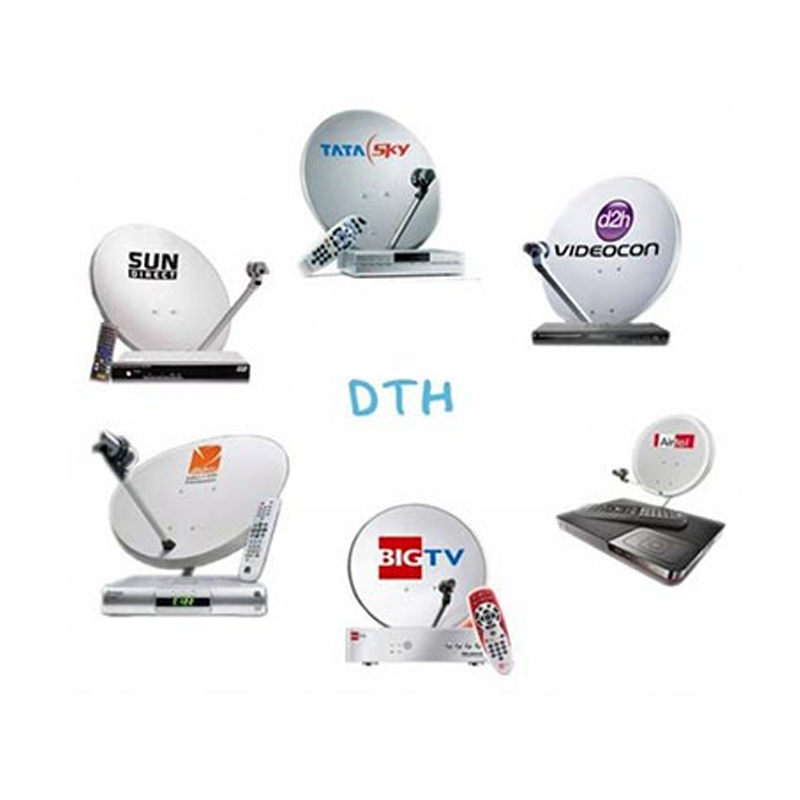
Tag: DTH

  • DSport reaches 110 mn households in a year

    DSport reaches 110 mn households in a year

    MUMBAI: DSport, the sports TV channel by Discovery Communications, has achieved the milestone of reaching 110 million households in India. The channel was launched on 6 February 2017 and achieved the milestone within one year of operations in India and has expanded its distribution across all DTH and cable platforms.

    It has broadcasting rights for some of the elite sporting events with 4000 hours of live programming.

    The channel claims to have grown consistently across the country and has been ranked among the top channels in motorsports and golf this year. In the car and bike racing genre, DSport has a 72.9 per cent market share. Moreover, in Golf the channel says it enjoys the second spot with a comfortable 32.2 per cent market share. Even in combat sports, the channel has witnessed a growth of close to 200 per cent in viewership. 

    In cricket, DSport brought the live action from the 2018 Nidahas Trophy and Pakistan Super League 2018 to the Indian audiences. In football, it has the exclusive rights to the Brazilian League, Major League Soccer and Chinese Super League. In golf, it telecasts three out of the four major PGA tours around the world including the historic British Open, PGA Championship and Augusta Masters.

    Also Read:

    Star spending up to Rs 2 cr on production per IPL match

    Dsport not in the running for BCCI’s media rights

    DSPORT to Broadcast Augusta Masters 2018 featuring Indian Golf Prodigy Shubhankar Sharma

  • How Harit Nagpal plans to keep Tata Sky ahead

    How Harit Nagpal plans to keep Tata Sky ahead

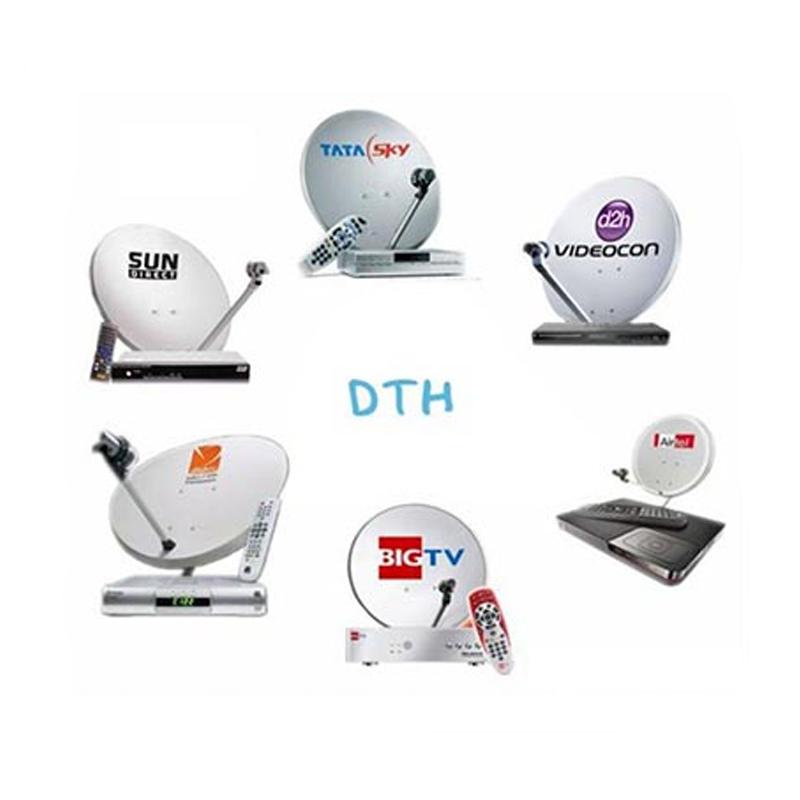
    MUMBAI: The DTH sector. What once seemed a lucrative arena has now seen companies getting acquired and merging, the competition being intense . Today, India is the largest DTH market in the world by number of subscribers. As on 30 September 2017, there were 66.99 million active pay DTH subscribers in the country. This does not include subscribers of free DTH services.

    A recent report published in Livemint sees Tata Sky CEO and MD Harit Nagpal stating that DTH has become a completely commoditised industry, like selling coal or steel, as everyone has access to everything today. He said, “If I drop prices, everybody will drop prices. So, there is really no differentiation. The only sustainable differentiation is process-centred, which is largely service. So, your boxes should fail less often, your picture quality should be good, your user interface should be better than anyone else’s, wherever there’s a failure, your response time should be the fastest.”

    Nagpal also revealed that Tata Sky’s current revenue is in the region of Rs 6000 crore where the current run rate (everyday recharge) is worth Rs 20 crore per day. Its revenue and profitability are increasing by 15-20 per cent y-o-y. The DTH player is witnessing subscribers mushrooming by 15-20 per cent every year. 

    Dismissing the general perception that Tata Sky is a premium service, he says that it isn’t so. However, the company has a higher proportion of high definition subscribers who pay Rs 500-600 every month. In the past five years, Tata Sky recorded 60 per cent new subscribers coming in from smaller towns and villages who pay Rs 200-220 per month, which is also a huge amount for them. For a business to be successful there has to be a balance of low, medium and high paying subs, Nagpal told Mint. Too many low-end customers will hamper profit and too many high-end ones will curb growth.

    The merger of Dish TV and Videocon to become India’s number one DTH entity has been of the key highlights of 2018 but Nagpal does not view the situation as a challenge and rather thinks Tata Sky’s numbers are equal to theirs or higher. 

    Cord cutting is a rage in the US with subscriber after subscriber giving up traditional TV services for OTT platforms like Amazon Video, Hulu, Netflix and Youtube. The internet content is either free or significantly cheaper than the same content provided via cable.

    In the US, cable costs $100 per month whereas in India it’s a mere $5. So, when Netflix or other OTT platforms are available at $10 each, a consumer would rather prefer watching the latter. But this won’t be the case in India due to the low pricing. Nagpal is of the opinion that India will never give up on TV even if people get on to watching OTT.

    Tata Sky recently tied up with OTT platforms Netflix, Hotstar, Youtube and Amazon Prime Videos in order to make them available to its subscribers. The DPO  says simply changing the customer premise equipment will allow Tata Sky subs to  receive both the signals—from the satellite and from  broadband, enabling viewers to watch on TV screen, live TV via satellite whenever they want to, and OTT via broadband whenever they want to.

    Nagpal concluded by saying that he does not feel pressure from OTTs since he is in the content business. “My life depends on the customer. I was buying content from broadcasters earlier and supplying it to the customer via satellite. The customer sometimes wants to watch the content of his choice, my job is to fetch that content for him. I am not wedded to the satellite,” he stated.

  • JioFiber to take on DTH players

    JioFiber to take on DTH players

    MUMBAI: December 2018 is the target that Reliance Jio has set for itself to launch its broadband services. According to a report in Digit, JioFiber will be launched in 20 cities initially with a minimum speed of 40 Mbps.

    An optical network termination (ONT) box will be installed in the homes of users which can even handle IPTV requests. This means that Jio’s target is not just broadband companies but even DTH providers including Tata Sky, Dish TV, Airtel DTH, etc., as it gets ready to offer all-in-one bundled services.

    The ONT box can be connected to a TV or any device. There are four LAN ports attached to the device. Subscribers opting for special plans can avail speeds of one Gbps. The pricing of the service isn’t yet known but it is expected that people will get unlimited packs like its current mobile phone schemes.

    It will initially target tier I and II cities including Mumbai, Delhi, Kochi, Bhopal, Chandigarh, etc before it moves into other towns.

    In its FAQs, the company boasts of the superiority of JioFibre by stating that the connectivity will be till each house ensuring high speed internet while other companies only provide fibre till the building after which traditional cable is used to reach every house thereby reducing the speed and causing frequent disturbances. It goes on to say that the fibre network need not be changed after the first installation since the company will ensure upgradation with latest technology that will create electronic light pulses.

    (Source : Reliance Jio plans to roll out JioFiber across India by December this year bundled with Internet Protocol Television (IPTV) services)

    Also Read :

    Reliance Jio ready to disrupt wired broadband: Matthew Oomen

    Reliance Jio readies Rs 60,000 cr war chest: Report

    Jio partners Screenz for interactive TV solution

  • Tata Sky coughs up Rs 561 crore as licence fee for FY 2017-18

    Tata Sky coughs up Rs 561 crore as licence fee for FY 2017-18

    MUMBAI: Direct-to-home operator Tata Sky has paid Rs 561 crore as licence fee to the government for 2017-18 financial year, according to a statement released by the company.

    The company paid a total of Rs 2,200 crore in the last fiscal year ended on 31 March 2018. This amount includes GST, state entertainment taxes and some other taxes.

    Commenting on the development, TataSky MD & CEO Harit Nagpal said: “With the payment made today, we have paid licence fee, past and current as per specified rates, regardless of pending litigations between the government and the platforms.”

    The Ministry of Information & Broadcasting (I&B) rules mandate DTH operators to pay 10 per cent of their gross revenue as their annual fee to the government. DTH operators, however, contend that the MIB should charge licence fee based on adjusted gross revenue left after paying several taxes and others.

    In 2014, the DTH operator had paid Rs 383 crore to the government as licence fee for the previous fiscal and arrears.

    In the same year, the MIB had sent notices asking them to pay licence fee totalling Rs 2,066 crore within 15 days. DTH operators had challenged the licence fee demand in the Telecom Disputes Settlement and Appellate Tribunal (TDSAT) in 2014.

    Tata Sky, a joint venture between Tata Sons and 21st Century Fox, has presence across 1.5 lakh towns with over 18 million connections.

    The Telecom Regulatory Authority of India (TRAI) has in its recommendations to the MIB said that the DTH licence period should be increased to 20 years while the licence fee should be charged as 8 per cent of adjusted gross revenue (AGR) where AGR is calculated taxes paid to the government.

    Also Read :

    Tata Sky brings Netflix content for customers

    Dish TV-Videocon d2h to bank on economies of scale


  • Afghanistan asks India for transponder for DTH

    Afghanistan asks India for transponder for DTH

    MUMBAI: After being allocated a transponder from the South Asia Satellite, Afghanistan has requested India for another one that it could use for direct-to-home (DTH) television services, the Press Trust of India quoted an official from the Department of Space anonymously.

    However, unlike the South Asia Satellite or G SAT-9, which was a “gift” from India to its neighbours and one transponder was allocated to the participating SAARC countries for free, Afghanistan may have to pay for the services this time, the official said.

    “They have asked for another transponder and we are looking into it. Unlike in the case of the South Asia Satellite, Afghanistan may be charged for the second transponder. However, no decision has been made in this regard,” the official said, requesting anonymity.

    The second transponder may not be from the South Asia Satellite.

    In 2014, Afghanistan had launched its satellite AFGHANSAT-1 for wide-ranging services including DTH, broadcasting and internet services. The satellite was launched by a French company. But as demand increases, it looks to augment its supply side.

    During the 2014 SAARC Summit in Kathmandu, Prime Minister Narendra Modi had announced India would be launching a satellite as a gift to its South Asian Association for Regional Cooperation (SAARC) neighbours. Pakistan did not join the project, stating it was working on its own satellite, but offered monetary and technical support, which was rejected by India.

    The Indian Space Research Organisation (ISRO) launched the South Asia Satellite in 2017. The 2,230-kg communication spacecraft, with a mission life of 12 years, will support effective communication, broadcasting and internet services in a region that is geographically challenging, economically lagging and has limited technological resources.

    The satellite provides significant capability to each of the participating countries in terms of DTH services, besides linking the countries for disaster information transfer.

    The satellite has 12 Ku band transponders that the six nations—Afghanistan, Maldives, Sri Lanka, Bangladesh, Nepal and Bhutan—could utilise to enhance communications. Each South Asian country will get access to one transponder through which it will be able to beam its own programming.

    As part of its commitment, India also assisted several countries to build ground stations and other infrastructure-related work to receive signals sent from transponders.

  • Netflix deal will help in customer retention, revenue enhancement: Tata Sky’s Harit Nagpal

    Netflix deal will help in customer retention, revenue enhancement: Tata Sky’s Harit Nagpal

    Tata Sky MD and CEO Harit Nagpal has been a bit of an early mover in terms of innovation and building a world-class satellite TV operation. Whether it has been in the case of HD or VAS or top-notch customer services, Tata Sky has been driving many of the path-breaking initiatives in the DTH sector. Nagpal announced a major strategic partnership with Netflix under which Tata Sky subscribers will be able to watch the world-class streamer’s on-demand content, including TV shows, films and documentaries, in the coming months through the direct-to-home operator’s platforms.

    Nagpal was in APOS Bali and was on stage for a conversation with MPA’s Vivek Couto. He openly spoke about the reasons behind the Netflix partnership, how it will benefit customers, what it means for Tata Sky and how does he see the satellite TV leader continuing with its leadership status. Sources indicate that Tata Sky is generating close to a billion dollars in revenue from about 15 million subscribers. Excerpts from the conversation:

    Why the Netflix tie-up?

    We don’t look at us as satellite TV platforms, we look at ourselves as the equivalent of grocers in this industry that produce and distribute content. We are a distributor part of the content, depending on the customer, whenever he wants to buy wherever he wants to watch we are privileged to provide him that—that was our thinking.

    Some customers of ours—not all, a very small fraction in India—are having access to good quality broadband, which can carry video. Also, they have the capability of paying for the broadband. And third, they don’t have the time to watch when it is broadcast; they’d rather watch it at their time.

    Who are these customers?

    Unlike the western world, where almost everybody falls in this category, in our country, a very small fraction falls in this group. Fortunately, we are providing linear television services to this kind of customers and today there are about 3.5 million such customers who are paying about $10 plus per month on content in a country whose ARPU is much lower. We have two million of these customers. So, it’s been our endeavour to create a platform. Because the lunch is lying in front of me, I would rather eat it rather than wait for someone else to come and eat it. We met Reed (Hastings) and Bill two years ago at their villa in Bali during APOS. And the rest is history.

    How will you differentiate from other service providers and mobile companies?

    We are going to distribute almost everything but not on-demand content like the mobile guys did. Mobile guys could best take a phone and put in five, six, seven eight apps. We were distributing television very differently. We were going to Sony, Star, Zee, Colors and buying content in bulk but providing it to the customer by genres making content discovery easy. That means if a linear TV customer says I don’t have kids, I like music, I don’t like sports, and I speak Malayalam, then I see no reason why he should not be watching on-demand content in the same way.

    It is my job to get all the content from various sources or on demand platforms and make the content discovery as easy as I have made it on the TV screen. We are giving him probably seven days catch-up TV for what he is subscribing on linear. To that you add Netflix, Amazon, Hotstar, YouTube, and whatever else become the prominent apps. You distribute that content via genre and offer it to him for a little over what he is willing to pay for linear TV.

    Is the Netflix addition mostly about ARPU enhancement in India?

    It’s retention and revenue enhancement. We have noticed that a customer when he gets into one of our services, his inclination to churn reduces. To the extent of around 75 per cent. The moment he gets dependent on a DVR, the 12 per cent churn becomes three per cent churn.

    So one more dependency for another service which is OTT will drive down the churn or deactivation even if it is for a short duration. The premium segment which accounts for 15-20 per cent of our base, there is no more price increases you can take on them and hence grow revenue.

    They are also consuming almost every single genre of content that is there. There is no genre to go into and select. We can lure in these guys by giving him additional services.

    Will the tie-up work against Tata Sky? Don’t you fear competition?

    Competitive intensity is good for the industry especially at the stage we are in. We need more high-quality competition to come into this business. I don’t want to run a monopoly because monopolies become very lethargic and they don’t feed the customer and they don’t grow the industry. At this stage, the more, the larger number of good quality competition that comes in it will keep us on our toes it should be there. It will help get good quality of product to the customer and is welcome.

    It’s not going to be a single platform. It’s going to be a combination. Just like a set top box is HD, DVR, SD and all those kinds of things. It’s going to be low cost to high cost. Even the customer price models will be different. You pay upfront a lot and don’t make me subsidise, you pay less per month. You make me subsidise the equipment, you pay me more per month.

    Has not the pay TV market slowed down in India? What about free to air?

    Deceleration is not happening. First of all the pay TV mass in India was not growing. What was happening was the transition from analog cable to digital platforms. If you look at the last five or six years, the pay TV base has not grown tremendously. 50 million people we have migrated from cable TV to DTH. That was growing at a pretty fast pace earlier. In the last two years, it slowed down. First year was because of free to air (FTA). We licked that problem in May last year. And since that the FTA growth has been curbed.

    There has been a lack of competitive intensity amongst the DTH competitors in the last one year. Primarily because a couple of them were busy panning out the merger and they were not participating in the competition in the market. Which has probably led to the slowing down of migration from cable TV to DTH. It’s a momentary thing, I guess. It’s going to come back.

    We don’t treat FTA as competition. FTA is a good thing. FTA provides me a pool from which I can source customers from. Because the customer does not buy a TV and decide to pay subscription simultaneously. He first buys it as subscription is going to be free. Then some of them upgrade to a paid service and that’s the pool we can tap into.

    Where do you see growth coming from?

    I see growth coming from phase IV. Two thirds of India lives in phase IV. They

    live in small villages which have 50 and 100 households. Drawing a cable to that village is uneconomical. If the cable operator who was serving those 150 households, if he loses 50 households then serving the balanced left-over subs become uneconomical.

    Will the march of the telcos like airtel, Jio, Idea Vodafones into content and distribution also impact your business?

    I welcome the telcos getting into the content business because it will keep the addiction to content alive. Compare it to the time when we only had land lines, we talked for 200 minutes a month. And we added mobiles, we are talking for 600 minutes a day. Because I am not restricted to my sofa and talking. I can be in the car, on the road, in the loo, wherever. Similarly, if I am restricted to my living room, then there are chances of addiction not become addictive enough.

    If I have the option I am watching something on the phone then I come back and again watching it on the TV, the addiction will stay. So, it’s additive not subtractive. And nobody has watched content on a six-inch screen if a 42-inch was available in front of him. You will watch it if the remote is taken from you by your wife or the kid, you will watch it on the mobile sitting in the same room: I am not deprived of the content I want to watch.


  • Tata Sky brings Netflix content for customers

    Tata Sky brings Netflix content for customers

    MUMBAI: Streaming giant Netflix and DTH operator Tata sky have entered into a strategic partnership for easy access to a world of content through future Tata Sky platforms.

    “We are delighted to partner with Tata Sky to bring great content under the same roof. With this new partnership and Netflix’s stellar line up of original content from across the world, Tata Sky’s customers will be able to seamlessly access and enjoy all the best entertainment they love in one place,” Netflix global business development head Bill Holmes said.

    Tata Sky subscribers will be able to browse and access the entire Netflix service, including TV shows, films, documentaries, stand-up comedy and kids’ titles. Netflix’s service includes over a thousand hours of ultra HD content, complementing Tata Sky’s extensive high-quality programming.

    “Tata Sky’s partnership with Netflix adds another dimension to providing world-wide quality content on-demand for our subscribers. Keeping up with our promise of pioneering innovation, we will soon announce the offering that is possible with this partnership. We are glad to include Netflix in our family and look forward to keep offering an extraordinary entertainment experience to all our subscribers,” Tata Sky CEO Harit Nagpal said.

    Also Read :

    Tata Sky woos new customers with free Star Sports channels

    Indian content at Netflix to be creatively lead by Disney’s Simran Sethi

  • Reliance Big TV clears dues to Antrix; to resume service shortly

    Reliance Big TV clears dues to Antrix; to resume service shortly

    MUMBAI: Direct-to-home (DTH) operator Reliance Big TV (RBTV) today settled its dues of Rs 28 crore to Antrix Corpo (Antrix) thereby ensuring the immediate resumption of services. The Telecom Disputes Settlement & Appellate Tribunal (TDSAT)’s order has asked Antrix to reinstate RBTV’s services today, according to Pantel Technologies MD Vijender Singh. Pantel had earlier taken over the DTH biz of Anil Amabni Reliance ADA.

    RBTV was using satellite operator MEASAT’s transponders for providing the DTH service. DTH operators in India have to go through Antrix for hiring transponders even from foreign satellite operators.

    Acknowledging the development, Singh said, “This is a win for us. We will resume the services of RBTV shortly.”

    Earlier this month, Antrix had disconnected the transponder service to the DTH operator over non-renewal of agreement and non-payment of outstanding dues. As a result, beginning 15 April, RBTV’s DTH service had come to a standstill. The Rs 28 crore covers the period from October 2017 onwards.

    Last month, the DTH operator, which is now owned by Pantel Technologies and Veecon Television and Media, had asked for grant of one more opportunity on the assurance that it would abide by the time schedule fixed by the TDSAT. The DTH operator had also said that Antrix would be at the liberty to disconnect the service in case of any default.

    Also Read :

    TDSAT allows broadcasters to disconnect signals to RBTV

    Reliance Big DTH to take FTA route under new management?

  • Dish TV plans to add 30 Tamil channels

    Dish TV plans to add 30 Tamil channels

    MUMBAI: Direct-to-home (DTH) operator Dish TV has planned to come up with 30 popular Tamil channels on its platform for the customers in Tamil Nadu. This will leave customers with a wider choice of entertainment in their language of comfort.

    “Understanding customer requirement and driving high engagement through our offerings has always been our focus. With the addition of around 30 most popular Tamil channels, we aim to add a new dimension in our products and services and hope our customers will enjoy the fabulous content. At Dish TV, we will continue to work towards customer-centric offerings to drive the highest levels of satisfaction and entertainment,” Dish TV India Ltd senior vice president-marketing Sukhpreet Singh said.

    Currently, leading channels such as Sun TV, STAR Vijay, Zee Tamil, KTV and Colors Tamil exist on the platform’s Tamil language portfolio. The new plan also includes adding more HD channels thereby boosting the company’s ‘HD for all initiative’.

    The company has a distribution network of more than 4,000 distributors and around 400,000 dealers across 9,450 towns in the country.

    Also Read :

    Star India, Dish TV agree on carriage deal

    Dish TV promoter cos offer to buy 26% from public shareholders

  • MIB proposes installation of chip in DTH boxes: Report

    MIB proposes installation of chip in DTH boxes: Report

    MUMBAI: In order to make the measurement process of viewership better, the Ministry of Information and Broadcasting (MIB) has proposed of an in-built chip in set-top boxes (STBs). According to a report by The Asian Age, the ministry has sought that all direct-to-home (DTH) operators should install a chip in all new set-top boxes to record data about channels watched and their duration.

    The MIB has made this recommendation to the regulatory body Telecom Regulatory Authority of India (TRAI). The proposal was squeezed into the voluminious DTH sector recommendations and the TRAI has asked for a separate and detailed proposal in regard to the matter.

    “Regarding asking DTH operators to instal a chip in new STBs, it is stated that this is a new issue and cannot be part of the reference. If the MIB desires the TRAI’s recommendation on this issue, it may send a separate reference to TRAI as per the provisions of TRAI Act 1997,” TRAI said in a communication to the ministry.

    If the step is taken, it would ensure a wider and better measurement system of viewership preferences across the country. Other than that, the move may also lead to the end of the Broadcast Audience Research Council’s (BARC) monopoly in the measurement system.

    The proposal of allowing the renewal of licences to only DTH operators that have no dues pending to government has been approved by the TRAI.

    Also read:

    TRAI bats for issuing DTH licences for 20 years

    BARC begins new subscription service PreView