Tag: DTH

  • TRAI issues show-cause notice to Airtel over DTH service blackouts

    TRAI issues show-cause notice to Airtel over DTH service blackouts

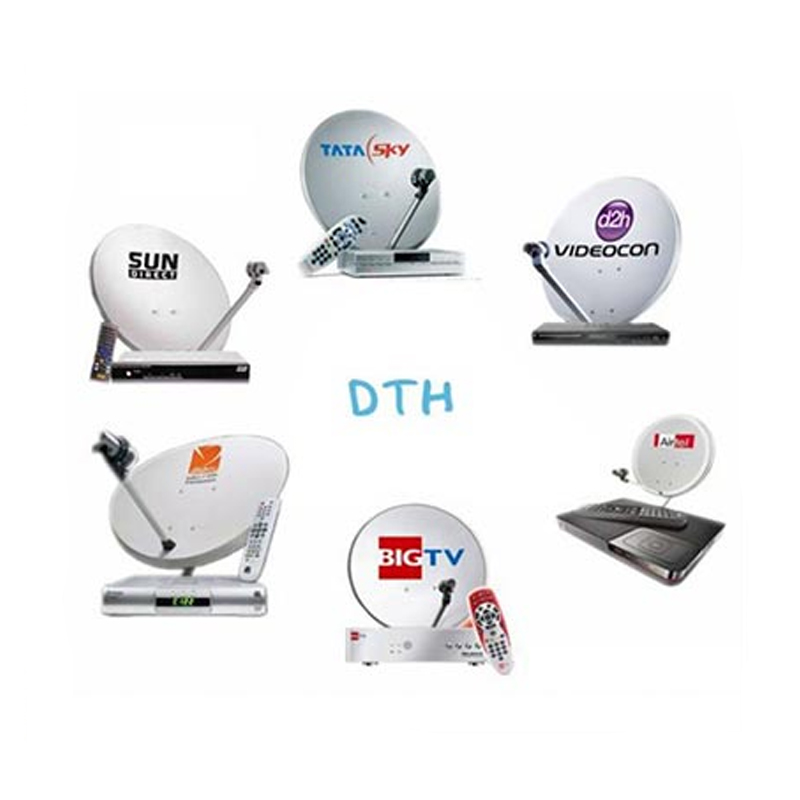
    MUMBAI: Telecom and DTH operator major Airtel has been served a show-cause notice by the Telecom Regulatory Authority of India (TRAI) over issues of blackout faced by some Airtel Digital TV subscribers during transition to the new tariff regime, a report by news agency IANS said.

    The regulator, which sent the notice earlier this week, has given Airtel three days to respond.

    Airtel's DTH service had 15 million customers at the end of the third quarter, up 7.6 per cent over the corresponding quarter in 2017.

    Commenting on the regulator’s notice, an Airtel spokesperson said: "We have over 15 million customers who are being migrated to the new tariff regime. Due to massive surge in last-minute requests, particularly on 31 January and 1 February, few customers may have experienced some delays in provisioning of channels."

    "Customer experience is of paramount importance to us. We remain fully committed to ensuring compliance with all TRAI guidelines and will file our response to the notice," he added.

    The new tariff order for cable and DTH TV services came into effect on 1 February post a month-long extension that was granted by TRAI to all stakeholders.

    The regulator has held constant meetings with DPOs and broadcasters to ensure a smooth transition to the new system.

    "The authority has noticed that due to heavy rush, the website of some DPOs have crashed intermittently and a little inconvenience was caused to come subscribers due to sporadic local issues. However, by and large the migration of subscribers to the new regulatory framework has been smooth," TRAI said in a press note on Wednesday.

    This isn’t the first time the regulator has shown that it means business. Last month, the TRAI sent a show-cause notice to Tata Sky.

    According to a report by news agency PTI, TRAI's show-cause notice said, "Tata Sky has failed to provide options to its 17.7 million subscribers in compliance with the new framework to exercise their choices for TV channels. Tata Sky has put its subscribers in a situation of great difficulty despite no fault of theirs by not complying with the provisions of the new regulations and the tariff order.”

    While both DTH operators have now complied by the TRAI’s tariff order, they, along with Sun Direct and Discovery Communication India, continue to battle against the new norms in the Delhi High Court.

  • India’s communication satellite GSAT-31 launched successfully from French Guiana

    India’s communication satellite GSAT-31 launched successfully from French Guiana

    MUMBAI: India’s latest communication satellite, GSAT-31 was successfully launched from the Spaceport in French Guiana during the early hours today.

    With a lift-off mass of 2536 kg, GSAT-31 will augment the Ku-band transponder capacity in Geostationary Orbit. The satellite will provide continuity to operational services on some of the in-orbit satellites. GSAT-31 derives its heritage from ISRO’s earlier INSAT/GSAT satellite series.

    ISRO Chairman Dr K Sivan said, “GSAT-31 has a unique configuration of providing flexible frequency segments and flexible coverage. The satellite will provide communication services to Indian mainland and islands.”

    Dr. Sivan also remarked that “GSAT-31 will provide DTH Television Services, connectivity to VSATs for ATM, Stock-exchange, Digital Satellite News Gathering (DSNG) and e-governance applications. The satellite will also be used for bulk data transfer for a host of emerging telecommunication applications.”

    The launch vehicle Ariane 5 VA-247 lifted off from Kourou Launch Base, French Guiana at 2:31 am (IST) carrying India’s GSAT-31 and Saudi Geostationary Satellite 1/Hellas Sat 4 satellites, as scheduled.

    After a 42-min flight, GSAT-31 separated from the Ariane 5 upper stage in an elliptical Geosynchronous Transfer Orbit with a perigee (nearest point to Earth) of 250 km and an apogee (farthest point to Earth) of 35,850 km, inclined at an angle of 3.0 degree to the equator.

    After separation from Ariane-5 upper stage, the two solar arrays of GSAT-31 were automatically deployed in quick succession and ISRO's Master Control Facility at Hassan in Karnataka took over the command and control of GSAT-31 and found its health parameters normal.

    In the days ahead, scientists will undertake phase-wise orbit-raising manoeuvres to place the satellite in Geostationary Orbit (36,000 km above the equator) using its on-board propulsion system.

    During the final stages of its orbit raising operations, the antenna reflector of GSAT-31 will be deployed. Following this, the satellite will be put in its final orbital configuration. The satellite will be operational after the successful completion of all in-orbit tests.

  • New TRAI’s tariff regime unlikely to reduce TV bills for most subscribers: Report

    New TRAI’s tariff regime unlikely to reduce TV bills for most subscribers: Report

    MUMBAI: The network capacity fee (NCF) and channel prices announced by broadcasters and distributors as per the Telecom Regulatory Authority of India’s (TRAI) new guidelines could increase the monthly bill of most subscribers of television channels as per the CRISIL report.

    TRAI’s new regulatory framework for broadcasting and cable services industry is intended to usher in transparency and uniformity, and will afford far greater freedom of choice to viewers.

    More than 90 per cent of TV viewers flip 50 or fewer channels, and the new rules will let them subscribe to what they want and not be saddled with channels they are not interested in.

    The regime, which came into effect on 1 February 2019, will benefit popular channels and hasten adoption of over-the-top (OTT); or content providers who stream media over the internet, such as Netflix and Hotstar) platforms, and will be a mixed bag for viewers and distributors.

    Ratings senior director Sachin Gupta said, “Our analysis of the impact of the regulations indicates a varied impact on monthly TV bills. Based on current pricing, the monthly TV bill can go up by 25 per cent from Rs 230-240 to ~Rs 300 per month for viewers who opt for the top 10 channels, but will come down for those who opt upto top 5 channels.”

    The new regime could drive consolidation in the broadcasting industry because content will clearly be the king and key differentiator. Subscription revenues of broadcasters would rise ~40 per cent to Rs 94 per subscriber per month compared with Rs 60-70 now. With viewers likely to opt for popular channels, large broadcasters will have greater pricing power. Conversely, broadcasters with less-popular channels will find it tough to piggyback on packages, and the least popular ones will hardly have a business case and could go off air.

    For distributors (DTH and cable operators), the new regulations are a mixed bag. While content cost will become a pass-through, protecting them from fluctuations, they may lose out on the benefits of value-added services such as bundling content across broadcasters, customisation, and placement revenue.

    Currently, most distributors are charging NCF at the cap rate of Rs 130 per month. Similarly, broadcasters have priced subscription for the most popular pay channels at the cap rate of Rs 19 per month.

    But these are early days and the situation may evolve with prices charged by broadcasters and distributors declining depending on market forces, viewership and competitive intensity.

    Ratings director Nitesh Jain “In all this, OTT platforms could emerge as the big beneficiary because many viewers could shift because of rising subscription bills. And low data tariffs also encourages viewership on OTT platforms.”

  • Tata Sky vs TRAI: Case, argued partly by DTH operator, adjourned to 30 January

    Tata Sky vs TRAI: Case, argued partly by DTH operator, adjourned to 30 January

    MUMBAI: The next instalment of direct-to-home operator Tata Sky’s ongoing legal tussle with the TRAI and its new tariff regime, in which Bharti Telemedia-owned Airtel Digital TV and Sun Direct are a part, will play out in two days time after the Delhi High Court adjourned the matter to 30 January with arguments being inconclusive.

    The matter was argued partly by Rajiv Nayar on behalf of the DTH operator on Monday.

    On Thursday, the Harit Nagpal-led company finally unveiled the new pricing of channels and packs after it was served a show-cause notice by the TRAI.

    TRAI's show-cause notice said, "Tata Sky has failed to provide options to its 17.7 million subscribers in compliance with the new framework to exercise their choices for TV channels. Tata Sky has put its subscribers in a situation of great difficulty despite no fault of theirs by not complying with the provisions of the new regulations and the tariff order.”

    Despite the delay in announcing channel prices, Tata Sky MD and CEO Nagpal is confident that his team can complete the tricky task of implementing the new norms within a relatively short span of time.

    “Tata Sky has always been compliant to regulatory requirements. We have gone live with our modes of communication across the Tata Sky website, Tata Sky mobile app and also equipped the dealers that subscribers can reach out to. We were confident that we would be able to complete the task in 1 week’s time. hence we used this time to create a seamless and smooth transition for all our subscribers. We have ensured that choosing channels and packs is as easy as 1, 2, 3 for any subscriber,” the veteran executive said.

    In a press release issued by the TRAI on Thursday, it had singled out one DTH operator for not providing options to its subscribers to exercise their choices. The press note also mentioned that the said DTH operator had assured in writing that it would comply with the new regulatory framework.

    In 2017, Bharti Telemedia, Tata Sky and Discovery Communication India had filed petitions against TRAI, challenging its tariff order and the interconnect regulations.

    Unlike the position adopted by Star India wherein it questioned the regulatory powers of TRAI, the matter in the Delhi HC questions the regulator’s power to wipe out deals that operators enter into to fix commissions and rates for customers.

  • Prasar Bharati fills up 4 vacant MPEG-2 slots on DD FreeDish

    Prasar Bharati fills up 4 vacant MPEG-2 slots on DD FreeDish

    MUMBAI: Prasar Bharati-led free direct-to-home (DTH) service DD FreeDish has allocated MPEG-2 slots to four channels. The four slots have been allocated to Aajtak Tej, Republic Bharat, Surya Samachar and Kushboo Bangla. The first three channels are from the news category with Republic Bharat to launch on 26 January, while the fourth is a Bengali GEC.

    “Based on the applications received for interim placement of channels on currently vacant MPEG-2 slots on DD FreeDish on pro-rata basis, 4 slots have been allocated to Aajtak Tej (news), Republic Bharat (news), Surya Samachar (news) and Kushboo Bangla (Bengali GEC),” Prasar Bharati informed on Twitter.

    The public broadcaster invited applications for interim placement of channels on currently vacant MPEG-2 slots on DD FreeDish on pro-rata basis for the period 26 January 2019 to 28 February 2019. Interested private satellite TV channels were requested to submit their applications along with all requite documents and demand drafts/fee on or before 24 January latest by 12 pm.

    “Good to see a Bengali GEC channel take up a slot on DD FreeDish. Gives us much hope that the upcoming eAuction next month will expand regional/language diversity on DD Free Dish taking it beyond the Hindi belt,” Prasar Bharati CEO Shashi Shekhar Vempati commented.

    Earlier this month, DD Free Dish e-auctions were resumed under a revised policy. Vempati said e-auctions will be based on a differential pricing to be determined by the genre or language of channels. He also said a key consideration of the new policy was to increase the diversity of content available on DD Free Dish and to expand its reach across India especially within the non-Hindi speaking states.

    The e-auction of slots  on DD Free Dish was arbitrarily called off in 2017 while the last e-auction of DD Free Dish took place in July 2017. Earlier, DD Free Dish used to hold e-auctions once every couple of months to award vacant channel slots to private broadcasters.

  • Tata Sky reveals new channel prices after TRAI’s show-cause notice

    Tata Sky reveals new channel prices after TRAI’s show-cause notice

    MUMBAI: Leading direct to home (DTH) operator Tata Sky on Thursday finally unveiled the new pricing of channels and packs after it was served a show-cause notice by the Telecom Regulatory Authority of India (TRAI). With just a week for the new tariff order to kick in Tata Sky’s decision to announce its pricing comes as a relief to consumers, some of whom had even complained about the same to the TRAI.

    According to a report by news agency PTI, TRAI's show-cause notice said, "Tata Sky has failed to provide options to its 17.7 million subscribers in compliance with the new framework to exercise their choices for TV channels. Tata Sky has put its subscribers in a situation of great difficulty despite no fault of theirs by not complying with the provisions of the new regulations and the tariff order.”

    Despite the delay in announcing channel prices, Tata Sky MD and CEO Harit Nagpal is confident that his team can complete the tricky task of implementing the new norms within a relatively short span of time.

    “Tata Sky has always been compliant to regulatory requirements. We have gone live with our modes of communication across the Tata Sky website, Tata Sky mobile app and also equipped the dealers that subscribers can reach out to. We were confident that we would be able to complete the task in 1 week’s time. hence we used this time to create a seamless and smooth transition for all our subscribers. We have ensured that choosing channels and packs is as easy as 1, 2, 3 for any subscriber,” the veteran executive said.

    The DTH operator has come up with a number of packs that will serve consumers of different interests. The packs not only focus on several genres like entertainment, news, sports, and lifestyle but also on all the regions across the country. Even in terms of pricing, the packs provided by the DTH operator offers a wide variety. Apart from its own packages, Tata Sky has also updated the information about broadcasters’ packages and price of the channels available on a-la-carte basis.

    For making the transition easier for its subscribers, a dedicated pack selection portal has also been provided on the website. Users need to log in via their registered mobile number or subscriber ID, post which they can exercise the options.

    The DTH operator has also notified that users with long duration packs will be migrated to monthly packs starting 1 February and the remaining balance will be credited to their Tata Sky account.

    Tata Sky is currently embroiled in a legal battle, of which Bharti Telemedia-owned Airtel Digital TV and Sun Direct are a part, with the TRAI in the Delhi High Court. Unlike the position Star India had adopted, wherein it questioned the regulatory powers of TRAI, the matter in the Delhi HC questions the regulator’s power to wipe out deals that operators enter into to fix commissions and rates for customers. The court is likely to pronounce its verdict in the matter on 28 January.

    In a press release issued by the TRAI on Thursday, it had singled out one DTH operator for not providing options to its subscribers to exercise their choices. The press note also mentioned that the said DTH operator had assured in writing that it would comply with the new regulatory framework.

    TRAI wrote to all broadcasters and DPOs, asking them to comply by the new regulatory framework within the stipulated time. The regulator has also revealed that 40 per cent of consumers have exercised their option of selecting TV channels under the new tariff order.

  • TRAI asks Tata Sky to submit status report on tariff order implementation

    TRAI asks Tata Sky to submit status report on tariff order implementation

    MUMBAI: Telecom Regulatory Authority of India (TRAI) has asked direct-to-home operator Tata Sky to file a comprehensive status report on the implementation of its new tariff regime. The regulator's direction came after it received complaints from several Tata Sky consumers.

    The new regulatory framework puts the power in hands of consumers to pay for channels they want to watch.

    According to a PTI report, TRAI also said Tata Sky is misleading its subscribers by suggesting that the regulator has extended the date of implementation of the new regulatory framework.

    The regulatory body in its letter to Tata Sky has described this act of the DTH operator as “patently false and misleading ".

    TRAI has further stated that it has given consumers time until 31 January to choose television channels, thereby enabling a smooth migration to the new regulatory framework.

    According to TRAI, it has received complaints from its subscribers suggesting that Tata Sky has "not made any provision in their system to obtain the choice of subscribers as per the new regulatory framework."

    It is important to mention here that a petition filed by Tata Sky against the new tariff order is pending before the Delhi High Court.

    Tata Sky’s ongoing court battle with the TRAI and its new tariff regime, in which Bharti Telemedia-owned Airtel Digital TV and Sun Direct are a part, was adjourned by the Delhi High Court on Thursday to January 23 with arguments being inconclusive.

    The matter was argued partly by senior lawyer Kapil Sibal on behalf of the direct-to-home operator on Tuesday who focussed on two points of 15 per cent discount cover (or the lack of it) and micromanagement attempt by TRAI of how business should be conducted.

    The hearing in the case started at around 2:45 pm and continued till almost 90 minutes during which Sibal argued that with the Madras HC setting aside the 15 per cent discount cap, the main aim of the tariff order had been frustrated and that attempt to micromanage a business, especially moves relating to pricing, etc., some of the provisions of the regulation were not in the interest of the DTH operator, which follows a different cost model compared to MSOs.

    The TRAI counsel’s interjection, according to industry sources, was minimal except seeking some technical clarifications relating to issues being argued by the Tata Sky lawyer and the actual content of the writ petition.

  • Tata Sky vs. TRAI: Case, argued partly by DTH operator, adjourned to 23 January

    Tata Sky vs. TRAI: Case, argued partly by DTH operator, adjourned to 23 January

    MUMBAI: DTH operator Tata Sky’s ongoing court battle with the TRAI and its new tariff regime, in which Bharti Telemedia-owned Airtel Digital TV and Sun Direct are a part, has been adjourned by the Delhi High Court to January 23 with arguments being inconclusive.

    The matter was argued partly by senior lawyer Kapil Sibal on behalf of the direct-to-home operator on Tuesday who focussed on two points of 15 per cent discount cover (or the lack of it) and micromanagement attempt by TRAI of how business should be conducted.

    The hearing in the case started at around 2:45 pm and continued till almost 90 minutes during which Sibal argued that with the Madras HC setting aside the 15 per cent discount cap, the main aim of the tariff order had been frustrated and that attempt to micromanage a business, especially moves relating to pricing, etc., some of the provisions of the regulation were not in the interest of the DTH operator, which follows a different cost model compared to MSOs.

    The TRAI counsel’s interjection, according to industry sources, was minimal except seeking some technical clarifications relating to issues being argued by the Tata Sky lawyer and the actual content of the writ petition.

    Though this essentially means the regulator is unlikely to take any coercive action against the DTH operator and Discovery (that has already published new rates in compliance with the TRAI tariff order) until the next hearing, during the 10 January 2019 hearing of the case the court had verbally observed that Tata Sky could remain non-compliant at its own peril.

    At the earlier hearing Sibal had impressed upon the judges to ask TRAI to produce all documents on how it arrived at the decision to implement the new tariff regime. He had also stated that implementing the present order will have an adverse impact on business.

    The TRAI lawyer had countered saying while Tata Sky felt aggrieved, a big DTH operator like Dish TV and all other MSOs seemed satisfied and had complied with the new tariff framework.

    The court had then asked the regulator to file the documents and the data that was the basis for arriving at the new tariff regime.

    Tata Sky is unlikely to upload its RIO for now, unlike Discovery, which has already published the same on its website, under protest.

    In 2017, Bharti Telemedia, Tata Sky and Discovery Communication India had filed petitions against TRAI, challenging its tariff order and the interconnect regulations.

    Unlike the position adopted by Star India wherein it questioned the regulatory powers of TRAI, the matter in the Delhi HC questions the regulator’s power to wipe out deals that operators enter into to fix commissions and rates for customers.

    While the Delhi HC case outcome could have implications on Tata Sky, Sun Direct, other distribution platform operators (DPOs) continue to be bound by the tariff order and most of them have complied too.

  • TRAI tariff order: Topline projections for broadcasters, MSOs

    TRAI tariff order: Topline projections for broadcasters, MSOs

    MUMBAI: In what is probably the acting collaboration of the year, Aamir Khan teamed up with Pankaj Tripathi for an infomercial for broadcasting behemoth Star. The 1 minute 22-second video, available both on TV and digital platforms, is an ad for Star’s new bouquet of channels, with the tagline“#Sachmein?”.Created to take the new TRAI tariff order ruling head-on, the ad seems to sum up the urgency broadcasters must be feeling to be ahead of the curve on this issue.

    The ad also starkly displays customers being at the mercy of cable and DTH providers for a fair offer. The new tariff order, however, will change this by favouring consumer choice and bringing in transparency, equitable distribution and parity. That the broadcaster had to call out the big guns (Khan, Tripathi) to make their point is a fair reflection of how seriously they expect the TRAI order to affect the television industry. And, all things considered, this might be the next revolution in the industry, one that will put consumers firmly at the centre of the ecosystem.

    The background

    In the past, negotiation took place between the rates channels agreed upon with the DPO and those that reached the consumers. The customers were never clear how much they were paying for which channels. Now, broadcasters will be creating fair bouquets, which the distributors have to package attractively in order for customers to subscribe to them.

    What the tariff order is all about:

    ·         All channels are offered on an a-la-carte basis.

    ·         Channels must be declared as pay channels or FTA-free to air channels and cannot be mixed in a single bouquet.

    ·         Distributors have to offer a base pack consisting 100 FTA channels in which 26 channels from Doordarshan are mandatory.

    ·         A bouquet of pay channels cannot contain a pay channel exceeding MRP Rs19.

    ·         The prices of bouquets and a-la-carte channels will be uniform across distribution platforms. No regional pricing is allowed.

    All stakeholders will finally be at par

    1. For the broadcaster: An obstacle to be worked around

    The broadcaster will now have to announce the MRP of each channel individually and set reasonable a la carte prices.

    They have to decide how much they can corner from advertising, subscription revenue and engage in intelligent pricing. They are even allowed to indulge in promotional pricing twice a year for up to 180 days in total. For broadcasters, opportunities need to be identified within the given framework. Those displaying good content will benefit while those used to bundling channels with no demand will take a hit.

    Our research shows that broadcasters may take a substantial hit, but strictly only in an ideal a la carte scenario. If we accept the ideal scenario, the Chrome Content Consumption Index shows that consumers will choose, on a national average, six pay channels. So apart from the basic cost of Network Capacity Fee (Rs 130), plus one flagship channel (~Rs 19) and five secondary channels (5*Rs 3), the new ARPUs stand at Rs 164, down from the current average of Rs 208.

    However, this needs to be tempered by the fact that most consumers will go for bouquets instead of ordering a la carte channels, largely due to the ease of ordering in one go, and if this is the case, the numbers need to be reworked. Broadcasters will sell their first bouquet for Rs 49 (led by driver/mass entertainment channel), the second for Rs 25 (led by a secondary driver/mass entertainment channel) and the 4 remaining channels (4*Rs 3), which will together amount to 86 rupees. In addition to the existing network capacity fee of Rs 130, the new ARPU is placed at Rs 216, an increase in the current ARPUs.

    Over the next few months, how it plays out, remains to be seen.

    2. Distributors and last mile operators (LMOs)

    Broadcasters will now be directly linked to end consumers and the intermediaries have the most to lose. In the past, they used to gain out of leakages and from money, which was not accountable. With the tariff order bringing in transparency, money can be tracked and the government will receive its due taxes.

    On the other hand, broadcasters will no longer coerce the distributors either. Rather than fixed deals between the two, which occurred in the past, the order will bring in objective, transparent deals based on content. They will now be able to create bouquets from different broadcasters at prices declared by them and can incentivise customers to purchase the same.

    Distributors and LMOs have to sign an agreement for revenue sharing on a mutually agreeable percentage share. If they both do not reach an agreement then recommended revenue share will be distributor at 55 per cent and LMO at 45 per cent.

    3. The audience: empowering consumers across the nation

    The belief is that the customer is the same everywhere.

    Overall prices are to be brought down through transparency of the pricing structure. The unfair advantage held by broadcasters will finally be dismantled as the consumers gain freedom to cherry pick their content and pay for the same. Not only is the price of each channel known, but viewers can also pro-actively, economically choose content from a wide range of choices. 

    What remains to be seen…

    Many have hailed the new regime as the right way forward where service providers and consumer interests are balanced. A fair deal is negotiated between broadcasters, distributors and the consumers as per the tariff regulations. However, its successful implementation remains to be seen and operational difficulties are being predicted.

    In terms of advertising, that second revenue pillar of broadcasting, the new order should render sampling quite obsolete, especially with more than 50,000 variations in packages. This will be the time when distribution data will become ‘oil’ for the industry. Channel availability, and not sampling, will drive media buying in the short to middle term.

    Industry topline projections

     The conclusion

    In the end, this is a much-needed step in the right direction, although the ideal scenario of 100 per cent a-la-carte channels might still be an improbability. The tariff order promotes transparency, empowers the audience, and plugs the revenue leakages, thereby increasing accountability of the key industry stakeholders. 

    (The author is chief executive officer and co-founder, Chrome DM. The views expressed here are his own and Indiantelevision.com may not subscribe to them) 

  • Bob Bakish on turning around Viacom, tie up with CBS, company’s culture and future

    Bob Bakish on turning around Viacom, tie up with CBS, company’s culture and future

    MUMBAI: Viacom CEO Bob Bakish describes his tenure at the giant company using two words – turnaround and evolution. At the end of 2016, Paramount Pictures was coming off a year where it had lost half a billion dollars and consumed another billion in cash. There was friction with distributors with the company’s cable networks not performing as they should have. It highlighted a trend line that was moving in the wrong direction. Cut to 2019, Paramount has delivered an earnings improvement in seven straight quarters with earnings improvement. The studio produced films that matter and made money on them. The television business delivered 400 million dollars in revenue, putting out nine series. Bakish has scripted one of the most fascinating times in the media and entertainment world with his work as CEO of Viacom. At CES 2019, he sat down for a fireside chat to reveal how we made it happen. Here are the excerpts of that insightful conversation with Variety.

    You’ve been on record recently saying Viacom doesn’t require a transformational deal. In this environment there were companies even bigger than yours are consolidating. How is that position tenable?

    Look, we and I, continue to believe there’s a lot of value in the assets we already own. In 2016 people thought that MTV was dead and buried but today it is the fastest growing network in television. Its audience is up again, in the current quarter, in double digits and we are already beginning to benefit from that resurgence from a monetisation standpoint… there’s a lot of value to the assets we already own. We, unlike most media companies, are truly a global operating media company, we don’t just have sales forces outside the US, you know we own the number one broadcast network in Argentina, we are major broadcaster on Channel 5, we are making content all over the world. We own half of the leading Indian media company called Viacom18 which owns the Colors brand. There’s a lot of value there and if you think about the transition we are in from an industry standpoint. Back in February of ’17 we started talking about something we call a flagship brand which was partially about prioritisation but it was also about unlocking opportunities through multi-platform expression. If you look at MTV, it’s only not only a linear cable network with substantial programming slate, but it also has a piece of the Paramount film slate. We started a digital native division called the Viacom digital Studios which produces original content in short form for distribution both in front of the wall social and other places… that has dramatically taken us from number 22 in space into top 10. There’s a lot of opportunity and when we got to our fourth fiscal quarter of ’18 we saw our company to return to growth, something that hasn’t been the case since ’14. So, we think there’s a lot of growth ahead.

    And relative to some of our peers, we are further along in making this transition. Look at the ad business, it’s not all 30 seconds up. We got an advanced ad business with significant branded content assets, significant data-driven assets. We can insert dynamically in 90 per cent of the VoD homes in the US. Something nobody else we can do. We have been doing M&A, we have been doing what I call accelerant deals. We bought a company called Whosay, a branded content company, which clearly increased our capabilities in the lower-end of the branded content space from a price perspective which is important. We also bought a company called Vidcon which is ground zero for social influencers… it has really strengthened our legacy with young-adult audiences and associated talented and it is also an extension of our experiential business, we most recently bought a company called Awesomeness which people think of as a web company and it’s true that they are an expert in marketing content on web but it’s also true it’s a studio in its own right. And increasing our participation in creation of content including for third parties is a big push we are making as a company and that Awesomeness has produced among other things “To All the Boys I have Loved Before”, which was amongst the most watched shows on Netflix.

    But these are very small deals. Are you going to look at making bigger deals or are you looking at more of the same smaller deals?

    Scale is very much in vogue, vertical integration is very much in vogue. If you look at the history of the industry in certain media vertical integration doesn’t tend to work, bigger is not always better. I don’t think that is the necessary path. What is really important is that you have a plan and you know where you are going and you’re executing against and you are achieving growth and that’s exactly what we are doing.

    Let’s address the elephant in the room. There’s a plenty of speculation that Viacom and CBS can be combined this year. How do you manage for you know an uncertain future? Do you have a distinct vision that you are planning for Viacom with smaller acquisitions or are you trying to build for a bunch of different possible futures?

    I’m a huge believer in having a plan. Our plan is fundamentally based on the assets we have because that is the only thing I can bet on for sure. We got to focus, we got to play through, we got to execute, we got to grow because there’s only one thing I know for sure that at the end of the year you are going to be talking to me or you are going to be talking to somebody else. What you don’t want to have to say is that ‘well yeah we had this opportunity but we got distracted and we didn’t get it done’. So our mission continues to be focussed on the assets that we have, focus on execution, look broadly to capture value and opportunistically see what else happens, and that’s what we do day in and day out and that’s what we’ll keep doing.

    However, in this climate where the pay-TV business is challenged, you guys are dealing with your tensions with some of major distributors. That could end up dropping key channels. How do you manage the future?

    You have to make sure you’re adding values. Point one and two is that you have to recognise how the world is changing. To the first point, talking about what we are doing in distribution, we broadened our ability to add value for our mutual benefit, both our partner’s benefit and Viacom’s benefit and certainly our whole extension to advanced advertising, what we call AMS, is fundamental to that.

    The second thing I would say in terms of how the world is changing is the fundamental thing is going on is fragmentation in terms of how people access content. In the television space 85 per cent people had the same product and that was big basic and that was very nice structure. Today, that’s no longer true and it continues to fragment. So you have a vast majority of the people in the highest priced segment, but you got people at 45 dollars, that price is starting to creep up as people are trying to make economic businesses there. We have people in teens, people around 10 bucks in terms of the SVoD space, then you have some single digit numbers and then you have free, the AVoD mode. So, that world is not going to change, that’s the world we are going to live in, and what’s important is that we take these called flagship brands and we make sure that we participate in all those levels. The big basic levels, that’s fairly obvious… you know we are active in VMVPD in the OTT space, we are also active in the SVoD space through our third party production business.

    Are those deals in the future big enough?

    We are in the state of transformation of our industry. You can either view that as glass half full or half empty. I view it as half full. Global distribution really is the catalyst that will turn this whole decline of television argument on its head because you have 3G, soon 4G, never mind 5G as 5G is more about fixed broadband. It will eventually be handset. If you have 500 million pay TV homes outside the US at the high side, probably 300 million quality ones, if you take out India and China. These kinds of deals where you bring in product either products that look like exactly what you get on television so that’s Telefonica and aggregated product that combines a lot of different things under one brand.

    We are in Indonesia with a mobile carrier that has 160 million subscribers. We have Nick Play and Nick Junior Play apps which provide access to that product on an on-demand basis. Some of these are through a third party intermediary, you could think Amazon channel store, and some of these are called B2B2C deals with carriers. You could think about Telefonica or Telenor or Telecom Cell. Now in this kind of hybrid economy of distribution, unfortunately, everybody doesn’t get the same thing, people are getting different products bigger bundles or smaller bundles.

    So you look at the difference between Sling and Dish in the US. For us we are carried on both, but all the Sling ads are dynamic, we can insert a specific ad to a specific person based on specific data. On the Dish platform we can’t do that, for obvious reasons, it’s a DTH going down, we can’t do it because of some technical work but that is another big move forward in terms of our ability to create values and we are in the super early days of that.

    So your focus will be more and more on production now, and what’s interesting about that is if there is a double edged sword to the success there. Doesn’t it make it harder for you to get eyeballs because people are watching your content on Netflix or Facebook? Doesn’t it hurt your core business?

    No, it doesn’t. For two reasons, one is whether we make a show for Facebook or not it’s not going to influence whether they have shows on their platforms. Point two is the most important thing from a consumer perspective and that is to continue to have our flagship brand on top for consumers that think about entertainment. And that entertainment might be going to see a movie in a theatre, on your flat screen watching pay video bundle or access to product on an app. Out of the extended ecosystem of entertainment experience associated with these brands that cross this fragmented environment is what it’s all about. It provides great solutions for advertisers. It’s all about being able to get reach to say men 18-34, which is not easy to reach these days, it is harder than ever. Use a cross-section of platforms, leveraging our linear distribution, adding our app distribution, adding our over the top distribution, adding our Viacom Digital Studios product, in branded content, in a programme that synchronised to reach that 18-34 group.

    How did you energise thousands of employees especially at Viacom, because looking at their world, there is pessimism, there is negativity. How did you get people going?

    You have a plan and you have to make sure people understand what it is and how they fit in and both you and they can understand if you are making progress and if so it is the path you want to take. Or if you are not making progress in one year you can see if you want to take some different direction. If you talk to people at Viacom they fundamentally believe in our plan. That we are actively participating in places that we haven’t before including providing original content on a day-in-day-out basis to the AVOD digital stratosphere and that we are acting in advance. In total, we actually grew the earnings of the company and all of that is the culture of content. Whether you make short-form, long-form, feature-length or event, whether you are on the creative side, monetisation side, or sports side, they all are working in this culture of content and they see the progress we’re making. I know because I talk to them, at least quarterly, I talk to them on Facebook live and take questions and ask them do you see the progress. Because at the end of the day people are pretty simple, it comes down to what’s in it for them and that is the future.

    Here at Las Vegas with CES you are spending a lot of time. What are the kind of technologies that are catching your eye?

    If you think about the fundamentals of our business there are kind of two things we are working on. One is we get the consumers to spend more time, that’s important, and two is that you are getting paid for it. If you have those two things, everything else can sort itself out. And if you look at the arc of consumption, I remember because I’ve been in this business 30 odd years when second TV sets starting showing up in scale in kids’ bedrooms and other places and that drove more minutes. That was a good thing and then more reasons like computers with infrastructures started to show up in places like offices and that wasn’t really in the heavy video space but there were more impressions and of course much more recently you get into over the top and you get into mobile and that’s much more ton of a product. There are two things that are coming like a freight train. One is the continuing acceleration of broadband infrastructure both in the name of 5G which is definitely coming as you all know, maybe its fixed broadband first but that’s going to flood in and all the wireless carriers when you talk to them all they say we need use cases and certainly entertainment is a use case and the other thing that’s got less press at CES is 10G and that’s the cable industry talking about their next length. They are delivering 1G now and their next push is to deliver 10x that which will be five years or something. 5G autonomous cars that people don’t have to drive is also coming. So just like adding a TV set to a bedroom or adding mobile on the go, the last vestige of video free consumption is automobile.