Tag: DTH

  • 2024 The year that was – Convergence redefines India’s media landscape

    2024 The year that was – Convergence redefines India’s media landscape

    MUMBAI: As 2024 draws to a close, India’s media and entertainment sector has undergone a profound transformation, reshaping how content is created, distributed, monetised and consumed. The industry’s trajectory is no longer defined by linear growth but by convergence – a blending of formats, technologies, and audience experiences. This article explores the standout trends of 2024 that have positioned India at the forefront of the global media revolution. 

    The Rise of Unified Media Ecosystems 

    In 2024, the fragmentation of content across platforms prompted a surge in unified media ecosystems. Major players integrated cable, satellite, and OTT services into seamless bundles. Partnerships like those between Tata Play and JioCinema offered consumers a singular subscription covering live TV, streaming, and interactive content. The merger of Disney+ Hotstar and JioCinema under the JioStar brand will further demonstrate this trend, combining Disney’s extensive content library with Jio’s robust technological and distribution infrastructure.  

    These developments addressed subscription fatigue by offering cost-effective and convenient bundled services. As telcos and streaming players increasingly leaned towards unified offerings, the next pivotal step emerged – creating singular OTT platforms to integrate multiple streaming services under one roof. Scalable and modular architectures have become essential, enabling flexibility and customisation to accommodate evolving service bundles and diverse consumer preferences. This shift underscores the industry’s adaptability in meeting the complex demands of modern consumers. 

    Sports Broadcasting Reinvented 

    India’s sports media landscape saw unprecedented innovation in 2024. Beyond traditional cricket broadcasts, kabaddi, football, and esports embraced hybrid delivery models. Augmented reality (AR) features allowed fans to experience matches with real-time statistics and dynamic visuals, while 5G-enabled immersive experiences brought stadium energy into living rooms. 

    Regional sports leagues also thrived by leveraging vernacular commentary and localised marketing, broadening their appeal and strengthening connections with diverse audiences. These efforts not only amplified audience engagement but also positioned regional sports as valuable contributors to India’s overall sports media ecosystem. 

    AI, Advertising, and Live Commerce Converge 

     Artificial intelligence, innovative advertising, and live commerce emerged as interconnected forces shaping the media landscape in 2024. AI-driven personalisation powered hyper-targeted recommendations and dynamic content delivery, tailoring experiences to individual, regional, or similar preferences. This capability extended into advertising, where AI analytics enabled micro-segmentation and dynamic ad formats. Brands also experimented with shoppable media embedded directly into OTT platforms, allowing users to interact with ads and make purchases seamlessly. 

    Live commerce further transformed engagement by integrating real-time shopping into live events. Cricket telecasts, for instance, featured exclusive merchandise drops available for purchase during key moments. Platforms with modular architectures and seamless third-party integrations supported these innovations, unlocking new revenue streams and enhancing viewer interactivity. These advancements reflect a significant evolution in how audiences engage with content and commerce simultaneously. 
     

    Deltatre

     Content Without Borders 

     In 2024, Indian content flourished on the global stage. Platforms like Netflix and Amazon Prime Video promoted Indian originals, while regional OTT platforms expanded into south Asia, the Middle East, and Africa. This cross-border success highlighted the universal appeal of culturally rich narratives. 

    International co-productions became more common, with Indian creators collaborating with global studios. Flexible monetisation models, including ad-supported, subscription-based, and hybrid offerings, enabled experimentation and growth, allowing platforms to cater to diverse audience needs. This trend underscores the global demand for authentic storytelling and India’s role as a leading content powerhouse. 

    Collaborative Ventures and Audience Co-Creation Redefine Engagement 

    Collaborative ventures between creators, platforms, and brands surged in 2024. Co-productions between Indian and international studios introduced fresh storytelling perspectives, while brands acted as content producers, funding original series that aligned with their ethos. 

    Audiences also became active contributors, engaging in interactive storytelling, user-generated content campaigns, and fan-led initiatives. This participatory approach fostered loyalty and transformed viewers into brand advocates. Platforms embracing flexible monetisation strategies and modular architectures capitalised on this trend, delivering sustainable revenue through community-driven content models. Such initiatives highlighted the importance of deeper connections between creators and audiences in driving content innovation. 

    Looking Ahead: 2025 and Beyond 

    As we step into 2025, the role of technology in shaping India’s media landscape cannot be overstated. Scalable, modular platforms will be critical in enabling media companies to grow and adapt without overhauling their infrastructure.  

    These technological advancements will not only enable cost-effective scaling but also foster innovation, allowing the industry to explore new content formats, distribution models, and audience engagement strategies. 

    India’s media and entertainment sector is poised to lead the way in leveraging technology for inclusivity and innovation. By embracing modularity, scalability, and flexibility, stakeholders can address the complexities of a rapidly evolving market, ensuring sustained growth and global relevance. 

    The author is country manager India, Deltatre.

    (The picture  for this article featured on Indiantelevison.com’s home page was generated using Microsoft’s AI Image generator. No copyright infringement is intended)

  • Airtel Digital TV loses half a million subs in Q2 FY 2025

    Airtel Digital TV loses half a million subs in Q2 FY 2025

    MUMBAI: Bharti Airtel’s digital TV business’ revenue saw a marginal bump even as it shed a chunk of customers in Q2 FY 2025 ended 30 September 2024. India’s leading direct to home television (DTH) player saw a one per cent increase in revenues to Rs 7586 million (Rs 7515 million in  Q2 FY 2024).

    Airtel’s DTH sub base continued to see erosion with a drop of 546,000 subscribers in Q2 FY’25 to 15.8 million as against a loss of 196,000 subs in the previous years’ corresponding quarter. ( It had gained 194,000 subs in Q1 FY’25).  Monthly customer churn  climbed to 3.7 per cent (2.7 per cent). Average revenue per user was shaved by a rupee to Rs 158 in the latest quarter as against last year’s  corresponding quarter figures.

    EBITDA stayed nearly constant at Rs 4,243 million as compared to Rs 4,212 million in the corresponding quarter last year with EBITDA margin degrowing to 55.9 per cent as against 56.1 per cent. EBIT for the quarter was at Rs 12 million as compared to Rs 832 million in the previous quarter.  During the quarter, the company incurred a capital expenditure of Rs 4,252 million.

    During the quarter, Airtel and Apple entered in a strategic partnership to bring exclusive offers of Apple TV+ and Apple Music to Airtel customers in India. 

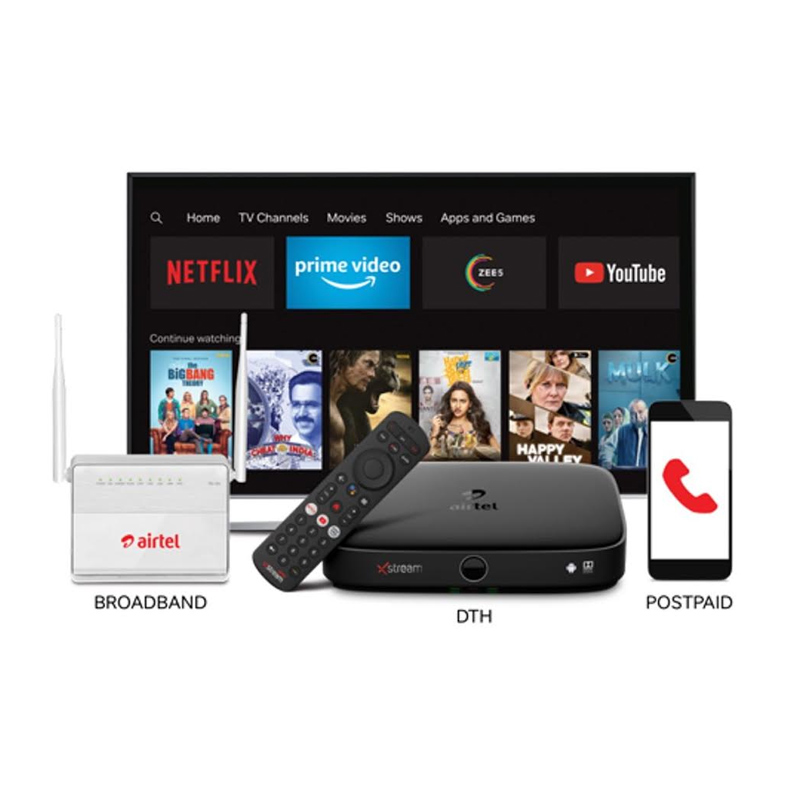
    Airtel digital TV then joined hands with Amazon Prime to offer live TV and Prime Lite benefits as part of its new Ultimate and Amazon Prime Lite plan. Subscribers of the Amazon Prime Lite plan that start Rs 521, can enjoy Prime Video on two devices in HD quality, in addition to enjoying linear TV channels. The Prime Lite subscription also includes other Prime benefits like free unlimited same-day delivery on over 10 Lakh products and next-day delivery on products on Amazon, early access to sale events and lightning deals and 5 per cent  cashback on purchases on Amazon.in with Amazon Pay ICICI Bank credit card. 

  • Dish TV India incorporates new subsidiary

    Dish TV India incorporates new subsidiary

    MUMBAI: The ailing direct to home operator Dish TV on 10 October informed the Bombay stock exchange that it is going ahead and incorporating a new wholly owned subsidiary under the name of Dish Bharat Ventures Pvt Ltd. Its purpose: to the distribute its products
    and services through a robust digital platform and also provide ancillary services.

    Dish TV had earlier got clearance from its board on 24 July to set up the firm. And it  has got clearance from the ministry of corporate affairs to do the same on 10 October.

    It may be recalled that Dish TV controls 19.8 per cent market share of the DTH subscriber base in the country.  It notched up a revenue of Rs 9710.9 million in the year ended 31 March 2024 and it notched up a loss before exceptional, extraordinary items and tax of Rs 528.3 million, according to data available on moneycontrol.com.

  • TRAI releases TV, cable TV, DTH data for June 2024 quarter

    TRAI releases TV, cable TV, DTH data for June 2024 quarter

    MUMBAI: Industry watchdog the Telecom Regulatory Authority  of India (TRAI) released its quarterly Indian Telecom Services Performance Indicator Report yesterday  for the quarter ending 30 June 2024 which is compiled by collecting information from service providers. And there are no real surprises as far as broadcasters and DPOs are concerned.

    The report has revealed that 912 satellite channels have been allowed to uplink/downlink/do both by the ministry of information & broadcasting as of 30 June 2024. This compare to 924  private satellite TV channels which had got permission in end March 2024 and 903 in end June 2023.  So, it appears there has been a drop in permitted channels. Of these 912, 902 are available for downlinking in India. 362 of the 902 channels are pay TV channels as of end June 2024, while the rest are free to air. There has been not much of a growth in terms of HD services with the figure hovering around the 103 channel mark for the past many quarters; the number stands at 103 HD channels in end June 2024. The SD channels too have stayed put at the 255-259 mark; with the latest number being 259.

    199 of the SD channels are priced between between less than Rs 1 and Rs 12, while 37 HD channels are priced in that range. 42 SD channels and 54 HD channels are priced at Rs 19 and just two SD channels and five HD channels are priced more than Rs 19. So much for the watchdog’s fears that broadcast networks would price their channels too high.

    The largest genre of pay TV channels is represented by general entertainment channels which is at 115 followed by movies with 72 and news & current affairs which has 65 pay channels.


    On the DPO side, TRAI  has reported that 11 MSOs and 1 HITS operator have more than a million subs as of end June 2024. 

    Active DTH subs have expanded to 62.17 million as against 61.97 in end March 2024.  

  • Bharti Airtel responds to BSE query on Tata Play buyout

    Bharti Airtel responds to BSE query on Tata Play buyout

    MUMBAI: The Sunil Mittal-owned Bharti Airtel has responded to a query from the Bombay stock exchange (BSE) regarding news reports that it is in advanced talks to acquire the lossmaking DTH market leader and Tata group company Tata Play, led by Harit Nagpal.

    The company told the BSE that from time to time it or its subsidiaries evaluate various opportunities. And that it saw no reason why it should make any disclosures now, keeping in mind Securities Exchange Board of India (Sebi) regulations for listed companies.

    In a letter addressed to both the National Stock Exchange and BSE, it responded as follows:

    “We wish to clarify that the Company (on its own or through its subsidiary companies) evaluates various opportunities of alliances/ acquisitions and other similar avenues as per its requirements from time to time, in the ordinary course of business. There is no material event/ information that requires disclosure under Regulation 30 of the Securities and Exchange Board of India (Listing Obligations and Disclosure Requirements)
    Regulations, 2015 (‘SEBI Listing Regulations’). As a responsible corporate that follows the highest standards of corporate governance, the Company is fully conscious of its disclosure obligations under SEBI Listing Regulations and will duly make appropriate disclosures in compliance with applicable laws.”

    It may be recalled that The Economic Times had reported a couple of days ago that Tata Sons which holds a 70 per cent stake in Tata Play is looking at exiting along with Walt Disney, which holds 30 per cent.  The DTH provider’s valuation has reportedly plummeted from around $3 billion pre-covid to around $1 billion today. Tata Sons had bought out Singapore’s Temasek Holding’s  10 per cent investment in Tata Play for around $100 million in April 2024.  Bharti Airtel is expecting to close the purchase at the same valuation, the Economic Times report had stated. 

    Bharti Airtel owns the second largest DTH platform in India in Airtel DTH and the Tata Play acquisition will reportedly bolster its subscriber base. 

  • TRAI’s DD FreeDish recommendations draw industry flak

    TRAI’s DD FreeDish recommendations draw industry flak

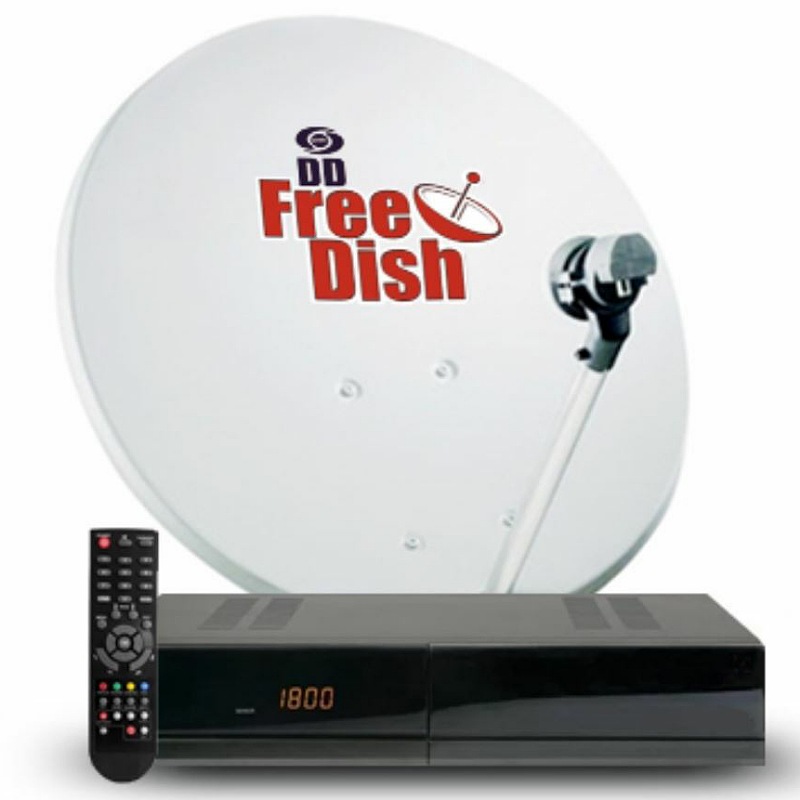
    Mumbai: Industry watchdog – the Telecom Regulatory Authority of India (TRAI)  – has bowled another bouncer at the Indian broadcasting sector by recommending tight – and many say impossible deadlines – deadlines for the Prasar Bharti owned DTH operator DD FreeDish.

    In its latest round of recommendations, the TRAI has asked it to stop selling non-addressable set top boxes for DD FreeDish by 1 January 2025. The public service broadcaster has been selling these for more than a decade and more than 45 million homes have them. The regulator has advised DD FreeDish to  replace them with indigenously-developed STBs and addressability built in by an organisation such as C-DoT. An additional caveat that has been mentioned is that the boxes should be inter-operable with those of other cable TV netwoks and DTH platforms. It has stated that even private cable TV networks and DTH operators should also take the inter-operable STB route.

    The authority has also asked it to start encrypting all private channels on its platform by 1 April 2025, followed by all DD, education, and radio channels within four years.

    “This is madness,” said a senior legal counsel at a major broadcasting network. “Does the TRAI know what it is doing? Where are the chips available? The circuits? And inter-operability – which developed market has inter-operable STBs between cable TV and DTH? Each player has his own CAS? I am sure this is going to be challenged very shortly. “

    Another broadcasting executive added: “The recommendations make it appear as if the TRAI wanted to placate the DPOs who have been demanding a level playing field between DD and the encrypted platforms. Please check whether  DD and Prasar Bharti expected things to go in the direction that TRAI has said. I don’t expect the recommendations to be implemented in my lifetime.”

    (Indiantelevision.com had managed to get only the private sector’s viewpoint and had not managed to get through to either TRAI or Prasar Bharti at the time of writing.)

  • Tata group to buy out Disney’s 30 per cent stake in Tata Play

    Tata group to buy out Disney’s 30 per cent stake in Tata Play

    MUMBAI: The mouse house is playing its final hand in India. The Bob Iger headed entertainment major has lined up a deal under which it will be selling its near 30 per cent stake in DTH firm Tata Play to the Tata Group. The transaction values India’s most respected pay TV operator at $1 billion, according to a report by Bloomberg.

    The exit by Disney will allow it to merge its India business with the Mukesh Ambani-owned Viacom18.

    Disney pocketed its holding in Tata Play when it acquired the entertainment business of Twenty First Century Fox from News Corp which landed it the Star India network.

    Tata Play, which has seen in an erosion in subscriber numbers, like most in the pay TV business, thanks to the expansion of the government-owned Free Dish, and cord cutting which has seen in the growth of streaming services.

    It has been looking at unlocking value and attracting capital, and even started the process for an IPO in 2020, which it later dropped.

    With the acquisition of Disney’s 30 per cent, the Tatas will retain total ownership of Tata Play.

  • Sony Entertainment Television’s exclusive linear TV airing of Shrimad Ramayan

    Sony Entertainment Television’s exclusive linear TV airing of Shrimad Ramayan

    Mumbai: Sony Entertainment Television (SET) celebrated the New Year by connecting with Indian television viewers through its exclusive linear TV airing of Shrimad Ramayan. Recognising the enduring allure of linear TV, the channel chose to launch the divine epic exclusively on cable TV and DTH platforms.

    Shrimad Ramayan resonates deeply with millions, portraying essential relationships amid inherent conflicts. The narrative of Lord Ram, the ‘Ideal Man,’ embodies timeless values such as integrity, loyalty, courage, love, and resilience. In an endeavour to echo the relevancy of the value that this timeless epic is known for, SET has created compelling short videos promoting the essence of relationships and essential life lessons

    Beyond the familiar story, Shrimad Ramayan will also showcase multiple untold stories, offering a nuanced understanding of the saga’s depth and eternal beauty. By exclusively releasing it on cable TV and DTH, Sony Entertainment Television aims to play a vital role in revitalizing family viewing.

    SPNI’s distribution marketing and sales head Makarand Palekar emphasises, “In my experience, while streaming services have become increasingly popular, linear TV remains a resilient and relevant part of the media landscape. It is not only coexisting with on- demand platforms but also adapting to evolving viewer habits, ensuring its continued presence in the foreseeable future.”

    Sony Entertainment Networks was amongst the earliest movers to make the bold, industry-first step of discontinuing all its Live TV channels on Sony LIV. This move along with exclusive Linear TV only releases like Srimad Ramayan will help create differentiated content, both in the linear & the OTT offerings of the network, thus helping drive viewership and revenues for both the mediums.

    The network, known for its novel and popular shows, features progressive storylines in existing shows like ‘Kavya – Ek Jazbaa, Ek Junoon,’ ‘Sapnon Ki Chhalaang,’ ‘Mere Dad ki Dulhan,’ and ‘Aangan.’ Upcoming shows such as ‘Mehndi Wala Ghar,’ ‘Kuch Reet Jagat Ki Aisi Hai,’ and ‘Nivedita Maajhi Tai’ promise a rich and diverse content mix.

    Undoubtedly these shows are a huge draw for viewers and also provide advertisers with distinct opportunities for targeted engagement and strategic product placements. Company anticipates that exclusive content like Shrimad Ramayan marks the beginning of a pivotal moment in the continued vitality of television entertainment. The distinctive allure of such shows, with their unique narratives and exclusive platform specific airing, is poised to significantly elevate viewership and reaffirm the enduring appeal of linear television.

  • TV Viewership: Unaccredited agencies issuing motivated measurement reports under government radar

    TV Viewership: Unaccredited agencies issuing motivated measurement reports under government radar

    Mumbai: The government may take strict action against the unlicensed agencies issuing viewership data for TV and internet-connected platforms.

    As per the government guidelines, these platforms are in violation of the policy for TRP in India which also covers the measurement of online video platforms. Recently, an agency issued a viewership report for TV news channels. As per industry experts, most of these reports are motivated and at times are even paid by channels being shown as number one.

    The Ministry of Information and Broadcasting requires all Television Rating Agencies to register themselves and follow the policy guidelines laid down by the Ministry in respect of television ratings.

    The guidelines provide for strict conditions and obligations to be compulsorily met, including ensuring that ratings are tech-neutral and capture data across multiple viewing platforms including Cable TV, DTH, Terrestrial TV and online platforms.


  • Telcos’ gross revenue slips 0.01% to Rs 76,408 cr  in Apr-Jun’2022: Trai

    Telcos’ gross revenue slips 0.01% to Rs 76,408 cr in Apr-Jun’2022: Trai

    Mumbai: The Telecom Regulatory Authority of India (Trai) has released the latest edition, for the quarter ending 20 June 2022, of its report “Indian Telecom Services Performance Indicator” on Wednesday.

    The report provides a broad view of telecom services, including key parameters and growth trends, as well as cable TV, DTH, and radio broadcasting services in India from April 1 to June 30.

    According to the report, the number of telephone subscribers has increased from 1,166.93 million at the end of March 22 to 1,172.96 million at the end of June 22, registering a growth rate of 0.52 per cent over the previous quarter. This reflects a year-on-year (YoY) decline rate of 2.46 per cent over the same quarter of the last year. Overall teledensity in India increased from 84.88 per cent on March 22 to 85.13 per cent on June 22.

    Trends in Telephone subscribers and Tele-density in India

    Telephone subscribers in urban areas increased to 649.09 million at the end of Jun-22, in comparison to 647.11 million at the end of Mar-22. During the same time period, however, urban tele-density fell from 134.94 per cent to 134.72 per cent.

    Rural telephone subscribers increased from 519.82 million at the end of Mar-22 to 523.27 million at the end of Jun-22 and rural tele-density also increased from 58.07 per cent to 58.46 per cent during the same period.

    Out of the total subscriptions, the share of rural subscriptions increased from 44.55 per cent at the end of Mar-22 to 44.66 per cent at the end of Jun-22.

    Composition of Telephone Subscribers

    With a net increase of 5.30 million subscribers during the quarter, the total wireless subscriber base increased from 1,142.09 million at the end of Mar-22 to 1,147.39 million at the end of Jun-22, registering a growth rate of 0.46 per cent over the previous quarter. On Y-O-Y basis, wireless subscriptions decreased at the rate of 2.83 per cent during the year. 

    Wireless tele-density increased from 83.07 per cent at the end of Mar-22 to 83.27 per cent at the end of Jun-22 with quarterly growth rate of 0.24 per cent.

    Wireline subscribers increased from 24.84 million at the end of Mar-22 to 25.57 million at the end of Jun-22, representing a quarterly growth rate of 2.92 per cent, and wireline subscriptions increased by 17.62 per cent year-on-year at the end of quarter ended Jun-22.

    Wireline tele-density increased from 1.81 per cent at the end of Mar-22 to 1.86 per cent at the end of Jun-22 with quarterly growth rate of 2.69 per cent.

    Total number of internet subscribers increased from 824.89 million at the end of Mar-22 to 836.86 million at the end of Jun-22, registering a quarterly growth rate of 1.45 per cent. Out of 836.86 million internet subscribers, the number of wired subscribers is 28.73 million, and the number of wireless subscribers is 808.13 million.

    Composition of internet subscription

    There are 800,94 million broadband internet subscribers and 35.92 million narrowband internet subscribers in the internet subscriber base.

    The broadband internet subscriber base increased by 1.60 per cent from 788.30 million at the end of Mar-22 to 800.94 million at the end of Jun-22. The narrowband internet subscriber base declined by 1.84 per cent from 36.59 million at the end of Mar-22 to 35.92 million at the end of Jun-22.  

    Monthly average revenue per user (ARPU) for wireless service increased by 5.02 per cent, from Rs 127.17 in Mar-22 to Rs 133.55 in Jun-22. On a YoY basis, monthly ARPU for wireless service increased by 27.61 per cent in this quarter.

    Prepaid ARPU per month increased from Rs 121.91 in Mar-22 to Rs 128.61 in Jun-22, however, postpaid ARPU per month decreased from Rs 200.56 in Mar-22 to Rs 197.55 in Jun-22.

    On an all-India average, the overall MOU per subscriber per month decreased by 4.38 per cent from 955 in March 2022 to 914 in June 2022.

    Prepaid MOU per subscriber per month fell from 972 in March to 936 in June. Postpaid MOU per subscriber per month fell from 721 in March to 621 in June.

    The telecom service sector’s gross revenue (GR) and adjusted gross revenue (AGR) for the quarter ended June 22 were Rs 76,408 crore and Rs 60,530 crore, respectively. GR decreased by 0.01 per cent and AGR increased by 2.79 per cent in Jun-22, as compared to the previous quarter.

    The YoY growth in GR and AGR in Jun-22 over the same quarter last year has been 17.91 per cent and 17.91 per cent, respectively.

    Pass-through charges decreased from Rs 13,568 crore in Mar-22 to Rs 13,415 crore in Jun-22, with a quarterly decline rate of 1.12 per cent. Pass-through charges for the quarter ended June 22 have decreased by 0.38 per cent YoY.

    The licence fee increased from Rs 4,712 crore to Rs 4,844 crore for the QE Mar-22 to QE Jun-22. The quarterly and the YoY growth rates of the licence fee are 2.79 per cent and 18.05 per cent, respectively, in this quarter.

    Service-wise composition of Adjusted Gross Revenue

    Access services contributed 80.95 per cent of the total adjusted gross revenue of telecom services. In access services, gross revenue (GR), adjusted gross revenue (AGR), license fee, spectrum usage charges (SUC) and pass through charges increased by 1.67 per cent, 5.55 per cent, 5.53 per cent, 3.82 per cent and -3.41 per cent, respectively in QE Jun-22.

    The performance of cellular mobile service providers in terms of quality of service performance in all the parameters remains the same, i.e., neither performance has improved nor deteriorated in this quarter as compared to the previous quarter.

    A total of approximately 892 private satellite TV channels have been permitted by the ministry of information and broadcasting (MIB) for uplinking only/downlinking only/both uplinking & downlinking.  

    As per the reporting done by broadcasters in pursuance of the tariff order dated 3 March 2017 as amended, out of 879 permitted satellite TV channels which are available for downlinking in India, there are 347 satellite pay TV channels as on 30 June 2022. Out of 347 pay channels, 249 are SD satellite pay TV channels and 98 are HD satellite pay TV channels.

    Since the introduction of the DTH sector in 2003, Indian DTH (direct-to-home) services have displayed phenomenal growth. There were four pay DTH service providers in the country during the quarter that ended in June 2022.

    As of June 30, 2022, Pay DTH had approximately 67.04 million active subscribers. This is in addition to the DD Free Dish (free DTH services from Doordarshan) subscribers.