Tag: DTH

  • Tata Sky’s Pallavi Puri says TRAI tariff order has no impact on VAS portfolio

    Tata Sky’s Pallavi Puri says TRAI tariff order has no impact on VAS portfolio

    MUMBAI: DTH operator Tata Sky has been banking on value-added services (VAS) for a long time to differentiate itself from competitors. Its newly launched Tata Sky Theatre has emerged as one of the fastest growing services. While there have been speculations on the new tariff order’s impact on such services, Tata Sky chief commercial officer Pallavi Puri said the new price regime has not affected its VAS portfolio at all.

    “Tata Sky Theatre is priced at Rs 75 and Rs 99 depending on whether you take SD or HD. At Rs 75, subscribers get four new plays every month; one new play every week plus there are other plays. There is no comparison. The new tariff order has no impact on it. It’s a big value offering for consumers,” she commented.

    Tata Sky launched the subscription-based service for theatre enthusiasts in collaboration with Zee Theatre last September. According to Puri, customer insights revealed a need for access to theatrical content which led them to the ideation of this service. Puri said that while the company was identifying need gaps for launching more services, theatre came across as one.

    “It’s been one of our fastest services. We launched over 30 services. What we found very unique about Tata Sky Theatre is that we have seen consumers actually calling us and say what they want more. So, the engagement has been higher. They love the plays and they want more regional plays,” Puri commented on the traction of the service.

    In the initial phase, more traction has come from the Northern and Western part of India because primarily the plays are in Hindi. However, Puri revealed plans to expand the service in other regional languages. The company is currently discussing what would be the right plays or languages to add on.

  • TRAI tariff order’s impact on DD Free Dish’s growth

    TRAI tariff order’s impact on DD Free Dish’s growth

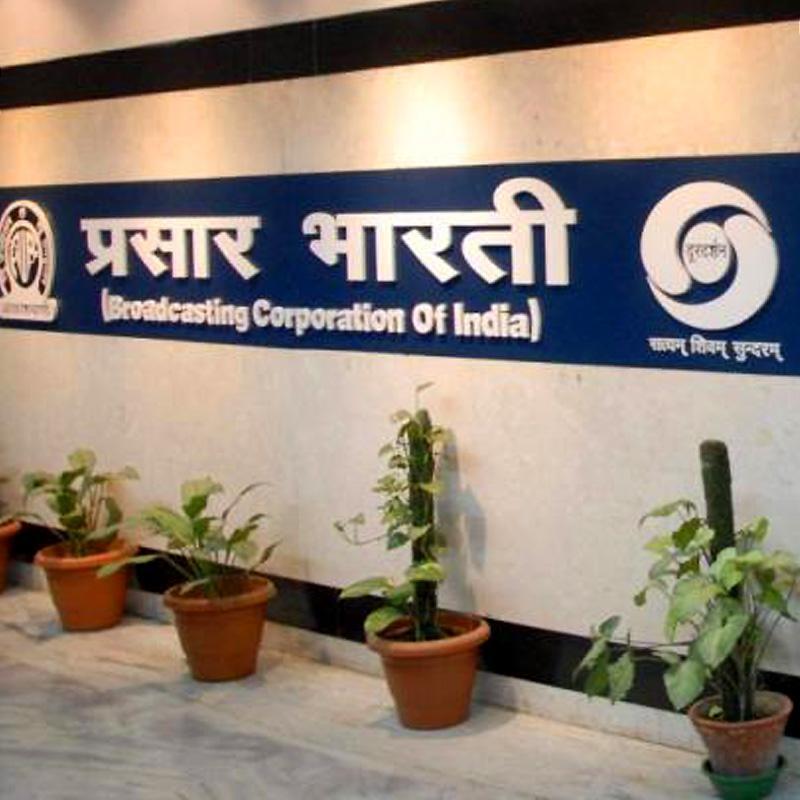
    MUMBAI: Prasar Bharati run direct-to-home (DTH) platform DD FreeDish’s success is evident from the estimated number of subscribers it boasts of. The free-to-air (FTA) DTH service, experts believe, commands close to 30 million subscribers, which could shoot up post TRAI tariff order’s implementation, the 2019 FICCI-EY report points out.

    According to the report, DD FreeDish has the potential to breach the 50 million subscriber mark if broadcasters continue to provide pay content on the platform.

    Another interesting point worth mentioning here is that the report suggests lower end consumers will increasingly shift to the free platform or even use it for their second television connection as a result of the new tariff regime.

    Last year at the Video and Broadband Summit, Doordarshan director general Supriya Sahu stated that FreeDish is not only used by a marginal section of the society but is also evolving as an alternative option for consumers. An older report of consulting firm EY predicted that the number of DD FreeDish subscribers is bound to cross 40 million by 2020.

    While the experts Indiantelevision.com spoke to were optimistic about the potential for robust growth, they seemed sceptical about the scale.

    Elara Capital vice president Karan Taurani did not agree with 2019 FICCI-EY report's observation about FreeDish, especially the figure of 50 million. Taurani rejected the possibility of a second home connectivity, adding that mobile is going to be the second screen for consumers. He said content consumption increment is happening on digital platforms.

    PricewaterhouseCoopers (PwC) partner and leader, media and entertainment Frank D’Souza, however, believes there is some merit to the argument.

    “Now the question is how many households who can get multiple connections will choose OTT rather than adding one more TV connection- that is little debatable. But the first argument has merit –lower-end consumers may shift to DD Free Dish. But the question is, will lower-end consumers be able to have multiple connections due to lack of physical space availability?” he asked.

    Travelxp CEO Prashant Chothani said the growth of FreeDish has so far been propelled by free content only. Now, however, major broadcasters have pulled off their content from the platform, he highlighted.

    The report also says that if large broadcasters continue to keep their content off the platform, television advertising revenues would be impacted and FreeDish’s future will be determined by the number of new channels that sign up on the platform.

    “FreeDish generated an estimated Rs 20 billion of advertising revenues. In February 2019, large broadcasters removed their channels from this medium and this could impact our ad revenue forecast by Rs 10-20 billion in 2019,” the report adds.

    Earlier this year, Prasar Bharati board gave a green signal to e-auctioning of DTH slots on DD FreeDish which was arbitrarily called off in October 2017. The first e-auction after recommencement witnessed intense competition. Under the revised guidelines, a total of 40 MPEG2 slots were successfully sold while the estimated revenue from the sold slots is Rs. 395 crore.

    The FICCI-EY report also adds that regional, news and niche channels, especially those impacted negatively by the TRAI tariff order, are bound to build their audience through FreeDish (subject to auction base prices).

    Industry experts, however, see things different in case of niche channels.

    “I don’t know how much they will try and do that because the market for niche channels is different and the people who are going to access DD Free Dish – the consumer is different. It may not fit the target segment of such channels,” D’Souza argued.

    According to Chothani, niche channels don’t see DD FreeDish as a viable option and are not going to jump on its bandwagon.

    In addition to that, he also pointed out that niche channels won’t be negatively impacted by the new tariff order. According to the 4k pioneer, niche channels will benefit from the new regime because consumers won’t shy away from paying for good content.

    “One of the fundamental premises of new tariff order is also to bring transparency in the system. Consumers’ habits build over time and also change. If they want to see the content which they were seeing earlier and now they are not getting because of NTO, in due course of time, they may subscribe. If the content is strong enough they will subscribe,” he opined.

    Taurani said niche channels opting for DD FreeDish remains a possibility mired in a couple of constraints. Apart from limited slots, what could also deter niche channels from staying off FreeDish is the high carriage fee.

  • Airtel Digital TV, Dish TV merger talks on

    Airtel Digital TV, Dish TV merger talks on

    MUMBAI: Sunil Bharti Mittal-led Bharti Airtel is not only scaling up its business in the broadband segment but is also trying to cement its presence in the DTH sector. Mittal has started talks with Dish TV to merge Airtel Digital TV with the leading DTH player.

    According to a report by Economic Times, the talks are now at an exploratory stage. The report also added quoting a source that the idea is to consolidate operations for facing the Jio onslaught. If the talk reaches a positive conclusion, the combined entity will be the world’s largest TV distribution company with over 38 million subscribers along with 61 per cent DTH market share in India.

    The consolidation in DTH space started with mega merger of Dish TV and Videocon d2h. Earlier, Airtel was in talks with another leading DTH player Tata Sky also but the parties could not reach any agreement.

    According to TRAI data, Dish TV combined with Videocon d2h leads with a 37 per cent market share as of September 2018 followed by Tata Sky’s 27 per cent and Airtel Digital TV stood with 24 per cent.

    In the third quarter, Dish TV had 23.6 million subscribers and it reported operating revenue of Rs 1,517.4 crore while Airtel Digital TV had 15 million subscribers with revenue of Rs 1,033 crore.  However, Airtel Digital TV’s ARPU was higher at Rs 231 compared to Dish TV’s ARPU of Rs 200.

  • Sun Direct introduces long duration regional packs

    Sun Direct introduces long duration regional packs

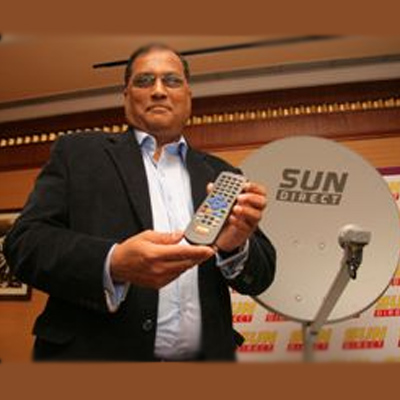
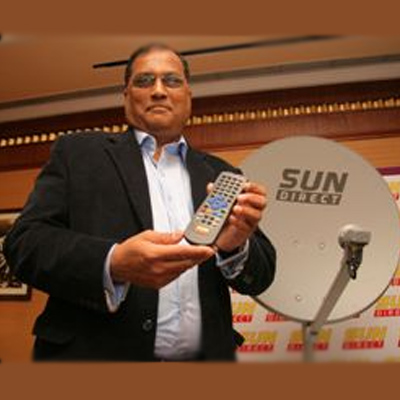
    MUMBAI: The popular DTH operator in South India, Sun Direct, has introduced long duration regional packs. According to reports, the newly introduced DPO packs come with a validity of up to six months covering languages Telugu, Tamil, Kannada, Malayalam, Marathi, Bengali and Odia.

    A three month long duration pack is also available with the six month variant. Subscribers can also avail a discount of about 7 to 10 per cent if they want to opt for these packs. Earlier, another leading DTH player Tata Sky launched Annual Flexi Pack with a recharge credit of one month.

    Before the new TRAI tariff regime came into effect, every DTH operator had long duration packs which had good demand among consumers. With the changes in pricing, the DTH players are now rolling out new packs to prevent churn rate.

  • Airtel Digital TV removes network capacity fee

    Airtel Digital TV removes network capacity fee

    MUMBAI: After Telecom Regulatory Authority of India’s (TRAI) tariff order has come into effect, consumers across the country have been complaining about a hike in cable bill. To keep them satisfied, DTH operators are waving off Network Capacity Fee (NCF). Now, Airtel Digital TV has joined the league of operators who have removed the NCF on free-to-air (FTA) channels following Tata Sky, Dish TV and Sun Direct.

    Airtel Digital TV is waiving off NCF for its long term plans only. Subscribers under three months plan, six months plan, 12 months plan will be able to avail this facility. According to media reports, the modified long term plans are now available in selected regions and are expected to be expanded into other regions within a few weeks.

    As per the latest framework, customers need to pay Rs 130 to get the first 100 FTA channels. An additional network fee of Rs 20 per month is also being charged for every block of 25 paid channels.

    Last month, TRAI extended the deadline for DTH and cable TV subscribers to select their channels till 31 March under the new tariff regime. The regulatory body added that the subscribers’ old plan would continue till the consumer makes the choice. TRAI also said that the subscribers who don’t exercise any choice would be migrated to ‘Best Fit Plans’.

  • ShortsTV continues to maintain growth rate of 50k subscribers since launch month

    ShortsTV continues to maintain growth rate of 50k subscribers since launch month

    MUMBAI: Feature films have always had an edge over other forms of movies in India. But the internet boom has enabled more short-form content with engaging plots and fresh faces. Against this backdrop, ShortsTV, the world’s only TV channel dedicated to short movies, is creating an example. Though the channel is now in an exclusive partnership with Tata Sky, it is also in talks with other carriers to make it available across the country.

    The London-based television channel entered into a partnership with India’s leading DTH platform Tata Sky for the platform Tata Sky ShortsTV in last November. Along with availability on the telly screen, the service is also available on the mobile app as well as the DTH operator’s website.  With a growing library of over 5000 titles, the next step in the agenda is to launch its machine learning app in India which will personalise viewing for each customer based on his favourite genres and mood.

    Tata Sky aimed to target the new youth with the Rs 75 a month channel, a steep number in price-conscious India. But the channel seems to be picking up pace as earlier this year, it acquired 18 shorts from Terribly Tiny Tales.

    ShortsTV chief executive Carter Pilcher spoke to Indiantelevision.com on the deal with Tata Sky, future expansion plans along with other relevant issues.

    Edited excerpts:

    How has the partnership with Tata Sky panned out for you?

    Tata Sky is a great partner. I would say we spoke to lots of potential partners in India and Tata Sky probably is the most forward-thinking in terms of good content and technical delivery. They have a great digital programme and an extensive video-on-demand offering that the mobile app users also can enjoy. They are very creative as partners. We have really enjoyed working with them.

    How many subscribers have you acquired since the launch of the service?

    Tata Sky is the right company to tell you the exact numbers now. But we crossed 50,000 in the first month and maintained growth is at that rate since then. So, it’s been a very popular service.

    Are you considering deals with any other DTH platform or other carriers?

    Yes, we are exclusive with Tata Sky at this point but we are definitely talking with other carriers to bring ShortsTV all across India. That will happen towards the end of the year. We will be with Tata Sky for most of this year to promote the channel.

    Do you have any plan to talk to OTT platforms at this point?

    We talked to some but we are talking more to mobile operators and other satellite operators just because we think their business models are little more established.

    What has been the consumption trend so far, as you noticed?

    The things that really succeed, of course, are the big star films, the big films which are award winners. In Oscar month, we promoted a lot of Oscar-nominated shorts and we had great viewing numbers for the Oscar-nominated shorts. That’s always a popular thing, especially during the Oscar months. We also partnered with PVR Cinemas and released this year’s Oscar-nominated Live Actions and animated short films in theatres in more than 12 cities in India. That was a great initiative and I think pushed the viewership. The third area, always popular, is local stories. Our teams have been looking at and acquiring best shorts across India irrespective of language. We found great films in different regions and film cultures in different regions are very different. Now we are developing a catalogue that is particularly interesting that you can see how Maharashtrian films look opposed to Karnataka films as opposed to films from Bengal. Language is different, the set-up is slightly different. So, we find the audience really loves that exposure to different film cultures in India.  

    As you said local stories always work great so what’s your plan in front of regional content?

    We have our guys going to every part of the country and talking to production houses from different parts of the country. Definitely, we focused first on bringing films from Maharashtra, we also looked at Bengali films. We are looking at major film producing regions of the country and chasing great stories from there to add up to our catalogue.

    Have you noticed any particular segment of audience inclined to watch these short films?

    It’s hard to say because unlike online, it’s a little difficult to get this data as we are selling it to TV homes. We are not getting the exact data whether the grandmother, grandson, father or mother is watching. But we generally see in all of our territories, the first television audience that really loved us is the film enthusiasts. They are very committed to watching great shorts. We work very hard to provide the best experience and best shorts content. They understand the difference between a good and a bad film.

    Then, the second set of the audience we track are young people who have been interested in watching shorts. They may have a TV at home but they go for work, they travel on the bus or train then they can watch short films.

    How does the year look like for ShortsTV?

    2019 looks great. By the end of the year, we will have several more carriers in India and we are looking at growing in several other regions and markets internationally. I think audiences in India, the US and Europe, are getting accustomed to short releases.

    What has been the impact of the TRAI tariff order on ShortsTV, if any?

    We were already selling the channel individually so it has not really affected us. But we were afraid of the factor that could affect us is that there would be a lot of churn, people might say ‘I have to pay for everything now, this is too expensive’. However, we have not experienced that at all. 

  • Cable subscribers switching to DTH platforms amid new tariff order implementation

    Cable subscribers switching to DTH platforms amid new tariff order implementation

    KOLKATA: While the Telecom Regulatory Authority of India (TRAI) continues to reiterate that its new tariff order will benefit all stakeholders of the cable and broadcasting industry, implementation of the new norms has witnessed a mixed response on the ground. As the ecosystem adapts to this radical change, local cable operators (LCOs) in Kolkata have started bleeding as cable subscribers are migrating to DTH platforms.

    Many consumers in the city have complained that they are experiencing channel blackouts despite shifting to new packages ahead of the deadline. In addition to that, they also contended that the operators are forcing them to opt for packages and not providing any options of a-la-carte channels. As a result, several consumers have switched over to DTH platforms in order to avoid this hassle.

    One of the major local cable operators in south Kolkata said they have experienced 10-15 per cent churn rate post the new tariff order implementation. On the other hand, another operator in north Kolkata has claimed that his company experienced a 20-25 per cent churn rate. Both of them have opined that the churned out subscribers are not choosing other cable operator but DTH operators only.

    Both the local cable operators blamed MSOs for not having a proper system in place to make the migration smoother. According to them, the websites of MSOs are crashing due to the traffic spikes. In turn, this is hampering the process of new package selection, with the a-la-carte channel activation getting delayed. 

    They also pointed out that web portals of some national MSOs are malfunctioning for last two months. They added that subscribers, being unaware of the problems, are pinning the blame squarely on LCOs.

    Last week the West Bengal government held a meeting with some of the stakeholders of the Indian broadcast and cable industry to understand the tariff issue and challenges in its implementation.

    State government sources told Indiantelevision.com that the meeting, attended by a minister too, was called to explore what the stakeholders could do for local LCOs who have been having a trying time to convince and educate consumers, especially in rural areas of the state.

    It is learnt that those who attended the meeting included senior representatives from Star India, MSO Hathway and Zee group. One of the requests made by the state government, according to official sources, was whether companies like Star and Hathway could also fund educational TVCs relating to the TRAI tariff order in the Bengali language that could be aired by the LCOs on their networks to make consumers better understand the issues relating to  channel selection and their prices. Industry stakeholders, it is learnt, remained mostly non-committal on this particular matter of TVCs in Bengali.

    Maharashtra Cable Operators Foundation (MCOF) committee member Asif Sayed, an LCO based out in Mumbai, too voiced a similar opinion, saying a-la-carte channel activations are getting delayed as MSO web portals aren’t equipped to manage the load.

    According to him, the churn rate is actually 5-10 per cent and another 10-15 per cent may be switching off because of ongoing examinations. Hence, after one month, there would be clarity on the actual churn.

    Since the beginning of tariff order rollout, many LCOs across the country have expressed their reservations about the new regulations. The 80-20 revenue share between broadcasters and DPOs has been a bone of contention, as they maintain there should be revenue cap separately for LCOs.

    “NTO has come at a time industry had settled down after DAS. Obviously it's a major shift and hence causing confusion across the board. Negative propaganda does happen when any change takes place. For example when DAS was declared similar propaganda was there that MSOs are not equipped to provide channels, boxes, and that consumers are migrating to DTH. Some people strategically float these propaganda. DPOs offer packages that satisfy most consumers. If a particular MSO fails to implement that there could be migration to other DPOs which can be to DTH or to other MSOs,” KCCL CEO Shaji Mathews, a veteran in the industry, commented.

    Mathews also added that the major MSOs are equipped to provide high-quality service to their consumers. 

    According to him, MSOs are in a better position to implement the order as cable operators are doing channel activations on ground. He added that in any case, there will be some amount of consumers who will keep jumping on both sides. He does not hold the view that there is any massive migration on either side, neither to cable nor to DTH.

    “Whatever migration is taking place is driven by non-compliance of some stakeholders. While the SC has commented on the need to regulate bouquet rates in relation to a-la-carte rates, the broadcasters have taken liberty to overstep the basic objective of NTO and declare disproportionate rates. With the most important part of the NTO thrown to the wind it's as good as no NTO and is the fundamental cause of confusion. Secondly, I have come across a DTH operator in blatant violation of basic DAS itself and transmitting unencrypted channels including pay channels,” he further added.

    Earlier TRAI said that in case of MSOs and LCOs, the biggest problem was discriminatory treatment by the broadcasters. As a result, it was almost impossible for smaller MSOs to get the content at an appropriate price from the broadcasters because the agreements were not transparent.

    The new tariff order, however, was meant to change that and benefit both the MSOs and LCOs. While a part of cable industry continues to believe the same, a large number of LCOs, at least in Kolkata, are quite disappointed with what implementation of the new tariff order has resulted in. 

  • TRAI asks DTH operator Independent TV to explain tariff plans

    TRAI asks DTH operator Independent TV to explain tariff plans

    MUMBAI: Telecom regulatory authority of India (TRAI), in a letter, has asked direct-to-home (DTH) operator Independent TV to explain whether tariff plans offered by it are as per the new regulatory framework.

    TRAI swung into action in the matter after it received several consumer complaints about the opaque nature of the break-up of Independent TV’s monthly tariff plans.

    “…You are hereby directed to provide all the information in the prescribed format as sought by TRAI…. Further you are also required to provide detailed justification that the present tariff plans, being offered by Independent TV are in line with the new regulatory framework clearly indicating the bifurcation of the Network Capacity Fee and other charges,” TRAI wrote in a letter, according to a report by news agency Press Trust of India (PTI).

    TRAI now wants the DTH platform, which is believed to have 0.83 million subscribers, to come clean on the consumer complaints.

    Recently, TRAI extended the deadline for consumers to select television channels under its new tariff regime till 31 March.

    Subscribers that don’t opt for new channels would be moved to ‘Best Fit Plans’, which would be developed as per usage pattern, language and channel popularity, the sector regulator said in its statement.

  • TRAI clarifies tariff regime didn’t restrict Ind-Aus T20I match

    TRAI clarifies tariff regime didn’t restrict Ind-Aus T20I match

    MUMBAI: The thrilling last ball finish in the T20I match between India and Australia on 24 February grabbed the attention of many but was not accessible to the consumers of cable TV networks. This was apparently due to the implementation of the new regulatory framework prescribed by the Telecom Regulatory Authority of India (TRAI), according to reports in certain sections of the media and other social platforms.

    However, TRAI clarified that the tariff regime, in no way inhibited or restricted the telecast of India and Australia T20I cricket match. It stated, “The non-availability or non- transmission of the recent cricket matches (T20I and ODI) being played between India and Australia over the cable networks has nothing to do with implementation of new regulatory framework of TRAI for broadcasting and cable services.”

    TRAI also pointed out that the transmission are governed by the Supreme Court judgement dated 22 August 2017.

    It also quoted the Supreme Court’s direction stating, “Under Section 3 of the Sports Act, 2007 the live feed received by Prasar Bharati from content rights owners or holders is only for the purpose of re-transmission of the said signals on its own terrestrial and DTH networks and not to cable operators so as to enable the cable TV operators to reach such consumers who have already subscribed to a cable network.”

    After the decision of the Supreme Court, Ministry of Information and Broadcasting (MIB) issued a notice dated 12 April 2018, asking all the DPOs to display a caption, during the broadcast of sports events of national importance, on DD Sports channel that “The match/ game can be viewed in free-to-air mode on DD Sports channel, on DD FreeDish and DD terrestrial network”.

    Therefore, the distribution platform operators (DPOs) have to switch off the DD Sports channel from their cable networks during the period of the matches under the recent India-Australia T20I and ODI series.  

    “Therefore, the rumours circulating in some sections of the press or in social media platforms holding TRAI regulations responsible for non-transmission of the cricket matches in cable networks are baseless and incorrect,” TRAI concluded.

    Recently, TRAI extended the deadline for consumers to pick their television channels under the new tariff regime till 31 March. The subscribers that don’t opt for new channel would be moved to ‘Best Fit Plans’, which would be developed as per usage pattern, language and channel popularity.

    According to TRAI, close to 100 per cent of cable subscribers and 57 per cent of DTH subscribers have been shifted to new packs.

  • TRAI: Almost 100% cable consumers have picked channels in new tariff regime

    TRAI: Almost 100% cable consumers have picked channels in new tariff regime

    MUMBAI: The Telecom Regulatory Authority of India (TRAI) held a meeting on Friday with distribution platform operators (DPOs) where it was informed that almost all cable consumers have either made their channel preferences or moved to ‘best fit plan’ under the new tariff regime, according to a report by the Press Trust of India.

    The meeting was attended by multi-system operators (MSO) and all major DTH players to review the progress of migration of TV viewers under the new framework.

    TRAI secretary SK Gupta said, "According to inputs received by the regulator from players, in the case of DTH services, about 43 per cent customers have made their channel preferences known. When combined with statistics for ‘best fit plan’, this number rises to 57 per cent."

    The DTH service providers have submitted to TRAI that all subscribers of this prepaid platform will be migrated to the new framework in the next 2-3 weeks. TRAI has also emphasised to players that customers should not face any inconvenience or service disruption during the migration process.

    Earlier this month, the regulator had extended the timeline for consumers to make their channel preferences till 31 March 2019.

    “TRAI is urging subscribers to exercise their options to select TV channels of their choice, immediately. DPOs have been instructed to execute the options of subscribers at the earliest,” he said.