Tag: DTH

  • Independent TV’s suspended DTH service to resume after 3 July

    Independent TV’s suspended DTH service to resume after 3 July

    MUMBAI: While DTH provider Independent TV Network abruptly shut its services recently, the service is expected to resume only after 3 July as per an update on the website.  Earlier, the DTH operator said it was expected to resume after 22 June.

    “Dear customers, the decision on resumption of our satellite services is pending in the TDSAT court. We shall update on further developments, post the outcome of the court hearing already scheduled for 2nd July 2019. We appreciate your patience,” a message on website read.

    Recently, the Telecom Disputes Settlement Appellate Tribunal (TDSAT) had ordered it to clear its dues to Antrix Corporation by 12 June or else face a disconnection. It had to pay Rs 9 crore to Antrix or Rs 15 crore in the form of a bank guarantee.

    It is likely that the DTH operator was unable to pay as per the court order and hence Antrix disconnected its signal. The matter will further come up for hearing on 2 July.

    The DTH provider is a property of Garvit Innovative Promoters Ltd. If reports are to be believed, the distributors are now contemplating to approach TRAI and Ministry of Corporate Affairs against the company and its directors including Sachin Bhati.

    The company was launched in 2018 and was active in the state of Uttar Pradesh and had 26 distributors in just Meerut and Saharanpur division. It had more than 90 thousand subscribers in the division.

  • TRAI may look at “finetuning” new tariff order

    TRAI may look at “finetuning” new tariff order

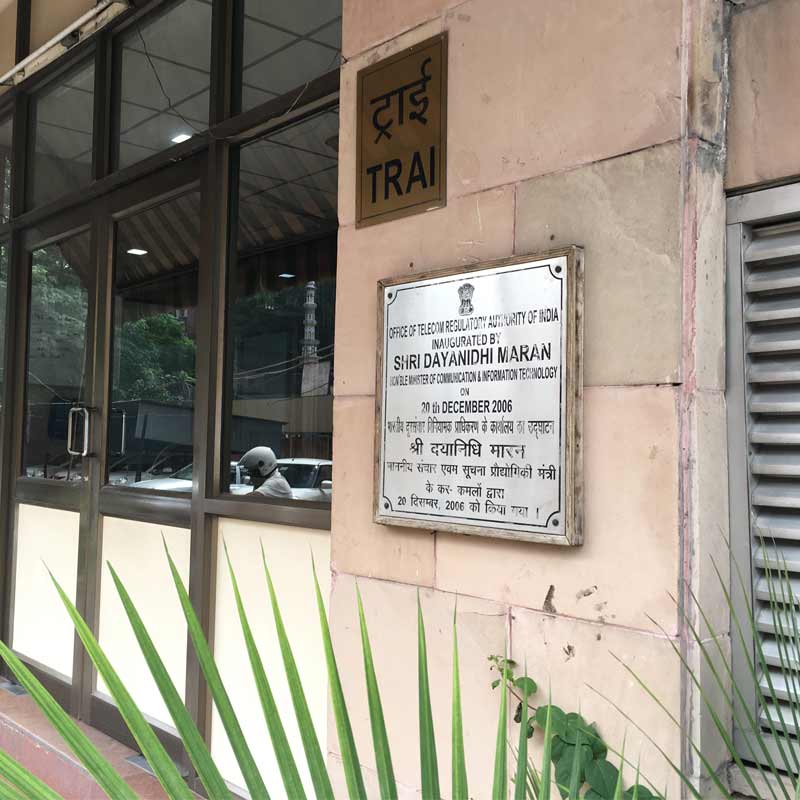
    MUMBAI: The Telecom Regulatory Authority of India (TRAI) may look at “finetuning” the new tariff order for cable and broadcasting sector to address any “aberrations”, as per a news report by Economic Times. However, the regulatory body won’t rush into this without adequate data backup.

    “When a new thing is put in place, you always notice that in some areas, things are not working out the way you had imagined, or in some areas some finetuning is required,” TRAI chairman RS Sharma told ET. Sharma also added that the new regime marked a “paradigm shift,” giving customers transparency and choice as well as providing a level playing field for operators.

    “Finetuning will require some data and we don’t want to get into that on the basis of anecdotes, ARPU (average revenue per user), number of litigations, etc. We’re looking at this carefully and collecting data and will finetune (the regulation) at the right time,” Sharma said. He said that the regulatory body is looking at if there are any aberrations in the implementation of the tariff order and they would rectify accordingly.

    However, it was not clear if the finetuning will also consider looking at ways to reduce monthly cable and DTH (direct-to-home) bills of consumers. The new tariff order reduced the cable bill for users who use fewer channels but it increased it for many. Even, some subscribers found the new regime complicated.

    He also clarified that subscribers will have the freedom to select separate channels on their second set-top box like they can do for their first box. He also noted that the industry agreed to give discounts for the second box.  While he acknowledged that adapting to the new regime is taking time with people learning along the way, he said consumers need to have complete control over choosing and paying for channels.

    “We’ve issued show-cause notices, etc. So, we’re very proactive to ensure that aberrations that take place are set right before they become the regular practice,” Sharma said while mentioning that in some places broadcasters are not doing it.

  • Independent TV assures TRAI of compliance with new tariff order after subscribers complain

    Independent TV assures TRAI of compliance with new tariff order after subscribers complain

    MUMBAI: Direct-to-home (DTH) operator Independent TV has clarified to the Telecom Regulatory Authority of India (TRAI) that it has taken several measures in order to ensure that its current tariff plans are in conformity with the regulator’s new framework for the broadcast sector.

    TRAI had earlier sought an explanation from the DTH operator, formerly known as Big TV, over the tariff plans offered to its subscribers post the implementation of the new regime.

    TRAI, in a letter on 26 March, had directed Independent TV "to ensure that the new regulations are followed in letter and spirit with no violations…ensure that all new connections booked are provided in a time bound manner…and ensure that all outlets of Independent TV Ltd do not provide any package which is in violation of new regulations".

    This regulator’s action was a direct result of several complaints from Independent TV subscribers concerning the break-up details for monthly charges and an overall lack of clarity in terms of the operator’s new tariff plans.

    "In regard to our current tariff plans being offered by Independent TV, we would like to assure the authority of our complete compliance with the NTO (New Tariff Order). Pursuant to our meetings…and the discussions…we have realigned our product offerings,” Independent TV told TRAI in a letter written last month, according to news agency PTI.

    The operator also apprised TRAI of all its current plans and packages on offer, along with details of the network capacity fee (NCF) and distributor retail price.

    "There were some complaints that their franchisees were offering annual plans without clarity on break up…So, Independent TV has said it has not activated any annual plan after implementation of the new regulatory framework, and that in case any of its franchisee is offering such plans, it will take necessary action," a TRAI official said.

    Independent TV has also upped its communication strategy crafting advertisements and clearly stating its policy on withdrawal of the legacy offers and other details like channel packs and pricing on its website.

    "With regard to any ambiguity on the old annual offer (Freedom 1999) from Independent TV and its current availability, we have taken the following steps…We have run a campaign on our website informing all prospective customers of the withdrawal of all our LDPs (Long Duration Packs) including Freedom 1999 pack. We have aggressively engaged in educating and explaining the same to our channel partners," the Independent TV letter further said.

    The operator added, "Every complaint forwarded to us by the authority with regard to this issue is being verified one-on-one and any delinquent behaviour from any of our channel partners is being dealt with appropriately." 

  • Applications for DD Free Dish Bucket R1 MPEG-2 slots invited by Prasar Bharati

    Applications for DD Free Dish Bucket R1 MPEG-2 slots invited by Prasar Bharati

    MUMBAI: Prasar Bharati has invited applications to fill up reserved Bucket R1 MPEG-2 slots of DD Free Dish DTH Platform on pro-rata basis for the period from 15 April to 31 May in accordance with amendment to Policy Guidelines  of slots of DD Free Dish, notified on March 30 2019.

    Only devotional/spiritual satellite channels, including channels promoting yoga, ayurveda, health and wellness based on traditional methods, licensed by the Ministry of I&B and categorized as Bucket R1 as per the amendment to policy guidelines for allotment of slots on DD Free Dish Direct to home satellite platform, notified by Prasar Bharati on 30.3.2019, are eligible to apply for allocation of these slots on pro-rata basis.

    The interim reserve/base price of Bucket R1 for allotment of slots on DD Free Dish on pro-rata basis is Rs 3.00 crore per year. Hence, the pro-rata carriage fee for the period from 15.04.2019 to 31.05.2019 will be Rs. 45,58,356/- (Rupees forty five lakhs fifty eight thousand three hundred fifty six only) inclusive of GST @18%.

    Broadcasters desirous of placing their Channels on DD Free Dish shall be required to declare genre and language of their channel while applying for pro-rata allocation.

    E-auction, if required, will be held on 12.04.2019.

  • DD Free Dish policy: New bucket created in MPEG2 slots for devotional genre

    DD Free Dish policy: New bucket created in MPEG2 slots for devotional genre

    MUMBAI: Public broadcaster Prasar Bharati has amended the DD Free Dish policy in a meeting held earlier this week. Under the amended policy, a new bucket has been created to reserve MPEG2 slots towards devotional channels. The reserve price of the bucket has been fixed at Rs 3 crore.

    “Consequently a new Bucket R1 has been created to reserve MPEG2 slots towards devotional/spiritual/AYUSH channels which may be placed through the open eAuction process as laid down in the policy,” Prasar Bharati CEO Shashi Shekhar Vempati said on Twitter.

    Spiritual channels including channels promoting Yoga, Ayurveda, Health & Wellness (AYUSH) based on traditional methods fall under the devotional category or bucket R1. Under amended policy, three slots have been reserved for genres deemed to be in public interest. The amended policy also says that placement of regional channels of Doordarshan that are currently not available on DTH/cable may be considered for placement on vacant MPEG2/MPEG4 slots reserved for the same.

    Vempati also revealed on Saturday the results of the first annual e-auction for MPEG4 slots on  FreeDish. After robust bidding, a total of 15 MPEG4 slots were successfully sold to channels across genres and languages.

  • DD Free Dish e-auction: 15 MPEG4 slots sold

    DD Free Dish e-auction: 15 MPEG4 slots sold

    MUMBAI: The first annual e-auction for MPEG4 slots on Doordarshan’s FTA DTH platform FreeDish, witnessed intense competition. After robust bidding, a total of 15 MPEG4 slots were successfully sold to channels across genres and languages.

    Prasar Bharati CEO Shashi Shekhar Vempati said on Twitter that the slots were being taken at an average price that was nearly eight to nine times the invitational price. “With this overall projected annual revenue from DD Free Dish will cross 400 cr between MPEG2 and MPEG4 slots,” he added.

    Vempati added that the new line up of 15 channels will be published on Monday, subject to completion of procedural formalities. He also mentioned that three slots have been reserved for public broadcasting purposes.

    Earlier in February, 40 MPEG2 slots were successfully sold under revised guidelines after recommencement of e-auction. Vempati said that the estimated revenue from the sold slots is Rs 395 crore and added that the new channels will be on air from 1 March 2019.

    The Prasar Bharati Board gave a green signal to e-auctioning of DTH slots on DD FreeDish in January. The e-auctioning was arbitrarily called off in October 2017. Earlier, FreeDish would conduct the e-auction every couple of months to award vacant channel slots to private broadcasters. The last e-auction was held In July 2017.

    While revealing the new policy guidelines, Vempati had said a key consideration factored in was to increase the diversity of content available on FreeDish and to expand its reach across India, especially within the non-Hindi speaking states.

  • Dish TV re-launches duration packs with special benefits

    Dish TV re-launches duration packs with special benefits

    MUMBAI: Amid the ongoing change in the cable and broadcasting sector, direct-to-home (DTH) operators are coming up with new plans to keep subscribers satisfied. Major DTH operator Dish TV has introduced new offers which will provide extra days of subscription with long duration packs.

    The subscribers of three months or more long duration packs will get seven extra days to their credit whereas on purchasing a long-term subscription of six months or more, they will get to enjoy 15 additional days of subscription. Moreover, users who buy a long-term plan of 11 months or more will get 30 extra days on their plan.

    Its other brand d2h had previously also introduced similar benefits on buying long-term plan but with more choices. Along with these mentioned three slabs of Dish TV, d2h users will get 60 extra days on 22 months subscription, 90 days on 33 months subscription, 120 days on 44 months subscription and 150 days on a long-term subscription of 55 months.

  • TRAI tariff order to drive people to online consumption

    TRAI tariff order to drive people to online consumption

    MUMBAI: Of late, there have been several speculations on the impact of the TRAI tariff order on consumers including hike in monthly cable bill and migration to OTT platforms.

    The research agency YouGov conducted a study to find its impact among 1,020 respondents. As per the study, 92 per cent are aware of the new TRAI tariff order while 76 per cent have already made alterations to their DTH subscription as per the new guidelines.

    “In general, 3 in 5 (62 per cent) of North India residents look at the new TRAI framework favourably. On the other hand, a third of residents from South India (32 per cent) are not so optimistic about the new regulation and more than half (54 per cent) feel they may have to spend more on their subscription going forward,” the report says.

    However, despite TRAI’s onstant claim that the new order will bring down cable bill, 54 per cent of those who have made modifications to their channel subscription said they pay more than what they paid earlier. On the other hand, 32 per cent feel they pay lesser than what they paid earlier. Only 14 per cent feel there has been no change as they pay the same amount as before.

    Interestingly, 59 per cent of the customers who have already switched to new plans think this rule is going to be favourable for end customers like them. Even among those who haven’t yet upgraded their subscription, 58 per cent look at this change favourably.

    The research also shows that 49 per cent of the respondents feel that the new regulatory framework will increase the amount of time they spend watching original content on OTT. In addition to that, two out of five people feel this move will increase the amount of time they spend online watching TV content.

    “The countrywide implementation of the new regulation is bound to have an impact on viewership and advertisers need to revisit their media plans in accordance with the changing consumer behaviour. Although TV viewing may not change drastically, we see the likelihood of people moving online. Advertisers thus need to carefully align and study how they can reallocate their budgets,” YouGov India general manager Deepa Bhatia commented.

  • TRAI’s new tariff order has made ecosystem transparent: RS Sharma

    TRAI’s new tariff order has made ecosystem transparent: RS Sharma

    MUMBAI: The new tariff order has been rolled out aiming transparency in the cable and broadcasting sector of India. Telecom Regulatory Authority of India (TRAI) chairman RS Sharma reiterated that the new regulatory framework has brought transparency in the ecosystem along with non-discrimination and fair play. Sharma also asserted that it has reduced the bills of the average TV watcher.

    "The implementation of the new broadcast tariff regime is working out very well. The monthly bills of thousands of consumers have also been reduced. The consumer's bill is a function of how much he watches, if he or she watches hundreds of channels obviously the bills will go up. If someone watches 25 channels, the bill will come down to one-third," Sharma told as quoted by IANS.

    "The objective of the regulations is to essentially bring out a regime of transparency and allow the customers to choose channels which they want to watch, and then allow the market forces which were not in play earlier," he added.

    Earlier the market was only focused on distributors and broadcasters but consumers were not actively participating.

    He also added that the implementation of the new tariff regime has removed the difference between the small operator and a large operator, as they both get the channels at the same rate from the broadcasters. Moreover, he asserted that the basic objective of the new regime to create a buffet of channels where everyone is charged the same rather than reducing or increasing the bills.

    Sharma’s comment comes at a time when several reports, as well as surveys, have indicated that there has been a hike in the monthly bill under the new price regime. Due to the change in pricing, many experts predicted that consumers would shift to OTT platforms eventually. To decrease the churn rate, some of the DTH players have removed network capacity fee for long duration packs.

    Earlier, the regulatory body in February extended the deadline to pick new channels under the new regime till 31 March as well as gave a directive of Best Fit Plans. The subscribers that don’t opt for new channels would be moved to ‘Best Fit Plans’, which would be developed as per usage pattern, language and channel popularity, the sector regulator said in its statement.

  • TRAI chairman RS Sharma says STB portability possible by yearend

    TRAI chairman RS Sharma says STB portability possible by yearend

    MUMBAI: Telecom Regulatory Authority of India (TRAI) chairman RS Sharma has said that by the end of the year, set top box interoperability’s is likely to become functional.

    Speaking to news agency PTI, Sharma said, "Since last two years we have been trying to make STBs interoperable. Large part of problem has been resolved. There are some business challenges (which) remain… we are looking at this to happen by end of this year."

    He added that interoperability in a product should not come as an "after thought" but should be in place at the product planning stage itself. “Open systems are going to be the future. The entire back-end of Aadhaar has been developed on open source software except biometric de-duplication system," he said.

    Those who want to change their provider currently have to buy a new STB but soon they will only have to change the sim card, like mobile phones, for which the government is working on standard STB features.

    He released a study on open ecosystem for devices in India, prepared by the Indian Cellular and Electronics Association (ICEA) and consultant firm KPMG, which showed that 89 per cent of mobile phones in the country work on open source operating systems.

    Sharma further cited interoperability as one of the key factors behind the success of the Indian mobile phone industry where no subscriber is required to buy a new phone if he wants to change his service provider.

    The report found that Open OS mobile operating systems have expanded the smartphone market in India by reducing barriers to entry. The regulator has been working for quite some time, to introduce a similar system in the broadcasting sector. This will provider STB ownership to the consumer.