Tag: DTH services

  • Pak DTH: Mag, Shahzad & Star Time to start ops in a year

    Pak DTH: Mag, Shahzad & Star Time to start ops in a year

    MUMBAI: Three direct-to-home (DTH) licences in Pakistan were on Wednesday awarded for a total of PKR 14.694 billion (USD 140 million) by the Pakistan Electronic Media Regulatory Authority (PEMRA) as confirmed by its Twitter handle.

    The auction started after Pakistan’s apex court permitted PEMRA to go ahead with the bidding although the Lahore HC had issued a stay on the process.

    The highest bid was raised by Mag Entertainment for PKR 4.91 billion, respectively followed by M/s. Shahzad Sky for PKR 4.90 billion and M/s. Star Time for Rs 4.89 billion, Pakistani newspapers reported. PEMRA issued non-exclusive licences for 15 years to the three companies. The licencees will have to start operations within a year or risk termination.

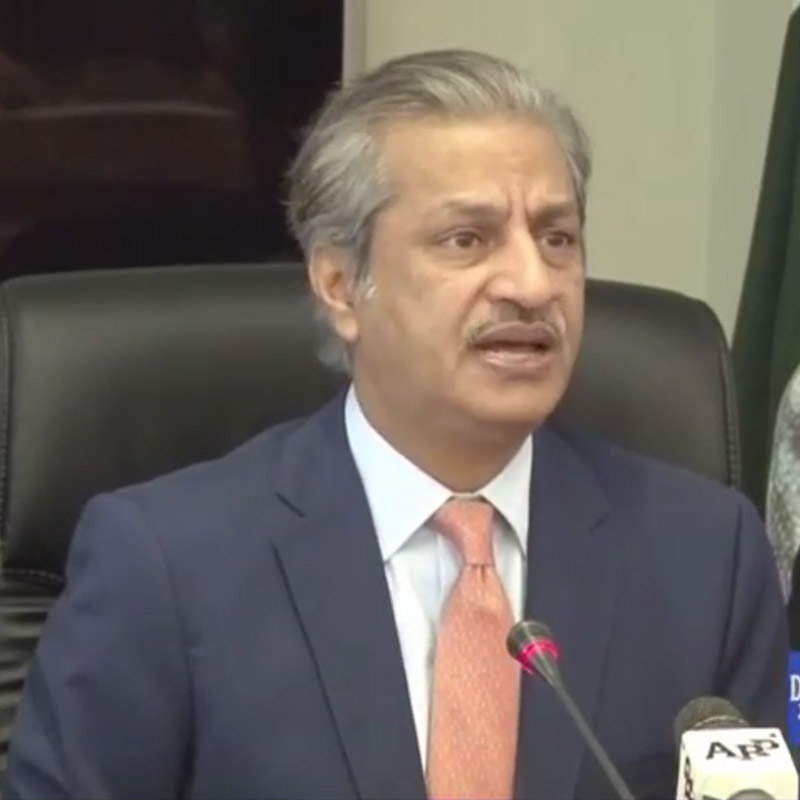
    PEMRA chairman Absar Alam said the DTH service would not end the cable operators’ business, but would compel them to invest in technology and distribution systems.

    Pakistani DTH services would counter the sale of illegal Indian DTH services in Pakistan, which leads to annual transfer of between US$ 200 million to US$ 350 million to India on account of subscription fee. The DTH services will now give Pakistani consumers a choice against the existing monopoly of cable operators.

    Terming DTH a game-changer, Alam said, it was the biggest investment in Pakistan’s electronic media history. As per estimates and feasibility studies carried out by PEMRA experts, the overall investment, Alam said without explaining, would be US$ 450 million ($ 150 million each) and could reach an additional US$ 750 million in the next two years, newspaper reports stated. Alam said that those estimates did not include the bidding proceeds.

    The DTH service, Alam said, was a state-of-the art technology adding new dimension to the audio-visual content distribution system. The existing analogue system was offering a maximum of 80 channels while the DTH, Alam added, would increase the capacity to around 120 and each local DTH licence holder was expected to have at least 500,000 subscribers.

    Similarly, landing rights will be permitted to foreign channels to come under the local regime, and new local satellite channels will be approved.

    Also read:

    http://www.indiantelevision.com/dth/dth-operator/pak-dth-licence-bidding-stayed-161123

    http://www.indiantelevision.com/dth/dth-operator/pak-to-award-three-dth-licences-on-23-nov-chinese-uae-companies-in-fray-161119

    http://www.indiantelevision.com/dth/dth-services/pemra-announces-dth-licence-bidders-indian-dth-eviction-to-continue-161116


  • Q2-17: Airtel Digital TV revenue up, sees highest subscriber growth

    Q2-17: Airtel Digital TV revenue up, sees highest subscriber growth

    BENGALURU: Indian telecom major Bharti Airtel Limited’s Digital TV Services segment (DTH segment) reported 21.9 percent year-over-year (y-o-y) increase in operating revenues for the quarter ended 30 September 2016 (Q2-17, current quarter). Also, Operating Profit (Earnings Before interest and Tax – EBIT) of the DTH segment in the current quarter more than quadrupled (by 4.11 times) y-o-y.

    Airtel DTH reported revenues of Rs 854.5 crore in Q2-17 and Rs 706.8 crore in Q2-16. EBIT for the corresponding periods was Rs 69.9 crore (8.2 percent margin of the segment’s operating revenue) and Rs 1.7 crore (2.4 percent margin of the segment’s operating revenue) respectively.

    However, quarter-over-quarter (q-o-q) the segment reported 42.7 percent drop in EBIT for the current quarter as compared to Rs 121.9 crore (14.6 percent margin of the segment’s operating revenue) in the immediate trailing quarter. Revenue in Q2-17 was 2.1 percent higher q-o-q than Rs 836.9 crore in Q1-17.

    Subscription numbers, ARPU

    Airtel’s DTH segment added 18.29 lakh subscribers between Q2-16 and Q2-17, or a 17.3 percent y-o-y increase. The company says that this is the highest growth in percentage terms over seventeen quarters. It had 124.05 lakh subscribers as on 30 September 2016. Q-o-q, the segment witnessed a 2.1 percent growth (2.56 lakh adds) in subscribers from 121.49 lakh in Q1-17.

    ARPU in Q2-17 increased to Rs 232 from Rs 224 in the corresponding year ago quarter, but declined marginally (by Re 1) from Rs 233 in the immediate trailing quarter.

    Airtel numbers

    Bharti Airtel Limited saw a 3.4 percent increase in operating revenue to Rs 24,651.5 crore in Q2-17 as compared to Rs 23,835.7 crore in Q2-16, but witnessed a 3.5 percent q-o-q decline from Rs 25,546.5 crore. Profit after tax (PAT) in the current quarter declined 4.9 percent y-o-y to Rs 1,460.7 crore (5.9 percent margin) from Rs 1,536.1 crore (6.4 percent margin) and was almost flat (0.1 percent decline) q-o-q as compared to Rs 1,462 crore (5.7 percent margin).

    The JIO effect – Company speak.

    In a statement, Airtel MD and CEO, India & South Asia, Gopal Vittal said, “Our strong focus on enhancing customer experience and building a robust network has resulted in continued acceleration of revenue market share. Overall revenue momentum in India has been sustained during Q2 with a growth of 10.1 percent y-o-y. This is primarily due to the strong performance of our non-mobile businesses which grew in aggregate at 18.8 percent y-o-y, albeit our mobile business has experienced a slowdown in growths due to free services being offered by a new operator. But, we remain excited about the long term opportunity in India and believe that with the recently acquired spectrum, we are well positioned to lead India’s data revolution”.


  • Q2-17: Airtel Digital TV revenue up, sees highest subscriber growth

    Q2-17: Airtel Digital TV revenue up, sees highest subscriber growth

    BENGALURU: Indian telecom major Bharti Airtel Limited’s Digital TV Services segment (DTH segment) reported 21.9 percent year-over-year (y-o-y) increase in operating revenues for the quarter ended 30 September 2016 (Q2-17, current quarter). Also, Operating Profit (Earnings Before interest and Tax – EBIT) of the DTH segment in the current quarter more than quadrupled (by 4.11 times) y-o-y.

    Airtel DTH reported revenues of Rs 854.5 crore in Q2-17 and Rs 706.8 crore in Q2-16. EBIT for the corresponding periods was Rs 69.9 crore (8.2 percent margin of the segment’s operating revenue) and Rs 1.7 crore (2.4 percent margin of the segment’s operating revenue) respectively.

    However, quarter-over-quarter (q-o-q) the segment reported 42.7 percent drop in EBIT for the current quarter as compared to Rs 121.9 crore (14.6 percent margin of the segment’s operating revenue) in the immediate trailing quarter. Revenue in Q2-17 was 2.1 percent higher q-o-q than Rs 836.9 crore in Q1-17.

    Subscription numbers, ARPU

    Airtel’s DTH segment added 18.29 lakh subscribers between Q2-16 and Q2-17, or a 17.3 percent y-o-y increase. The company says that this is the highest growth in percentage terms over seventeen quarters. It had 124.05 lakh subscribers as on 30 September 2016. Q-o-q, the segment witnessed a 2.1 percent growth (2.56 lakh adds) in subscribers from 121.49 lakh in Q1-17.

    ARPU in Q2-17 increased to Rs 232 from Rs 224 in the corresponding year ago quarter, but declined marginally (by Re 1) from Rs 233 in the immediate trailing quarter.

    Airtel numbers

    Bharti Airtel Limited saw a 3.4 percent increase in operating revenue to Rs 24,651.5 crore in Q2-17 as compared to Rs 23,835.7 crore in Q2-16, but witnessed a 3.5 percent q-o-q decline from Rs 25,546.5 crore. Profit after tax (PAT) in the current quarter declined 4.9 percent y-o-y to Rs 1,460.7 crore (5.9 percent margin) from Rs 1,536.1 crore (6.4 percent margin) and was almost flat (0.1 percent decline) q-o-q as compared to Rs 1,462 crore (5.7 percent margin).

    The JIO effect – Company speak.

    In a statement, Airtel MD and CEO, India & South Asia, Gopal Vittal said, “Our strong focus on enhancing customer experience and building a robust network has resulted in continued acceleration of revenue market share. Overall revenue momentum in India has been sustained during Q2 with a growth of 10.1 percent y-o-y. This is primarily due to the strong performance of our non-mobile businesses which grew in aggregate at 18.8 percent y-o-y, albeit our mobile business has experienced a slowdown in growths due to free services being offered by a new operator. But, we remain excited about the long term opportunity in India and believe that with the recently acquired spectrum, we are well positioned to lead India’s data revolution”.


  • TRAI studying concerns of service providers about inter-operability of set top boxes for cable television

    TRAI studying concerns of service providers about inter-operability of set top boxes for cable television

    NEW DELHI: Some service providers have raised concerns about feasibility of technical interoperability of set top boxes to the Telecom Regulatory Authority of India.

    TRAI, which is considering interoperability to enable consumers to switch to other service providers if they are not satisfied, says the objections relate to technical and commercial reasons. TRAI sources said the regulator is currently in a consultative process to understand their concerns before arriving at a solution.The objective of STB inter-operability is to make available STBs in open market, which will provide an exit option to the consumers who want to change their service providers due to some reasons or the other.This is expected to facilitate competition and improve quality of services offered to the consumers TRAI feels.

    The regulatory framework of TRAI mandates the commercial interoperability by prescribing that the STBs/Customer Premises Equipments (CPE) to be provided on outright purchase basis, hire purchase basis and rental basis.

    TRAI has also notified Tariff orders for Digital Addressable Cable TV Systems which prescribes a standard tariff package for offering of STBs to the subscribers. This tariff order provides an easy exit option to the subscribers and ensures availability of STBs at reasonable price while protecting the interest of the service providers.

    Similarly for DTH services, TRAI has prescribed a tariff order which prescribes certain restrictions on the DTH operators offering schemes of Customer Premises Equipment. The tariff order for DTH services – the Telecommunication (Broadcasting and Cable) Services (Seventh) (the Direct to Home Services) Tariff Order 2015 of 1 April last year – has been challenged and is sub judice.

  • TRAI studying concerns of service providers about inter-operability of set top boxes for cable television

    TRAI studying concerns of service providers about inter-operability of set top boxes for cable television

    NEW DELHI: Some service providers have raised concerns about feasibility of technical interoperability of set top boxes to the Telecom Regulatory Authority of India.

    TRAI, which is considering interoperability to enable consumers to switch to other service providers if they are not satisfied, says the objections relate to technical and commercial reasons. TRAI sources said the regulator is currently in a consultative process to understand their concerns before arriving at a solution.The objective of STB inter-operability is to make available STBs in open market, which will provide an exit option to the consumers who want to change their service providers due to some reasons or the other.This is expected to facilitate competition and improve quality of services offered to the consumers TRAI feels.

    The regulatory framework of TRAI mandates the commercial interoperability by prescribing that the STBs/Customer Premises Equipments (CPE) to be provided on outright purchase basis, hire purchase basis and rental basis.

    TRAI has also notified Tariff orders for Digital Addressable Cable TV Systems which prescribes a standard tariff package for offering of STBs to the subscribers. This tariff order provides an easy exit option to the subscribers and ensures availability of STBs at reasonable price while protecting the interest of the service providers.

    Similarly for DTH services, TRAI has prescribed a tariff order which prescribes certain restrictions on the DTH operators offering schemes of Customer Premises Equipment. The tariff order for DTH services – the Telecommunication (Broadcasting and Cable) Services (Seventh) (the Direct to Home Services) Tariff Order 2015 of 1 April last year – has been challenged and is sub judice.

  • Tata Sky adds nine SD and six HD channels to its bouquet

    Tata Sky adds nine SD and six HD channels to its bouquet

    MUMBAI: One of the leading direct-to-home (DTH) players of the country – Tata Sky – has new offers for its 11 million subscribers. The DTH player has added nine standard definition (SD) and six high definition (HD) channels to its bouquet, taking the total tally of HD channels to 24. Viewers now have more options.


    The nine SD channels are Discovery Tamil, Jaya Plus, Home Shop 18, News Express, News Nation, Jai Maharashtra, Zee Marudhara, Zee Khana Khazana and Zee Q. The six HD channels are Zee Studio HD, Life Ok HD, Sun TV HD, Gemini TV HD, Sony Six HD and CNBC Prime HD. The channels are a mix of entertainment, music, news and regional language channels.


    “Tata Sky has always taken the lead in enhancing its value proposition and believes in providing the maximum and the best in entertainment to its subscribers. The addition of these new channels is in line with the vision to offer the best content to our subscribers across the country,” says a release from Tata Sky.


    Interestingly, another DTH player Videocon d2h also added new channels to its bouquet recently taking its HD channel count to 27.

  • Trai issues draft tariff package for STBs/CPEs for DTH and cable TV ops

    Trai issues draft tariff package for STBs/CPEs for DTH and cable TV ops

    NEW DELHI: In order to ensure a smooth migration of customers from one service provider to another without having to re-invest in a new STB, the Telecom Regulatory Authority of India (Trai) today issued draft tariff orders prescribing standard tariff package for set top boxes in digital addressable cable TV systems (DAS) and consumer premises equipments (CPE) for direct-to-home services.

    The standard tariff packages for STB/CPE on rental basis are to be offered mandatorily by DTH and cable TV operators. The draft tariff orders have been put on the TRAI site to seek comments of stakeholders by 26 April.

    The Tariff Order also assumes significance as it attempts for the first time to give inter-operability to consumers of DTH players.

    The authority is of the view that the interests of the consumers can be largely protected through the provision for commercial interoperability of STB. The commercial interoperability provides an exit option for a subscriber in case the subscriber wishes to change the operator for any reason.

    Accordingly, in the relevant Regulations/ Tariff orders of Trai, it has been mandated that the operators of Digital Addressable Cable TV Systems and DTH operators shall give an option to every subscriber to procure the STB either on outright purchase basis or hire purchase basis or rental basis, or in accordance with the scheme, if any, prescribed by the Authority. The relevant provisions of various Trai Regulations/ Tariff Order in this regard are attached as Appendix-I.

    While interoperability is available to customers of LCOs, Trai observed that in case of DTH services, ‘the predominant DAS platforms at the moment, the schemes for CPEs offered to the subscribers by the DTH operators, have wide variations and at times are such that no viable exit option is available to the subscribers. Instead the consumer has to re-invest in new hardware in case of migration from a particular operator or platform. The same may also hold good in case of the upcoming Digital Addressable Cable TV Systems.‘

    The authority is of the view that in order to, provide an easy exit option to the subscribers, ensure availability of STBs at reasonable cost and terms and at the same time to protect the interest of the service providers a Standard Tariff Package, for STBs, as provided for in the existing Regulations/Tariff Orders be prescribed by the Authority.

    Accordingly Standard Tariff Package for STBs for DAS has been worked out. In addition to offering the STB as per the Standard Tariff Package prescribed by the Authority, the operators are free to offer their own schemes for supply of STB to its subscribers in accordance with the existing Regulations/ Tariff Orders and the subscribers shall have option to choose from the Standard Tariff Package prescribed by the Authority and the alternative schemes offered by the operators.

    Authority has observed that The operators are offering to its subscribers various types of STBs having different features/ capabilities such as “recording facility”, “Internet/broadband compatibility”, “High definition/ 3D reception capability” etc., in addition to the basic functionalities. Since for such STBs there would be wide variations in terms of features and cost and hence the Standard Tariff Package is provided only for the basic/ vanilla STBs meant for reception of Standard Definition TV signals (SDTV) conforming to the relevant Indian Standard set by the Bureau of Indian Standards.

    The Standard Tariff Package for Cable TV operators has been worked out on the basis of the following facts and figures as provided by the Industry stakeholders/ Associations:-

    a) The total cost of STB has been taken as Rs. 1750/-.
    b) Life span of STB has been taken as 5 years.
    c) The residual value has been taken as nil.
    d) Rental per month is based on cost of STB on Equated Monthly Installment (EMI) Basis @15% per annum (@1.25% per month) for a period of 60 months.

    The Standard Tariff Package for DTH operators has been worked out on the basis of the following facts and figures as provided by Industry stakeholders/ Associations;

    a) The total cost of CPE has been taken as Rs. 2250/-.
    b) Life span of CPE has been taken as 5 years.
    c) The residual value has been taken as nil.
    d) Rental per month is based on cost of CPE on Equated Monthly Installment (EMI) Basis @15% per annum (@1.25% per month) for a period of 60 months.

    The authority has also noted that no monthly rentals will be payable after the period of five years and the Customer Premises Equipment will become the property of the subscriber (except smart card/viewing card) after the expiry of five years. An amount equal to the sum of security deposit to be refunded per month and interest per month on balance security deposit has been adjusted in Rent per month per Customer Premises Equipment. The Full amount of security deposit stands adjusted in a period of five years.

    Up to five years, on returning of the Customer Premises Equipment, the Security Deposit shall be refunded as per attached table-B, provided that the Customer Premises Equipment is not tampered with.

    In case of un-installation/discontinuance of service before the last day of the month, balance security deposit shown as refundable at the end of that month will be refunded on return of Customer Premises Equipment.

    No repair or maintenance charges would be levied by DTH operator on the subscriber, towards repair or maintenance of Customer Premises Equipment up to the period of five years from activation of the Customer Premises Equipment. The subscriber, however, shall be liable to pay repair and maintenance charges from sixth year onwards.

    No installation charges or re-installation charges (except in case of shifting of connection) or activation charges or smartcard/ viewing card charges is to be levied by the DTH operator on the subscriber.

  • ‘Southside sees action’

    ‘Southside sees action’

    “Mind it!”

    A phrase immortalized by Channel [V]’s south Indian cowboy character Quick Gun Murugun in the nineties. And one that is most relevant to the regional language market in 2007. The year saw a flurry of launches or announcements of launches, a change in long-running political equations, continued growth, and an increasing intensity of competition in almost every language segment – whether Tamil or Malayalam or Kannada or Telugu – of the regional market.


    The big news of the year in this space was the public parting of ways between Kalanidhi Maran’s Sun Network and his grand uncle Karunanidhi, the chieftain of the DMK party. The breakup was bitter, and it was almost as if the floodgates were let open and a flurry of launches followed.

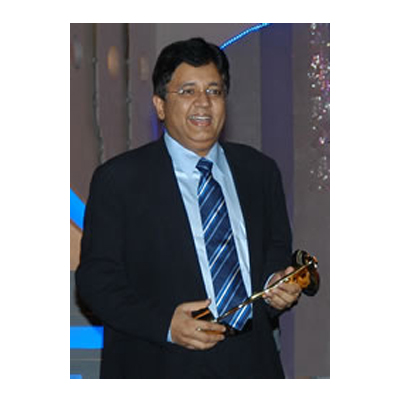
    Kalanithi Maran holds the Contribution to Television Award trophy he was presented with at the Indian Telly Awards 2006.

    The DMK launched its own channel Kalaignar TV with a little bit of help from former Maran friend Sharad Kumar, a few Sun TV employees and Sun arch rival Raj TV. The latter offered it uplinking facilities for Kalaignar TV which has a menu consisting of film and entertainment programs and news. The DMK appeared to be in in a hurry to make up for time it lost – over the past decade during which it supported the Sun Network – and announced plans to build a channel bouquet with a 24-hour news channel and music or a movie channel. This apart, it initiated steps to set up its own cable network in the state to counter any moves by the Maran-owned MSO Sumangali Cable Vision as well as to gain control of the last mile.

    DMK ally, Raj TV announced plans to introduce its DTH service, again as if to darken the Sun Network’s DTH prospects. In May 2007, the Raj TV management said that it would roll out 11 channels, and would take the acquistion trail to expand nationally in other languages, without disclosing any time frame. In August, 2007, it unveiled a FTA music channel Raj Musix.

    Besides Musix, Raj TV telecasts two channels – Raj TV and Raj Digital Plus’.
    On the Raj TV horizon are Tamil and Telugu news channels.


    Jaya TV, backed by the AIADMK party, and a comparatively smaller player, recently started testing two new Tamil channels – music and news, which are expected to start full time transmissions sometime this month. As the year drew to a close, Tamil Nadu Congress member of parliament, KV Thangabalu’s flagged off Mega TV, a 24 hour FTA Tamil news, current affairs, and entertainment channel, while Tamil Nadu Congress MLA Vasanth Kumar said he intends to start Vasanth TV.


    For the Sun Network, 2007 was business as usual, the political setbacks notwhithstanding. The network, which has the highest number of channels in south India, dominates the region, with the exception of Kerala where it trails Asianet as a close No 2. It drew the curtains on its DTH service using transponders on Insat 2B, offering subscription packages that looked extremely competitive and attractive. Industry watchers expect Sun’s dominance to get eroded over time, but 2008 is unlikely to be the year when we will see that happen.

    “Sun’s biggest strength has been content, be it GEC or movie. Just because Sun may be not be gaining numbers and Kalaingar is showing unprecedented growth, it doesn’t mean that advertisers are going to run away from Sun to its next biggest rival. At present, Sun has retained a firm grasp on its slowly reducing share in percentage terms, its share has not reduced in numbers,” says an ad executive.


    So far, Sun has been able to maintain a lead over all the others in most of the space it operates in. In a few places, even its second channel has performed better and attracted far more viewers than its nearest competition’s main channel has. In a very dynamic space, how the new equations will work out only time can tell.


    For Telugu print and TV baron Ramoji Rao, however, 2007 would be a year he would prefer to write off as a bad dream. For Rao, who owns TV network ETV and leading Telugu newspaper Eenadu, it was reportedly his close alignment for the past quarter century with the Telugu Desam and his run-ins with the Congress chief minister of Andhra Pradesh, Y Rajshekhar Reddy that cost him dear. It is pertinent to note that a deal signed between US-based Blackstone Group and Rao’s holding company Ushodaya in January 2007 for the sale of a 26 per cent stake is yet to see closure. If Blackstone’s proposal to invest $275 million in Ushodaya had gone through, it would have been the biggest ever media investment in an Indian firm.

    2007 will also go down in the annals of regional television history as the year of TV9. Promoted by Associated Broadcasting Corporation’s (ABCL), it appears to have ambitions to get its foothold into almost every language segment. In Andhra Pradesh, TV9 News got the better of Gemini News and ETV2 News, with its Telugu religious channel Sanskruti beginning to get noticed.

    In Karnataka TV9 Kannada surpassed the biggest player Sun’s Kannada news offering Udaya Varthegalu. It has also been itching to get control of Kerala’s fledgling news channel IndiaVision, but has only managed to start selling air time for it.


    Karnataka witnessed the launch of two GEC channels Asianet’s Suvarna and Kasthuri (the latter headed by then chief minister HD Kumaraswamy’s wife) during the year. Another channel ‘Real Estate TV’ for national consumption by a construction group made a lot of noise, but failed to get its signals carried.


    “Kasthuri could be eating into DD Bangalore’s ad shares, especially ads by the state government and public sector undertakings based in Karnataka,” said an executive from an advertising agency. “Having been the chief minister, Kumaraswamy could leverage his contacts in these companies. Even if these pickings are small, they are very good for a new entrant,” he avers.


    Observers expect the action in the southern space to continue. Balaji Telefilms is expected to launch TV channels in partnership with Star TV either in 2008 or 2009. And there is no doubt that others will also make a try for the southern pie.

  • Insat-4C satellite launch fails; Sun’s DTH plans hit

    Insat-4C satellite launch fails; Sun’s DTH plans hit

    MUMBAI: India’s attempt to enter the elite “space club” has received a setback. The launch of the country’s first commercial communications satellite from home soil has ended in failure. The GSLV-F02, carrying the state-of-the-art communication satellite Insat-4C, crashed into the Bay of Bengal a short while after lift-off at 5:38 pm from its launch pad at the Satish Dhawan Space Centre (SDSC) SHAR, Sriharikota.

    The launch of the completely indigenous Insat-4C communications satellite on the Geosynchronous Satellite Launch Vehicle (GSLV) was delayed twice before its final failed attempt due to unspecified technical reasons. The launch was originally scheduled for 4:30 pm this evening. 

    The three-stage 414-tonne launch vehicle of the Indian Space Research Organisation (Isro), started under-performing right from the start and veered off its path after travelling a few kilometers into the sky.

    Isro chairman Madhavan Nair admitted the failure of the satellite. “The mishap happened in the first stage of the separation. We have activated and analysed the data and we will get to the bottom of it,” Nair said, adding, “today’s happening is a setback, especially after we had 11 continuous successful launches.”

    Insat-4C, which cost Rs 4 billion, was the second satellite in the Insat-4 series. The first, Insat-4A, was launched in December last year, from the spaceport of Kourou in French Guiana by an Ariane5 vehicle.

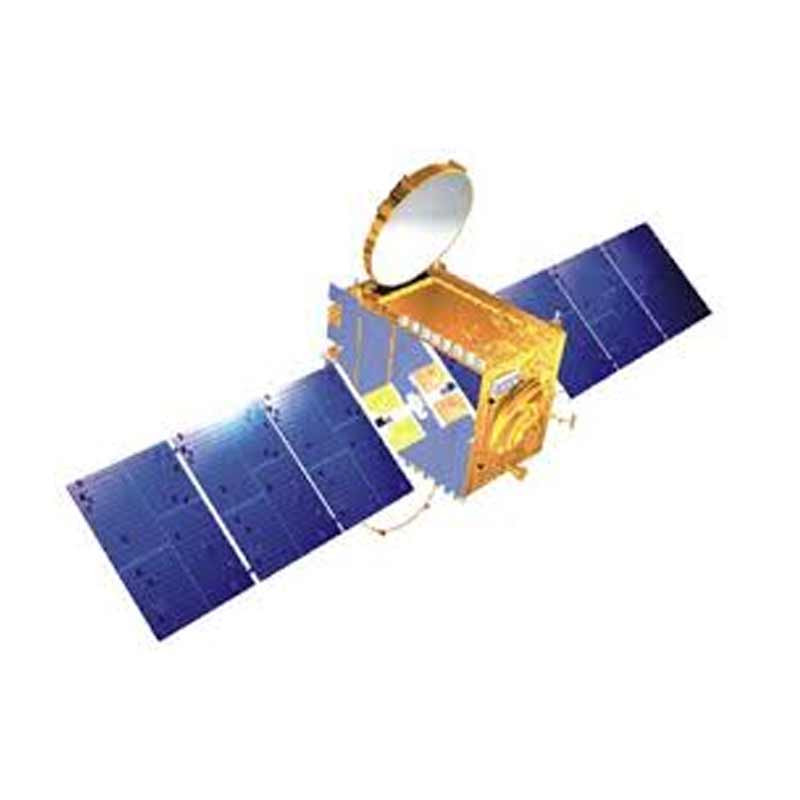
    It was for the first time that India’s space agency was putting into orbit a two-tonne class satellite. Equipped with 12 high-powered Ku band transponders (like the earlier Insat-4A), the 2,180 kg spacecraft is designed for a mission life of 10 years. Insat-4C was designed with the capability to broadcast 150 TV channels through the DTH platform.

    If succesful, this mission would have taken India to being one of the five major satellite launch countries in the world. With this failure, Isro’s strategy of taking satellite contracts from other countries has also received a setback.

    As regards the Insat-4 mission, Isro will now have to look ahead to the launch of the third satellite in the series – Insat-4B. The GSLV’s failure will in no way influence that launch however, because Isro will be using the services of Arianespace to launch Insat-4B from Kouru next year.

    The failure of this mission is not just about the challenge it throws up to India’s space ambitions though. Immediately hit will also be Kalanithi Maran’s Sun Group, which had booked space on Insat 4C for its DTH venture Sun Direct.

    At present, DD Direct Plus managed by the pubcaster Prasar Bharati and the Subhash Chandra owned Dish TV are the two operators offering DTH services in the country.

    All the Ku-band transponders on the Insat 4A satellite, meanwhile, have been leased to the Tata-Star consortium, which will soon be launching the Tata Sky DTH service.

    Other than Tata Sky and Sun Direct, there is also Anil Ambani’s DTH venture Reliance Bluemagic, which will be rolling out in due course.