Tag: DTH services

  • Wireline broadband pricing might reduce by 40-50%

    Wireline broadband pricing might reduce by 40-50%

    MUMBAI: Home broadband, television services and integrating wireline voice is expected to move towards bundled plans by the Indian wireline broadband market. With this, ICRA predicts, the pricing is expected to reduce by around 40 to 50 per cent.

    As per the ET reports, the agency said that similar to the strong growth that was observed for wireless broadband, wireline broadband subscriber base can also witness growth due to its high price elasticity and expanding demand. It also added that over the next five years, the home broadband and DTH market would see a greater role of telecom operators with a higher subscriber base and revenue generation. But the key watch-outs for the industry would be the extent of competitive intensity, and the need for capex.

    ICRA sector head and VP – corporate ratings Harsh Jagnani said that the wireline broadband penetration in India is much lower as compared to international standards and presents a significant opportunity for telcos. 

    In India, the wireline broadband coverage would largely expand through the fibre to the home (FTTH) networks which have the capability to deliver high speeds with stability in the network. "This will allow it to be the bedrock for content delivery to homes, thereby encompassing an umbrella of services including wireline voice, wireline broadband and television. Increasingly, the television industry is shifting towards content on demand and high-quality videos/content," he said.

    ICRA said in a statement that India's wireline broadband subscriber base can increase to 100 million households over the next five years, and the revenue generation from these segments could expand to Rs 80,000 crore as against Rs 14,500 crore now from wireline voice, home broadband and DTH services, with the combined ARPU of Rs 875.

    "In such a scenario, wireline broadband can be the next growth driver with the potential to subsume television/DTH services, also providing diversification from the mobile services revenues," ICRA said.

    The penetration of wireline broadband is low in the country as of now and the subscriber base has not seen any meaningful traction over the years. As on September 2018, the subscriber base was only 18 million, accounting for less than 7 per cent of the total households, much lower than 44 per cent in Brazil and 99 per cent in France. In the television segment, while the total penetration is around 66 per cent of the total households, of this, around 65 per cent are provided over copper cable, on which the capability to provide high bandwidth services are limited and not fully developed.

    Jagrani said, “Even at a penetration level of 30 per cent of the households, this could translate into subscriber base of 100 million by FY2024, generating revenues to the tune of Rs 80,000 crore. Correspondingly the revenue contribution from these services is expected to increase from current 8 per cent to around 30 per cent on an expanded revenue base."

    As of now, the industry has fibre network of 17,20,000 route km. Much deeper and wider penetration is required to be able to meet the envisaged FTTH demand, which will encumber the financials of the telcos.

  • DishTV extends its connection up to Flipkart

    DishTV extends its connection up to Flipkart

    MUMBAI: DishTV has joined hands with the e-commerce giant Flipkart to bring to its customers a hassle-free connection. With this association, DishTV becomes the first DTH service provider to be listed on Flipkart.

    As part of this collaboration, for a limited period, users of Flipkart, which was voted as one of the most popular e-commerce brands in India by RedSeer report, will get an opportunity to grab offers from DishTV on their new connections.

    Dish TV India senior vice president-marketing Sukhpreet Singh expressed, “Through this move, the company aims to integrate and connect the tech-savvy consumers to entertainment services on a platform which is dynamic.”

    Flipkart senior director – electronics Hari Kumar said, “Of the total cable and satellite base of 169 million, 47 million are non-digitised households. So, there is a huge opportunity with the existing customers itself. With the TV installations expected to double over the next five years, we see a significant upside in making DTH services available at the customers’ doorstep.”

  • Television viewership stable despite VoDs, says DISH TV exec

    MUMBAI: People’s interest in television was intact although use of cell phones in India has increased considerably in India. After increase in internet speed, people in India had started watching videos on mobile phones. However, despite VoD services proliferating in the country, viewers preferred to watch films on television.

    DTH services leader DISH TV’s senior executive told PTI that it was a wrong perception that people lately did not watch television because of the growing popularity of video on cell phone facility. Despite the increasing tendency of seeing videos on handsets, the executive said, different studies revealed that people’s interest in watching television in all age brackets had not declined.

    DISH TV’s senior vice president (marketing) Sukhpreet Singh, who was in Indore to launch DISH TV’s “Mera Apna Pack” and “Swagat Pack” in the Madhya Pradesh market, said, in fact, the television viewership was increasing. Singh said that people watching videos on cell phones was a healthy sign for the entertainment industry.

    Answering a question, Singh said even now many cable operators in India had not come under the purview of regulation, and they were the ones who became a nuisance for both, the government and the public. It would be better if they were regulated soon, he added.

  • TRAI starts process of STBs’ interoperability, issues consultation note

    NEW DELHI: Realising that lack of technical interoperability of set-top boxes creates problems for consumers wanting to switch over to another service provider, the Telecom Regulatory Authority of India today issued a consultation note on the solution architecture for technically interoperable STBs after receiving 28 comments to a pre-consultation note issued on 4 April 2016.

    All stakeholders which include CAS providers, SoC vendors, middleware providers, EPG solution providers, STB manufacturers, smart card providers, and service providers like Broadcasters, Multi System Operators, and DTH operators are requested to provide their written comments on the proposed solution architecture for technical interoperable STBs by 25 August 2017.

    Subsequently, TRAI is planning to organise a workshop on proposed solution architecture for technically interoperable STB during the first fortnight of September 2017 to elaborate in detail on various technical aspects commented upon by the stakeholders in response to this consultation note.

    After incorporation of comments received from the stakeholders and the workshop, TRAI will be launching a pilot project on STB interoperability. Entities interested in pilot projects for deployment of Interoperable STBs can also send their details to TRAI.

    TRAI said this inter-operability between different service providers has an adverse effect on competition and service quality in the Pay-TV distribution market. Non-availability of STB in an open market is also a major hindrance to technological innovations. Whenever, a consumer changes its service provider, the STB of existing service provider becomes useless as the same STB cannot be used; resulting in electronic waste (e-waste). The availability of practical solution which can provide technical interoperability of STB is always desirable.

    The framework of interoperable STB should ensure the following:

    a. The level of security should be similar to or better than what is present today.

    b. The framework must be sound enough to prevent reception of services by unauthorized persons.

    c. The prices of the interoperable STBs should remain comparable to non-interoperable STBs.

    d. The portability cost should reduce considerably

    e. The DPOs should be able to choose security solutions (Conditional Access System) as per their requirements.

    f. The proposed solution must be able to identify pirates, if any

    g. The User Interface (UI) and Electronic Program Guide (EPG) format customization.

    h. The framework should ensure that TV channels with EPG listing continue toØ be available to the consumers on migration to another operator.

    At the outset, TRAI said digital TV broadcasting services can be received by a subscriber using STB which is connected with the TV set (sometimes the STB is in-built in the TV set). The STB receives TV signals from distribution network and decodes them into viewable form on a TV set. STB enables the subscriber to view only those TV channels which he/she has subscribed.

    Cable TV and direct-to-home (DTH) platforms are the major distribution platforms for delivery of TV broadcasting services in India. Whereas, the DTH services delivered in digital mode since beginning, the migration of cable TV services, from analogue to digital, has also been completed with implementation of Digital Addressable Cable TV systems (DAS) in the country.

    Presently, Distribution Platform Operator (DPO) provides STB, which is compatible with his network to provide services to subscriber. Over a period of time, variety of technologies has been deployed by DPOs into the networks. It has led to a situation where STBs provided by one operator are not compatible with the system of the other operator. This impedes portability of a subscriber from one operator to another in case he wishes to do so

    TRAI collaborated with IIT-Bombay and Centre for Development of Telematics (C-DOT). The issues identified by stakeholders in response to the pre-consultation paper were communicated to C-DOT and IIT-Bombay. Now C-DOT, the telecom technology development centre of the Government of India, in close coordination with TRAI, has developed a solution for interoperable STBs. Describing the same, C-DOT has provided TRAI, a copy of the document titled “C-DOT framework and feature requirements for the ecosystem entities towards implementation of STB interoperability framework.”

    Through this consultation note, TRAI presents the solution architecture for technically interoperable STB to all the concerned stakeholders to seek their comments on proposed solution.

    Some of the reasons for non-interoperability of STBs and the C-DOT framework and feature requirements for the ecosystem entities towards implementation of STB interoperability framework” are available on trai.gov.in.

  • Could India blocking ABS’ FTA TV signals lead to breach of ITU norms?

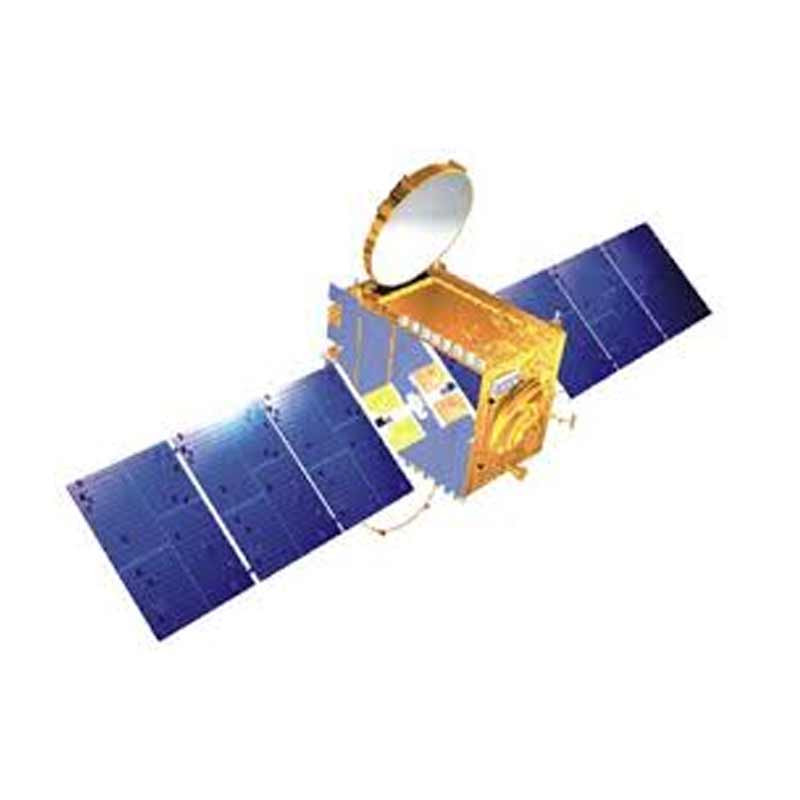
    MUMBAI: Government of India, it seems, could find itself in a Catch-22 situation over a directive to Department of Space (DoS) to block free-to-air channels available in India broadcast through Asia Broadcast Satellite (ABS)-2, a foreign `bird’ not licensed to provide KU-band or DTH services in India. Reason: such a blockade may breach international laws relating to spillover of satellite signals.

    Signals of ABS-2 satellite —hosting on its South Asian beam a Nepalese and a Bangladeshi DTH service licensed in their respective countries — have been spilling over into India and a mix of Indian, Nepalese and Bangladeshi TV channels are available to Indians as a FTA service that can be accessed via some plain vanilla hardware (read set-top boxes and an antennae) at a nominal cost. This has raised the heckles of India authorities over possible national security.

    While last week junior minister for Ministry of Information and Broadcasting (MIB) Rajyavardhan Rathore informed Parliament that his ministry has requested DoS to block the “unauthorized” DTH or KU-band ABS-2 service, the foreign satellite operator feels it has not broken any Indian regulations.

    ABS source claimed that the issue is of “natural spillover” of satellite signals into neighboring countries that are outside the service area of the countries offering licensed DTH services, but falling within the coverage area of the satellite. Such issues have been debated by the International Telecommunications Union (ITU) where it was concluded that such a spillover or overlap of coverage areas (countries) is in “full compliance” with ITU provisions. “Consequently, ABS is not in violation of any existing provisions/guidelines stipulated by the government of India,” a company source explained.

    ITU is the United Nations specialized agency for information and communication technologies or ICTs. It allocates global radio spectrum and satellite orbits, develops technical standards that ensure networks and technologies to seamlessly interconnect and strives to improve access to ICTs to underserved communities worldwide. Originally founded in 1865 as the International Telegraph Union, ITU is one of the oldest existing international organizations. India is also a member of the organization and Indian satellites’ slots too are co-ordinated by ITU.

    Categorically denying that the company has “been providing” a DTH service in India, ABS sources said ABS-2 satellite has two customers on its South Asian beam. The customers are Bangladeshi DTH service provider marketing under brand name Realvu and Nepalese Humro TV platform. Both these services are licensed in their respective countries, the sources claimed, adding there was a “natural spillover” of these services into India that is being lapped up by Indian viewers as it has a mix of regional content in an un-encrypted format.

    ABS also clarified that it does not sell any hardware in India, nor does it advertise or provide any service to the Indian TV channels within the country. The ABS series of satellites are owned by the Bermuda-based Asia Broadcast Satellite, a comparatively young global satellite operator with offices in the United States, UAE, South Africa, Philippines, Indonesia and Hong Kong.

    Of course, this ABS-2 service is available to Indian consumers at no monthly charge and all they need to do is install a standard STB, easily available in the open electronics hardware market, which also means that the TV channels on the platform stand to gain from additional eyeballs that can be used for marketing purposes by the TV channels.

    According to an estimate, presently there are approximately 20 satellites broadcasting over the Indian skies beaming channels into India and viewers wanting to watch those channels can watch via an ordinary STB and pointing the antenna to the desired satellite’s geo-stationary location. Though this synchronization of antennae with a specific satellite’s position may be technical in nature, there would be hordes of service providers in India with adequate knowledge to do so for a small price.

    Free to view platforms have an advantage over paid DTH services like Dish TV or Tata Sky or Videocon d2h or Reliance BIG TV in the rural areas of the country where consumers may not be too quality conscious. This FTA phenomenon is evident from the considerable reach of pubcaster Doordarshan’s KU-band or FTA DTH service, FreeDish, and a clamour amongst private TV channels too to be on the platform that has a limited shelf capacity.

    Rathore, while responding to queries from three Members of Parliament last week, had said the move to block ABS-2 signals was being done keeping in view any threat to national security via a service not licensed in India. He said MIB was the licensing authority for DTH services in India and it had not received any application or reference from ABS regarding ABS-2 services. However, the minister also admitted that there was no violation of downlinking guidelines by licensed Indian channels on the ABS-2 platform.

    ALSO READ:

    Block illegal DTH FTA, space dept. told


  • Q3-17: Jio affects Airtel revenue; Digital TV segment numbers up

    Q3-17: Jio affects Airtel revenue; Digital TV segment numbers up

    BENGALURU: Indian telecom major Bharti Airtel Limited (Airtel) reported 3 percent decline in total revenue for the quarter ended 31 December 2016 (Q3-17, current quarter) as compared to the corresponding year ago quarter. The drop was partially affected by a drop in revenue due to divestments of its Africa operating units, tower assets sale and merger of Bangladesh operations. However, like in the previous quarter, Reliance Jio’s entry has resulted in a drop in the company’s India mobile revenues which contribute a lion’s share to overall revenue.

    Airtel MD and CEO of India and South Asia regions Gopal Vittal said, “The quarter has seen turbulence due to the continued predatory pricing by a new operator. The present termination costs at 14 paise which are well below cost has resulted in a tsunami of minutes terminating into our network. This has led to an unprecedented year on year revenue decline for the industry, pressure on margins and a serious impact on the financial health of the sector. At the same time our commitment to provide a superior experience to our customers has led to revenue market share crossing a lifetime high of 33 percent. Airtel revenues grew by 1.8 percent Y-o-Y and our non-mobile businesses continue to grow at a healthy clip and now contribute a sizable 24 percent of our total revenues.”

    In consonance with Vittal statement, Airtel’s Digital TV Services segment (DTH segment) reported 17.7 percent year-over-year (y-o-y) increase in operating revenues for the quarter ended 31 December 2016 (Q3-17, current quarter). Also, Operating Profit (Earnings Before interest and Tax – EBIT) of the DTH segment in the current quarter increased 27.1 percent year-over-year (y-o-y).

    Airtel DTH reported revenues of Rs 873.5 crore in Q3-17 and Rs 742.2 crore in Q3-16. EBIT for the corresponding periods was Rs 68.4 crore (7.8 percent margin of the segment’s operating revenue) and Rs 53.8 crore (7.2 percent margin of the segment’s operating revenue), respectively.

    EBIDTA in Q3-17 also increased y-o-y – by 22.3 percent to Rs 302.6 crore (34.6 percent margin of the segment’s operating revenue) in the current quarter from Rs 247.4 crore (33.3 percent margin of the segment’s operating revenue).

    Subscription numbers, ARPU

    Airtel’s DTH segment added 14.82 lakh subscribers between Q3-16 and Q3-17, or a 17.3 percent y-o-y increase. It had 125.88 lakh subscribers as on 31 December 2016. Q-o-q, the segment witnessed a 1.5 percent growth (1.83 lakh adds) in subscribers from 124.05 lakh in Q2-17.

    ARPU in Q3-17 increased to Rs 232 from Rs 229 in the corresponding year ago quarter, but remained flat q-o-q as compared to the immediate trailing quarter.

    Airtel numbers

    Bharti Airtel Limited saw a 3 percent decline in operating revenue to Rs 23335.7crore in Q3-17 as compared to Rs 24065.9 crore in Q3-16.. Profit after tax (PAT) in the current quarter declined to less than half (declined by 54.5 percent) y-o-y to Rs 504 crore (2.2 percent margin) from Rs 1,108 crore (4.6 percent margin). The company attributes decline in profits to net interest costs of Rs 1,810 crore that have risen from Rs 1,360 crore in the corresponding quarter last year largely due to increased spectrum related interest costs. Further, forex and derivative losses for the quarter came in at Rs 126 crore compared to Rs 57 crore in the corresponding quarter last year as well as exceptional items net losses of Rs 114 crore.

  • Q3-17: Jio affects Airtel revenue; Digital TV segment numbers up

    Q3-17: Jio affects Airtel revenue; Digital TV segment numbers up

    BENGALURU: Indian telecom major Bharti Airtel Limited (Airtel) reported 3 percent decline in total revenue for the quarter ended 31 December 2016 (Q3-17, current quarter) as compared to the corresponding year ago quarter. The drop was partially affected by a drop in revenue due to divestments of its Africa operating units, tower assets sale and merger of Bangladesh operations. However, like in the previous quarter, Reliance Jio’s entry has resulted in a drop in the company’s India mobile revenues which contribute a lion’s share to overall revenue.

    Airtel MD and CEO of India and South Asia regions Gopal Vittal said, “The quarter has seen turbulence due to the continued predatory pricing by a new operator. The present termination costs at 14 paise which are well below cost has resulted in a tsunami of minutes terminating into our network. This has led to an unprecedented year on year revenue decline for the industry, pressure on margins and a serious impact on the financial health of the sector. At the same time our commitment to provide a superior experience to our customers has led to revenue market share crossing a lifetime high of 33 percent. Airtel revenues grew by 1.8 percent Y-o-Y and our non-mobile businesses continue to grow at a healthy clip and now contribute a sizable 24 percent of our total revenues.”

    In consonance with Vittal statement, Airtel’s Digital TV Services segment (DTH segment) reported 17.7 percent year-over-year (y-o-y) increase in operating revenues for the quarter ended 31 December 2016 (Q3-17, current quarter). Also, Operating Profit (Earnings Before interest and Tax – EBIT) of the DTH segment in the current quarter increased 27.1 percent year-over-year (y-o-y).

    Airtel DTH reported revenues of Rs 873.5 crore in Q3-17 and Rs 742.2 crore in Q3-16. EBIT for the corresponding periods was Rs 68.4 crore (7.8 percent margin of the segment’s operating revenue) and Rs 53.8 crore (7.2 percent margin of the segment’s operating revenue), respectively.

    EBIDTA in Q3-17 also increased y-o-y – by 22.3 percent to Rs 302.6 crore (34.6 percent margin of the segment’s operating revenue) in the current quarter from Rs 247.4 crore (33.3 percent margin of the segment’s operating revenue).

    Subscription numbers, ARPU

    Airtel’s DTH segment added 14.82 lakh subscribers between Q3-16 and Q3-17, or a 17.3 percent y-o-y increase. It had 125.88 lakh subscribers as on 31 December 2016. Q-o-q, the segment witnessed a 1.5 percent growth (1.83 lakh adds) in subscribers from 124.05 lakh in Q2-17.

    ARPU in Q3-17 increased to Rs 232 from Rs 229 in the corresponding year ago quarter, but remained flat q-o-q as compared to the immediate trailing quarter.

    Airtel numbers

    Bharti Airtel Limited saw a 3 percent decline in operating revenue to Rs 23335.7crore in Q3-17 as compared to Rs 24065.9 crore in Q3-16.. Profit after tax (PAT) in the current quarter declined to less than half (declined by 54.5 percent) y-o-y to Rs 504 crore (2.2 percent margin) from Rs 1,108 crore (4.6 percent margin). The company attributes decline in profits to net interest costs of Rs 1,810 crore that have risen from Rs 1,360 crore in the corresponding quarter last year largely due to increased spectrum related interest costs. Further, forex and derivative losses for the quarter came in at Rs 126 crore compared to Rs 57 crore in the corresponding quarter last year as well as exceptional items net losses of Rs 114 crore.

  • Broadcasters can now bid for new Pak DTH licence auction

    Broadcasters can now bid for new Pak DTH licence auction

    MUMBAI: The Lahore High Court has requested PEMRA, Pakistan’s broadcast regulatory body, to start the bidding process for direct-to-home (DTH) licences again, after it declared the recent auction void that must be reheld. PEMRA is considering challenging the order in the Supreme Court of Pakistan, local newspapers reported.

    With the new order, broadcasters such as ARY and GEO will now be able to bid to operate DTH satellite TV services in the country.

    Three direct-to-home (DTH) licences in Pakistan were on 23 November awarded for a total of PKR 14.694 billion (USD 140 million). The highest bid was raised by Mag Entertainment for PKR 4.91 billion, respectively followed by M/s. Shahzad Sky for PKR 4.90 billion and M/s. Star Time for Rs 4.89 billion. PEMRA had issued non-exclusive licences for 15 years to the three companies.

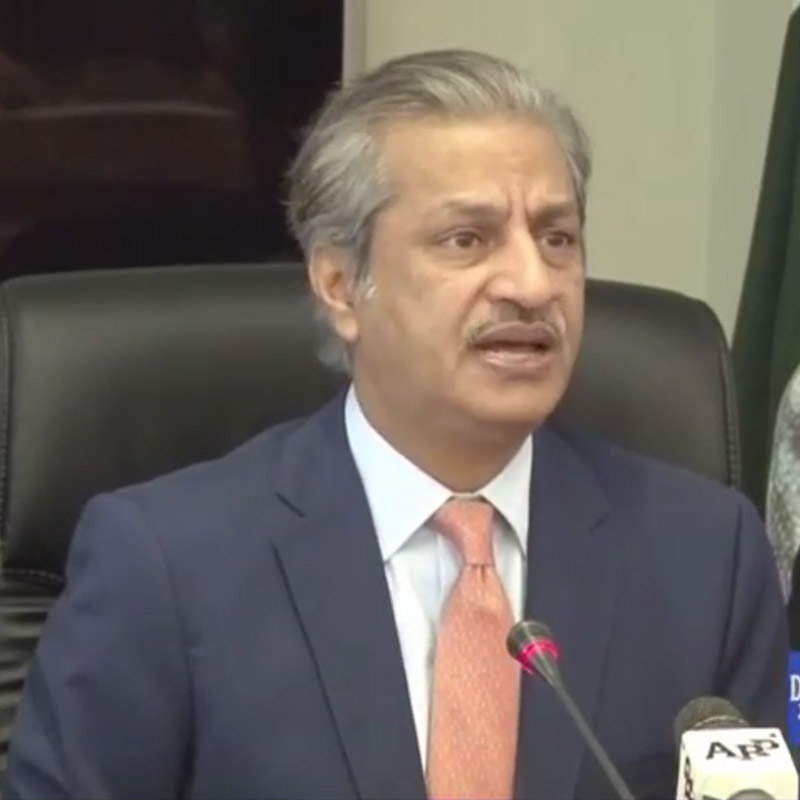
    PEMRA chairman Absar Alam had said the DTH service would not end the cable operators’ business, but would compel them to invest in technology and distribution systems.
    The auction barred broadcasters from bidding owing to what was believed to be a conflict of interest. The court however said the restriction was based on an assumption that any vertical integration between broadcast media and distribution services would result in undue concentration of ownership.

    Pakistani DTH services would have countered the sale of illegal Indian DTH services in Pakistan, which leads to annual transfer of between US$ 200 million to US$ 350 million to India on account of subscription fee.

    Also Read: Pak DTH: Mag, Shahzad & Star Time to start ops in a year

    Pakistan gets tough on Indian DTH & content

    Pak DTH licence bidding stayed


  • Broadcasters can now bid for new Pak DTH licence auction

    Broadcasters can now bid for new Pak DTH licence auction

    MUMBAI: The Lahore High Court has requested PEMRA, Pakistan’s broadcast regulatory body, to start the bidding process for direct-to-home (DTH) licences again, after it declared the recent auction void that must be reheld. PEMRA is considering challenging the order in the Supreme Court of Pakistan, local newspapers reported.

    With the new order, broadcasters such as ARY and GEO will now be able to bid to operate DTH satellite TV services in the country.

    Three direct-to-home (DTH) licences in Pakistan were on 23 November awarded for a total of PKR 14.694 billion (USD 140 million). The highest bid was raised by Mag Entertainment for PKR 4.91 billion, respectively followed by M/s. Shahzad Sky for PKR 4.90 billion and M/s. Star Time for Rs 4.89 billion. PEMRA had issued non-exclusive licences for 15 years to the three companies.

    PEMRA chairman Absar Alam had said the DTH service would not end the cable operators’ business, but would compel them to invest in technology and distribution systems.
    The auction barred broadcasters from bidding owing to what was believed to be a conflict of interest. The court however said the restriction was based on an assumption that any vertical integration between broadcast media and distribution services would result in undue concentration of ownership.

    Pakistani DTH services would have countered the sale of illegal Indian DTH services in Pakistan, which leads to annual transfer of between US$ 200 million to US$ 350 million to India on account of subscription fee.

    Also Read: Pak DTH: Mag, Shahzad & Star Time to start ops in a year

    Pakistan gets tough on Indian DTH & content

    Pak DTH licence bidding stayed


  • Pak DTH: Mag, Shahzad & Star Time to start ops in a year

    Pak DTH: Mag, Shahzad & Star Time to start ops in a year

    MUMBAI: Three direct-to-home (DTH) licences in Pakistan were on Wednesday awarded for a total of PKR 14.694 billion (USD 140 million) by the Pakistan Electronic Media Regulatory Authority (PEMRA) as confirmed by its Twitter handle.

    The auction started after Pakistan’s apex court permitted PEMRA to go ahead with the bidding although the Lahore HC had issued a stay on the process.

    The highest bid was raised by Mag Entertainment for PKR 4.91 billion, respectively followed by M/s. Shahzad Sky for PKR 4.90 billion and M/s. Star Time for Rs 4.89 billion, Pakistani newspapers reported. PEMRA issued non-exclusive licences for 15 years to the three companies. The licencees will have to start operations within a year or risk termination.

    PEMRA chairman Absar Alam said the DTH service would not end the cable operators’ business, but would compel them to invest in technology and distribution systems.

    Pakistani DTH services would counter the sale of illegal Indian DTH services in Pakistan, which leads to annual transfer of between US$ 200 million to US$ 350 million to India on account of subscription fee. The DTH services will now give Pakistani consumers a choice against the existing monopoly of cable operators.

    Terming DTH a game-changer, Alam said, it was the biggest investment in Pakistan’s electronic media history. As per estimates and feasibility studies carried out by PEMRA experts, the overall investment, Alam said without explaining, would be US$ 450 million ($ 150 million each) and could reach an additional US$ 750 million in the next two years, newspaper reports stated. Alam said that those estimates did not include the bidding proceeds.

    The DTH service, Alam said, was a state-of-the art technology adding new dimension to the audio-visual content distribution system. The existing analogue system was offering a maximum of 80 channels while the DTH, Alam added, would increase the capacity to around 120 and each local DTH licence holder was expected to have at least 500,000 subscribers.

    Similarly, landing rights will be permitted to foreign channels to come under the local regime, and new local satellite channels will be approved.

    Also read:

    http://www.indiantelevision.com/dth/dth-operator/pak-dth-licence-bidding-stayed-161123

    http://www.indiantelevision.com/dth/dth-operator/pak-to-award-three-dth-licences-on-23-nov-chinese-uae-companies-in-fray-161119

    http://www.indiantelevision.com/dth/dth-services/pemra-announces-dth-licence-bidders-indian-dth-eviction-to-continue-161116