Tag: DTH service

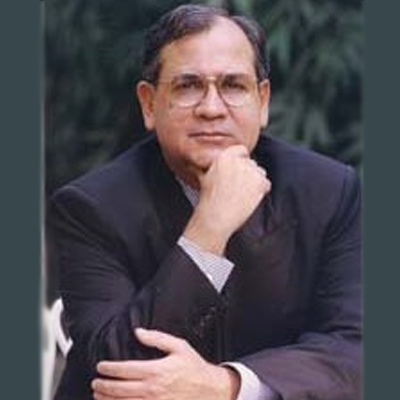
  • ‘We are refreshing BBC Entertainment in January’ : BBC Worldwide Channels director South Asia Deepak Shourie

    ‘We are refreshing BBC Entertainment in January’ : BBC Worldwide Channels director South Asia Deepak Shourie

    BBC Worldwide Channels is looking at cracking the Indian market a lot more seriously. The two channels, BBC Entertainment and CBeebies, were almost invisible for three years with a sole presence on Tata Sky, a DTH service provider.

    Now a lot more investments are being planned and the focus will be on beefing up the content and distribution of these two channels.

    BBC Entertainment is being refreshed in January and programming will be designed based on time bands for India.

    A local feed for CBeebies in Hindi is being examined, though a definite plan on this is some time away.

    For BBC Worldwide Channels, Asia is the fastest growing market. And within this region, India is emerging as an important market.

    While India has been flooded with American English entertainment content, BBC believes that the British flavour will be its big differentiator.

    In an interview with Indiantelevision.com‘s Ashwin Pinto, BBC Worldwide Channels director South Asia Deepak Shourie elaborates on the India plans for the two channels.

    Excerpts:
    How has BBC Worldwide grown its channel business over the past couple of years across Asia?
    The BBC Worldwide Channels business is ?262.5 million, up from ?225.5 million in the earlier year. The revenue from Asia grew from ?19 million to ?37 million. Asia is, thus, growing faster compared to the rest of the world.

    BBC is investing in new channels and geographies. About 35 per cent of BBC Worldwide‘s revenue comes from the channel business.

    In India, people say we are too late to enter. Are we? Global media companies are looking at India now. English content is watched by the affluent class. But is there space for everybody? People will have to find their strong propositions. BBC Entertainment will appeal to audiences who watch factual, entertainment and lifestyle content. We are bringing all of these genres into one channel. Our aim is to be a one stop destination.

    How important is India as a market for the BBC compared to that of Hong Kong and Singapore?
    The size is attractive. It is a market that is hot now. The other markets are good, but small demographically. India will be a very important market for us going forward.

    What is the roadmap that BBC Worldwide has set for their channel business in India?
    BBC World News is already there distributed in 34 million homes and holds its own as a premier news channel.

    As far as BBC Worldwide‘s channels are concerned, we have had BBC Entertainment and CBeebies in the market since 2007, but only as a small presence on DTH. They have not been mainstream. These two channels have had no advertising.

    We are refreshing BBC Entertainment in January with the tagline ‘Seriously Entertaining.‘ Our TG is 15-34 SEC A,B. In the daytime, viewing is leisurely. So we have lifestyle shows like Grand Designs that has Kevin McCloud following homebuilders. In the evening, we have factual entertainment like wildlife. Lifestyle content also airs like Extreme Makeover: Home Edition. At night, from 10 pm onwards, we have shows like Spooks, Top Gear and Sherlock.

    But why wasn‘t a push made earlier?
    That is always going to be a million dollar question. Should we have pushed earlier or is now the right time? The English market is expanding rapidly. So there is nothing wrong in entering now. The BBC Worldwide team in the UK is looking at India seriously now.

    How much is being invested in India and when do you expect to turn profitable?
    I cannot talk about numbers. However, all that I can say is that we see an opportunity here. Any market takes time to mature. Viewership traction has to be built along with the advertising base.
    ‘Research has confirmed that the audience we look at does not want localisation. There is enough local content around. The English audience wants international content‘

    Is the look and feel of BBC Entertainment being changed?
    The whole look and feel will change. The aim is to make it more vibrant and colourful.

    And from January, we will design programming based on time bands for India. There will also be a lot of fresh content and new shows.

    From 6-11 am, you have will light content like Trish‘s Fresh Country Kitchen. Early evening from 7 pm -10 pm will have a mix of lifestyle and factual shows like BBC Earth. Post 10 pm, we move towards more edgy, fast paced content like Luther which is about a detective who is fascinated by the darker side of human nature. London Live, which looks at the music scene, will also air at this time.

    The English GEC space is known for having ‘snacking‘ viewers. How do you plan to build loyal viewers?
    People want quality entertainment. It is not so much about storyline building as it is in the Hindi GEC space. People will come back to the show because of quality – there are shows like Wonders Of The Solar System and Human Planet. The key is to reach the audience with relevant content and, thus, offer advertisers relevant eyeballs. If you do this, then loyalty will automatically build.

    Is having a British flavour going to be your USP?
    That is important. Most content on air is from America. The BBC produces a wide ranging amount of content which has not been seen like Wallander, with Kenneth Branagh playing a detective in Sweden. The channel will give you everything.

    You also have other players coming into this genre like Big CBS. Do you see viewership growth happening as a result or will there simply be fragmentation?
    Viewership will change and grow. The question is whether everybody will get the viewership they are targeting. Fragmentation is a challenge. To counter it we are giving consumers everything in one channel. Our aim is to make an impact in the English entertainment space. The more you fragment by focusing on one genre, the chances are that people will see it.

    Are you selling BBC Entertainment to advertisers?
    Yes! The response is encouraging. We want to fill our inventory with quality clients. You have premium brands coming into the country. The world‘s most expensive car, Bugatti Veyron, has just been launched. They need to reach out to the relevant audience who are upscale. We will provide this audience segment. BBC Entertainment is being pitched as the Best of the BBC.

    The English space is worth $200 million and I see it growing. The nature of the market is such that you will depend more on advertising. Digitisation needs to spread for subscription revenues to really pick up.

    What are the synergies between BBC Worldwide Channels and the other businesses of BBC Worldwide?
    The magazine business has properties that the channels can exploit. An example of this is Top Gear.

    English GECs have started following a stripped strategy where one show airs at a time block across the week as opposed to a different show airing each day. Is BBC Entertainment doing something similar?
    A stripping strategy is good if you have long running shows. If it is not there, then it will not work as a concept. It depends on the concept. You can have factual content at a certain hour across the week, which we do. A documentary, though, cannot have that. The runtime is limited.

    Will localisation play a role in your strategy?
    No! Researchh

    has confirmed that the audience we look at does not want localisation. There is enough local content around. They want international content. The English audience is getting more confident. They are world citizens. They want world programming. Local shows will add a lot of cost for us, but not much value.

    What is being done for CBeebies?
    We could look at launching a local feed for it in Hindi in due course. As of now, we have not come up with a strategy for it.

    Are you launching more channels in India like BBC Knowledge?
    Not at the moment. BBC Entertainment has everything. When the time comes to have a wider bouquet of channels, we will look at it.

    BBC is launching BBC HD in more territories this fiscal. Is HD still some time away for India?
    HD is the future. Right now there is a bandwidth issue. Also, there are not many consumers who have HD ready television sets. When these two issues are sorted out, you will see a push for HD content. There will come a time when SD becomes HD.

    How will you leverage the mobile with 3G coming in?
    We will focus on this when the time comes. We know that people will want not just news but other genres like factual content.There will come a time when SD becomes HD.
  • ‘Koffee with Karan’ to simulcast on Star One, World

    ‘Koffee with Karan’ to simulcast on Star One, World

    MUMBAI: Attempting to aggregate eyeballs, Star is bringing back the second season of filmmaker Karan Johar’s candid talk show Koffee with Karan on two of its upscale channels.

    The show will kick off on 11 February at 9 pm every Sunday and be simulcast on Star World and Star One.

    “Given its huge popularity, the show will for the first time be aired across our two channels Star One and Star World. Koffee with Karan has just the right mix of fun and excitement coupled with Johar’s own unique style. The show became a topic for coffee table discussions for everyone across the nation and we are delighted to have it back,” said Star Entertainment India CEO Sameer Nair.

    Star One is clearly planning to evolve a time band strategy, hoping to navigate eyeballs from Colgate Maxfresh Antakshari at 8 pm to Koffee… that will follow on the Sunday line up. The musical talent hunt show Antakshari will be aired on Friday, Saturday and Sunday on the channel.

    Along with the change in sets and look of the show, another addition is the title sponsorship deal that has been bagged by DTH service provider Tata Sky. Star Group owns 20 per cent in the DTH venture.

    Star has roped in PepsiCo, Colgate, HLL, Candila Healthcare and HDFC as associate sponsors, said Star India executive vice president and head, interactive media Ajay Vidyasagar.

    A SOL production, Johar will kick of the first episode with his three personal favourites Kajol, Rani and Shahrukh. Most of the second season episodes will consist of “celeb combos,” from a mix of entertainment, sport and corporate backgrounds.

    “We will have some rather interesting matches such as Mallika Sherawat and Sanjay Leela Bhansali, Vijay Mallya and Shobha De,” Johar said while addressing the press on Friday.

    The only episode having a single celebrity will be with Hollywood actor Richard Gere. “I have tried to make the show more irreverent, more tongue in cheek, more fun… and I am sure everyone will have fun watching it. The guests on my show will include a lot of my friends from the first season but in unusual combinations and will also feature big names from the corporate and sports world. I am sure that the show will recreate the same magic, as it did in the first season,” said Johar.

  • Tata Sky on track for one million subscribers, unveils interactive edutainment service for kids

    Tata Sky on track for one million subscribers, unveils interactive edutainment service for kids

    MUMBAI: Tata Sky Ltd. is putting together a product offering that would help it ramp up one million subscribers in the first year of operations. The latest in this effort: a new interactive service, Active Wizkids, aimed at kids in the age group between 3-6 years.

    “We are enhancing our product offering virtually every week with more channels and functionality,” says Tata Sky managing director and CEO Vikram Kaushik.

    The result: Tata Sky has crossed 100,000 subscribers within the first 15 days of launch and almost 30 per cent of these subscribers are from rural areas.

    “Our service is on track to reach one million subscribers by the end of the first year,” says Kaushik.

    Kaushik expects the Zee-Turner channels to come on board soon as the dispute is up for final hearing in a Delhi court next week. The DTH service provider is also in talks with Sun TV, the most popular network in the southern states, but no commercial agreement is expected soon. “We gave them a proposal and are in negotiations with them. But a deal is still far away,” says Kaushik.

    Tata Sky is currently offering 75 channels and eight interactive services at the introductory price of Rs 200 a month. “We may look at new pricing later. But for a consumer who takes our service, the introductory offer is at least for four months,” says Kaushik.

    For Active Wizkids, Tata Sky has partnered with IL&FS and the product was developed after a year of research. The aim is to make learning an entertaining activity for children, through games, audio instructions and animated mascots. These games encompass a variety of subjects ranging from mathematics to english and general knowledge. It seeks to be applicable to children’s differential learning styles, to hone their basic learning skills.

    Tata Sky claims Active Wizkids to be a first of its kind interactive edutainment service in the world that would enhance a child’s classroom learning through entertaining, yet educational games.

    Developed by an in-house team at Tata Sky, the service has four sections called Beginners, Juniors, Seniors and Happy Times, attempting to make it as age, time and activity appropriate. The television-based service will be refreshed on a daily basis to avoid monotony and is supported by four friendly mascots, each representing a specific learning style. Jimbo the baby elephant, represents listening, the Busy rat represents doing, Spiky, the teenage alligator, represents looking or observing and Hi Ho, the donkey with his big muscles, represents playing.

    In connection with this, another child centric service available on Tata Sky’s platform is the Parental Control service which allows parents to regulate what their children watch on television. The Parental Control service not only allows an entire channel to be blocked out, but also allows blocking of movies based on parental ratings across channels, reiterating Tata Sky’s commitment to transferring control and convenience into the hands of consumers.

    The DTH service has 11 localized language options. However, Active Wizkids is presented in English. Explaining the rationale behind using this medium of communication, Kaushik says, “We have observed that parents are keen to have the basic education of their kids in English. Our focus is on learning of alphabets and numbers. Though we are initially aiming at the 3-6 year olds, we will expand this age category in future,” says Kaushik.

    Tata Sky has strengthened its distribution network to cover 3200 towns and cities, with 12,500 dealers across the country. The service is backed up by three call centres in Pune, Hyderabad and Chandigarh which receive about 10,000 calls a day.

    So how does Kaushik view the battle between cable TV and DTH? “There will be a restructuring in TV distribution. Going forward, DTH and cable will co-exist. In the US, 70 per cent of the market is dominated by cable TV while in UK DTH enjoys 70-80 per cent of the slice,” says Kaushik.

  • Tata Sky launches DTH service; STB price Rs 3999, basic subscription Rs 200

    Tata Sky launches DTH service; STB price Rs 3999, basic subscription Rs 200

    NEW DELHI/MUMBAI: Tata Sky Ltd, the $ 500 million joint venture between Tata Sons and the Rupert Murdoch-owned Star Group, today officially announced its arrival as India’s second DTH platform after Dish TV.

    Tata Sky is kicking of its service in 300 cities at an “introductory” monthly subscription of Rs 200 for the 55-odd channels it presently has on the platform.

    Price: hardware+installation Rs 3,999
    Monthly subscription: Rs 200
    No. of channels available: 55+
    Present area of service: 300 cities
    1st year target: 1 million subscribers
    Investments made till now: over Rs 25 billion
    Most critically, the Tata Sky set top box (supplied by News Corp owned NDS)
    has been priced at Rs 3,999 (inclusive of taxes). This includes installation
    and hardware cost and a full service warranty for one year.

    However, along with the monthly subscription of Rs 200, the Tata Sky offering will be more expensive than rival Dish TV’s package.

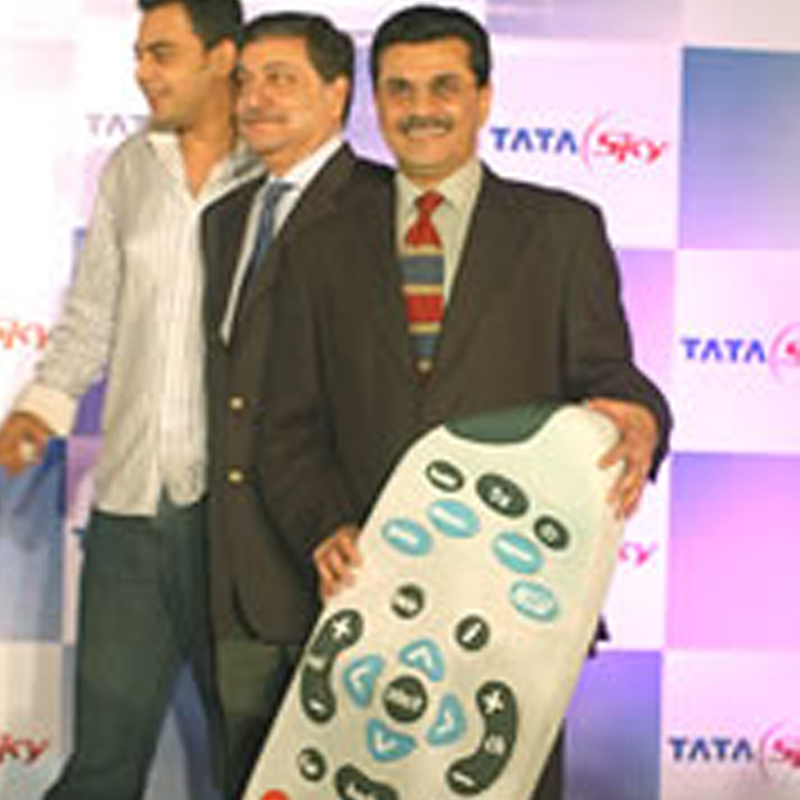
    Tata Sky CEO and MD Vikram Kaushik with Tata Sky chairman Ishaat Hussain
    Click here for a slideshow
    The Subhash Chandra-owned Dish TV is priced at Rs 3,290 (inclusive of taxes). This includes the cost of the STB as well as three months’ subscription. The monthly subscription for the basic Dish TV service of 75 channels is Rs 180.
    Announcing the launch at a glitzy event in Delhi where the likes of cricket commentator Harsha Bhogle rubbed shoulders with Mandira Bedi, Tata Sky MD and CEO Vikram Kaushik grandly proclaimed, “Entertainment will never be the same again.”

    Going on to harp on the state-of-the-art technology and finesse of the service, Kaushik added, “It’s a technological innovation that’ll bring the senses alive.”

    Apart from the many channels on the Tata Sky platform, a conspicuous absentee is the Zee Turner bouquet of over 20 channels as an agreement between Tata Sky and Zee Turner Ltd has not yet been concluded.

    Kaushik admitted that negotiations have not been concluded, but was hopeful that “things would get sorted out soon.”

    Another major absentee is the Sun Network, which dominates the South Indian markets. Tata Sky is, however, not alone in this, since Dish TV does not have access to the Sun channels either.

    “We are offering 55+ channels at the moment and with the passage of time the number of offerings would grow,” Kaushik said.

    The channels presently available on the non-tiered Tata Sky platform include all the channels from the Star (17), Sony Discovery One Alliance (14) bouquets as well as ESPN Star Sports and two channels of NDTV as its key offerings.

    It is worth noting here that it was only this morning that the deal for the carriage of the One Alliance channels by Tata Sky was signed and delivered.

    Confirming this to Indiantelevision.com, SET Discovery president Anuj Gandhi said the pricing terms was similar to the one signed recently with Dish TV.

    One Alliance is being paid around Rs 38 per subscriber by Dish for its channels. The deal is a five-year one that is extendable at the end of it, Gandhi revealed.

    Also available on the Tata Sky platform would be some Doordarshan channels as well the likes of Times Now, Aaj Tak, Headlines Today, etc. Some interactive and specially designed movie channels have also been thrown in as a sop.

    The Tata Sky service, Kaushik claimed in the presence of his company chairman Ishaat Hussain, has been designed to give subscribers “choice, control and convenience” in the way they want to watch television.

    A host of interactive services such as an on-screen programme guide, Actve Sports, Actve Star News, Actve Newsroom and Actve Khabar are also on offer.

    To offer maximum convenience to subscribers, Tata Sky has set up a pan-India distribution network of popular consumer electronic stores and mobile phone outlets for retailing its hardware and prepaid recharge vouchers.

    The pre-paid vouchers come in various denominations starting off with Rs 260.

    The company has also tied up with LG, ITC International Business Division and Indian Oil Corporation as part of its distribution drive.

    “We are looking at ramping up our activity and service over the next three months when the service should be covering the whole of India,” Tata Sky consumer marketing head Vikram Mehra said.

    The company has engaged a field force of approximately 3,000 people who will be complemented by a high-end 24×7 call centre, manned by multi-lingual customer service associates, trained to solve all customer problems.

    But Mehra was not forthcoming on the media campaign that’s about to break “soon”, except to say that it would be a 360 degree campaign using all normal media outlets.

    Tata Sky is an 80:20 DTH joint venture between the Tata Group and Hong Kong-based Star Group.

    The joint venture has invested over Rs 25 billion in the project till now, according to Kaushik, who added the target of 1 million subscribers in the first year is achievable.

    The unveiling of the Tata Sky service finally turns into reality a dream Murdoch has had since 1997 – of having a DTH platform in India

  • Dish media campaign draws flak from cable ops

    Dish media campaign draws flak from cable ops

    NEW DELHI: Dish TV’s media campaign revolving round freedom-from-cable-problems theme has incensed a section of cable community, which feels it’s “unethical.”

    In a letter e-mailed to Dish TV, All India Aavishkar Dish Antenna Sangh (AIADAS), one of the many bodies representing the cable fraternity, has exhorted the DTH company to withdraw the “misguiding advertisement.”

    “The whole cable TV community is shocked on seeing the business-damaging and misguiding advertisement campaign launched by Dish TV through various news papers, hoarding, and bus shelters. This type of advertisement campaign has hurt the cable TV fraternity in India as a whole,” the AIADAS letter states.

    The letter further highlights that the latest Dish campaign would severely hurt the business of cable operators; almost to the extent of crushing them out.

    “In case the (cable) consumer shifts (to DTH), who is going to pay compensation to the cable TV operator?” Dr. AK Rastogi, head of AIADAS, has asked in the letter.

    Though Rastogi claimed that Dish has agreed to withdraw the damaging ad campaign in deference to the cable industry’s anguish, Dish TV CEO Sunil Khanna denied any such move.

    “We are not withdrawing any campaign, nor altering it,” Khanna told Indiantelevision.com today afternoon.

    He added that instead of being cry babies, cable operators should seize this opportunity to digitize their networks and offer consumers better services than before.

    “With competition around in DTH sphere, there is bound to be consumer awareness campaigns highlighting the advantages of a DTH service. The cable operators should brace themselves for reality,” Khanna said.

  • Dish TV to come down hard on pirating cable ops

    Dish TV to come down hard on pirating cable ops

    NEW DELHI: India’s first direct-to-home service Dish TV today issued an ultimatum to cable operators filching its signals.

    In a rear guard action against piracy, a massive operation has been announced to crackdown on pirating cable operators who are using the Dish’s set-top boxes as a medium to illegally distribute TV channels (some of which are exclusively on the DTH platform) to the cable consumers.

    According to Essel Group of Industries additional vice-chairman Jawahar Goel, “It is important to send out the message that product counterfeiting will not be tolerated as it has an extremely detrimental effect on the whole fraternity, including content creators, broadcasters, and the government.”

    ASC Enterprises, an Essel Group company, holds the licence for a DTH service in the country, which is marketed under the brand name Dish TV.

    According to an official statement from Dish TV, a local cable operator in Saharanpur district in Uttar Pradesh was caught by the police, along with Dish’s anti-piracy team, on Saturday for illegally showing ESPN and Star Sports through a Dish TV box when he did not have an agreement with ESS to re-distribute the sports channels.

    The police has seized the errant cable operator’s infrastructure and the chip of Dish TV, which gives access to the DTH service.

    Commenting on the development, Goel added, “We expect support from broadcasting and the film industry as well to take up this effort to curb piracy, which is to the tune of over 10 billion annually.”

    The official statement said that of the 1.1 million subscribers of Dish TV, about 5,000 have been found to be allegedly indulging in piracy of signals. While their connections have been switched off, legal action too has been initiated against them.

  • Tata Sky begins publicity, trade activities

    Tata Sky begins publicity, trade activities

    MUMBAI: Aasman se seedhe aapke ghar (straight to your home from the sky). This could well be the tag line for Tata Sky’s proposed DTH service, slated to be launched June-July 2006.

    So what’s new? Well, Tata, “India’s most trusted company”, and Star, “India’s No. 1 entertainment company,” feel the people of India should be told that the two entities have “come together to change the way in which television is watched in India.” And, Tata Sky has started the process of telling the tale of world’s “most advanced” DTH service — one must admit quite engagingly so.

    The 40-slide presentation being made by Tata Sky to the trade affiliates, on the other hand, has upset the cable fraternity. At one place, to hammer home the point that cable operators get eliminated in a DTH service, some funny lines have been used (cablewallah to consumer: I don’t have electricity, you can’t watch TV or I fight with the channel for non-payment, you pay the price — here goes the cricket match) that presumably have not gone down well with cable ops of Mumbai.

    The text points out that a consumer need not “suffer a poor quality cable service” as he has the right to choose channels he wants to watch and pay only for those. “Could you ever imagine a choice like?” the text eggs on a consumer, who’s then told after sales service means “problems are no problems.”

    Apart from the high quality programming and DVD-type visual experience, free onsite installation of the hardware and maintenance under warranty are thrown in as added sops.

    For the gaming freaks, Tata Sky promises a personal games parlour where new games will be made available periodically for the whole family at no extra cost.

    The presentation also goes to list step-by-step the installation process and how the digicomp is compatible with most varieties of TV sets.

    Unstated however, are the costs involved for a consumer, which is also an indication that the various packages, probably, are still being worked out.

  • Dish moves TDSAT against Star

    Dish moves TDSAT against Star

    NEW DELHI: Court cases are buzzing all over the place in the media sector as deadlines for various guidelines, including adhering to downlink norms, near.

    In its first direct salvo against the Hong Kong-based Star Group, the Subhash Chandra-promoted ASC Enterprises, owners of the Dish TV DTH service in India, has moved the disputes tribunal against the former’s reluctance to make available Star channels to its platform.

    “It is respectfully submitted that the present petition has been filed due to the refusal on the part of the respondent (Star Group through Star India) to supply its bouquet one channels to the petitioner on reasonable and non-discriminatory terms,” the petition states.

    Filed today at the Telecom Disputes Redressal and Settlement Tribunal (TDSAT), the ASC petition adds, “The unreasonableness on the part of the respondent is evident from the fact that the respondent has laid down impracticable and unreasonable terms and conditions for supply of its bouquet one channels.”

    Contacted by indiantelevision.com, a Star India spokesperson said, “Negotiations are on with Dish TV. Beyond that we cannot comment as we have not heard from TDSAT yet.”

    The petition has been filed as Telecom Regulatory Authority of India (TRAI) in an order has mandated that all content should be made available to all delivery platforms on a non-discriminatory basis.

    Justifying its action of approaching the TDSAT, the petition seeks “appropriate directions against the acts of omission and commission” of Star, including its failure to provide on request the signals of the channels of its first bouquet “on reasonable and non-discriminatory terms.”

    Bouquet one of Star consists of channels like Star Plus, Star Movies, Star News, Star World, Star Gold, Channel [V], National Geographic Channel, The History Channel and Vijay TV.

    The second bouquet — the formation of which was necessitated owing to certain directions from the sector regulator in an effort to control cable TV prices — comprises Star One, Hungama, The Disney Channel and Toon Disney.

    What is interesting is that the Chandra company has decided to take on one time ally-turned-competitor with a vengeance.

    The petition not only states that discussions with Star were initiated by Dish TV in December 2005, but also insinuates that the delay in concluding a commercial agreement is deliberate as the respondent is a joint venture partner in another DTH service, Tata Sky, proposing to start operations later this year.

    Interestingly, Dish TV has won a favourable direction from TDSAT in a similar case involving MTV.

    Discovery-Sony distribution joint venture One Alliance, which comprises MTV and sibling channel Nick, is said to be close to striking a deal with Dish TV for its channels that include the likes of SET, MAX, Discovery and AXN.