Tag: DTH players

  • Ground level challenges delay digitsation benefits to MSOs & broadcasters: ICRA

    Ground level challenges delay digitsation benefits to MSOs & broadcasters: ICRA

    BENGALURU: In a vast country like India, ground level challenges is a key reason that has delayed in multi-system operators (MSOs) and broadcasters reaping the benefits of digitisation. The digitisation of the TV distribution industry, initiated in 2011, is yet to achieve its target of addressability and transparency in billing systems, which was expected to yield significant benefits to MSOs and broadcasters as per a report by Indian investment and ratings agency ICRA on the Indian Media and Entertainment Industry – TV Distribution (September 2015).


    Some of the noteworthy points mentioned in the report are as follows:


    As MSOs struggle with last mile ‘addressability’ hurdles for its digitised customer base, the industry’s ability to deliver customised / value added content remains restricted. As a result, the expected benefits of higher subscription revenues for MSOs and broadcasters are yet to be achieved. The end consumers are also yet to benefit from targeted subscription packages, which were expected to optimise the user experience. ICRA believes that end consumers are also yet to benefit from targeted subscription packages. Roll out of channel packages by MSOs remains crucial for driving ARPU growth and profitability as content costs increase.


    Implementation challenges and slow progress in Phase I and Phase II markets have restricted monetisation for MSOs due to slow progress in Consumer Application Form (CAF) collections – effectively LCOs have retained their control over the subscriber base, disputes in sharing of entertainment tax, ARPU is constrained and as yet determined on per subscriber basis, and not on basis of channel packages chosen.


    While distributors have witnessed 25-30 per cent decline in carriage income, overall carriage income for distributors has remained buoyant because the disbanding of channels aggregators has given distributors leverage with smaller broadcasters and new channels. Also, new channel launches and wider audience measurement metrics will keep carriage revenues buoyant for MSOs.


    DTH players and regional MSOs are likely to take the lead in implementation of Phase III and Phase IV. Extension of deadline for Phase III and Phase IV markets provides adequate time for resolving ground issues as well as coverage for large subscriber base; however lower purchasing power and price sensitive nature of subscribers make investments less attractive. DTH players remain well positioned for tapping growth opportunities in Phase III and Phase IV markets due to inherent technology advantage and easier access to cable dark areas.


    Credit profiles unlikely to improve significantly on account of debt funded capex plans.  Longer than expected timelines in monetisation opportunities, higher content costs for digitised areas coupled with ongoing investments for Phase III and IV would keep the return and coverage indicators of MSOs muted in near term. 


    While a significant amount of equity funds supported the investments in Phase I and II markets for major MSOs, investments for penetrating Phase III and IV areas, broadband penetration as well as offering value added services (such as Video on Demand) may be largely funded through debt; correspondingly the borrowing levels are expected to remain high over the next two years while the profitability generation from digitised areas stabilise gradually.


    In spite of execution delays, in the longer term, digitisation is expected to benefit MSOs, DTH operators and broadcasters through greater customer wallet resulting in higher subscription revenues.


    Sizeable subscriber penetration opportunity persists in Phase III and Phase IV markets. The market share dynamics between MSOs and DTH players are expected to change with an uptick in run rate for DTH operators (approximately 20-25 per cent market share in Phase I/II) as the industry progresses towards the Phase III and Phase IV.

  • Big Magic Bihar & Jharkhand inks DTH deal with Dish TV

    Big Magic Bihar & Jharkhand inks DTH deal with Dish TV

    MUMBAI: As part of its distribution-strengthening strategy, BIG MAGIC Bihar & Jharkhand the regional entertainment channel from the Reliance Broadcast Network stable, inks distribution deal with Dish TV becoming available on Channel No. 814. Available on the base pack, this move adds 8mn million Dish TV subscribers to BIG MAGIC Bihar & Jharkhand’s reach as it reaches out to a larger Diaspora across India.

     
    Backed with an aggressive distribution plan and an endeavor to reach its rich regionally rooted content, to discerning audiences across the country, Dish TV – India’s premier and largest DTH platform was the most natural choice. This deal marks the beginning of a robust expansion plan as the Channel is close to inking deals with other leading DTH players, in addition to an extremely robust local distribution network already in place.

     
    With an eclectic content mix that encompasses a wide slate ranging fiction, crime, reality, music, devotion, movies and mythology, tailored to offer a wholesome family viewing experience, the Channel is primed to get a huge loyal audience base instantly. Viewers can now savour television shows coated with the regional flavor ranging Police Files, Hindustan ka Big Star, Bhojpuri Films, Big Memsaab and upcoming reality shows Big Folk Star and Big Bahuria.

     
    The Channel said in a statement, “We are a leading player in the regional market and have delivered excellent performance. We see a huge opportunity in catering to a larger Diaspora and our endeavor is to reach our content mix to the discerning audiences spread across the length and breadth of India. Dish TV is a perfect partner to begin the exercise with, from here-on we will increase footprint through strengthened distribution across platforms.”

     
    BIG Magic Bihar and Jharkhand is currently available on Hathway, Incable, Manthan, Digicable, GTPL, Siti Cable, Maurya, DEN and other all independent operators.


  • Kolkata MSOs to provide value added services to consumers

    Kolkata MSOs to provide value added services to consumers

    KOLKATA: With an aim to provide value added services (VAS) to customers in the wake of digitisation of cable television, the multi-system operators (MSOs) in the eastern region are exploring opportunities to release regional movies on cable TV before it is released in the theatres to generate more revenue. 


    According to Siticable director Suresh Sethia, the MSO is in discussion with producers for premiere shows of regional movies on its cable channel as part of value added services.


    “These services can be implemented once the billing process is properly executed, which could take anywhere around six months to complete,” said Sethiya while addressing the audience at the Cable TV Show 2014 in Kolkata. 


    The service is similar to the ‘Movie-on-Demand’ platform of the direct-to-home (DTH) players.


    The charges for a newly released movie will vary between Rs 50 and Rs 100 for a day, remarked Sethia. “The producers, MSOs, LCOs and the customers-all will benefit by the move,” he said.


    Industry experts say that even if a MSO charges Rs 40- Rs 50 for a movie, with 50 per cent of its users booking the show, the producer can get back a substantial amount of his investment by premiering the movie on cable TV. 


    Siticable currently caters to around 20 lakh users in the eastern region. “The local cable operators will also have a share,” Sethia informed.


    Another prominent MSO, GTPL Kolkata Cable & Broadband Pariseva Ltd (GTPL KCBPL) is also looking forward to tap this opportunity with its 7.5 lakh user base in the eastern region. 


    “We are actively discussing on such value added services. But it may take at least three months to execute the process,” said GTPL KCBPL managing director Bijoy K Agarwal.

  • I&B in talks with ISRO to resolve transponder issue: Bimal Julka

    I&B in talks with ISRO to resolve transponder issue: Bimal Julka

    MUMBAI: Day one of FICCI FRAMES 2014, the 15th chapter of the annual convention, witnessed a couple of significant announcements by Information & Broadcasting Secretary Bimal Julka.


    “DTH operators have complained that the limited transponder capacity has led them to completely depend on the Ku band. We are engaged in discussions with ISRO (Indian Space Research Organization) and the Department of Space to ensure this problem is resolved at the earliest,” said Julka in an assurance that the I&B Ministry was seriously looking at DTH operators’ demand for more transponders.


    With taxes levied on DTH platforms currently including an average of 10 per cent of entertainment tax, licence fees, additional customs duty on set top boxes (STBs), service tax and spectrum charges, Julka touched upon DTH players’ demand for rationalizing taxes so as to help them boost investment in infrastructure development and customers’ activation. “We are in talks with the Ministry of Finance and a consultation on this is on its way. We should be able to resolve the issue soon,” he said.


    On the subject of applications for launching new channels pending with the Ministry, Julka said, “An inter-ministerial committee has been set up under the I&B Ministry to look at granting permissions. There are around 800-odd channels currently, while 245 applications are pending for grant of permission. On one side, we get complaints that there are not enough revenues for broadcasters, while on the other side, we are flooded with applications for grant of permission for channels.” He said that in times to come, there would be a large number of mergers and acquisitions among broadcasters. The I&B Ministry is also in talks with the Ministries of Home Affairs, Corporate Affairs and External Affairs to ensure a more smooth process for granting permissions. “At least now, the Ministry of Home Affairs has granted permission and security clearance for channels-to-be for a period of 10 years,” he said.


    During his speech, Julka highlighted the strong partnership the Ministry shares with various stakeholders. “We have come out with policies that bring in a paradigm shift in the Media and Entertainment (M&E) industry. We are at the cusp of a major change with digitization, and this will help India put its best foot forward. The change has to be supported by liberal progressive policies that will encourage investment and ensure sustainable business models, promote entrepreneurship and create innovations,” he said. India has 77 million cable TV homes, of which 29 per cent are serviced by DTH operators while Doordarshan’s Free Dish reaches out to nearly 9 million homes. There are roughly 396 non-news channels and 60,000 cable TV operators, 6000 multi system operators (MSOs) and approximately 360 broadcasters; he informed, pointing out that the first two phases of cable TV digitization had been completed in about 42 cities with over 30 million STBs installed. “This was a mammoth task which has been undertaken with the coordination of all stakeholders,” Julka said. “About 110 million STBs are required to be installed in phases III and IV of DAS. Unless these phases are completed, we will not be able to fully harness the fruits of digitization. This is an excellent industry for employment generation.” Lavishing praise on digitization, he said, “It will change the way television is consumed. It will put India in the league of advanced countries.”


    On entertainment tax, he informed that preliminary data from state governments reveals a two to three-fold increase in collection of entertainment tax. “The data from news broadcasters shows approximately 30 per cent reduction in carriage fees in phase I cities and data from MSOs shows increase in subscription fees of about 35 per cent to broadcasters,” he said. Stressing on the need to fill in consumer application forms (CAFs), he said, “This is an ongoing exercise. I hope that the MSOs and LCOs are engaged in this exercise and will soon finish it.”


    While digitization would bring in transparency which in turn would bring in foreign direct investment (FDI) in broadcasting, Julka didn’t shy away from acknowledging the challenges. “Filling of CAFs, choice of a la carte channels, computerized billing to consumers, and the revenue sharing module between MSOs, LCOs and broadcasters is taking some time, but I am sure it will be resolved soon,” he assured, adding that the government would step in at any time it deems fit. On the ongoing issue of credible ratings, he said, “We are glad that the BARC has been set up. I will request BARC to speed up its process so that we can generate ratings without any delay.”

    Julka stressed the importance of digitization. “We need to see complete digitization throughout the country. Also, there are issues of registration of MSOs, monopoly restriction on MSOs and LCOs, and content monitoring. While vertical monopoly and cross media holding is a big issue, it is also engaging the MIB. We will consult the stakeholders before taking a decision on this,” he said on a concluding note.

  • Tata Sky not to take legal action against ISRO for now

    Tata Sky not to take legal action against ISRO for now

    NEW DELHI: The Direct to Home (DTH) operators are going through a major capacity constraint. While Tata Sky was one of the first players to bring to the fore the need for availability of more transponders, it is now a major concern for all the DTH players.


    Tata Sky had in 2013 said it would initiate legal action against Indian Space Research Organisation (ISRO) if its demand for more transponders was not met.


    It should be noted that Tata Sky for the past four years has been waiting to get its contracted space on an ISRO satellite.


    “While I had said that earlier, for now, we have given a pause to that. We are not taking any legal course against ISRO, for now,” said Tata Sky CEO Harit Nagpal today while participating in the discussion on DTH at CASBAA India Forum 2014.


    Nagpal said, “There is a growing demand of channels. And soon there will be a time when the expectation will go up to providing 1,000 channels. Capacity will be needed to serve this demand. While for now, with 12 transponders and moving from MPEG 2 boxes to MPEG 4 boxes, we are sorted for next two years. But, after that, as demand grows, we will need more capacity.”  Tata Sky has invested huge sums in moving from MPEG 2 Set Top Boxes to MPEG 4 boxes.


    The satellite policy in India is being questioned the world over. “There is sufficient demand for investing in satellite. Also, we are ready to invest, but if the current policy bottleneck doesn’t cease to exist, satellites will stop dedicating capacity for India,” opined SES SVP commercial – Asia Pacific and the Middle East, Deepak Mathur.


    SES is a Luxembourg-based global satellite owner and operator.


    The session also brought to the fore a key point that while cable TV can carry 500 channels, DTH television providers cannot.


    Non-availability of transponders has caused a capacity constraint for DTH television providers and as a result unable to offer 500 channels. “This is distorting the playing field,” concluded SES’ Mathur.

  • Zee Q, Discovery Kids to get competitor

    Zee Q, Discovery Kids to get competitor

    MUMBAI: One more edutainment channel – Da Vinci Learning – is prepping to hit Indian shores next year.


    Come late Q2 or Q3 next year, the children’s entertainment space will see a new player – Da Vinci Learning.


    Launched world-wide on 15 September, 2007 by its parent media company Da Vinci Media GmbH – the edutainment channel – is aired across 29 territories in 15 different languages.

    It takes time to reap results and we will do whatever it takes to reach out to a large number of people, says Mohit Anand


    So what brings it to Indian shores? “The Indian television industry is dynamic and growing, and our philosophy has been to spread knowledge,” replies Da Vinci Learning country manager Mohit Anand, adding that the channel believes today’s children are far more curious and plans to cash in on this quality.


    With at least two other ‘edutainment’ channels – Zee Q and Discovery Kids – launched just last year, won’t it be an up-hill task for Da Vinci Learning?  Anand shrugs off the implication saying: “We believe in learning in a fun way and not many channels do so in the kids’ genre. We are an edutainment channel and today, there aren’t any products which use the TV medium to enhance kids’ desire to learn. And this is what will distinguish us from the rest.”


    With its content a mix of animated and non-animated, not ruling out a documentary-style, everything will be done in a manner so as to attract kids. The channel will target not only children in the age group of 6-14 but also parents since it’s a family-based one.


    With most channels today having regional counterparts or feeds to reach out to the maximum number of viewers, will Da Vinci Learning follow suit?


    “When you study Newton’s Law, do you do it in a regional language or in English?” counters Anand and adds, “Information about the kind of subjects we are talking about, even in vernacular mediums, is primarily in English. Having said that, we are definitely evaluating the need to have regional languages – something we’ve found in the course of our research as well.”


    While Da Vinci Learning will premiere in English and Hindi next year, Anand is quick to point out: “We will not shy away from launching in a regional language if the need arises because we want to reach out to as many people as possible.”


    Otherwise an ad-free channel running on the Pay-TV model, in India however, the channel will incorporate ads.


    Reasons Anand: “The channels have to depend a lot on ad sales for revenue, but with digitisation, the subscription revenues are heading in the right way. Over the years, we will see less dependence on ad revenue. Also, the kids channels might be the third-largest viewed (almost 11 per cent) category but has a way smaller share in the whole ad pie. Hence, with kids becoming key influencers and the channel being uniquely different, there will be advertisers who will want to associate with us.”


    Though the subscription rate hasn’t been decided yet, Anand says: “It will be within the dynamics of the market,” quickly adding, “We still have to decide though whether we will start with a certain subscription charge or decide to go free for a certain period to let viewers know what the channel is all about.”


    To be available on digital platforms, the channel is already in talks with various DTH players.


    Meanwhile, a city-based media planner isn’t too hopeful that Da Vinci Learning will be able to get a lot of viewers if it comes with a subscription rate attached. “It will be able to gather interest in metros and tier II cities at best but overall, it will find it difficult to garner viewers. However, it is good that such a channel is entering the market,” he says.


    Marketing-wise, the channel plans to concentrate on activations as it believes it will be able to capture families in malls, museums and zoos. There will be on-air promotions, print and OOH as well. “Around 90 days prior to the launch, we will start with all the buzz and hype about the channel,” says Anand, adding they are still in talks with creative and media agencies.


    Asked about investment, Anand says apart from the minimum network requirement of Rs 5 crore, which is mandatory for a broadcast license, the channel will do whatever it takes to be successful as it is here to stay. “It takes time to reap results and we will do whatever it takes to reach out to a large number of people,” says Anand.

  • Sun Direct launches freedom offer @1947

    Sun Direct launches freedom offer @1947

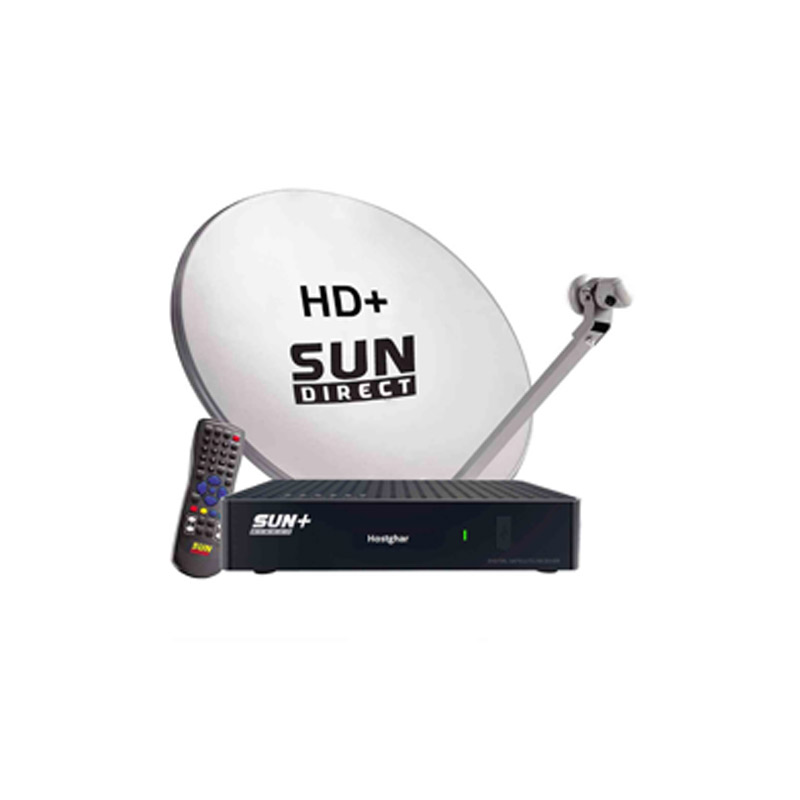
    Chennai, 13th August, 2013: On the eve of the Independence Day (August 15th), Sun Direct announces a limited period special offer priced at Rs.1947 for the Cinema + Sports pack valid from 14th to 18th August 2013. This subscription comes with 2 months subscription free.

    Cinema + sports pack comes at a great value of just Rs. 185 per month with 130+ channels and cheapest Cinema + sports offering among the DTH Players. This includes a range of sports and entertainment channels, with nonstop movies round the clock. The freedom offer delivers non-stop entertainment value at a very affordable price point. This new pack is sure to address the complete entertainment needs of the entire family with the addition of 4 new popular sports channels ESPN, Star Sports, Star Sports 2 and Star Cricket- at an amazing price point. Sun Direct has also added ESPN HD and Star Cricket HD as part of their HD offering. What's more, customers can now record their favorite serials and movies with Sun Direct offering video recording at no extra cost on all its SD + and HD + boxes. With introduction of this offer, Sun Direct wishes all its viewers a very happy Independence Day!