
Tag: DTH platforms

  • Breaking news, the French way

    Breaking news, the French way

    MUMBAI: The French public news channel France 24 has been available on cable TV since December 2010. However, it is only now that the channel is going all out to announce its arrival to Indian audiences.

    Earlier this month, France 24 inked deals with two DTH platforms, Dish TV and DD Direct+ to increase its reach to 38 million viewers from just 7 million on cable TV.

    And soon, a slew of advertisements will appear in newspapers and out-of-home (OOH) media, with French major Gedeon as the creative agency of choice.

    The channel, which aims to offer India a glimpse of the world essentially through French eyes, has kicked-off promotional campaigns with the tagline ‘World news made in France’ in leading newspapers and magazines, including The Times of India, Hindustan Times, India Today and Time Out. Apart from this, outdoor hoardings will be seen at the Delhi Airport and Metro junctions for three months.

    Says France Monde Group CEO and chairwoman Marie-Christine Saragosse: “In terms of distribution, India represents a substantial and strategic market for us. Over the years, India has become a major player on the international scene and now it’s time for France 24 to be available to the largest possible audience across the country. That’s the reason why our long-term objective is to establish the channel as a reference and make its presence durable to Indian viewers. But to do so, we need to reach more and more TV households, increase the channel’s profile and the visibility of its programs.”

    Distributed across the country by Catvision, the FTA channel has also launched India-centric programmes to air till the end of this month.

    “France 24 is an international news channel, therefore our reports and coverage depend on the international agenda but one thing is sure, we’ll be increasing our coverage of all major news in India and in its region,” says Saragosse, adding that India has been quoted over 250 times on the website, either in articles or TV reports, since the beginning of the year.


    Saragosse feels that Indians will know the way the French see and present news

    “Our India-based journalists in the region are permanently on alert and covering every event related to the country live in our news bulletins and reports,” she says, informing that two teams have been operating from Delhi and Mumbai since the channel’s worldwide launch in 2006.

    The French diaspora in India is pegged at approximately 10,000 while according to the International Organization of the Francophonie, there are around 2.6 French-speaking people in India.

    So is France 24 mainly catering to this segment? “It is obviously important for us to target the French speakers and the French expatriates. Nevertheless, the biggest potential in the region remains the English-speaking market. That’s why we want to address the English speakers with our English version in India. Anyone with a connection to France is a plus, but our French perspective on news is quite universal and it is today making the difference: with 41.7 million TV viewers each week, France 24 has found its rightful place in the global news international concert. It gives a French perspective to international current events through diversity of opinions, debate, contradiction and confrontation of viewpoints,” says Saragosse.

    A media planner however pointed out that the ad campaign, while showing France 24’s POV, doesn’t really connect with Indian audiences. “It will not be easy for them to garner a mass audience. At the same time, BBC is an established brand already for international news. They might also be doing the same: building the brand name in the country,” he says.

    Another planner though felt the deals would add value to the channel by making it more visible to viewers in the country.

    Right now, France 24 isn’t earning any revenue from advertising as it is a foreign channel and an FTA. It has also burnt a hole in its pocket in carriage and advertising fees. “Discussing everything; that’s undoubtedly part of the French way of life. And I am pretty sure you’ll like it,” Saragosse signs off.
  • Ses: Continued Robust Performance

    Ses: Continued Robust Performance

    MUMBAI: SES S.A. (NYSE Euronext Paris and Luxembourg Stock Exchange: SESG) reports financial results for the nine months and three months ended 30 September 2013.
    Romain Bausch, President and CEO, commented:

    “SEShas delivered a robust performance in the year to date. We have increased our capacity and are commercialising new market opportunities. Forthcoming launches will further develop this capability and create the conditions for future growth. Our European business, which is almost entirely Video DTH, continues to grow (revenue +5.6%, when excluding analogue). New business and renewals with major customers, including Sky Deutschland and Arqiva, have contributed to an increase in the contract backlog to EUR 7.4 billion. In the International segment (revenue +12.5%) we have added a number of new DTH platforms, in Latin America, Africa, and the Asia-Pacific region. Although the launch schedule continues to be subject to some delays, total revenue growth (excluding analogue) was 5.7%, with considerable momentum from the video business.”

    “Despite some delays experienced earlier this year with regard to new satellite launches, we have significantly expanded our capacity with the launch of SES-6 in June and ASTRA 2E in September, and we now expect to launch SES-8 later this month, followed by ASTRA 5B in early December.”

    “SES’ 2013 revenue and EBITDA growth guidance at constant FX, of 3-4% and 2.5-3.5% respectively, and 5.5-6.5% excluding analogue, is reiterated.”

    “Our performance to date as well as our fleet development underscore SES’ commitment to growing its presence in the developed markets and to accelerate inroads in emerging markets. Our investments are focused on growth opportunities based on differentiated offerings and secured anchor customers in the video business. We are continuing to build DTH neighbourhoods.In the data business, the numerous contracts signed so far this year underscore the complementarity of SES’ geostationary satellite capacity with the High Throughput Satellite (HTS) capabilities of the O3b Networks Mid-Earth Orbit (MEO) constellation.”

    “SES is now entering a period in which capital expenditure will reduce significantly, even while additional growth investments are pursued. This, coupled with rising revenue and EBITDA, will deliver strong growth in free cash flow, which may be applied to further profitable investments and acquisitions and/or be returned to shareholders.”

  • Vishwaroopam’s theatrical release postponed to 25 Jan

    Vishwaroopam’s theatrical release postponed to 25 Jan

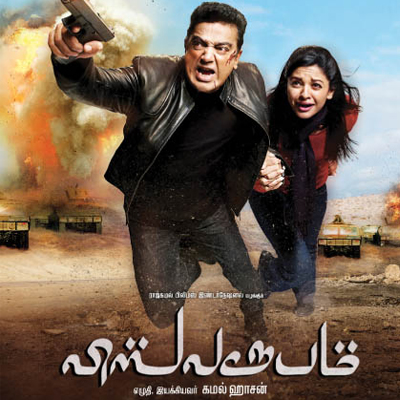
    MUMBAI: Tamil superstar Kamal Haasan‘s upcoming film ‘Vishwaroopam‘ will now release on 25 January instead of 11 January, the earlier decided date of release.


    The Rajkamal Films International‘s movie that was to release on DTH platforms on 10 January was called off by Haasan after the opposition from the theatre owners as it would have affected their business. It is now uncertain when the movie will air on DTH platforms.


    Haasan said in a press statement, “Based on the unstinted support of theatre owners and distributors fraternity, ‘Vishwaroopam‘ will release in over 500 screens across the State of Tamil Nadu. I appreciate the exhibitors and distributors brethren for having understood my vision for creating a new revenue stream for the film producing community through DTH.”


    “In line with the postponement of the release date of the movie ‘Vishwaroopam‘ (Tamil and Telugu)/‘Vishwaroop‘ (Hindi)‘ across theatres and on the DTH platform by Rajkamal Films, we have stopped taking bookings for the movie premiere that was scheduled for 10 January at 9.30 p.m. on Airtel DTH,” Bharti Airtel CEO-DTH/Media Shashi Arora said in a statement issued by the company.


    Haasan has acted, directed and produced the movie. In a press meet on Wednesday, he said that he is considering releasing the movie simultaneously in both theaters and DTH platforms.


    The other DTH operators with which Haasan had tied up for the movie premiere of ‘Vishwaroopam‘ included Tata Sky, Dish TV and Videocon d2h, Sun Direct and Reliance Digital TV.

  • DD gets board clearance to initiate steps for legal action against TAM

    DD gets board clearance to initiate steps for legal action against TAM

    NEW DELHI: TAM Media, the sole television ratings agency in India, is now under attack from the pubcaster. The Prasar Bharati board Monday formally gave approval to Doordarshan to finalise the parameters of legal action against TAM for generally overlooking the ratings of the state-owned network which has the largest reach in the country.

    Prasar Bharati chief executive officer Jawahar Sircar told indiantelevision.com that the board took cognizance of the grievances of Doordarshan in this regard.

    The board was apprised of the discussions held so far with the legal experts. The board would approach the Information and Broadcasting Ministry after getting the legal opinion.

    Doordarshan has the largest reach terrestrially through local cable operators and around 20 per cent of the market through various DTH platforms.

    The action by Prasar Bharati comes close on the heels of the case filed by NDTV in a New York court against The Nielsen Co, a global research and information firm, and Kantar Media Research, the owners of TAM Media. NDTV has sought $810 million as compensation for the loss in revenues it has suffered over the years and $580 million in penalty for negligence by Nielsen and Kantar officials.

    Doordarshan with a reach of 92 per cent in the country through 1415 transmitters has a terrestrial reach to around 25 million viewers, apart from those getting the feed through the DTH and other platforms. In fact, Sircar claimed that DD Direct Plus is reaching out to another ten million viewers, thus taking the direct reach to 35 million.

    Also read:

    Agencies feel need to speed up BARC

    NDTV lawsuit may trigger Govt action on BARC

    NDTV sues TAM, Nielsen for manipulation of data

    NDTV lawsuit: Govt may investigate TAM

    The ball is in the IBF court: AAAI prez Arvind Sharma

  • Pubcaster to discuss possible legal action against TAM

    NEW DELHI: Prasar Bharati, which has the largest reach terrestrially through local cable operators and around 20 per cent of the market through various DTH platforms, is also piqued by the way TAM has been side-stepping Doordarshan in the television ratings.

    Encouragd by NDTV‘s lawsuit, Prasar Bharati is exploring legal options against TAM. Prasar Bharati chief executive officer Jawahar Sircar told indiantelevision.com that it was astonishing that TAM had never attempted to give importance to capturing DD‘s viewership with greater details despite it being the largest broadcaster and the fact that every platform has to mandatorily show its channels.

    Sircar said that the pubcaster was also considering taking legal action against TAM and the action in this regard will be finalised in the meeting of the Prasar Bharati Board on 6 August afternoon.

    The pubcaster was also in discussions with its legal counsel and their view would be placed before the Board, he added.

    The issue has been raised regularly by the pubcaster with both the Ministry and the Parliamentary Standing Committee. In fact, with TAM covering a very small number of cities and towns, 62 million of 112 million TV homes were outside the ambit of television audience measurement ratings as they were in rural areas.

    The action by Prasar Bharati comes close on the heels of the case filed by NDTV in a New York court against The Nielsen Co, a global research and information firm, and Kantar Media Research, the owners of TAM Media in this regard.

    Doordarshan with a reach of 92 per cent in the country through 1415 transmitters has a terrestrial reach to around 25 million viewers, apart from those getting the feed through the DTH and other platforms. In fact, Sircar claimed that DD Direct Plus is reaching out to another ten million viewers, thus taking the direct reach to 35 million.

    It has 37 channels including DD Bharati and DD National besides four allied channels like Lok Sabha and Rajya Sabha TV.

    The commercial revenue have been adversely affected because of being totally ignored by TAM which only wants to cater to private channels.

    Doordarshan earned just Rs 7.94 billion – a little over half the projection of Rs 12 billion – during 2011-12 through commercial means.

  • ‘We deliver natural history with a powerful brand at a global level’ : National Geographic Wild senior VP, Development Janet Han Vissering

    ‘We deliver natural history with a powerful brand at a global level’ : National Geographic Wild senior VP, Development Janet Han Vissering

    A new entrant in the infotainment space, Nat Geo Wild launched in India last year to cater to the need for high quality wild life and natural history content.


    The channel, which is on two DTH platforms, is looking to push distribution with a clear focus on digital. It is also doing an India specific show called Wild India which goes on air next year.


    National Geographic Wild senior VP, Development Janet Han Vissering is responsible for commissioning over 250 hours of original programming per year for broadcast in 166 countries, 330 million homes and 34 languages worldwide.


    Vissering manages a team to source and develop all original programming for Nat Geo Wild. Previously she was SVP of Strategic Development and Co-finance for seven years. As part of Development, she has been responsible for developing key programmes such as Engineering Connections, Big Bigger Biggest and Animal Autopsy among other highly rated shows.


    Prior to acquiring her current position, Vissering served as vice president of International Acquisitions at NGCI from August 1998 to March 2000. She joined NGCI from Discovery Networks International, where she was Head of Program Acquisitions and Development from 1995 to 1998.


    In an interview with Indiantelevision.com‘s Ashwin Pinto, Vissering talks about the challenges of creating unique content in an increasingly competitive television environment.


    Excerpts:

    What challenges do you face as a content production executive with more lifestyle and entertainment channels launching?
    It is the same challenge in India as it is around the world. The expansion of technology and bandwidth is allowing more channels to live together.

    How do you make programming different?
    My job is made easier as we deliver a channel that serves an audience that is begging for animals and natural history. They want family friendly content.


    We deliver natural history with a powerful brand at a global level. That is how we differentiate ourselves. At NGC we deliver by expanding genres like science, adventure, history and exploration.

    In terms of how Nat Geo Wild is programmed and scheduled, is there a difference between India and other countries like Singapore and Malaysia?
    It is independent. It is scheduled differently. We do shows to the viewers‘ choice which are relevant. People in Hong Kong love fish based shows. Here shows on snakes and big cats do really well. People are used to seeing these animals. Indians empathise with shows featuring these animals better. It is easier to identify with Wild even if it is not India specific. The flagship is harder as there are more genres.


    We have different genres of wildlife film. We leave it to our regions as to how they schedule to conform to the local needs.

    For Nat Geo Wild, what have been the learnings from NGC?
    You learn logistical things. We also learned the priority of customisation. We know what animals have rated better in each region. We know what animals do not rate. It was a great way for Nat Geo Wild to dip its toes into the water to find out what works and what does not. This is not just from a content basis but also from a logistical point of view. We know what the lead time is in terms of scheduling shoots.

    What response has Nat Geo Wild received in India and globally since launch?
    We are number one in our genre in Hong Kong, Singapore and Malaysia. We also had record ratings in the UK last week. We are a successful young network. In India we are on two DTH platforms – Dish TV and Tata Sky. Our focus is on digital. It is still young days here.

    Nat Geo Wild is programmed & scheduled differently. In India, shows on snakes & big cats do really well. People in Hong Kong, on the other hand, love fish based shows

    What is its USP vis-a-vis other channels and shows dedicated to animals and wildlife?
    We have a foundation of scientific, factual research. No other network offers this perspective. Being part of Nat Geo offers us access to many places that other filmmakers do not gain access to. I think that also we feature scientists that are a part of the National geographic Explorer base. Heinrich Sala is a marine biologist and we are making a show on sharks that features his work. Access and scientific research are our USPs.


    We have the foundation of all our shows on factual research and science. We are the only network that has this guarantee. We are always about animals and the wild world. The main goal is to bring viewers closer to that natural world.

    Why didn‘t National Geographic launch a show for wildlife earlier?
    We launched the channel as wildlife is only one of many genres that National Geographic Channel has. Wildlife was a small part of their lineup but it consistently delivered ratings. We looked across the market and saw the channel that would meet viewer needs for high quality natural history content. This need was not being met. Viewers want programming that is safe that everybody in their family can watch. They want a channel that will always deliver high quality visuals, information and be a destination channel. We look at launching later as a benefit. We saw what was not there.

    Could you give me an overview of how the production process works at Nat Geo Wild?
    I work out of the DC office. As part of this, we have eight executives that reach out to over 300 production companies around the world. They work with outsourcing ideas. We also have a global website where anybody can actually submit their projects into. I on behalf of Wild meet with the National Geographic team to sift through the best ideas every two weeks. On a monthly basis, we have greenlight meeting with all departmental heads and the head of programming Jeff Daniel. This is where projects are greenlit and put into production.

    Before giving an idea the go ahead, what do you look for?
    I look for a myriad of things. I look for exclusivity. What is the USP? Why are we doing this show now and why are we using this filmmaker? There has to be great cinematic value. The market is competitive. There are a lot of options. I have to give a show that nobody can do anywhere else. This is key for me. Our shows are shot 100 per cent in HD.

    How much research goes into making a successful show like Engineering Connections on NGC?
    This is a show that I really pushed for. It involved a UK star Richard Hammond. He has passion for engineering. What we wanted to do was show all collections of how a guitar vibrating in a room can relate to an oil platform. The show builds a bridge between different subject matters. It took over a year to do. We picked ideas which were iconic like a Formula One vehicle but had really good connection an odd connection. A+B has to equal C.


    Every step of production including the music was important to me. Hammond was immersive. We had to make sure that he was okay in doing stunts. There was one moment where he was strung up on a bridge and he was scared. That made great television.

    Could you talk about the upcoming ‘Wild India‘ series on Nat Geo Wild?
    This goes on air early next year. This will be a three hour special. It is a coffee table celebration of India and its wildlife. We felt that there hadn‘t been a really good natural history series on India for ten years. The last good show was Land Of The Tiger that the BBC has made. Things have moved on since then. A whole new young audience is interested in India‘s natural history. The technology has also moved on.


    We have more interesting camera techniques to capture intimate animal behaviour. We have HD cameras, night film cameras, infra red and thermal cameras. We can, thus, film in the night. We want people to experience a much more personal wildlife.

    Did the economic downturn put pressure on budgeting?
    The global economic situation has made everyone think twice. But we continue to do projects. I scrutinise every penny more. It is up to us and the filmmakers to make sure that the investment being made is sound. So we rely on reliable production companies like Icon Films. The production team on Wild India is largely Indian. The crew is from Tamil Nadu, Karnataka and Gujarat. So cameramen can be on the field for longer. We do not have long haul flights to pay for. We can be more responsive.


    You have to respond to the natural environment. This is a homegrown product which is important. With any film whether it is from Russia, Asia, Japan or Scandinavia, I want to make sure that filmmakers can get access and give viewers the feeling of being right there next to the environment.

    What have been the learnings from localisation in terms of what works and what does not globally?
    I am in a lucky position that wildlife has few cultural barriers. Everyone loves tigers, big cats, snakes. There are few cultural issues I have to worry about.
    Is it a collaborative effort working with production companies?
    Yes! We always have one of our Nat Geo Wild or NGC executive producers who is working in partnership with an executive producer from the production company side by side all the way through the film. We have an internal production group from National Geographic television that make shows with us often featuring our own scientists.

    How long does it take for a show to be made?
    It depends. Wild India will take a year to make. They will shoot in March and April. It takes at least six months but most shows take nine months. We can do a quick turnaround on a topical subject matter, though. When the Gulf oil spill happened in the US, we did a show within four weeks of that accident.


    But natural history does not work on human timelines. We have to work hand in hand with Mother Nature. A tiger will show up when it wants to. Animals are unpredictable. If they were predictable, my life would be easier bur probably less exciting. It is the moment of capturing that bit of footage that makes it worthwhile. To give you an idea of how challenging making wildlife content can be, on Wild Mississippi the temperature was minus 30 degrees Fahrenheit. We had to use urine to prevent the camera from freezing.

    What are the trends we are seeing in environmental and wildlife film making?
    Having a first point of view, less narration and giving the impression that people are there next to the cameraman is very important now. Less is more. Beautiful cinematic images are important. Having characters that can deliver adventure and the journey of exposition in a very visceral way is also important. People want to be vowed.
    What role is HD playing in boosting the documentary genre?
    Each show is on HD. This is a non negotiable discussion with any show going on air. This is a must before we commission anything. From a visual aspect it is different and an enhancement from Standard Definition. When you watch Wild India, you will feel that you are flying on a plane over India on your own. On Standard Definition images are cloudy. It is like looking through muddy waters. On HD you get the true essence of where you are. You can almost smell where you are. We will deliver 100 hours of premiere HD content every year.
    Balancing traditional story telling techniques with technical innovation is key for the success of factual content. How does NGC manage this?
    We have the ability to film wildlife in HD at night. This gives you the perspective of three cameras that allow you to see how animals work at night.
    What other recent commissions have been done?
    Following Wild India we also have Wild Mississippi, Secret Brazil. These are three part specials like Wild India. That will celebrate the journey into natural areas. We also have hosted shows that are young and contemporary. We will have a show featuring a heli cowboy in Australia. At the end of the year we have our annual Big Cat Week to bring awareness about conservation. We will have shows on the Jaguar, American Cougar and the Indian Cloud Leopard.
    How does NGC use new media platforms like YouTube to leverage its brand?
    We have our site, links and blogs. This is additional information for viewers. We will expand on this as our network grows. As we send filmmakers to exotic places, we will look for conversations on Twitter and other media.
    Are you looking at long term projects?
    Absolutely. We are still in negotiations though. We are also a young network.
  • Casbaa urges pay TV regulation rethink for India

    Casbaa urges pay TV regulation rethink for India

    MUMBAI: The Cable and Satellite Broadcasting Association of Asia (Casbaa) has called on the Government of India to make a shift in its regulatory approach to the pay-TV industry.
    Casbaa CEO Simon Twiston Davies says, “The Indian authorities’ current positioning is holding back the industry and introducing significant new constraints of the kind that slowed India’s economic development for decades”.

    According to Casbaa, recent initiatives by the Ministry of Information & Broadcasting (MIB) and the Telecom Regulatory Authority of India (Trai) will severely limit development, not just of pay-TV, but of the entire Indian communications industry.

    Speaking at a conference in Delhi organised by the Associated Chambers of Commerce and Industry of India (Assocham), Casbaa said it would like to see more emphasis on promoting growth, rather than on restricting market flexibility, adding that international and domestic examples of thriving, lightly regulated markets are plentiful.

    A Casbaa study last year Regulating for Growth clearly demonstrated this linkage, under-scoring the success of markets such as Singapore, Japan, Malaysia and Hong Kong.

    Davies adds, “India can make immediate and enormous strides towards becoming a digital leader – if it takes fundamental steps to loosen restraints on industry growth. The size of Malaysia’s pay-TV market, for instance, has doubled in the last three years.”

    In other Asian markets bidding for cable systems is generating offers of more than $1.5 billion each, yet there is little encouragement of fresh domestic or foreign investment into the India market.

    Meanwhile, Casbaa believes that the proposed Broadcast Services Bill would create a new pay-TV industry regulator potentially subject to political interference.

    Favies says, “India needs to install a truly independent communications industry regulator. Regulatory decisions should be technical and quasi-judicial, responding to the demands of the fast-changing media environment, and not subject to transient political pressures.”

    Casbaa also highlighted items such as the recent Trai decision to set maximum retail prices for all pay-TV channels at Rs5 ($ 0.11) each and the draft Broadcasting Services Regulation Bill (2006) – which mandates local content requirements for every pay-TV channel.

    “Does the Government of India really believe that all TV channels have the same value; that a high cost movie channel should be priced in the same way as a channel dedicated to low cost chat shows? This makes no sense,” argues Davies.

    According to Casbaa investment in high-quality content could quickly dry up as channel providers find they cannot make a return on their investment. The rate cap decision could quickly produce a race to the bottom in terms of content, to the detriment of viewers.

    The maximum retail price directive ignores market realities states Casbaa. “It is now over two years since TRAI first instituted a cable price freeze which it said would be temporary until the launch of DTH satellite services. Unfortunately, that understanding seems to have evaporated, even though we have two DTH platforms that are now competing ferociously – with each other and with cable providers,” said Davies.

    Casbaa also has serious concerns over a proposed 15 per cent ‘local content’ requirement for all channels aired in India, another example of regulation that will restrict the access of Indian viewers to premium content, especially international news, documentaries, sports and entertainment.

    Many internationally focussed channels do not have India-specific feeds. “How can a global news channel meet a 15 per cent local content requirement? News happens where it happens. The same applies to international sports. And how reasonable is it to expect niche channels from Italy, or Australia, or Germany, or China to carry Indian programming?” ask Davies.

    According to Casbaa, India’s content industries are already strong and don’t need artificial life-support. “India’s film and television industry is now an export market and part of the global industry. Indeed, it benefits from the airing of Indian-generated TV programming in jurisdictions that don’t impose content quotas. The domestic market should operate in sync with the rest of the world and gain the full benefit of a global marketplace.

    “Without taking account of the new digital world, India’s pay-TV regulators will fall further and further behind global trends,” Davies warned.

  • Max goes the Extraaa mile for Champions Trophy

    Max goes the Extraaa mile for Champions Trophy

    MUMBAI: Cricket weds entertainment! With the Champions trophy in cricket kicking off in less than a month’s time on 7 October 2006, Max is adding more muscle to its wrap around show Extraaa Innings.

    Max executive VP and business head Albert Almeida notes that Max turned cricket into an entertainment property. This way it was able to hook in women and kids as well. This time he says that the Extraaa Innings content has been beefed up. For starters, in addition to the hosts Mandira Bedi and Charu Sharma, whom Max calls the first couple of cricket it has roped in television stars Rohit Roy and Shonali Nagrani as well. Roy will co-present various segments of Extraaa Innings. Nagrani will be the roving reporter. “Having said that Extraaa Innings will continue to be a judicious mix of serious cricketing action for the hardcore cricket buff and wholesome entertainment for the family,” Almeida adds.

    They will be joined by many experts on the game including former English opening batsman Geoffrey Boycott, former Indian cricket coach John Wright who will provide an insider’s touch, Navjot Singh Sidhu, who should add spice to the show, Barry Richards and Ian Chappell. On each match day Eztraaa Innings starts at 12:30 PM There will be a two-hour pre show, a show during the lunch break and a one-hour post show.

    A dual feed: Sony COO NP Singh says that this time around there will also be a Hindi feed on Sab. Three India matches, the semi finals and final will be aired on Sab. Maninder Singh, Atul Wassan and Saba Karim are among the commentators for this feed. The aim is to reach out better to places in the North like UP.

    Almeida says that Extraaa Innings haws been beefed keeping in mind factors like Indians increasingly becoming technologically savvy, they see cricketers as celebrities who do other things (like Sachin has his own restaurant).

    Max will organise a talent hunt using Extraaa Innings to promote it. The hunt looks for a roving reporter who will join the team to cover World Cup in the West Indies next year. There is also an interactive game Predict 2 Win, which allows fans to win prizes. The Gully Cricket initiative has been turned into a mobile game, which can be played by visiting the mobile portal 2525. Then the mascot of Max the tiger Deewana will now be a part of Extraaa Innings. There will be Deewana’s countdown of her game, his ratings of the game, players etc. Then there is also a Max Makeover.

    Here one will see fashion experts comment on the style quotient of the players.

    Of course features that were there before will return.
    These include Q&A. Here fans get to ask questions to the panel through SMS. Then there is Voice of India.

    Here Max’s expert panel will ask the audience to voice their opinion on issues. Answers can be sent through SMS or the internet. Message Board is a platform where viewers can send in goodwill messages to the Indian team through SMS. Another section India On tour offers a sneak peak into the daily routine of the Indian team. This will take them behind the scenes to the nets, practice matches etc.

    The DTH Plan: Sony CEO Kunal Dasgupta says that Max is talking to both DTH platforms Tata Sky and Dish TV regarding putting in interactive features. One feature will allow viewers the option to choose one of four angles to watch the match. Max also plans to offer highlight packages.