Tag: DTH operators

  • GSAT-18 successfully launches, new capacity for DTH operators, TV channels

    GSAT-18 successfully launches, new capacity for DTH operators, TV channels

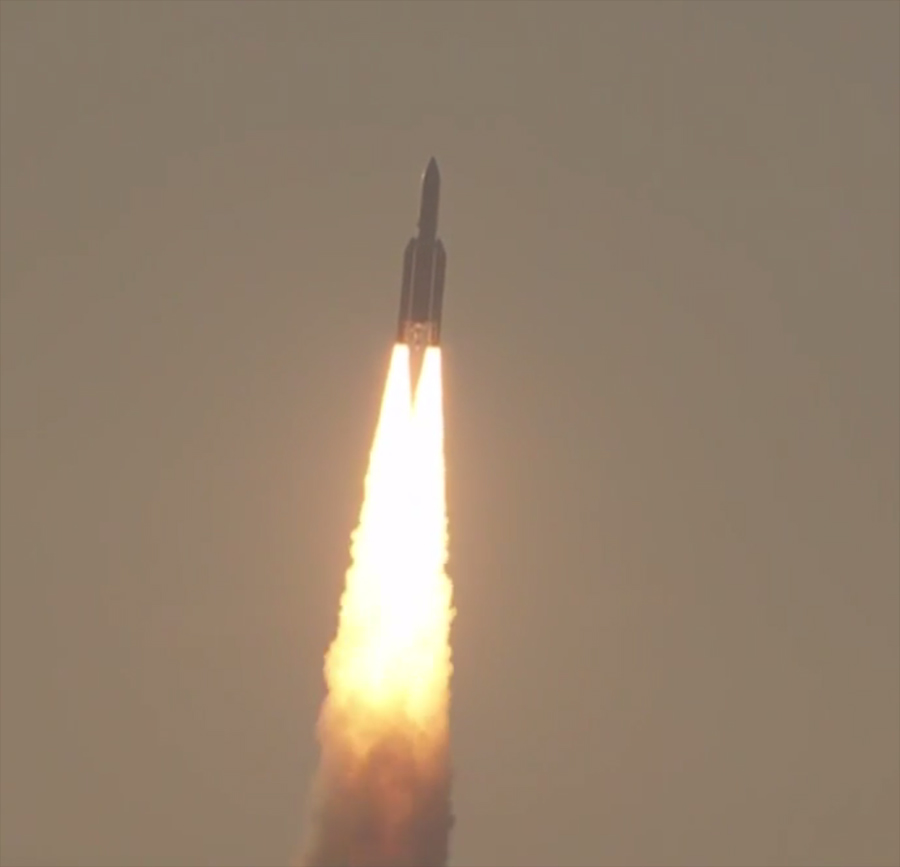
    MUMBAI: Indian DTH operators, television channels, VSAT and digital satellite news gathering providers are a happy lot because of a development in Kouro French Guiana this morning. The reason: the successful launch of Arianespace’s Ariane 5 VA 531 rocket with its passenger, the Indian Space Research Organisation’s GSAT-18 satellite. When the satellite starts ticking fully a few weeks later, its 48 transponders ranging from Ku-band, C-Band to extended C-Band will be beaming their signals over India to Indian TV viewers and companies.

    32:28 minutes after blasting off from the launch site, the 3,400 kg GSAT-18 was placed in geo-synchronous transfer orbit (GTO) this morning around 2:30 am. And, ISRO officials including the Indian ambassador in France Mohan Kumar leapt up, fisting the air in triumph.

    Following that, ISRO’s master control facility took charge of it and will perform operations which will result it being placed in a circular geo-stationary orbit. Following this, ISRO will deploy the solar panels – which will provide it power over its 15 year life – and antenna. The satellite will then be stabilized on three axis, placed at 74 degrees East longitude, and become part of ISRO’s 14 telecom fleet in space

    Later, it is planned to experimentally turn on the communication payloads of GSAT-18. After the successful completion of all the in-orbit tests, GSAT-18 will be ready for operational use.

    This was the Indian space organisation’s twentieth satellite mission through Arianespace. It will add to that count when it launches two more satellites – GSAT 11 and GSAT-11 – using Arianespace launchers in 2017.

    The VA 531 flight had another payload – Australia’s SkyMuster II satellite – which too was placed successfully in orbit. SkyMuster II aims to provide broadband facilities to remote locations in Australia.

    Prime minister Narendra Modi sent out his congratulatory message on Twitter to the scientists at ISRO.

  • GSAT-18 successfully launches, new capacity for DTH operators, TV channels

    GSAT-18 successfully launches, new capacity for DTH operators, TV channels

    MUMBAI: Indian DTH operators, television channels, VSAT and digital satellite news gathering providers are a happy lot because of a development in Kouro French Guiana this morning. The reason: the successful launch of Arianespace’s Ariane 5 VA 531 rocket with its passenger, the Indian Space Research Organisation’s GSAT-18 satellite. When the satellite starts ticking fully a few weeks later, its 48 transponders ranging from Ku-band, C-Band to extended C-Band will be beaming their signals over India to Indian TV viewers and companies.

    32:28 minutes after blasting off from the launch site, the 3,400 kg GSAT-18 was placed in geo-synchronous transfer orbit (GTO) this morning around 2:30 am. And, ISRO officials including the Indian ambassador in France Mohan Kumar leapt up, fisting the air in triumph.

    Following that, ISRO’s master control facility took charge of it and will perform operations which will result it being placed in a circular geo-stationary orbit. Following this, ISRO will deploy the solar panels – which will provide it power over its 15 year life – and antenna. The satellite will then be stabilized on three axis, placed at 74 degrees East longitude, and become part of ISRO’s 14 telecom fleet in space

    Later, it is planned to experimentally turn on the communication payloads of GSAT-18. After the successful completion of all the in-orbit tests, GSAT-18 will be ready for operational use.

    This was the Indian space organisation’s twentieth satellite mission through Arianespace. It will add to that count when it launches two more satellites – GSAT 11 and GSAT-11 – using Arianespace launchers in 2017.

    The VA 531 flight had another payload – Australia’s SkyMuster II satellite – which too was placed successfully in orbit. SkyMuster II aims to provide broadband facilities to remote locations in Australia.

    Prime minister Narendra Modi sent out his congratulatory message on Twitter to the scientists at ISRO.

  • 17.8 million STBs deployed in Phase IV areas: MIB

    17.8 million STBs deployed in Phase IV areas: MIB

    MUMBAI: The ministry of information and broadcasting says that close to 17.8 million set top boxes have been seeded in Phase IV areas. The figure was 138 million set top boxes during the fifteenth task force meeting held in end May this year.

    Speaking at the sixteenth task force meeting which was held on 26 July, the joint secretary R. Jaya stated that most of this is coming courtesy voluntarily digitization.

    She also urged representatives of the MSOs to finalise their procurement plans of STBs, and cautioned that “they should not let some disinterested players in phase IV areas delay digitization in phase IV areas on the grounds of non-availability of STB as it was done in phase III.”

    She added that except for some DTH operators the public awareness campaign for DAS Phase IV digitization has not come up to scratch. She urged the industry to develop its own creative and its own spots to spread the message of cable TV digitization in the phase IV regions.

    This is of course apart from the spots that have been developed by the ministry and which were playing out on the public broadcaster Doordarshan’s channels.

  • 17.8 million STBs deployed in Phase IV areas: MIB

    17.8 million STBs deployed in Phase IV areas: MIB

    MUMBAI: The ministry of information and broadcasting says that close to 17.8 million set top boxes have been seeded in Phase IV areas. The figure was 138 million set top boxes during the fifteenth task force meeting held in end May this year.

    Speaking at the sixteenth task force meeting which was held on 26 July, the joint secretary R. Jaya stated that most of this is coming courtesy voluntarily digitization.

    She also urged representatives of the MSOs to finalise their procurement plans of STBs, and cautioned that “they should not let some disinterested players in phase IV areas delay digitization in phase IV areas on the grounds of non-availability of STB as it was done in phase III.”

    She added that except for some DTH operators the public awareness campaign for DAS Phase IV digitization has not come up to scratch. She urged the industry to develop its own creative and its own spots to spread the message of cable TV digitization in the phase IV regions.

    This is of course apart from the spots that have been developed by the ministry and which were playing out on the public broadcaster Doordarshan’s channels.

  • Delay in Phase III monetisation likely to disturb profitability of MSOs: ICRA

    Delay in Phase III monetisation likely to disturb profitability of MSOs: ICRA

    MUMBAI: In the cable TV space, in the current fiscal the revenue growth of multiple system operators (MSOs) will remain sensitive to regulatory changes, says ICRA. While lifting of stay orders and consequent discontinuation of analog signals in Phase III markets will remain a key subscription revenue growth driver, any extension with respect to Phase IV deadline (beyond December 31, 2016) will impact the activation revenues.

    With an estimated population of over 60 million households in Phase IV markets, cable TV players do not anticipate any extension in Phase IV deadline. However, the implementation is expected to be along the experience of Phase III, with analog signals being discontinued in a phased manner. Of the analog population in Phase III and Phase IV markets, residual analog subscriber base amongst the top three MSOs stood at ~9.5 million subscribers only (as on March 31, 2016), against a total analog population of over 6 0 million in the country, indicating healthy growth opportunities for DTH operators and regional MSOs. In this direction, DTH operators have introduced lower priced vanilla STBs and channel packages to tap the opportunity in Phase IV markets; however, DD Free Dish is also expected to emerge as a key player in Phase IV, given the price sensitive nature of subscribers.

    “Over the last few years, market leaders in the cable TV space have adopted an inorganic growth strategy for entering new geographies and increasing their subscriber universe, consolidation in the cable TV space is expected to continue as MSOs look at further strengthening their market position in their respective geographies,” says ICRA Ratings SR GVP Subrata Ray.

    While the overall placement revenues are expected to remain buoyant, driven by new channel launches and the inclusion of tier II and tier III markets in audience measurement metrics; some correction on account of the change in the nature of content deals (net of placement revenues) with larger broadcasting networks is anticipated. While the subject of discontinuation of analog signals in Phase III markets remains under litigation, monetisation of the Phase III markets is expected to get deferred by nearly a year before the benefits of the healthy STB seeding, achieved in Phase III markets, start percolating.

    “In view of the potential delays in Phase III monetisation, ability of the MSOs to improve cost efficiencies and ARPUs from Phase I and Phase II markets remains crucial to support the profitability metrics in the current fiscal,” says Ray.

    During this transition phase, the cash accruals of MSOs are expected to improve gradually as incremental capex requirements are likely to remain low.

    “The capex outlay of MSOs over the medium term will be driven towards achieving higher broadband penetration in identified markets; investments in LCO management and improving penetration of value-added services such as HD channels and Video-on-Demand in digitised markets. In addition, replacement capex for STBs seeded in Phase I and Phase II markets will also drive the investment requirements of MSOs over the medium term,” adds Ray.

  • Delay in Phase III monetisation likely to disturb profitability of MSOs: ICRA

    Delay in Phase III monetisation likely to disturb profitability of MSOs: ICRA

    MUMBAI: In the cable TV space, in the current fiscal the revenue growth of multiple system operators (MSOs) will remain sensitive to regulatory changes, says ICRA. While lifting of stay orders and consequent discontinuation of analog signals in Phase III markets will remain a key subscription revenue growth driver, any extension with respect to Phase IV deadline (beyond December 31, 2016) will impact the activation revenues.

    With an estimated population of over 60 million households in Phase IV markets, cable TV players do not anticipate any extension in Phase IV deadline. However, the implementation is expected to be along the experience of Phase III, with analog signals being discontinued in a phased manner. Of the analog population in Phase III and Phase IV markets, residual analog subscriber base amongst the top three MSOs stood at ~9.5 million subscribers only (as on March 31, 2016), against a total analog population of over 6 0 million in the country, indicating healthy growth opportunities for DTH operators and regional MSOs. In this direction, DTH operators have introduced lower priced vanilla STBs and channel packages to tap the opportunity in Phase IV markets; however, DD Free Dish is also expected to emerge as a key player in Phase IV, given the price sensitive nature of subscribers.

    “Over the last few years, market leaders in the cable TV space have adopted an inorganic growth strategy for entering new geographies and increasing their subscriber universe, consolidation in the cable TV space is expected to continue as MSOs look at further strengthening their market position in their respective geographies,” says ICRA Ratings SR GVP Subrata Ray.

    While the overall placement revenues are expected to remain buoyant, driven by new channel launches and the inclusion of tier II and tier III markets in audience measurement metrics; some correction on account of the change in the nature of content deals (net of placement revenues) with larger broadcasting networks is anticipated. While the subject of discontinuation of analog signals in Phase III markets remains under litigation, monetisation of the Phase III markets is expected to get deferred by nearly a year before the benefits of the healthy STB seeding, achieved in Phase III markets, start percolating.

    “In view of the potential delays in Phase III monetisation, ability of the MSOs to improve cost efficiencies and ARPUs from Phase I and Phase II markets remains crucial to support the profitability metrics in the current fiscal,” says Ray.

    During this transition phase, the cash accruals of MSOs are expected to improve gradually as incremental capex requirements are likely to remain low.

    “The capex outlay of MSOs over the medium term will be driven towards achieving higher broadband penetration in identified markets; investments in LCO management and improving penetration of value-added services such as HD channels and Video-on-Demand in digitised markets. In addition, replacement capex for STBs seeded in Phase I and Phase II markets will also drive the investment requirements of MSOs over the medium term,” adds Ray.

  • TRAI warns Pay Broadcasters against ignoring cost per subscriber in interconnect agreements

    NEW DELHI: All the broadcasters of pay channels have been asked by the Telecom Regulatory Authority of India to strictly comply with the provisions of clause 3C of Tariff Order, 2004 and clause 4 of the Tariff Order, 2010 at the time of providing signals of TV channels including in term of Cost Per Subscriber agreements.

    In its direction, TRAI said this was being done “to protect the interest of service providers and consumers” under Section 13, of the TRAI Act 1997, clause 4A of the Telecommunication (Broadcasting and Cable) Services (Second) Tariff Order 2004, and clause 10 of the Telecommunication (Broadcasting and Cable) Services (Fourth) (Addressable Systems) Tariff Order 2010.

    Following a Supreme Court interim order of 18 April 2011, the rate of a bouquet of channels of addressable systems shall not be more than 42 per cent of the rate of such bouquet as specified by the broadcaster for non-addressable systems. 

    The Authority also pointed out that the Tariff Order, 2010 defines bouquet or bouquet of channels and bouquet rate or rate of bouquet as an assortment of distinct channels offered together as a group or as a bundle. The ‘bouquet rate’ or ‘rote of bouquet’ means the rate at which a bouquet of channels is offered to the distributor of TV channels or to the subscriber, as the case may be.

    The Regulator said that on examination of the information relating to the interconnection agreements filed by the broadcasters under the Register of Interconnect Regulations 2004, the Authority noted that in many cases the agreements are signed in the name of CPS deals between the broadcasters and Distribution Platform Operators (Multi System Operators providing cable TV services through Digital Addressable Systems and DTH operators) for offering of channels of the broadcasters in different formations, assemblages and bouquets for a group or a bundle of channels.

    The Authority in a letter on 1 December 2015 requested the broadcasters of pay channels to clarify the exact nature of CPS agreements being executed with different Distribution Platform Operators and also explain how CPS agreements comply with the existing regulatory framework including the provisions of clause 3C of Tariff Order 2004.

    Most of the broadcasters, in their responses stated that all the channels of a broadcaster are given to a Distribution Platform Operator at a single rate per subscriber per month under CPS agreements. The Distribution Platform Operator pays to the broadcaster on the basis of the number of Set Top Boxes carrying any or all the channels of the broadcaster irrespective of number of channels of the broadcaster actually opted by subscribers.

    Most of the broadcasters in their response stated that CPS based agreements are purely mutually negotiated interconnection agreements and cannot be construed as bouquet of channels and hence do not fall within the realm of’ a-la-carte or bouquet offerings and; since CPS agreements do not fall within the category of a-la-carte or bouquet offerings therefore such agreements do not contravene the provisions of the clause 3C of the Tariff Order! 2004.

    After examining the response of the broadcasters in pursuance of
    the provisions contained in sub-clauses (2) and (3) of clause 3C of the Tariff Order 2004 and the definition of bouquet or bouquet of channels in the Tariff Order 2010, and concluded that this nothing but a bouquet or bouquet of channels being given as an assortment of distinct channels being offered together as a group or as a bundle in the CPS agreements.

    And whereas the provisions of the Tariff Order 2004 and Tariff Order 2010 are applicable to all type of interconnection agreements, including mutually negotiated interconnection agreements, entered between the broadcaster and the Distribution Platform Operators and the definition of bouquet or bouquet of channels in the Tariff Order 2010, the conditions specified in sub-clause (2) of clause 3C of the Tariff Order 2004 are applicable on the CPS agreements signed for an assortment of channels offered together as a group or bundle of channels.

    It stressed that sub-clause (3) of clause 3C of the Tariff Order 2004 was clear that a broadcaster may offer discounts to Distribution Platform Operators on a-la-carte rates of its channels or bouquet rates and such offer of discount in no case will directly or indirectly have effect of contravening the provisions of sub-clause (2) of clause 3C of the Tariff Order 2004.

  • TRAI warns Pay Broadcasters against ignoring cost per subscriber in interconnect agreements

    NEW DELHI: All the broadcasters of pay channels have been asked by the Telecom Regulatory Authority of India to strictly comply with the provisions of clause 3C of Tariff Order, 2004 and clause 4 of the Tariff Order, 2010 at the time of providing signals of TV channels including in term of Cost Per Subscriber agreements.

    In its direction, TRAI said this was being done “to protect the interest of service providers and consumers” under Section 13, of the TRAI Act 1997, clause 4A of the Telecommunication (Broadcasting and Cable) Services (Second) Tariff Order 2004, and clause 10 of the Telecommunication (Broadcasting and Cable) Services (Fourth) (Addressable Systems) Tariff Order 2010.

    Following a Supreme Court interim order of 18 April 2011, the rate of a bouquet of channels of addressable systems shall not be more than 42 per cent of the rate of such bouquet as specified by the broadcaster for non-addressable systems. 

    The Authority also pointed out that the Tariff Order, 2010 defines bouquet or bouquet of channels and bouquet rate or rate of bouquet as an assortment of distinct channels offered together as a group or as a bundle. The ‘bouquet rate’ or ‘rote of bouquet’ means the rate at which a bouquet of channels is offered to the distributor of TV channels or to the subscriber, as the case may be.

    The Regulator said that on examination of the information relating to the interconnection agreements filed by the broadcasters under the Register of Interconnect Regulations 2004, the Authority noted that in many cases the agreements are signed in the name of CPS deals between the broadcasters and Distribution Platform Operators (Multi System Operators providing cable TV services through Digital Addressable Systems and DTH operators) for offering of channels of the broadcasters in different formations, assemblages and bouquets for a group or a bundle of channels.

    The Authority in a letter on 1 December 2015 requested the broadcasters of pay channels to clarify the exact nature of CPS agreements being executed with different Distribution Platform Operators and also explain how CPS agreements comply with the existing regulatory framework including the provisions of clause 3C of Tariff Order 2004.

    Most of the broadcasters, in their responses stated that all the channels of a broadcaster are given to a Distribution Platform Operator at a single rate per subscriber per month under CPS agreements. The Distribution Platform Operator pays to the broadcaster on the basis of the number of Set Top Boxes carrying any or all the channels of the broadcaster irrespective of number of channels of the broadcaster actually opted by subscribers.

    Most of the broadcasters in their response stated that CPS based agreements are purely mutually negotiated interconnection agreements and cannot be construed as bouquet of channels and hence do not fall within the realm of’ a-la-carte or bouquet offerings and; since CPS agreements do not fall within the category of a-la-carte or bouquet offerings therefore such agreements do not contravene the provisions of the clause 3C of the Tariff Order! 2004.

    After examining the response of the broadcasters in pursuance of
    the provisions contained in sub-clauses (2) and (3) of clause 3C of the Tariff Order 2004 and the definition of bouquet or bouquet of channels in the Tariff Order 2010, and concluded that this nothing but a bouquet or bouquet of channels being given as an assortment of distinct channels being offered together as a group or as a bundle in the CPS agreements.

    And whereas the provisions of the Tariff Order 2004 and Tariff Order 2010 are applicable to all type of interconnection agreements, including mutually negotiated interconnection agreements, entered between the broadcaster and the Distribution Platform Operators and the definition of bouquet or bouquet of channels in the Tariff Order 2010, the conditions specified in sub-clause (2) of clause 3C of the Tariff Order 2004 are applicable on the CPS agreements signed for an assortment of channels offered together as a group or bundle of channels.

    It stressed that sub-clause (3) of clause 3C of the Tariff Order 2004 was clear that a broadcaster may offer discounts to Distribution Platform Operators on a-la-carte rates of its channels or bouquet rates and such offer of discount in no case will directly or indirectly have effect of contravening the provisions of sub-clause (2) of clause 3C of the Tariff Order 2004.

  • India leads HDTV boom on DTH in SAARC region

    India leads HDTV boom on DTH in SAARC region

    NEW DELHI: India, which had just three true high-definition television (HDTV) channels in 2010, now leads in the South Asian Association for Regional Cooperation (SAARC) region with 50 HDTV channels in Q1 2015.


    What’s more, the SAARC countries will see a boom for HDTV segment over the next three years.


    According to a new research report by Dataxis, the steady increase in HDTV subscribers and the number of HDTV channels in the region, driven by the digitisation drive could lead to robust growth in the segment.


    This steady increase in HDTV penetration in the SAARC region is therefore mainly due to India, which accounts for more than 90 per cent of the total HD subscribers in the SAARC countries – Bangladesh, Nepal, Pakistan and Sri Lanka – covered in the report.


    The HDTV penetration in India is primarily driven by DTH players, who are aggressively promoting HDTV set top boxes (STBs) in the country. Dataxis report finds that DTH operators in India have seeded about four million STBs in Q1-2015 as compared to less than 0.3 million HD STBs seeded by multi-system-operators (MSOs) during the same period.


    HDTV segment, both in terms of HDTV STB penetration and HDTV channels have witnessed steady growth in the last four quarters, with HDTV penetration in the SAARC countries reaching 4.2 million in the quarter ended March 2015, says the new Dataxis report titled “SAARC: HDTV Market Q1-2015.”


    Although, MSOs in India had a slow start in seeding HD STBs mainly due to the delay in implementing gross billing, cable operators have begun pushing HD STBs to customers in metros and other Phase II cities where gross billing is in place. HD STB seeding by MSOs is expected to gain traction by the fourth quarter of 2015.


    “DTH players are expected to lead the HDTV penetration in India for the next couple of years, however, MSOs are also expected to come on board as the demand for HDTV and UHD content is on the rise in the Phase II cities where cable TV dominates the Pay-TV market,” said Dataxis media analyst Sreeja VN.

  • DTH operators gear up to woo new customers during IPL

    DTH operators gear up to woo new customers during IPL

    MUMBAI: Will Kolkata Knight Riders (KKR) continue its winning streak from last year or will there be another team that will be crowned as this year’s champions in the Indian Premier League (IPL). While a billion people mull over what the final outcome of the cricket tourney will be, Indian direct to home (DTH) operators are not far behind from milking the multibillion dollar sports property.


    When quizzed about how the IPL was aiding operators in getting subscriptions, Tata Sky CEO Harit Nagpal says, “Any activity or event like the IPL generates viewer interest. This viewer interest is important and critical in adding subscriptions. But our pricing and such events are independent of each other. People are likely to follow the event and therefore make a purchase.”


    Agreeing with him, Sun Direct CEO Mahesh Kumar reasons, “IPL is a fantastic form of cricket that is full of entertainment. Given that we are at the forefront in providing entertainment, the IPL fits in well.”


    Kumar is of the opinion that customers coming back from the exam season will definitely be keen to latch on to new connections from Sun Direct as they are providing IPL on Sony Six free to new customers as an incentive. The operator will also provide the IPL add-on free for customers, who recharge beyond six months.


    “We see the IPL as a good tool to win back customers and improve our recharges substantially. We also have an add-on for Rs 44, which allows customers to watch the T20 matches for the entire duration of the tournament, apart from the a la carte of Sony Six and Set Max,” he adds.


    Dish TV came on board as the official partner for Shah Rukh Khan’s KKR for a fourth time now. The association is a good brand fix as Khan is also the brand ambassador for the DTH operator. The logo of Dish TV will be prominently featured on the non-lead arm of KKR players’ jersey.


    “SRK believes in enthralling his audience with quality and consistent entertainment, which is the same philosophy that we at Dish TV believe in. Kolkata has always been a very important market for us and over the years we have been working with the eastern region for trade and consumer engagement activities,” opines Dish TV COO Salil Kapoor.


    Kapoor is hopeful that the IPL will bring in added subscriptions. According to him, with cricket fans across the globe, TV sales are likely to see a jump, which in turn will generate a demand for HD channels. “Shah Rukh’s connect and the fact that Dish TV has a strong bouquet of 41 HD channels will help in increasing brand equity, which in turn will result in good sales for us during this IPL,” Kapoor adds.


    When asked about the company’s plans during the IPL, Kapoor informs that the ethos behind their brand – i.e. fuelling the passion for entertainment – is to ensure that it goes beyond sports. “This special package is customized to suit the needs of every member of the family. Keeping this in mind, we have introduced the Cricket + package. Our HD channels’ offering is the highest in the industry at present,” he says.


    Videocon d2h too has continued its association as the principal sponsor for the Mumbai Indians franchise for the third continuous season of the IPL. The logo of Videocon d2h will feature on the front of the jersey of Mumbai Indians players. Speaking about the same, Videocon d2h CEO Anil Khera says, “We are hopeful of garnering greater visibility for our brand and are looking forward to another eventful year through this partnership.”


    Airtel Digital TV has launched various schemes for its customers during this IPL. A company spokesperson informs that for all customers buying Samsung Curve and UHD TV, Airtel Digital TV will offer HD DVR connection at the same cost as that of an HD connection.


    “All customers will get discount coupons worth Rs 2650. Customer can enjoy watching the matches on an HD DVR by paying Rs 2350. This box has inbuilt hard disk of 500 GB and customer can enjoy record content up to 750 hours enabling customer to record and watch the matches at a time convenient. Additionally, customers will get free subscription for up to 12 months through a scratch card offer,” informs the spokesperson.


    Besides on all other Samsung models, Airtel Digital TV will offer a discount coupon of Rs 660 on its HD+ variant. Additionally customers will get a 8 GB pen drive worth Rs 399 free enabling them to record. Activation charges on Samsung smart direct TVs will be waved off completely.