Tag: DTH operators

  • TRAI notifies amendments to regulatory framework for broadcasting and cable services and releases

    TRAI notifies amendments to regulatory framework for broadcasting and cable services and releases

    Mumbai: Telecom Regulatory Authority of India (TRAI) has issued Telecommunication (Broadcasting and Cable) Services (Eighth) (Addressable Systems) Tariff (Fourth Amendment) Order, 2024 (1 of 2024);  Telecommunication (Broadcasting and Cable) Services Interconnection (Addressable Systems) (Sixth Amendment) Regulations, 2024 (4 of 2024); the Telecommunication (Broadcasting and Cable) Services Standards of Quality of Service and Consumer Protection (Addressable Systems) (Fourth Amendment) Regulations, 2024 (3 of 2024) and also recommendations to Ministry of Information and Broadcasting (MIB) on ‘Listing of channels in Electronic Programme Guide and Upgrading DD Free Dish platform to an Addressable System’. These amendments, except for a few clauses, shall come into force after 90 days from the date of its publication in the official gazette.

    In consonance with the complete digitization of the cable TV sector, TRAI on 3 March 2017 had notified the Regulatory Framework for Broadcasting and Cable services. The framework was further tuned to the need of the broadcasting ecosystem and to address the concerns of stakeholders through amendments issued in 2020 and 2022.

    The stakeholders namely, broadcasters, MSOs, DTH operators and LCOs had taken up further issues for the consideration of the Authority from time to time.

    To address such issues, the Authority issued a consultation paper on “Review of Regulatory Framework for Broadcasting and Cable services” on 8 August 2023 seeking stakeholders’ comments.

    The consultation paper sought comments and suggestions from various stakeholders, on several issues which included Network Capacity Fee (NCF), discount limit on sum of MRP of a-la-carte channels for fixing MRP of bouquets by the distributors of TV channels (Distribution Platform Operators-DPOs), equivalence of an HD channel in terms of SD channels for capacity calculations, mandatory FTA News Channels in all packs formed by the DPOs, level playing field with DD Free Dish, amendment to Reference Interconnect Offer, listing of channels in Electronic Programme Guide (EPG), revenue share between MSO and LCO, carriage fee, removal of channels after expiry of existing interconnection agreement, issues related to billing cycle, regulation of platform service channels, review of prescribed charges, consumer corner, establishment of websites by DPOs, manual of practice, etc.

    The Authority analysed the comments of the stakeholders and the discussion held during the open house discussion and noted the level of competition in the market due to the presence of multiple Broadcasters, DPOs (MSO/DTH/HITS/IPTV) and LCOs. Accordingly, there is a need to provide flexibility to the service providers for enabling them to adopt to the dynamic market conditions while at the same time safeguarding the interest of consumers and small players through transparency, accountability and equitability.

    Based on the above considerations, TRAI has notified the amendments to Tariff Order 2017, Interconnection Regulations 2017 and QoS Regulation 2017. The primary objective of these amendments includes the following:

    a  Facilitate growth of the broadcasting sector by reducing regulatory mandates and compliance requirements.

    b  Provide flexibility to the service providers to adopt a market driven approach while safeguarding the interest of the consumers and small players through transparency, accountability and equitability.

    c  Promoting ease of doing business by simplifying the regulatory provisions.

    The salient features of these amendments include the following:

    A. Tariff Order

    i  Ceilings of Rs 130 for 200 channels and Rs 160 on more than 200 channels have been removed on Network Capacity Fee (NCF) and is kept under forbearance to make it market driven as well as equitable. Service provider may now charge different NCF based on number of channels, different regions, different customer classes or any combination thereof. To ensure transparency, all such charges have to be mandatorily published by the service providers and communicated to the consumers besides reporting to the TRAI.

    ii  DPOs have now been permitted to offer discount up to 45% while forming their bouquets to enable flexibility for them in forming bouquets and to offer attractive deals to the consumers. Earlier this discount was permitted only up to 15%.

    iii  A pay channel available at no subscription fee on the DTH platform of the public service broadcaster has to be declared free-to-air by the broadcaster of the channel for all the addressable distribution platforms also so as to have a level-playing field.

    iv  DPOs have been mandated to declare tariff of their platform services.

    B. Interconnection Regulations

    i  With the proliferation of HD television sets and to encourage transmission of high-definition content, distinction between HD and SD channels has been removed for the purpose of carriage fee.

    ii  Carriage fee regime simplified and made technology neutral by prescribing only single ceiling for carriage fee, thereby, providing the DPOs with the option to charge a lesser carriage fee as deemed appropriate.

    iii  The above measures are expected to not only simplify the offerings of the service providers to the consumers but also promote the availability of high-quality channels.

    C. QoS Regulations

    i    Charges for services like installation and activation, visiting, relocation and temporary suspension which were prescribed earlier under regulation have now been kept under forbearance. DPOs have to publish the charges of their services for clarity and transparency to consumers.

    ii  Relaxation of certain regulatory compliances for small DPOs.

    iii  Duration/Term/Validity of all prepaid subscriptions to be specified in number of days only for greater clarity to the consumers.

    iv  DPOs may display Distributor Retail Price (DRP) in the electronic programme guide (EPG) along with MRP for channels.

    v  DPOs to categorise platform service channels under the genre ‘Platform Services’ in the EPG.

    vi  DPOs to display respective MRP of the platform service channel in the EPG against each platform service to ensure transparency.

    vii  DPOs provide an option of activation/deactivation of any platform service.

    D. Financial disincentives have been introduced for contravention to provisions of the Tariff Order and certain other provisions of Interconnection Regulation and QoS Regulation to ensure accountability of service providers.

    E.  Service providers publish all the information related to tariff and other charges which have now been kept under forbearance, on their websites. Moreover, they need to communicate the tariff and other charges to the subscribers, pertaining to the plans being subscribed.

    Further, the Authority also issued recommendations to MIB on certain issues covered in the consultation process. These issues include ‘Listing of channels in Electronic Programme Guide’ and transition of ‘DD Free Dish’ to an addressable system. The salient features of these recommendations are as follows:

    A.  Listing of channels in EPG:

    While giving permission to each channel, MIB to seek information from broadcasters about primary language of each channel and sub-Genre of every non-news channel as per Interconnection Regulation 2017 and display the same on Broadcast Seva portal of MIB to enable DPOs to place the channel at appropriate place in the EPG for easy navigation by the consumers, in accordance with the present regulation.

    B.  Upgradation of DD Free Dish platform to an Addressable System:

    i  In order to ensure quality of viewing experience, prevent unauthorized re-transmission of television channels to combat piracy and maintain the record of subscribers, Prasar Bharati to take steps to convert DD Free Dish platform from a non-addressable system to an addressable system and make a beginning by encrypting the signals of private satellite television channels at DD Free Dish head end before uplinking. Subsequently, all other channels of DD Free Dish may also be transmitted in encrypted form.

    ii  Public service broadcasters will be provided with the requisite exemptions of TRAI Regulations, once such notification is issued by MIB.

    iii  Prasar Bharati may utilize indigenous technologies for Conditional Access System (CAS), Subscriber Management System (SMS) and interoperable Set Top Boxes (STBs).

    iv  Prasar Bharati should adopt interoperable STBs for DD Free Dish to act as catalyst for transitioning the entire ecosystem from operator-based STBs to interoperable STBs to empower consumers’ choice. This will eliminate the need for changing STBs every time the service provider is changed.

    v  A roadmap for transition of DD Free Dish from non-addressable to addressable platform along with authorizing manufacturers and distributors by Prasar Bharati for sales and aftersales service of STBs, has been suggested to MIB.

    vi  MIB may direct private DPOs to adopt and implement interoperable STBs.

    TRAI in the present amendments, addressed those issues which were covered in the consultation paper dated 8 August 2023. However, during the consultation process for these amendments, certain other issues were also raised by various stakeholders which need to undergo a detailed consultation process for the consideration of TRAI.   These issues and suggestions have been noted and TRAI will come out with a comprehensive consultation paper shortly to address the relevant issues.

  • DTH operators report sharp drop in subscribers in Jan-March: TRAI

    DTH operators report sharp drop in subscribers in Jan-March: TRAI

    Mumbai: The total number of active DTH subscribers declined to 69.57 million at the end of March 2021 from 70.99 million at the end of December 2020, as per the Telecom Regulatory Authority of India (TRAI). This is in addition to the subscribers of DD Free Dish (DTH service of Doordarshan).

    The share of leading DTH players stood at Tata Sky (33.3 per cent), Dish TV India (24.09 per cent), Bharti Telemedia (25.54 per cent), and Sun Direct TV (17.07 per cent).

    A total of 901 satellite TV channels have been permitted by the ministry of information and broadcasting (MIB) out of which 327 are pay-TV channels. There are 235 SD channels and 92 HD channels. All the other channels permitted by MIB may be considered free-to-air channels.

    There are 1726 MSOs registered with MIB out of which only 12 MSOs and one HITS operator have a subscriber base greater than one million. Siti Networks had 8.2 million subscribers followed by GTPL Hathway at 7.7 million, Hathway Digital at 5.6 million, Den Networks at 4.5 million, Thamizhaga Cable TV Communication at 3.5 million, Kerala Communicators Cable at 3.05 million, Tamil Nadu Arasu Cable at 2.9 million, Fastway Transmissions 2.2 million, NXT Digital (HITS) at 2.05 million, KAL Cable at 2.02 million, VK Digital at 1.7 million, Asianet Digital Network at 1.2 million and NXT Digital (Cable TV) at 1.1 million.

    There are 366 private FM radio channels in 105 cities with 30 private FM radio broadcasters. Odisha Television Ltd, has ceased the operation of its single FM radio station in the city of Rourkela, Odisha. The advertising revenue reported by FM radio broadcasters is Rs 321.52 crore as against Rs 323.01 crore in the previous quarter.

    There are 324 operational community radio stations up from 315 in the previous quarter.

  • Broadcasters to let 12 August deadline on NTO 2.0 pricing slide

    Broadcasters to let 12 August deadline on NTO 2.0 pricing slide

    New Delhi: The action and buzz is gathering pace in the television ecosystem even as the deadline for broadcasters to file the new pricing for their channels under NTO 2.0 is set to expire on 12 August 2021.

    A section of the distribution sector – consisting of DTH operators and cable TV operators –  maintains that broadcasters will have to file their new reference interconnect orders (RIO) declaring their bouquet pricing and the MRPs of their channels under NTO 2.0 by Thursday.

    The latter had approached the Bombay high court in July asking it to stay the NTO 2.0 but it had turned down their plea. The court had given them six weeks to get their acts together even as it had informed the sectoral regulator – the Telecom Regulatory Authority of India (Trai) not to take any coercive action against the broadcasters in the interim. The deadline given by the court to them ends on Thursday and the watchdog can, if it chooses, penalise the TV networks.

    Earlier, the Trai had brought down the MRP for a TV channel from Rs 19 to Rs 12, something which the broadcasters have been protesting against.

    Senior executives from TV networks – under the umbrella of the Indian Broadcasting Foundation – were in meetings all of Wednesday. A senior broadcasting executive told Indiantelevision.com that the Trai cannot and should not take a tough stand against broadcasters as the Supreme Court’s next hearing is scheduled for 18 August.

    The IBF and its member broadcasters had challenged the Bombay HC order which had upheld the constitutionality of the NTO 2.0. On 6 August, the apex court asked them to get back to it with slimmer petitions, and posted the matter for hearing on 18 August.

    “The case is sub-judice, and the Supreme Court will hear it only on 18 August so the matter of “stay orders” does not arise,” said the executive.

  • New DTH guidelines to have potential effect on top operators

    New DTH guidelines to have potential effect on top operators

    KOLKATA: The new DTH guidelines issued by the ministry of information and broadcasting (MIB) can have far-reaching impact on the sector, such as increasing the potential liabilities of incumbents when renewing their licenses. The top four DTH operators are liable to pay Rs 7,700-8,000 crore, credit rating agency Crisil said. Their Ebitda for the current fiscal is estimated at Rs 7,000-7,500 crore.

    Few days after releasing the amended guidelines, the ministry said that the issue of fresh license to the existing licensees will be subject to their clearing all dues. “New licensing guidelines issued by the MIB on 30 December 2020, for providing direct-to-home (DTH) broadcasting service could significantly increase the potential liabilities of incumbents when renewing their licenses,” Crisil said.

    It also added the matter has been discussed at various legal fora over the past decade and continues to be sub judice. Clarity with respect to the final dues, timelines for payment and the debt-equity funding mix to pay up the liability will be crucial to ascertain the cash-flow impact on the DTH operators.

    “DTH operators supported by strong sponsors will be able to sustain their credit profiles notwithstanding the expected potential liability. Their credit profiles are also supported by healthy cash accrual, strong balance sheets and high financial flexibility,” the credit rating agency added.

    Crisil said it would continue to monitor the developments on this and take appropriate action as and when required.

  • DTH operators against imposition of further regulation on platform services

    DTH operators against imposition of further regulation on platform services

    MUMBAI: Major direct-to-home (DTH) operators spoke against the imposition of any registration fee or annual fee for the platform services (PS) offered by them. Tata Sky, Dish TV, Bharti Telemedia the holding company of Airtel Digital TV are of the view that as DTH operators already pay license fee and furnish bank guarantee, there should not be any requirement of any additional payment for PS. The companies have also delivered their views against capping the number of PS channels.

    The Telecom Regulatory Authority of India (TRAI) issued a consultation paper (CP) on issues related to PS aimed at a proper regulatory framework for the services in late August. Before the CP was floated, the Ministry of Information and Broadcasting (MIB), in a letter dated 2 July  2019, sought the recommendations of TRAI on various issues related to PS with reference to DTH guidelines. TRAI also mentioned in the consultation paper that unlike private satellite TV channels which are permitted and regulated under the uplinking and downlinking guidelines of MIB, PS is not subject to any specific regulations or guidelines as of now.

    As TRAI invited comments on the consultation paper from the stakeholders Tata Sky, Dish TV, Bharti Telemedia submitted their comments on the issue:

    “Platform Services (PS) are programs transmitted by distribution platform operators (DPOs) exclusively to their own subscribers and does not include Doordarshan channels and registered TV channels. PS shall not include foreign TV channels that are not registered in India,” TRAI defined PS in its Recommendations on Regulatory Framework for Platform Services dated 19 November 2014.

    Here are the important questions raised in the CP and the comments by the mentioned companies:

    What should be the Registration fee/Annual fee for PS per channel? And how it is to be estimated?

    All three players have commented that there should not be any requirement of any additional payment by DTH operators applicable for a PS channel as the DTH operators are required to pay entry fee, license fee and also furnish bank guarantee. They also mentioned in the submission that other distribution platform operators like MSOs, LCOs, HITS are not paying such fees which already creates a non-level playing field. Dish TV also mentioned that the requirement for payment annual fee can be imposed on cable platforms who are not required to pay any kind of entry or license fee to the government.

    The maximum number of PS channels that can be offered by DTH operators:

    According to the submissions made by the DTH players, there should not be any cap on the number of PS channels offered by the service providers. One of the reasons that has been highlighted is that DTH operators provide pan-India service and need to cater to customers of varied tastes and languages. Moreover, at a time when the broadcasters are having their own over-the-top platforms, limiting the number of PS would harm DTH operators in the competition.  

    “If the authority still feels that a limit is required, then it should be sufficient for us to grow further beyond the number of channels that we already have, and the limit should also be flexible going forward so that we may not be required to approach MIB and TRAI for cap enhancement. Additionally, for maintaining parity, similar caps should also be placed on MSOs/ LCOs,”  Tata Sky commented.

    Is there a need to revisit/review the earlier recommendations of the Authority dated 11th November, 2014, relating to keeping recording of all PS channel programs for a period of 90 days and maintaining a written log/ register of such program for a period of 1 year by the DPO from the date of broadcast and the role of Authorised Officer and the State/ District Monitoring Committee and MIB as monitoring authorities:

    Article 8 of the DTH license condition mandates DTH operators to maintain the recoding of the programs carried on the platform for a period of at least 90 days at its own cost which is also applicable on PS carried by the operators. In addition to that, all the content transmitted by DTH operators are monitored by the Electronic Media Monitor Center which is entrusted with the responsibility to check the compliance of the ‘Programme and Advertisement Code’ under the Cable TV Network (Regulation) Act, 1995. Hence, they are of the view that there is no requirement for prescription of any additional compliance maintaining a written log/ register of such program for a period of one year by the DPO. 

  • DPOs say broadcasters misusing TRAI tariff order with heavy discounts

    DPOs say broadcasters misusing TRAI tariff order with heavy discounts

    MUMBAI: Distribution platform operators (DPOs) believe that broadcasters have misused the flexibility available to them to give a discount on the sum of a-la-carte as high as 90 per cent. The operators have shared their views on Telecom Regulatory Authority of India's (TRAI) consultation paper (CP) on ‘Tariff related issues for Broadcasters and Cable services. The industry has also given mixed views over the implementation of the 15 per cent cap on discount for a-la-carte by broadcasters.

    TRAI had released the consultation paper seeking responses from stakeholders to review the new tariff regime on 16 August 2019. In its consultation paper, the authority informed that it has observed that broadcasters are offering bouquets at a discount of up to 70 per cent of the sum of a-la-carte rates of pay channels constituting those bouquets. “It indicates that in absence of any restriction on the discount on the offering of bouquets, broadcasters are making prices of a-la-carte channels illusory thereby impacting the a-la-carte choice of channels by consumers and giving huge discounts on bouquets to push even those channels which are not the choice of subscribers,” said TRAI.

    Tata Sky in its responses to TRAI expressed disappointment of not revisiting the entire new regime. It said, “We are glad that TRAI has finally acknowledged these misgivings, however, to our  disappointment, TRAI, instead  of conducting a  holistic exercise of revisiting the new regime in entirety has chosen to selectively focus only on  few issues thereby limiting the scope of the exercise.”

    “Having acknowledged the serious misgivings in the regulations, the current consultation is a piece-meal and isolated effort and not the appropriate way forward,” opined Tata Sky.

    It also suggested that TRAI should allow the price forbearance models at the wholesale and the retail level. Further, the channel pricing framework and methodologies should be left to the parties involved, allowing the market forces and negotiation between the parties to decide the same.

    Tata Sky also informed the authority that it is against implementation of any kind of cap overpricing. It suggested, “The DPO bouquet is much more subscriber-friendly as it caters to the needs of the subscriber for availing channels from multiple broadcasters within a pack rather than having to subscribe to multiple bouquets/ or channels.”

    However Bharati Telemedia, in its responses, said, “We are of the view that at this stage, no changes should be made to any of the provisions of the tariff order including the provision w.r.t discount on sum of a-la-carte channels forming part of bouquets offered either by the broadcaster or the DPOs. Any changes at this stage will be equivalent to migration and this may not be the ideal time to cause any interference as it will also lead to unnecessary disturbances and customer dissatisfaction.”

    DEN Networks said that some broadcasters are indulging in heavy discounting of bouquets by taking advantage of non-implementation of 15 per cent cap on discount which has created a non-level field vis-à-vis other broadcasters.

    DEN Networks also expressed that popular channels are being unnecessarily clubbed with non-popular channels to push their uptake. It said, “The broadcasters who have large number of channels in their repertoire, are engaging in a practice of forming large number of heavily discounted bouquets (with minor changes) to push popular channels with non-driver channels. It can be seen that the channels which were FTA before the implementation of the new regulatory framework have been converted into pay channels with the price range of Rs 0.10-0.50/- just to push them with in a bouquet with popular channels of the broadcaster.”

    The operator believes that the non-implementation of 15 per cent cap on discount clubbed with the ceiling of Rs 19/- on the price of MRP of a-la-carte channels forming part of such bouquets is responsible for pushing unwanted channels along with popular channels.

    All India Digital Cable Federation (AIDCF) in its responses to TRAI said, “The non-implementation of the said proviso has given leverage to the broadcasters to offer their bouquets at discount which is as high as 70 per cent of the sum of a-la-carte channels forming part of such bouquets. This flexibility of giving discounts without a cap, created a non-level playing field for the distributors because the bouquets were priced on a discriminatory basis.”

    Sharing similar views, AIDCF and GTPL Hathway said, “The flexibility available to broadcasters to give discount on sum of a-la-carte channels forming part of bouquets has been grossly misused by the broadcasters. The same has also been acknowledged by the authority. It is pertinent to mention that the broadcasters have not only offered huge discounts as high as 90 per cent on their bouquets but have also created confusion in the minds of consumers, by offering  numerous bouquet(s) comprising of few popular  and bulk of non-popular channel(s) with a clear intent to push their non-popular channels.”

  • TRAI releases consultation paper on platform services by DTH operators

    TRAI releases consultation paper on platform services by DTH operators

    MUMBAI: The Telecom Regulatory Authority of India (TRAI) has issued a consultation paper on platform services (PS) offered by DTH operators. The authority has invited comments from stakeholders by 27 September 2019.

    The consultation paper has been released with an aim to address the issues related to platform services (PS) and to come up with a regulatory framework for it.

    TRAI has received a reference from the Ministry of Information & Broadcasting (MIB) dated 2 July 2019 wherein the authority has been requested to give its considered recommendations related to platform services with reference to DTH guidelines. Some of its discussion points are listed here. DTH operators offering platform service channels have to ensure that the same content is not shared with any other DPO. The one-time registration fee to be enhanced to Rs 1 lakh per PS channel as against Rs 1000 per PS channel recommended earlier by the authority. The maximum number of PS channels that a DTH operator can offer and platform service could be sequenced separately from the regular channels.

    “India has a large base of pay TV subscribers. Predominantly, the pay TV services are being delivered through cable TV and direct to home (DTH) systems. Other modes of TV broadcasting such as internet protocol TV (IPTV), head-end in the sky (HITS) have minuscule subscriber base as compared to the cable TV and DTH systems. All TV channel distribution platform operators (DPOs), i.e. MSOs, DTH and HITS operators, operate certain kind of programming services which are specific to each platform and are not obtained from broadcasters. All these platform-specific services being offered by DPOs but not obtained from broadcasters have been referred to as platform services,” explained TRAI in its release.

    It further said, “DPOs use PS to offer innovative services and product differentiation. It also acts as a unique selling proposition (USP) for DPOs and also helps them in meeting the specific needs of their subscribers.”

    “Unlike private satellite TV channels, which are permitted and regulated under the uplinking/ downlinking guidelines of MIB, Platform services (PS) is not subject to any specific regulations or guidelines as of now,” said TRAI in its consultation paper.

    Earlier, the authority in its recommendations on a regulatory framework for platform services dated 19 November 2014 had, inter alia recommended that the definition of PS shall be “Platform services (PS) are programs transmitted by Distribution Platform Operators (DPOs) exclusively to their own subscribers and does not include Doordarshan channels and registered TV channels. PS shall not include foreign TV channels that are not registered in India.”

  • DTH companies against changes to KYC norms for STBs

    DTH companies against changes to KYC norms for STBs

    MUMBAI: DTH operators believe that there is no need to change the KYC process for set top boxes (STBs) as the current process is well-equipped to meet the requirements and the DTH industry is already adhering to a comprehensive KYC process, which has been working effectively till date.

    The DTH operators have commented on TRAI’s consultation paper on ‘KYC and e-KYC of DTH Set Top Boxes’. Dish TV commented, “We are of the strong opinion that initial KYC done by the company is adequate enough and no further KYC is required thereafter.”

    “Broadcasting of channels through DTH involves unidirectional communication only i.e. broadcast through satellites and does not involve any inherent risk or misuse by the customers. In view of the same, introducing any additional measures for KYC other than what is being currently followed, would only aggravate the financial stress on the industry and will consequently lead to higher prices for the consumer, without yielding any benefits,” Bharti Telemedia commented.

    It further explained that during the provisioning of a new connection, a CAF is filled by the customer which captures details like registered telephone number of the subscriber, Name And Address for installation etc. These details are then entered into the systems. Only after these processes are completed, an engineer is assigned, who visits the customer premises for installation and demonstration. Thus, in any case, the present system already meets the KYC requirement of capturing the customer’s identity and address.

    One of the objectives stated by the Ministry of Information and Broadcasting, in its reference to TRAI, is to stop the illegal smuggling of set top boxes to other countries. The operators believe that even this objective cannot be met by introducing additional KYC requirements.

    “Collecting proof of identity (Pol) and Proof Of  address (PoA) documents, as an alternate to Aadhaar, will add to the inconvenience and cost  of approximately 100 million subscribers (includes  private DTH and DD Free Dish) and  potentially another 100 million future subscribers. Conducting such a massive exercise for weeding out a miniscule set of smuggled boxes would be an unfair burden for all stakeholders,” said Tata Sky.

    On the question of whether location-based services (LBS) needs to be incorporated in the DTH set top boxes to track its location, Dish TV replied, “This issue has been dealt at length and for the stated reason we strongly oppose this suggestion.”

    “We submit that there is no need to introduce the LBS requirement for the DTH set top boxes. To the best of our knowledge, there is no such implementation of LBS for DTH services anywhere in the world,” opined Bharti Telemedia.

    Tata Sky believes that location-based services (LBS) – developing and deploying STBs fitted with a LBS solution would make the box expensive and would add to the cost borne by the subscriber. “Also, there would be several cases of non-receipt of signals on account of equipment malfunction or other reasons and not necessarily  due  to the STB having been smuggled out,” the company said.

    Replying to TRAI’s question on whether one-time KYC is enough at the time of installation or verification is required to be done on periodic basis to ensure its actual location? Bharti Telemedia commented, “We firmly believe that the current one-time KYC at the time of installation is more than adequate as it duly meets the essence of any KYC process. Therefore, there is no need to introduce a system of re-verification.”

    Further it said, “At the cost of repetition, periodic verification in case of DTH industry has no relevance as the services provided over DTH platforms pose no threats or risks as these services are unidirectional and are made available transparently to the customer. When the verification activity yields no productive outcome, there is no rationale in terms of mandating a periodic re-verification exercise as the same will simply translate into a sizeable financial burden on the DTH industry as well as wastage of resources for a non-productive exercise.”

    According to Bharti Telemedia, re-verification will be a daunting and insurmountable task due to the complexities involved in taking customer consent and appointment or unavailability of customer due to various reasons. “It should be considered that it will cause huge inconvenience to users and may raise their apprehensions about the services. Therefore, we recommend that there should not be any change in the existing processes and the system of re-verification should not be introduced,” the company said. 

  • MIB yet to finalise new DTH policy; interim extensions granted

    MIB yet to finalise new DTH policy; interim extensions granted

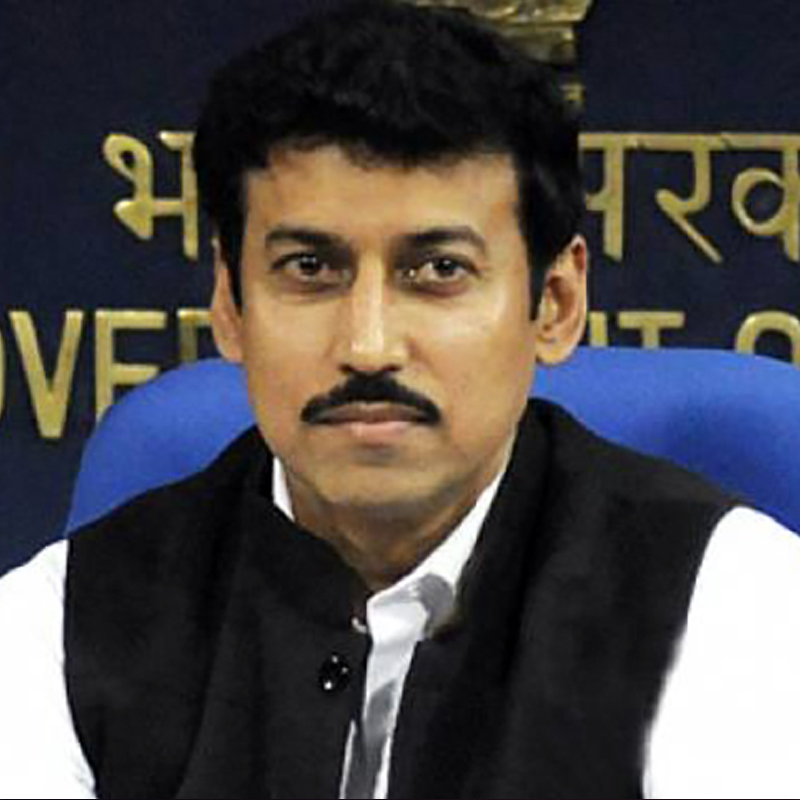
    MUMBAI: Direct-to-home (DTH) operators of India will have to wait a while if they were expecting something from the Ministry of Information and Broadcasting (MIB) regarding new DTH policy guidelines. In response to a question in the Parliament, Minister of State for MIB Rajyavardhan Rathore said that the government hasn’t yet finalised the new DTH policy.

    Rathore also added that the licenses of those DTH operators whose interim renewals were getting expired on 31 December 2018 have already been granted interim extension up to 30 June 2019.

    Last year TRAI had reiterated its recommendations to the Ministry on new licensing conditions for DTH players. The regulatory body had recommended that licences be issued for a period of 20 years and thereafter should be renewed every 10 years.

    Earlier it was reported that MIB was looking to send the new DTH policy for Cabinet approval by the end of 2018.

    The decades old DTH policy is being updated keeping the present scenario in mind, including fast changing technology and a slowing economy. Last month, MIB Secretary Amit Khare said that some sops would be handed to the DTH operators. However, he refused to comment on whether those sops would include financial rationalisation too like slashing of the annual revenue sharing with the government that is calculated at the rate of 10 per cent.

    In the past, the DTH industry has demanded, among other things, cut in annual revenue share percentage to 6-8 per cent and other financial adjustments (like removal of content acquisition cost and an adjusted gross revenue) while calculating gross revenues.

    Jawahar Goel, managing director of India’s biggest DTH operator (in terms of subscribers) Dish TV had written to policy-makers in October highlighting once again the industry’s woes and pleading for rationalisation of costs and taxes.

  • Focus Group to launch Kannada news channel

    Focus Group to launch Kannada news channel

    MUMBAI: Focus Group is now focusing on south India with its upcoming news channel Focus TV Kannada News.

    According to the sources, the channel will launch by the end of this year which will have 24×7 news programming.

    The channel will be available on all major cable and DTH operators. It will be a FTA (free-to-air) channel. The format of the channel will be MPEG4/DVBS2. The frequency rate is 4054 Hz. The testing for transmission service has started on INSAT4A satellite at 83 degrees east. The news channel will get the satellite transponder downlink signal from eight feet to 16 feet C-band dish antenna.

    Focus NE (formerly called NE TV) was the first 24-hour satellite channel of North-East India, which covered the eight states of the region. It was also the first earth station and teleport of the northeast.

    The group formerly had Focus News, Focus Haryana, Focus Bangla, Focus Odisha, Focus NE, Focus Hi-Fi under its umbrella. Some of the regional channels like Focus Haryana, Focus NE and Focus Hi-Fi were shut down a couple of years back.

    Neeraj Sanan was first roped in as the group CEO in 2014 and quit in 2015. After that its managing editor Shailesh Kumar who joined in the same year, quit around the same time as Sanan.

    Also Read: 

    Focus Group changes channel packaging for more focus 

    Focus News managing editor – regional Shailesh Kumar quits   

    Focus Bangla aims to capture its audience