Tag: DTH operator

  • Tata Sky has spectrum glut, adding five more HD channels

    MUMBAI: Leading DTH operator Tata Sky is reportedly planning to add five more HD channels and take its total high-definition offering to 86. DTH operators in India mostly provide only 45-65 HD channels, while cable operators provide between 30-50 HD channels.

    The channels that are reportedly being added are MTV HD+, Surya (Malayalam), DSports, Udaya (Kannada) and Gemini Movies (Telugu). With 86 HD channels, the operator plans to further consolidate its position as the largest provider of high-definition content in India. Tata Sky hugely benefitted owing to an oversupply of spectrum after one of ISRO’s satellites failed to ‘terminate’ as scheduled.

    In the Indian subcontinent content delivery, Tata Sky was reportedly using 432 MHz of spectrum on INSAT-4A and was backing Dish TV, which had 648 MHz and Videocon D2h, which has 540 MHz. INSAT-4A was expected to reach ‘end of life’ this year, for whose replacement ISRO sent GSAT-10 to the same orbit.

    Both satellites however are working simultaneously. Owing to ISRO’s reported dilemma of neither being able to sell capacity on its new satellite nor on the old (about to die) satellite to a new player, Tata Sky has been allowed to use both satellites, and adds up to about 828 MHz of spectrum at its disposal, which is almost two times of what DTH operators have in India.

  • Airtel Digital TV introduces Bengali SVOD service

    Airtel Digital TV introduces Bengali SVOD service

    MUMBAI: Leading Indian DTH player Airtel Digital TV is increasingly going to subscription video on demand (SVOD) way. Adding to its range of offering, the company announced the launch of Bangla Hitz a Bengali SVOD service. The DTH operator already offers language services in Gujarati, Tamil and Punjabi.

    This ad free service is available at f Rs 39 per month and can be accessed on channel number 702 on Airtel Digital TV. The new service will offer a whole new range of exclusive entertainment options in Bengali for Airtel DTH customers. This includes, a showcase of seven unique Bengali movies in a day, totaling up to 15-20 unique titles per week. A company press release says that the frequency will gradually be increased to four new premieres every month.

    Additionally, customers also get access to some of the finest musical performances from the region via the huge music catalog that comes with the service.

    “We are delighted to announce the launch of our subscription video on demand services in Bengali.,” said Airtel Digital chief marketing officer S. Siram,. “This service will give our users access to exclusive local entertainment content, right from the comfort of their homes. We will continue to focus on delivering compelling content for our customers and change the way customers view entertainment in India.”

    Airtel Digital TV customers will have to give a missed call to 9109121232 or SMS ADD 702 to 54325 to activate the service.
    Airtel Digital’s DTH business grew 20 per cent plus in Q2 2017 to register top line revenues of Rs 854.5 crore

  • Airtel Digital TV introduces Bengali SVOD service

    Airtel Digital TV introduces Bengali SVOD service

    MUMBAI: Leading Indian DTH player Airtel Digital TV is increasingly going to subscription video on demand (SVOD) way. Adding to its range of offering, the company announced the launch of Bangla Hitz a Bengali SVOD service. The DTH operator already offers language services in Gujarati, Tamil and Punjabi.

    This ad free service is available at f Rs 39 per month and can be accessed on channel number 702 on Airtel Digital TV. The new service will offer a whole new range of exclusive entertainment options in Bengali for Airtel DTH customers. This includes, a showcase of seven unique Bengali movies in a day, totaling up to 15-20 unique titles per week. A company press release says that the frequency will gradually be increased to four new premieres every month.

    Additionally, customers also get access to some of the finest musical performances from the region via the huge music catalog that comes with the service.

    “We are delighted to announce the launch of our subscription video on demand services in Bengali.,” said Airtel Digital chief marketing officer S. Siram,. “This service will give our users access to exclusive local entertainment content, right from the comfort of their homes. We will continue to focus on delivering compelling content for our customers and change the way customers view entertainment in India.”

    Airtel Digital TV customers will have to give a missed call to 9109121232 or SMS ADD 702 to 54325 to activate the service.
    Airtel Digital’s DTH business grew 20 per cent plus in Q2 2017 to register top line revenues of Rs 854.5 crore

  • Dish TV Videocon: Building a DTH powerhouse of global reckoning

    Dish TV Videocon: Building a DTH powerhouse of global reckoning

    MUMBAI: It’s a reflection of what’s hitting the corporate world globally – consolidate and build global scale. And scale is important in television distribution – whether cable, satellite or terrestrial or direct to home (DTH). Yesterday’s announcement of — what was speculated for nearly a year – the merger of India’s No 1 DTH operator Dish TV India with India’s fastest growing DTH player Videocon d2h – is a reflection of that trend and the building of a DTH powerhouse and pay TV operator.

    The merger has created a pay TV behemoth unrivalled in TV  distribution in the Indian market (let’s discount the public service terrestrial broadcaster Doordarshan and its satellite service FreeDish). The next Indian private DTH provider is less than half the size of the merged entity’s  size in pure net subscriber terms.

    A collective 27.6 million subs  for the combo firm Dish TV Videocon places it just behind the US-based DirecTV (which is now owned by AT&T) with its 37.6 million subs.  That’s a number which is hard to ignore. Much senior players such as Sky in the UK and dishnetwork in the US have just 21 million subs and 13.6 million subs, respectively.

    Of course, one may argue that ARPUs in India are wafer thin at about $3 or so per subscriber and revenues too are minuscule for the DTH operators.  ARPUs for Sky which is so much smaller than Dish TV Videocon are around pounds sterling 47 while these are at $111 at DirecTV which is far bigger.

    Team Dish TV led by Jawahar Goel and his CEO Arun Kapoor have reason to celebrate. For the fusion of the two players has created an enterprise that probably has overtaken his elder brother Subhash Chandra’s Zee Entertainment Enterprises in terms of EBIDTA and in revenue.  And what must be even more pleasing is that Dish TV has been operational for fewer years than Zee Entertainment which has led the cable and satellite TV revolution in India since the early nineties.

    Ditto for team Videocon d2h that is led by the executive chairman Saurabh Pradeep Kumar Dhoot and CEO Anil Khera. The last entrant in the DTH game, the merger has catapulted it into the leadership position in India.

    True, the market capitalization of Dish TV  (alone) is  Rs 9,321.1 crore  and Videocon d2h is being merged at an equity valuation of around Rs 7,200 crore and at an enterprise value of around  Rs 9,000-odd crore (as per reports) as compared to Zee Entertainment’s Rs 46,284 crore and Sun TV’s Rs 19,747 crore . The market capitalization value of  Dish TV Videocon has yet to be calculated at the time of writing but there’s no doubt it will skyrocket substantially post the completion of the merger in the next six to seven months.

    What does the fusion mean for DishTV Videocon?

    For one, lower costs. On almost every front.

    Imagine the negotiating power it will have with broadcasters on content pricing. Carriage and placement fees will end up being substantial. It  will be in a position to get better rates on hardware, middleware, ERP software, consumer premise equipment. And then, the two companies’ administration and sales teams could also be streamlined to form a formidable lean and mean sales force. Both have vast and deep distribution strengths. While Dish TV has 2,268 distributors, 244,688 dealers and 1090 service franchises across 9322 towns, Videocon d2h has 2280 distributors and direct dealers, 230,000 dealers/retailers and 320 direct service centres nationally. A consolidation of this could also yield cost benefits.

    A PhillipCapital estimate to CNBC TV18 was that the synergy benefit at the EBIDTA level would be between Rs 300 crore to 350 crore from year two onwards.

    The lower costs could allow Dish TV Videocon to also pass on the benefits to consumers and possibly start a price war, should it choose to, and thus attracting subscribers from cable TV or other DTH providers, in the process scaling up even further.

    Dish TV Videocon’s value-added services (VAS) will get a collective boost as these could be cross-promoted between the platforms. Its scale will allow it to negotiate better advertising deals for the two services opening screens, sponsorships and on TVCs.

    Most importantly, the combined entity will end up with a robust financial report card with revenues of Rs 5,915.8 crore ($883 million) for the year ended 31 March 2016.  The figure for the first half of the current fiscal (H1-2017) is at Rs 3,100 crore. That means one can expect it to cross the $1 billion topline milestone either by end this year or mid next.

    Dish TV Videocon’s EBIDTA margins too look  healthy at 31 per cent and absolute last-fiscal-year figures of Rs 1,826 crore ($274 million). The figure for H12017 is at Rs 1,040 crore. EBIDTA minus capex stands at a puny Rs 195 crore ($29 million) but that’s significantly higher than the Rs 116.5 crore of DishTV and Rs 78.5 crore of Videocon d2h, individually. In H12017, that figure had already climbed to Rs 190 crore. The merged entity will have a net debt load of Rs 2161 crore ($323 million). H1 2017, however,  saw that climb to Rs 2660 crore.

    How Dish TV Videocon will service this higher debt – whether it will be through internal accruals or through an external cash infusion – is a question. Both the firms have to also grapple with subscriber acquisition costs  – at around Rs 1500 for Dish TV at the end of March 2016 and at Rs 1,869 for Videocon d2h at the end of 30 September 2016. But, the good part is that both have generated net profits and free cash flows.

    The combined entity will end up with close to 2.8 million HD subscribers, which is around 10 per cent of the overall subscribers. These higher ARPU customers are also growing rapidly, forming around 50 per cent of the net adds.

    Now, one does not know the ambitions that the Goel and Dhoot families are harbouring. Will they go for further scale in a few years once the merger gets digested? Will they acquire other Indian DTH players as competitive forces compel further consolidation? Will they go outside and look for opportunities elsewhere in more mature and developed pay TV markets?

    It appears as if  the road to that journey may have just begun.

    Also read:

    http://www.indiantelevision.com/dth/dth-operator/videocon-d2h-to-merge-with-dish-tv-create-leading-cable-satellite-distribution-platform-in-india-161111


  • Dish TV Videocon: Building a DTH powerhouse of global reckoning

    Dish TV Videocon: Building a DTH powerhouse of global reckoning

    MUMBAI: It’s a reflection of what’s hitting the corporate world globally – consolidate and build global scale. And scale is important in television distribution – whether cable, satellite or terrestrial or direct to home (DTH). Yesterday’s announcement of — what was speculated for nearly a year – the merger of India’s No 1 DTH operator Dish TV India with India’s fastest growing DTH player Videocon d2h – is a reflection of that trend and the building of a DTH powerhouse and pay TV operator.

    The merger has created a pay TV behemoth unrivalled in TV  distribution in the Indian market (let’s discount the public service terrestrial broadcaster Doordarshan and its satellite service FreeDish). The next Indian private DTH provider is less than half the size of the merged entity’s  size in pure net subscriber terms.

    A collective 27.6 million subs  for the combo firm Dish TV Videocon places it just behind the US-based DirecTV (which is now owned by AT&T) with its 37.6 million subs.  That’s a number which is hard to ignore. Much senior players such as Sky in the UK and dishnetwork in the US have just 21 million subs and 13.6 million subs, respectively.

    Of course, one may argue that ARPUs in India are wafer thin at about $3 or so per subscriber and revenues too are minuscule for the DTH operators.  ARPUs for Sky which is so much smaller than Dish TV Videocon are around pounds sterling 47 while these are at $111 at DirecTV which is far bigger.

    Team Dish TV led by Jawahar Goel and his CEO Arun Kapoor have reason to celebrate. For the fusion of the two players has created an enterprise that probably has overtaken his elder brother Subhash Chandra’s Zee Entertainment Enterprises in terms of EBIDTA and in revenue.  And what must be even more pleasing is that Dish TV has been operational for fewer years than Zee Entertainment which has led the cable and satellite TV revolution in India since the early nineties.

    Ditto for team Videocon d2h that is led by the executive chairman Saurabh Pradeep Kumar Dhoot and CEO Anil Khera. The last entrant in the DTH game, the merger has catapulted it into the leadership position in India.

    True, the market capitalization of Dish TV  (alone) is  Rs 9,321.1 crore  and Videocon d2h is being merged at an equity valuation of around Rs 7,200 crore and at an enterprise value of around  Rs 9,000-odd crore (as per reports) as compared to Zee Entertainment’s Rs 46,284 crore and Sun TV’s Rs 19,747 crore . The market capitalization value of  Dish TV Videocon has yet to be calculated at the time of writing but there’s no doubt it will skyrocket substantially post the completion of the merger in the next six to seven months.

    What does the fusion mean for DishTV Videocon?

    For one, lower costs. On almost every front.

    Imagine the negotiating power it will have with broadcasters on content pricing. Carriage and placement fees will end up being substantial. It  will be in a position to get better rates on hardware, middleware, ERP software, consumer premise equipment. And then, the two companies’ administration and sales teams could also be streamlined to form a formidable lean and mean sales force. Both have vast and deep distribution strengths. While Dish TV has 2,268 distributors, 244,688 dealers and 1090 service franchises across 9322 towns, Videocon d2h has 2280 distributors and direct dealers, 230,000 dealers/retailers and 320 direct service centres nationally. A consolidation of this could also yield cost benefits.

    A PhillipCapital estimate to CNBC TV18 was that the synergy benefit at the EBIDTA level would be between Rs 300 crore to 350 crore from year two onwards.

    The lower costs could allow Dish TV Videocon to also pass on the benefits to consumers and possibly start a price war, should it choose to, and thus attracting subscribers from cable TV or other DTH providers, in the process scaling up even further.

    Dish TV Videocon’s value-added services (VAS) will get a collective boost as these could be cross-promoted between the platforms. Its scale will allow it to negotiate better advertising deals for the two services opening screens, sponsorships and on TVCs.

    Most importantly, the combined entity will end up with a robust financial report card with revenues of Rs 5,915.8 crore ($883 million) for the year ended 31 March 2016.  The figure for the first half of the current fiscal (H1-2017) is at Rs 3,100 crore. That means one can expect it to cross the $1 billion topline milestone either by end this year or mid next.

    Dish TV Videocon’s EBIDTA margins too look  healthy at 31 per cent and absolute last-fiscal-year figures of Rs 1,826 crore ($274 million). The figure for H12017 is at Rs 1,040 crore. EBIDTA minus capex stands at a puny Rs 195 crore ($29 million) but that’s significantly higher than the Rs 116.5 crore of DishTV and Rs 78.5 crore of Videocon d2h, individually. In H12017, that figure had already climbed to Rs 190 crore. The merged entity will have a net debt load of Rs 2161 crore ($323 million). H1 2017, however,  saw that climb to Rs 2660 crore.

    How Dish TV Videocon will service this higher debt – whether it will be through internal accruals or through an external cash infusion – is a question. Both the firms have to also grapple with subscriber acquisition costs  – at around Rs 1500 for Dish TV at the end of March 2016 and at Rs 1,869 for Videocon d2h at the end of 30 September 2016. But, the good part is that both have generated net profits and free cash flows.

    The combined entity will end up with close to 2.8 million HD subscribers, which is around 10 per cent of the overall subscribers. These higher ARPU customers are also growing rapidly, forming around 50 per cent of the net adds.

    Now, one does not know the ambitions that the Goel and Dhoot families are harbouring. Will they go for further scale in a few years once the merger gets digested? Will they acquire other Indian DTH players as competitive forces compel further consolidation? Will they go outside and look for opportunities elsewhere in more mature and developed pay TV markets?

    It appears as if  the road to that journey may have just begun.

    Also read:

    http://www.indiantelevision.com/dth/dth-operator/videocon-d2h-to-merge-with-dish-tv-create-leading-cable-satellite-distribution-platform-in-india-161111


  • Q1-2016: Dish TV q-o-q PAT up 55%, adds 390K net subscribers

    Q1-2016: Dish TV q-o-q PAT up 55%, adds 390K net subscribers

    BENGALURU: Last fiscal and quarter (year and quarter ended 31 March, 2015, Q4-2015), the Subhash Chandra led Essel groups DTH operator Dish TV Limited (Dish TV) turned the corner with a consolidated PAT of Rs 3.14 crore and Rs 34.94 crore (margin 4.8 per cent) respectively. 


    Dish TV was probably the first among listed DTH companies in the country in FY-2015 and Q4-2015 to report a profit after tax as opposed to the operating profits reported by a segment of the other goliaths for whom DTH services is just another small segment.


    This quarter (quarter ended 30 June, 2015, Q1-2016), the company has reported 55.2 per cent higher PAT at Rs 54.21 (margin 7.4 per cent) as compared to the above mentioned PAT in Q4-2015. The company had reported a loss of Rs 14.97 crore in Q1-2015.


    Note:  (1)100,00,000 = 100 Lakh = 10 million = 1 crore


    (2) With effect from April 1, 2015, Dish TV says that it has started netting-off certain collection fees paid to its trade partners from its topline. This has resulted in the company’s topline getting shrunk by around 4 percent, with a similar number being decreased from the middle line. The values for the prior comparative periods have also been recast to reflect the same.


    (3) Dish TV recently transferred its non-core business (including set-top boxes, dish antenna and related services) to its wholly owned subsidiary Dish Infra Services Private Limited (formerly known as Xingmedia Distribution Private Limited) on April 1, 2015 on a going concern basis. The Company today reported its maiden consolidated quarterly numbers.


    The company reported addition of 3,90,000 net subscribers in Q1-2016, taking its total subscriber base to 1.33 crore as on 30 June, 2015. Post consolidation, Dish TV says that Average Revenue Per User (ARPU) was Rs 173 versus Rs 172 (q-o-q) in Q4-2015. ARPU however would have been Rs 180, as compared to Rs 179 in Q4-2015, without the effect of consolidation. The company reported consolidated subscription revenues at Rs. 628.88 crore, up 20.6 percent y-o-y.


    The company reported 0.9 per cent higher consolidated net total Income from Operations (TIO) in the current quarter at Rs 736.68 crore as compared to the Rs 729.93 crore in the immediate trailing quarter and was 19.2 per cent more than the Rs 618.04 crore in Q1-2015.


    Dish TV chairman Subhash Chandra said, “Dish TV has been actively contributing to the ‘Digital India’ movement by digitizing analog TV homes in DAS phase 3 and 4 markets and remains optimistic about its prospects to acquire a substantial share in these markets. Continuing its focus on growth with profitability, the company delivered another quarter of encouraging financial results.”


    Let us look at the other numbers reported by Dish TV


    Dish TV total expenditure in Q1-2016 at Rs 659.69 crore (89.5 per cent of TIO) was 0.7 percent lower than the Rs 664.08 crore (91 per cent of TIO) in Q4-2015 and was 8.7 per cent more than the Rs 606.80 crore (98.2 per cent of TIO) in Q1-2015.


    A major expense head is programming /content and other costs (content costs). In Q1-2016 content cost at Rs 212.01 crore (28.8 per cent of TIO) was 2.1 per cent more than the Rs 207.62 crore (28.4 per cent of TIO) and was 5.3 per cent more than the Rs 201.39 crore (32.6 per cent of TIO) in Q1-2015.


    Employee Benefit Expense (EBE) in Q1-2016 at Rs 34.67 crore (4.7 per cent of TIO) was 39.7 per cent more than the Rs 24.81 crore (3.4 per cent of TIO) an was 34.8 per cent more than the Rs 25.72 crore (4.2 per cent of TIO) in the corresponding year ago quarter.


    Dish TV managing director Jawahar Goel said, “Our first quarter results are in line with the success of our regional and high definition (HD) strategy. Our regional offering, Zing, would soon be launched in Kerala and would carry the largest cache of vernacular channels offered in that market. Zing cemented Dish TV’s supremacy in the DAS Phase 3 and 4 markets with custom-made content, hardware and service packages for the regional audience. High definition continues to be a value driver and a key differentiator for us compared to other DTH offerings in India. Dish TV’s industry leading bandwidth capacity supports 42 HD channels, the largest on offer by any distribution platform so far.”


    “Led by robust subscriber additions and an improving ARPU, subscription revenues for the quarter increased 20.6 per cent over the corresponding quarter last fiscal. EBITDA of Rs 2,368 million recorded a significant 51.3 per cent jump over the corresponding quarter. Net Profit for the quarter was Rs 54.2 crore compared to a loss of Rs 15 crore in the first quarter last fiscal. The resultant free cash flow was Rs 68.9 crore. Amid improving financial performance, churn for the quarter remained steady at 0.7 per cent per month,” added Goel.

  • Tata Sky introduces first ever daily recharge voucher

    Tata Sky introduces first ever daily recharge voucher

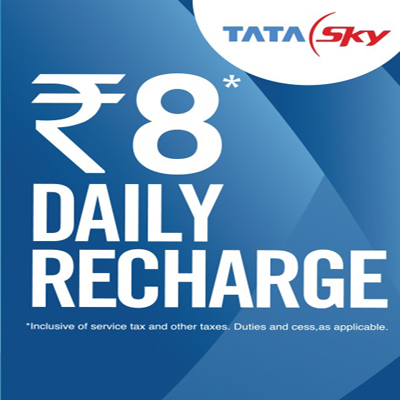
    MUMBAI: In yet another first, DTH operator Tata Sky has introduced the first ever daily recharge voucher empowering subscribers to pay only for the days they watched TV. This pioneering concept allows a minimum recharge value starting at Rs 8, making it the smallest denomination of recharge voucher in the television viewing sector globally.


    This innovation by Tata Sky puts the subscriber in control of his/her TV viewing expenses. There are a substantial number of subscribers who pay a monthly charge, but for some reason or another are unable to view TV on a daily basis.


    Tata Sky’s daily recharge enables them to now choose when to pay for their TV viewing. For a large part of the population, they can economize and re-charge their set top box on days when electricity is available, or when they are back from vacation. Similarly, they can decide on days when not to recharge for example during exam days or when travelling away from home.


    Tata Sky MD and CEO Harit Nagpal said, “We are confident that the introduction of Tata Sky’s ‘Daily Recharge’ will gain traction across the nation. The ‘Daily Recharge’ option available at Rs 8, 10, 20, 50 and 100 enables us to put power in the consumer’s hands to choose their level of convenience. It also elevates the DTH sector by redefining the pace of digitization and reach to markets nationwide.”


    With the understanding that there is a demand in smaller towns and villages for bite sized consumption (much like shampoo sachets and small sized mobile recharges), the ‘Daily Recharge’ card enables Tata Sky to make inroads into these untapped markets. Moreover, with digitization phase III still a year away, this plan should help accelerate acceptance of DTH sector in India.

  • Tata Sky doubles pace of team handling service disruption complaints

    Tata Sky doubles pace of team handling service disruption complaints

    MUMBAI: Direct to home (DTH) operator Tata Sky has been having sleepless nights in order to ensure that services are restored soon to its customers, who have been impacted by disruption in signals.


    According to Tata Sky CEO Harit Nagpal, the services will be restored in a couple of days. “Around 25,000 of our one crore customers have been experiencing disruption. This is because of our technology upgrade, which we undertake every three months. It is an ongoing process,” Nagpal tells Indiantelevision.com.


    The process is being undertaken to ensure that the DTH operator’s customers receive enhanced services. Nagpal further informs that the company is working hard to reach out to the affected 25,000 customers. The upgrade is being undertaken for technology compression purposes to enhance the channel carrying capacity of the operator.


    “Our services continue. They have not been impacted. We have also doubled the pace of our team handling the complaints. During the entire weekend, nobody slept,” states Nagpal when queried about them reaching out to customers experiencing the disruption in services.


    While a similar disruption had impacted close to 17,000 customers of Tata Sky last month, Nagpal says that this time around, the company had informed its audiences well in advance by coming up with a campaign on television. 


    Customers facing signal issues have also been asked to give a missed call on 0 88998 88998 or SMS ‘NS’ to 56633 on the operator’s website.

  • Tata Sky awaits MIB approval for Rs 250 crore investment

    Tata Sky awaits MIB approval for Rs 250 crore investment

    MUMBAI: Direct to home (DTH) operator Tata Sky has been applying a wait and watch policy not only for transponder space, but also for an approval from the Information and Broadcasting Ministry (I&B), for an additional Rs 250 crore investment.


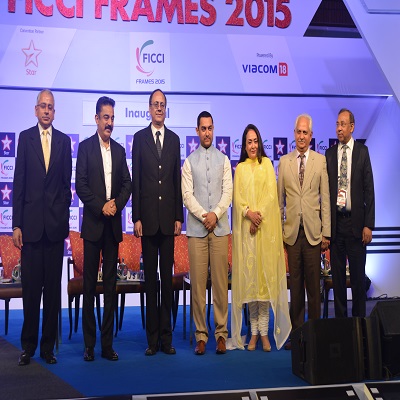
    “The money for the project has already come. But, if the approval doesn’t come in the next 48 hours, I will have to return that money to the foreign investors,” said Tata Sky MD & CEO Harit Nagpal, while addressing the inaugural session at FICCI FRAMES 2015.


    Responding to this, I&B Ministry additional secretary JS Mathur said, “Well, we had granted the approval a month back, and then Tata Sky realized that for the route it wanted to take with the investment, it had to reapply and this is the reason it is taking time.”


    Taking cue from Prime Minister Narendra Modi’s ‘Digital India’ campaign, Nagpal said, “The enabler of connectivity is broadband.”


    As per Nagpal, with low Average Revenue Per User (ARPU), putting fresh wires in the country would not give any return on investment. “Otherwise, there are enough hungry entrepreneurs, who would have used the opportunity. And if they haven’t, means that conditions are not viable in the country,” opined Nagpal.


    The country, though has hundreds miles of wires all over, which can carry broadband, and all it’s waiting for is an enabling and uniform environment, to use this infrastructure and deliver broadband to the consumer. “The rest as has happened in telecom, will happen,” he added.


    According to Nagpal, the industry lacks new thinking. “If anybody finds a successful format, 20 others follow and copy. I have seen general entertainment channels (GECs) being launched as pay TV, churning out the same content, and then either vanishing or becoming free to air (FTA). They lose viewership and distribution and then they are forced to carry 20-22 minutes of advertisement, which the regulator starts questioning and they are then seen sitting in courts,” he said.


    The problem, as per Nagpal, is not the producers, but the economics of the business, the restrictions and the permissions needed to do business. “All this restricts the producer from taking risks and choosing a safe and successful path,” he said.


    Nagpal, further went on to say, “I don’t think there is room for more Stars, Zees and Sonys. Also there is one Arnab and one Barkha, you can’t have too many of them. It is the niche, which will take us forward, and they are low investment and high return product.”


    Flair of creativity and new ideas is the key ingredient in the media and entertainment sector. “The deeper I travel, the more gems I see, but the production centres in the country are all located in the big cities. There is need to take production centres in smaller towns, where the talent is and create more self employed professionals in those areas,” he added.


    According to Nagpal, while the rules for setting up, funding and running the business are in place, one still needs to follow rules and ask for permission at every step. “Things have improved in the past few months and the government is keen to clear files, faster than ever before,” he said.


    The only way the industry can grow, as per Nagpal, is by allowing the businesses to inform and not seek approvals and also by self regulation. “In case we violate the law, issue penalties, cancel the licence,” he announced.


    Touching upon the movie business, Nagpal said that while we make the highest number of films, the industry is still not making money. “We have reached a choking point in terms of adding screens and it is marred by either high cost of real estate or the long list of approvals,” he said.


    According to Nagpal, the increasing number of digitized homes will help more producers to monetize their production. “This has already started, a lot of films are breaking even only on the basis of selling their rights to cable and satellite,” he said.


    The country has seen digitisation of 42 cities. Touching upon the condition in the digitized cities, Nagpal said, “The local cable operators are running the digitised area and the multi system operators (MSOs) are watching. Customers are not getting packages they want and neither are they getting value added services. The customers are willing to pay, unlike what is being projected by LCOs.”


    Digitisation is equal to automation. “The new role of the LCO is to be of a service provider to the MSO and not a partner. I think this needs to be thought about,” concluded Nagpal. 
  • Dish TV aims to boost ARPU with differential pricing strategy

    Dish TV aims to boost ARPU with differential pricing strategy

    MUMBAI: Taking the path that cable operators often do, Direct To Home (DTH) operator Dish TV has decided to offer differential pricing across different cities.


    Dish TV chief operating officer Salil Kapoor tells Indiantelevision.com that with the DTH operator having over 40 High Definition (HD) channels and superior quality, the consumers would not mind the “marginal jump.”


    According to Kapoor, Indian consumers can no longer be treated as “one size fits all,” especially in metro segments. Kapoor believes that the consumer today has the capacity to pay slightly more for a quality product. “This differential pricing is our strategy to give a boost to our Average Revenue Per User (ARPU),” Kapoor informs.


    As part of the first phase, metro cities such as Delhi, Mumbai, Kolkata and Pune will be targeted. Each pack in these four cities will now cost an additional Rs 10. The revised prices came into effect from 26 February, 2015.  


    Dish TV has already introduced differential pricing for its regional brand, Zing. While in Maharashtra, the pack price is pegged at Rs 189, in the state of Odisha it has been priced at Rs 175. Since the strategy worked successfully for its sub brand Zing, Kapoor is of the opinion that it would also work for Dish TV. 


    While the packages have currently been introduced for the metros, no decision on other cities has been taken as yet.