Tag: DTH licence

  • PEMRA announces DTH licence bidders; Indian DTH eviction to continue

    PEMRA announces DTH licence bidders; Indian DTH eviction to continue

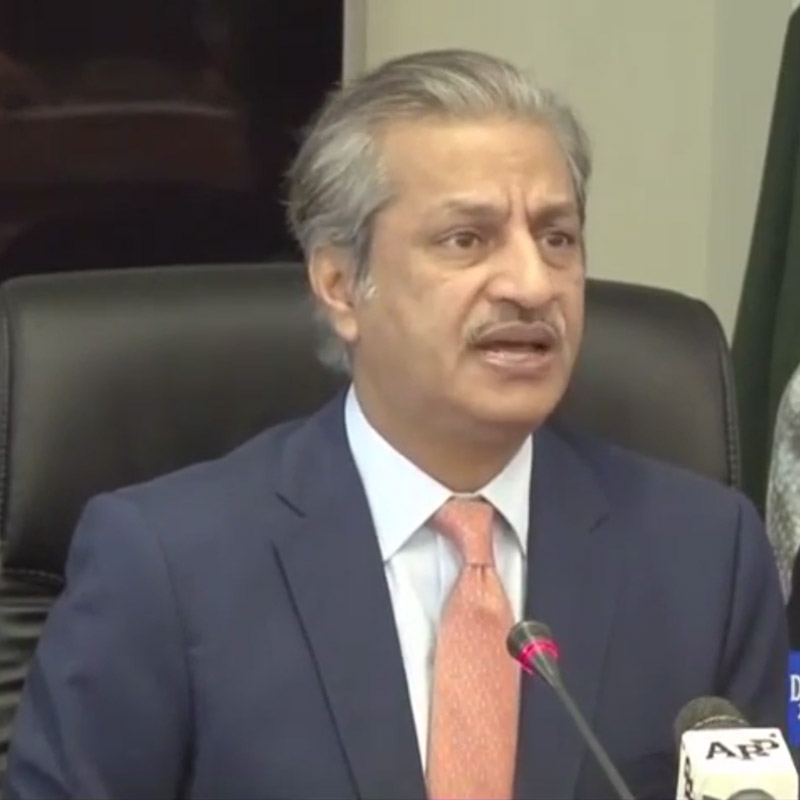
    MUMBAI: The countdown has begun. Amidst protests from cable TV operators and even private broadcasters, the Pakistan Electronic Media Regulatory Authority (PEMRA) earlier this week announced the shortlist of 12 companies which will be participating in the bidding for the first direct to home service (DTH)  licences auction which is scheduled to take place on
    23 November. The Pakistan government is on a drive to evict Indian channels, DTH services and content from its shores following the border skirmishes between the two countries over the past few months.

    Among the firms which have got into the shortlist include: Lahore-based firms Orient Electronics and Mag Entertainment, Islamabad-based companies Skyflix, Smartimes Communications, Sardar Builders, Smart Sky, Parus Media and Broadcast, Naya Tel, Maestro Media Distribution, Shahzad Sky, and HB DTH and Karachi-based IQ Communications. This was revealed by PEMRA chairman Absar Alam.

    Alam told reporters that the auction of three licences would be held through open competitive bidding.

    Alam appeared unwavering in his intent to completely eliminate all Indian DTH services from Pakistan. The authority has been urging its ministry of defence to take action against residential and housing societies which continue to use Indian DTH services.

    He also emphatically stated that Indian content stands banned in Pakistan, and there was no going back on the decision.

    “A lobby seems to be working for ending the ban on airing of Indian content and dramas on Pakistani channel,” he informed Pakistani media on Monday. “But they will be unsuccessful in their conspiracy,” he said.

    Alam probably was also referring to the petition filed by the Pakistan Broadcasters Association’s  (PBA’s) petition filed in Pakistani courts against the ban. Around a dozen broadcasters took PEMRA to court late last month for issuing an order banning Indian content completely from Pakistan’s general entertainment channels.

    Also read:

    Pakistan Broadcasters Association to oppose PEMRA Indian content ban


  • PEMRA announces DTH licence bidders; Indian DTH eviction to continue

    PEMRA announces DTH licence bidders; Indian DTH eviction to continue

    MUMBAI: The countdown has begun. Amidst protests from cable TV operators and even private broadcasters, the Pakistan Electronic Media Regulatory Authority (PEMRA) earlier this week announced the shortlist of 12 companies which will be participating in the bidding for the first direct to home service (DTH)  licences auction which is scheduled to take place on
    23 November. The Pakistan government is on a drive to evict Indian channels, DTH services and content from its shores following the border skirmishes between the two countries over the past few months.

    Among the firms which have got into the shortlist include: Lahore-based firms Orient Electronics and Mag Entertainment, Islamabad-based companies Skyflix, Smartimes Communications, Sardar Builders, Smart Sky, Parus Media and Broadcast, Naya Tel, Maestro Media Distribution, Shahzad Sky, and HB DTH and Karachi-based IQ Communications. This was revealed by PEMRA chairman Absar Alam.

    Alam told reporters that the auction of three licences would be held through open competitive bidding.

    Alam appeared unwavering in his intent to completely eliminate all Indian DTH services from Pakistan. The authority has been urging its ministry of defence to take action against residential and housing societies which continue to use Indian DTH services.

    He also emphatically stated that Indian content stands banned in Pakistan, and there was no going back on the decision.

    “A lobby seems to be working for ending the ban on airing of Indian content and dramas on Pakistani channel,” he informed Pakistani media on Monday. “But they will be unsuccessful in their conspiracy,” he said.

    Alam probably was also referring to the petition filed by the Pakistan Broadcasters Association’s  (PBA’s) petition filed in Pakistani courts against the ban. Around a dozen broadcasters took PEMRA to court late last month for issuing an order banning Indian content completely from Pakistan’s general entertainment channels.

    Also read:

    Pakistan Broadcasters Association to oppose PEMRA Indian content ban


  • 2014: A year of improved subscriber numbers

    2014: A year of improved subscriber numbers

    The year 2014 has been better than the previous year, in terms of the share of numbers for all direct to home (DTH) players. Subscriber additions were higher and there was more stability in the overall industry. In terms of price discounting, people were more rational through the year. Overall, it has been a much better year than 2013.

    Increased subscriber numbers and ARPU

    Overall additions in subscribers, for all the DTH players, were higher in the magnitude of 25-30 per cent than the previous year.

    That apart, the churn came down substantially, not only for Dish TV, but for all the other DTH players as well.

    2014 also saw a rise in the Average Revenue Per User (ARPU). But there are still problems, since the whole cable TV system hasn’t stabilised and gross billing hasn’t been fully implemented. Though, we do see some encouraging signs, in terms of people getting down to doing that now.

    DTH has been able to take price increases through the year. There was a price increase which took place in April, at the magnitude of 8-9 per cent. But the big collection from the ground will happen only once cable TV gets its act together.

    Different people calculate ARPU differently. For example, Dish TV calculates it on subscriber revenue, whereas Airtel Digital TV, as per its published figures, looks at gross numbers, and so do others. So there is no common matrix being used across the industry for definition of ARPU. But having said that, at the consumer level, the consumer prices are in the average price range of Rs 250-275.

    Challenges in 2014

    One of the major challenges that we continue to present to both the state and central government is on the high level of taxation on DTH. Apart from the taxation element which we have been presenting, we are the only industry which is subject to service tax and entertainment tax. While we were hoping for some relief in the last budget, we didn’t get that, we hope we will get some relief in the coming year.

    Secondly, there is no clarity on the licence fee issue, even though the Telecom Regulatory Authority of India (TRAI) issued a recommendation, there has been no action on that front.

    So while we lived in continued uncertainty in 2014, we hope that the government will take some steps in 2015. People have invested more than Rs 25000 crore in the industry, so at least we have the right to know what the law of the land will be going forward.

    The new launch Zing

    It has been an extremely successful product in all the geographies we launched. The specific proposition that we had, which was regional first and targeting the entire product mix around consumption has clicked very well with the customers. So we are very pleased with the way things have come.

    Highs and lows of 2014

     For Dish TV, it has been a fairly stable year. We regained our share leadership for about last three to four quarters. We launched a significant and tactical product in Zing which has helped us capitalize on the phase III and IV areas. The high point has been that we have been able to, post the balance sheet adjustment that we did last year, been able to get back on the growth path, which is what we have always said and we achieved that in 2014.

    The low point is at two levels: At one level, the whole issue of taxation and licence fee kept dragging for the whole year. Secondly, we expected the cable TV and broadcaster system to stabilize the whole regime. The whole issue of getting proper addressability and customers to actually choose and compare products has still not happened.

    Delayed Digitisation

    First and foremost, the manner of digitisation needs to be addressed. What has happened in the first two phases is simply the change of pipe. This has not been supported by addressability and that is the reason there has been no or marginal change in the revenue flow.

     Until and unless these issues are addressed, a non-addressable digitisation is of no help to anybody, neither to the government nor the stakeholders. We hope that by the time they get down to it, we will have some better roadmap of how to achieve that.


    (These are purely personal views of Dish TV CEO R C Venkateish and indiantelevision.com does not necessarily subscribe to these views)

  • TRAI to study how interoperability in DTH can be made effective

    TRAI to study how interoperability in DTH can be made effective

    NEW DELHI: The Telecom Regulatory Authority of India (TRAI) that released a recommendation paper on the new DTH licensing regime amongst other things also covered the issue of set top box (STB) interoperability. In the paper, the Authority has said that STB interoperability is not possible because of the different technologies adopted by the operators due to them entering the market at different times.


    TRAI thus, has asked the bureau of Indian standards (BIS) to regularly keep updating the standard of STB technology.


    Just one day after the recommendation paper, the Authority has now been asked by the Information and Broadcasting Ministry (I&B) to give its recommendations on how the portability of direct-to-home (DTH) set top boxes can be done easily.


    Stating this, I&B Minister Prakash Javadekar today told Parliament that the interoperability of DTH customer premises equipment has not so far proved to be effective due to various techno-economic reasons.


    The interoperability had been envisaged in the DTH licence conditions, he said.


    The portability in DTH service can be achieved through technical interoperability or through commercial interoperability.

  • TRAI extends DTH licence period to 20 years

    TRAI extends DTH licence period to 20 years

    MUMBAI: The Telecom Regulatory Authority of India (TRAI) has released its recommendations for a new DTH licensing regime today. As part of this, the period of DTH licence has been extended from the current 10 years to 20 years, renewable by 10 years at a time.


    The Regulator has said that the existing licence fee will be reduced from 10 per cent of gross revenue to 8 per cent of adjusted gross revenue, in line with the telecom licences.


    Also, the existing DTH licensees will be permitted to migrate to new regime at any time during the currency of the existing licences. Meanwhile, the one time entry fee has been retained at Rs 10 crore.


    The salient features of the recommended new DTH licensing regime are as follows:


    The   period   of  DTH  license  to  be  increased  from   10  years to  20  years, renewable by 10 years at a time.


    One time entry fee to be retained at Rs 10 crore.


    Existing license fee to be reduced from 10 per cent of gross revenue (GR) to 8 per cent of adjusted gross revenue (AGR) in line with the telecom licenses.


    The existing DTH licensees to be permitted to migrate to new regime at any time during the currency of their existing licenses.


    BIS   to    come     out    with     updated     specifications for     STBs in consultation with TRAI which should be complied by DTH licensees.


    The DTH licensees to be mandated to comply with the tariff order  scheme prescribed by TRAI for commercial inter-operability.


    The salient features of the Recommendation on Cross Holding/Control in the Broadcasting and Distribution Sectors are as follows:


    Policy on Cross-holding/Control to be restructured to bring in uniformity in the broadcasting and distribution sectors.


    Comprehensive definition of ‘control’ to be uniformly adopted in all segments of broadcasting and distribution sectors.


    Relevant market for DTH to be the   entire country and   for MSO /HITS – State.


    Broadcasters and Distribution Platform Operators (DPOs) – MSO /HITS  and DTH operators to be separate legal entities.


    Rationalised and regulated vertical integration to be permitted between broadcasters and DPOs.


    Vertically integrated broadcaster(s) and DPO   to   be   subjected   to additional set of regulations.


    A vertically integrated broadcaster to be permitted to control only one DPO.


    A vertically integrated DPO to be restricted from controlling any other DPO of other category in the relevant market.


    A vertically integrated DPO not to be permitted to acquire more than 33 per cent of the market share in the relevant market.


    The additional regulations for a vertically integrated broadcaster to include:


    The   agreements with   the   DPOs   to be non-discriminatory and   on charge-per-subscriber (CPS) basis.


    To file the   Reference Interconnect Offer (RIO) for approval by the Authority. All Interconnection Agreements to be only on the terms specified in the RIO.


    To make disclosures as prescribed by the Authority.


    The  additional regulations for a vertically integrated DPO would  include:


    DPO to declare its channel carrying capacity and not to reserve more than 15 per cent of this capacity for its vertically integrated broadcaster(s). Rest of the capacity to be offered to other broadcasters on non¬ discriminatory basis.


    DPO   to   publish the   access fees   for carriage of channels over   its network.  The    charging of   the    access fees    should be   on   non­ discriminatory basis.


    To make disclosures as prescribed by the Authority.


    The   Authority  to  come   out   with   appropriate  Regulations/Orders for  the regulatory  framework  and  disclosures  after    the   government   takes  the   policy decision on  the  recommendations.