Tag: DTH

  • Dish TV bets on Bigg Boss to flog its all-in-one smart television

    Dish TV bets on Bigg Boss to flog its all-in-one smart television

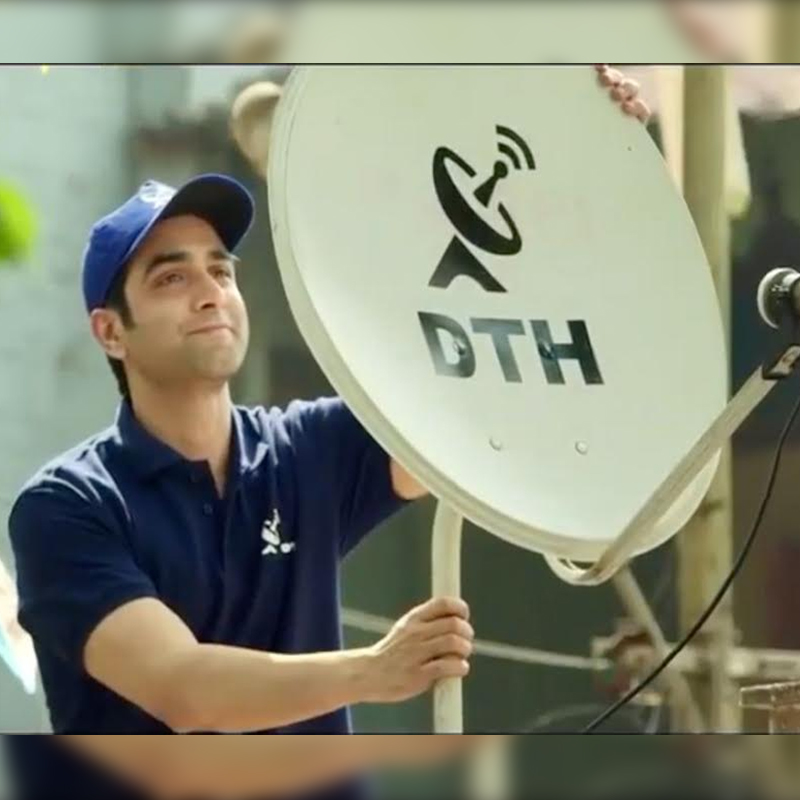
    MUMBAI: Dish TV is gambling that Indians will pay for convenience. The satellite broadcaster’s new VZY smart television—which bundles DTH and streaming services into one device—has signed on as sponsor of Bigg Boss in both Hindi and Kannada, hitching itself to two of the country’s most-watched reality franchises.

    The move, announced on October 1st, positions VZY as co-powered sponsor for Bigg Boss Hindi on Colors SD and HD, and co-presenting sponsor for Bigg Boss Kannada on Colors Kannada and JioHotstar. It is a calculated play: Bigg Boss commands fanatical viewership across demographics, making it prime real estate for a brand trying to crack both urban and regional markets.

    VZY’s pitch is straightforward. Rather than juggling a set-top box, streaming stick and multiple subscriptions, buyers get everything bundled into the television itself. The company also offers integrated set-top box models for those who prefer that route. It is, Dish TV claims, “India’s first truly integrated smart TV.”

    “Bigg Boss, both in Hindi and Kannada, is a show that unites audiences across regions and languages,” says Dish TV India chief revenue officer Sukhpreet Singh. The association, he argues, positions VZY as the television of choice for “entertainment-first consumers”.

    A JioStar spokesperson described Bigg Boss as “India’s most-watched and talked-about reality series” and welcomed VZY’s “smart TV proposition” as complementing the show’s immersive experience. The language suggests both parties see this as more than a typical sponsorship—it is a bet on convergence.

    Whether Indian consumers will embrace an all-in-one television remains uncertain. The market is crowded with smart TV brands, streaming devices and DTH providers, each vying for living-room dominance. Dish TV is wagering that eliminating complexity—and piggybacking on Bigg Boss’s massive audience—will give VZY an edge. The show’s millions of viewers will soon discover if the pitch holds up.

  • TRAI orders monthly, quarterly compliance reports from TV distributors

    TRAI orders monthly, quarterly compliance reports from TV distributors

    NEW DELHI: India’s broadcast regulator has ordered all distribution platform operators (DPOs) — including DTH, cable (MSOs), headend in the sky (Hits)  and IPTV players — to file performance monitoring reports every month and quarter, in a bid to sharpen oversight of the sector.

    The Telecom Regulatory Authority of India (TRAI), acting under section 12 of its 1997 Act, said the move was aimed at ensuring compliance, protecting consumer interests and fostering orderly growth of the TV distribution industry.

    Until now, only DTH firms were required to furnish quarterly reports, a rule dating back to 2008 and expanded in 2019 to cover MSOs and Hits)  operators. The new order updates formats to reflect changes in tariff, interconnection and quality-of-service rules.

    From now, operators must file monthly reports within ten days of month-end, and quarterly reports within 15 days of each quarter’s close. Smaller DPOs with fewer than 30,000 subscribers may skip the quarterly filing.
    The order marks another tightening of regulatory screws on a sector under pressure from both rising consumer expectations and surging competition from streaming platforms.

  • Cable TV lobby slams TRAI’s DTH licence fee waiver call

    Cable TV lobby slams TRAI’s DTH licence fee waiver call

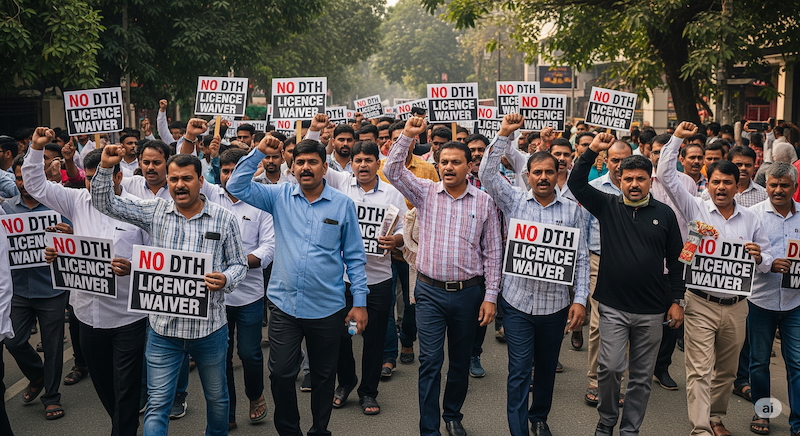
    NEW DELHI – India’s top cable lobby has sounded the alarm over TRAI’s proposal to slash and eventually scrap licence fees for Direct-to-Home (DTH) operators, warning it could wreck the delicate balance in the country’s broadcast distribution ecosystem.

    In a strongly-worded representation to the information and broadcasting ministry, the All India Digital Cable Federation (AIDCF) – which represents over 880 multi-system operators (MSOs) and 1.6 lakh local cable operators (LCOs) – said the move would “deepen regulatory inequality” and “threaten over 10 lakh livelihoods” linked to the cable TV industry.

    The AIDCF accused TRAI of tilting the scales in favour of DTH players who already enjoy “cost-free, administratively allocated spectrum” while cable operators continue to bleed under high Right of Way (RoW) charges and hefty underground infrastructure investments.

    “A DTH licence fee waiver will distort competition and violate regulatory neutrality,” an AIDCF spokesperson said, adding that any cut would hasten subscriber churn from cable to satellite platforms. The body flagged other disruptors like Free Dish, OTTs, Fast TV and digital DPOs as further stress points for the struggling cable sector.

    Rather than easing licence costs for satellite platforms, AIDCF wants the government to implement a fair cost recovery mechanism across distribution platforms, reflecting the true commercial value of spectrum. It has urged the ministry to junk TRAI’s recommendation in favour of a level playing field that safeguards the sector’s long-term viability.

  • TRAI telecom data:  India’s rural surge, internet binge and DTH downfall ring loud in March

    TRAI telecom data: India’s rural surge, internet binge and DTH downfall ring loud in March

    MUMBAI: India’s telecom scene in March 2025 was a tale of two Indias—rural Bharat rising on data dreams and legacy players like BSNL and MTNL gasping for bars. According to TRAI’s fresh data, it was a month of gains for mobile and broadband, and growing static for DTH.

    The total number of wireless subscribers climbed slightly to 1,160.65 million, with rural India accounting for nearly 80 per cent of new additions. Villages added 1.1 million users, urban India added just 296,000—proof that the real action is beyond city limits.

    Reliance Jio was on fire, gaining 2.15 million wireless users and reinforcing its market leadership with 39.6 per cent share. Bharti Airtel added 1.03 million, keeping pace. Vodafone Idea lost nearly 700,000 subscribers, and BSNL continued its freefall with a 1.25 million loss.

    India’s broadband subscriber base touched 946.32 million, a monthly growth of 0.21 per cent. Unsurprisingly, 4G/5G mobile broadband accounted for 921.4 million of those connections—soaring on reels, reels, and more reels.

    On the wireline broadband front, Jio continued to hustle, adding over 320,000 subscribers, bringing its fixed-line share to 33.6 per cent. Airtel stayed solid with over 100,000 adds, while government dinosaurs BSNL and MTNL lost tens of thousands more. Between sluggish service and vanishing relevance, they’ve become the landline’s last rites.

    In the home entertainment arena, the direct-to-home (DTH) sector saw a slide. Total active DTH subscribers dropped to 64.17 million from 64.45 million—a fall of over 278,000 users in just one month.

    Cord-cutting is no longer a western trend; it’s happening across Indian homes as OTT apps and smart TVs eat into satellite’s share. Operators like Tata Play and Airtel Digital are still holding their ground, but the writing is on the (living room) wall.

    The big takeaway? Rural India is dialling up, streaming more, and finally enjoying digital parity. Jio’s aggressive expansion is paying off across both mobile and fibre, while BSNL’s steady subscriber bleed raises existential questions.

    DTH is beginning to look like the landline of television. The OTT wave is here, and it’s pulling viewers—and revenue—away from satellite.

    With spectrum auctions around the corner and AI-fuelled data demands skyrocketing, India’s telecom race is less about who picks up the call—and more about who controls the cloud.

  • Bharti Airtel confirms  it is discussing potential Tata Play DTH merger

    Bharti Airtel confirms it is discussing potential Tata Play DTH merger

    MUMBAI: Bharti Airtel has confirmed it is in discussions with the Tata group regarding a potential merger of their direct-to-home (DTH) operations. 

    In a brief statement, filed with the Bombay stock exchange, Bharti Airtel acknowledged that the two companies are in bilateral talks exploring the combination of Tata Play Ltd with Bharti Telemedia Ltd, a subsidiary of Airtel. The potential transaction would need to be structured in a manner “acceptable to all parties.”

    It however cautioned that discussions remain at an early stage, with no firm agreements reached.

    The clarification follows reports in mainstream media about an imminent “mega DTH merger” between the two business groups.

    If successful, the merger would create one of India’s largest DTH operators, potentially reshaping the country’s pay television landscape.

    Neither company has provided details regarding timeframes, valuation, or potential regulatory hurdles that would need to be addressed for the transaction to proceed.

  • DD Free Dish concludes Mpeg 2 e-Auction, securing 60 television channels for 2025-26

    DD Free Dish concludes Mpeg 2 e-Auction, securing 60 television channels for 2025-26

    MUMBAI: Pubcaster Prasar Bharati  has successfully concluded its annual DD Free Dish MPEG-2 slot e-auction, allocating spaces to 60 television channels for the period of 1 April 2025, to 31 March 2026. Major broadcasters securing slots include: Sony, JioStar,  Zee, Sun TV. Some of the prominent channels on FreeDish include  names such as Colors Rishtey, Sony Pal, and several leading news channels including Aaj Tak, ABP News, and Republic TV Bharat.

    The auction process, initiated on 9 January, introduced a structured categoriastion system comprising six distinct buckets, each tailored to specific channel genres and languages. The pricing strategy implemented a two-round system, with initial reserve prices ranging from Rs 3 crore for regional channels to Rs 15 crore for Hindi/Urdu general entertainment channels. The second round saw these figures increase incrementally, with the highest bracket reaching Rs 16 crore.

    To ensure quality content delivery, Prasar Bharati has instituted a new 75 per cent alignment rule, mandating that three-quarters of a channel’s content must align with its declared genre and language. The broadcaster maintained its standard eligibility criteria, requiring participating channels to possess valid ministry of information and broadcasting permits for Indian distribution.
    LIST

    The auction’s participation structure included a Rs 1.50 crore fee for MPEG-2 slots, while MPEG-4 slots commanded Rs 3 lakhs. Notably, the framework extended participation rights to international public broadcasters operating under relevant guidelines.

    This auction follows a successful 2024 edition which generated Rs 1,156 crore through the sale of 64 slots, indicating the platform’s sustained commercial viability in India’s broadcasting landscape. The slight reduction in allocated slots from 64 to 60 suggests a possible strategic recalibration of the platform’s capacity utilisation.
    The successful conclusion of this auction reinforces DD Free Dish’s position as a significant distribution platform in India’s television market, particularly for reaching audiences in regions where paid television penetration remains limited.

  • TRAI recommends major overhaul of broadcasting services framework

    TRAI recommends major overhaul of broadcasting services framework

    MUMBAI: India’s telecoms regulator the Telecom Regulatory Authority of India (TRAI) has recommended  comprehensive reforms in  broadcasting service authorisations, marking the most significant regulatory change recommended in the sector since the original Broadcasting Act. The new framework, aligned with the Telecommunications Act 2023, aims to modernise and streamline the industry’s regulatory landscape.

    The industry watchdog has recommended the introduction of a simplified two-tier authorisation framework. The first tier governs initial authorisation requirements for new entrants, while the second establishes compliance parameters for ongoing service provision.

    It has recommended that financial requirements be substantially revised. Direct-to-Home (DTH) operators must now maintain bank guarantees of either Rs 5 crore or 20 per cent  of two quarters’ licence fees, whichever is higher. For Head-end in the Sky (HITS) services, the regulator has reduced initial bank guarantee requirements from Rs 40 crore to Rs 5 crore, with validity periods extended from 10 to 20 years.

    In a significant move towards technological advancement, TRAI has recommended the introduction of  provisions for ground-based television channel broadcasting and low-power small-range radio services. The framework makes radio broadcasting technology-agnostic, paving the way for digital adoption.

    The regulator has also recommended the mandatory  development of interoperable set-top boxes, tasking the Telecom Engineering Centre with creating standards for both standalone devices and integrated television sets. This move aims to reduce electronic waste and enhance consumer choice.

    The new recommended framework removes mandatory co-location requirements for radio broadcasters and encourages voluntary infrastructure sharing between broadcasting and telecom providers. Radio broadcasting authorisations will be delinked from frequency assignments, with spectrum to be auctioned separately.
    Existing licence holders can voluntarily migrate to the new regime without incurring processing or entry fees. The validity period for new authorisations will commence from the migration date, regardless of existing licence periods.

    Future amendments to authorisation terms, except those related to national security, will require TRAI’s recommendations, providing regulatory stability for service providers. The reforms represent a significant step towards modernising India’s broadcasting sector while enhancing ease of doing business.

    The changes are expected to facilitate growth in both traditional and digital broadcasting services, potentially attracting new investors to the sector. Industry observers note that the reforms could particularly benefit smaller operators and new entrants, while encouraging technological innovation across the broadcasting landscape.

    To download the entire Recomended Framework for Service Authorisations for provision of Broadcasting Services under the Telecommunications Act, 2023 click  here

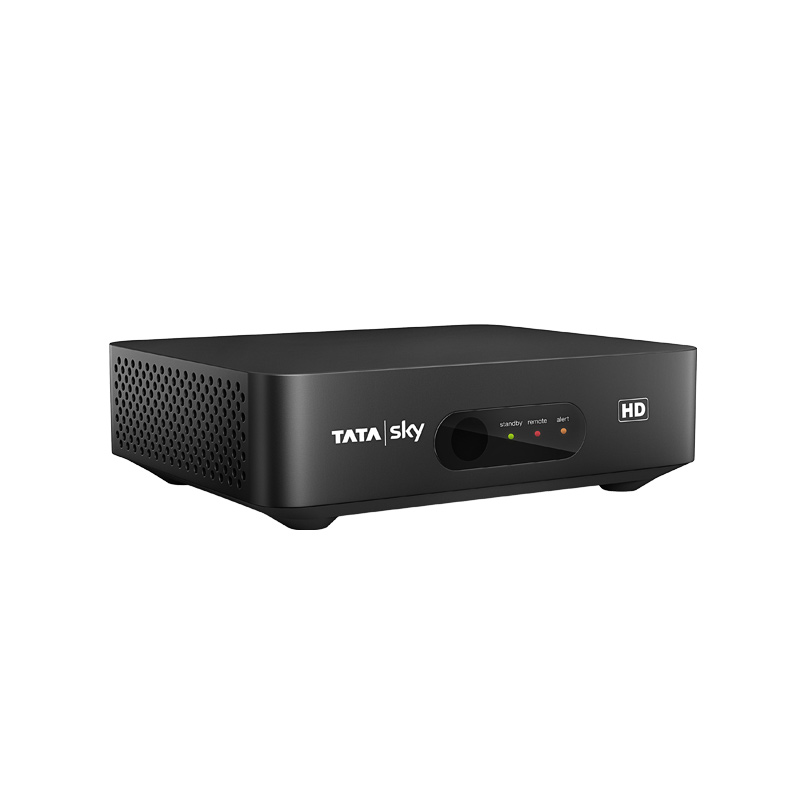
  • Tata Sons seeks CCI green signal for additional 10 per cent  stake in Tata Play

    Tata Sons seeks CCI green signal for additional 10 per cent stake in Tata Play

    MUMBAI: Tata Sons, the promoter of The Tata group, is seeking to own a larger slice of its distribution platform operator Tata Play. It has sought approval from india’s fair trade regulator, the Competition Commission of India (CCI), to acquire an additional 10 per cent  stake in Tata Play. The stake will be purchased from Baytree Investments (Mauritius) Pte Ltd, an affiliate of Singapore’s sovereign wealth fund, Temasek Holdings.

    Currently holding a 60 per cent stake in Tata Play, Tata Sons’ acquisition will increase its ownership to 70 per cent. Tata Sons is an investment holding company registered as a core investment company with the Reserve Bank of India, classified as a systemically important non-deposit taking core investment company.

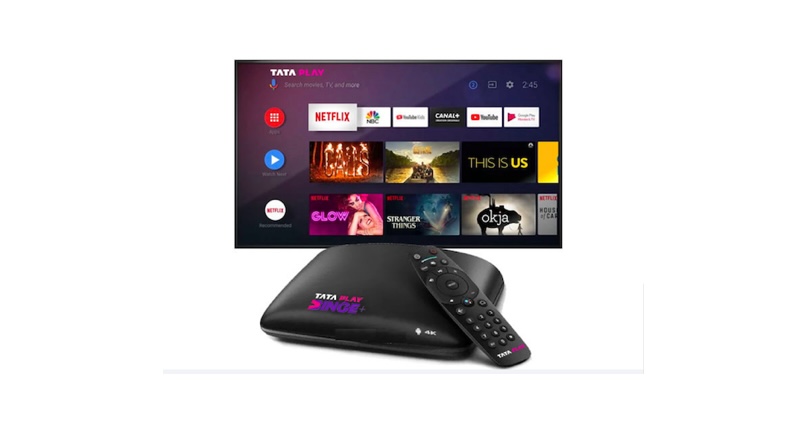
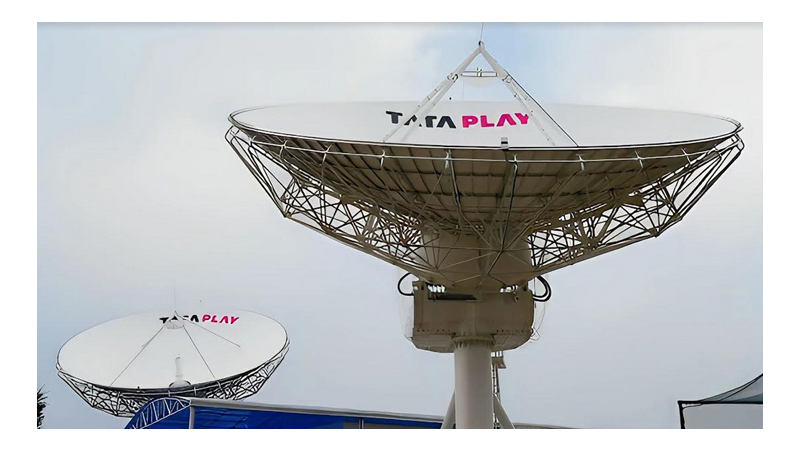
    Tata Play, formerly known as Tata Sky, is a leading content distribution platform in India, offering pay TV  and direct-to-home (DTH) services. it also operates Tata Play Binge, an over-the-top (OTT) platform that aggregates popular streaming apps under a single subscription model.

    The proposed transaction has been notified to the CCI under sections 6(2) and 5(a) of the Competition Act, 2002. these provisions mandate regulatory approval for acquisitions exceeding certain thresholds.

    Both Tata Play and Tata Sons have asserted that the transaction will not adversely affect competition in any relevant market. They have appealed to the  CCI to  examine the deal in the context of India’s wired broadband internet services and the complementary linkages between Tata Sons’ internet services and Tata Play’s online platforms.

    Meanwhile, the buzz of a transaction between Airtel and Tata Play taking place seems to have died down. Apparently, valuations are an issue and the further loss of subscribers by the  pay TV ecosystem has put a dampener in any deal going forward, reveal sources close to the conversation. Also, the earlier transaction between the Essel group Dish TV and Videocond2h didn’t yield any clear identifiable long term benefits for the former as it struggles to sustain itself in a sector that is being gnawed away at by DD’s free DTH service FreeDish, and low cost streaming services. 

    And going by the way that Tata Sons has applied to the CCI is it possible that the group has decided to retain its broadband part of Tata Play while letting go off of the video services portion the Distribution platform operator provides?If that is the case, then who is the buyer?  Or is it that the group still sees potential in both the video and internet delivery components of Tata Play and has decided to continue to invest in both? The Tata group is not talking;  neither is Tata Play.

    Guess, we will have to keep watching this space. 

  • Sony exec Vikram Vijay Chandan turns author with Love Life and Cricket

    Sony exec Vikram Vijay Chandan turns author with Love Life and Cricket

    MUMBAI: When you have been distributing sports channels for more than 20 years as a TV distribution executive, it gives you a first-hand look at the game of cricket than possible otherwise. And that’s what’s prompted Sony Pictures Networks Distribution India vice-president of sales Vikram Vijay Chandan to pen a book about the sport and its applicability to life.

    Called Love Life and Cricket, the book has made its debut on Amazon.  The cricket-mad Vikram has been podcasting about cricket for a while now and draws parallels between life and the game in every situation. He penned the book over four years, while holding his day job at Sony, meeting cable operators and executives at DTH platform doing deals to carry the Sony sports channels.

    “This book is a culmination of my journey, experiences and learnings around the game I love,” said he on linkedin. “Cricket, often referred to as a religion in India, is more than just a game. It’s a reflection of life itself. Just as cricket has its ups and downs, life too has its share of triumphs and tribulations. Love, in its purest form, is the glue that holds relationships together. Just as a batsman and bowler engage in a beautiful dance, love is the harmony that exists between two people.In cricket, every ball is a new opportunity, just like every day in life. We must seize each moment, just as a fielder seizes a catch, and make the most of it.
    As we navigate the ups and downs of life, cricket reminds us of the importance of perseverance, teamwork, and sportsmanship. And just as love conquers all, cricket too has the power to unite people across cultures and borders.So, let’s cherish the love, live life to the fullest, and enjoy the game of cricket – for in its simplicity lies a profound beauty that reflects the very essence of human existence.”

    Based in Gurugram, Vikram has also been expressing his thoughts and views about action on the ground through his Instagram handle and his opinions have got more than 20 million views.

    Love Life and Cricket has been published by Beeja House which is run by the mentor of writers Geetika Saigal.  

    You can get onto Amazon and buy your copy by clicking on the link: Love Life and Cricket
     

  • Indian DTH subscriber base drops further to 59.9 million in June-Sept ’24 quarter

    Indian DTH subscriber base drops further to 59.9 million in June-Sept ’24 quarter

    MUMBAI: Almost every leading TV executive – whether Uday Shankar or Punit Goenka or Gaurav Banerjee – has spoken about his or her belief that television  in India has legs. No doubt they have to speak optimistically. Linear television revenues are what are currently funding their hard-pressed-for-earnings streaming businesses.

    That television is under further duress has become even clearer from the latest Telecom Regulatory Authority of India (TRAI) quarterly report of telecom performence indicators for the period Jul y 2024 to September 2024.

    The continued drop in DTH  active subscriptions is alarming: the figure for end September 2024 is 59.9 million. The comparative figure for June 2024 was 62.17 million subscribers. In September 2023, there were 64.18 million active subs

    With four DTH operators in operation,  it’s not as if they are doing nothing to retain customers. They have been giving customers the freedom to create their own packs, they have slashed prices for their set top boxes, they have been offering easier payment terms and HD services, they have been doling out value-added services for cheap, and they have started OTT aggregator services,  broadband is being offered by them  at reasonable prices.

    But lo and behold, nada, nothing seems to be halting the slide of consumers dumping their satellite TV dishes.

    A few thoughts to ponder  for DTH operators:  

    When will the law of diminishing returns come into play as subscribers drop off? 

    At what level will the business become unviable? 40 million subs, 30 million, to service the well-spread-out India? 

    When will there be a major shakeup? 

    And what will lead to one or two players falling off the treadmill?

    Already, reports keep popping up that talks are continuing between Tata Play and Airtel for the latter to acquire the former. When and if it does happen, we’ll be down to three DTH operators.

    Also, solutions need to be evolved to stop the slide –   complaining about the gold rush towards DD Free Dish is not the best answer.

    2025 is a new year.

    A chance to relook at the business.

    A chance to see if Tata Play’s white-label-service model can be replicated and monetised by licensing it to other  players  in less developed markets to keep revenues coming in.

    A chance to experiment on how customers can be retained..

    Is customer service of the platinum class a good bait?  

    This has been talked about ad nauseum for quite some time; service can be the big differentiator.

    Convenience  be brought in and, if possible, local programming which can be picked up from the more advanced cable TV MSOs and retransmitted.

    There will come a time when subscribing to a nice plateful of streamers will become too expensive. Already some complaints are being voiced about the OTT bundles in the US. The commonly heard plaint is that they are  as – if not more – expensive than the pay TV bundles

    In India, we don’t have to wait for that to happen – Indian pay TV is cheap – very cheap. More than 400 linear channels are available in India for as low as Rs 300-350  on DTH and cable TV. An OTT aggregator will have to struggle to offer as much content at that price.

    The reality is both free TV and OTTs are here to stay. The question is: is India’s pay TV?

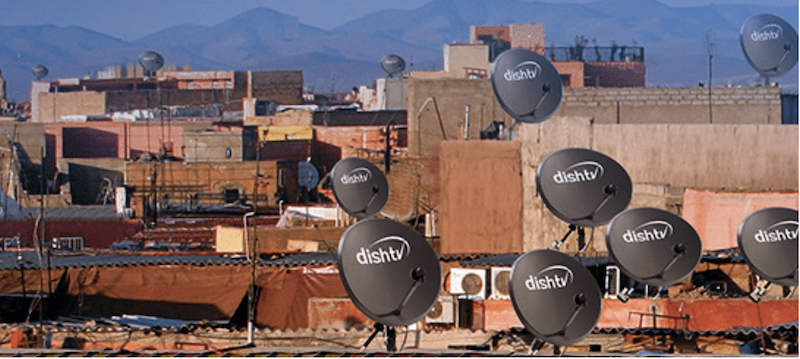
    (Picture of Dishes atop house courtesy Dish TV India)