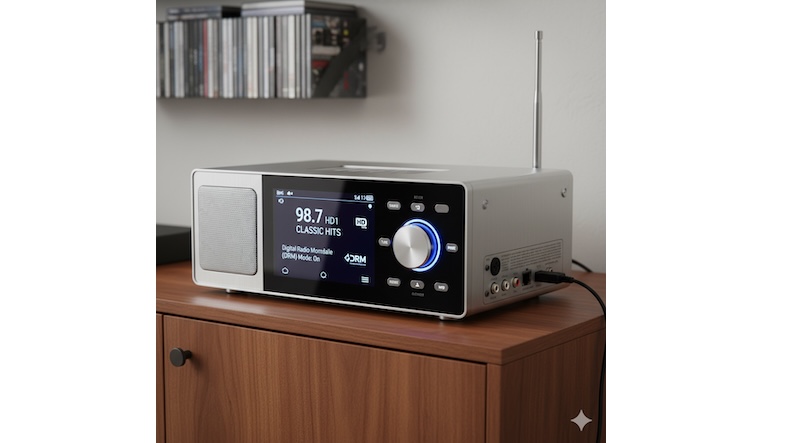
Tag: DRM

  • What TRAI’s digital audio rollout recommendations mean for the radio folks?

    What TRAI’s digital audio rollout recommendations mean for the radio folks?

    NEW DELHI: India’s telecom regulator has thrown struggling FM broadcasters a lifeline, recommending a graduated payment structure for digital radio spectrum that defers most costs for a decade while the receiver ecosystem develops.

    The Telecom Regulatory Authority of India (TRAI) proposes auctioning two digital frequencies in each of 13 major cities—including Mumbai, Delhi, Chennai and Bengaluru—at reserve prices ranging from Rs 20.52 crore to Rs 194.08 crore. Crucially, successful bidders choosing instalment payments would pay nothing for digital spectrum components during the first five years, when device adoption will be negligible.

    The phased approach reflects harsh commercial realities. Private FM radio advertising revenues have flatlined at Rs 1,819 crore in 2024-25, barely recovering to 2015-16 levels despite more operational channels. The sector faces mounting competition from music streaming platforms and shifting listener habits.

    “The business model of radio broadcasters is primarily driven by advertising revenues, which is closely linked to listener reach,” TRAI notes in recommendations released on 3 October 2025. “Without affordable receivers, broadcasters may have little incentive to adopt digital radio.”

    Under the staggered payment plan, analogue spectrum costs would be recovered in equal instalments over 15 years. But digital spectrum fees—representing one-third of total valuation—would be waived entirely for five years, then recovered at one-third rates from years six to ten, and two-thirds rates from years 11 to 15. All payments would protect net present value using State Bank of India’s marginal cost of lending rate, currently 8.75 per cent.

    The delay acknowledges brutal adoption timelines. TRAI estimates two years for service rollout, three more for widespread device availability, and another five to reach break-even—consuming two-thirds of the 15-year authorisation period before meaningful returns materialise.

    Digital radio allows multiple channels on single frequencies through simulcast transmission—one analogue channel plus three digital channels and one data channel per frequency. But the technology requires new receivers. Mobile handset manufacturers have shown little interest in integration, despite government advisories. Vehicle infotainment systems may take 15 years to reach full penetration given replacement cycles.

    The regulator stops short of mandating a specific technology, recommending government choose between HD Radio and Digital Radio Mondiale (DRM) after consulting industry. “Selection of technology among the two technologies suitable in VHF Band-II for deployment in India…may be done in consultation with the industry, including radio broadcasters and radio receiver manufacturers,” TRAI states.

    Both technologies are recognised by the International Telecommunication Union. HD Radio, used in North America, requires 400 kHz bandwidth. DRM needs just 300 kHz and is open-source, avoiding royalty fees. The authority warns against allowing multiple standards, citing interoperability nightmares and market fragmentation.

    Existing FM broadcasters could voluntarily migrate to simulcast by paying the difference between auction prices and their proportionate remaining licence fees. A six-month window would follow auctions for migration decisions.

    The recommendations tackle infrastructure bottlenecks head-on. Common transmission infrastructure in existing cities cannot accommodate new digital channels. TRAI proposes either broadcaster consortiums or assignment to Broadcast Engineering Consultants India Ltd  should create new facilities within three months. Mandatory co-location with government infrastructure would be scrapped.

    Prasar Bharati, the public broadcaster, should offer land, tower and transmission infrastructure at concessional rates whilst recovering operational expenses, TRAI adds.

    Annual authorisation fees would be set at four per cent of adjusted gross revenue for most cities, dropping to two per cent for three years in northeastern states, Jammu and Kashmir and island territories. The regulator proposes a new category of radio broadcasting infrastructure providers authorised to build and lease facilities commercially.

    Controversially, TRAI recommends allowing terrestrial radio streaming without user controls like download or playback. This extends reach globally whilst the authority dismisses potential copyright concerns as beyond its remit, noting broadcasters “shall be subject to Copyright Act, 1957.”

    The measured rollout—just two frequencies per city initially—contrasts sharply with July 2025’s disastrous auction, where only 63 of 730 channels found buyers across 234 cities. That debacle underscores sector weakness and justifies cautious expansion.

    Whether broadcasters bite remains uncertain. The staggered payment plan reduces upfront barriers, but fundamental economics remain challenging. Streaming platforms offer unlimited choice and user control. Digital radio offers better audio quality and emergency alert capabilities, but competes for ears in an increasingly crowded audio landscape.

    TRAI’s recommendations now await government action. Implementation timelines are unclear, but the regulator urges swift technology selection before financial bidding begins. The decade-long journey to digital radio viability starts with that choice.

  • Broadcasters address DRM, CAS hacking, fingerprinting concerns in TRAI’s draft addressable system regulations

    Broadcasters address DRM, CAS hacking, fingerprinting concerns in TRAI’s draft addressable system regulations

    MUMBAI: Broadcasters have shared their suggestions on TRAI’s draft “The Telecommunication (Broadcasting And Cable) Services Interconnection (Addressable Systems) (Amendment) Regulations, 2019. The industry welcomed TRAI’s decision to regulate Digital Rights Management Systems (DRM) and include it in Schedule III of the regulations. However, it has also suggested that the authority should add anti-piracy safety prerequisites and other technical features in DRM technology before providing signals to any distribution platform.

    Star India recommended TRAI that the distributor of television channels should ensure that the current version of the DRM in use, do not have any history of hacking. In the event that hacking of the DRM system is detected, such as, but not limited to cloning of STBs and/or VCs, the DRM vendor to be served a show cause notice as to why it should not be blacklisted with immediate effect. In the event of continued default beyond 7 days, the DPO shall be liable to pay 150 per cent of the preceding month’s billed amount.

    It further said, “The DPO should maintain DRM and SMS downtime records along with MTBF (Mean Time Between Failure) and MTTR (Mean Time To Restore) validated by CAS and SMS vendors.”

    Even Discovery suggested 21 prerequisites to be included in the amended regulations. It also said, “TRAI had undertaken a consultation process to prepare the audit manual wherein Discovery had submitted its comments / suggestion to the same. Some of the concerns raised by Discovery related to the efficient and seamless utilisation of an addressable system, and essential for an effective audit process. However, these have neither been discussed nor considered by TRAI. It would have been desirable in the interest of transparency, for TRAI to deal with these concerns of Discovery while bringing out the Draft Amendment.”

    The draft stated that the distributor of television channels should ensure that the current version of the CAS, in use, does not have any history of hacking. In addition to it, Indian Broadcasting Foundation (IBF) has suggested, “In the event hacking of the CAS system is detected, then the same should be intimated by CAS vendor to DPO and TRAI, and in-turn by DPO to all relevant broadcasters for impact assessment as well as remedial action with a copy to TRAI. Instance of hacking shall include but not limited to cloning of STBs and/or VCs.”

    TRAI also stated in its draft that the distributor of television channels shall ensure that it has systems, processes and controls in place to run finger printing at regular intervals.  Sharing its suggestion on fingerprinting, Discovery said, “We strongly feel that covert fingerprint is a vital tool to detect piracy on the ground. In absence of this tool, if by any chance finger printing is disabled or blocked by the entity involved in piracy, covert finger printing technology will be useful to detect the card number used by such entity for carrying on piracy, so that broadcasters can switch off the signals immediately. This is especially helpful during sports events or any live feed as during such events the level of piracy increases. Therefore, we strongly recommend enforcement of covert technologies.”

    Further it also recommended that TRAI should come up with a deadline for DPOs to replace their existing technologies/ STBs with covert fingerprinting technology. To curb piracy, the company recommended inclusion of a provision wherein it shall be mandatory for all the DPOs to upgrade the existing STBs with STBs supporting covert fingerprinting within a certain timeline as prescribed by TRAI.

    Sony Pictures Network also suggested, “The watermarking network logo for all pay channels shall be inserted at encoder end only. Provided that only the encoders deployed after coming into effect of these regulations shall support watermarking network logo for all pay channels at the encoder end. Further, provided that all the encoders deployed shall support watermarking network logo for all pay channels at the encoder end by sunset date of 1 July 2020.”

  • DRM best system as it utilises existing tech, uses less spectrum: Pal

    DRM best system as it utilises existing tech, uses less spectrum: Pal

    NEW DELHI: Even as the Telecom Regulatory Authority of India has scheduled an open house discussion on digital radio broadcasting based on a paper issued by it on 10 July this year, the Digital Radio Mondiale has strongly urged the government to encourage the efforts of digitising the All-India Radio medium wave and short wave transmissions using the DRM standard.

    In its response to the consultation paper, the Indian wing of DRM Consortium has said the government should also facilitate full utilisation and announcement of a roadmap for the complete switchover of radio broadcasting, including the private FM and Community Radio Stations, to digital radio in India.

    DRM Consortium – India head Yogendra Pal, in his detailed response, said that the existing analogue transmission equipment (both AM and FM) can be upgraded to DRM operation, reducing initial setup cost (depending on hardware manufacturer/model)

    He said when upgrading an analogue transmitter to full-digital operation, the same or even more coverage than with analogue before can be achieved, while significantly reducing transmission power, enabling green and cost-optimised broadcast networks for the future

    DRM allows for a flexible trade-off between transmission power, coverage requirements and content capacity, to always enable the most economic operation for any given coverage scenario

    The Consortium “strongly feels that there is an urgent need to frame a roadmap for digital radio broadcasting in all bands. This includes the FM band and private FM broadcasters too.

    There is no doubt that FM analogue radio is a very good standard. It provides stereo audio broadcasting, it is a robust and well established. There are millions of FM receivers and there is demand for the expansion of private FM broadcasting and community radio stations.

    Referring to the usage of FM spectrum, he said available FM spectrum is not sufficient to meet the full demand by Indian broadcasters and the public. FM Band is from 88MHz to 108 MHz that is, 20 MHz bandwidth. One single FM channel needs 200 kHz bandwidth. So, theoretically, there can be a maximum 100 FM channels in the full FM band.  But, unfortunately, neither is a full band available for broadcasting nor can two adjacent channels be broadcast without some guard band. The same FM frequency can be repeated only after about 400 to 600 km, or with a frequency separation of several hundred kHz. Although FM broadcasting is popular, the possibilities for extending the FM coverage in its band of 88-108 MHz remain limited.

    In addition to stereo audio content, analogue FM enables the broadcast of a very low bit data channel. Analogue FM, an early 20th century technology, is a successful standard but, in truth, it has reached its spectrum, coverage and improvement limits. It might be a good solution for here and now but not a strategic choice for the future, with increasing expectations of the public regarding audio quality, service diversity, and added-value services tying radio in with modern media consumption. This, in time, has to be and will be accompanied and, eventually, replaced by the digital, compressed, enhanced features of digital radio. Using only 50 per cent spectrum, digital (DRM) in VHF band is able to offer multiple services on a single frequency, 5.1 surround sound quality and a number of value added services along with significant transmission power savings.

    “So keeping in tune with the vision of the new government, it is time to plan digital broadcasting in VHF (FM) band also using the already adopted DRM standard and thus benefitting from the following salient features:

    1.    Equally supporting all terrestrial radio broadcasting bands, including MW, SW and VHF bands (with the FM band II included alongside band I and band III). The audio quality offered by DRM is equally excellent on all the transmission bands: MW, SW or VHF

    2.    Robust signal unaffected by noise, fading or other forms and interference in all bands

    3.    Clear and powerful sound quality with facility for stereo and 5.1 surround

    4.    More audio content and choice: Up to three audio programmes and one data channel on one frequency

    5.    Extra multimedia content: Digital radio listeners can get multimedia content including audio, text, images and in future even small-scale video, such as:

    a.    Text messages in multiple languages

    b.    Journaline – advanced text based information service supporting all classes of receivers, providing anytime-news for quick look-up on the receiver’s screen; interactivity and geo-awareness allowing targeted advertising

    c.    Electronic Programme Guide (EPG), showing what’s up now and next; search for programmes and schedule recordings

    d.    Slideshow Programme accompanying images and animation

    e.    Traffic information

    Due to the inherent advantages of digital broadcasting, broadcasters the world over are adopting high quality digital delivery systems with TV leading the way. Mandatory digitisation of cable TV networks in India is the example. Digitisation of the terrestrial radio broadcasting is also inevitable. In fact the Planning Commission in 2006 had given timelines for the switch-off of analogue radio and terrestrial TV transmissions in India as well. AIR and DD started taking action in this direction.

    AIR has chosen the ITU endorsed DRM standard, with all technical specifications published and freely accessible to the Indian industry for the digitisation of its terrestrial radio networks. But the task of migrating AIR’s terrestrial broadcast services today is still incomplete. Therefore, it is essential that the full potential of DRM digital radio in MW & SW is soon utilised by configuring the best possible audio quality, finalizing the service selection for each location, and adding value-added services such as Journaline text and EWF (DRM’s Emergency Warning Functionality), and a roadmap is provided for the complete switchover of radio broadcasting, including private FM and community radio Stations, to DRM digital in India. This task, demanded to be carried out immediately by the by the ministry of information and broadcasting (MIB) will require a department-spanning stringent management that also reaches out to the public and the Indian receiver and automotive industry.

    DRM is the newest and most technologically advanced global digital radio standard. It is internationally standardized by ITU and ETSI for digitising terrestrial radio broadcasts in all frequency bands (both AM and FM bands). It is capable of fully serving India’s needs, with all its diverse coverage demands, at low energy costs and with rich and freely accessible features set. DRM is the digital radio standard in direct succession to its analogue predecessor technologies AM and FM. It matches existing ITU-conforming channelization and frequency regulations, and maintains full ownership on the technology, its deployment, product development and roll-out in the hands of the government and industry.

    In January 2017, then MIB minister M Venkaiah Naidu had lauded the national public broadcaster All India Radio (AIR) under Prasar Bharati for having successfully completed phase 1 of the national digital radio roll-out. AIR has completed the installation of the nationwide network of 37 powerful medium and short wave transmitters operating in simulcast  and/or pure DRM mode, resulting from a significant national investment.

    Phase II inaugurated by him is aimed at finalizing the selection of programmes per region, the implementation of all DRM features and the improvement of the content quality provided by those transmitters, and will ultimately result in the official launch of DRM digital radio services by AIR to listeners.

    Though DRM has not officially been launched yet as a service to the public, given that phase 2 of the national roll-out of DRM digital radio by AIR has just started a few months ago, the industry is already showing their commitment and support to be in the market with products once AIR’s DRM services will officially launch.

    Probably the most important factor for establishing modern radio listening habits is the support for AIR’s digital radio roll-out demonstrated by the automotive industry. Mahindra & Mahindra demonstrated their line-fit DRM receiver in car models launched not long ago. Also Maruti Suzuki has launched cars with DRM line-fit receivers. In early 2017, Hyundai joined by announcing two new car models with native DRM support. By late summer 2017 this has grown to a total of five models ranging from entry-level products to high-end cars – all radio sets with DRM functionality included, at no extra cost. Many major automotive brands have scheduled the launch of DRM capable car receivers for India in the next two years, almost all of them based on chipsets developed and produced in India.

    Today India is in a leading position worldwide by rolling out digital radio on a national level using the DRM standard, with great cooperation and product export opportunities into countries all over Asia-Pacific and beyond. Currently countries such as Pakistan (for both local coverage in the FM band and large-area coverage in the AM bands), Indonesia, South and Southern Africa, and many more are in the process of adopting and/or rolling out DRM for national coverage. In addition, a huge portion of the world’s population is already covered by DRM transmissions on international shortwave.

    In the past, several digital radio standards have been thoroughly tested and reviewed by Indian authorities, and DRM was tested, identified and confirmed to be the best suited option for India’s radio digitization needs (incl. the detailed “Report of the Expert Committee on Prasar Bharati” under Dr Sam Pitroda). DRM is the most advanced standard to-date, incorporating the experiences and lessons learned from previous approaches. It utilizes the latest audio codec “MPEG xHE-AAC”, which ensures the highest possible audio quality even for very robust transmission signals.

    From a cost and business perspective, DRM transmission equipment and receivers are easy to calculate and cheap to produce by manufacturers: Firstly, given that DRM is an open standard, no ‘licence’ (or ‘permission to use proprietary technology’) is required.

    All aspects of the DRM technology are published and freely accessible, and no single company or entity owns the DRM technology. There is no use-fee or revenue sharing approaches for the DRM technology – neither for broadcasters nor for listeners.

    DRM can carry up to four services per transmission as a flexible mixture of data and (up to three) audio services

    DRM ensures clear sound with the latest MPEG audio codec technology xHE-AAC, enabling multiple stereo programmes in FM quality on a single MW transmission, stereo services over SW, and multiple stereo or even 5.1 surround services in the FM band

    Thanks to the Journaline advanced text application, DRM makes the broadcast’s rich textual information treasure with news, sports updates and much more, in the past only available on the broadcaster’s web page, available to all listeners right on the radio sets as part of the radio service – free to air, without the need to pay for Internet access, and simultaneously in a multitude of languages with every DRM transmission

    DRM allows the broadcaster to transmit multiple audio and data services in a single transmission, without any extra cost or the need to sign licence contracts

    DRM allows the broadcaster to transmit special or even B2B data applications such as traffic services, without extra cost or the need to sign licence contracts

    The ITU approved DRM standard provides identical functionality on all broadcast bands from large-area coverage in the AM bands to local/regional coverage in the FM band, ensuring optimized and low-cost receiver design

    DRM is the only digital radio ITU standard to also cover national and international shortwave transmissions

    DRM in VHF bands uses less spectrum than current stereo FM broadcasts, whilst additionally deriving the potential benefits of increased robustness, reduced transmission power, increased coverage or additional services: While analogue FM transmissions carry a single audio service within a bandwidth of at least 200 kHz, a DRM digital radio signal carries up to three audio services along with value-added services in better-than-FM quality within only 96 kHz bandwidth for the on-air signal.

    It helps in automatically switch for disaster & emergency warnings in case of impending disasters. In large areas, automatically presenting the audio message, while providing detailed information on the screen in all relevant languages simultaneously. Great potential to become the surest and widest means of alerting the population to emergencies.

    DRM supports multi- and single-frequency network operation (MFN/SFN). SFN operation allows multiple transmitters to cover a common area on a single frequency, which allows for new and more efficient network designs by extending coverage areas with additional synchronized transmitters as required, and solving typical network problems such as signal outages due to shadowing by using small-power gap-filler transmitters. In contrast, analogue FM services required additional individual FM frequencies for each additional transmitter in the network, as otherwise the signal in the overlapping coverage areas would be destroyed.

    DRM supports the automatic hand-over to other frequencies and even other networks (AFS – Automatic Frequency Checking & Switching) once the receiver leaves the coverage area of the currently tuned transmission, and thus keeps the selected service tuned as long as possible while on the move without the needs for any user interaction.

    DRM is fully compliant with the frequency allocations of the current FM and its analogue transmissions. And using DRM’s simulcast operation mode, it guarantees for a smooth transition from analogue FM services to future DRM-only operation by initially inserting the new digital services in the existing FM band without affecting the already existing analogue transmissions.

    The extension of the licence (which should be free, or at nominal cost) would be dependent on the broadcaster getting digital services on the air (within a specified period of i.e. 1or 2 years). This is realistic as the digital signal in DRM is only 100 kHz wide and can be contained within the 800 kHz FM allocation, or it can be placed independently wherever there is a gap in the spectrum (and not necessarily next to the FM frequency).

    DRM suggested a smooth and non-disruptive migration from analogue-only FM to future digital-only DRM transmissions in the FM band over a period of time, and with full protection for the FM licences issued to broadcasters as part of Phase-III and previously. During this transition period DRM’s simulcasting capabilities and flexibility in terms of using gaps in the FM spectrum while peacefully co-existing with analogue FM services (and, thereby, greatly extending the overall capacity of the FM band) are key success factors.

    DRM has recommended the following ‘very flexible’ approach:

    1. Complete the allocation of Phase III of private FM auctions (for 15 years permission as per the existing policy) as early as possible. And as an incentive for going digital, allocate an additional frequency (absolutely free for, say, five years) to each of the successful bidders in VHF band for DRM services with the condition to implement the DRM digital services within a definite period of, say, one or two years. Failing this initial setup term or failing to continuously operate the additional digital transmission at any time during the proposed five-year period, the allocation of the additional frequency for DRM digital should be deemed to be cancelled and available for separate auctioning to third parties.
    2. Allocate an additional frequency (absolutely free for, say, five years) to each of the existing FM broadcasters in VHF band for DRM services on the condition to implement the DRM digital services within, say, one or two years period. Failing this initial setup term or failing to continuously operate the additional digital transmission at any time during the special licence grant (of, say, five years), the allocation of the additional frequency for DRM digital should be deemed to be cancelled and available for separate auctioning to third parties.
    3. Irrespective of whether or not the licencee chooses to use the free additional digital-only, licenced to obtain permission to migrate their main analogue FM frequency to DRM on the existing terms and conditions.
    4. Announce that no analogue radio transmissions (including analogue FM licence extensions) would be allowed after 15 years or at the end of the current FM licence terms, respectively, and develop a policy to renew the licences of the existing private FM players, as and when these expire, for the maximum period of 15 years from now keeping in view the time for analogue transmissions proposed to be allowed to the successful bidders of Phase III.
    5. Within the period of five years, develop and announce plans for the allocation of frequencies for DRM digital transmissions in the VHF band for AIR, private FM and Community Radio Stations. Also keep the requirements in view for the All India Highway Advisory Service in DRM digital proposed to be started by the National Highway Authority of India (NHAI).
    6. AIR should also develop and announce its plan for DRM digital implementation in VHF bands, as well as the remaining analogue MW & SW transmitters, as per the above proposed 15-years switchover period from now.
    7. Develop and announce policy for DRM digital implementation for Community Radio stations also along similar lines.
  • Content piracy making b’casters invest in good tech for security: Tata Communications VP Brian Morris

    Content piracy making b’casters invest in good tech for security: Tata Communications VP Brian Morris

    Somebody had aptly said that a new development brings along with it not only benefits, but also various downsides. If technology is opening up new frontiers of content delivery to consumers, the menace of content piracy too is rising globally. So, it’s almost always a race against time to find neutralizers to a menace like piracy for content owners and technology & security companies. 

    And, Tata Communications is one such company that not only helps its customers deliver content, but also does continuous research in safety methods. That’s just one of the many reasons why the company continually makes major investments in building and improving state-of-the-art global communications network. One such example of investments is the $1.19 billion spent on the company’s global subsea fibre network — the company claims it is one of the world’s largest and most advanced —- that covers 700,000 km or more than 17 times around the world; the only Ethernet ring serving the Middle East; more than 400 points of presence on five continents, apart from ownership and operation of over 1 million sq. ft. of data centre space in 44 locations worldwide.

    In an interaction with Indiantelevision.com, Tata Communications VP and GM – Global Media and Entertainment Services Brian Morris holds forth on various aspects of content delivery, tackling content piracy and the need to have a good technology partner for broadcasters.

    Excerpts:

    As broadcasters deliver content on multi-platform like social media and OTT, how can they ensure that they have the highest levels of content security integrated within the core of their business operations and across various delivery platforms?

    Today, content owners, enabled by technology providers, are taking control in a world where the viewing patterns of consumers are dramatically changing due to advances in mobile and flexible content provisioning. The broadcasting counter-revolution is about staying ahead of the game and providing viewers with the platforms and services that give them more control when it comes to dictating their own viewing experiences.

    For broadcasters and Over the Top (OTT) and streaming network providers, this means enabling content to be delivered via non-traditional distribution channels, to support on-demand and catch-up services that allow viewers to watch whatever content they want, whenever they want, on any device.  It is also enabling the disruption of regionalization and rights management as content owners seek to extend reach and distribute their content on a global basis.

    Hence, emergence of OTT and streaming players and growing adoption of various smart devices, in an increasingly growing connected world, has forced pay-TV operators to offer their content on multiple networks and multiple devices. This gradual transformation has led to roll out of parallel systems requiring adoption of multiple service delivery and content security platforms resulting into management complexities.

    To manage the multi-service / multi-platform environment, media service providers need to adopt unified security approach to meet security requirement on any device and any type of content (live or on-demand). Below are the key trends in unified content security space:

    # Single security client combining CAS (conditional access systems) and DRM (digital rights management) functionalities to support DVB, IPTV STB and OTT based media distribution

    # Adaptive security solutions compatible with any devices (including device with HWRoT, Open STBs like Android STB, Legacy STBs without HWRoT and Open CE devices)

    # Security solutions to meet requirements for enhanced content (UHD, HD HDR, early release content) – MovieLabs , an R&D JV of six major motion picture studios, has come with new content security ECP guidelines

    # Security solutions to support open consumer devices – software based security solutions compatible with customer owned devices.

    Is forensic watermarking a step in the right direction when it comes to content security?

    It is the prerogative of content owners to do any kind of watermarking. We, at Tata Communications, are fully supportive and capable of carrying any watermarking through our infrastructure. Forensic watermark is a great help when it comes to content security. It offers a range of benefits to broadcasters and content providers and some of them are the following:

    # Single solution to fight against content redistribution across the value chain– For the content owner, the source of leak can be found out; while for the licensee, session-based watermarking enables them to identify which OTT account or smart card the pirate stream is originating from.

    # Lower total cost of ownership with easy deployment and scalability – all consumers (irrespective of the device they use) receive watermarked content, and not just those users who own watermarked enabled devices.

    # Fast time to market on deployed devices and existing workflows – there is no need for specific client side hardware, which makes it easier to deploy to existing devices.

    # Renewable, robust security based on a centralized design – central architecture is more secure, in order to make it impossible for pirates to exploit the client device and easy to renew if a breach occurs.

    The main limitation of forensic watermarking technology is the occasional occurrence of false positives in which legal copies of a document, image, video or program are tagged as unauthorized. Forensic watermarks have gained acceptance in the software and digital video industries. Other applications in which the technology holds promise include digital music and electronic books (e-books).

    With the rise of number of OTT platforms in India, are the players taking security breach or its possibility seriously as Indian security systems generally tend to be lax?

    A mega-trend noticed in the broadcasting industry in India is the rise in non-traditional content viewing and distribution. With the growing adoption of smart devices and the millennial audience of the country, with 50 per cent of the population under the age of 25, looking to consume videos on-the-go, the video-on-demand is on an exponential growth. This growth has raised a number of concerns around public safety and privacy issues, both at an organizational and a national level.

    OTT players are, therefore, looking to adopt a unified security approach that can meet the security requirement on any platform and any region. An important change noticed amongst the Indian broadcasters is the investment made in technology partners who can keep up with the demand of maximum uptime, reach and security. A strong network player can carry the content applications securely and smoothly. 

    Do you feel that the level of piracy of Indian content within and outside India is growing?

    Piracy has become a major issue for broadcasters globally. One example of this would be the final episode of Game of Thrones’ season five in 2015; it was illegally downloaded 1.5 million times before it had even aired. This shows that there is a complete breakdown of geographical boundaries and India is seeing a boom in online piracy too. The recent addition of Netflix and other big OTT players in the country is an additional reason of worry for the industry. 

    According to a study conducted by Evisional and America’s Motion Pictures Association (MPA), Indians form the largest group to download Indian copyright content from torrent sites. So, broadcasters are not only looking to harness the power of non-traditional distribution methods to get their content to the consumer, they also face a battle to decrease illegal broadcasting.

    If piracy is a growing phenomenon, are Indian broadcasters and content owners really alive to the problem and taking safety measures or these are just ad hoc moves? 

    The biggest challenge for broadcasters is: how do they make content available to global audiences in real-time and in different file formats ranging from HD TV, to tablets and smartphones to protect their content and minimize piracy? Cases like the Game of Thrones are a wake-up call. While there is no foolproof way to completely block content piracy, but iinnovative broadcasting organizations are increasingly looking to fibre to run their content on. The readily available bandwidth of fibre enables the transport of live video in higher resolutions, with more security and more potential for customization than other methods. Fibre is also ideal for moving large video files.

    Content transcoding and delivery technology in the cloud is also making headway. It enables broadcasters to move content files to the cloud and transcode them into broadcast quality formats ready for immediate transmission and secure delivery to selected destinations. This means that it is possible to make authorized content available for simulcast in HD format. with the aim of helping broadcasters and content creators transcode media files into broadcast quality formats ready for immediate delivery and transmission globally. This drastically reduces the delivery time compared with traditional solutions that rely on the physical transport of media, meaning the time to view can be reduced across all regions.

    Considering that Tata Communications also operates in APAC region, how seriously piracy is taken by players in that region?

    According to a recent report by digital TV research, OTT TV and video revenues for 17 countries in the Asia Pacific region will reach $18,396 million in 2021. Another finding shows that Game of Thrones has been crowned as the most pirated television show for a few years with data collected from the first 12 hours during season six’s premiere episode showing that India stood as the second country in top downloads. Content piracy clearly ignores geographical boundaries and the unauthorized distribution of premium content is here to stay. 

    However, with the entry of global players like Netflix, RedBull Media House, OTT players are realizing that content offering and content security are two important factors that will help them differentiate from each other. A technology partner that can help with their global distribution requirements over a secure network is becoming a need. Tata Communications’ partnership with Red Bull Media House or distribution of live Formula1 races over Sky television are some of the recent partnerships we have seen as a result of these requirements.

  • Content piracy making b’casters invest in good tech for security: Tata Communications VP Brian Morris

    Content piracy making b’casters invest in good tech for security: Tata Communications VP Brian Morris

    Somebody had aptly said that a new development brings along with it not only benefits, but also various downsides. If technology is opening up new frontiers of content delivery to consumers, the menace of content piracy too is rising globally. So, it’s almost always a race against time to find neutralizers to a menace like piracy for content owners and technology & security companies. 

    And, Tata Communications is one such company that not only helps its customers deliver content, but also does continuous research in safety methods. That’s just one of the many reasons why the company continually makes major investments in building and improving state-of-the-art global communications network. One such example of investments is the $1.19 billion spent on the company’s global subsea fibre network — the company claims it is one of the world’s largest and most advanced —- that covers 700,000 km or more than 17 times around the world; the only Ethernet ring serving the Middle East; more than 400 points of presence on five continents, apart from ownership and operation of over 1 million sq. ft. of data centre space in 44 locations worldwide.

    In an interaction with Indiantelevision.com, Tata Communications VP and GM – Global Media and Entertainment Services Brian Morris holds forth on various aspects of content delivery, tackling content piracy and the need to have a good technology partner for broadcasters.

    Excerpts:

    As broadcasters deliver content on multi-platform like social media and OTT, how can they ensure that they have the highest levels of content security integrated within the core of their business operations and across various delivery platforms?

    Today, content owners, enabled by technology providers, are taking control in a world where the viewing patterns of consumers are dramatically changing due to advances in mobile and flexible content provisioning. The broadcasting counter-revolution is about staying ahead of the game and providing viewers with the platforms and services that give them more control when it comes to dictating their own viewing experiences.

    For broadcasters and Over the Top (OTT) and streaming network providers, this means enabling content to be delivered via non-traditional distribution channels, to support on-demand and catch-up services that allow viewers to watch whatever content they want, whenever they want, on any device.  It is also enabling the disruption of regionalization and rights management as content owners seek to extend reach and distribute their content on a global basis.

    Hence, emergence of OTT and streaming players and growing adoption of various smart devices, in an increasingly growing connected world, has forced pay-TV operators to offer their content on multiple networks and multiple devices. This gradual transformation has led to roll out of parallel systems requiring adoption of multiple service delivery and content security platforms resulting into management complexities.

    To manage the multi-service / multi-platform environment, media service providers need to adopt unified security approach to meet security requirement on any device and any type of content (live or on-demand). Below are the key trends in unified content security space:

    # Single security client combining CAS (conditional access systems) and DRM (digital rights management) functionalities to support DVB, IPTV STB and OTT based media distribution

    # Adaptive security solutions compatible with any devices (including device with HWRoT, Open STBs like Android STB, Legacy STBs without HWRoT and Open CE devices)

    # Security solutions to meet requirements for enhanced content (UHD, HD HDR, early release content) – MovieLabs , an R&D JV of six major motion picture studios, has come with new content security ECP guidelines

    # Security solutions to support open consumer devices – software based security solutions compatible with customer owned devices.

    Is forensic watermarking a step in the right direction when it comes to content security?

    It is the prerogative of content owners to do any kind of watermarking. We, at Tata Communications, are fully supportive and capable of carrying any watermarking through our infrastructure. Forensic watermark is a great help when it comes to content security. It offers a range of benefits to broadcasters and content providers and some of them are the following:

    # Single solution to fight against content redistribution across the value chain– For the content owner, the source of leak can be found out; while for the licensee, session-based watermarking enables them to identify which OTT account or smart card the pirate stream is originating from.

    # Lower total cost of ownership with easy deployment and scalability – all consumers (irrespective of the device they use) receive watermarked content, and not just those users who own watermarked enabled devices.

    # Fast time to market on deployed devices and existing workflows – there is no need for specific client side hardware, which makes it easier to deploy to existing devices.

    # Renewable, robust security based on a centralized design – central architecture is more secure, in order to make it impossible for pirates to exploit the client device and easy to renew if a breach occurs.

    The main limitation of forensic watermarking technology is the occasional occurrence of false positives in which legal copies of a document, image, video or program are tagged as unauthorized. Forensic watermarks have gained acceptance in the software and digital video industries. Other applications in which the technology holds promise include digital music and electronic books (e-books).

    With the rise of number of OTT platforms in India, are the players taking security breach or its possibility seriously as Indian security systems generally tend to be lax?

    A mega-trend noticed in the broadcasting industry in India is the rise in non-traditional content viewing and distribution. With the growing adoption of smart devices and the millennial audience of the country, with 50 per cent of the population under the age of 25, looking to consume videos on-the-go, the video-on-demand is on an exponential growth. This growth has raised a number of concerns around public safety and privacy issues, both at an organizational and a national level.

    OTT players are, therefore, looking to adopt a unified security approach that can meet the security requirement on any platform and any region. An important change noticed amongst the Indian broadcasters is the investment made in technology partners who can keep up with the demand of maximum uptime, reach and security. A strong network player can carry the content applications securely and smoothly. 

    Do you feel that the level of piracy of Indian content within and outside India is growing?

    Piracy has become a major issue for broadcasters globally. One example of this would be the final episode of Game of Thrones’ season five in 2015; it was illegally downloaded 1.5 million times before it had even aired. This shows that there is a complete breakdown of geographical boundaries and India is seeing a boom in online piracy too. The recent addition of Netflix and other big OTT players in the country is an additional reason of worry for the industry. 

    According to a study conducted by Evisional and America’s Motion Pictures Association (MPA), Indians form the largest group to download Indian copyright content from torrent sites. So, broadcasters are not only looking to harness the power of non-traditional distribution methods to get their content to the consumer, they also face a battle to decrease illegal broadcasting.

    If piracy is a growing phenomenon, are Indian broadcasters and content owners really alive to the problem and taking safety measures or these are just ad hoc moves? 

    The biggest challenge for broadcasters is: how do they make content available to global audiences in real-time and in different file formats ranging from HD TV, to tablets and smartphones to protect their content and minimize piracy? Cases like the Game of Thrones are a wake-up call. While there is no foolproof way to completely block content piracy, but iinnovative broadcasting organizations are increasingly looking to fibre to run their content on. The readily available bandwidth of fibre enables the transport of live video in higher resolutions, with more security and more potential for customization than other methods. Fibre is also ideal for moving large video files.

    Content transcoding and delivery technology in the cloud is also making headway. It enables broadcasters to move content files to the cloud and transcode them into broadcast quality formats ready for immediate transmission and secure delivery to selected destinations. This means that it is possible to make authorized content available for simulcast in HD format. with the aim of helping broadcasters and content creators transcode media files into broadcast quality formats ready for immediate delivery and transmission globally. This drastically reduces the delivery time compared with traditional solutions that rely on the physical transport of media, meaning the time to view can be reduced across all regions.

    Considering that Tata Communications also operates in APAC region, how seriously piracy is taken by players in that region?

    According to a recent report by digital TV research, OTT TV and video revenues for 17 countries in the Asia Pacific region will reach $18,396 million in 2021. Another finding shows that Game of Thrones has been crowned as the most pirated television show for a few years with data collected from the first 12 hours during season six’s premiere episode showing that India stood as the second country in top downloads. Content piracy clearly ignores geographical boundaries and the unauthorized distribution of premium content is here to stay. 

    However, with the entry of global players like Netflix, RedBull Media House, OTT players are realizing that content offering and content security are two important factors that will help them differentiate from each other. A technology partner that can help with their global distribution requirements over a secure network is becoming a need. Tata Communications’ partnership with Red Bull Media House or distribution of live Formula1 races over Sky television are some of the recent partnerships we have seen as a result of these requirements.

  • Global Eagle Ent to provide satellite-based in-flight entertainment to Jet Airways

    Global Eagle Ent to provide satellite-based in-flight entertainment to Jet Airways

    NEW DELHI: Global Eagle Entertainment Inc. – worldwide provider of aircraft connectivity systems, operations solutions and media content to the travel industry – has entered into a partnership with Jet Airways to provide inflight entertainment (IFE) streaming service and KU based internet connectivity aboard the global airline’s fleet of B737 NG aircraft.

    Jet Airways, which operates more than 300 flights to 73 destinations worldwide, selected Global Eagle Entertainment in a fiercely competitive IFE market based, in part, on its 10-year content delivery alliance and experience with GEE. 

    During Q2 2016, the Los Angeles-based GEE will provide Jet Airways with its Airtime IFE streaming solution, with a clear roadmap for migration to full broadband satellite connectivity. GEE will equip Jet Airways aircraft with digital rights management (DRM) technology, in-cabin servers and WiFi routers, enabling the proven Airtime streaming platform to deliver movies, TV shows, music and other content directly to passengers’ laptops, tablets and smart phones.

    GEE chief commercial officer Walé Adepoju said, “GEE is honoured to expand our long-term partnership with Jet Airways, an innovative airline keenly focused on elevating the passenger experience and a true leader across the exciting Asian region.By deploying GEE’s Airtime IFE streaming solution across its growing fleet, Jet Airways can deliver a broad range of entertainment content to passenger’s personal devices with an eye on full blown satellite connectivity aboard future flights.”

    “GEE has clearly demonstrated a deep understanding of our business over the past decade, providing the content at the core of our passenger entertainment experience. Jet Airways is now moving to GEE’s integrated IFE solution capable of streaming a broad range of content to our passengers’ own devices and providing a clear path to our future connectivity needs,” said Jet SVP – commercial Gaurang Shetty. “We look forward to growing our partnership with GEE and, in turn, enhancing our passenger experience across our global fleet.”

  • Global Eagle Ent to provide satellite-based in-flight entertainment to Jet Airways

    Global Eagle Ent to provide satellite-based in-flight entertainment to Jet Airways

    NEW DELHI: Global Eagle Entertainment Inc. – worldwide provider of aircraft connectivity systems, operations solutions and media content to the travel industry – has entered into a partnership with Jet Airways to provide inflight entertainment (IFE) streaming service and KU based internet connectivity aboard the global airline’s fleet of B737 NG aircraft.

    Jet Airways, which operates more than 300 flights to 73 destinations worldwide, selected Global Eagle Entertainment in a fiercely competitive IFE market based, in part, on its 10-year content delivery alliance and experience with GEE. 

    During Q2 2016, the Los Angeles-based GEE will provide Jet Airways with its Airtime IFE streaming solution, with a clear roadmap for migration to full broadband satellite connectivity. GEE will equip Jet Airways aircraft with digital rights management (DRM) technology, in-cabin servers and WiFi routers, enabling the proven Airtime streaming platform to deliver movies, TV shows, music and other content directly to passengers’ laptops, tablets and smart phones.

    GEE chief commercial officer Walé Adepoju said, “GEE is honoured to expand our long-term partnership with Jet Airways, an innovative airline keenly focused on elevating the passenger experience and a true leader across the exciting Asian region.By deploying GEE’s Airtime IFE streaming solution across its growing fleet, Jet Airways can deliver a broad range of entertainment content to passenger’s personal devices with an eye on full blown satellite connectivity aboard future flights.”

    “GEE has clearly demonstrated a deep understanding of our business over the past decade, providing the content at the core of our passenger entertainment experience. Jet Airways is now moving to GEE’s integrated IFE solution capable of streaming a broad range of content to our passengers’ own devices and providing a clear path to our future connectivity needs,” said Jet SVP – commercial Gaurang Shetty. “We look forward to growing our partnership with GEE and, in turn, enhancing our passenger experience across our global fleet.”

  • Future of Prasar Bharati lies in Freedish, FM Radio and internet radio, says Jawhar Sircar

    Future of Prasar Bharati lies in Freedish, FM Radio and internet radio, says Jawhar Sircar

    NEW DELHI: Prasar Bharati chief executive officer Jawhar Sircar has said that the pubcaster would have to strengthen its direct-to-home platform Freedish and its FM services if it has to survive.


    He announced that Freedish was expected to go up to 112 television channels in the next two to three months but he had made it clear to the government that while most were coming through e-auctions, some popular channels may have to be ‘attracted’ to join Freedish since satellite television was the future. He said he was not opposed to digital terrestrial transmission but advances in technology may make it obsolete.  


    He said that when Freedish utilises its full strength, it will give the other DTH operators ‘a run for their money,’ while addressing a function organised by the Broadcast Engineering Society (India) on the occasion of Public Service Broadcasting Day.


    Similarly, he said he was conscious that FM was on analogue and may have to be phased out at some stage, but was the best alternative at present since medium wave and short wave were on the way out. That was the intent in his plan to simulcast MW programmes on FM channels. According to Sircar, AIR should direct its resources to strengthen FM broadcasts, particularly as even mobile phones and car radios could catch these signals.


    He denied that he was opposed to DRM (Digital Radio Mondiale), but said the present DRM will become obsolete by the time people are able to afford it and a futuristic version of DRM may be in vogue.


    He also felt that Internet Radio was the best alternative at present to short wave and asked the engineers to work on this.


    The day is marked as Public Service Broadcasting Day as it coincides with the only time that the father of the nation, Mahatma Gandhi, ever visited All India Radio. He had come to the station in Delhi to make a broadcast in 1947 aimed at Hindu refugees from Pakistan then staying in a camp near Kurukshetra.


    AIR director general F Sheheryar referred to Prime Minister Narendra Modi’s decision to talk to the people through AIR and to the disaster management that AIR had helped in during the floods in Jammu and Kasmmir or the storm in the Bay of Bengal. In Kashmir, he said people depended either on the Army for help or AIR for information on how to get that help.


    He said the clear philosophy of the public service broadcaster was to do more than just entertainment as the private FM channels were doing. A pubcaster gave precedence to public welfare over pecuniary gain.


    A pubcaster also helped in development of languages and literature and taking forward classical art, music and dance.


    He said AIR had now undertaken a major exercise to record for posterity all the dying forms of folklore and folk music before these vanish.


    From six stations in 1947, he said AIR had grown to 414 stations at present. However, there was severe dearth of technical staff.


    Speaking earlier, Doordarshan engineering-in-chief N A Khan said terrestrial transmission was necessary for narrow casting.


    Meanwhile, he said DD had already begun using 19 of the 64 digital transmitters being set up to strengthen digital terrestrial transmission.


    Nobel Peace Prize winner Kailash Satyarthi, who was the chief guest, said that he had depended on AIR when he set up ‘Bachpan Bachao Aandolan’ to reach out to parents who had lost their children or to get information about forcibly kept children.


    He also lauded radio for its work when the country was struck by disaster like the floods in J and K and the storm in the Bay of Bengal.


    He wanted AIR to work towards democratisation of knowledge. The pubcaster could help the people march from despair to hope and the dissemination of collective construction of information.


    While AIR had united India, he wanted it to help create a child-friendly India.


    Three former engineers of Prasar Bharati –M C Aggarwal, G S Sarma, and A R Krishnamurthy – were given lifetime achievement awards. BES(I) president O K Sharma and AIR E-in-C Animesh Chakravarty also spoke on the occasion.


  • Cisco increases its reach to 100 million digital TV homes in Asia Pacific

    Cisco increases its reach to 100 million digital TV homes in Asia Pacific

    MUMBAI:  In the rapidly-growing digital television industry in Asia Pacific, Cisco, a provider of conditional access (CA) and digital rights management (DRM) solutions, has secured content that is delivered to more than 100 million digital homes in the region.

    Using an industry-estimated average of 3.3 people per household, Cisco’s VideoGuard conditional access and digital rights management technology now provides the critical protection of premium content to over 340 million viewers.

    Cisco has also developed a research and development (R&D) center in Bengaluru that is dedicated to the development of video technology. According to the MPA report of May 2013, the company currently enjoys the largest market share of the estimated 257 million digital TV homes in Asia Pacific.

    Service Provider Video Software Solutions vice president sales, Asia Pacific Sue Taylor said, “Achieving the milestone of over 100 million digital homes in this region is a testament to our commitment to Asia Pacific over the past 20 years, and our partnerships with some of the most successful cable TV and DTH satellite platforms in the region. This industry in Asia Pacific is one of the fastest growing and most dynamic in the world. We look forward to serving million more households that can benefit from Cisco’s enhanced TV-viewing experiences, as the demand for advanced services and applications surges.”

    BOX

      Cisco® VideoGuard conditional access and digital rights management solutions make Cisco the leading CA provider in Asia Pacific with a market share of 31 per cent (Source: Screen Digest Report 2013 and Cisco’s internal subscriber data).
     

      Cisco is a trusted pay-TV technology partner for over 150 Pay-TV operators as well as media and entertainment companies worldwide, including leading Direct-to-home (DTH) and cable operator customers in Asia Pacific like Airtel Digital TV, Astro, Foxtel, Hathway, Oriental Cable Network, Sichuan Cable TV, Tata Sky and DEN Networks.

    Cisco recently announced the key milestone of over 30 million digital TV homes in India with an estimated 150 million viewers.

  • ‘Mobiles will be the first introduction to the internet for an awful lot of people’ : Vinton G Serf – Google’s vice president and chief internet evangelist

    ‘Mobiles will be the first introduction to the internet for an awful lot of people’ : Vinton G Serf – Google’s vice president and chief internet evangelist

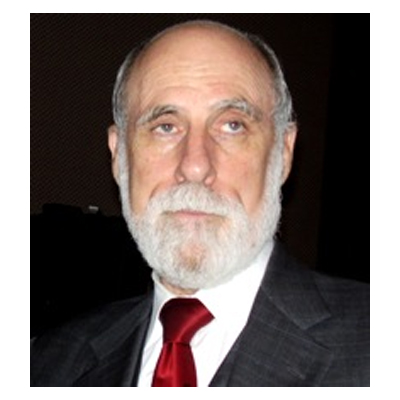
    Google’s Vice President and Chief Internet Evangelist Vinton G Serf is regarded as one of the fathers of the internet. While in Bangalore, he shared his views, Google’s objectives and the future of the internet, with Indiantelevision.com’s Tarachand Wanvari.


    Excerpts:

    IPR issues – You say that Google would like to make information available everywhere globally. Recently a Belgian court passed a ruling against Google over copyright. Google has been accused of dragging its feet in bringing in technology to take care of IP rights and help fight piracy. What does Google propose to do now on this issue?

    First of all, I’d like to point out that Google does not preview the content and we don’t claim any ownership or anything like that. Our intent is to make people aware of content which is already on the network. There are issues arising when someone who pulls copyright material and someone else has put that material improperly on the network. Google is unaware of any of the copyright claims when that information shows up on the net, it was there.


    Our package is very much like the package that was established in the US called the Digital Millennium Copyright Act.

    The US DRM is not as good as the framework in the EU.

    Actually, there is some tension in here between the piracy laws and the copyright laws and there is uncertainty as to how that is going to be resolved. The European Commission is trying to figure out how to adapt their intellectual property and content protection laws to match the US DRM laws.

    Google earth has run into several problems with regards to security. Lot of concerns have been raised about sensitive locations being viewed easily. What do you propose to do about this?

    Our policy is that whenever we have an issue arising with the national authorities, we take it away. We do understand their problems, and in fact there are any number of images that have been adapted. But I do need to point out to you that the data that we are using is not ours, typically it is available for free like the Nasa Landsat. Anyone could have access to it, and so removing it from Google Earth does not necessarily solve the problem, because the imagery is there. It’s also commercially accessible, in other words if you wanted that information, particularly if someone deliberately wanted the security overhead in order to mount an attack, if they have a coherent capability to attack, they probably also may have the ability to purchase this information quite independent from Google. So the problem is more complex than taking things out of Google Earth. The problem is that a lot of the overhead imagery is widely accessible. Period.


    I actually do not know of the specifics of the issues here in India, I can say that for some US installations we have removed or replaced information with less resolution or in some cases actually wiped out – like the White House for example, you can’t see the roof, it’s simply been covered up digitally. So those are things where actions have been taken.


    We face this all the time with regards to content that is indexed in different parts of the world you’ll find governments with different views, usually the Chinese example, the one everyone brings up, but I want to mention that there are other places. For example in France and Germany, it is illegal to profit form Nazi war memorabilia, and so it is considered illegal literally to put up images of these materials. So we have to consciously remove them form the google.de and the google.fr index. We understand that and we try to work with governments.

    The way mobile penetration is going on compared to laptops and desktops, do you see the internet more as a virtual net?

    In some ways yes. I think that we’re going to see expansion in all directions 802.11, Wifi, as opposed to physical networking technology. Lots and lots of mobiles which I think will be the first introduction to the internet for an awful lot of people in the world. Their first opportunity to interact with the internet may be on a mobile device.

    The ability to respond to an individual interaction, and to produce relevant advertising material in these different media is very important for us to consider

    As evangelist at Google, is it right for Google to acquire companies like Youtube, etc. Basically your core competency lies in developing search engines, aren’t you moving away from those core competencies?

    I disagree that we are going away from our core competencies. First of all, we acquire a lot of companies, because their technology we think is helpful. It’s true that our primary business is search and we have never lost track of that. But remember what’s driving the company right now is advertising, because advertising is how we pay for everything. And so you have to remember that the core of the business is revenue generation through target advertising. And we are very interested in all the mediums, not just the online internet, which has turned out to be wonderful for us. But that doesn’t mean that the other advertisement mediums should be ignored. They are still quite valuable.


    Youtube and Google video are media and so is radio. So we have been experimenting with video advertising, with audio advertising and with print advertising. Using similar kinds of techniques, the thing which is probably the most critical is the ability to produce an intervention in real time as opposed to the traditional thing where you produce a video advertisement which is a part of a television show actually prepared months or weeks ahead. The ability to respond to an individual interaction and to produce relevant advertising material in these different media is very important for us to consider.

    Could you speak on Web 2.0 and Web 3.0?

    I actually think those are two marketing terms and I sort of reject them out of hand as being overly simple. I do think however that the web as we know it with xml and html and so on has created an infrastructure layer on top of which you can now do things and so to the extent that there is a Web 2.0, maybe it uses web services and Service Oriented Architecture, it’s still very nascent, still very infantile. Long ways to go before we see it grabbing hold. I even chatted with Infosys this morning abut that and we have a similar view that it is still very much in its infancy.


    But, the concept is very compelling that you could standardize interaction. I hope we do it right this time. We tried once before in 1980, we called it the Webtronic Data Interchange and it didn’t work out because it was too vertical. So I sort of don’t like the terms Web 2.0 and Web 3.0., the thought behind them is standardizing of exchanges creating a layer of infrastructure that everyone can use and build on.

    How much is your India R & D center involved in solving these issues and challenges?

    In very obvious terms, we have a large number of Indian researchers and engineers at Google working very hard on many of these problems. So it’s a direct contribution at least to Google.