Tag: DreamWorks Animation

  • Justin Timberlake joins cast of Dreamworks Animation’s ‘Trolls’

    Justin Timberlake joins cast of Dreamworks Animation’s ‘Trolls’

    MUMBAI: Nine-time Grammy and four-time Emmy Award winner Justin Timberlake has signed on to star as Branch, a hilariously hardcore survivalist who hides his surprising true colors, in DreamWorks Animation’s upcoming musical comedyTrolls.


    Joined by Academy and Tony Award nominee Anna Kendrick as Princess Poppy, the two embark on a hair-raising adventure as the globally iconic Trolls make their motion picture debut. The film will be released on 4 November, 2016, by 20th Century Fox.


    Directed by Mike Mitchell, co-directed by Walt Dohrn and produced by Gina Shay, the film for the first time tells the story behind the beloved Trolls and their gravity defying and coloUrful manes.


    Continuing to this day, the Troll doll phenomenon was born in 1959 when Danish fisherman and woodcutter Thomas Dam, too poor to afford a Christmas present for his young daughter Lajla, carved a doll for her based on the legendary Scandinavian troll. This modern-day Geppetto couldn’t have imagined that the Troll dolls would soon become one of the biggest toy crazes of the 1960s. The Trolls experienced a resurgence in the 1990s and their uniquely endearing faces and shocks of coloUrful hair continue to capture the hearts and imaginations of fans around the world.


  • Netflix plans ‘Mr. Peabody & Sherman’ series from DreamWorks Animation

    Netflix plans ‘Mr. Peabody & Sherman’ series from DreamWorks Animation

    MUMBAI: Netflix will introduce a new original series for kids – The New Mr. Peabody & Sherman Show from DreamWorks Animation.


    Mr. Peabody, the smartest dog in the world, and his boy Sherman host a zany late-night comedy show broadcast from their swanky penthouse in front of a live studio audience. Anything can happen in this show jam-packed with exciting segments, great musical acts and very special guests like outrageous neighbors and hilarious time travelers they meet with the WABAC machine.


    Netflix has planned 13 episodes for season 1 of the show.

  • DreamWorks Animation loses $38.6 million in Q2 due to restructuring

    DreamWorks Animation loses $38.6 million in Q2 due to restructuring

    MUMBAI: Including the impact of the restructuring plan, DreamWorks Animation SKG, Inc reported net loss attributable of $38.6 million, or $0.45 per share for the quarter ended 30 June, 2015. The company’s operating loss stood at $21.8 million.


    DreamWorks Animation’s revenues for the quarter ended 30 June, 2015 at $170.8 million, were up 39.7 per cent from the same period in 2014. In addition, the company reported an adjusted operating loss of $1 million and adjusted net loss attributable to DWA of $11.6 million.


    Adjusted financial results exclude a $20.9 million pre-tax charge associated with company’s restructuring plan announced in January 2015.


    Of the restructuring-related charges totaling $20.9 million or a loss of $2.4 million was due to employee termination and other employee-related costs, $10.9 million was related to accelerated depreciation and amortization charges associated with the closure of its Redwood City facility, and $7.6 million was primarily related to excess staffing and other costs associated with previously announced changes in the feature film slate.


    “Our second quarter financial results were solid, highlighted by the theatrical success of Home and the rapid expansion of our Television and New Media businesses. The appetite for premium content across platforms continues to grow both domestically and internationally, and it’s clear DreamWorks Animation is well-positioned to capitalize on the growing demand,” said DreamWorks Animation CEO Jeffrey Katzenberg.


    Home, which was released theatrically on 27 March, 2015 has reached $177 million at the US box office and $207 million at the international box office to date. 


    Second Quarter Review:


    DreamWorks Animation’s second quarter revenues of $170.8 million increased 39.7 per cent versus the prior-year period primarily driven by the performance of the feature film, television series and specials and new media segments.


    Television Segment


    Revenues for the quarter ended 30 June, 2015 from the Television series and specials segment increased to $54.5 million, compared to $20 million during the prior-year period. The increase in revenues was attributable to a significantly higher number of episodes delivered under episodic content licensing arrangements.


    Segment gross profit increased to $19.2 million in the current quarter, from $1.2 million in the same period of the prior year. The increase was primarily driven by favorable amortization rates associated with episodic series, partially offset by higher up-front marketing costs associated with the release of its new television series.


    In addition, for the three months ended 30 June, 2014 segment gross profit was negatively impacted by higher than expected returns of seasonal and newly-released home entertainment product, as well as increased selling costs, related to the company’s Classic Media properties.


    Film Segment


    Revenues for the quarter ended 30 June, 2015 from the Feature Film segment increased to $87.8 million, up from $69.7 million in the prior-year period. Segment gross profit also increased to $31.7 million compared to $23.9 million in the same period last year.


    In the quarter, Home contributed revenue of $23.9 million, The Penguins of Madagascar contributed $8.3 million, How to Train Your Dragon 2 contributed $17.9 million, Mr. Peabody and Sherman contributed $8.4 million and Turbo contributed $1 million.


    Library titles contributed feature film revenue of $28.3 million to the quarter.


    Consumer Products Segment


    Revenues from the Consumer Products segment decreased to $12.7 million in the second quarter, compared to $18.5 million in the same period last year. The prior year period benefitted from merchandise and licensing revenue associated with How to Train Your Dragon 2, which was released theatrically in June 2014. Segment revenues in the current quarter were primarily generated by licensing arrangements related to a variety of intellectual property rights associated with the characters from films.


    Segment gross profit decreased to $1.8 million from $7.3 million in the prior year period, largely due to higher costs incurred across a variety of segment activities.


    New Media Segment


    Revenues for the quarter ended 30 June, 2015 from the company’s New Media segment were $14.6 million compared to $11.5 million during the three months ended 30 June, 2014. This increase was primarily attributable to revenue generated under new licensing agreements and the delivery of newly-created content versus the prior-year period.


    Segment gross profit increased to $7.5 million from $2.5 million in the prior-year period, primarily due to higher revenue contributions from newly licensed content. 

  • Dreamworks Animation & Spin Master to re-launch ‘Noddy’ franchise

    Dreamworks Animation & Spin Master to re-launch ‘Noddy’ franchise

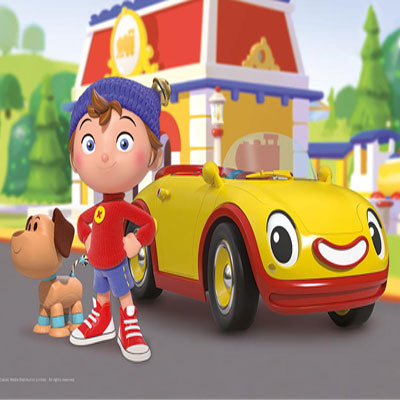
    MUMBAI: DreamWorks Animation and Spin Master have entered into an exclusive licensing relationship in which Spin Master will serve as the master toy licensee for the re-launch of the iconic preschool franchise Noddy.


    Alongside the all-new television series, Noddy, Toyland Detective, a wide range of toys including figures, playsets, vehicles, games and more, are slated to hit shelves in fall 2016.


    “Our portfolio of licensed properties has grown immensely in recent years and we are thrilled to be welcoming a true legacy franchise like Noddy to the Spin Master family. Noddy already has deep heritage throughout Europe and we know he will continue to captivate children around the world. It goes without saying that we can’t wait to introduce a new generation to the adventure and wonder that Noddy can bring to play time,” said Spin Master executive vice president of global licensing Adam Beder.


    Created by renowned children’s author Enid Blyton in 1949, Noddy has followed a little boy and his friends on a series of adventures around the colorful world of Toyland. In the upcoming series, Noddy has a refreshed look and a newly established role as Toyland Detective, in which he’ll show children how to investigate their world and make their own discoveries as he looks for clues to mysteries in each episode. Noddy will take audiences on adventures through new lands like the fantastical Fable Fields and the delightful Animal Acres, introducing new characters and locations along the way.


    “Spin Master is the perfect partner for our reintroduction of Noddy. Noddy has a rich legacy around the world, and we know a whole new generation of children will be excited to join the new Noddy on his many adventures onscreen and off,” added DreamWorks Animation head of international consumer products Jonathan Baker.


    Commissioned by France Television, Noddy, Toyland Detective is produced by Gaumont Animation in association with DreamWorks Animation Television and slated to premiere on France 5 in spring 2016. Gaumont Animation will distribute the series in France and French-speaking Europe. DreamWorks Animation owns Noddy and retains additional global distribution rights and manages licensing and merchandising for the property.

  • HP to automate IT infrastructure of DreamWorks Animation

    HP to automate IT infrastructure of DreamWorks Animation

    MUMBAI: DreamWorks Animation has selected HP to automate its IT infrastructure. By deploying HP Datacenter Care – Infrastructure Automation, HP is providing an agile deployment model, enabling DreamWorks Animation to manage its infrastructure as code to continuously deliver applications and services more quickly and reliably. 


    According to IDC, the average number of application deployments per month for Fortune 1000 companies is expected to double in two years. By automating, high-performing organizations can deploy code 30 times more frequently with 50 per cent fewer failures.


    “As we continuously push the boundaries of digital animation, we require a much faster and more reliable way to deliver applications and IT services. With a strong technology partner like HP, we are moving toward a new agile model that will enable IT with a greater capacity to innovate,” said DreamWorks Animation head of global technology operations Derek Chan.


    For more than a decade, HP solutions and services have supported all areas of DreamWorks Animation’s production processes, digital infrastructure and business divisions. This latest collaboration with HP will provide advice, support and tools to help DreamWorks Animation transform business ideas into customer value through software development and IT service delivery with agility, speed, efficiency, and reliability. For IT operations, this service will enable fast release cycles without interrupting production systems.


    HP Datacenter Care – Infrastructure Automation features open source tools, including Chef, to improve reliability and agility for IT environments. Chef’s IT automation platform turns infrastructure into code so datacenter management is versionable, repeatable and significantly less costly.


    “Automating infrastructure makes IT a strategic asset that can meet the growing demands being placed on IT teams to rapidly deliver applications and IT services. With Datacenter Care – Infrastructure Automation, we’re providing DreamWorks Animation high degrees of automation and collaborative software delivery processes,” added HP senior vice president and general manager technology services support Scott Weller.


    With HP’s robust support and advice tailored to DevOps environments, DreamWorks Animation will be able to reliably adopt and scale lean and agile IT. The HP Datacenter Care – Infrastructure Automation global Center of Excellence (CoE) will provide guidance and best practices for infrastructure as code and processes, along with support for tools that automate how DreamWorks Animation builds, deploys, and manages infrastructure. HP will also conduct proactive assessments and review tools usage quarterly to identify challenges, opportunities for improvement, and plan for future needs. 

  • DreamWorks Animation taps Jason Reitman to write & direct ‘Beekle’

    DreamWorks Animation taps Jason Reitman to write & direct ‘Beekle’

    MUMBAI: DreamWorks Animation has found a very real director for the story of an imaginary friend, as the Academy Award-nominated Jason Reitman is set to write and direct Beekle, based on the award-winning children’s book, The Adventures of Beekle: The Unimaginary Friend.


    Beekle is the first project to be put into development by DreamWorks Animation’s recently appointed co-presidents of feature animation Bonnie Arnold and Mireille Soria. It is the first foray into animation for Reitman, director of films including the Academy Award-nominated Juno, Thank You For Smoking and Up in the Air, amongst others.


    Written and illustrated by Dan Santat, The Adventures of Beekle: The Unimaginary Friend, is the 2015 recipient of the Caldecott Medal, awarded annually to the most distinguished American picture book for children.


    DreamWorks Animation development executive Damon Ross brought the project to the studio, which he, along with the studio’s head of development Gregg Taylor are overseeing.


    “Welcoming Jason onto this project is a true coup, as his incredible ability to tell heartfelt character-driven stories with a signature comedic tone makes him the perfect choice to bring this beloved book to the big screen. We immediately fell in love with the concept of ‘Beekle’ and know that Jason will create something truly special from this fantastic source material,” said Arnold and Soria in a joint statement.


    “I was book shopping with my daughter, when a little tooth-shaped character in a paper crown stole our hearts. His name was Beekle and I’m honored to now be adapting Santat’s charming story into a feature film. I’m particularly proud to be working with DreamWorks Animation, makers of Kung Fu Panda, the first film my daughter ever saw on the big screen,” Reitman added.


    Beekle is the story of an imaginary friend who is so odd and so unique that no kid could possibly imagine him. So he decides to take matters into his own hands, and sets off on an unimaginable journey to the land of people in search of a best friend.

  • DreamWorks Animation posts loss of $248 million as ‘Penguins’ flop

    DreamWorks Animation posts loss of $248 million as ‘Penguins’ flop

    MUMBAI: DreamWorks Animation posted a massive loss of $247.7 million in the fourth quarter due to the company’s recent restructuring plans, the closure of its Northern California studio and changes in its film release strategy.


    The company posted sales of $234.2 million for the quarter ended 31 December, 2014, which was up 14.7 per cent over the same period in 2013. The company’s adjusted operating loss came in at $37.6 million, while its net loss was $64.1 million.


    The company’s adjusted financial results exclude a $210.1 million pre-tax charge associated with its restructuring plan announced on 22 January, 2015. The company’s results for the quarter ended 31 December, 2014 include impairment charges of $57.1 million, or a loss of approximately $0.63 per share, primarily related to the performance of The Penguins of Madagascar and Mr. Peabody and Sherman, as well as certain other titles and investments.


    As part of the reorganisation, which resulted in over 500 layoffs, DreamWorks Animation also said that it is selling its Glendale, Calif., campus for $185 million and will lease back the space.


    Including the impact of the restructuring plan, DreamWorks Animation reported net loss of $263.2 million for the quarter ended 31 December, 2014. Of the restructuring-related charges totaling $210.1 million, $54.6 million was related to employee termination costs and other contractual obligations and $155.5 million was primarily related to write-offs of capitalized production costs of unreleased projects, including B.O.O. and Monkeys of Mumbai, as well as other charges associated with changes in the film slate.


    “Although 2014 was a challenging year for our company, I am confident that our recent announcement to restructure our feature film business will enable us to deliver great films and better box office results,  while improving the overall financial performance of our business. And while 2015 will be a transitional year for us, I couldn’t be more confident for the future. We have a set of strategic imperatives in place designed to ensure sustainable and profitable growth over the long term,” said DreamWorks Animation CEO Jeffrey Katzenberg


    For the full year, DreamWorks Animation’s 2014 revenues decreased 3.2 per cent to $684.6 million, while it posted an operating loss of $300 million. When adjusted, the loss was $90 million.


    Fourth Quarter Review:


    DreamWorks Animation’s fourth quarter revenues of $234.2 million increased 14.7 per cent due to increases in revenues across each of the company’s primary segments.


    Feature Film Segment


    Revenues for the quarter ended 31 December, 2014 from the Feature Film Segment increased to $131.3 million, while segment gross profit declined to $152.2 million, primarily due to the impact of film and other inventory write-offs of $153.8 million stemming from the company’s restructuring initiatives, as well as impairment charges of $39.7 million related to The Penguins of Madagascar and Mr. Peabody and Sherman:


    The Penguins of Madagascar, which was released theatrically on 26 November, 2014, has reached $358 million at the worldwide box office to date. The film contributed feature film revenue of $6.9 million in the quarter, primarily from distribution outside of Fox territories. Fox did not report any revenue to DreamWorks Animation in the quarter for the film as they had not yet recouped their marketing and distribution costs.


    How to Train Your Dragon 2 contributed feature film revenue of $66 million in the quarter, primarily from home entertainment. The film was released into the domestic home entertainment market on 11 November, 2014 and through the end of the fourth quarter reached an estimated 7.5 million home entertainment units sold worldwide, net of actual and estimated future returns.


    Mr. Peabody & Sherman was released into the domestic home entertainment market on 14 October, 2014 and through the end of the fourth quarter, reached an estimated 3.4 million home entertainment units sold worldwide, net of actual and estimated future returns. Fox did not report any revenue to DreamWorks Animation in the quarter for Mr. Peabody and Sherman as they had not yet recouped their marketing and distribution costs.


    Turbo contributed feature film revenue of $5.8 million in the quarter, primarily from home entertainment. The film was released into the domestic home entertainment market on 12 November, 2013 and through the end of the fourth quarter, reached an estimated 6.3 million home entertainment units sold worldwide, net of actual and estimated future returns. 


    The Croods contributed feature film revenue of $6.5 million in the quarter, primarily from home entertainment. The film was released into the domestic home entertainment market on 1 October, 2013 and through the end of the fourth quarter, reached an estimated nine million home entertainment units sold worldwide, net of actual and estimated future returns. 


    Library titles contributed feature film revenue of $46.1 million to the quarter.


    Television Series and Specials Segment


    Revenues for the quarter ended 31 December, 2014 from the Television Series and Specials Segment increased 7.7 per cent to $50.7 million. Segment gross profit declined from $7.3 million to $2.6 million, as the higher revenues were more than offset by write-downs of capitalized film costs totaling $13.3 million in the quarter, primarily due to revisions in estimated future revenues for certain television specials, as well as up front marketing costs related to the various television series that were delivered in the quarter.


    Consumer Products Segment


    Revenues from the Consumer Products Segment increased 77.5 per cent to $22.1 million, while segment gross profit increased to $6.1 million mostly due to increased sales in the company’s merchandise, location-based entertainment and retail development businesses.


    New Media Segment


    The company is now presenting a New Media Segment within its financials, which consists of revenues and expenses attributable to Awesomeness TV (ATV) and related businesses. Revenues and segment gross profit for the quarter ended 31 December, 2014 from the company’s New Media Segment increased to $24.9 million and $13.2 million, respectively. The New Media Segment benefitted from the production and delivery of original programming, sponsorships arrangements and content licensing fees.


    Also during the quarter, DreamWorks Animation entered into a joint venture agreement with Hearst Corporation under which Hearst purchased a 25 per cent ownership interest in ATV for $81.25 million. The company also entered into an agreement with the former stockholders of ATV under which the Company paid $80 million in lieu of any amounts of earn-out consideration. As a result, DreamWorks Animation recorded a gain in the quarter of $6.8 million to reflect the change in fair value of the contingent consideration liability. 


    All Other Segments


    Revenues for the quarter ended 31 December, 2014 from the All Other Segment declined to $5.2 million, primarily because the company is no longer self-producing any live performance productions. In the prior year period, the company earned revenues of $11 million attributable to the subscription video-on-demand (SVOD) release of the filmed version of Shrek the Musical. Segment gross profit decreased to $4 million, largely due to lower revenues and the write-off of capitalized costs in the amount of $5.4 million.


    For the quarter ended 31 December, 2014, DreamWorks Animation posted an adjusted operating loss of $37.6 million. This was primarily driven by impairment write-downs on certain film assets and investments, as well as the impact of increased investment in support of brand and new business initiatives.

  • DreamWorks Animation wins two awards from Academy of Motion Picture Arts & Sciences

    DreamWorks Animation wins two awards from Academy of Motion Picture Arts & Sciences

    MUMBAI: DreamWorks Animation has been awarded two Technical Achievement Awards by the Academy of Motion Picture Arts and Sciences for the development of two revolutionary tools used in feature filmmaking: Foliage System and OpenVDB.


    Both of these tools were most recently used in the making of How to Train Your Dragon 2, an Academy Award nominee for Best Animated Feature and winner of this year’s Golden Globe, six Annie Awards from ASIFA-Hollywood and named Best Animated Feature by the National Board of Review. In addition to these two awards, Hewlett-Packard also received a Technical Achievement Award for its HP DreamColor LP2480zX Professional Display monitor, created in collaboration with DreamWorks Animation engineers.


    “At DreamWorks Animation, engineers, technicians and artists come together to create new technology stimulated by the vision and imagination of filmmakers such as writer/director Dean DeBlois (HTTYD2). I want to congratulate our engineers and artists, as well as the DreamColor team at Hewlett-Packard, on their Technical Achievement Awards that recognize outstanding innovation in the development of tools and technology that enhance the industry’s creative storytelling ability,” said DreamWorks Animation chief technology officer Lincoln Wallen.


    The Foliage System was first developed for 2001’s Shrek, where it was used to create more than 10,000 trees, the largest deployment of digital vegetation in any film at its time. Since then, DreamWorks Animation has continued to be the industry leader in innovating new tools and techniques that provide the greatest artistic flexibility in rendering foliage. DreamWorks Animation effects artists Scott Peterson, Jeff Budsberg, and Jonathan Gibbs received the award for the design and implementation of the Foliage System.


    OpenVDB is an open source data structure and set of tools that help manage the storage of enormous amounts of information created by complex visual effects such as water, dust, smoke and fire, found in both animated and live action films. OpenVDB’s efficiency reduces digital storage requirements and the need for long wait times when running simulations, which have resulted in it becoming a standard in the animation and VFX industry. With adoption at studios including Weta Digital, Disney Animation, and ILM, the tools were used in the making of several of this year’s Academy Award nominated films for Best Visual Effects, including X-Men: Days of Future Past, Dawn of the Planet of the Apes and Guardians of the Galaxy. DreamWorks Animation engineers Ken Museth, Peter Cucka, and Mihai Alden, received the award for the creation of OpenVDB. 


    HP’s DreamColor monitor was jointly developed with DreamWorks Animation to provide the highest color quality level LCD monitors required for graphic intense workflows, such as those for producing feature animation and visual effects. Karl Rasche, a DreamWorks software engineer, was recognized by the Academy, along with the other award winners from Hewlett-Packard, for the joint development of the HP DreamColor LP2480zx Professional Display.

  • Prime Focus World’s 3D solutions for filmmakers

    Prime Focus World’s 3D solutions for filmmakers

    Of late, several projects have deployed the process of making stereo images from non-stereo traditional 2D images, also called stereo conversion or dimensionalisation or 3D imagery. And one of the leading stereo conversion studios, Prime Focus World, has had a very successful track record of converting 2D films into 3D, and assisting filmmakers shoot in 3D during the filming process itself.

    While it is generally the directors and filmmakers who reach out to Prime Focus World to convert a 2D film into a 3D one, right from the scripting stage to pre-production and production, the studio too seeks out filmmakers to show them the possibilities of converting their films into 3D.

    Prime Focus World senior stereoscopic supervisor Justin Jones has worked with clients including Lucasfilm, Dreamworks Animation, Paramount Pictures, Relativity Media and Warner Bros, apart from collaborating with Industrial Light & Magic visual effects supervisors, John Knoll and Dennis Muren.

    Jones’ mandate is to oversee the creative aspect of 3D projects. Early in the project cycle, he collaborates with the client to develop a creative strategy and establish the show structure and workflow. He works closely with the show’s producer to conduct shot analysis, schedule consultation, departmental organisation and pipeline development. It is also part of Jones’ job to keep tab on the progress made by the show across teams in North America, India and the United Kingdom.

    Coming to technicalities, stereoscopic 3D is currently found in four basic formats, including anaglyph (red-cyan), polarised passive (movie theatres and many 3DTVs), active-shutter (DLP projectors and many 3DTVs) and autostereoscopic (parallax barrier like Nintendo 3DS). The tools used for stereo conversion are roto, ocula, in-painting, rubber mapping and projection. Of which, roto is the primary tool used for stereo conversion by volume. While roto just prepares the material, it is the most time-consuming portion of the conversion process.

    “Roto really helps us achieve perfect conversion and helps artistes to have greater control over each pixel during the final conversion process,” says Jones.

    While stereo conversion mainly relies on these tools, there is more to it than just the technical aspect. Many a times, there are creative differences between the studio and filmmakers but Jones believes in first visualising what the director wants and then sitting with the team and ideating on how best to utilise the shots and scenes for perfect conversion into 3D.

    “We convert a few shots and scenes and take it back to the filmmakers to show the difference between 2D and 3D, allowing them to give feedback and implementing it to see if it is beneficial to the conversion,” says Jones.

    With so much to and fro, the entire process is bound to be time-consuming. However, Prime Focus sticks to a very strict schedule to meet deadlines. “We have a track record of converting films in record time and with the right visual effects. What also helps is the abundance of resources that we have at our disposal. On any given project, we would have anywhere between 400 and 450 artistes,” exults Jones. A three-month window is usually kept for every project so as to allow time for final stage testing and checking footage in detail. Jones reveals that The Wizard of Oz (1939) took nearly 14 months from the early stages where the character design was mapped out on paper, which alone took 10 weeks.

    On the whole, it’s been a satisfying journey, what with hours, days, weeks and months of hard work being put in.

    Every project has been unique. Jones recalls doing a lot of stereo renders on Avatar and helping director James Cameron with stereo aspects as well. “Whatever Cameron shot, we worked alongside the stereographers of his team to bring out the best visual result, and were commended for our dedicated efforts,” he says. Working on Transformers alongside Michael Bay and Cory Turner was equally enjoyable, and “Working on Star Wars was a personal high as it is one of my favourite movie franchises. Working with Lucasfilm was a great experience as they have really been doing some great work in the field of advanced technology used in movies,” he says.

    Jones is excited about his current projects which includes Sin City 2: A Dame to Kill For. About the sequel to Sin City, he says, “We are doing all the special effects for the film and the concept, design and executing the visual effects, apart from doing all the stereo effects.”

    Ask him about 3D vs. 2D and he says it all depends on how much thought has really gone into the making of the 3D film. He gives the example of Cameron who was dead sure his film would be in 3D even before starting work on it, which is why he ensured the best use of technology. Ditto for Gravity, which took months of pre-production and visualizing a posse of camera angles and shots before getting made in 3D.

    “The idea is to offer an immersive experience for the viewer. That said, if the film is first shot in 2D and then converted into 3D, it doesn’t necessarily lose out on a great 3D proposition. What is required is a great stereographer who can visualise and find those places that can be used to enhance the 3D effect in the film and bring about an immersive experience. The idea is never to look like a gag for the audience by just throwing things at them in the theatres, but to give them a memory of taking back an experience, not just a movie,” sums up Jones. He is quick to add however that a good 3D effect can never make a bad movie get a good review; “You need to have a good script in place and each aspect of the film needs to be rock solid for great BO and critical acclaim,” Jones ends.

  • Mipcom 2013: Bigger and Better

    Mipcom 2013: Bigger and Better

    CANNES: If you thought 1,200 participants at Mip Junior was big, think again. 

    We’re talking 13,000 participants from 100 countries; 4,400 buyers with 40 sessions and keynotes; 1,700 exhibitors across five exhibition floors; and approximately 100 Indian companies with their biggest formats. Mipcom 2013 is finally here and how!

    Starting 7 October at the resplendent Palais des Festivals in Cannes, the four-day fest will see some of the biggest content deals being sealed. The Indian contingent will see Star TV with its biggest format Mahabharat and Zee TV with its new offering Buddha among others. Events to watch out for include the key note address by Zeel MD and CEO Puneet Goenka along with Dreamworks Animation CEO Jeffrey Katzenberg.

    So what’s the Mipcom allure really? For one, launching and selling programmes and expanding sales to new platforms. Second, discovering and acquiring the newest and best content in every genre and platform. Third, finding co-production partners and new international channels to enrich offerings and last but not the least, expanding industry knowledge, understanding trends and discovering new business models.

    And while Cannes gears up to welcome a host of participants from around the world, indiantelevision.com preps up to keep you up-to-speed with what’s happening out there…