Tag: Dr Prannoy Roy

  • …and journalism just happened to Bhupendra Chaubey

    …and journalism just happened to Bhupendra Chaubey

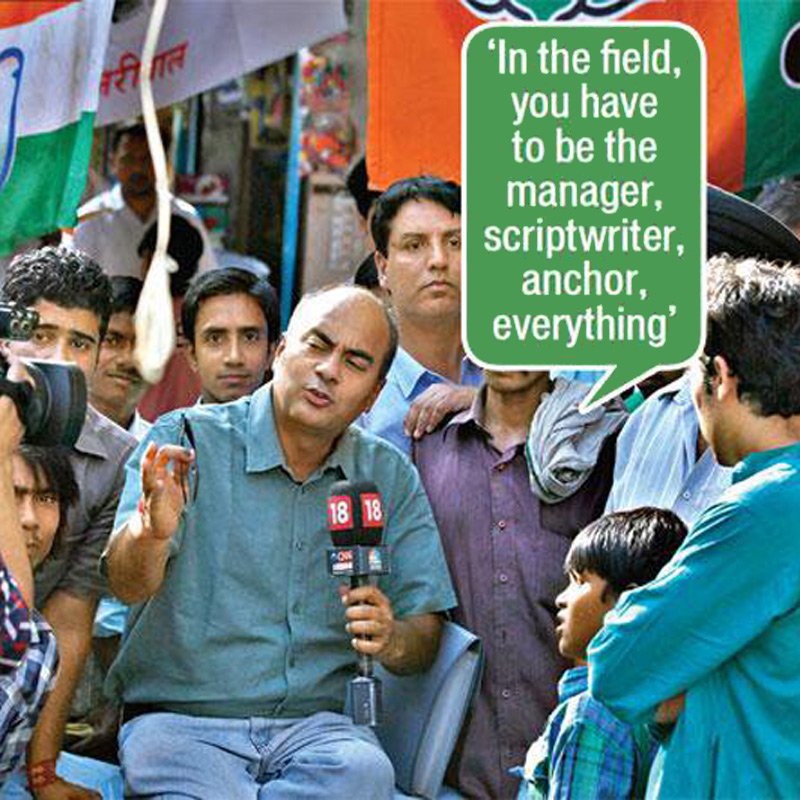
    Sometimes the best things in life which make you stand out are unplanned. Mapping his way from a postgraduate in films to senior journalist in CNN-News18 is Bhupendra Chaubey. Set out to become a filmmaker in life, journalism just happened to him. Being good at theatre, public speaking, essay-writing and elocution, etc, cinema is something that still excites him.

    The Delhi-based graduate heard about Dr Prannoy Roy looking for bilingual people to come on board. Although not too excited by the news to boost his friend’s confidence who was applying for a job at NDTV, Chaubey went along and dropped his CV as well.

    As they did not know anyone working there, the duo randomly dropped their CVs a couple of times at NDTV and forgot about it.  After a few days, not the other guy but Chaubey received a call from the HR for a meeting scheduled with Dr Roy. Declining to meet would have looked mean, and so Chaubey decided to meet him just to convey his regards. The co-founder of NDTV, after going through Chaubey’s CV, immediately offered him a job right there. But, Delhi was not the place where this young budding journalist’s heart was. He wanted to work in Mumbai.

    Bhupendra Chaubey’s resume

    Chaubey has been a TV journalist since 2000, when he started his career with NDTV. In 2005, he left NDTV and was a part of the team that started CNN IBN. As a political journalist, he has travelled the length and breadth of the country and has covered three general elections and assembly elections in a majority of Indian states.

    A graduate in Mathematics and a postgraduate in films, Chaubey has been among the finest political journalists of his generation. He has that unique ability to grasp things at a micro level, and then present them with a macro-level understanding. He is amongst those journalists who depend more on (political) awareness on the ground supplementing it with academic awareness of issues that confront the nation.

    Chaubey moved up the ladder by becoming the executive editor of CNN News18. Today, he hosts the prime-time broadcast Big5 at 10pm. He also hosts a weekend interview show Hot Seat where he puts tough questions to key newsmakers and regularly writes columns for various English and Hindi newspapers, magazines and digital media. He lives in the national capital with his wife and two children.

    Chaubey till date remembers what Dr Roy told him that day: “I think I am seeing a journalist in you. You should give it a shot. If you think you can’t fit in, there is always an option to leave”.

    Thus started his journey with New Delhi Television. One thing led to the next which caught Chaubey’s interest and there was no stopping, then. Dating a girl then who is now his wife, going to Mumbai was still on the cards. “Working with NDTV was phenomenal and an enriching experience. Imagine a newsroom working alongside Rajdeep Sardesai, Barkha Dutt and Arnab Goswami under one roof. Today, they all are in different companies but I have learnt a lot from them,” shares Chaubey.

    Chaubey preferred putting himself as the third generation of TV journalists in India considering Dr Roy and Vinod Dua as the first generation, and Rajdeep, Barkha, Arnab and Ravish as the second generation. “The beauty of entering a different profession is that you start as a novice. As I did not know what was coming my way, each day was a new day. Barkha was an outstanding scriptwriter, and I also learnt a lot about storytelling formats from her. Arnab was a great political mind; all the conversations with him were enriching. Rajdeep was a big superstar even in those days.”

    Remembering his tough days and working in various shifts, the curious reporter credits three people in his life. His wife, who knew a bit about journalism, the one who trained him to think in 10 different ways. “In school, you debate at an elementary level. But, the ability to speak on a topic in multiple ways is something I learnt from her. (The second) Prannoy, the head of NDTV, was my ideal, but I made it a point to hang around Rajdeep (Sardesai) to see what he was doing”. Rajdeep handheld Chaubey and was always a dear friend and editor to him.

    Mentioning the time of during the Coffingate, the then defence minister George Fernandes was the main target of the critics accused in supplying coffins to the Indian army jawans. “One fine afternoon, on a weekday, as I was climbing down the stairs of NDTV office, Sardesai was seated in his car heading to some place”. He asked Chaubey to join him. In the next few minutes, they were right in front of Fernandes’s house opposite to Arun Jaitley’s place without any camera. Sardesai, being a star at that time, the duo was allowed to enter the minister’s house. Fernandes was not giving interviews to anybody because of the heat around the allegations. Sardesai, positioning himself completely on his side by saying a few things about Fernandes which made him feel very comfortable, sectretly messaged a cameraman. While, he was having the conversation with Fernandes, the man with a single camera entered. Sardesai convinced Fernandes to be patient with only five questions and got a 25-minute interview with him. “Rajdeep was sitting behind the camera. So, after George answered his last question, the cameraman was asked to focus only on Rajdeep and he repeated the questions which he had put to Fernandes. He was blessed with a photographic memory. That was my first encounter wherein I learnt how to convert a single cam entity to two cam entity”.

    “He has always motivated and helped me. There is a certain kind of bond and friendship that I have with him. He made me understand the nuances of journalism. That is why when he left NDTV, I too left.”

    “Bhupendra is a dynamic and bright journalist. I wish him all the best for whatever he does in future,” says Sardesai.

    Right after that Arnab Goswami made an exit from NDTV. “Arnab was very keen on me working with him. But, I joined Rajdeep. So, for some time, he was not happy with it.”

    “Now the person who is really helping me and encouraging me to create, enhance and carve a niche for myself is Rahul Joshi. He is an absolutely great guy to work with completely different from any TV editor. I am enjoying working with him.”

    With Google not being efficient in those days, on several occasions, Chaubey has worked under pressure. Not knowing where political parties office were, he used to often dial AskMe service at that time to figure out addresses. It has led him to several wrong addresses, nonetheless. “Pressure and dilemma are there in every work life, every profession, and journalism is no different. The only point is that journalism allows you to take decisions completely on your own. What you do in your journalistic career, only you are accountable for that.  While it is a team game, it is often enormously an individualistic game where it enables you to own your individual skills”.

    One crazy experience that Chaubey cites during his tenure with NDTV was back in 2003 when Uma Bharti was the chief minister of Madhya Pradesh. The day he was supposed to meet her for an interview, Bharti resigned as she wanted to surrender herself in the court of law. She decided to undertake a train journey from Bhopal to Hooghly; it was a two-day long journey. While preparing to return to NDTV, he got a call from Sardesai asking to interview her during the jounery, and there was no option but to accept. “Rajdeep has a peculiar way of talking. I got on the train without a ticket. I remember, at some station, Bharti wanted to take a bath. Being in an express train, one of her followers came arrived with two buckets full of water for her. She simply took the buckets, went inside the loo and poured it on her person and came out in the same clothes”.

    At the Jim Corbett National Park, there was a story of dying elephants which smacked of corporate poaching. Chaubey was asked to follow up, and he obeyed. On reaching there, he recorded an interview with the forest conservator who game some interesting viewpoints. “At that time, we did not have OB vans. The park is 300 kms from Delhi. In my great enthusiasm, I sent the tape back to Delhi with the driver and asked him to return. Rajdeep got so angry with me for this two-way journey.”

    Chaubey’s journey with NDTV was full of twists and turns. He left the network in 2005 and was a part of the team that launched CNN IBN. He joined CNN-IBN (now, CNN-News18) as the chief political correspondent. Before joining CNN IBN, he got a call from Prannoy Roy. He said, “Only a stupid person would think of leaving The New York Times to join The Tribune hinting that NDTV is the NY Times and CNN-IBN is The Tribune.”

    “He comes with abundant energy to work everyday. His energy is infectious and sometimes gets transmitted to those working with him,” says IBN18 Network chief executive producer Rajen Garabadu about Chaubey. “You tend to work harder when you see him work so hard. He reaches on time for an early morning shoot even if he has worked till late the previous day. He remains fully charged and his energy does not fade through the day. Having spent more than two decades in news television, I can say there aren’t too many journalists who can match his energy,” Garabadu said.

    Always hoping to anchor ‘The Big Fight’ which Sardesai used to do, it was a difficult task for Chaubey to leave NDTV. “Prannoy Roy did not like it when I bid adieu to him. But, that is the way some of our media barons are. They expect extreme loyalty, and he thought it was disloyal on my part to be moving away with Rajdeep”.

    Chaubey went back and told this to Sardesai, to which he replied, “One day, we will make it bigger than the New York Times”.

    “Bhupendra is good for his place. There are few editors who can decide and put entertainment in primetime slots which Bhupendra understands well. Earlier, Rajdeep’s blue-eyed boy and now Rahul Joshi’s lad,” says a senior media expert.

    Chaubey has been termed as Rajdeep’s blue-eyed boy on various occasions. Contradicting this remark, Garabadu says, “I don’t think he is. I have worked very closely with Rajdeep for more than 11 years. The editor-in-chief of a channel will work closely with his senior journalists. Anyone who breaks big stories becomes the editor’s blue-eyed boy. And, in that sense, Bhupen did break stories from time to time”.

    Leading a team of bright reporters, Chaubey recollects how challenging it was for him to work with his peers. But, it came out well for him. Always believing in leading by example, he does not consider himself like a studio anchor. “I cannot sit in an AC office and ask everyone else to do the job”.

    One more instance that comes to his mind is when Sardesai wanted Ram Jethmalani as a guest for a primetime show. Chaubey barged into Jethmalani’s car without his permission. “I was not permitted to talk on the phone. So, I went to a place where he was a speaker and parked myself next to his car. When he arrived to board the car, I opened the other door and got inside his car. I requested him to speak to me”.

    On one occasion, Chaubey caught hold of Murli Manohar Joshi when he was passing by, at which he got furious. “Today, he is a good friend of mine. These events toughen you, and CNN-IBN has toughened me even more. Through the years, one improves through the experiences of various kinds,” he observes.

    Chaubey believes that there has been a complete change in the approach to journalism. The entire concept of journalism has been turned upside down. “News has been replaced by views, and the feeling right now is like views are news. Some channels have converted it into a fine art wherein you can just say what you want to and will present only one side of the truth. You would convert it into an opportunity, a scenario where no one else can question you which is a dangerous trend and should not be taking place. These dangers are the result of falling standards of journalism reflected in various forms now”.

    Chaubey himself became news after his CNN IBN interview with the Bollywood star Sunny Leone for which he received a lot of flak. After the drama post telecast, he explained that he was simply doing his job by questioning her. “If anyone felt offended, I am sorry. That was not my intention. My focus was to get, try and figure out who the real Sunny Leone was. In this country, people can object to anything. Viewers thought that my tone was not in good taste but this is the way it is. They just expect filmstars to be treated differently.”

    “In my opinion, he spoilt the interview with Sunny Leone. It was a bit awkward and in bad taste. But, soon enough, he felt it and apologised which was appreciated. The interview was certainly a miscalculation and he realised, adds a senior journalist.

    “The interview became more than what he said. His manner of asking questions, his expression, the tone, etc., made the issue bigger than its actual content. I am sure he did not mean to offend Sunny or belittle her. It was just the manner and a few wording which upset some people. In hindsight, he could have chosen his words better,” adds another senior reporter.

    For people who admire Chaubey and want to be successful, one thing that he follows is “be patient because if there is any profession that will check your patience, it is journalism.” Making a film is definitely on the agenda that Chaubey wishes to pursue. Writing a book is also his plan going forward.

    “Journalism should not be restricted to one platform or source, it should be across sources. I will be very keen if it works out well,” concludes Chaubey.

    “For Bhupendra, keep up the same level of energy as you bring to the newsroom everyday. Keep rocking. For others, there is much more to Bhupendra than what you see on screen. He puts in a lot of hard work which might not be visible on TV,” voices Garabadu.

  • …and journalism just happened to Bhupendra Chaubey

    …and journalism just happened to Bhupendra Chaubey

    Sometimes the best things in life which make you stand out are unplanned. Mapping his way from a postgraduate in films to senior journalist in CNN-News18 is Bhupendra Chaubey. Set out to become a filmmaker in life, journalism just happened to him. Being good at theatre, public speaking, essay-writing and elocution, etc, cinema is something that still excites him.

    The Delhi-based graduate heard about Dr Prannoy Roy looking for bilingual people to come on board. Although not too excited by the news to boost his friend’s confidence who was applying for a job at NDTV, Chaubey went along and dropped his CV as well.

    As they did not know anyone working there, the duo randomly dropped their CVs a couple of times at NDTV and forgot about it.  After a few days, not the other guy but Chaubey received a call from the HR for a meeting scheduled with Dr Roy. Declining to meet would have looked mean, and so Chaubey decided to meet him just to convey his regards. The co-founder of NDTV, after going through Chaubey’s CV, immediately offered him a job right there. But, Delhi was not the place where this young budding journalist’s heart was. He wanted to work in Mumbai.

    Bhupendra Chaubey’s resume

    Chaubey has been a TV journalist since 2000, when he started his career with NDTV. In 2005, he left NDTV and was a part of the team that started CNN IBN. As a political journalist, he has travelled the length and breadth of the country and has covered three general elections and assembly elections in a majority of Indian states.

    A graduate in Mathematics and a postgraduate in films, Chaubey has been among the finest political journalists of his generation. He has that unique ability to grasp things at a micro level, and then present them with a macro-level understanding. He is amongst those journalists who depend more on (political) awareness on the ground supplementing it with academic awareness of issues that confront the nation.

    Chaubey moved up the ladder by becoming the executive editor of CNN News18. Today, he hosts the prime-time broadcast Big5 at 10pm. He also hosts a weekend interview show Hot Seat where he puts tough questions to key newsmakers and regularly writes columns for various English and Hindi newspapers, magazines and digital media. He lives in the national capital with his wife and two children.

    Chaubey till date remembers what Dr Roy told him that day: “I think I am seeing a journalist in you. You should give it a shot. If you think you can’t fit in, there is always an option to leave”.

    Thus started his journey with New Delhi Television. One thing led to the next which caught Chaubey’s interest and there was no stopping, then. Dating a girl then who is now his wife, going to Mumbai was still on the cards. “Working with NDTV was phenomenal and an enriching experience. Imagine a newsroom working alongside Rajdeep Sardesai, Barkha Dutt and Arnab Goswami under one roof. Today, they all are in different companies but I have learnt a lot from them,” shares Chaubey.

    Chaubey preferred putting himself as the third generation of TV journalists in India considering Dr Roy and Vinod Dua as the first generation, and Rajdeep, Barkha, Arnab and Ravish as the second generation. “The beauty of entering a different profession is that you start as a novice. As I did not know what was coming my way, each day was a new day. Barkha was an outstanding scriptwriter, and I also learnt a lot about storytelling formats from her. Arnab was a great political mind; all the conversations with him were enriching. Rajdeep was a big superstar even in those days.”

    Remembering his tough days and working in various shifts, the curious reporter credits three people in his life. His wife, who knew a bit about journalism, the one who trained him to think in 10 different ways. “In school, you debate at an elementary level. But, the ability to speak on a topic in multiple ways is something I learnt from her. (The second) Prannoy, the head of NDTV, was my ideal, but I made it a point to hang around Rajdeep (Sardesai) to see what he was doing”. Rajdeep handheld Chaubey and was always a dear friend and editor to him.

    Mentioning the time of during the Coffingate, the then defence minister George Fernandes was the main target of the critics accused in supplying coffins to the Indian army jawans. “One fine afternoon, on a weekday, as I was climbing down the stairs of NDTV office, Sardesai was seated in his car heading to some place”. He asked Chaubey to join him. In the next few minutes, they were right in front of Fernandes’s house opposite to Arun Jaitley’s place without any camera. Sardesai, being a star at that time, the duo was allowed to enter the minister’s house. Fernandes was not giving interviews to anybody because of the heat around the allegations. Sardesai, positioning himself completely on his side by saying a few things about Fernandes which made him feel very comfortable, sectretly messaged a cameraman. While, he was having the conversation with Fernandes, the man with a single camera entered. Sardesai convinced Fernandes to be patient with only five questions and got a 25-minute interview with him. “Rajdeep was sitting behind the camera. So, after George answered his last question, the cameraman was asked to focus only on Rajdeep and he repeated the questions which he had put to Fernandes. He was blessed with a photographic memory. That was my first encounter wherein I learnt how to convert a single cam entity to two cam entity”.

    “He has always motivated and helped me. There is a certain kind of bond and friendship that I have with him. He made me understand the nuances of journalism. That is why when he left NDTV, I too left.”

    “Bhupendra is a dynamic and bright journalist. I wish him all the best for whatever he does in future,” says Sardesai.

    Right after that Arnab Goswami made an exit from NDTV. “Arnab was very keen on me working with him. But, I joined Rajdeep. So, for some time, he was not happy with it.”

    “Now the person who is really helping me and encouraging me to create, enhance and carve a niche for myself is Rahul Joshi. He is an absolutely great guy to work with completely different from any TV editor. I am enjoying working with him.”

    With Google not being efficient in those days, on several occasions, Chaubey has worked under pressure. Not knowing where political parties office were, he used to often dial AskMe service at that time to figure out addresses. It has led him to several wrong addresses, nonetheless. “Pressure and dilemma are there in every work life, every profession, and journalism is no different. The only point is that journalism allows you to take decisions completely on your own. What you do in your journalistic career, only you are accountable for that.  While it is a team game, it is often enormously an individualistic game where it enables you to own your individual skills”.

    One crazy experience that Chaubey cites during his tenure with NDTV was back in 2003 when Uma Bharti was the chief minister of Madhya Pradesh. The day he was supposed to meet her for an interview, Bharti resigned as she wanted to surrender herself in the court of law. She decided to undertake a train journey from Bhopal to Hooghly; it was a two-day long journey. While preparing to return to NDTV, he got a call from Sardesai asking to interview her during the jounery, and there was no option but to accept. “Rajdeep has a peculiar way of talking. I got on the train without a ticket. I remember, at some station, Bharti wanted to take a bath. Being in an express train, one of her followers came arrived with two buckets full of water for her. She simply took the buckets, went inside the loo and poured it on her person and came out in the same clothes”.

    At the Jim Corbett National Park, there was a story of dying elephants which smacked of corporate poaching. Chaubey was asked to follow up, and he obeyed. On reaching there, he recorded an interview with the forest conservator who game some interesting viewpoints. “At that time, we did not have OB vans. The park is 300 kms from Delhi. In my great enthusiasm, I sent the tape back to Delhi with the driver and asked him to return. Rajdeep got so angry with me for this two-way journey.”

    Chaubey’s journey with NDTV was full of twists and turns. He left the network in 2005 and was a part of the team that launched CNN IBN. He joined CNN-IBN (now, CNN-News18) as the chief political correspondent. Before joining CNN IBN, he got a call from Prannoy Roy. He said, “Only a stupid person would think of leaving The New York Times to join The Tribune hinting that NDTV is the NY Times and CNN-IBN is The Tribune.”

    “He comes with abundant energy to work everyday. His energy is infectious and sometimes gets transmitted to those working with him,” says IBN18 Network chief executive producer Rajen Garabadu about Chaubey. “You tend to work harder when you see him work so hard. He reaches on time for an early morning shoot even if he has worked till late the previous day. He remains fully charged and his energy does not fade through the day. Having spent more than two decades in news television, I can say there aren’t too many journalists who can match his energy,” Garabadu said.

    Always hoping to anchor ‘The Big Fight’ which Sardesai used to do, it was a difficult task for Chaubey to leave NDTV. “Prannoy Roy did not like it when I bid adieu to him. But, that is the way some of our media barons are. They expect extreme loyalty, and he thought it was disloyal on my part to be moving away with Rajdeep”.

    Chaubey went back and told this to Sardesai, to which he replied, “One day, we will make it bigger than the New York Times”.

    “Bhupendra is good for his place. There are few editors who can decide and put entertainment in primetime slots which Bhupendra understands well. Earlier, Rajdeep’s blue-eyed boy and now Rahul Joshi’s lad,” says a senior media expert.

    Chaubey has been termed as Rajdeep’s blue-eyed boy on various occasions. Contradicting this remark, Garabadu says, “I don’t think he is. I have worked very closely with Rajdeep for more than 11 years. The editor-in-chief of a channel will work closely with his senior journalists. Anyone who breaks big stories becomes the editor’s blue-eyed boy. And, in that sense, Bhupen did break stories from time to time”.

    Leading a team of bright reporters, Chaubey recollects how challenging it was for him to work with his peers. But, it came out well for him. Always believing in leading by example, he does not consider himself like a studio anchor. “I cannot sit in an AC office and ask everyone else to do the job”.

    One more instance that comes to his mind is when Sardesai wanted Ram Jethmalani as a guest for a primetime show. Chaubey barged into Jethmalani’s car without his permission. “I was not permitted to talk on the phone. So, I went to a place where he was a speaker and parked myself next to his car. When he arrived to board the car, I opened the other door and got inside his car. I requested him to speak to me”.

    On one occasion, Chaubey caught hold of Murli Manohar Joshi when he was passing by, at which he got furious. “Today, he is a good friend of mine. These events toughen you, and CNN-IBN has toughened me even more. Through the years, one improves through the experiences of various kinds,” he observes.

    Chaubey believes that there has been a complete change in the approach to journalism. The entire concept of journalism has been turned upside down. “News has been replaced by views, and the feeling right now is like views are news. Some channels have converted it into a fine art wherein you can just say what you want to and will present only one side of the truth. You would convert it into an opportunity, a scenario where no one else can question you which is a dangerous trend and should not be taking place. These dangers are the result of falling standards of journalism reflected in various forms now”.

    Chaubey himself became news after his CNN IBN interview with the Bollywood star Sunny Leone for which he received a lot of flak. After the drama post telecast, he explained that he was simply doing his job by questioning her. “If anyone felt offended, I am sorry. That was not my intention. My focus was to get, try and figure out who the real Sunny Leone was. In this country, people can object to anything. Viewers thought that my tone was not in good taste but this is the way it is. They just expect filmstars to be treated differently.”

    “In my opinion, he spoilt the interview with Sunny Leone. It was a bit awkward and in bad taste. But, soon enough, he felt it and apologised which was appreciated. The interview was certainly a miscalculation and he realised, adds a senior journalist.

    “The interview became more than what he said. His manner of asking questions, his expression, the tone, etc., made the issue bigger than its actual content. I am sure he did not mean to offend Sunny or belittle her. It was just the manner and a few wording which upset some people. In hindsight, he could have chosen his words better,” adds another senior reporter.

    For people who admire Chaubey and want to be successful, one thing that he follows is “be patient because if there is any profession that will check your patience, it is journalism.” Making a film is definitely on the agenda that Chaubey wishes to pursue. Writing a book is also his plan going forward.

    “Journalism should not be restricted to one platform or source, it should be across sources. I will be very keen if it works out well,” concludes Chaubey.

    “For Bhupendra, keep up the same level of energy as you bring to the newsroom everyday. Keep rocking. For others, there is much more to Bhupendra than what you see on screen. He puts in a lot of hard work which might not be visible on TV,” voices Garabadu.

  • NDTV awarded as India’s most trusted brand; Dr Prannoy Roy falicitated with Lal Bahadur Shastri National Award

    NDTV awarded as India’s most trusted brand; Dr Prannoy Roy falicitated with Lal Bahadur Shastri National Award

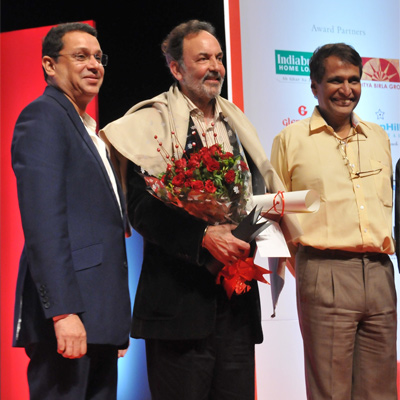
    MUMBAI: 2015-2016 has truly been a golden year for NDTV in more ways than one with NDTV being awarded India’s most trusted brand across all television in India for the 3rd year in a row, based on Trust Research Advisory’s Brand Trust Report, India Study.  NDTV co-founder and executive co-chairperson Dr Prannoy Roy received the prestigious Lal Bahadur Shastri National Award for excellence in public administration, academics and management 2015.

    Not only has NDTV taken on some major projects and delivered cutting edge work , it has also been a year when they earned several accolades and honours. Spearheading this successful journey has been the NDTV Non Tabloid Campaign.

    The NDTV non tabloid campaign was started keeping in mind the basic ethics and principles the organization was founded upon. NDTV kick started this campaign with two promotional videos and then began its incredible journey. The campaign resonated with the audience as it reflected upon aspects responsible in everything that is going wrong with media nowadays. It focused on how the biggest threat to Indian television is tabloid news and that it needs to be stopped.

    The promo went on to win several awards including two world golds at the New York festival International TV and film awards where it beat entries from 52 countries. At the Goa Fest, one of the most coveted advertising awards in the country, it was the only campaign to win the Broadcasters Abby Award.

    NDTV’s The Buck Stops Here – Srinagar Floods Coverage was also announced as one of the 8 International Emmy nominees for the 2015 News & Current Affairs categories for its week-long ground reportage and broadcasts on the floods in Jammu and Kashmir. This is the first time that India has been nominated in the News category.

    Another feat that NDTV has won significant accolades for is their remarkable documentary on human survival – Operation Everest. This documentary has won the Award of Excellence in Environment Category at Canada International Film Festival 2016; the Best Documentary (Jury) Award at 6th Dada Saheb Phalke Film Festival 2016 and also won the Mumbai Press Club’s RedInk Excellence in Sports Journalism Award 2016

    NDTV’s Editors, Anchors, correspondents and programmes have received many prestigious awards through the year including the Journalist of the Year: Ravish Kumar (NDTV India) Red Ink Awards ; National Award for Outstanding Efforts in Communication in the Electronic Medium – Pallava Bagla, NDTV (Ministry of Science and Technology, GOI) with Best News Website for NDTV.com. (IAMAI Awards 2015); Best Film Critic- Prashant Shishodia – NDTV India (Dada Saheb Phalke Film Foundation Award).

  • NDTV awarded as India’s most trusted brand; Dr Prannoy Roy falicitated with Lal Bahadur Shastri National Award

    NDTV awarded as India’s most trusted brand; Dr Prannoy Roy falicitated with Lal Bahadur Shastri National Award

    MUMBAI: 2015-2016 has truly been a golden year for NDTV in more ways than one with NDTV being awarded India’s most trusted brand across all television in India for the 3rd year in a row, based on Trust Research Advisory’s Brand Trust Report, India Study.  NDTV co-founder and executive co-chairperson Dr Prannoy Roy received the prestigious Lal Bahadur Shastri National Award for excellence in public administration, academics and management 2015.

    Not only has NDTV taken on some major projects and delivered cutting edge work , it has also been a year when they earned several accolades and honours. Spearheading this successful journey has been the NDTV Non Tabloid Campaign.

    The NDTV non tabloid campaign was started keeping in mind the basic ethics and principles the organization was founded upon. NDTV kick started this campaign with two promotional videos and then began its incredible journey. The campaign resonated with the audience as it reflected upon aspects responsible in everything that is going wrong with media nowadays. It focused on how the biggest threat to Indian television is tabloid news and that it needs to be stopped.

    The promo went on to win several awards including two world golds at the New York festival International TV and film awards where it beat entries from 52 countries. At the Goa Fest, one of the most coveted advertising awards in the country, it was the only campaign to win the Broadcasters Abby Award.

    NDTV’s The Buck Stops Here – Srinagar Floods Coverage was also announced as one of the 8 International Emmy nominees for the 2015 News & Current Affairs categories for its week-long ground reportage and broadcasts on the floods in Jammu and Kashmir. This is the first time that India has been nominated in the News category.

    Another feat that NDTV has won significant accolades for is their remarkable documentary on human survival – Operation Everest. This documentary has won the Award of Excellence in Environment Category at Canada International Film Festival 2016; the Best Documentary (Jury) Award at 6th Dada Saheb Phalke Film Festival 2016 and also won the Mumbai Press Club’s RedInk Excellence in Sports Journalism Award 2016

    NDTV’s Editors, Anchors, correspondents and programmes have received many prestigious awards through the year including the Journalist of the Year: Ravish Kumar (NDTV India) Red Ink Awards ; National Award for Outstanding Efforts in Communication in the Electronic Medium – Pallava Bagla, NDTV (Ministry of Science and Technology, GOI) with Best News Website for NDTV.com. (IAMAI Awards 2015); Best Film Critic- Prashant Shishodia – NDTV India (Dada Saheb Phalke Film Foundation Award).

  • NDTV and L’Oréal Paris host ‘Women of Worth’ Conclave

    NDTV and L’Oréal Paris host ‘Women of Worth’ Conclave

    MUMBAI:  With the aim of making the ‘Women of Worth’ initiative bigger and showcasing its commitment towards the cause, L’Oréal Paris in partnership with NDTV hosted ‘Women of Worth’ conclave on the occasion of International Women’s Day.

    Distinguished personalities and influencers from across the country were invited to participate in the discussion that tried to touch upon key women related issues that are plaguing modern India and the role played by the women in our lives in today’s age and time.

    Divided into four sessions, the panel discussion brought to the forefront some hard hitting points on women’s issues like gender equality, pay parity, safety for women in India and the position of women in the corporate world. The afternoon was opened by Dr. Prannoy Roy, Executive Co-Chairperson, NDTV Group.

    Welcoming the panelists, Jean-Christophe Letellier, Managing Director, L’Oréal India,said, “L’Oréal believes that true beauty is about transforming people’s lives. That’s why ‘Women of Worth’ as a platform is extremely close to our heart. We believe it’s our duty to inspire and encourage more women to develop initiatives that will create new opportunities to change our lives, and of course also change the course of how the world sees them. Through initiatives like Women of Worth, we’d like to celebrate brilliant examples of beauty in diversity and talent that does not take into account the gender or ethnicity of the person”

    Session 1: We, The Unequal

    Panellists: Priya Dutt (politician) Anjum Chopra (Former Indian Cricket Team Captain) Naina Lal Kidwai(Chairperson, Max Financial), Manashi Guha(VP-Marketing, L’Oréal India), Suhel Seth (Managing Partner, Counselage India) and Harshavardhan Neotia, (President FICCI &Chairaman, AmbujaNeotia Group)

    ·         The session highlighted how modern women have to fight inequalities across industries – and women in general command lesser remuneration than men, quality of work notwithstanding

    ·         Panellists unanimously agreed that women need to market themselves better, stand up for each other a lot more, and that we also need to create a more robust social infrastructure in this country for women

    ·         Suhel Seth, “There are three issues that we need to discuss. We men don’t respect women as much as we should; We treat women as objects of benevolence or patronage, which is abominable; Our laws don’t support women as much as they should. We cannot have gender quotas, we must have gender respect.”

    Session 2: Financial Empowerment of Women in India

    Panellists:Anjolie Ela Menon (Artist), Dr.Syeda S Hameed (Former member of the Planning Commission), Preeti Malhotra (Chairperson, ASSOCHAM), Jayant Krishna (CEO, National Skill Development Corporation) and Vineet Nayar (Founder, Sampark, Foundation & Former CEO, HCL, Technologies)

    ·  Emphasis on how more corporates need to support the aspirations of women to establish successful careers across industries

    · Preeti Malhotra said, “You need to get women into decision making positions. Only then will gender parity increase and you will see more women-friendly policies.”

    Session 3: Looking Back, Looking forward

    Panellists: Arati Devi (Sarpanch, Dhunkapada, Odisha), Justice Leila Seth, Raghu Rai (photographer), Nidhi Dubey (Country Director, Girl Rising) and Farooq Abdullah (Politician)

    · Focused on young girls and boys having their own growth space and the need to provide holistic education at the grass root level

    · Mr. Abdullah said, “While women have their education degrees, the government and the corporates need to do more to channelize their future.”

    · Justice Seth said, “While there are changes in law and society, the mindset of people is slow to change and this is the biggest challenge we face.”

    Session 4: The Way We See Women

    Panellists: Shabana Azmi(Actress),Vrinda Grover (Lawyer, Researcher, Human Rights & Women’s Rights Activist),Shiv Vishwanathan(Social Scientist) and KalpanaVishwanath(Co-founder Safetipin, Former Chief of Jagori) and Kalilkesh Singh Deo (Politician)

    · Key points were raised regarding the prejudice that exists in India towards how a girl is viewed in society and is expected to behave

    · Commenting on the way women in Bollywood are positioned, Shabana Azmi said, “Filmmakers and artists have to exercise self-regulation in how we project women, objectifying and commodifying women is wrong.”

    Speaking at the conclave, Vikram Chandra, CEO NDTV Group said, “On International Women’s Day, we must take a pledge to promote and protect the right of every woman in the world. NDTV as a media house has always supported women’s empowerment. We are proud to be associated with the Women of Worth campaign that has stood for this cause globally and has applauded women who have made a significant impact on society. The conclave was an excellent gathering of like-minded people to share their thoughts and solutions for a promising future for women around the world.”

    Praising the enthusiastic participation from the panelists, Mr. Satyaki Ghosh, Director, Consumer Products Division, L’Oréal India concluded the event saying,“It was wonderful to see such passionate flow of opinions regarding the various issues discussed today. I would like to laud all the panellists present here who took time out from their schedule to participate in this initiative. Women have the same aspirations, abilities and qualities that men do and therefore they should have equal opportunities to develop their faculties. It is time we come out with more initiatives like ‘Women of Worth’ that recognize individual identity of women and make the women of our country feel that they are absolutely ‘worth it!’

    The L’Oréal Paris ‘Women of Worth’awards recognize the achievements of women who possess a strong personality, are sensitive to needs of the society and a pillar of support and strength in all walks of life. The nominees have been shortlisted after an extensive research process while identifying each one’s key contribution in their respective fields. These unique awards felicitate ‘Women of Worth’, while celebrating the many facets of their inspirational journey.

    Through a public voting system in conjunction with jury inputs, the campaign will end in March 20th, 2016. A transparent and well-structured voting system for the public will be set up to ensure that the most deserving nominees win. A glittering ceremony, where the nominees will be awarded the ‘Women of Worth’ titles, will be held in Mumbai on 28thMarch 2016.

  • NDTV and L’Oréal Paris host ‘Women of Worth’ Conclave

    NDTV and L’Oréal Paris host ‘Women of Worth’ Conclave

    MUMBAI:  With the aim of making the ‘Women of Worth’ initiative bigger and showcasing its commitment towards the cause, L’Oréal Paris in partnership with NDTV hosted ‘Women of Worth’ conclave on the occasion of International Women’s Day.

    Distinguished personalities and influencers from across the country were invited to participate in the discussion that tried to touch upon key women related issues that are plaguing modern India and the role played by the women in our lives in today’s age and time.

    Divided into four sessions, the panel discussion brought to the forefront some hard hitting points on women’s issues like gender equality, pay parity, safety for women in India and the position of women in the corporate world. The afternoon was opened by Dr. Prannoy Roy, Executive Co-Chairperson, NDTV Group.

    Welcoming the panelists, Jean-Christophe Letellier, Managing Director, L’Oréal India,said, “L’Oréal believes that true beauty is about transforming people’s lives. That’s why ‘Women of Worth’ as a platform is extremely close to our heart. We believe it’s our duty to inspire and encourage more women to develop initiatives that will create new opportunities to change our lives, and of course also change the course of how the world sees them. Through initiatives like Women of Worth, we’d like to celebrate brilliant examples of beauty in diversity and talent that does not take into account the gender or ethnicity of the person”

    Session 1: We, The Unequal

    Panellists: Priya Dutt (politician) Anjum Chopra (Former Indian Cricket Team Captain) Naina Lal Kidwai(Chairperson, Max Financial), Manashi Guha(VP-Marketing, L’Oréal India), Suhel Seth (Managing Partner, Counselage India) and Harshavardhan Neotia, (President FICCI &Chairaman, AmbujaNeotia Group)

    ·         The session highlighted how modern women have to fight inequalities across industries – and women in general command lesser remuneration than men, quality of work notwithstanding

    ·         Panellists unanimously agreed that women need to market themselves better, stand up for each other a lot more, and that we also need to create a more robust social infrastructure in this country for women

    ·         Suhel Seth, “There are three issues that we need to discuss. We men don’t respect women as much as we should; We treat women as objects of benevolence or patronage, which is abominable; Our laws don’t support women as much as they should. We cannot have gender quotas, we must have gender respect.”

    Session 2: Financial Empowerment of Women in India

    Panellists:Anjolie Ela Menon (Artist), Dr.Syeda S Hameed (Former member of the Planning Commission), Preeti Malhotra (Chairperson, ASSOCHAM), Jayant Krishna (CEO, National Skill Development Corporation) and Vineet Nayar (Founder, Sampark, Foundation & Former CEO, HCL, Technologies)

    ·  Emphasis on how more corporates need to support the aspirations of women to establish successful careers across industries

    · Preeti Malhotra said, “You need to get women into decision making positions. Only then will gender parity increase and you will see more women-friendly policies.”

    Session 3: Looking Back, Looking forward

    Panellists: Arati Devi (Sarpanch, Dhunkapada, Odisha), Justice Leila Seth, Raghu Rai (photographer), Nidhi Dubey (Country Director, Girl Rising) and Farooq Abdullah (Politician)

    · Focused on young girls and boys having their own growth space and the need to provide holistic education at the grass root level

    · Mr. Abdullah said, “While women have their education degrees, the government and the corporates need to do more to channelize their future.”

    · Justice Seth said, “While there are changes in law and society, the mindset of people is slow to change and this is the biggest challenge we face.”

    Session 4: The Way We See Women

    Panellists: Shabana Azmi(Actress),Vrinda Grover (Lawyer, Researcher, Human Rights & Women’s Rights Activist),Shiv Vishwanathan(Social Scientist) and KalpanaVishwanath(Co-founder Safetipin, Former Chief of Jagori) and Kalilkesh Singh Deo (Politician)

    · Key points were raised regarding the prejudice that exists in India towards how a girl is viewed in society and is expected to behave

    · Commenting on the way women in Bollywood are positioned, Shabana Azmi said, “Filmmakers and artists have to exercise self-regulation in how we project women, objectifying and commodifying women is wrong.”

    Speaking at the conclave, Vikram Chandra, CEO NDTV Group said, “On International Women’s Day, we must take a pledge to promote and protect the right of every woman in the world. NDTV as a media house has always supported women’s empowerment. We are proud to be associated with the Women of Worth campaign that has stood for this cause globally and has applauded women who have made a significant impact on society. The conclave was an excellent gathering of like-minded people to share their thoughts and solutions for a promising future for women around the world.”

    Praising the enthusiastic participation from the panelists, Mr. Satyaki Ghosh, Director, Consumer Products Division, L’Oréal India concluded the event saying,“It was wonderful to see such passionate flow of opinions regarding the various issues discussed today. I would like to laud all the panellists present here who took time out from their schedule to participate in this initiative. Women have the same aspirations, abilities and qualities that men do and therefore they should have equal opportunities to develop their faculties. It is time we come out with more initiatives like ‘Women of Worth’ that recognize individual identity of women and make the women of our country feel that they are absolutely ‘worth it!’

    The L’Oréal Paris ‘Women of Worth’awards recognize the achievements of women who possess a strong personality, are sensitive to needs of the society and a pillar of support and strength in all walks of life. The nominees have been shortlisted after an extensive research process while identifying each one’s key contribution in their respective fields. These unique awards felicitate ‘Women of Worth’, while celebrating the many facets of their inspirational journey.

    Through a public voting system in conjunction with jury inputs, the campaign will end in March 20th, 2016. A transparent and well-structured voting system for the public will be set up to ensure that the most deserving nominees win. A glittering ceremony, where the nominees will be awarded the ‘Women of Worth’ titles, will be held in Mumbai on 28thMarch 2016.

  • VLCC’s Vandana Luthra invests in NDTV’s Smartcooky.com

    VLCC’s Vandana Luthra invests in NDTV’s Smartcooky.com

    MUMBAI: VLCC founder Vandana Luthra has invested an undisclosed amount in NDTV’s e-commerce platform Smartcooky.com.

    The company has previously raised funds from multiple investors, which values the startup at $12 million. 

    The platform will sell healthy foods and personal care products across the country and is based on the network’s current food website,www.food.ndtv.com. The funding for the platform, which claims to have over three million unique visitors a month, has come through NDTV’s subsidiary SmartCooky Internet Limited.

    The new content site will help in making healthy choices in the daily life by offering a well chosen selection of quality products.

    Speaking on the investment, NDTV Group executive co-chairperson Dr. Prannoy Roy said, “We are delighted to have Mrs. Vandana Luthra, a pioneer in the field of wellness, as an investor in Smartcooky. We see this alliance as a strategic one, where both parties are bound to gain.”

    On this new deal, Smartcooky director Seema Chandra added, “We are very pleased to have Mrs. Luthra as our investor, as she brings on board a wealth of knowledge about the well ness space from a global perspective and would give SmartCooky a strategic edge in this high growth market. She will join the other marquee investors on Smartcooky and mentor the business as we move a long.”

    Luthra said, “The health and wellness industry is growing rapidly and is very dynamic. Having been in the industry for 26 years, I believe that there is a need for such a platform, which can inform on and deliver quality health and wellness products to consumers and further grow the market. I look forward to working with the Smartcooky team and wish them the very best.”

    “Baseline is delighted to facilitate Mrs. Vandana Luthra’s association with the Smartcooky venture of NDTV. Mrs. Luthra has revolutionised the concept of wellness in our country and with her coming on board of this exciting new venture of NDTV, it will surely be a great symbiotic relationship between them,” voiced NDTV’s online wedding market Baseline Ventures MD Tuhin Mishra.

    Smartcooky’s other investors include Google VP and MD South East Asia and India Rajan Anandan, Genpact former president and CEO Pramod Bhasin, Manipal Group Education chairman Siddarth Pai and Unilever executive board member Manvinder Singh Banga.

  • VLCC’s Vandana Luthra invests in NDTV’s Smartcooky.com

    VLCC’s Vandana Luthra invests in NDTV’s Smartcooky.com

    MUMBAI: VLCC founder Vandana Luthra has invested an undisclosed amount in NDTV’s e-commerce platform Smartcooky.com.

    The company has previously raised funds from multiple investors, which values the startup at $12 million. 

    The platform will sell healthy foods and personal care products across the country and is based on the network’s current food website,www.food.ndtv.com. The funding for the platform, which claims to have over three million unique visitors a month, has come through NDTV’s subsidiary SmartCooky Internet Limited.

    The new content site will help in making healthy choices in the daily life by offering a well chosen selection of quality products.

    Speaking on the investment, NDTV Group executive co-chairperson Dr. Prannoy Roy said, “We are delighted to have Mrs. Vandana Luthra, a pioneer in the field of wellness, as an investor in Smartcooky. We see this alliance as a strategic one, where both parties are bound to gain.”

    On this new deal, Smartcooky director Seema Chandra added, “We are very pleased to have Mrs. Luthra as our investor, as she brings on board a wealth of knowledge about the well ness space from a global perspective and would give SmartCooky a strategic edge in this high growth market. She will join the other marquee investors on Smartcooky and mentor the business as we move a long.”

    Luthra said, “The health and wellness industry is growing rapidly and is very dynamic. Having been in the industry for 26 years, I believe that there is a need for such a platform, which can inform on and deliver quality health and wellness products to consumers and further grow the market. I look forward to working with the Smartcooky team and wish them the very best.”

    “Baseline is delighted to facilitate Mrs. Vandana Luthra’s association with the Smartcooky venture of NDTV. Mrs. Luthra has revolutionised the concept of wellness in our country and with her coming on board of this exciting new venture of NDTV, it will surely be a great symbiotic relationship between them,” voiced NDTV’s online wedding market Baseline Ventures MD Tuhin Mishra.

    Smartcooky’s other investors include Google VP and MD South East Asia and India Rajan Anandan, Genpact former president and CEO Pramod Bhasin, Manipal Group Education chairman Siddarth Pai and Unilever executive board member Manvinder Singh Banga.

  • Side effects of high decibel quotient on news channels

    Side effects of high decibel quotient on news channels

    MUMBAI: Surprisingly the largest read English newspaper in the world hails from India. More surprisingly, India, which is often perceived as a country suffering from poverty with low literacy rate has a whopping 99,660 publications registered with the Registrar of Newspaper in India (RNI). The story of pride and honor doesn’t end there; the country has in excess of 90 24×7 news channels operating in more than 10 languages. Such is India’s journalistic story.


    Take a walk down memory lane and you’ll see that Indian media received global recognition on many occasions. Young aspirants were inspired by the words of P Sainath, Shekhar Gupta and Aroun Shourie. While Indian Express’ blank editorial page to protest emergency enthralled journalism of courage in young minds, R Jagannathan business analysis informed readers about numbers in the most exquisite manner. Indians were not only reading but were also watching headlines in World This Week with Dr Prannoy Roy in the broadcast medium.


    While the past makes us nostalgic, the ecstasy in present poses a threat to the future. Senior journalists are taking on each other on public forums. More than news, anchors are speaking about ratings, whereas hashtags like #presstitutes, #whoownsNDTV #traitortimesnow are trending on social media. Competition has transformed to jingoism and campaigns are launched to take on each other. While one is calling the other’s show hysteria, the other is claiming to be the best in the business. Not only that jingoism is going to such an extent that reputed journalists are tagging and bantering with each other on Twitter.


    And all this to garner high ratings, which in turn will bring 12 money-making minutes per hour to the channel! But what about the millions who are following these veteran journalists on social media platforms? Why has minting money become the foremost target of news channels? And more importantly, how will it stop?


    Almost every news channel now has a campaign, which indirectly depicts loopholes in the ratings of Times Now’s prime time show News Hour hosted by the effervescent Arnab Goswami. What’s more, Times Now has now launched a campaign hitting out at the other four English news channels namely India Today Television, NDTV 24×7, CNN-IBN and NewsX.


    Not long back Goswami directly targeted Rajdeep Sardesai after Sunanda Pushkar’s coverage on erstwhile Headlines Today (now India Today Television). Goswami went to such an extent that Sardesai went on to offer an indirect apology when he wrote, “Yes, we are driven by a TRP culture and see a murder case involving the rich and famous as ideal fodder. Yes, this case must be thoroughly investigated. But are we conducting a media trial based on sensationalizing facts?”


    Sardesai’s blog further added, “Last night, I carried a video of the dead body with marks on it. We saw it as evidentiary value and, therefore, relevant to the case. On hindsight, in showing close ups of the body, we erred: could we not have just blurred the body pictures? I plead guilty. Sunanda deserves justice. She also deserves dignity, in death as in life.”


    Goswami also publicly opposed NDTV’s decision to premiere India’s Daughter – a documentary directed and produced by Leslee Udwin on the Delhi rape case. The Government of India intervened and a decision was passed to forbid the premiere. It must be noted that Times Now also aired a controversial documentary on Purulia Arms Drop featuring interviews of accused Kim Davy and Peter Bleach. The documentary exposed many holes in the Indian judicial system and Times Now’s investigative journalism witnessed mass acknowledgement. So when Times Now airs a controversial documentary, it’s investigative journalism and if NDTV does so it’s an insult? Nirbhaya’s parents had no problem with the documentary, so what was the real issue? Was insecurity of others getting higher viewership the problem? What happened to freedom of expression?


    A senior media planning executive is of the opinion that at the end of the day, ratings is what planners look at and that’s the reason why all this is happening. The more the eyeballs… the more the brand interest. “Negative publicity does not result in brands rejection until and unless viewers reject the show and stop watching it,” the planner adds.


    The most recent development in this entire scenario is Times Now’s new campaign hitting on the other four channels, which earlier took the campaign route to criticize News Hour.


    Speaking to Indiantelevision.com, journalism professor of Calcutta University Tapati Basu says, “There are a huge number of young minds who want to be journalists. A majority of them look at Arnab, Barkha and Rajdeep for inspiration. Them bantering with each other for whatever reason impacts those igniting minds. They should set an example, a path, which young ones will follow and grow. And not only students, this public bantering affects the mass too. As of now there is no downward trend in enrollment.”


    Former Symbiosis media dean and current Amity University dean Ujjwal K Chowdhury opines, “The campaign of picking on each other is not healthy. The attempt of any news-initiative campaign should be on the strengths of the initiative and not on others’ weaknesses. And when you resort to such a campaign, you are actually giving importance to your rivals perhaps more than they deserve. Or, at least more than what YOU think they deserve. Having said this, sensationalism and commodification of news have been on the rise, more so in television and the thought that only talking loud, creating quarrels on screen, taking moral high positions, and playing to the emotions, almost playing to the gallery are sure shots of success. So, there is bound to be a backlash.”


    On the issue of negative impact on students, Chowdhury feels, “There will not be any perceived impact of this campaign on media education in general, or journalism in particular. However, the buzz is out that newer ways to tackle Times Now type of journalism are needed. The exclusive interview of Lalit Modi by India Today Television is one such way. Original, incisive and investigative journalism will be respected and become more popular ahead.”


    Sardesai is the largest followed Indian journalist on Twitter with 2.42 millions. Barkha Dutt, whose footage from the warfront still gives goose bumps to many, holds the second position with 2.34 million followers. On the other hand, Goswami has so far failed to take the Twitter bait and is unlikely to hop on to the social networking site anytime soon. However, Times Now, which is almost synonymous with Goswami, has 2.48 million followers. No matter the permutation combination, at least 20 per cent of those followers will be aspiring journalists, who look up to the stalwarts for inspiration. These veteran journalists also have a moral responsibility towards the younger lot. In the end, it’s not just about the 12 money-making minutes per hour.


    Three Parting Thoughts:


    “The true function of journalism is to educate the public mind, not to stock it with wanted and unwanted impressions.” MK Gandhi


  • “In Prannoy’s legacy lives a hope:” Uday Shankar

    “In Prannoy’s legacy lives a hope:” Uday Shankar

    MUMBAI: NDTV executive co-chairman Dr Prannoy Roy was honoured with the Lifetime Achievement Award at the recently held Red Ink Awards 2015.


    Star India CEO Uday Shankar presented the award to Roy and thanked him for giving the country and the media community “not just a legacy, but a whole category of intellect, industry, business and communication’ through ‘professional television journalism.”


    Shankar said, “Let me tell you a story. This is from when people like us had just gone to college and television had just come in. It was a device for occasional viewing. And suddenly one night, when I was looking for something interesting to do — something a little more interesting than watch Krishi Darshan on TV – there popped a show, which was talking about what was happening in the US, UK and China, and there was a young man with a beard who was presenting the show. That show was called The World This Week, and that was my first interaction with what TV was meant to be.”


    Talking more about Roy and the show, Shankar added, “Here we were, fed on a diet of what came out of Mandi House, and suddenly, we saw this show, which was about information, production, technology, graphics, and credibility of presentation. That was the day I decided that television was a viable and exciting career option. And when I say this here tonight, I don’t think I’m the only one who feels so.” 


    Shankar, during his opening remarks, said that a large number of people who came to television were drawn by the personality, charisma and opportunity or potential to contribute because of what they saw through the eyes of Prannoy Roy. 


    “There are a very few people who can retire — at some stage I hope he will — but there are very few people who can retire with the satisfaction that they created not just a legacy, but a whole category of intellect, an industry, business and communication,” he added.


    Describing the work done by Roy, Shankar said, “This country had only Doordarshan and nothing else… this country had no reference to what modern, professional television communication could be… and in came Prannoy with his vision, content, production and everything, and set these standards and thereby saved us almost two-to-two-and-a-half decades of the growth curve, the learning curve that all of us would have necessarily had to go through in order to get to a level of professional television journalism and communication.” 


    Roy became the reference point for Shankar, when he came to try his hand at TV. “We had The World This Week, NDTV, Prannoy Roy and his brand of journalism. And the sheen of that brand of journalism has never been dull. His legacy lives on, and in that legacy lives on a hope,” he concluded.