Tag: Dr Manmohan Singh

  • BBC launches news in Indian languages, ties up with Eenadu and India News

    BBC launches news in Indian languages, ties up with Eenadu and India News

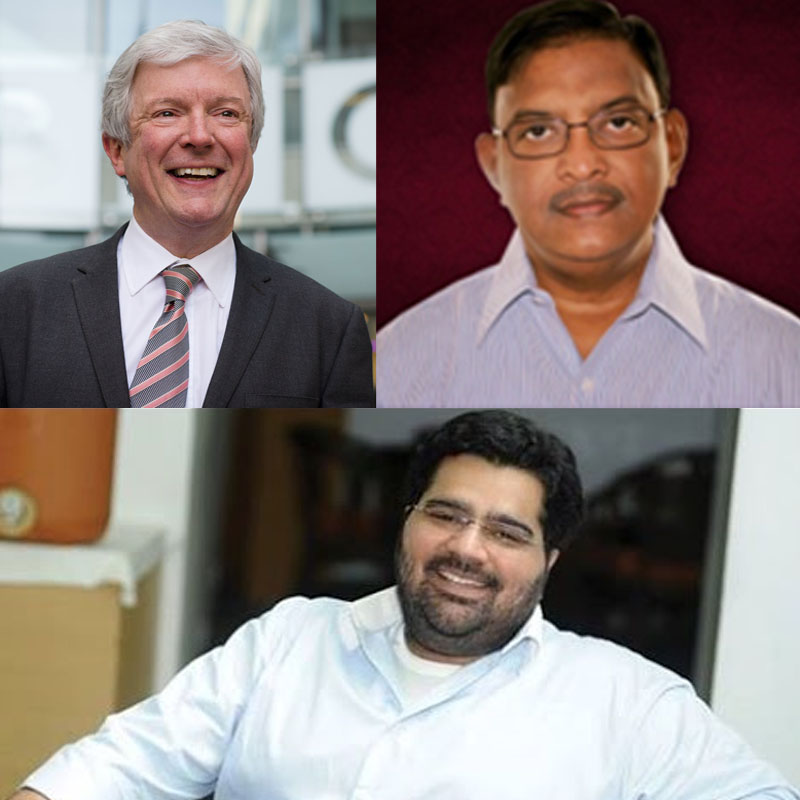
    MUMBAI: BBC has launched news services in four Indian languages – Marathi, Gujarati, Telugu and Punjabi as it expanded business in the country for which BBC director-general Anthony William “Tony” Hall has arrived. BBC Duniya, a nightly television news bulletin in Hindi, has also been relaunched; it will be telecast on India News.

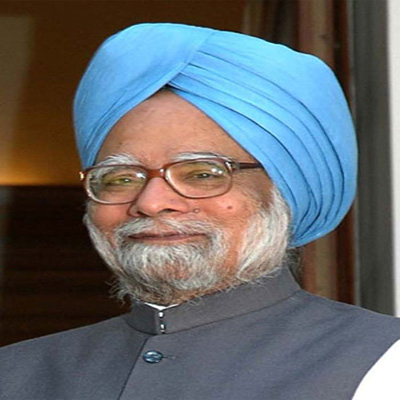
    The Punjabi service will initially be online and on social media and include video coverage. BBC, in its blurb, advertised Punjabi as the eleventh most spoken language in the world, used by 100 million people — the highest in Pakistan. Among the popular Punjabis, it stated, are the former Indian prime minister Dr Manmohan Singh, seven Indian army chiefs and six Air Force chiefs.

    Formally opening a BBC bureau in Delhi, BBC’s largest outside the UK, the D-G said that the audience in India had trusted the BBC for decades for bringing them independent and impartial news, and millions would get the chance to access BBC in their own languages, IBNS reported. Expanding the news bureau in Delhi and opening two television studios is a part of the UK Government’s Rs 25 billion (GBP 291 million) investment in India.

    BBC, which has now partnered India News and Eenadu TV, was already held in great regard across India, and BBC News was being offered to new audience, especially the next generation. BBC has recruited 150 smart journalists from across the country, the D-G added.

    The new services would also be available online and on social media, with BBC Prapancham, a Telugu TV bulletin which will be aired on Eenadu TV (Telangana) and Eenadu TV (Andhra Pradesh).

    Eenadu TV Network CEO K Bapineedu said, that the BBC initiative to produce international stories in the Telugu language to be aired on ETV Network will add value to their endeavour of reaching the Telugu audience with the highest reach and authenticity.

    India News operator-owner iTV Network founder-promoter Kartikeya Sharma said that BBC was famed for its unbiased and well-researched content which would be reaching its viewers in a format and language they could comprehend.

  • PM Narendra Modi’s I-Day speech recorded 1.9% reach on DD National: TAM

    PM Narendra Modi’s I-Day speech recorded 1.9% reach on DD National: TAM

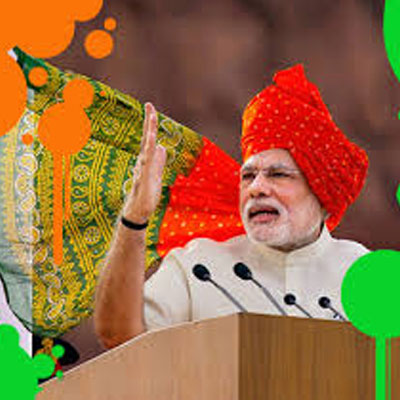
    MUMBAI: A great orator and a crowd puller, Prime Minister Narendra Modi, who addressed the nation on Independence Day proved to be an audience puller for pubcaster Doordarshan. The early morning speech telecast on DD National and DD Sports, reached out to more audiences this year than the previous Prime Minister Dr Manmohan Singh. However there was a drop in sampling as compared to the last year, when PM Modi gave his maiden Independence Day speech.

    The year 2014 when Modi was appointed as the Prime Minister of India, saw the Independence Day speech gaining the highest reach and viewership. According to TAM TV analysis, while the pubcaster garnered 2.3 per cent reach in 2014, its reach dropped a little this year, but was still more than that of 2013. DD National and DD Sports recorded 1.9 per cent reach on 15 August, 2015, while on the same day in 2013 it managed 1.6 per cent reach.

    Apart from Doordarshan, there was heavy coverage of Independence Day on Hindi and English News channels as well. 

    Among the Hindi News channels, Zee News and India News gave maximum coverage to Independence Day, but it was Aaj Tak and ABP News, which garnered maximum returns on the news. While Aaj Tak with 170 GRPs topped the Hindi news genre in terms of ratings, it was India News, which saw the highest time spent, as it recorded 32,000 seconds.

    Like last year, Times Now and News X were again leaders in terms of coverage of Independance Day, in the English News channel genre. However, it was Times Now with 8 GRPs, which received maximum returns, thanks to its coverage, which was spread across the day unlike other players. News X topped the time spent category with 37,000 seconds. 

  • “Govt. should come up with clear, transparent security clearance guidelines:” Dr Subhash Chandra

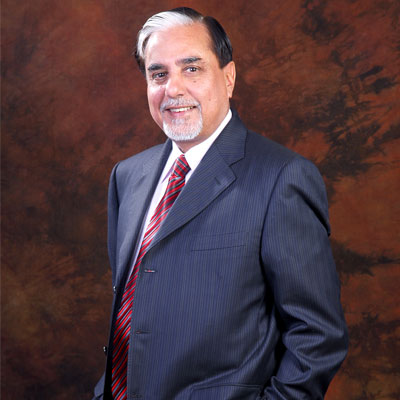
    “Govt. should come up with clear, transparent security clearance guidelines:” Dr Subhash Chandra

    MUMBAI: The growing number of television channels and the recent debate over the security clearance of Kalanithi Maran owned Sun TV Network has led the ‘Big Daddy’ of Indian television to come out and speak about ownership and security guidelines of the mushrooming channels.


    Essel Group chairman Dr Subhash Chandra said, “From the beginning, I have been of the view, which I mentioned during the UPA 1 regime to Priyaranjan Das Munshi and Dr. Manmohan Singh that licences should not be issued without proper checks.”


    According to Chandra, news channel licences should be scrutinized in the manner that the Reserve Bank of India scrutinizes applications before issuing any licence in financial service. “They go to the extent of finding out the ultimate source of funding as well as cleanliness of people involved and check them out before issuing licence,” he informed. 


    Chandra has been actively speaking about having a strict and clear guideline before issuing licences from 2001-2006. “But because no one was listening to my point of view, I decided to then remain dormant and listen to the government’s point of view,” he laughed off. 


    Ten days ago, Chandra had tweeted rather sensationally saying, “I will not be surprised if for some TV stations, the final money is coming from Dawood Ibrahim.” He feels that the system prevalent currently doesn’t go even one layer beyond what the person has submitted. 


    The minimum amount required for starting a news channel today is Rs 5 crore. “As per the guidelines today, the check is done on the person submitting the money. No one tries finding out where the money is coming from. This is eroding our credibility as media,” he said.  


    Chandra is of the opinion that the time has come to have strict, clear and transparent guidelines, which will expose the corporate veil and go to the real source of funding. “The government is not doing anything on the issue of media ownership and then says that all media is wrong,” he added. 


    Pointing out that no one so far has debated on the issue, he said, “I want the debate to be triggered and then the decision can be taken collectively.”


    Calling out to the government to check entities through clear guidelines, he said, “Those who are clean will come out clean, but the government hasn’t checked anyone. We are open to such scrutiny ourselves.”


    Stressing on the fact that not having clear security guidelines compromises with the national and economic security, Chandra said, “I want to see clean money coming into the sector.”

  • Rajesh Khanna passes away

    MUMBAI: Rajesh Khanna, who mouthed ‘Zindagi kaisi hai paheli hai, kabhi toh hasaye kabhi ye rulaye…‘ in Anand, left for his heavenly abode this afternoon at the age of 70. His last breath came at his residence Aashirwad.

    He breathed his last in the presence of his wife Dimple Kapadia, daughters Rinkie and Twinkle, son-in-law Akshay Kumar, grand children and close relatives.

    The veteran actor, who has been battling a prolonged illness for a long time, finally gave in to his ailment. Just yesterday, the actor was discharged from the Lilavati Hospital. But late at night, due to extreme weakness and low blood pressure, he was kept on ventilator.

    The actor‘s condition had been deteriorating since April when he stopped eating and had complained of weakness. He was admitted to the Lilavati Hospital twice in the past month.

    Incidentally, the actor who shot to stardom in the 1960s, was the first ‘superstar‘ of Indian cinema.

    Meanwhile, the entire film industry is shocked at the passing away of Khanna. In fact, the film industry has come to a standstill with as many as three events marked for the day cancelled.

    Not only the film industry but the entire country is in deep shock on the star‘s demise. People from all walks of life are talking about the departed soul, his dialogues, his songs, his leading ladies and friends etc.

    In a condolence message to the stars eldest daughter Twinkle Khanna, Prime Minister Dr Manmohan Singh said, ” I am deeply saddened to learn of the passing away of your father Shri Rajesh Khanna.

    “Khanna was a celebrated artiste who entertained millions of Indians with his performance in a variety of films. His legacy will live on in the form of the numerous entertaining and acclaimed films that he leaves behind. The powerful roles he essayed in classics like Anand, Aradhana, Kati Patnag and Amar Prem, stand testimony to his artistic genius.”

    Rajesh Khanna was not new to politics as he was a Congress member of the Parlaiment (Lok Sabha) in the early nineties. “In the passing away of the Rajesh Khanna, the Indian film industry has lost one of its most successful and most charming heroes.On this sad occasion, I convey my heartfelt condolences to the members of the bereaved family and Khanna‘s countless fans and admirers. I pray for peace of the departed soul,” the message added.

    Minister for Information & Broadcasting, Ambika Soni has also condoled the death of Khanna. In her condolence message to the members of the bereaved family, Soni said, “Very few actors can match the charisma, stardom and popularity that Rajesh Khanna enjoyed. His era initiated the wave of Superstardom in the Indian film industry, a concept which was unknown till then. Rajesh Khanna gave Indian cinema a whiff of fresh air by projecting the essence of goodness and romance in the various characters that he portrayed. His films provided us melodious music and haunting melodies which became a part of the generational change of the 1970s. The Indian film industry has lost one of its iconic personalities who gave a new identity to the male protagonist in films. Shri Rajesh Khanna was a much admired colleague in our party. We will all miss him. I pray to god to give necessary strength to his family to overcome the crisis.”

    Gujarat Chief Minister Narendra Modi tweeted, “With his unique persona, Rajesh Khanna ji made a special and unforgettable place in the hearts of Indians! May his soul rest in peace.”

    Producer Ashim Samanta, son of the late Shakti Samanta said, “Lost a family member. It‘s a huge loss to the film industry. He was a fabulous actor and a great human being. He was very close to us since 1962. My father was very attached to him; it‘s a sad day for all of us.”

    “I knew that his condition was extremely critical, but I never knew that he would go off so soon,” said Marathi actor Ramesh Deo, who acted with Khanna in Anand.

  • CNBC Awaaz celebrates 5th Anniversary with special lineup

    CNBC Awaaz celebrates 5th Anniversary with special lineup

    MUMBAI: CNBC Awaaz, the first Hindi business news channel of India, is completing five years of operations tomorrow. The channel, which was unveiled on 13 January 2005 by PM Dr Manmohan Singh, has planned a special line up to celebrate the anniversary.

    Says CNBC Awaaz editor-in-chief Sanjay Pugalia, “We are proud to carry on the vision that Dr Manmohan Singh shared with us when he launched CNBC Awaaz five years ago. It has been 5 years of building a financially literate India, of empowering small and medium enterprises, of fostering entrepreneurship, of enabling and transforming the lives of a billion Indians.”

    CNBC Awaaz claims a 96 per cent growth in terms of channel share over the past five years which has reflected in the 45 per cent jump in the entire business news genre. It also boasts of a 350 per cent growth in its viewer base in the last five years.

    Adds TV18 business media COO Anil Uniyal, “CNBC Awaaz has not only created a new genre and expanded the business audience but has also fuelled an all new consumption boom amongst progressive, Hindi speaking audiences in India, besides increasing retail participation in the equity markets, both directly and indirectly.”

    The channel has titled programming aspect as “Five years of Redefining Business”.

    The programming will focus on the defining moments in the last five years, through panel discussions and one-on-one interviews with industry and political big wigs who will present their views on how the economy has shaped the country and what can be expected in the next five years.

    Some of the key shows on the channel will be:

    5 Years – Markets Special: A half hour show where market experts will bring out the five year journey of the Stock & Commodities markets, the transition and the manifold growth achieved and what is expected in 2010.

    5 Years – Personal Finance & Investments: A half hour episode that will encapsulate the magnanimous growth that the personal finance and investment sector has witnessed in the last five years, in terms of the number of investors, the total volume of investment in various investment avenues like stocks, mutual funds, insurance and more.

    5 Years – Industry Special: This half hour will be a round up of all the major events and trends witnessed by Indian industries in the last five years, with industry figures highlighting the exponential growth achieved and the way forward.

    5 Years Specials: A series of three special half hours of one-on-one interviews with individuals from industry and politics, to discuss their view on the past five years and their expectations for the next 5 years from the industry and the economy

    5 Years – Defining Moments & The Realty Sector: Two special half hours dissecting the growth achieved by the realty sector in the past five years and discussing occasions, events, announcements during the past five years, that became defining moments in the history of the nation. 

  • Manmohan Singh CNN IBN’s ‘Man of the Year’

    Manmohan Singh CNN IBN’s ‘Man of the Year’

    NEW DELHI: The word was out early last morning in huge ads splashed in newspapers that Dr Manmohan Singh, the Indian premier had won the Indian Man of the Year in the “Politics” category, but later in the evening in a high-tech massive awards ceremony, he was declared the overall winner of the CNN-IBN Indian Man of the Year 2007.

    The organisers had thought he would perhaps finally be able to make it, but he could not. The award was received on his behalf by Dr Sanjay Baru, his media in-charge. But soon after, Singh was shown receiving his award at his residence in a special TV coverage. The gala event saw some of the top men and women from business, media and political fields attend the first ever CNN-IBN Indian Man of the Year awards.

    With the biggest ever business takeover of Corus Steel by the Tata group, Ratan Tata expectedly won the award in the business category. He too could not attend and the prize and citation were received by his representative.

    Laxmi Narayan Mittal had also been in the running in the business section, but had to make way to Tata. However, his stature and achievement was rewarded by a Jury Award. But perhaps the best surprise was in the sports category, with Jeev Milkha Singh winning the sports award, with a proud father, Flying Sikh, Milkha Singh applauding. Sania Mirza failed the rigorous tests and processes involved, though Amar Singh, sitting in the audience would have none other than her as his choice.

    “Jeev’s mother and I never wanted him to be a sportsperson, because when we were in sports there was no money in it. We wanted him to become a doctor or engineer, but he went ahead and became a golfer. Now that he has done so, he must win every award in the sport,” Milkha Singh said.

    There were two other delightful decisions. Rajkumar Hirani, director of “Lagey Raho Munnabhai” and the right to information missionary Arvind Kejriwal won the awards in the entertainment and social work categories.

    Hirani said he was overwhelmed by the audience reaction to the film. “I was scared when we did the film. It is truly gratifying that a concept like Gandhism has found a meaning in the context of the 21st century India,” Hirani said.

    Introducing the awards, CNN-IBN chief editor Rajdeep Sardesai said that the idea was first floated by one of his senior colleagues but “My first reaction was – Oh, another award.” He said that most Indian awards were confusing: who chose them, on what criteria, what was the credibility?

    “We decided that if we have to go for an awards ceremony, we needed to have that credibility. That is why some of India’s top people were selected as jury, headed by eminent jurist Soli J Sorabjee.” Strict criteria were fixed and nominations received from across the country. These were scrutinised and the jury spent days going through the process.

    “We wanted the Indian’s to vote as a whole and hence the SMS votes were also invited,” However, Sardesai said that “We knew SMS votes can be fixed, so there was a modicum of doubt about that.” Still, he said, some factors were considered from there.

    Finally, the awardees were decided and he along with the jury were satisfied with the choice as credible and acceptable.

    The jury comprised of Sorabjee, senior police officer and social worker Kiran Bedi, former billiards champion Geet Sethi, industrialist Deepak Parekh and Infosys boss Nandan Nilekani.

    Interestingly, before the announcement of prize for each category, members of the audience were asked their choice. In one such response, railways minister Laloo Prasad drew laughter when he refused to comment. “Yeh judicial mamla hain, to jury nay jo kaha hum usko mantey hain (This is a judicial matter, and I stand by the verdict of the jury).

    Sadesai had spoken of the new, vibrant India, the cynosure of world business, and it was thus in the fitness of things that Pepsi CEO Indra Nooyi bagged the jury’s verdict in the NRI category.

    The audience was regaled when Sorabjee said that deciding on awards was fraught with danger, of losing old friends, but in a more serious note, added that 100 top Indians had been initially short-listed and the most important deciding factor in the final verdict was, did the person concerned do India proud in his or her area of activity and put India on the global map?

    Somenath Chatterjee, Speaker, Lok Sabha brought the ceremony late at night by a long and arduous speech.