Tag: Dr Dhananjay Chandrachud

  • Mumbai High Court to hear ‘cable case’ on 10 September

    Mumbai High Court to hear ‘cable case’ on 10 September

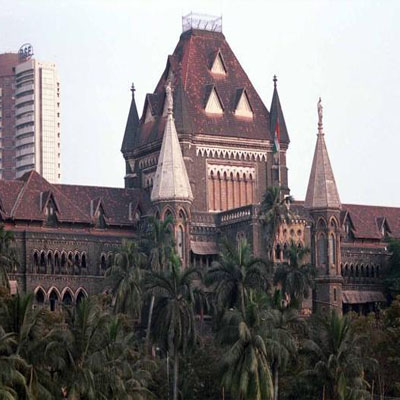
    MUMBAI: It was quite inevitable but those were expecting to get a ruling got another date. A division bench of the Mumbai High Court comprising Chief Justice CL Thakker and Dr Dhananjay Chandrachud, after listening to arguments from both sides, proclaimed the next date of the ‘cable case’ hearing – 10 September.

    However, several Mumbai-based lawyers are of the opinion that the central government’s dithering over the decision to postpone CAS (conditional access system) rollout in Delhi, Mumbai and Kolkata can be challenged.

    On 3 September, there was intense confusion as one petition came up for hearing before noon; but several lawyers of concerned petitioners and respondents weren’t present; and it was decided to club the petition with the other petitions that were to be heard at 2:45 pm.

    Finally, the union informed the court that the city had been given a 10-day grace period due to the ongoing festival of Ganesh Chaturti. Since CAS is not expected to happen till 10 September, the next hearing will also take place on the same date.

    The indiantelevision.com team spoke to some lawyers and obtained reactions from them:

    The president of an NGO Consumer Action Network lawyer Ahmad Abdi says: “The government must clearly clarify its stand. How can the government hesitate in implementing CAS when a law has been passed in the Parliament of the country – the highest legislative authority in the country?”

    Talking about the partial implementation of CAS, Abdi says: “The government cannot discriminate between cities. How can the government cite the excuses such as political compulsions rather than administrative compuslions in the postponement of CAS rollout in Delhi? The government’s haphazard ways might have legal implications and consumers are suffering. Anyone who challenges the government’s decision will have a strong case as per the law.”

    The lawyers representing the multi-system operators argued that the government must go ahead with CAS rollout.

    Lawyer Janak Dwarkadas, who represents the multi system operator INCableNet also agrees: “The government’s stance is causing prejudice to the multi-system operators. Incidentally, INCableNet has invested millions in setting up CAS infrastructure. Moreover, several consumers have taken advantage of the earlier ruling and are abstaining from paying monthly cable rents. Yesterday, we argued in court and emphasised that the government must go ahead with the rollout of CAS in the various cities as specified in both the houses of the Parliament.”

    Darshan Mehta of Dhruve Liladhar & Co, who represents BJP member of Parliament Kirit Somaiya says the court has decide to persist with its earlier ruling that the cable operators can charge 10 per cent more than the rates applicable as on 31 December 2002. “More importantly, the court has maintained that cable operators cannot disconnect connections of those who pay this amount. Now, we shall wait for the next hearing on 10 September,” adds Mehta.

    It looks as if the court is taking its own time till there is more clarity amongst the various elements of the government, the I&B ministry and the politicians.
  • Mumbai High Court sets next cable case date for 3 September

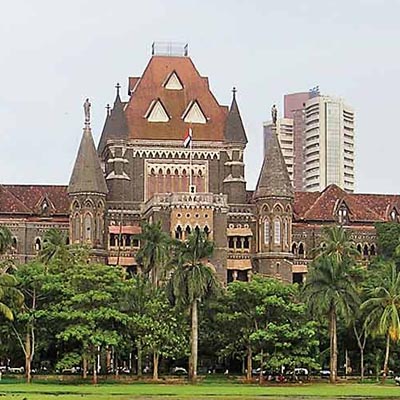
    MUMBAI: The trade was anxiously awaiting a decision but all they got was another date. A division bench of the Mumbai High Court comprising Chief Justice CL Thakker and Dr Dhananjay Chandrachud, after listening to arguments from both sides, posted the next date of hearing for 3 September.
    Incidentally, the rollout of conditional access systems in the four metros is scheduled to kick off from 1 September.
    “There is no will to sort out the problem. However, it is a win-win situation for the politicians. Even if their petition is dismissed, later on, they can claim they tried their best and score political brownie points. But, the trade will continue to suffer due to consumers refusing to pay and taking recourse to the campaign of the politicians. With the decision being postponed, we shall have to battle on in order to collect our rightful dues,” a cable operator had earlier told indiantelevision.com, on condition on anonymity.

  • Mumbai High Court postpones cable case to 18 June

    Mumbai High Court postpones cable case to 18 June

    MUMBAI: The trade was anxiously awaiting a decision but none was forthcoming. A division bench of the Mumbai High Court comprising Chief Justice CL Thakker and Dr Dhananjay Chandrachud today further postponed the crucial hearing of the “cable case” to 18 June 2003.
     

    Chaitanya D Mehta, representing the chief petitioner Bharatiya Janata Party (BJP) member of Parliament Kirit Somaiya and other politicians, opened proceedings by stating the original petition is not restricted merely to monthly cable charges payable by the consumer. Mehta stated that the other issues included disconnections, black outs by cable operators, incorrect disclosures and non payment of applicable taxes to the state and Central government.

    During the court room proceedings a lot of inconsistent statements were made by the assembled lawyers. For instance, Mehta read out the applicable sections which stated that the Union government was empowered to dictate the ceiling rate of the monthly cable charges. However, it is important to note that he was quoting from the recently amended Cable Television Networks (Regulation) Amendment Bill 2002 which empowers the government to determine the ceiling price of free-to-air (FTA) channels – and not the pay channels. Also, industry sources present in the court mentioned that some of these sections will only become applicable from 14 July 2003 when conditional access system (CAS) commences in the metropolitan cities.

    Mehta also appealed to the Lordships to postpone the hearing to 18 July as the Central government is supposed to ratify certain aspects of CAS by 17 July 2003 – three days after the implementation process commences!

    However, Mehta was bang on target when he raised the issue of compliance. He pointed out that there could be 2 million subscribers in the city of Mumbai but the statistics available with the government indicated the figure was in the region of 4,47,000. He also mentioned that the government should be earning revenues of Rs 60 million per month instead of the Rs 13 million that it is getting. He questioned as to why the state and central government enforcement authorities (excise department, income tax department officials and the legal authorities such as the police) had failed to enforce and interpret the laws correctly.

    Mehta wondered whether there was a nexus between the enforcement authorities and cable operators. He stated that the laws clearly said that cable operators must maintain a maintenance register in the prescribed form and produce (on demand by the enforcement authorities) information on all aspects of their business including the exact number of customers serviced.

    Mehta also quoted sub sections 3, 4A, 5 amongst others which empowered enforcement authorities to seize equipment of defaulting cable operators. He pointed out that the broadcasters had admitted (in their petition as well as in public statements) that only 25 per cent of the actual subscriber base was declared by the cable trade.

    This line of reasoning was seconded by Doordarshan / Prasar Bharati lawyer additional solicitor-general of Maharashtra SB Jaisinghani. Jaisinghani wondered as to why the enforcement authorities had failed to conduct a single raid on any cable operator till date. He appealed to the lordships to give the requisite instructions to the enforcement authorities.

    The lawyers of the cable operators raised the issue of the chief petitioner (BJP MP Somaiya) misguiding the general masses by wrongly informing them (through banners in public places) that the High Court order of 7 March included an injunction against raising cable charges. One of the lawyers representing respondent No 25 (cable distributor Sada Kadam) and Mumbai Cable Operators Federation lawyer AM Saraogi urged the lordships to clarify that they had not passed an injunction. They said that the “political gimmick” was affecting the day-to-day cable business.

    The lawyers representing the cable operators also stated that the consumers were taking recourse to the incorrect or partly correct interpretations made by the chief petitioners in their public communication and refraining from making monthly cable payments. They pointed out that petition of the chief petitioner mentioned that the broadcasters were charging Rs 240 per month for pay channels. They argued that the cable trade was willing to charge Rs 150 as long as the chief petitioner was willing to compensate the difference in amount.

    Meanwhile, MSO InCablenet lawyer Janak Dwarkadas again requested the Lordships to give their verdict as the broadcasters were cutting signals to the MSOs for non-payment of dues whereas the consumers refused to pay in lieu of the incorrect messages sent out by the chief petitioners and politicians.

    After the Lordships postponed the hearing to 18 June 2003, some of the assembled members of the cable trade mentioned that the case would drag on till July 2003 when CAS would come into effect.

    “There is no will to sort out the problem. However, it is a win-win situation for the politicians. Even if their petition is dismissed, later on, they can admit that they tried their best and score political brownie points. But, the trade will continue to suffer due to consumers refusing to pay and taking recourse to the campaign of the politicians. With the decision being postponed, we shall have to battle on in order to collect our rightful dues,” says a cable operator on condition on anonymity while speaking to indiantelevision.com.

  • HC to hear affected parties on 4 April

    MUMBAI: A division bench of the Mumbai High Court comprising Chief Justice C L Thakkar and Dr Dhananjay Chandrachud today ruled that cable operators had the right to disconnect connections of those consumers who had not paid cable dues based on the rates applicable prior to 31 December 2002.
    However, the judges also specified that cable operators couldn’t disconnect those consumers who refused to pay the new rates applicable from 1 January 2003. 
    The division bench also held that it would hear the arguments of the various affected parties – consumers, NGOs (non-government organisations), MSOs (multi-system operators) and broadcasters on 4 April. “All the individual petitions made by several affected parties have been clubbed together as the future ruling would have a bearing on the entire city,” Chief Justice Thakkar said. 
    Starting off the proceedings, MSO InMumbai Networks’ lawyer Janak Dwarkadas informed the court that the MSOs were in a tricky situation as the broadcasters were pressurising them to clear the dues irrespective of whether the local cable operators had paid the MSOs or not. He produced a letter from broadcaster Sony Entertainment Television (SET) which had threatened to disconnect signals if InMumbai didn’t pay an outstanding amount of Rs 12.1 million till 15 March 2003. 
    “The MSO would have to make the payment in lieu of the ongoing World Cup cricket irrespective of whether it receives the payments from the cable operators within the stipulated deadline,” he added. 
    “The voluntary statement of order given by the cable operator to the court that they could offer consumers signals at any particular rate is not binding on the MSO. Cable operators were kept in the loop whenever the MSOs entered into an agreement with the broadcasters. Cable operators should honour the existing commitments which they had with the MSOs,” Dwarkadas added. 
    Dwarkadas stated that the MSOs held the cable operators responsible for withholding revenues collected from the consumers from the MSOs. He mentioned that the MSOs didn’t have the appropriate technology to control the signals once they left the main control room. “Once the signal travels to the local cable operators, the MSOs can’t prevent the defaulting cable operators and consumers from accessing the signals,” Dwarkadas added. 
    Speaking to indiantelevision.com after the ruling, InMumbai’s lawyer Dwarkadas said: “The division bench accepted our argument that we don’t have the technology to bypass the defaulting cable operators and the consumers. The cable operators can decide what they should charge the consumers but ensure that they pay the MSOs and the government their dues for the services.” 
    Seven Star’s lawyer Majid Memon said: “Seven Star had taken the lead in saying that they wouldn’t disconnect any cable connections of consumers who refused to pay the new rates applicable from 1 January 2003. We are happy that our stance has been vindicated and extended to all the cable operators (belonging to various cable associations) in other parts of the city.”
    Consumer Action Network president Abdi said: ” We are happy that the High Court has stopped arbitrary disconnections. We have received nearly 5000 letters from consumers who have been victims of random disconnections. We shall await the court’s ruling on 4 April 2003.” 
    BJP MP Kirit Somaiya was disappointed that the court held that status quo should be maintained on the old rates as of 31 December 2002. “These old monthly cable rates could be anything between Rs 200 to Rs 300. I am sure that we shall prove our case on 4 April 2003 and push for a monthly amount of Rs 150. We shall produce evidence comprising of written statements by disgruntled consumers. We shall also prove that cable operators haven’t paid service tax, income tax and entertainment tax to the government.”
    However, some of the members of the cable trade present say that Somaiya is way off the mark when he mentions an amount of Rs 150 per month. “Our upgradation costs work out to Rs 40 per subscriber and around Rs 800 per subscriber per annum. They expect us to pay for the regular maintenance of the networks. The network wires get damaged during kite flying competitions or other building maintenance work,” says a cable operator on condition of anonymity.
    “Consumers and NGOs must remember that we are dealing in electronic equipment. The lifespan of an amplifier or electronic components required at the control room is limited. How can consumers expect these equipment to last a lifetime? We have dished out money for these spare parts, for salaries, office rents, electricity charges, so on and so forth. After all, it is just another business and we want to be profitable,” says an MSO representative who doesn’t wanted to be quoted. 
    “Kiritbhai is talking about disclosing revenues to the excise and income tax department. I wish to point out that the excise department officials are extremely corrupt and they were the ones who urged honest cable operators to avoid disclosing their real subscriber numbers. Most of them made their money through bribes and have been transferred to other departments. Now, the cable operators who bribed them have been left in the lurch due to Kiritbhai’s actions,” says another cable operator. 
    “The honest cable operator gets squeezed from all sides. Whenever there is a rate hike, he has to go to consumers and demand more money. If the consumers refuse to pay, his profit margins reduce. The dishonest cable operator makes merry in all scenarios,” says a cable operator from South Mumbai. 
    A politician opines that the only law which can teach dishonest cable operators a lesson is the Income Tax Act. “The revenue and excise officials must instigate IT scrutiny on one or two major defaulters. The onus of proving that the cable operator had lesser number of subscribers must be placed on the operator. The defaulters shouldn’t be given amnesty and should be penalised so heavily that all other cable operators would toe the line. Once CAS comes in, everyone’s true colours will be revealed!” 
    Among those present for the hearing were Bharatiya Janata Party MP Kirit Somaiya, Consumer Action Network president Ahmad M Abdi, Doordarshan (DD) Mumbai deputy director Yashpal Ramavat, Hathway GM operations Rohinton Dadyburjor and one of the promoters of Seven Star Nader Ali. 
    DD was represented by additional solicitor-general SB Jaisinghani; MSOs Hathway, Seven Star and InMumbai were represented by their lawyers Ravi Kadam, Majid Memon and Janak Dwarkadas respectively; Mumbai Cable Operators Federation (MCOF) was represented by its lawyer A M Saraogi.
    It looks as if 14 July 2003 is a long way off. Today, everyone has had their say. All eyes are now on Mumbai High Court’s room number 46 where the hearing will take place on 4 April 2003.