Tag: Dr A Didar Singh

  • FICCI FRAMES: Prasar Bharati CEO Jawhar Sircar to speak on pubcaster & revenue

    FICCI FRAMES: Prasar Bharati CEO Jawhar Sircar to speak on pubcaster & revenue

    NEW DELHI: Prasar Bharati chief executive officer Jawhar Sircar will be addressing the annual FICCI FRAMES convention commencing in Mumbai on how a public broadcaster can still earn revenue.


    Sircar’s talk is on “India 2015: Role of the Public Service Broadcaster and Lessons from the World.”


    The three day convention from 25 – 27 March will extensively cover discussions on various issues related to the media sector centred around the theme – how to make India a Global Entertainment Superpower.


    Sircar said, “There is no nation in the world that does not have a decent public broadcaster and some of them like BBC or NHK Japan or the Korean Broadcasting System are legends, mainly because their nations, people and their governments wanted them to be so and help them succeed. India cannot be an exception as it is the only public broadcaster, which operates from the icy peaks of Kargil to our lonely borders in Arunachal, right down to Andaman and every possible corner of India: without ever looking at short-term commercial gains.”


    This panel discussion is scheduled on the second day of the entertainment and media conclave and will be moderated by business journalist Pranjal Sharma featuring BBC Global News CEO Jim Egan and Russia’s largest media corporation and public broadcaster – VGTRK deputy CEO Ayuna Badmaeva.


    The other key participant is Asia Pacific Broadcasting Union (ABU) secretary general Javad Mottaghi, who is a special invitee at FICCI FRAMES 2015.


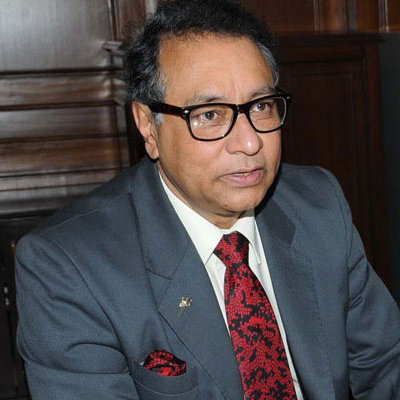
    FICCI secretary general Dr A Didar Singh said, “The discussion would provide greater clarity on how to maximise the efforts of public service broadcasting, and also how institutions like Prasar Bharati can balance their programming mandate with effective revenue generation, and remain relevant in the digital era.”


    The session will explore the relevance, importance and space for Public Service Broadcasting in today’s ‘always connected’ world which offers a multitude of choices by way of content, delivery platforms and engagement channels.
     

  • Indian copyright law is one of the strongest in the world: USTR report

    Indian copyright law is one of the strongest in the world: USTR report

    NEW DELHI: Despite vehement and exhaustive submissions arraying the strength of the Indian IP regime, India continues to be on the watch list in the United States Trade Representative (USTR) 2014 Special 301 Report.


    Others in the list are China, Russia, Algeria, Argentina, Chile, Indonesia, Pakistan, Thailand and Venezuela.


    The report, however, commends India for its achievements like digitisation and upgradation of IP offices and active copyright enforcement by the Delhi High Court through injunctive relief, to name a few. In the report, the US has also recognised the role of bilateral engagements between US and India to resolve concerns relating to Intellectual Property.


    “FICCI in its response to Hearing Testimony of India before USTR had strongly asserted that India has a well-established legislative, administrative and judicial framework to safeguard IPRs which meets its obligations under TRIPS, and has withheld the test of severe international scrutiny. We are glad to note that India has not been given the Priority Country status as this could have had serious ramification on economic, political and trade sanctions”, according to FICCI secretary general Dr A Didar Singh.


    “Indian IP law is TRIPS Compliant and more. Indian copyright law is one of the strongest and best in the world. India protected computer programmes by copyright much earlier than the US. The Indian Copyright Act 2012 law is in full conformity with international treaties of WIPO. The legislative and statutory measures are supplemented by appropriate administrative measures by the Governments both at the Centre and in the States for enforcement of IPRs; this includes Inter-Ministerial Committee on Enforcement of IPR laws, Copyright Enforcement Advisory Council (CEAC), Enforcement Cells, Intellectual Property Appellate Board (IPAB) and Automated Recording and Targeting System (ARTS) portal of Central Board of Excise and Customs (CBEC).”


     The national IP strategy gives utmost importance to IPR Portfolios. Recent upgradation of the Intellectual Property Offices in accordance with the international standards has been one of the significant steps taken by the Indian government to make it more service oriented and user friendly.


    With effect from 15 October 2013, Intellectual Property Office (IPO) has also started functioning as International Search Authority (ISA) and International Preliminary Examining Authority under PCT.