Tag: DPO

  • TRAI explores methodology for QoS under DAS regime

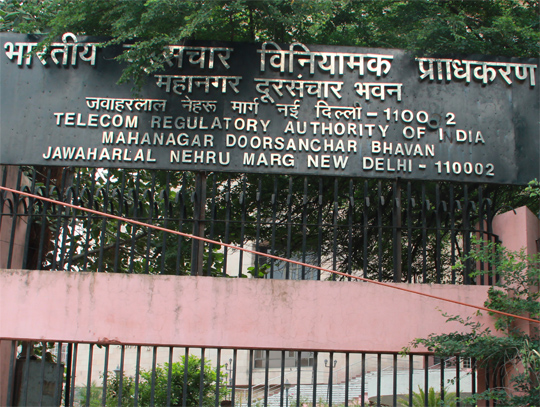
    NEW DELHI: As the country moves towards the final phase of digital addressable systems, the Telecom Regulatory Authority of India wants to know if there should be a uniform regulatory framework for quality of service and consumer protection across all digital addressable platforms.

    TRAI has also sought opinion of stakeholders on the standards and essential technical parameters for ensuring good quality of service for digital cable TV, direct-to-home (DTH), head-end in the sky (HITS) and Internet Protocol Television (IPTV).

    The opinion has been sought in a detailed consultation paper on ‘Issues related to quality of services in Digital Addressable Systems and consumer protection’, and stakeholders have been asked to send in their comments by17 June and counter-comments if any by 1 July.

    In over fifty questions posed to stakeholders, it wants to know the broad contours for quality of rervice regulatory framework for digital addressable systems.

    The regulator has asked if timelines relating to various activities to get new connection should be left to the Distribution Platform Operators (DPOs) to be transparently declared to the subscribers.  What should be the time limits for various activities including consumer application form and installation and activation of service for new connections, it wants to know.  

    Referring to a query often asked by stakeholders, the Regulator wants to know if the minimum essential information to be included in the CAF should be mandated through regulations to maintain basic uniformity.  Should the use of e-CAF be facilitated, encouraged or mandated, it has asked.

    It wants to know whether the minimum essential information to be included in the Manual of Practice be mandated through regulations to maintain basic uniformity and to ensure that consumers get all relevant information about the services being subscribed.

    TRAI wants to know if an initial subscription period can be charged while providing a new connection to protect the interest of subscribers as well as DPOs, and the protections for subscribers and DPOs during initial subscription period.

    TRAI wants to know the methodology of reduction in subscription charges be calculated in case of discontinuation of channel from DPOs platform.

    Stakeholders have been asked to give their opinion on the maximum permissible time of disruption beyond  which subscriber must be compensated if there is disruption due to technical fault on the DPO network or at the subscriber’s end; disruption due to technical fault of Consumer Premises Equipment at the subscriber’s end.

    The stakeholders have been asked why the uptake of mandated schemes for set top box (Outright purchase, hire purchase, and on rent) is so low at present and whether this is due to lack of consumer awareness and what other methods should be used for this.

    Opinion has also been sought on the billing cycle both for pre-paid and post-paid and whether deduction of maintenance related charges for CPE from the pre-paid subscription account should be prohibited.

    Comments have been sought on call centre availability hours, multiple languages in Interactive Voice Response, response time for answering IVR and voice to voice calls and  d. Sub menu and accessibility of customer care executive.

    What should be the innovative ways to develop a speedy user friendly complaint registering and redressal framework using Mobile Apps, SMS, online system etc., the regulator has asked.


  • TRAI advises TV distribution platforms to use e-CAF to increase efficiency

    TRAI advises TV distribution platforms to use e-CAF to increase efficiency

    MUMBAI: As a proactive measure for enabling the use of digital technologies towards bringing efficiencies in providing and managing services to the subscribers, the Telecom Regulatory Authority of India (TRAI) has asked distribution platform operators (DPOs) like direct to home (DTH), multi-system operators (MSOs), Headend-In-The-Sky (HITS) and IPTV companies providing TV broadcast services to use Electronic Customer Application Form (e-CAF). 

    The CAF is required to be filled up by customers mandatorily before subscribing to TV services. The information captured in the CAF is then transferred to the Subscriber Management System (SMS) of the DPO for managing the services availed by the subscriber.

    The authority said that presently, use of CAF in paper format is prevalent and manual process is followed for updating information in the SMS, which involves processing millions of physical CAFs and their storage creates operational difficulties.

    “The e-CAF can be easily accessed and integrated with the SMS of the DPO eliminating the manual feeding of information and also provides customers a simpler method for subscribing to services; improve customer relationship, and management of their subscription and services. The e-CAF will bring efficiencies in the process of providing and managing services to the subscribers,” TRAI said in an advisory. 

    It went on to add that the adoption of e-CAF is an environment friendly measure and is likely to benefit all stakeholders.

  • TRAI advises TV distribution platforms to use e-CAF to increase efficiency

    TRAI advises TV distribution platforms to use e-CAF to increase efficiency

    MUMBAI: As a proactive measure for enabling the use of digital technologies towards bringing efficiencies in providing and managing services to the subscribers, the Telecom Regulatory Authority of India (TRAI) has asked distribution platform operators (DPOs) like direct to home (DTH), multi-system operators (MSOs), Headend-In-The-Sky (HITS) and IPTV companies providing TV broadcast services to use Electronic Customer Application Form (e-CAF). 

    The CAF is required to be filled up by customers mandatorily before subscribing to TV services. The information captured in the CAF is then transferred to the Subscriber Management System (SMS) of the DPO for managing the services availed by the subscriber.

    The authority said that presently, use of CAF in paper format is prevalent and manual process is followed for updating information in the SMS, which involves processing millions of physical CAFs and their storage creates operational difficulties.

    “The e-CAF can be easily accessed and integrated with the SMS of the DPO eliminating the manual feeding of information and also provides customers a simpler method for subscribing to services; improve customer relationship, and management of their subscription and services. The e-CAF will bring efficiencies in the process of providing and managing services to the subscribers,” TRAI said in an advisory. 

    It went on to add that the adoption of e-CAF is an environment friendly measure and is likely to benefit all stakeholders.

  • TRAI clears platform services offered by local cable ops, subject to conditions and payments

    TRAI clears platform services offered by local cable ops, subject to conditions and payments

    NEW DELHI: The Telecom Regulatory Authority of India (TRAI) has recommended the establishment of an online system by the Information and Broadcasting Ministry to register all the platform services being offered and the registration is on the basis of a simple set of information and at a nominal registration fee of Rs 1000 per channel.

     
    According to the recommendations on the ‘Regulatory Framework for Platform Services’ issued by it, TRAI said distribution platform operators (DPOs) desirous of providing platform services must be incorporated as a company under the Indian Companies Act 2013.

     
    TRAI had issued a consultation paper on ‘Regulatory framework for Platform Services’ on 23 June and the recommendations are based on the responses received from stakeholders. TRAI said there is an urgent need to ensure that these programming services are brought within the four corners of a robust and fair regulatory system that addresses all concerns adequately.


    The Ministry in a letter to TRAI on 17 January 2013 sought recommendations of TRAI under section 11 (1) (a) (ii), (iii) and (iv) of TRAI Act, 1997 on the issues related to local ground-based channels of cable TV operators. In addition, through an earlier letter of 2 February 2009, the Ministry had also sought TRAI’s recommendations about such kind of programming services being offered by DTH service providers to their subscribers as well as on the issue of carriage of FM radio channels on the DTH platform.

     
    The Regulator also issued a letter in this connection to the secretary in the Ministry, Bimal Julka.

     
    TRAI has also said a time of 12 months should be given to the DPOs to comply with the guidelines to be issued by the Ministry in this regard.

     
    Prior clearance is required from the district authorities of any local information and local affairs bulletins that may be transmitted.

     
    Platform Services (PS) are programming services/ channels that are owned by the DPO; available only to the subscribers of the DPO’s network; advertisements, if any, on these channels is inserted by the DPO and ad-revenues, therefore, accrue to it. Regular TV channels, howsoever transmitted, and Doordarshan channels which appear on the TV networks, cannot be included in PS. Further, foreign TV channels not registered in India cannot be included in PS.

     
    A maximum number of five PS channels may be offered by the cable operators in non-DAS areas. In DAS areas and for all other platforms, a maximum of 15 PS channels may be offered by the DPOs. These numbers are the number of PS channels to be made available at the subscribers’ end.

     
    In addition to the recommendations on Platform services, the Authority has suo motu made recommendations for a regulatory framework for ground based broadcasters as well. This has been done to ensure that any TV channel that is distributed on any TV network in India is covered by a regulatory framework, whether it is obtained from a satellite-based broadcaster; produced by the network operator or sourced from a terrestrial broadcaster.

     
    The recommendations for the ground-based broadcasters are largely the same as that for the satellite broadcasters, barring the requirements of seeking spectrum and approvals in that regard from Department of Telecom and the Department of Space.

     
    Retransmission of FM radio channels on TV channel distribution networks has been recommended provided that all the legal rights to do so are obtained. However, the Authority has said that this matter will be revisited at a later point in time, once the FM radio industry fully develops in India.

     
    These recommendations have been issued in view of ground based channels being operated at the level of cable TV operators and regarding the kind of programming services being offered by the DTH service providers to their subscribers.

     
    The Authority recommends that no change in the existing FDI limits and Net-worth requirements be made for DPOs offering PS.

     
    In so far as carrying local news and current affairs bulletins on PS is concerned, the following categories will be treated as non-news and current affairs broadcast and will, therefore, be permissible:

     
    (i) Information about local events and other local affairs, sourced locally and not obtained from news agencies or from broadcast news channels/ sources;

    (ii) Information pertaining to sporting events, excluding live coverage. However live commentaries of sporting events of local nature may be permissible, if broadcasting rights for the same are not held by anyone else;

    (iii) Information pertaining to Traffic and Weather;

    (iv) Information pertaining to and coverage of cultural events, festivals;

    (v) Coverage of topics pertaining to examinations, results, admissions, career counseling;

    (vi) Availability of employment opportunities; and

    (vii) Public announcements pertaining to civic amenities like electricity, water supply, natural calamities, health alerts etc. as provided by the local administration.

     
    There are four distinct kinds of channels, though variously described, and with a variety of content, that are being carried on DPO networks. For analytical ease and simplicity these are classified in terms of the source of the channel:  

     
    (a) Private Satellite Channels: These are the traditional satellite broadcast channels, governed by the Uplinking/ Downlinking Guidelines of the Ministry. They carry all genres of programme content.

    (b) Doordarshan Channels: These are the Public Broadcaster’s channels, some of which the TV networks are mandated to carry under the Cable Television Networks (Regulation) Act 1995.

    (c) Platform Services (PS) Channels: These are channels owned and operated by the DPOs and distributed to their own subscribers. They are of several kinds and, depending on the design of the network, may or may not be interactive. They offer a fairly wide variety of content to their subscribers. Content generally offered includes local affairs information/news; movies; general entertainment; music; education and religion. The DTH networks offer on-demand services for which the subscriber has to pay extra. These channels include movies/ video on demand, educational channels, interactive channels, etc. While such on-demand channels are at present distributed only by the DTH operators, in the DAS environment MSOs too can provide them.

     
    (d) Ground-based Channels: These channels are akin to the traditional broadcast channels, but with a strong local focus. In the comments received they have generally been referred to as ‘local-channels’ and the producers of such channels have been described as ‘local-channel operators’. In reality they are ground-based broadcasters. These channels offer a variety of content such as local news and information; regional movies and music; religious content, etc. The ground-based broadcaster channels are an integral part of most cable TV networks. Like traditional TV channels, these channels may also be carried on more than one DPO network simultaneously. The owners of these channels transmit the content terrestrially to the headend of the cable TV network, i.e., there is no uplinking or downlinking of the channel and the DPOs retransmit them on commercial terms to the subscribers. Like traditional TV channels, these local-channels also carry advertisements and the ad-revenue obtained usually accrues to the ground-based broadcaster. Consequently, they own the rights for the content carried and are responsible for the same. At present, such channels are not specifically covered under any regulatory framework and the ground-based broadcasters are not formally recognised as a ‘broadcaster’.

     
    The Authority recommended that any DPO offering PS retain, with itself, a recording of all PS channel programmes for a period of 90 days; a written log/register should also be maintained about such programme for a period of one year from the date of broadcast. The recording and the register can be examined by the Authorised Officer and the State/District Monitoring Committee appointed by the MIB as, when and if required. For PS distributed on a pan-India basis MIB should be the monitoring agency.

     
    The Authority recommends that the first violation of the PS Guidelines should lead to prohibition on transmission of the PS channel for a period of up to 30 days; for the second violation, the prohibition on transmission of the PS channel should be for a period of up to 90 days; for the third violation the registration of the PS should be revoked and the PS channel concerned should not be allowed to be transmitted. Consequently, the number of PS channels that the DPO can transmit thereafter will be appropriately reduced.

     
    Considering the smaller reach of some of the ground-based broadcasters, the Authority recommends that a State should be taken as a unit and a reach in 15 or more States should be taken as a pan-India presence. The States that are members of the North Eastern Council (NEC) could be considered to be equivalent to one State, for this purpose.
     

  • So who does DAS benefit and what does RIO have to do with it?

    So who does DAS benefit and what does RIO have to do with it?

    When the BJP government was last in power with Ms Swaraj at the helm of the MIB, the digitisation process was first mooted in its original form of CAS. The populist notion was to bring down cable prices with the false concept of pay for what you want, so pay less. But little did the government realise that the customer’s cable bill was so significantly subsidised because of ‘under declaration’ that the ‘spoilt’ consumer in the cheapest cable market in the world would either have to reduce his current offering by half or more or if he wanted the same channel line up, would actually have to pay twice as much!

    At that time, the broadcasters were resentful as reduced reach was imminent in an advertising driven market and for DPOs it was definitely not favourable as they would need to reduce the number of analogue channels to piggyback digital cable on some of the frequencies which was otherwise used for analogue channels. (This was because both digital and analogue had to be offered on the same network). And this reduction of analogue channels impacted their carriage potential and hence revenues.

    So who won? None of the key stake holders- broadcaster, DPO or consumer.

    So who does DAS in its new avatar benefit?

    Certainly not the consumer from his cable bill point which was the original populist premise. Sure, the DPOs and broadcasters, once the dust settles down. With the transparency of set top boxes and doing away with ‘under declaration’, the MSO can now collect from the ground higher revenues and hence a bigger chunk eventually to the broadcaster. (Cable revenues were significantly lower than DTH revenues even though cable homes far exceeded DTH homes.) Who else benefits? The government, for sure, by way of higher taxes.

    And the losers of course in the value chain would be no doubt the consumer now shelling out higher ARPUs. And of course the LCO who till now reigned king keeping the bigger chunk of collections.
    So what’s wrong with DAS?

    Fundamentally, the current consumer pricing structure, the RIO rates and the business model. If DAS was to benefit the consumer why is there no B to C model, why are there no retail prices with direct offers from broadcasters to consumers with pipeline commissions to DPOs. Why are RIO rates unrealistic? Why are DPOs free to do retail pricing? The problem is RIO is a regulatory created framework and broadcasters have maxed out after years of price freeze not knowing what to expect.  

    If DAS has to succeed then this whole pricing scenario has to be re-looked. How can the broadcaster market his product if the DPO controls retail pricing? Or given the RIO pricing (which will now be used as a basis for negotiation) will the broadcaster really allow the DPO to play the role of a wholesaler and buy in bulk and retail at attractive customer offerings significantly lower than RIO.

    When regulation hinders market dynamics, it creates more absurdities. Any consumer product needs an MRP. Packages or stand alone. RIO is definitely not helping this process. It’s best the two beneficiaries – the DPOs and the broadcasters finally come together, see eye to eye and work out what is the magical pricing so that packaging and pricing is offered by both and directly to the consumer. If the DPO truly acts as a wholesaler he can surely better any packages the broadcaster directly offers unless of course the broadcaster/channel can go it alone which no doubt will be the true test of content and certainly a success yardstick to measure addressability.

    So can the government bury RIO and keep the consumer in mind!  TV entertainment is mass and needs to be looked at (retailed) as a service similar to that of consumer products! Let’s have an MRP, let’s also have a distributor pricing better than MRP. There is scope for both models to co-exist- DPOs mixing it up and offering multi-broadcaster packages and broadcasters also retailing with negotiated discounts to DPOs for pipeline usage and payment gateway.

    A 100 million plus pay TV homes is a very robust subscription market!

    Lastly, with the BJP now back surely we hope they will complete what they chaotically started. With the honourable I&B Minister Arun Jaitley and MoS Rajyavardhan Singh Rathore now at the helm it certainly looks like MIB is priority and our industry will definitely be both in competent hands and in their cross hairs!


    (These are purely personal views of consultant Sanjev Hiremath and indiantelevision.com does not necessarily subscribe to these views.)

  • “India is not yet mature for RIO deals”: Sanjev Hiremath

    “India is not yet mature for RIO deals”: Sanjev Hiremath

    The current scenario in India is not very viable to allow for reference interconnect offer (RIO) to take off. No broadcaster would want to be on a RIO agreement because the moment you are on RIO, your distribution is affected. Broadcasters want their channels to be carried by all operators and also in good packs for maximum reach.


    Subscription too would be lower at least initially. The RIO rate X subscribers on CPS basis will mostly likely be lower than the existing negotiated price for that channel.


    India is not yet an addressable pay TV subscription market and RIO deals will not work anytime soon; neither for the broadcaster nor for the DPO. The addressable billing system, consumer communication and B to C marketing needs to kick-in. 


    Currently, broadcasters want reach and DPO wants carriage or at the least it does not want to pay for the channel and keep its content cost down. There is competition among DPOs too and cost of content is critical to all. RIO is a regulatory mandate in the absence of a deal and a good basis for negotiations. Money saved on carriage on RIO (as there is no carriage) can be used for discounts to structure deals. 


    In the immediate future, some channels will get impacted due to poor uptake or because of it being a niche or premium channel. Some of these channels will likely go on RIO especially stand alone ones. As and when billing for content gets established we move to a more mature market where broadcasters will get decent subscription revenues, niche channels will be able to survive and premium channels will make more money being a-la-carte on a CPS deal.


    We are in a transition phase of moving to the real objective of DAS, pay as per channels viewed/subscribed – in short, ADDRESSABILITY!


    (These are purely personal views of consultant Sanjev Hiremath and indiantelevision.com does not necessarily subscribe to these views.)

  • TRAI issues consultation paper on regulating local TV channels

    TRAI issues consultation paper on regulating local TV channels

    MUMBAI: The Telecom Regulatory Authority of India (TRAI) is going to look at putting in place regulations relating to local TV channels now.


    In a consultation paper released today, the TRAI has sought stakeholders’ opinions on the regulatory framework that could be drawn up for local content channels in order to put them on a par with TV channels that are broadcast via satellite.


    The ministry of information and broadcasting (MIB) – through its secretary Uday Kumar Verma (in January 2013) – had asked the regulator to come up with its recommendations for the same.


    The TRAI consultation paper states that MSOs, LCOs, DTH operators, HITS and IPTV service providers (all called as distribution platform operators – or DPOs-  henceforth) are running local channels aka platform services (PS) that don’t have the MIB’s permission. Some channels that are transmitted by the DPOs through the PS channels have content similar to regular TV channels.


    TRAI has made it clear in the consultation paper that DAS has changed the context for DPOs and their PS as far as cable TV operators are concerned. The reason: with digitization, it is only the MSOs who can transmit encrypted signals from their headends on cable TV networks; LCOs can no longer transmit their own local ground based channels.


    The regulator states that there has been a debate on whether PS channels can be considered as a conventional TV channel or a value added service (VAS) because broadcast TV channels are charaterised by continuous dissemination of content in a push mode to all subscribers through DPOs. On the other hand, PS channels provide content in a pull mode triggered by a specific need or demand of consumers.


    TRAI has queried whether stakeholders agree with the following definition of a PS and if not then to suggest an alternative: “PS are programs transmitted DPOs exclusively to their own subscribers and does not include Doordarshan channels and TV channels permitted under downlinking guidelines.”


    Programmes on PS


    PS generally includes music, movies, news, devotional, entertainment, local news, live events, teleshopping, kids programs, serials, documentaries, regional programs, local plays, infotainment, market news, educational, and interactive games.


    TRAI has asked stakeholders to provide their views on whether a PS channel cannot transmit news or current affairs, coverage of political events, programmes already shown on DD or other TV channels, international/national and state level sporting events or games like IPL, Ranji Trophy. Whether what it shows can include programmes such as movies, VOD, interactive games, coverage of local events and festivals,  traffic, weather, educational/ academic programs (such as coaching classes), information regarding examinations, results, admissions, career counseling, availability of employment opportunities, job placement, Public announcements pertaining to civic amenities like electricity, water supply, natural calamities, health alerts etc. as provided by the local administration,  Information pertaining to sporting events excluding live coverage, live coverage of sporting events of local nature i.e. sport events played by district level (or below) teams and where no broadcasting rights are required.


    It has also asked the timeframe for reviewing whether a PS is trespassing into the domain of a regular TV broadcaster.


    Eligibility criteria for PS


    All categories of DPOs, apart from MSOs, are required to be registered under the Companies Act. To ensure uniformity in the legal status of all DPOS, TRAI suggests that a DPO offering a PS must register under the same. Therefore, the process of incorporation as a company has been simplified. Since the act allows even one person to register as a Company, small MSOs that are registered with the MIB can now register under the Companies Act.


    TRAI has asked whether it is mandatory for all DPOs to be registered as companies to be allowed to operate PS or to suggest an alternative.


    FDI limit for PS


    Currently news channels are allowed only 26 per cent FDI and a recommendation to increase it to 49 per cent is pending with the government. On the other hand, MSOs can have FDI up to 74 per cent. The regulator states that exclusion of ‘news and current affairs’ category of programmes from a PS channel would address this unevenness. It asks views on the same.


    Other issues


    As per the downlinking guidelines, an applicant company needs to have a minimum net worth of Rs 5 crore to downlink of its first TV channel and Rs 2.5 crore for any additional channel. It asks if there is a need for a minimum net-worth requirement for offering PS channels. Additionally, it also seeks to know if such channels should be subject to similar security clearances as applicable to private satellite TV channels.


    The TRAI also requests inputs on registration of PS channels with the MIB for which it would introduce a time bound centralised online registration system. Registration can be for 10 years with renewal for another 10 years. At the time of registration, the DPO should also declare the type of programmes it will transmit and any changes should be informed 30 days prior to a change.


    Although TRAI feels market forces would compel the DPOs to restrict transmission of channels to a local geographical area, it still asks for stakeholders’ views on should there be any limit in terms of geographical area for PS channels. Also, if there should there be a limit on the number of PS channels which can be operated by a DPO.


    Inputs on other obligations/restrictions that need to be imposed on DPOs for offering a PS such as non-sharing of a PS with another DPO and compliance with the programming and advertising code and TRAI’s regulations on quality of service and complaint redressal are also sought.


    Certain DTH operators transmit radio channels while some radio stations provide it through the net as over the top services. It asks whether a DPO should be permitted to re-transmit already permitted and operational FM radio channels under a suitable arrangement with the FM operator and if there should be a limit on the number of such channels.


    In order to monitor the kind of content that is being transmitted through the PS channels, DPOs may be mandated to keep a record of programmes for 90 days and produce it as and when required. The regulator asks for a monitoring mechanism.


    Whether a PS should be penalised in a manner similar to TV broadcasters, is also asked. Lastly, it seeks a timeframe for the registration of existing PS channels  once it is notified by the MIB.


    Comments are required to be submitted by 14 July and counter comments by 21 July.


    Click here to read the TRAI consultation paper on regulating local TV channels

  • Home Cable Network approaches TRAI against Star Sports

    Home Cable Network approaches TRAI against Star Sports

    MUMBAI: Delhi-based multi-system operator (MSO) Home Cable Network, which has for long been facing issues with Star Sports channels, has now written to the Telecom Regulatory Authority of India (TRAI) seeking its intervention in the resolution of the matter, which first arose in November 2013, after the interconnection agreement between the MSO and Star Sports expired on 31 October, 2013.


    Home Cable Network, in its letter to TRAI, has said that since expiry of the agreement with Star Sports, it has found abnormalities in the rates charged by the broadcaster. “We have been making representations to Star Sports executives, informing them that the rates charged on a per subscriber basis are not at par with the rates being charged by the network to various other MSOs. Due to this, our business is getting adversely affected,” reads the letter, a copy of which is in the possession of indiantelevision.com.


    “We have always been asked by Star Sports representatives to either sign on the exaggerated subscriber base with CPS rates or sign up on RIO rates which again are five to ten times higher as compared to the rates offered by them to favoured MSOs,” the letter further states.


    The move comes after the 10 February release of the TRAI regulation on content aggregators. “It was in this regulation that TRAI itself noticed irregularities in interconnection agreements. The regulation was an eye-opener, wherein MSOs like us were informed that the rates being charged from non-vertically integrated DPOs were in some cases higher by 62 per cent as compared to vertically integrated DPOs.


    The TRAI also brought to our notice that the rates charged by broadcasters to smaller, non-vertically integrated DPOs were higher by about 85 per cent as compared to vertically integrated DPOs,” said Home Cable Network managing director Vikki Choudhry.


    He informed that Home Cable Network has approached TRAI under clause 5.11 of the “Telecommunication (Broadcasting and Cable Services) Interconnection (Digital Addressable Cable Television Systems) Regulations, 2012” to facilitate the “process of entering into an agreement between Home Cable and Star Sports with just and equitable terms and conditions which help in creating a level playing field between the competing MSOs.


    The MSO has given a period of seven to ten days to TRAI to respond to its letter. “After the expiry of this tenure, we will approach The Telecom Disputes Settlement and Appellate Tribunal (TDSAT) against Star Sports,” Choudhry said.


    In the case against Star Sports channels, Home Cable Network plans to make TRAI respondent number one and Star Sports respondent number two. “If TRAI is unable to create level playing fields, MSOs will start making the regulator a party in the disputes with the broadcaster,” Choudhry concluded.