Mumbai: Asia’s largest higher edtech company upGrad is back with yet another clutter-breaking digital campaign featuring a seemingly ironic interviewer-interviewee banter. The campaign film, through interesting on-screen chemistry, brings out the efficacy of upGrad’s best-in-class faculty, and the placement strategy it offers under its Digital Marketing Job-Linked Bootcamp, delivering a promising career outcome.
Conceptualised by upGrad’s in-house creative team, the film is produced by Valeum Films and is directed by Manoj Tapadia, who has made ad films for an endless list of brands, notably Dove, Maggi, Dettol, Tata Tea, Havells, Symphony, and HDFC. The film, shot in an office setup, shows a job interview underway that isn’t going the applicant’s way, until he answers a key question that turns the interview – and the hiring manager’s perspective – around.
The six month bootcamp has been developed using upGrad’s extensive industry experience and offers a hands-on curriculum, including 200+ hours of live lectures, introduction to niche digital marketing tools, and 65+ hours of interview preparation and dedicated soft skill development sessions each. Prepared by industry experts for industry roles, the 100 per cent live bootcamp is carefully designed for freshers to assist them land a job with a minimum of Rs 4 lakhs per annum within 150 days of performance-based program completion or an entire fee refund. The move is also set to accelerate India’s growth momentum significantly through an added employment doorway.
Commenting on the campaign, upGrad CEO – India Arjun Mohan said, “Job-Linked Digital Marketing Bootcamp is one of the biggest milestones, we, as a higher edtech leader, have introduced and therefore, it was critical for us to create maximum awareness touchpoints to let our target group and aspiring marketers take an informed career choice. The campaign draws insights from an internal study which highlighted the existing market gap in terms of available jobs. As a result, we realised that freshers and working professionals who aspire to build a career as digital marketers do not have a direct entry point. They have to pursue multiple different job profiles before they actually land the desired job.”
“Young people change the face of any industry. Digital marketing is no different – in fact, it is one of the industries, most prone to be changed by new blood coming in. While earlier, young people usually stumbled into digital marketing, a structured and industry-relevant course like this upGrad Bootcamp, will give prospective marketers a great start to their career, thanks to the veteran faculty teaching it. This was the insight that led to the ad film,” added upGrad head of creative and content marketing – India Shreyas Shevade.
In line with upGrad’s commitment to LifeLongLearning, the program structure also includes 1:1 mentorship opportunity with industry experts, end-to-end support in resume building, interview etiquette, and mock interview sessions, enabling its learners with enhanced career development opportunities.
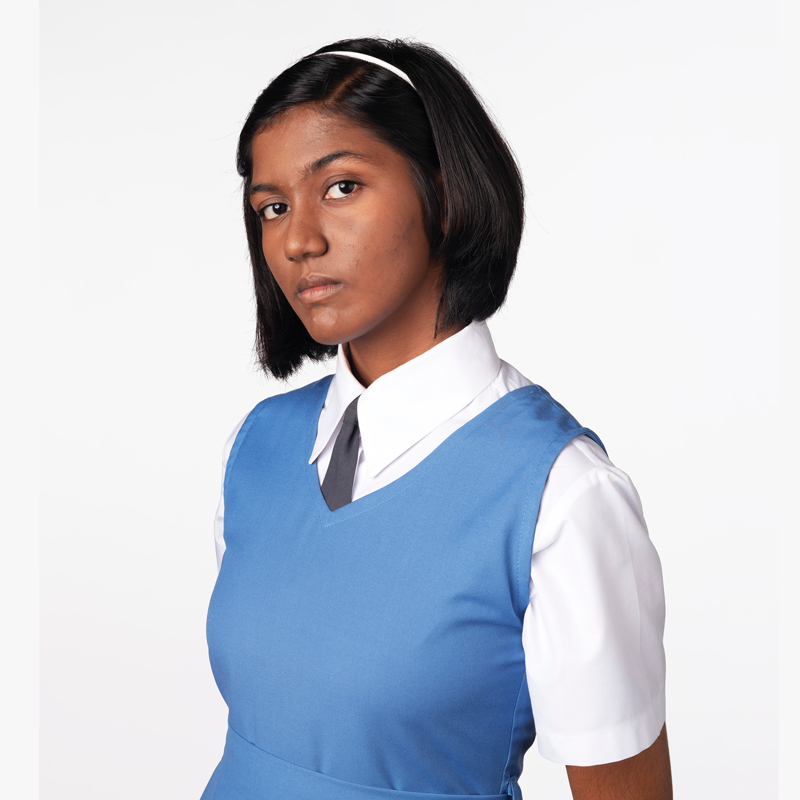
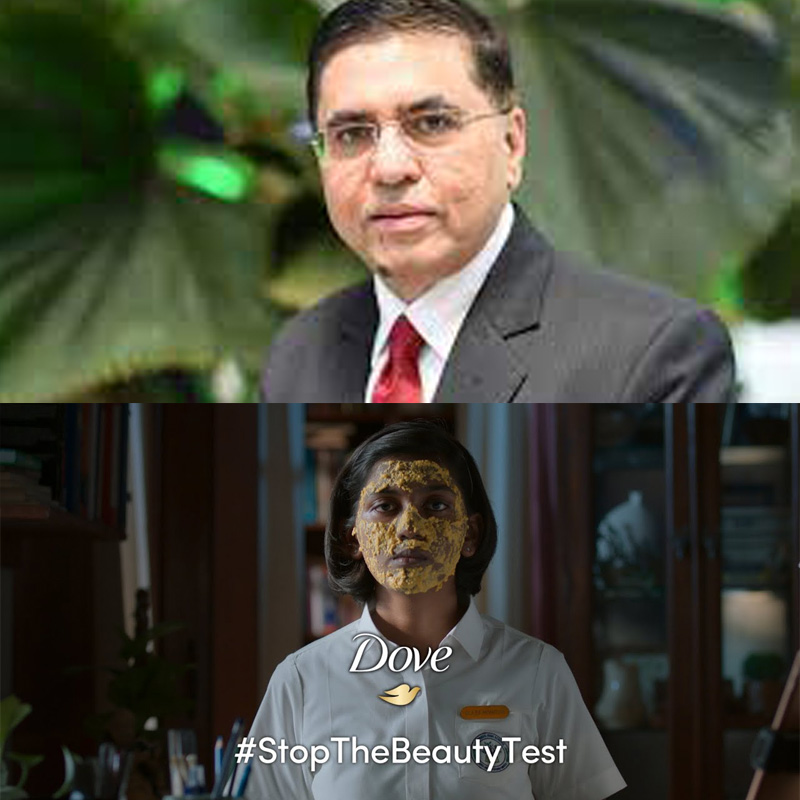
Mumbai: As the writer of this story, I don’t know if the recent “#StopTheBeautyTest” campaign by Dove is just blown out of proportion or it isn’t. Dove, HUL’s soap brand, has been in India since the 1990s and one of HUL’s other products, Glow & Lovely (previously Fair & Glow) – a skin-lightening cream, has been around in the country since 1975. So, my question is, has the fair skin obsession been fiercely propagated in India by one of the largest FMCG giants, Hindustan Unilever (HUL), or “#StopTheBeautyTest”? Or is the existence of both the brands at varied timings in the country, just a point to be brushed aside? Time and again when this tug of war between beauty and calibre has occurred, it has only led me to ask more and deeper questions. This time, I spoke to industry veterans who have pondered on the points about the creative and strategy of this campaign which has been conceptualised and executed by Ogilvy.
He was the first person I called to review this campaign, simply because on my LinkedIn, apart from HUL CEO & managing director Sanjiv Mehta, he was the first person whose post dared to speak something which not many could lend an ear to. Bang In The Middle (BITM) co-founder and chief strategy officer, Naresh Gupta says, “I think it’s very dishonest on the part of HUL to do a campaign like this. That’s where the whole issue is. I understand that you have a brand to sell and nobody has the right to tell you to not sell the brand. But when they try to take this righteous approach – the whole righteousness is wrong, because, from the business perspective, this is not what they’re doing when they’re selling Axe and Glow & Lovely. They’re doing something different – they’re prying on all the insecurities a person has when they’re selling Glow & Lovely and Axe.”
He further continues to ask – who are these people who would move to buy Dove? “They are actually at one point of time buying Glow & Lovely or are on Axe. So, you made money off them at some stage of life, and now you are continuing to make money off them at another stage of life. The other problem is the way the whole campaign has been executed – it is not executed with a positive tone of voice, which is the deeper issue. My concern is that the campaign should have been executed with a much more positive tone of voice,” he explains.
Even though many root for HUL’s hypocrisy, on the other hand, FCB India executive creative director Sumitra Sengupta likes the brand’s (Dove’s) work in bits but still feels that it doesn’t strike that spark. “After speaking to the urban target group for so long, I think Dove decided to address the masses. Yes, it’s written beautifully, is fabulously shot, and imparts information emotionally, but doesn’t create magic.”
Some people recognise that Dove, over the years, has been a trailblazer, breaking beauty conventions and stereotypes and Dentsu Creative chief strategy officer Sumeer Mathur is one of them. This campaign is phase two of an earlier campaign that focused on how women are judged at the time of seeking a life partner. The communication seems to be taking the same position forward. “If anything, it’s more of the same and not entirely new or fresh,” he feels.
Business strategist and PepsiCo India, Motorola & HP Asia former marketing head Lloyd Mathias finds this campaign interesting and in line with Dove’s core proposition that beauty is not defined by shape, size or colour – it’s authentic and all about self-esteem and confidence.
“Dove’s current campaign “#StopTheBeautyTest” tries to counter the prevalent stereotypes about beauty that are reinforced early on from darker skin tones to body shaming. It is a hard-hitting campaign bringing to the fore the trauma many young girls go through in India,” he adds.
Elucidating on the hype and buzz that this ad has created on social media Lloyd explained that the debate is a clear indication that the campaign strikes a chord, which is good for the brand that plays a niche in the soap market. Besides the activism, it inspires and drives consideration which is hugely positive for the brand.
Talk about being regressive!
Along with MediaMonks chief content officer, an ex-Ogilvy, an ex-MullenLowe Lintas Azazul Haque many others strongly believe that “#StopTheBeautyTest” is a very elite way of looking at Indian society. It feels like a conversation that happens in high society about how suppressed and regressive our society is. Brands like Dove should inspire women to celebrate real beauty instead of questioning society for suppressing a certain gender.
A lot of people watching this ad feel that for a brand like Dove which has always stood for true beauty, and has done some commendable work in the past, Azazul thinks that “#StopTheBeautyTest” lacks a deep-rooted insight.
Naresh firmly stands his ground when he says that the current Indian president Droupadi Murmu doesn’t fit the beauty bill, the way any brand would want to fit the beauty bill – but she has climbed to the top position in the country and you can’t get a more inspirational woman to look up to than her. “So if you look at it that way, society is moving somewhere else, and the brand is stuck somewhere else. This is just dated thinking and execution. And we, advertising people, live in our echo chamber, thinking this is what happens and this is what doesn’t happen,” he asserts.
Several also feel that the campaign puts Indian society in a poor light by portraying it as regressive even now, which, to be true, isn’t the fact. “To a certain extent, it is true that in Indian society few parents still believe that looking beautiful is a parameter of success. But this ad makes it look like most Indians are stuck in this conservative, parochial mindset. Also, it makes the women, the mother, the family- the villain,” says Azazul.
Sumeer understands that we seem to live in a world where it’s good to have an opinion and even better to be outraged. “It’s great if a certain section of society feels that we have moved on from judging girls on the beauty parameter and this no longer holds relevance for them. However, it would be interesting to know what the masses think about this ad – right now the criticism seems to come from the progressive English-speaking digital urban classes,” he explains.
He has a different stance on this and goes on to add that he thinks many girls even in urban India would find this communication relevant, the fact that teenage girls face unfair scrutiny and feel overwhelming anxiety about their body and looks is a global phenomenon that is well documented by psychologists. Young men seem to be developing similar issues these days in many social pockets.
“Would husbands get the idea of beating their wives because they saw “Darlings”? Similarly, it would be regressive if it ended in ambiguity on what Dove believes in and that’s not the case, it’s not promoting beauty tests. Merely calling out a social evil does not mean you are propagating it. Could it have been executed with more positivity, would that have worked better at getting people to sit up and notice the issue? Usually, when a brand takes on social evil, its communication needs to hold a mirror to society. On a normal day most brand communication is sun-shiny,” he reveals.
Lloyd, too, doesn’t consider the campaign to be regressive at all, as it shows a mirror to deeply prevalent social mores, thus bringing them to the fore. “Highlighting social issues will always raise controversies and bring out polarising views but these are inescapable in these times where social media enables everyone to have a view and air it freely. Smart brands harness this to their advantage,” he explains.
Naresh has believed for a very long time that the advertising guys are out of touch with reality. The world has moved on and the progression has happened to a very large extent. But the advertising folk have gone back on their appeals – they haven’t moved forward.
“15-16 years ago the advertising appeals were much more progressive. Agencies have been doing far more progressive work – ‘Daag Acche Hai’ (the tagline and brand campaign line for HUL’s detergent brand – Surf Excel) comes from the same company – that is so much progress. But when you do this “#StopTheBeautyTest,” it is not progression, it’s regression. And this is what has happened in advertising for the last 10 years – we have only gone back in time, we have not moved forward,” debates Naresh.
For business and brand strategist and Harish Bijoor Inc founder Harish Bijoor, the “#StopTheBeautyTest” campaign is unnecessary today. “It is so yesterday! I do believe society has moved on. Reminding it of what it did in the past is an unnecessary stoking of the issue and the pot,” he says.
Compared to the fabulously progressive work Dove has done with its other social experiments, Sumitra does find this ad to be regressive. She added, “It sets up the problem beautifully, but doesn’t provide a solution. And I think ‘Dove says… stop the beauty test’ sounds a trifle arrogant.”
HUL’s hypocrisy or just plain marketing?
With HUL Dove’s “#StopTheBeautyTest” campaign on one end, and its Glow & Lovely and Axe products’ advertising on the other, is this HUL’s hypocrisy or just plain demands of the various products in their portfolio? Every single time, when ads for fairness creams are rolled out, and on the other hand much is spoken about calibre outshining outward beauty, one tends to think that how farce could all this conversation get. Well, ad people, Sumitra and Azazul feel that HUL is doing justice to all its brands.
“Various brands of HUL stand for various points of view. So one can stand for artificial, outer beauty while the other celebrates real beauty. I don’t see a clash there,” clarifies Azazul.
Additionally, Sumeer points out, “If you see their actions, across its portfolio Unilever is moving towards more inclusivity, they have dropped ‘normal’ from some 200 beauty products, all these brands (Axe, Glow and Lovely) have moved on to a more progressive, modern worldview. I feel brands and people must be encouraged to evolve, pillorying attempts to evolve serves no purpose, it works against the agenda of change and inclusivity.”
Naresh, on the contrary, discussing the print execution of this campaign feels that through this campaign, Dove is giving a sense that teachers evaluate students, giving them marks on the way they look, which is blatant cheating. “They are being provocative, that’s the correct thing to do. But it can’t be a mark sheet because, in reality, there is no mark sheet. If a teacher says something like this to a student and if the student complains, the teacher gets sacked,” he says.
He goes on to add that if HUL has done the research, they should have put the research out in the public domain, mentioning clearly that this is what they have heard from their research and this is why the campaign is happening – that also they are not doing. He is of the thought that the brand is just trying to be clever.
Lloyd, speaking from a business and brand point of view, elaborates, “Multi-brand and multi-category businesses will always face the criticism of seeming hypocritical as they have different positionings for their various offerings.”
He strongly believes that in this case the criticism is justified as while Dove walks the higher ground of inner-beauty, there’s little doubt that HUL’s Glow & Lovely, panders to skin lightening. This is a fundamental contradiction.
On a concluding note, Sumeer discusses that there isn’t a monolith India – different people are on a different scale in terms of attitudes and concerns, and there is always a trend and a pushback against every topic on social media, as it allows everyone to express and share their opinion. It’s hard to gauge where the critical mass of opinion is.
“Keep your brand audience in mind, if it matters to them it matters to the brand, that’s a good north star to have,” he signs off.
Mumbai: Dove’s latest campaign questioning society on the beauty-based judgements that young girls are subjected to has been garnering attention, not always for the right reasons however. As was probably discovered by the Hindustan Unilever Ltd (HUL) MD & CEO Sanjiv Mehta when he recently shared a post on the campaign on a social networking platform.
Sharing the brand film on LinkedIn Mehta wrote: “Ahead of #InternationalDaughtersDay pleased to launch phase 2 of our #StopTheBeautyTest movement. Our new brand communication sheds light on the scrutiny and low self-esteem young girls encounter in society because of unrealistic beauty norms.”
“As a father to two lovely daughters, I feel deeply for the cause. You would agree that our children’s formative years are critical, and if done right, we set them up for life. Therefore, we must create an environment where girls can feel more confident about themselves and focus on who they are as individuals, not how they look,” he continued.
Let us pause, reflect and eliminate beauty biases that prevent India’s daughters from achieving their full potential, Mehta added before concluding with the plea “Please let us all #StopTheBeautyTest.”
While several netizens lauded him and Dove for taking up the cause of women by asking consumers to confront beauty stereotypes laid down by society, there were other voices which questioned HUL’s seemingly contradictory stance when it came to its other flagship brand Glow & Lovely (formerly Fair & Lovely).
“Fascinating ad from the company that makes Fair & Lovely,” pointed out a user, referring to the ‘skin-lightening’ cosmetic product of Hindustan Unilever introduced to the Indian market in 1975. The user, Savitha Rao, further demanded to know if Unilever would make an ad on how so many companies are marketing products by making the customer feel inadequate. “For decades, Fair & Lovely promoted a solution to dark complexions, which was shown as a problem,” she added.
The film was also criticised for showing parents and teachers in a bad light ‘to sell a soap.’
“A campaign ad that shows hardworking mothers, grandmothers, and teachers as the real villains, pushing for unrealistic beauty standards, while not just absolving oneself, but branding oneself as the torchbearer of change. I am yet to come across a better example of hypocrisy,” declared a netizen.
LinkedIn user Anirudh Kunte while being appreciative of the campaign, did not hesitate to give the company a reality check on it’s ‘not-so-fair’ history. “Good initiative. However, admitting your mistakes is the first step towards correcting them,” he wrote, recalling the tag lines/ narratives propagated by the conglomerate. “These aren’t exact, but the gist is similar: ‘Fairer skin got me a job/ romantic date/groom’, ‘Gora nikhaar laye jeevan mein bahaar’, ‘Get 2 shades lighter skin in 4 weeks’. All of these, perpetuated for decades, by the brand’s parent company (and specifically some of its products) in India,” he stated.
“All of these, perpetuated for decades, by the brand’s parent company (and specifically some of its products) in India,” he stated.
Responding to the campaign’s exhortation of ‘Dove kehta hain #StopTheBeautyTest‘, another user wrote, “Sirf Dove kehta hai… But what about Fair & Lovely and all the other brands that have told every little girl to constantly worry about glowing skin/ shining hair / makeup that hides them.”
“There is demand and there is supply.. I propose you cut the supply of useless confidence shattering products and demand shall wade off. Be the first movers if you really care!! N not just for the Daughters Day campaign,” she emphasised.
Yet another netizen minced no words while replying to Mehta’s post. After seeing this short film, the first thing that crossed my mind is a popular saying in Hindi language, he wrote. “It goes like this… Sau chuhe kha kar, billi chali Haj ko.”
He continued,” I’m sorry, no amount of campaign like this can undo the damage that Unilever India has done to the psyche and self-confidence of millions of young girls in India in the last several decades, milking their emotions and preying on their low self-esteem with campaigns for brands like Fair & Lovely, Pond’s, Lakme, etc. to make millions of dollars in profit.”
“And what’s worst is that I have personally contributed to this by selling F&L for over 2.5 years while working for HUL in rural India,” he added.
LinkedIn user Gautam Pradhan was also scathing of the post even as he lauded the initiative. “Good initiative Sanjiv, But Unilever has actively contributed to believing that fair skin colour is beautiful with massive advertisement campaigns from 1975 to 2020,” he wrote. “The height was when Hindustan Unilever started giving seven shades scale in the pack. I have seen my sisters growing up with the Fair and Lovely brand. And they are comparing skin tone on the scale,” he further shared.
“Keep running this campaign on TV until you change the belief system of an Indian household that skin colour doesn’t matter,” he emphasised.
Dove’s latest campaign claims to bring to fore beauty-based judgements that young girls are subjected to by the society in the guise of advice.
Last year, the soap brand launched the #StopTheBeautyTest campaign throwing a spotlight on how beauty biases are amplified during the process of finding a life partner. The campaign showcased how the remarks deeply impacted the self-esteem of prospective brides.
The second and latest leg of the campaign has shifted its focus on ‘the root of the problem’ – from prospective brides to teenage girls. The film features girls who narrate their stories of how they have been subjected to varied beauty tests based on their appearances and thereby rated by society on their looks instead of their intellect / aptitude.
Watch the Dove film here:
Mehta’s post also faced backlash from a section of users who pointed out how the campaign seemed removed from the reality of today’s times, even as some LinkedIn users responded by complimenting Dove for bringing social issues to light with their ‘wonderful purpose driven campaign’.
“Something is not right with these ads. Indian mother daughter relationship has changed at least aspirationally. In the households depicted in the ads pressure from mother is for studies and ambitions mothers have for their daughters. The middle class India has changed. The ads looked unreal to me for a hashtag#realbeauty brand,” wrote a user in response to Mehta’s post.
“Our girls have crossed this barrier long back. Ask your team to work on some other strategy to connect with girls,” trolled another, even as another section of users commended the ad for being relatable and true. This prevails in many families, even ‘educated and cultured families’, they noted.
Some users called the brand’s latest campaign another ‘marketing gimmick’.
“Good to see a change, but large questions remain on the way most of Unilever’s products are marketed and pushed into the minds of the vulnerable. Till the bigger change happens, these ads will be viewed by most as a mere gimmick,” wrote a user.
“It IS a gimmick. An expensive , slick gimmick. What is the locus standi of a company that makes Fair & Lovely , Lakme to preach #StopTheBeautyTest to consumers,” insisted another user.
Are they asking Dove consumers to not buy Fair & Lovely, Lakme products, a user demanded to know.
NEW DELHI: FMCG giant Hindustan Unilever Ltd (HUL) is in the process of filing a legal case against German skincare brand Sebamed for targeting its soap brands Lux, Dove, and Pears in a series of ads released last weekend, media reports suggested. Sebamed in its Filmstars Kee Nahi Science Kee Suno (listen to science, not filmstars) campaign had called out the aforementioned soap brands for their pH levels.
"Our brands are best-in-class and deliver fully on the promises…backed by strong tech, science, clinical evidence and decades of expert and consumer-backed testing, enjoying strong brand loyalty. We will take suitable action as we deem fit," HUL has said as per several reports.
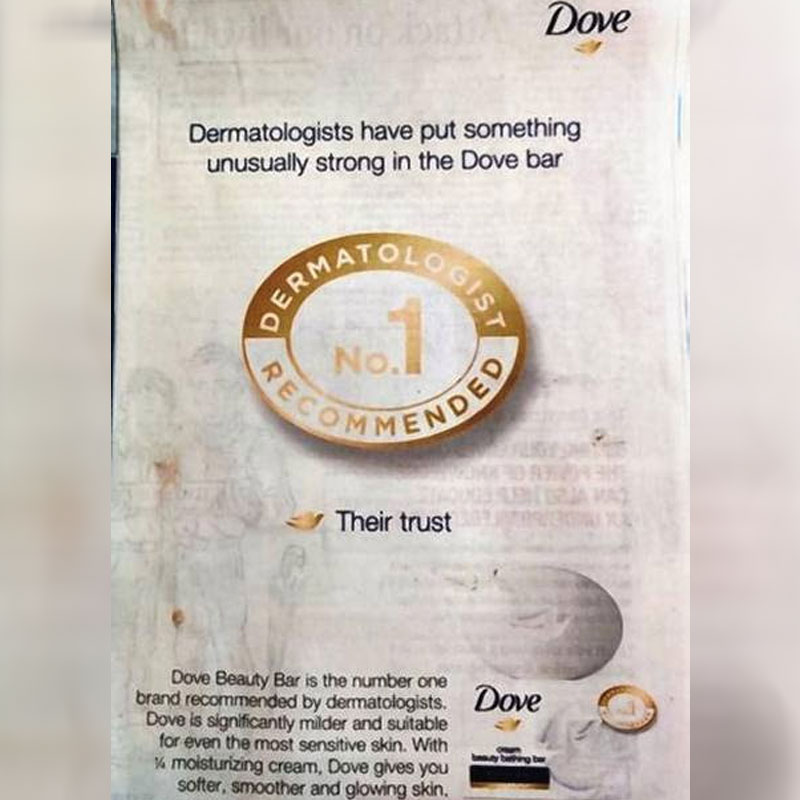
HUL also responded to the bold campaign by Sebamed, claiming that dermatologists trusted Dove. Sebamed claimed Dove soaps have a pH level of 7, while Pears and Lux have a pH level of 10, same as that of detergent bar Rin. The ads also named Santoor soap.
Previously, Sebamed India head Shashi Ranjan had said, “We stand for truth and transparency. During these unprecedented times, our wide portfolio of skin and hair care products with unique pH 5.5 benefit offers the new gold standard to the consumers. We remain strategically committed to investing in attracting the best talent, creating engaging brand stories and driving rapid distribution expansion across channels.”
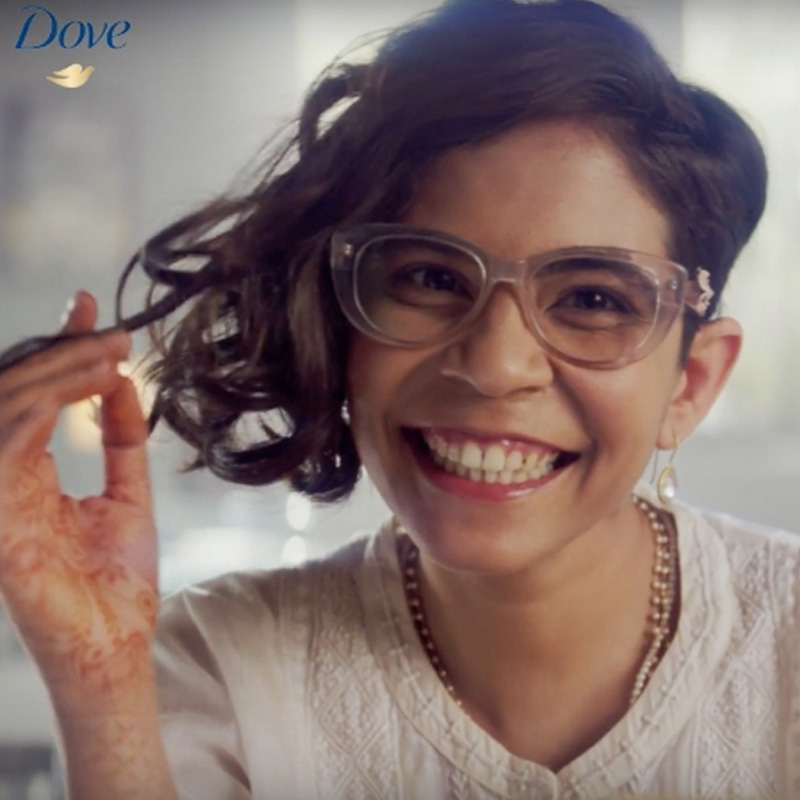
This Independence Day Dove takes forward its long-standing narrative on societal benchmarks of acceptability by encouraging women to talk about stereotypes attached to their hair. Dove’s #AapkeBaalAapkiMarzi campaign highlights the biases women face solely because of how they wear their hair and urges them to break free from the shackles of a narrow perception of beauty.
For most Indian women being told to grow their hair long and black is the earliest memory of ‘beautiful’ imbibed in them. Slowly, the stereotype becomes jarring and evident as most movies, advertisements and societal norms depict long, straight black hair to be the symbol of beautiful women, concretizing the biases that exist. For instance, an earlier study by the brand, in collaboration with Hansa Research, found 71% of Indians think short, coloured and curly hair is less beautiful than long & straight hair. This approach creates a tendency for women to measure their beauty on the scale of social norms, making them feel under-confident and diffident. The typecasting limits choices for women who conform to pre-defined standards of ‘beauty’ to be socially acceptable.
Dove’s new campaign, developed by Ogilvy India, is an endeavour towards addressing these archaic, pre-defined stereotypes and encouraging women to stand tall and wear their hair as they like #AapkeBaalAapkiMarzi in the true spirit of Independence Day.
Harman Dhillon, Vice President, Hair Care, Hindustan Unilever said, “Dove recognizes and realizes the impact typecasting can have on an individual’s being. For over 60 years, Dove has showcased the beauty in diversity. Through our campaigns we try to create awareness around and break the narrow definition of beauty, creating a space where women feel nurtured and liberated from societal beauty barriers. There is a lot more to be done to create a systemic change in mindsets and celebrate the individuality and independence of women.”
Unveiled on Independence Day, the campaign shares the story of real women Farishte, Huda and Pia, how they view their hair vis-a-vis how the society perceives them. In an inspiring and moving narrative, it draws focus to the conditioning that women undergo, early-on, towards hair beauty norms. Whether it is short or grey hair, curly or coloured hair, it is the time women are the creators of their beauty standards and feel free to choose for themselves, that reflects their true personality.
According to Zenobia Pithawalla, Senior Executive Creative Director, Ogilvy India (West), “As a brand that celebrates inclusion, we at Dove decided to celebrate the inclusion of all kinds of hair, in a society that has glorified just one kind of hair. Straight, long and black. After all, the freedom to do what one wants with one’s hair is implicit in the fight for emancipation. We interviewed women across the country to arrive at these inspiring stories. These women were left in a dilemma at some stage in their lives, all because they didn't conform to society's idea of beautiful hair. Instead of succumbing to societal bondage, they continued to wear their hair their way and emerged even more triumphant because of it. These are their stories. Stories that helped us arrive at our campaign idea, #AapkeBaalAapkiMarzi. What better day, than Independence Day to share these stories of freedom and diversity with every woman of India.”
With campaigns like #AapkeBaalAapkiMarzi, Dove hopes to ignite a conversation amongst women, across generations, on experiencing biases and the need to overcome them –to inspire others who have held back so far. #AapkeBaalAapkiMarzi gently pushes for a change in outlook – one that is more accepting of women without pre-conceived notions, allows them to make their own choices without the fear of being judged and takes a step towards truly liberating women.
MUMBAI: United Nations Children’s Fund (UNICEF) and Unilever’s personal care brand, Dove have partnered to help 10 million young people across India, Brazil, and Indonesia gain better self-esteem and body confidence by 2022. The partnership announced at the Women Deliver Conference in Vancouver will see Dove and UNICEF integrate modules from the Dove Self-Esteem Project, launched in 2004 to educate girls on body-confidence, and UNICEF’s Life Skills Programs.
The ‘Dove Self-Esteem Project’, which has so far reached 35 million young people, is the largest provider of self-esteem and body confidence education in the world. The project has been working to better understand the damage that low self-esteem can have on young people, including India.
According to a survey conducted by the project last year, 60 per cent of Indian girls do not have high body esteem and 65 per cent avoid important activities due to low body confidence. The survey highlighted that 60 per cent of Indian girls feel pressure to be beautiful – shown to have the largest impact on overall life satisfaction.
Speaking about the three-year partnership UNICEF executive director Henrietta Fore said, “Young people are some of the world’s best advocates, creators, and thinkers. Yet, feelings of disempowerment, low self-esteem, and a lack of confidence too often prevent them from speaking out, standing up for what they believe in and reaching their full potential. Through our new partnership with the Dove Self-Esteem Project, we are hoping to change that.”
The project also revealed that 70 per cent of girls with low body esteem fail to assert themselves or ask for help in school because they do not feel confident about the way they look. The same research showed that 80 per cent of girls with low body esteem have put their health at risk, for example by not attending a doctor’s appointment or skipping meals.
The new partnership will develop modules, with education specialists, psychologists and subject matter experts, urging young girls to fulfil their potential and exercise their human rights for a path to a promising future. The partnership will also encourage these girls to move beyond negative appearance-related dogmas affecting their health, education, careers and relationships.
“The Dove Self Esteem Project has reached 35 million young people and we are very happy to be partnering with UNICEF to empower 10 million more young people, especially girls. Issues with self-esteem and body confidence can have serious implications for girls’ development; so it is critical that we work to address them and help girls become the leaders of tomorrow,” said Dove parent company Unilever CEO Alan Jope.
Talking about the initiative in detail, Hindustan Unilever executive director and VP beauty and personal care Sandeep Kohli said, “Dove believes in the need to address unrealistic beauty standards and change them so that we can create a world where young girls can grow up to be women confident in their own skin. We are making progress towards this, however, we still have an enormous amount of work to do. Through our partnership with UNICEF, we hope to continue to help girls develop the resilience they need to overcome the impact of beauty and appearance pressures.”
BENGALURU: Indian FMCG giant Hindustan Unilever Ltd (HUL) is one of the biggest advertisers in India. On Indian television, the company releases the highest number of advertisements by far according to Broadcast Audience Research Council of India (BARC) weekly data for top 10 advertisers across genre. According to BARC’s weekly data for calendar year 2017 (week 1 starting Saturday, 31 December 2016 to week 52 ending on Friday, 29 December 2017), the FMCG behemoth released a staggering 68,12,298 ad insertions. This number does not include the television insertions by Brooke Bond Lipton India Ltd (Lipton), Lakme Lever Ltd (Lakme) and Ponds India Ltd (Ponds).
Industry sources said that HUL had promoted its products quite aggressively in Q3 2018 by way of sops to the players across the sales and distribution chain as well as to consumers for some of its brands. In the current fiscal that started on 1 April 2017 (FY 2018) and will end on 31 March 2018, the company spent the highest amount as yet in the quarter ended 31 December 2017 (Q3 2018, quarter under review) towards advertisement and sales promotions at Rs 1,107 crore. In terms of percentage of total revenue also, HUL’s Q3 2018 ad and sales promotion spend works out to 12.66 percent, another peak for this year. HUL’s year-over-year (y-o-y) and quarter-on-quarter (q-o-q) spends towards advertisement and sales promotion in Q3 2018 increased 29.47 percent and 8.21 percent respectively.Please refer to the graph below for HUL’s ad and sales promotion spends during the last eight quarters.
HUL was the top advertiser during all the 52 weeks of 2017 according to BARC data.Please refer to the graph below:
It must be noted that BARC provides weekly data – BARC’s week commences on a Saturday and ends on the next Friday. Hence the quarterly TV insertions numbers mentioned above are approximate.
HUL’s Tea and beverages company Lipton was present among BARC’s top 10 advertisers across genre lists during 50 of the 52 weeks. In week 52 of 2017, Lipton had 32,049 ad insertions, the highest by it in the year, while in week 19 of 2017 it had 15,719 TV ad insertions, the lowest while it was present in BARC’s list of top 10 advertisers across genre. Lakme was present in BARC’s weekly lists for 3 weeks of 2017, while Ponds was present in the lists for 15 of the 52 weeks of 2017. Assuming that these three advertisers released 20 percent additional television advertisements during the year, the total number of TV insertions by HUL during the year works out to almost 82 lakhs.
HUL chairman Harish Manwani said: “We have delivered another strong performance in the quarter, with broad based growthacross categories and further improvement in margins. We remain positive about the mid-term outlook of the industry and willcontinue to invest strongly in our core brands and developing categories of the future. There are early signs of commodity costinflation and we will further sharpen our focus on cost effectiveness programs and manage our business dynamically forcompetitiveness and sustained profitability.”
MUMBAI: In 2014, Cannes Lions launched See It Be It. A programme that responded to the gender imbalance in the advertising industry – only 25% of agency creatives are women, and just 11% reach creative director level. The stats for India, being woefully lower.
Every year, 15 future leaders from all over the world are chosen to be part of this programme. And this year, Sakshi Choudhary from OgilvyOne, Mumbai, has made it as India’s sole representative.
Following a series of written submissions and a rigorous interview, Sakshi secured her place at See It Be It from among hundreds of entrants across the globe. The programme involves a series of specially curated sessions at Cannes Lions that include workshops, behind-the- scenes with jury members and one-to-one mentoring with leaders from the global advertising fraternity.
A delighted OgilvyOne Worldwide president Vikram Menon said: This is truly wonderful news. It is a proud moment for all of us at Ogilvy. Sakshi has been a stand-out performer ever since she became part of the Ogilvy family and this is just reward for years of commitment to her craft. Hopefully, this inspires many more women to push for leadership positions in the coming years.
Sakshi Choudhary is at present the creative supervisor at OgilvyOne Mumbai where she manages some of the agency’s iconic brands including Dove and Coca-Cola. A multiple award-winner, she has also been recognised among ‘India’s Top 30 under 30’ – a listing of the country’s 30 Most Promising Young Achievers in the Media and Advertising Industry under the age of 30. Outside her day job, Sakshi is the founder of The Seesaw Project – an initiative that seeks to simplify the complex issues of gender bias, using art.
MUMBAI: L’Oréal India has appointed Shalini Raghavan as the chief marketing officer for its consumer products division. Raghavan will be responsible for driving overall marketing capability and strengthening digital initiatives to build a strong strategy for L’Oréal’s CPD brands – L’Oréal Paris, Garnier, Maybelline New York & NYX Professional Make up.
In her new role, Raghavan will report into Jean-Christophe Letellier, MD – L’Oréal India and will oversee marketing, media, public relations and digital functions.
Letellier said, “Shalini is an experienced marketing professional with a deep insight into the beauty business. Her international experience and knowledge of building organizational capacity in strategy, innovation and marketing will be prized as we look to grow our presence across the country.”
“L’Oréal is the world leader in beauty for over a century and has grown this category in India with a blend of enterprise, insights and first to market innovations. I am deeply passionate about the beauty business and the opportunity to build on L’Oréal India’s leadership position is an exciting journey that I look forward to,” Raghavan added.
Raghavan joins L’Oréal from Hindustan Unilever Limited (HUL), where she was the global brand director (Asian and African) of Dove Masterbrand.
MUMBAI: L’Oréal India has appointed Shalini Raghavan as the chief marketing officer for its consumer products division. Raghavan will be responsible for driving overall marketing capability and strengthening digital initiatives to build a strong strategy for L’Oréal’s CPD brands – L’Oréal Paris, Garnier, Maybelline New York & NYX Professional Make up.
In her new role, Raghavan will report into Jean-Christophe Letellier, MD – L’Oréal India and will oversee marketing, media, public relations and digital functions.
Letellier said, “Shalini is an experienced marketing professional with a deep insight into the beauty business. Her international experience and knowledge of building organizational capacity in strategy, innovation and marketing will be prized as we look to grow our presence across the country.”
“L’Oréal is the world leader in beauty for over a century and has grown this category in India with a blend of enterprise, insights and first to market innovations. I am deeply passionate about the beauty business and the opportunity to build on L’Oréal India’s leadership position is an exciting journey that I look forward to,” Raghavan added.
Raghavan joins L’Oréal from Hindustan Unilever Limited (HUL), where she was the global brand director (Asian and African) of Dove Masterbrand.