Tag: DOT

  • DoT seeks legal view on the Vodafone-Idea merger

    DoT seeks legal view on the Vodafone-Idea merger

    MUMBAI: DoT (Department of Telecommunications) is seeking for legal opinion on the Vodafone-Idea merger in respect to Vodafone’s administratively allocated spectrum holdings. It is also seeking legal opinion on whether this would be wilful disobedience of the court.

    According to the merger and acquisition (M&A) guidelines, for such spectrum holdings of acquired entity, the acquirer has to pay differential between the market determined price and the entry fee.

    Such payments have to be made for 4.4 MHz of spectrum on a pro-rata basis for the remaining period of licence validity.

    The issue now is that, with Vodafone being acquired by Idea, whether DoT should raise the demand on Idea Cellular of the differential amount. 

    Vodafone had challenged these demands with the Telecom Disputes Settlement and Appellate Tribunal (TDSAT), but part of the demand i.e. Rs 2,000 crore out of the Rs 6,700 crore had already been paid on the directions of the Supreme Court.

    Also Read:

    TDSAT allows broadcasters to disconnect signals to RBTV

    ISRO, DoT turf wars delaying connectivity reach: govt official

  • Telecom policy likely to be rolled out in June

    Telecom policy likely to be rolled out in June

    MUMBAI: The new telecom policy is likely to be implemented by next month, telecom secretary Aruna Sundararajan said yesterday.

    The draft policy, branded as National Digital Communications Policy 2018, was unveiled by the government yesterday. It aims to attract $100 billion or about Rs 6.5 lakh crore investments in the digital communications sector by 2022 with the help of reforms.

    “We want to place it (the telecom policy) before the cabinet in four weeks. It will be open for public comments for two weeks, then we will finalise everything in a week and send to the cabinet after that. It will be in place in June,” Sundararajan told reporters in Delhi.

    The Department of Telecommunications (DoT) has already issued a draft of the new telecom policy.

    Promising rationalisation of levies such as spectrum charges to rejuvenate debt-ridden telecom sector, the proposed new telecom policy seeks to provide broadband access to all with 50 mbps speed, 5G services and create 40 lakh new jobs by 2022.

    “The crux of the policy is to have broadband for all,” Sundararajan said. She said that spectrum usage charges will be rationalised within the ongoing financial year. “The investment in the sector will come once industry stabilises. There are efforts to stabilise industry soon.”

    Also Read :

    DoT addresses broadband issues in policy out for public consultation

    TRAI releases paper on National Telecom Policy 2018


  • DoT addresses broadband issues in policy out for public consultation

    DoT addresses broadband issues in policy out for public consultation

    MUMBAI: The Indian government is exploring renaming/replacing the National Telecom Policy (NTP) 2018 as the National Digital Communications Policy, which will aim to have increased synergies amongst ministries of telecom, IT and I&B.

    What the new draft policy, seeking public comments, does not look at is trying to make TRAI the converged regulator as had been suggested by TRAI in its feedback to the government on formulation of NTP 2018.

    Some of the important recommendations are:

    “Leveraging existing assets of the broadcasting and power sector to improve connectivity, affordability and sustainability”

    “Strengthening Satellite Communication Technologies in India
    (a) Review the regulatory regime for satellite communication technologies, including: 

    i. Revising licensing and regulatory conditions that limit the use of satellite communications, such as speed barriers, band allocation, etc.
    ii. Simplifying compliance requirements for VSAT operators to ensure faster roll out
    iii. Expanding scope of permissible services under the Unified Licensing regime using High Throughput Satellite communication systems

    (b) Optimise Satellite communications technologies in India, by: 

    i. Reviewing SATCOM policy for communication services, along with Department of Space, keeping in view international developments and social and economic needs of the country
    ii. Making available additional transponders and new spectrum bands (such as Ka band) for satellite-based commercial communication services
    iii. Rationalizing satellite transponder, spectrum charges and charges payable to WPC
    iv. Assessing the bandwidth demands across various spectrum bands used for satellite communications, in consultation with stakeholders
    v. Prioritising international engagement with ITU on spectrum management issues, specifically with respect to satellite communications in India

    (c) Develop an ecosystem for satellite communications in India, with focus on: 

    i. Streamlining administrative processes for assignment and allocations, clearances and permissions related to satellite communication systems
    ii. Promoting local manufacturing and development of satellite communications related infrastructure through appropriate policies
    iii. Promoting participation of private players, with due regard to national security and sovereignty”

    “Enabling Infrastructure Convergence of IT, telecom and broadcasting sectors:

    i. Amending the Indian Telegraph Act, 1885 and other relevant acts for the purpose of convergence in coordination with respective ministries
    ii. Establishing a unified policy framework and spectrum management regime for broadcast and broadband technologies
    iii. Restructuring of legal, licensing and regulatory frameworks for reaping the benefits of convergence”

    “Enabling unbundling of different layers (e.g. infrastructure, network, services and applications layer) through differential licensing”

    “Fostering an Intellectual Property Rights regime that promotes innovation, by:

    i. Implementing key recommendations in the National IPR Policy pertaining to Digital Communications, including a review of the legal regime around copyright, patents and trade marks
    ii. Assisting start-ups in filing copyright, patent and trademarks applications
    iii. Providing financial incentives for the development of Standard Essential Patents (SEPs) in the field of digital communications technologies
    iv. Promoting Indian IPR through international collaborations and active participation in standard development processes and IPR related events”

    “Recognising the need to uphold the core principles of net neutrality:

    i. Amending the license agreements to incorporate the principles of non-discriminatory treatment of content, along with appropriate exclusions and exceptions as necessary
    ii. Ensuring compliance with net neutrality principles, by introducing appropriate disclosure and transparency requirements”

    There are three aims- first is to connect India digitally, second is to propel India by using technologies like 5G, AI and IoT and third is to secure India which will enable the security of people’s privacy, security, data etc.

    After the Facebook-Cambridge Analytica scandal, the government will amend licences and terms and conditions to incorporate provisions for privacy and data security.

    This apart, the government aims to establish five million public wi-fi spots by 2020 and 10 million by 2022. It will also amend the Indian Telegraph Act to converge IT, telecom and broadcasting sectors.

    The government will re-look at the fees it levies at various places to enable investment of $100 billion in the digital communications sector. It will also revisit spectrum usage charges where telecom providers currently pay 3-6 per cent of adjusted gross revenue as fees. Licence fee is 8 per cent of the same.

    The Telecom Commission has also accepted the recommendations of the Telecom Regulatory Authority of India regarding a new framework for public data offices for setting up public wi-fi hotspots where people can purchase telecom or internet services in sachet-sized packets starting at Rs 2.

    Also Read :

    BSNL inks deals with SoftBank-backed OneWeb for satellite capacity 

    DEN expands broadband services; plans Rs 100 cr capex

    Zee, Star, NBA oppose converged regulator for broadcast and telecoms

  • TRAI urges govt to set up public wi-fi systems

    TRAI urges govt to set up public wi-fi systems

    MUMBAI: The Telecom Regulatory Authority of India (TRAI) is of the opinion that the the government must encourage public wi-fi solutions from a public policy point of view. “The availability of broadband services at a very low cost and in every corner of the country is the basic requirement of digital India,” it said in a report.

    In the report on ‘Public Wi-Fi Open Pilot Project’, submitted to the Telecoms Ministry, TRAI  said, “Wi-fi is a technology that can easily meet this requirement [for digital India]. The recommendation envisages an architecture that supports one time authentication requirement, interoperability across different wi-fi networks, ease of payment through any instrument and above all inexpensive service.”

    According to TRAI,  global internet traffic is anticipated to increase three times to 3.3 ZB per year by 2021 from 1.2 ZB per year in 2016 and wi-fi will play an important role in driving that growth. Public wi-fi hotspots are crucial for broadband internet in international countries. As per a Cisco report, the number of public wi-fi hotspots is set to increase from 94 million in 2016 to 541.6 million in 2021. The density of WiFi hotspots will also increase from one hotspot for 150 people to one hotspot for 20 people.

    The authority noted that India significantly lags behind other countries in terms of providing access to broadband, especially to people in rural areas. Since there is a significant section of the population still to be connected, it feels there is a need to take some measures so as to provide broadband services to the unconnected. This calls for introduction of new set of small players in the wi-fi service provisioning space, who will be able to extend their resources through a process of incentivisation.

    The report shows that mobile network data usage in India remains dominant currently as compared to other forms of internet usage. This can be attributed to a number of factors, including the cost and affordability of different broadband services, lack of fixed line coverage and relatively small number of public wi-fi zones. “This situation highlights the need for better proliferation of public wi-fi networks that can offer a more affordable and flexible alternative for scaling up of internet access,” it says.

    The regulator has come prepared. In 2017, it conducted a pilot trial of the suggested framework in the recommendations. Several companies registered to be app providers, software and hardware service providers and public data offices with a vision to ‘establish an open architecture based on wi-fi access network interface (WANI)’ in such a way that smaller entities were easily able to setup systems and users were able to easily identify and connect to them. Its opinion is that the prices must be of lower denominations such as Rs 2.

    The pilot was conducted to demonstrate that unbundling of services reduces rework, speeds up development and hence is the most effective way to tackle this complex problem. It also highlighted that multi-provider, inter-operable, collaborative model increases the overall innovation in the system, dismantles monopolies and encourages passing of benefits to end user. The pilot allowed for real life testing and suggestion of improvements as well as fine tune technology.

    The public wi-fi pilot outcome aims to offer a seamless experience to end users. As an encouragement for small entrepreneurs such as tea shops, grocery shops to set up and maintain access points, it wants to uncomplicated issues like unbundling authentication, payment and accounting from hardware and software running on the access point.

    TRAI mentions the operating guidelines to include a speed of at least 2 Mbps and e-KYC linked to Aadhaar or m-KYC via OTP authentication. The providers must set up systems capable of withstanding cyber attacks such as malware, denial of service (DoS) and even customer data and privacy protection.

    It calls the pilot a success since 96.3 per cent of the persons found the system user friendly and just 3.7 per cent of the persons believed that there is still a scope for improvement. It now intends to expand the second phase in two large cities – Delhi and Bengaluru – at junctures like airports, railway/metro stations, bus stands and other public places. This will allow testing WANI framework at scale.

    As an encouragement, TRAI says that the success of the pilot addresses the issues of interoperability and payment options. The WANI architecture would unleash the power of wi-fi and provide an impetus to the number of public hotspots in the country thereby providing the user a good quality of service and also a foolproof payment system.

    Also Read:

    Industry hails doubling of digital allocation

    Wi-Fi: TRAI plans to set up ‘open’ WANI, seeks inter-operable, sachet-priced model

  • Mobile internet rates drop by 93% in three years

    Mobile internet rates drop by 93% in three years

    MUMBAI: Mobile internet rates witnessed a phenomenal drop of 93 per cent while data usage per user surged by more than 25 times in the three years ended 30 September 2017, the Department of Telecom (DoT) said in a tweet today.

    The mobile data consumption in India is now the highest in the world at 1.3 million GB per month–more than the combined data usage in the US and China. This trend has also been fueled by the penetration of smartphones—which has shot up from 190 million to 390 million—in the country.  Internet users have increased by about 66 per cent from 251 million to 429 million (in June 2017) between 2014 and 2017.

    “Cheapest tariff globally—Rs 33 per GB in 2014 to Rs 21 per GB as on September 2017, tariff reduction of 93 per cent,” the DoT tweeted. The data war started following the entry of Reliance Jio in 2016. The company this year slashed the prices to as low as Rs 4 per GB per day. With declining mobile internet rates, data usage also grew multi fold. “Average data usage per subscriber grew 25 times from 62 MB per month in 2014 to 1.6 GB per month in 2017,” the DoT said .


    The broadband access in the country increased from 61 million subscribers in March 2014 to 325 million subscribers in September 2017, the DoT said. According to latest performance indicator of the Telecom Regulatory Authority of India, there were 445.9 million internet subscribers at the end of December 2017.

    The DoT data showed that during the three-year period, the mobile base stations in the country more than doubled from 7.9 lakh in May 2014 to 16.8 lakh by 2017-end.

  • TRAI releases recommendations on net neutrality

    TRAI releases recommendations on net neutrality

    MUMBAI: The Telecom Regulatory Authority of India (TRAI) has released its recommendations on net neutrality. These recommendations are the result of a long, multistage consultation process.

    On 27 March,2015, TRAI had issued a consultation paper titled ‘Regulatory Framework for Over-The-Top Service.’ Apart from issues relating to Over-The-Top (OTT) service, this consultation paper also touched upon issues related to net neutrality.

    TRAI first decided to deal with the issue of differential pricing of data access. Accordingly, after following a public consultation process, TRAI issued the “Prohibition of Discriminatory Tariffs for Data Services Regulations, 2016” on 8 Feb,2016. Subsequently, Department of Telecommunications (DoT) vide letter dated 3 March, 2016 sought TRAI’s recommendations on net neutrality including traffic management and economic, security and privacy aspects of OTT services, apa1i from other relevant standpoints as covered in the consu ltation paper dated

    27 March, 2015. TRAI considered the matter and decided to deal with the issue of Net Neutrality first. The recommendations released by TRAI today are an outcome of this decision.

  • TRAI wants spectrum cap revised to 35 per cent

    TRAI wants spectrum cap revised to 35 per cent

    NEW DELHI: The Telecom Regulatory Authority of India (TRAI) has suggested the revision of overall spectrum cap from the current limit of 25 per cent to touch 35 per cent.

    In its responses to the paper ‘Issues relating to spectrum cap’, TRAI said that there should be a cap of 50 per cent on the combined spectrum holding in the sub-1 GHz bands (700 MHz, 800 MHz and 900 MHz bands) instead of the intra-cap band which it suggests removing.

    The government recently constituted an inter-ministerial group (IMG) on ‘Stress in balance sheet in select sectors’. The IMG, among others, reviewed the spectrumcap applicable for telecom service providers (TSPs). IMG, in its report, stated that the issue of spectrum cap merits detailed examination and variety inputs from sectoral regulators. In light of IMG report, DoT, on 29 September 2017 requested TRAI to provide its views on spectrum cap.

    Presently, there is a cap of 25 per cent of the total spectrum assigned in 700/800/900/1800/2100/2300/2500 MHz bands and 50 per cent within a given band in each of the service area.

    The authority sought comments of the telecom service providers and took note of the following:

    • Overall spectrum cap of 25 per cent was imposed at a time when there were 6-10 TSPs in a local service area (LSA). After the ongoing consolidation in the sector, the number of TSPs in a LSA may be much less.

    • The spectrum being assigned through auction is a liberalised spectrum. At present, more than 80 per cent of the spectrum held by various service providers is liberalised spectrum wherein they can use any technology of their choice in any band or using multiple bands.

    • As LTE device ecosystem is evolving in each of the spectrum band, there is no real need to put spectrum cap in each spectrum band. In fact, asking a TSP to acquire spectrum in different band to deploy the same technology increase the cost of network with no real gains.

    • Sub-1 GHz bands are perceived as the most optimal bands to ensure availability of wireless broadband services over large areas with low population density. Therefore, spectrum in sub-1 GHz range – 700 MHz, 800 MHz and 900 MHz should be treated separately and special provisions have to be made to safeguard against creation of monopoly

  • TRAI sets new targets for carbon emissions by telecom sector

    TRAI sets new targets for carbon emissions by telecom sector

    NEW DELHI: With the world coming to grips with problems of climate change and greenhouse gas emissions, the Telecom Regulatory Authority of India has set 30% as the target for reduction in carbon emission by the year 2019-20 and 40 per cent by the year 2022-23 taking the base year as 2011-12.

    The regulator has revised the formula for calculation of carbon footprint by only recommending the target for overall reduction, in its recommendations following responses to its consultation paper issued early this year. TRAI has decided not to recommend any sub-targets for induction of RET.

    The directives of the Department of Telecom of 4 January 2012 have been amended in its recommendations.

    TRAI is in the process of preparing a strategy to tackle the problems created by the telecom sector concerning climate change.

    Following a request received from the DoT, TRAI had issued the Consultation Paper on Approach towards Sustainable Telecommunications on 16 January 2017. The paper had raised 14 questions on which stakeholders had to respond by 27 February 2017 but this date was extended to 28 March 2017.

    TRAI had issued a paper on similar issues in 2012 and the DoT had in fact given directions on that basis, but new issues have cropped up with emerging technologies.

    India has the second largest and fastest growing mobile telephone market in the world. Power and energy consumption for telecom network operations is by far the most important significant contributor of carbon emissions in the telecom industry.

    Hence, it is important for the telecom operators to shift to energy-efficient technologies and alternate sources of energy. Moreover, going green has also become a business necessity for telecom operators with energy costs becoming as large as 25 per cent of total network operations costs. A typical communications company spends nearly one per cent of its revenues on energy which for large operators may amount to several million rupees.

    The Telecom Sector witnessed substantial growth in the number of subscribers during the year 2015-16 and up to September 2016. As of November 2016, the subscriber base was 1123.95 million, out of which 1099.51 million were wireless subscribers.

    To develop the roadmap, a comprehensive program and viability gap funding for mobilising the renewable energy technology deployment in telecom sector, DoT constituted a Renewable Energy Technology (RET) committee that submitted its report on 1 August 2014. The recommendations of RET committee were further examined by a departmental committee which has submitted its report in May 2015.

    In light of the above mentioned reports of the Committee and deliberation thereof, DoT had sought recommendations of TRAI on the methodology of measuring Carbon Emission and calibration of Directives issued by DoT in 2012 and approach for implementation (Target on the implementation of RETs).

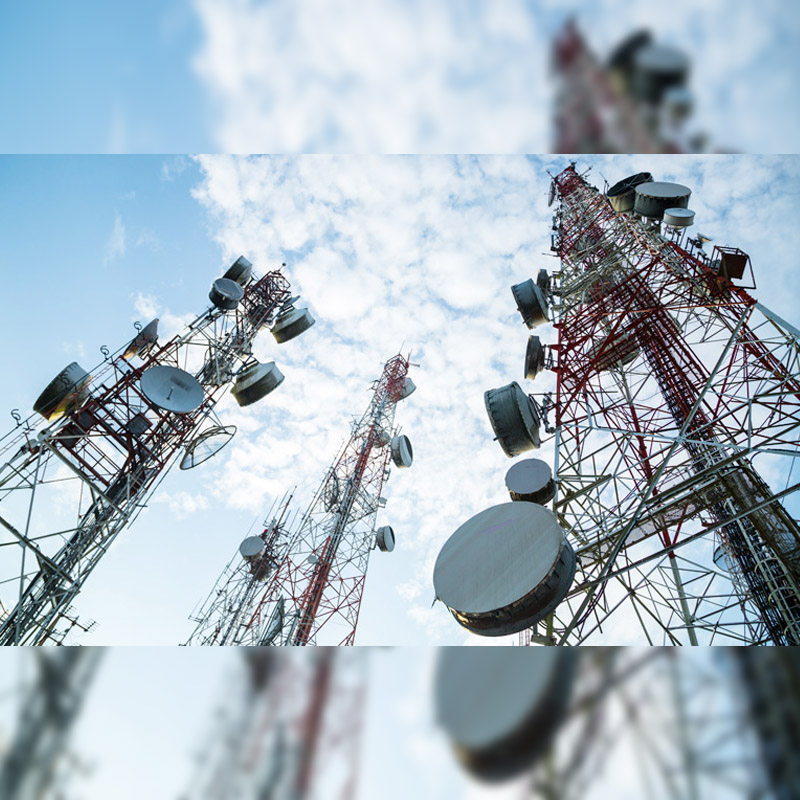
  • DoT-regd Net providers can set up towers on defence land

    DoT-regd Net providers can set up towers on defence land

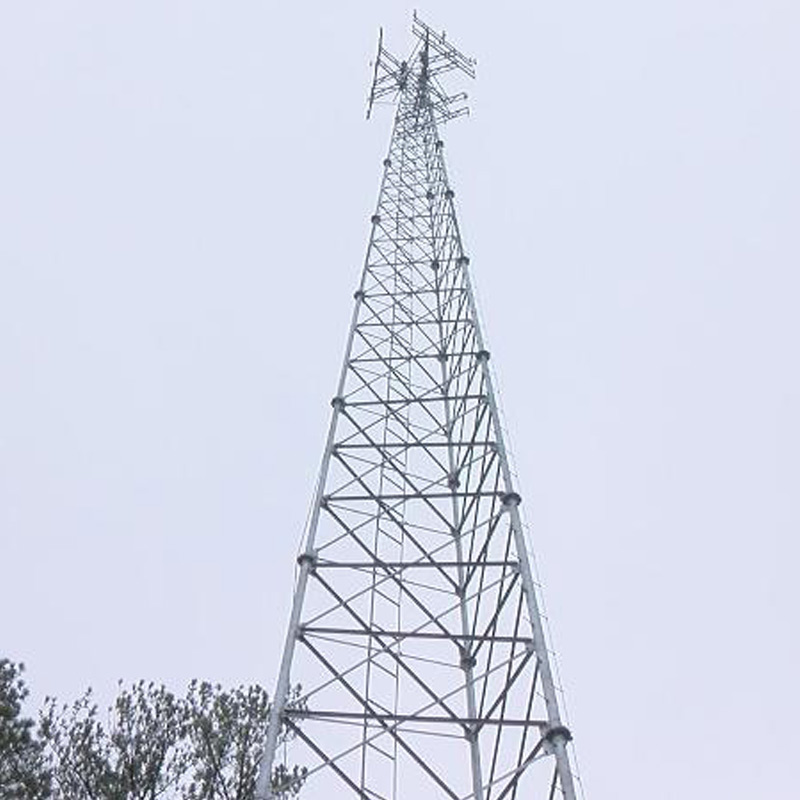
    NEW DELHI: The government has decided to allow allotment of defence land on lease and grant of permission in defence areas and cantonments to access service licensees and companies registered with department of telecommunications as internet provider for setting up shared communication towers and allied infrastructure.

    The union cabinet chaired by the prime minister Narendra Modi has approved a proposal for revision of policy of the ministry of defence for providing defence land to communication operators for construction of shared communication towers and allied infrastructure.

    The decision is based on experience in implementing the policy and guidelines issued by DoT for issue of clearance for installation of mobile towers. 

    This will improve the quality of communication services in the cantonments and military stations.

  • Cable variant with 50x capacity launched, good for BharatNet, says telecom panel secy

    Cable variant with 50x capacity launched, good for BharatNet, says telecom panel secy

    MUMBAI: Sterlite Tech, an end-to-end global technology leader in smarter digital networks, has bolstered its all-new FlashFWD 5G Solution with the launch of 1152F variant cables at India Mobile Congress (#IMC2017).

    As part of its new FlashFWD 5G Series, this new indigenous cable variant comes with over 50 times the capacity of the typical cable deployed in India.

    While launching this solution, Telecom Commission (DoT) secretary (T) and chairman Aruna Sundararajan said, “I am delighted to launch Sterlite Tech’s 5G cable that has been completely made in India. This is really a next-generation product. As the world looks at more fibre deployment, I think this is one of the products that will be a leader. This technology also fulfils the Government of India objectives. As BharatNet and other optical fibre projects roll-out in the country, we will see more such technology deployments.”

    FlashFWD 1152F is NABL certified and complies with the latest global standards of IEC.60794 series, ANSI/ICEA S-87-640, Telcordia GR-20, and ITU-T Recommendations.

    Sterlite Tech CEO Anand Agarwal asserted, “We are proud to have designed and manufactured this dense network solution for mobile backhaul in India. Sterlite Tech manufactures these products across the value chain from core silicon to semiconductor-grade glass to optical fibres and optical fibre cables, making us the most integrated player globally. This solution proposes the usage of one fibre cable and one duct solution instead of putting multiple ducts, which are subsequently unusable.”

    Sterlite CTO Badri Gomatam said, “These cable solutions have 50 times the capacity of the current cables deployed in the country and future-proof for 20 years. With efficient use of limited duct space, the 1152F cable features a rugged design that protects the network in harsh weather and impact situations, increasing life expectancy to at least double the current average lifetime with lowest carbon-footprint.”