Tag: DOT

  • TRAI sticks to its recommendations on reserve price

    TRAI sticks to its recommendations on reserve price

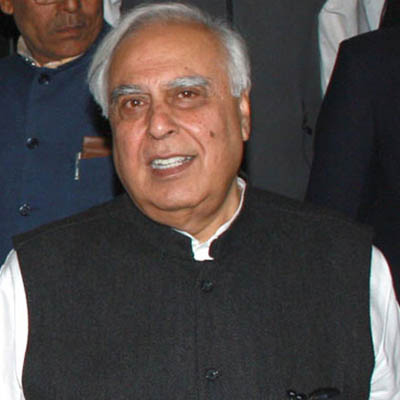
    NEW DELHI: Even as Communications Minister Kapil Sibal said the reserve price for the spectrum auction would go down in December auction, the Telecom Regulatory Authority of India has said the Reserve Prices for 1800 MHz and 900 MHz will remain unchanged and at the level already recommended by the Authority.


    Since the recommendations on the reserve price obtained for different LSAs follow, in logical sequence, from the valuation through adoption of different economic methodologies, the authority did not find any scope to “reconsider” the reserve price, as suggested by the Department of Telecommunications.


    TRAI had sent its recommendations on “Valuation and Reserve Price of Spectrum” on 9 September to the Department of Telecommunications which had on 11 October sought clarifications/ reconsideration on some of the recommendations.


    After considering the comments given by the DoT, the Authority has furnished its response to the Government. The authority has reiterated its earlier recommendations with detailed reasoning.  Thus TRAI has reiterated its recommendation regarding no reservation/priority in the 900/1800 MHz band in order to have an open, transparent, objective, responsive, unrestricted and successful auction of 900 MHz and 1800 MHz spectrum and to ensure a level playing field amongst bidders.
    Other recommendations reiterated by TRAI are:


        In order to correct the present urban-centric bias in the roll-out obligations as also to harmonise the roll-out obligations with the objectives of NTP 2012, the authority has reiterated its recommendations on roll-out obligations to enhance rural coverage.

        The DoT has conveyed its in-principle acceptance on spectrum trading. Accordingly, the authority will shortly work-out the detailed guidelines on spectrum trading.
        On auction of 800 MHz spectrum, the Authority has again recommended that the Government must first explore the feasibility of adoption of the E-GSM band before reaching any hasty conclusion.  

        On Spectrum Usage Charges (SUC), the Authority has reiterated its recommendations for a graduated transition from the existing regime with its many limitations, to a more balanced, equitable and rational system.
     

  • TRAI should reconsider Spectrum Trading, says DoT

    TRAI should reconsider Spectrum Trading, says DoT

        
    NEW DELHI: A Department of Telecommunications (DoT) committee has for the present turned down any proposal to permit spectrum trading.

    In a report to the Telecom Commission, this Committee has however admitted that this finds place in the National Telecom Policy (2012). It has said there is need for a more holistic view on the matter to prevent ‘some unintended consequences’.

    It feels that the Telecom Regulatory Authority of India (TRAI) should be asked to give a detailed recommendation in this regard. At present, only right-to-usage of spectrum is auctioned and the legal framework under which it can be treated as transferable and tradable in whole or part needs to be prepared, the Committee added.

    According to the report, any Presidential Reference on this issue should be in conformity with the Supreme Court order in the 2G spectrum allocation case.

    The Committee says there is need for assessment of market sale of spectrum. This would assume more importance in merger and acquisition (M&A) cases, for assessment of the fair value of spectrum, where the entire business might be taken over as a going concern along with the spectrum, without separate determination of the price. It should also have provisions to curb fly-by-night operators entering for only trading benefits.

    Earlier, the DoT had sought TRAI’s views on the conditions and timing for allowing trading of what got through auction, the quantity for trading by an operator, revenue payable and the legal, regulatory and technical framework. This followed a recommendation by Planning Commission Deputy Chairman Montek Singh Ahluwalia to Communications and Information Technology minister Kapil Sibal to allow trading of spectrum. The matter was also discussed in a meeting of the Empowered Group of Ministers (EGoM) on telecom headed by Finance Minister P Chidambaram.

    The DoT committee has said TRAI should reconsider sharing of spectrum. Guidelines are to be finalised for the sharing of spectrum in accordance with the TRAI suggestion on a spectrum management and licencing framework. However, the present recommendation for a flat spectrum usage charge would impact the previous recommendation, it felt.

  • Radiation norms non-compliant mobiles can no longer be sold in India

    NEW DELHI: The government, which had introduced stringent mobile radiation norms from 1 September last year, has now said in new norms that non-complaint phone makers will not be permitted to operate in India.


    Companies manufacturing or importing mobile phones for sale in India will have to ensure that the handsets are compliant with new norms. In the EMF (Electromagnetic Frequency) Radiation Standards issued last year, mobiles to be manufactured from 1 September 2012 were to have one tenth of the radiation levels compared to the then mobiles.

    The government had also said at that time that the mobile handsets with existing designs which were compliant with 2.0 W/kg averaged over 10 gram of human tissue would continue to co-exist up to 31 August 2013. Thereafter, only the mobile handsets with revised SAR value of 1.6 W/kg would be permitted to be manufactured or imported in India.


    It is expected that this may also help in curbing illegal imports and help Indian manufacturers such as Micromax, Karbonn, Lava and Spice to avoid pricing pressure in the market since they will not compete with lesser known rivals.


    Under the new rule put in place by the Communication and Information Technology Ministry, the exposure of radiation emitted from a mobile phone over a gram of human tissue should not be more than 1.6 watt if a consumer uses it for six minutes.


    All companies will have to display radiation emitted from mobile phones on the handset in terms of SAR (specific absorption rate) unit. According to a Department of Telecom official, no fresh stock of non-compliant mobile phones will be allowed to be sold from 1 September.


    Bureau of India Standards is also working on certain norms which are expected to provide clause for seizure of non-compliant handsets, the official said. These guidelines made India one of the select few countries in the world to have stringent, established in the interest of public health, for mobile towers and mobile handsets. Indian standards are now 10 times more stringent than more than 90 per cent countries in the world.


    Furthermore, the Manufacturer‘s mobile handset booklet will contain safety precautions. All cell phone handsets sold in the market in India will comply with relevant standards and shall be available in hands free mode.


    A scientific study in India-specific context is being undertaken jointly by the Department of Telecom and Department of Science and Technology in collaboration with the Indian Council for Medical Research, the Ministry of Environment and Forests, and the Science & Technology Ministry to derive norms based on credible scientific evidence taking into account diversity of Indian social context.


    While guidelines for consumers on mobile handset usage have been issued and placed on the DoT Web site (http://www.gov.dot.in), they include keeping distance – Holding the cell phone away from the body to the extent possible; using a headset (wired or Bluetooth) to keep the handset away from and not pressing against the head, and limiting the length of mobile calls and using text.


    Radio Frequency (RF) energy is inversely proportional to the square of the distance from the source – being very close increases energy absorption much more. Other precautions include putting the cell phone on speaker mode and not carry a mobile phone that is close to the chest or pants pocket. When a mobile phone is switched-on, it automatically transmits at high power every one or two minutes to check (poll) the network.

  • Cellular Association welcomes central advisory to state govt on mobile towers

    Cellular Association welcomes central advisory to state govt on mobile towers

    NEW DELHI: The Cellular Operators Association of India has welcomed the advisory sent by the Department of Telecommunications to state governments on mobile tower guidelines, saying the norms clearly segregate emission aspects from structural requirements.

    The DoT has asked the states to refrain from sealing mobile towers or disconnecting power supply to them without the permission of its unit, TERM cell, on account of radiation related issues.

    COAI director general Rajan S Mathews said in a statement: “We are working closely with the DoT to ensure that all safety norms are made universal and fears of the public about the telecom towers are removed”.

    He said the positive aspect of the guidelines is a clear distinction and segregation of emission (EMF) aspects from structural requirements. “The new guidelines have clearly stated that EMF aspects, compliance of RF exposure field emissions, issues related to SACFA, licence etc are to be handled solely by the DoT’s TERM Cells,” it added.

    COAI said the guidelines encourage a nominal one-time fee, single window clearance, and electricity connection on priority for mobile towers.

    “These are welcome steps for the industry which has been contending with a complex system and procedural delays which are hindrance towards the much required development of telecom infrastructure in the country,” it added.

    India has already implemented stricter radiation norms than are followed by other countries, DoT officials said.

    Industry representatives maintain that due to the lack of awareness on radiation, people object to the installation or working of mobile towers.

    Around 5,000 towers in Delhi and Mumbai were termed illegal by local authorities and shut down.

  • Prasar Bharati spectrum issue may go to TRAI for final decision

    Prasar Bharati spectrum issue may go to TRAI for final decision

    NEW DELHI: An internal panel of the Department of Telecom (DoT) has recommended that the note from the Information and Broadcasting Ministry seeking exemption from auction for spectrum to be allocated to Prasar Bharti be referred to the Telecom Regulatory Authority of India (TRAI).


    Prasar Bharati said “Spectrum to Prasar Bharti would be allocated on rates fixed by Government of India.”


    Meanwhile, a committee has been set up to examine the conditions for allotment of airwaves through routes other than auction, according to Minister of State for Communications and Information Technology Milind Deora.


    The DoT panel will examine various issues related to allotment and pricing of spectrum, “Including conditions which need to be satisfied in order to adopt auction as the preferred/sole mode of allotment of spectrum, conditions and types of spectrum for which administrative allotment of spectrum should be adopted as the norm,” Deora said in Parliament earlier this week.


    Telecom minister Kapil Sibal had earlier said that adopting auction route every time for allocating spectrum “does not make sense” and that the cabinet would decide on the issue based on the committee’s report.


    It is also learnt that the DoT may seek sector regulator TRAI’s views on the process to be adopted for allocation of spectrum to telecom operators without auction, following the draft recommendation in this regard by its internal committee.


    The last spectrum allocation through administrative process for mobile telephony was done in 2009. But later it was put on hold following series of controversial reports regarding spectrum allocation made in 2008 for 122 2G telecom licenses. Later, the Supreme Court in its judgment on February 2, 2012 cancelled these licenses and asked government to allocate the freed spectrum through auction.


    DoT formed an internal committee to look into conditions where auction cannot be always suitable for spectrum allocation. This is especially in cases like allocation of small amount of airwaves to telecom operators who were earlier allocated 4.4 megahertz of frequencies to bring them in sync with new rules of five Mhz spectrum allocation, or for duration in between their license period of 20 years.


    DoT’s Committee on Allotment/Assignment and Pricing of Spectrum, in its draft report, is learnt to have suggested that the department seek recommendation of TRAI on the matter of spectrum assignment and allocation meant for commercial use without auction. The committee in its report said the reference to TRAI be made on “terms of reference of the committee – conditions which need to be satisfied in order to adopt auction as the preferred or sole mode of allotment/assignment of spectrum for the services.” The committee, however, has suggested that airwaves frequencies allocated to organisations for internal use need not be referred to the sector regulator.

  • TRAI releases consultation paper on “Valuation and Reserve Price of Spectrum”

    TRAI releases consultation paper on “Valuation and Reserve Price of Spectrum”

    NEW DELHI: The Telecom Regulatory Authority of India (TRAI) on 23 July released a consultation paper on “Valuation and Reserve Price of Spectrum”.

    On 10 July 2013 the Department of Telecommunications (DoT) sought the TRAI’s recommendations on the applicable reserve price for the auction of spectrum in 800 MHz, 900 MHz and 1800 MHz bands. In this context, TRAI has issued this consultation paper raising specific issues for consideration of stakeholders. The key issues raised in the consultation paper are quantum of spectrum to be auctioned, eligibility for participation, roll-out obligations, methods to be used for valuation and estimation of reserve price of spectrum, review of spectrum usage charges and spectrum trading.

    Written comments on the issues raised in the consultation paper are invited from the stakeholders by 14 August 2013 and counter-comments by 21 August 2013 by the regulator. 

    Stakeholders have been requested to send their comments by the due dates as there is an urgency to complete the consultation process. In its reference, the DoT has stated that, in light of the Honourable Supreme Courts’s directive, TRAI may consider an expedited process; hence there will be no further extension of timelines.

    This is also an advance notice that open house discussion on the consultation paper will be held on 26 August 2013 in New Delhi.

  • Auction of 800 Mhz spectrum to commence on 11 March

    Auction of 800 Mhz spectrum to commence on 11 March

    NEW DELHI: Only one applicant – SSTL – registered for the auction of 800 MHz spectrum while no applicants registered for the auction of 1800 and 900 MHz spectrum at the time of close on the last date for receipt of applications, 25 February.

    In view of this, the Government today announced that it will commence the auction for 800 MHz on 11 March.

    Under the original announcement, auction for 1800 and 900 MHz bands was to begin simultaneously starting from 11 March and the 800 MHz band auction was to commence two days after the conclusion of the auction of 1800 and 900 MHz spectrum.

    The Department of Telecom also announced that the next steps in respect of the 1800 and 900 MHz spectrum will be decided shortly after placing the developments and issues arising therefrom before the Empowered Group of Ministers on auction of spectrum.

    A third auction (after the first auction in November 2012 and the second auction due to commence on 11 March) was already announced by the DoT on 20 February consequent to the Supreme Court directions of 15 February.

    This third auction was to cover only the 1800 MHz band to comply with the SC directive to put the entire spectrum surrendered (which was entirely either in the 1800 or 800 MHz bands) by holders of quashed licenses to auction immediately. This would, in any case, have necessitated auction in 20 of the 22 circles wherein the quantum of spectrum put to auction was less than what the apex court had directed on 15 February after the issue of the NIA for the March 2013 auction.

    In Delhi and Mumbai circles, the quantum of spectrum put to auction in March 2013 was already in accordance with the latest orders of the Court. This was also the case in respect of spectrum in the 800 MHz band both in the November 2012 auction and again in the March 2013 auction.

    In the light of these developments, DoT will review the need to include the remaining two circles – Delhi and Mumbai – for 1800 MHz bands in the next round of auctions as also the need for a re-auction in the three metro circles of the 900 MHz band. The quantum of spectrum, the reserve price and the timelines for this auction will be decided after necessary directions are obtained from the EGoM and where required, the cabinet, in this regard.

    DoT is also in the process of filing an affidavit of compliance in the Supreme Court regarding implementation of its orders of 15 February. Any further directions issued by the Court in the matter will be incorporated into the plan of action for the next round of auction to be held as soon as possible after the 11 March auction is completed.

    Separately, the DoT will also take action as directed by the Delhi High Court to dispose of the applications for extension of licenses received from licensees whose licenses are due to expire in November 2014. This action will be completed before the timeline fixed by the High Court of Delhi.

  • Vodafone moves HC against DoT order of auction of its 900 MHz

    Vodafone moves HC against DoT order of auction of its 900 MHz

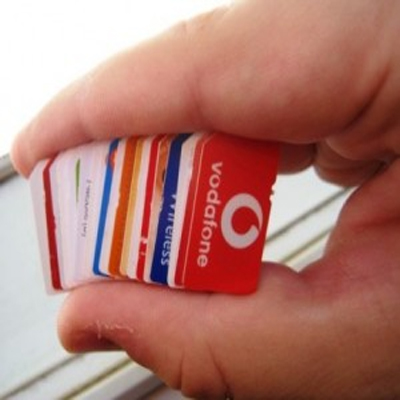
    NEW DELHI: Even as the government is preparing to auction the remaining 2G spectrum, Vodafone has filed a petition in the Delhi High Court challenging the Telecommunication Department‘s action of putting its 900 MHz spectrum to auction.

    The petition has opposed the auction as it had applied for licence extension which is pending with the Department. Vodafone said that it had in December 2012 sought extension of its licence period for Delhi, Mumbai, and Kolkata circles which are coming up for renewal in November 2014.

    Even when these applications for renewal were pending, the DoT went ahead to announce the auction of 900 MHz spectrum, Vodafone said. The extension of auction was sought under clause 4.1 of the licence agreement under which government can extend the period of licence for further 10 years, Vodafone said. It sought a fair and reasonable extension as per the rules.
     
    Vodafone contended that the action of DoT to auction its existing licenses is arbitrary and against the provisions of policy and licence and also disruptive against public interest.

  • Trai takes on new member

    Trai takes on new member

    NEW DELHI: RN Prabhakar, who retired from the Indian Telecommunication Service a year ago, has joined as a whole-time member of the Telecom Regulatory Authority of India today.

    His last posting before retiring in January last year was as Advisor (Production) and Ex-officio Additional Secretary in the Department of Telecommunications. He also looked after the charge of the Member (Production), Telecom Commission.

    Prabhakar has about 36 years of technical, administrative and financial experience in the telecom sector and has held various posts in the DoT. He has also served on the Boards of BSNL and Instrumentation Ltd Kota.

    He has participated in several international seminars and workshops and has presented technical papers related to network security, regulation and public policy etc. He was deputed for a period of three years to Nigeria for imparting training to their telecom officers.

  • DoT grants ILD & NLD licenses for BT India

    DoT grants ILD & NLD licenses for BT India

     MUMBAI: BT announced that it has been granted international long distance (ILD) and national long distance licenses (NLD) by the Department of Telecommunications, Government of India. These licenses enable BT’s newly-formed joint venture company, BT Telecom India Pvt Ltd, to offer services for the first time directly to multi-site corporate customers in the Indian market.

    BT plans to provide corporate customers who have sites in India with virtual private network-based (VPN) services using technologies such as internet protocol-based multi-protocol label switching (MPLS) and ATM.

    BT Global Services CEO Andy Green said, “This is fantastic news, allowing BT to establish and manage our own operations in India. It’s also great news for our multinational customers doing business in India and our Indian customers wanting to access a BT-managed network which is connected to BT’s comprehensive global network across Asia Pacific, Europe and North America.”

    Minister of Communication and IT M Maran said, “To further promote investment into India and enhance business opportunities for Indian companies operating overseas, India must have the best and latest infrastructure. These licenses will allow BT to bring its 21 CN services to India’s IT and ITES sector and increasing their competitiveness through connectivity, availability, quality and responsiveness on a global scale.”

    The company also predicted in 2006 that its revenues from India will be US$250 million by 2009 and that it is looking to increase its Indian employee strength by hiring an additional 6,000 people within the next two years. In February 2007, BT signed an agreement for the acquisition of i2i Enterprise Pvt Ltd, a Mumbai-based enterprise services company specialising in internet protocol (IP) communications services for major Indian and global multinational companies.BT also plans to add additional resources to support its already substantial capabilities in outsourcing and systems integration services.