Tag: DOT

  • TRAI’s Khullar lashes out at DoT for delay in giving spectrum to Airtel and Vodafone

    TRAI’s Khullar lashes out at DoT for delay in giving spectrum to Airtel and Vodafone

    NEW DEHI: The Telecom Regulatory Authority of India (TRAI) has lashed out at the Department of Telecom (DoT), noting that it is “unable to understand the reasons for the inordinate delay in the assignment of spectrum despite the clear provision in the notice inviting applications fo the assignment of spectrum and after the payment has been made by the licencees.


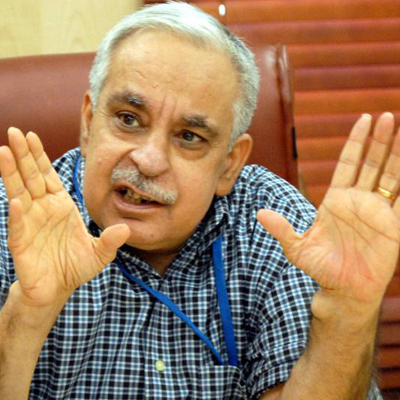
    In a letter by TRAI chairman Rahul Khullar to Telecom secretary Rakesh Garg, it has been stated that the Authority is seriously concerned that this delay on the part of WPC in assigning spectrum in the 1800 MHz band may lead to a partial breakdown of services offered by  Airtel and  Vodafone especially in Delhi, the national capital.

    This will inconvenience consumers greatly. Both these operators have around 20 million subscribers in Delhi which constitute around 45 per cent of the total subscriber base of Delhi Licence Service Area. It is apprehended that in December 2014, there will be a serious deterioration in the quality of service to these subscribers because of call drops, network congestions etc.
     
    The Authority has suggested that the DoT should immediately call a meeting of both Telecom Service Providers and arrive at a feasible solution so that consumers’ inconvenience can be avoided.
     
    At the outset, Khullar said in the three metros of Delhi, Mumbai and Kolkata, the first two CMTS/UAS licences given in 1994 are due to expire on 29/30 November 2014. These “expiry” licensees were holding spectrum in the 900 MHz and 1800 MHz band which was put to auction in the February 2014 auctions. Except Loop which did not participate in the auctions, other “expiry” licensees.  and Vodafone were successful in re-acquiring spectrum in these LSAs.
     
    In the Delhi LSA, Airtel and Vodafone, which were both having 8MHz in 900 MHz, could re-acquire only 6 and 5 MHz of 900 MHz band respectively in the auctions. Moreover, the spot frequencies now assigned to them are almost entirely different from the earlier different from the earlier assignment.  To make up for the shortfall int eh 900 MHz band, these TSPs have acquired additional spectrum in the 1800 MHz band, but it will require sufficient time to build a new network in the 1800 MHz spectrum.  In addition, in the Delhi LSA, Idea has acquired 5 MHz in the 900 MHz band, which has to be assigned to it after getting it vacated from these two TSPs.
     
    As reported by these TSPs, this whole exercise of change over of frequencies will need to be carried out in two stages. First, these TSPs will have to build a new network of 1800 MHz spectrum by putting new BTSs and augmenting the capacity of the existing ones. In the second stage, they will have to reduce their holding in the
    900 MHz band in steps and carry out swapping of spectrum andreleasing spectrum to the new entrant (Idea). Both of them will berequired to do rigorous planning and work in tandem. The above change  over  will be  a huge challenge  as all these changes are to be carried out on a live network catering to millions of subscribers and any lapse may result in service interruption and serious deterioration in quality of service.
     
    Anticipating the above challenges in mind, the Authority, in its recommendations on ‘Auction of Spectrum’ dated 23 April 2012 had recommended that the 900 MHz spectrum be auctioned at least 18 months in advance so as to enable the winning bidders to be ready with the deployment plans. According to the NIA of 12 December 2013 for the auctions of February 2014 in case of bidders whose licenses were about to expire in 2014, the effective date of spectrum assignment in 1800 MHz band, will be the preferred date of allotment of spectrum indicated by the successful bidders which in no case shall be later than date of expiry of existing licenses in the respective service area.
     
    Khullar noted that media reports had reported and Vodafone and Airtel had told the Authority that there has been inordinate delay in the assignment of spectrum in the 1800 MHz band. Vodafone says it has been assigned spectrum only on 10 October 2014, that is, after almost 8 months from the February 2014 auctions despite a number of representations to the WPC.
     
    In its representation of 16 October, Vodafone has indicated that it would require at least one week for the deployment of new frequencies assigned in the 1800 MHz band and 9 weeks for freeing up the excess 3MHz in the 900 MHz band in a progressive manner.  Subsequently, it would require another three weeks’ time for swapping of its frequencies in the 900 MHz band with Airtel.
     
    However, only seven weeks are left before the expiry of licences, Khullar noted.
     

  • TRAI extends date for stakeholders’ views on AGR and on licensing of NSOs and SDOs

    TRAI extends date for stakeholders’ views on AGR and on licensing of NSOs and SDOs

    NEW DELHI: The Telecom Regulatory Authority of India (TRAI) has extended till 7 October the date for written submissions on a pre-consultation paper on ‘delinking of license for networks from delivery of services by way of virtual network operators’.


    In this paper, stakeholders have been asked by the TRAI to give their views on their definition of adjusted gross revenue.


    The paper is on what the model of agreement is between network service operator (NSO) license and service delivery (SDO) operator license created under the draft National Telecom Policy 2011 will be.


    It has asked if this would be left to the market or regulated like mandating NSOs to provide services to SDO licensees and mandating charges etc.


    In its policy, the Department of Telecom (DoT) had said that NSOs would be licensed to set up and maintain converged networks capable of delivering various types of services such as voice, data, video, broadcast, IPTV, VAS etc in a non-exclusive and non-discriminatory manner.


    SDOs would be licensed to deliver the services such as teleservices (voice, data, video), internet/broadband, broadcast services, IPTV, VAS and content delivery services etc.


    In its latest reference to TRAI, the DoT has envisaged the entry of virtual network operators (VNOs) for delivery of services by delinking them from licensing of networks.


    VNOs are SDO licensees who do not own the underlying network(s) but rely on the network and support of the infrastructure providers, telecommunications operators (who are owner(s) of towers, radio access networks, spectrum etc) for providing telecom services to end users/customers. As these operators do not have their own networks, they are termed as VNOs. They can provide any telecom service being provided by network providers viz teleservices (voice, data, video), internet/broadband, IPTV, VAS, content delivery services etc. The most popular among VNOs are mobile virtual network operators (MVNOs).


    India is a diverse country, large in size and had very poor telecom networks when the Government decided to open the sector to private participation. Therefore, in order to ensure development and proliferation of telecom infrastructure across the length and breadth of the country, the Government took a conscious decision that all TSPs would have their own network for providing services to their customers. To meet this end, each TSP was mandated to comply with certain roll-out obligations and even sharing of infrastructure was not permitted initially. To encourage tower sharing amongst operators, the Government initiated a project ‘Mobile Operator Shared Tower (MOST)’ in March 2006, and later on, in April 2008 sharing of active infrastructure, except spectrum, was also permitted.


    At present, most access providers are integrated operators who have their own infrastructure for both access and long distance services. Having already established their networks, the issue to deliberate upon is whether delinking the network from service delivery will have any effect on the working of these TSPs. The new licence regime has come into existence only about a year back.


    In the proposed licencing framework, based on the VNO model, one issue could be whether the existing TSPs, will have to obtain an NSO licence or both NSO and SDO licences on migration to the new licensing regime.


    A linked issue for deliberation will be about the necessity of changing the licensing regime at all, at such a short interval since unified licencing (UL) was introduced.


    At present, there are 7-13 licensees in various service areas. Therefore, another issue for deliberation could be about the need for introduction of more competition in the form of VNOs.


    Apart from access services, for other services like V-SAT, PMRTS/CMRTS, GMPCS, it needs to be deliberated whether any business case/revenue potential exists for a standalone virtual operator for these services.


    In India, the TSPs have infrastructure, including spectrum, which is just about sufficient to cater to their own requirements. Would they really be able to spare their infrastructure for new SDOs, TRAI wants to know.


    It can also be deliberated whether the reference of DoT envisaged an entirely new licensing regime or could be considered to mean that a chapter may be added to the existing UL for facilitating licenses to the VNO.

  • DoT challenges TDSAT judgment on 3G roaming services in Supreme Court

    DoT challenges TDSAT judgment on 3G roaming services in Supreme Court

    NEW DELHI: The Department of Telecom has moved the Supreme Court challenging tribunal TDSAT’s judgment that allowed Airtel, Idea and Vodafone to offer 3G services under a roaming arrangement in areas where not all of them own 3G spectrum.


    “Legal opinion has favoured challenging TDSAT judgement dated 29 April on 3G intra-circle roaming. DoT has sent petition to Supreme Court registry around a week ago for appeal against the judgement,” an official source told.


    The Telecom Disputes Settlement and Appellate Tribunal had overturned a government ban on offering 3G mobile services beyond their licensed zones through roaming pacts, saying that it was in national interest to allow better utilisation of scarce radio frequency.


    The three operators – Airtel, Vodafone and Idea Cellular – benefitted from this judgment as they were facing a penalty of Rs 1,200 crore for entering into pacts with each other to offer 3G services in regions where they did not win spectrum in the 2010 auction.


    Airtel had won the 3G spectrum in 13 out of 22 telecom service areas for Rs 12,295.46; Vodafone in 9 for Rs 11,617.86 and Idea Cellular in 11 circles for Rs 5,768.59 crore.


    DoT issued notices to Airtel, Vodafone and Idea on 23 December 2011 asking them to stop 3G ICR within 24 hours and report compliance but the order was challenged by them.


    Tata Teleservices and Aircel too had signed 3G ICR but immediately called off their agreement after DoT issued notice to them.


    Following the TDSAT judgement, Airtel, Vodafone and Idea have extended service under their 3G ICR at pan-India level except Odisha.


    Reliance Communications also entered in similar agreement with Tata Teleservices to provide 3G services in Karnataka, Andhra Pradesh, Tamil Nadu, Kerala and UP-East telecom Circles.

  • ‘Super Regulator’ to replace TRAI, TDSAT

    ‘Super Regulator’ to replace TRAI, TDSAT

    MUMBAI: After scrapping the planning commission, the Modi government is thinking about clipping the wings of the Telecom Regulatory Authority of India (TRAI).


    According to a CNBC TV-18 story, the government is planning on a new super regulator for the communications sector. To be called Communications Commission, it will not only retain powers that TRAI enjoys, but also look into other matters concerning other regulators as well like Censor Board, some clearances from Ministry Of Environment, Competition Commission of India and the Department of Telecommunications.


    Moreover, the bill will also replace the Telecom Disputes Settlement Appellate Tribunal (TDSAT) with a new appellate body called the Communications Appellate Tribunal, which will have three members and a chairman. According to the report, this tribunal will also have the power to oversee dispute resolution.


    The communications bill seeks to replace all old and redundant legislations which include the Telegraph Act and TRAI Act. The Bill proposes a six member regulator with one chairman, who will have five year tenure. The member will include one each from sectors like telecom, broadcasting, finance, management, accountancy and either law or consumer affairs.

  • DoT in favour of 10 per cent custom duty on telecom gear

    DoT in favour of 10 per cent custom duty on telecom gear

    MUMBAI: Following the uproar after the union budget proposed imposing 10 per cent import duty on telecom products not covered under Information Technology Agreement (ITA) 1 of WTO to boost domestic production of telecom products, media reports suggest that the Department of Telecommunications (DoT) wants the Finance Ministry to retain the 10 per cent customs duty on specified telecom products as proposed in the budget.


    According to a report in Economic Times, a letter written by the DoT to the revenue secretary said, “Imposition of customs duty on specified telecom products will create a level playing field for domestic manufacturers who suffer severe disability due to poor infrastructure and inverted duty.”


    India is a signatory of ITA 1 as a member of World Trade Organisation. Under the pact, member countries should allow duty free import of products falling under eight categories covering telecom, computers and semiconductors like mobile phones and electronic chips.


    The telecom products mostly fall in the category of 2G, 3G as well as the 4G equipment, including switches and broadband equipment. These products are outside the list of about 220 electronic items on which India has a zero duty commitment under the World Trade Organisation’s Information Technology Agreement (ITA-1).  


    The Government, also, recently declared set top boxes as a part of telecom network. The move exempts STBs from various taxes and duties, bringing down prices, which the government hopes to pass on to consumers. In the first and second phase of cable digitisation, imported STBs accounted for about 95 per cent market share.  


    The letter also added that “India is under no obligation to allow duty free imports of items not covered in ITA-1.”

  • TRAI recommends no change in entry fee for mobile number portability for service providers

    TRAI recommends no change in entry fee for mobile number portability for service providers

    NEW DELHI: There should be no change in the entry fee for mobile number portability (MNP) service providers for implementing Full Mobile Number Portability, the Telecom Regulatory Authority of India said today. 

    It also said the Performance Bank Guarantee and Financial Bank Guarantee for the MNP service providers should be continued according to the existing licence conditions. 


    The recommendations were made in response to the Department of Telecom on additional entry fee, Performance Bank Guarantee (PBG) and Financial Bank Guarantee (FBG) to be charged from the existing Mobile Number Portability licensees for enhancement of scope of their licence. 


    In accordance with the provisions contained in the National Telecom Policy 2012 regarding “One Nation- Full Mobile Number Portability,” TRAI received a reference from the DoT on 27 December 2012, seeking the recommendations of TRAI for implementing full Mobile Number Portability across the country. 

    After consultation with the stakeholders and examination of various issues, TRAI had given its recommendations on ‘Full Mobile Number Portability’ to the Department on 25 September 2013. 


    On 2 July this year, the DoT conveyed the acceptance of the said recommendations and requested TRAI to give its opinion for additional entry fee, PBG and FBG to be charged from the existing Mobile Number Portability licensees for enhancement of scope of their license. 


    The issues indicated in the DoT’s reference have been examined by the Authority and response to the said issues has been finalised. 

  • STBs considered as telecom equipment to encourage indigenous production: Javadekar

    STBs considered as telecom equipment to encourage indigenous production: Javadekar

    NEW DELHI: The Department of Telecommunications (DoT) has issued orders confirming that set top boxes (STBs) are part of telecommunication equipments. This has been done to promote indigenous production of STBs.

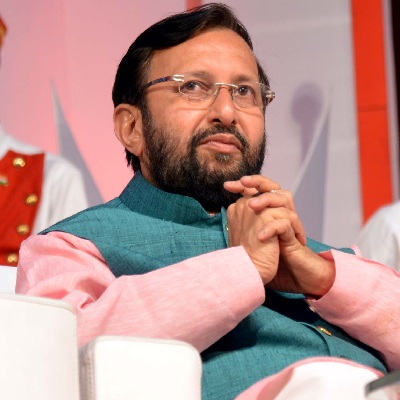
    Information and Broadcasting Minister Prakash Javadekar today informed the Lok Sabha that this was done after his ministry along with other ministries took up the constraints of Indian manufacturers in the production of indigenous STBs, in view of the fact that an estimated 110 million STBs would be required for the third and fourth phase of digital access system (DAS).


    While the earlier government had introduced digitisation in the country, it failed to chalk out a clear path for it, especially for boosting indigenous production of STBs. The new government had assured all the players that it would look at every sector’s problems and work on them. This thrust to indigenous STB makers seems to be a step forward in that direction.


    Javadekar also said that a task force has been set up to finalise the modalities and study the implementation of the last two phases of DAS which need to be completed by 31 December 2014. A Deloitte report prepared for ASSOCHAM recently said about 12 million STBs have been seeded and 80 per cent consumer application forms received as of December 2013. The Telecom Regulatory Authority of India (TRAI) claims 100 per cent digitisation has taken place in the second phase of DAS.

    TRAI has also said that recommendations on the new direct to home (DTH) licences would be brought out very soon. HITS licences have been issued to two players and are expected to enable digitisation in Phase III and Phase IV markets.

    Meanwhile, the report notes ‘complaints have poured in against STBs. People in the city are complaining about digital STBs installed in their residences and commercial organisations. Visual and sound disturbances coupled with channels going off air from time to time have left viewers unhappy.’


    It also noted that ‘in the haste to install STBs in the city, cable operators have overlooked a crucial step – that of filling in the conditional access form (CAF) before installation of the device. The purpose behind mandating DAS was to identify the actual number of cable viewers in the country. But with most customers not filling in the form, the purpose still remains defeated.’


    ‘With penetration of TV in India standing at approximately 65 per cent, at present, the country has close to 80 million non-TV households, which present a key opportunity for the television distribution players. This low level of penetration holds a great potential for players to increase their subscribers and revenues. Drivers such as rising incomes, decreasing household size, multi TV phenomenon and rising urbanisation would only provide a further fillip.’

  • Cancel all Reliance Jio Spectrum licences, says CAG

    Cancel all Reliance Jio Spectrum licences, says CAG

    NEW DELHI: The nationwide broadband spectrum allocated to Infotel Broadband Services, now a Reliance Industries company, should be cancelled for allegedly rigging the auction and violating rules, says the Comptroller and Auditor General (CAG).

    In a draft report sent to the Department of Telecom for comments, CAG said, “The DoT failed to recognise the tell-tale sign of rigging of the auction right from beginning of the auction” in which a small ISP, Infotel Broadband Services (IBSPL) emerged winner of pan-India broadband spectrum by paying 5,000 times of its networth.

    The draft report says IBSPL which is ranked 150th in the list of ISP submitted an earnest money deposit of Rs 252.50 crore “through the covert and overt assistance of third party/private bank”, bid for Rs 12,847.77 crore (5000 times of its networth) for pan-India spectrum and then sold the company on the day of completion of the auction.

    According to the draft report, these “indicated IBSPL’s collusion and sharing of the confidential information with a third party in violation of auction conditions/rules.”

    According to news agency reports, the Mukesh Ambani-promoted RIL, which acquired IBSPL within hours of it winning the spectrum and later renamed it Reliance Jio, outrightly rejected any suggestion whereby spectrum was acquired in any manner other than through a transparent bidding process duly supervised by the Government. It also noted that this was not the final report as the DoT had not sent its comments.


    An RIL spokesperson said the auction for the BWA spectrum was one of the most competitive auctions in the Indian telecom history which fetched final bid price more than six times the reserve price for the pan-India spectrum.


    On bank guarantee, the spokesperson said according to the NIA, bidders were required to submit bank guarantee for desired amount as earnest money deposit (EMD) along with its application. “EMD was based on specific deposit requirement for each telecom circle. Accordingly, IBSPL submitted a bank guarantee of Rs 253 crore in format as prescribed in NIA. Since no money was deposited as EMD, the question of source of deposit does not arise,” the spokesperson said.


    The draft CAG report said, “Due to inclusion of inadequate eligibility criterion for participation in the auction, the promoters of the IBSPL enriched themselves and made unfair gain.” 


    CAG rejected DoT’s response that the eligibility criterion for participation in the auction was finalised after due diligence and on sector regulator TRAI’s recommendations saying it was the department’s responsibility to ensure that only serious ISPs participated in the auction.


    DoT in its response admitted that there was no eligibility criterion with respect to minimum net worth or paid up capital for participation in the auction.


    “Neither the top management of the DoT nor the important committees could detect these tell tale signs of collusion and sharing of confidential information by the biggest bidder, a tiny Internet Service Provider (ISP).


    “The IMC (inter-ministerial committee) did not satisfy itself as to how the IBSPL, a company with a networth of Rs 2.5 crore, would be able to pay the bid amount of Rs 12,847.77 crore within ten days,” it said.


    CAG in the report said, “The government should get the matter investigated even at this juncture, fix responsibilities on the bidders, which violated the auction conditions/rules prescribed and cancel the allotment of the BWA spectrum along with exemplary punishment on the colluding firms.”

    The CAG estimated that the decision of the government to allow an ISP licence holder having BWA spectrum to provide voice services against payment of Rs 1,658 crore resulted in undue advantage worth Rs 22,842 crore to Reliance Jio.

    The DoT has said the auction rules allowed all kinds of telecom operators to participate in auction and there were no inherent limitation in providing voice service using BWA spectrum.

    “Had the successful bidder of pan-India BWA spectrum obtained UAS licence (permits held by mobile phone service providers), he would have become eligible to use BWA spectrum to provide any of the service permitted under UASL including full mobile service,” the official source said.

    Telecom operators like Bharti Airtel, Idea Cellular, Vodafone, Aircel etc hold unified access service licence (UASL) that allows them providing full mobile phone services as well.


    The BWA auction rules gave option to participants to procure BWA spectrum under UASL against payment of Rs 1,658 crore as paid by other operators but there was no guarantee of giving them initial spectrum as was given to incumbents.


    CAG has rejected logic of DoT saying that auction guidelines linking of BWA spectrum with UASL is “unfair and highly inappropriate.” 


    According to the draft audit report, the IBSPL promoter director went on electronic media on June 11 2010 to confirm that they had been in talks with RIL during the course of auction process.

    The report said it was in ‘gross violation of the confidential clause of NIA which had prohibited bidders and insiders from conveying any confidential information to any other person, including any other bidder or its insiders.’


    The CAG has also indicted telecom regulator Telecom Regulatory Authority of India (TRA) for not giving clear recommendation and remaining a passive observer when changes were made in its suggestion to reduce quantum of spectrum in auction.


    TRAI in 2006 had recommended to make available spectrum for entry of 12 players but finally only two blocks of spectrum were put for auction that restricted scope for entry to only two pan-India players. 

  • Telecom spectrum auction further delayed

    Telecom spectrum auction further delayed

    NEW DELHI: The spectrum auction which has been put off from time to time will begin on 3 February 2014. The Department of Telecom (DoT) had been asked to give clarifications to a number of questions from mobile phone companies like Bharti Airtel and Vodafone India on spectrum usage charges, option of withdrawing from auction and availability of contiguous spectrum but there is still no clarity on these issues.

    According to a notice issued today, the DoT will now give clarifications on the concerns raised by service providers on 2 January. The department has also extended the last date for operators to submit their applications to bid in the auction to 15 January.

    While DoT will announce the pre-qualification of bidders by 25 January, bidders will also be given an option to withdraw their applications, according to the changes in the auction schedule. Service providers had objected to DoT’s move to remove the option of withdrawing their bids, as was allowed in the last auction.

    Operators will now be allowed to withdraw their bids by 27 January and the final list of bidders will be announced on 29 January. A mock auction will be conducted over 30 and 31 January.

    Leading operators like Bharti Airtel and Vodafone India had warned DoT in a pre-bid conference held last week that they could stay away from the upcoming bandwidth auctions if the government continued with the present cascading spectrum usage charge (SUC) regime, instead of moving to a flat fee structure of 3 per cent.

    The government levies SUC between 3-8 per cent of revenue earned by telecom companies from telecom services, depending on the quantum of airwaves held.

    The telecom department is set to auction 403 Mhz in 1800 Mhz and 46 Mhz in the 900 Mhz bands in the next round of auctions, beginning 23 January. The government aims to raise Rs 40,874.5 crore from spectrum revenue this fiscal year ending 31 March 2014, including one-time spectrum fee, and has its hopes pinned on this round to raise funds to limit its budget deficit.

    Operators stayed away from the last two rounds held in November 2012 and March 2013 citing very high reserve prices and low spectrum availability. The government has set the reserve price in 1800 Mhz at Rs 1,765 per unit for pan-India airwaves, 25 per cent lower than the last auctions.

    DoT also lowered the reserve price for Delhi, Mumbai and Kolkata circles in 900 Mhz band by 53 per cent from last auctions to Rs 360 crore, Rs 328 crore and Rs 125 crore respectively.

  • Mergers and acquisition policy being given final touches

    Mergers and acquisition policy being given final touches

    NEW DELHI: Though the Department of Telecom (DoT) is expected to drop the three-year mandatory lock-in period for promoters of telecom companies under the new mergers and acquisition rules expected this week, the recent reports of high reserve price for spectrum may prove to be counter-productive.

    Initially, the government had introduced the lock-in period to prevent speculative players from misusing the opportunity to sell spectrum at market price after acquiring spectrum from the government under the first-come-first-served policy.

    But since fresh spectrum allocation is being done only through auction and older players who had got spectrum under the earlier dispensation have completed more than three years, the government has decided that the lock-in period is not necessary.

    The draft of the M&A norms say that “Further lock-in condition may hamper the progress and roll out of capital intensive telecom projects as shareholders may not be able to invest further equity.”

    Industry sources feel that some of the players in each circle may want to leave because of poor financial returns and increasing debt.

    The proposed M&A policy may not allow such players to leave, and rules are clear on issues such as spectrum trading, and the draft also says the buyer will have to pay the government the market price for any spectrum the seller holds under the older dispensation of first-come-first-served.

    While the TRAI had initially proposed a flat fee, the DoT is keen to retain the existing slab system where operators with higher amount of spectrum have to pay a higher revenue share.