Tag: Dot Media

  • “Brands don’t really push the LBTQIA conversation beyond a tokenistic approach”- Dot Media’s Danny Advani

    “Brands don’t really push the LBTQIA conversation beyond a tokenistic approach”- Dot Media’s Danny Advani

    June is Pride Month – a time when rainbows pop up across corporate India, from brand logos to Instagram grids. But behind the hashtags and the colourful symbolism, a tougher question lurks: is this genuine progress or just another seasonal PR parade?

    Over the years, India Inc. has inched forward in recognising sexual diversity. But is it truly embracing the LGBTQIA+ community, or simply ticking the inclusion box for 30 days a year? To explore this, Indiantelevision.com turned to leaders in the advertising and marketing fraternity.

    In the second part of our Executive Dossier series, Indiantelevision.com’s Rohin Ramesh had an email interaction with Danny Advani, head of business strategy at Dot Media. Previously, where Mihir’s take on Indian brands during Pride Month felt like a rainbow with a silver lining — cautiously optimistic, yet hopeful — Advani’s perspective is the thundercloud that follows. In a sharp contrast to the celebratory tone often seen in June, he lays it bare: we’ve barely scratched the surface. For him, the truth is uncomfortable — most brands are still dancing around the idea of inclusion, not walking the talk. His take sparks a necessary debate: are brands truly evolving, or are we still mistaking seasonal signaling for sustained support?

    Advani isn’t buying into the optimism. His perspective acts as a stark counterpoint — a reminder that beyond the sparkle of Pride-themed campaigns, the reality remains largely cosmetic. For him, the issue isn’t that brands are doing too little during Pride Month; it’s that they’re doing so only during Pride Month.

    The tension between these viewpoints opens up a much-needed dialogue: Is India’s brand ecosystem truly evolving in its understanding and representation of LGBTQIA+ identities, or are we still stuck in a cycle of rainbow-washing, safe tokenism, and corporate convenience?

    Excerpts from the interaction  follow.

    On brands evolving from symbolic gestures during pride month to sustained representation in product design, hiring policies, partnerships and campaigns that sparked conversation vs those that felt like rainbow-washing.

    In the Indian brand landscape, I personally haven’t come across any brand that really pushes the boundaries of the LBTQIA conversation beyond a tokenistic approach during the pride month? Where does the association disappear after June? Do we see more open conversations around them? Not yet! Are we ready as a country, not yet! Of course some brands are inclusive in conversations but is it an always on approach? Don’t think so!

    On creative, PR, and digital agencies working to ensure LGBTQ+ stories are told authentically, with lived experience and not just layered filters.

    My response remains the same above. But yes, there are agencies and organisations that do put in the effort for representation and create a safe space and welcoming environment for the community. Parmesh Sahani has been integral in doing this for Godrej now for years and I think we need more of these flag bearers to help open the archaic mindset of most organisations.

    On Indian brands showing up for the queer community throughout the year, or only when it trends.

    Let me switch my gay spotlight on and say ‘Oh honey, don’t even get me started”. Brands don’t care, most of them, they don’t care about Mothers Day, Fathers Day let alone pride. It is a trend that they ride the wave hoping they get to see the golden pot aka ROI across the rainbow.

    But I must say, some brands have at least made some inclusions in their choices of talents being used, be it as a face for commercials, or product shoots but there seems to be some movement in the positive direction.

    On the data about LGBTQ+ inclusion driving brand loyalty, especially among Gen Z and millennial consumers.

    I am not even sure if there’s a substantial data pool in the Indian landscape, but globally brands like Levis, Skittles, etc have seen proof of success in being an inclusive brand. I remember reading a paper that says skittles saw an engagement spike of 20-25 per cent during their pride campaign and as per Nielsen research paper “LGBTQ+-inclusive ads saw 23 per cent higher brand recall among Gen Z, and were 2x more likely to lead to purchase intent”. Even Close Up as a brand in India has been inclusive in their campaigns in the past and not necessarily for Pride but even during Valentines.

    On brands showing solidarity without falling into legal or cultural backlash traps, given the legal grey areas around same-sex marriage in India.

    No one is asking any brand to endorse or fight for the rights of the community by showcasing any strong statements but just have the appetite to showcase and accept the community first for who they are and stop questioning their choices. I remember an incident when X used to be Twitter and a certain Top TIer Bank had rolled out a campaign and a service for same sex couples to have a joint holder account. But when my friend applied for it, she was denied and it became a Twitter War. Pinkwashing isn’t cool!

    On the LGBT market being a big enough market in India to be targeted for products specially designed for them.

    Can’t remember any digital film, television commercial that showcased anything outside a heteronormative lens. The Indian ecosystem is too fragile and lacks awareness of anything outside the biological gender to accept or even have a conversation that could be in the benefit of the community.

    On the LGBT market being a big enough market in India to be targeted for products specially designed for them.

    Take a page from the new age fashion brands and I ain’t talking about the e-commerce giants. Brands in the fashion space today are aware of the choices that the community needs so instead they are keeping it unisex. It’s not necessarily defined by biological gender but by the design and the collection that is inclusive for all.

    On where the right attitude towards the LGBTQ+ community in an organisation truly begins — leadership, middle management, or peers.

    Oh, the chicken and the egg question! Let’s be honest, it all has to work in tandem with each other. The management can set the groundwork and help create an environment that is inclusive, but the middle management and the peers are equally responsible for you to feel it’s a safe space to work. You cannot have your leadership valuing your contributions while your peers and middle management try to tear you apart with ignorant remarks or homophobic slurs. It seems like a lot to ask but you need the majority in an organisation doing the right to silence the wrong. 
     

  • The power of relatable content in brand advertising

    The power of relatable content in brand advertising

    Mumbai: In today’s digital age, where every scroll and click presents an opportunity for brands to connect with consumers, the concept of relatable content has emerged as a game-changer in advertising strategies. This approach focuses on creating content that resonates deeply with the audience, forging a genuine connection that goes beyond mere product promotion. To learn more about this growing trend, we spoke to three renowned couple content creators who have mastered the art of merging authenticity with brand endorsements- Vishakha & Divesh, Khushi & Kushal, and Rashika & Hitesh.

    Vishakha & Divesh-

    Vishakha and Divesh, known for their heartwarming couple vlogs and lifestyle content, emphasise the importance of authenticity in their collaborations with brands. “Our audience trusts us because they see themselves in our everyday experiences,” explains Divesh. “When we partner with a brand, we ensure that the product seamlessly integrates into our lives,” adds Vishakha. This perfect integration is crucial for maintaining credibility and connecting with their audience. Whether they’re promoting a new beauty regimen or spotlighting travel accessories, their approach is rooted on real everyday experiences. They also bring a humour quotient to their content. Their ability to mix authenticity with humour makes their recommendations feel not just relatable, but also enjoyable and entertaining. “When people see us using a product in our daily routines, they can visualise themselves using it too,” Divesh adds. This visualisation is key in converting viewers into consumers!

    Khushi & Kushal-

    Khushi and Kushal are celebrated for their dynamic content that ranges from travel diaries to cooking experiments, all infused with their infectious energy and humour. “Emotions drive engagement,” says Kushal. “When we share a personal story or a genuine reaction to a product, our audience responds with enthusiasm,” Khushi adds. This emotional resonance forms the core of their brand collaborations. “Authenticity is non-negotiable,” Kushal emphasises. “Our audience can tell when something isn’t genuine, so we make sure every brand partnership feels natural and adds value to our viewers.”

    Rashika & Hitesh-

    “Our audience appreciates the blend of tradition and modernity in our lifestyle,” says Rashika. “When we partner with brands, we ensure the product aligns with our values and resonates with our diverse audience,” Hitesh adds. “Each partnership is an opportunity to educate and inspire,” Rashika notes. “When we showcase how a product fits into our multicultural lifestyle, it sparks curiosity and interest among our viewers,” Hitesh explains. This educational aspect not only expands the brand’s reach but also establishes Rashika and Hitesh as cultural ambassadors within their community.

    By prioritising authenticity, emotional connection, and cultural relevance, these content creators have redefined how brands engage with consumers in the digital age. 

  • From Campus to Corporate- A 21 year old’s guide to launching a career in PR

    From Campus to Corporate- A 21 year old’s guide to launching a career in PR

    Mumbai: If you’re here, you either love what ‘Samantha Jones’ from ‘Sex and the City’ did, or you want to know what exactly Public Relations is and how to embark on your journey. A career in Public Relations is dynamic, ever-changing, and never dull or monotonous. As far as careers go, it is considered one of the most prestigious and well-paying ones. However, that doesn’t mean that working in PR is a never-ending party. A day in the life of a beginner PR professional mostly includes writing press releases, managing media interviews, attending industry events, and networking with potential clients.

    If you want to kickstart your journey in PR, here are some tips and tricks that helped me!

    1   Apply Extensively: Applying to jobs is never enough, especially in PR, as it is a competitive field. Tailor your resume according to the job description, don’t limit yourself to one or two ‘dream companies’. Consider applying to different PR firms and positions that align with your skills and interests. You might just discover an unexpected opportunity that leads to a fulfilling career path.

    2   Network, Network, Network: Attend industry events, identify PR agencies and companies, follow their social media accounts (especially on LinkedIn), engage with their content, and reach out to PR professionals/hiring managers of these agencies and companies. Subtly express your interest in working for them, showcasing how you can contribute to the company’s growing success and why you think you would be a suitable candidate or how you stand out from the rest.

    3   Work on your communication skills: At its core, the PR industry is all about communication. While you might believe you have amazing communication skills, there’s always room for improvement. Whether it’s refining your pitching techniques for a compelling story, effectively conveying the importance of seizing opportunities to clients, or perfecting your writing skills for press releases, authored articles, or listicles, there’s always more to learn.

    4   Stay up-to-date on industry trends: In the fast-paced world of PR and communications, staying in the loop is key. Sign up for newsletters from top publications and stay up-to-date on industry trends. Grasp every piece of information you get, as no amount of information is ever enough!

    5   Develop and MAINTAIN media relations: While maintaining media relations is not the sole essence of PR, it sure is a brownie point you wouldn’t want to miss. It’s all about staying in regular touch with journalists, editors, and influencers to ensure credibility and trust are maintained throughout. By keeping these relationships strong, you not only get your message out there accurately but also stay ahead of the game. It’s the secret sauce to making sure your brand shines a little brighter in the media spotlight.

    If you’re someone who loves to be on their toes, juggle deadlines like a pro, stay up-to-date on trends, and know what’s happening around the globe before your friends do, loves to talk and meet new people, knows how to craft stories that are impossible to miss, PR is definitely for you! Apart from these skills, it is a cherry on top if you have an extroverted personality, as you’ll be communicating with various people throughout your average workday. And last but not least, you will also need to be a quick thinker who can handle yourself in high-pressure situations or crises. All of this might sound like a lot, but those in the industry love what they do.

    The author of this article is Drisshti Asknani.

  • Influencer ethics and transparency: A look at industry standards and best practices

    Influencer ethics and transparency: A look at industry standards and best practices

    Mumbai: There is no doubt that the trend of Influencer Marketing has skyrocketed, with social media feeds bombarded with influencer and business collaborations. While this concept is certainly not a new one, over the recent years, the immense popularity of this new age community termed ‘Influencers’ has been a game changer in the marketing landscape. This dynamic industry which was previously valued at $16.4 billion, continues to grow further with a whopping revenue forecast of $143.10 billion in 2030.    

    Emerging as the most preferred business strategy to do both- forge ephemeral connections with customers and boost sales, Influencer Marketing has left no stone unturned. Nevertheless, it’s pivotal to delve into the ascent of it, since this gigantic community is responsibly becoming the direct communication between brands and audience. Thus, a comprehensive system that has specific guidelines and ethical practices for both influencers and businesses, can go a long way in fostering a transparent community.

    Choosing the Right Brands

    Influencer-Brand partnerships from the onset itself, need to go beyond the realms of monetary considerations. Diligent efforts need to be made by both brands and influencers to cultivate a relationship that prioritises positive collaborations and respectful communication, in order to showcase the audiences an absolute genuinity and authenticity. Chasing money can never bring any good, which is why Influencers need to meticulously select and partner only with brands that share similar values, since their community relies on their words and recommendations before making purchases.

    Open Communication from Both Ends

    Influencer Marketing clutches onto the trust between brands, influencers and their followers. In order to preserve and cultivate this trust, it’s essential for them to establish a transparent and open communication channel that clearly outlines the expectations and objectives of both parties. Transparency is an indispensable asset when it comes to fostering relationships between brands and influencers, as it is the lifeforce sustaining trust and credibility as well as instrumental in averting customer confusion and misinterpretations.

    Learning where to Stop

    It’s no secret that there is a limit to everything in life and going beyond that boundary only brings forth repercussions and complexities, which is applicable even for Influencer Marketing. The world of Influencer marketing is characterised by the bond that influencers share with the audience, which is why it’s crucial for Influencers to remember that their popularity is solely based on the support and love of their audience, which they have achieved by being authentic and real. Thus, it’s vital for Influencers to set limits in Influencer-Brand collaborations and never traverse through that murky boundary.

    Relatable Integration Instead of Ads

    The key element that has made Influencer marketing a reliable source of information over traditional advertising is its seamless ability to integrate within the content, making it all the more relevant and manifold its impact. Instead of just running after quantity over quality, Influencers need to advocate for genuine integration of products or services into the content, showcasing to the audience that it is more than merely promotional advertising. For instance, Dunkin Donuts collaboration with Charlie Damelio has been a superhit because long before Charlie’s fame, she had always advocated Dunkin, making the recent partnership more relatable and genuine.    

    Educating the Audience  

    Influencers possess the ability to sway the purchasing decisions of their followers, generating noteworthy traffic and sales for the brand. However, as an Influencer it is your ethical responsibility to not misuse the trust and power that your audience has bestowed you with, instead, be real and educate your audience about the why, basically why they should invest in a particular product or service. Influencer Marketing isn’t merely about promoting products, but in reality, it’s also about delivering valuable information through content that is informative.

    Being Responsible and Owning up

    Beyond fostering aspirational lifestyles, it is significant for Influencers to discuss the accountability of the content that they have shared. In certain cases, some endorsements can raise audience distrust and scepticism, which is why it’s crucial for Influencers to mitigate such concerns and ambiguity by clearly stating the nature of such endorsements. Given that more than half of the world’s population religiously follows Influencer recommendations, it is the moral responsibility of Influencers to take accountability for their mistakes and address any issues or controversies.

    Final Thoughts

    There is an absolute certainty that Influencer Marketing needs to be marked and shaped by ethical and transparent practices to cultivate an authentic relationship between brands and Influencers. With a strong grasp on the foundation of their journey, Influencers need to prioritise choosing the right brands, creating open communication channels, crafting content that is educational as well as peppered with sparks of creativity and most importantly imposing restrictions with something that doesn’t align with their individuality.

    The author of this article is by Dot Media CEO & co-founder Shubham Singhal.

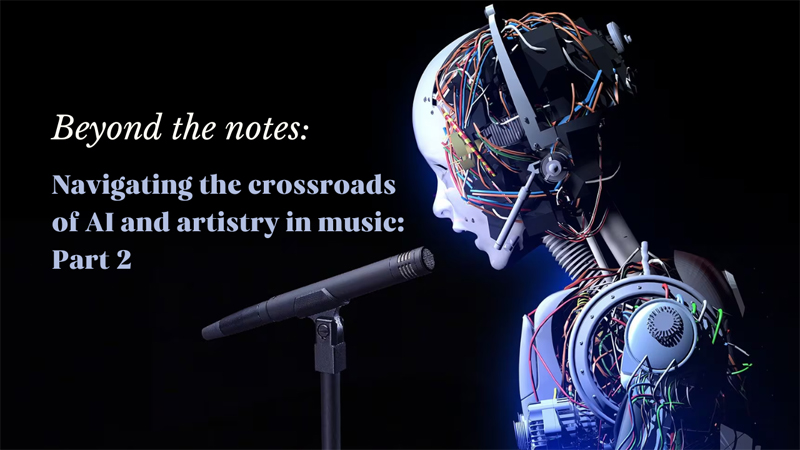
  • Beyond the notes: Navigating the crossroads of AI and artistry in music: Part 2

    Beyond the notes: Navigating the crossroads of AI and artistry in music: Part 2

    Mumbai: As technology continues to evolve with each passing day, artificial intelligence appears to gain a strong and steady foothold in the very existence of human beings. The inescapable integration of AI is becoming more palpable, shaping a formidable future that blurs the lines between the artificial and the human.

    Soon, AI’s omnipresence threatens to permeate every industry, from the harmonies of music to the intricacies of architecture. In this era of rapid transformation, the ascent of artificial intelligence is not merely a paradigm shift; it is an indomitable force reshaping the narrative of our collective tomorrow.

    Through conversations with industry experts, and key figures, we have gleaned insights into their perspective on AI causing a potential threat to the music industry and artists’ creative processes with the rising use of AI tools to make dubbed versions of a song in different artists or people’s voices.

    The Hype Capital founder Sachin Shah

    I do not perceive AI as a direct threat to the music industry or the creative processes of artists. This is primarily because AI is still in its early stages, and larger corporations and platforms have taken appropriate measures to prevent its misuse. One of the examples of this is YouTube, which disclosed on their blog on 14th November, “We’ll require creators to disclose when they’ve created altered or synthetic content that is realistic, including using AI tools.” I anticipate that more companies will follow this trend to ensure a safer space and prevent the abuse of AI technology.

    Furthermore, artists can leverage AI to streamline their musical journey and processes, making use of the available tools to achieve better results. Although this may be easier said than done, it is always good to streamline things and use the available resources to make our lives better.

    Serial entrepreneur, tech visionary & advisor Vinod K Singh

    The rapid advancement of AI tools has opened up a new frontier in music production, enabling the creation of dubbed versions of songs in different voices. While this technology holds immense potential for creative expression, it also raises concerns about its potential impact on the music industry and the artistic process.

    On one hand, AI-generated dubs could threaten artists’ control over their work and deprive them of rightful royalties. The ability to effortlessly create unauthorized versions of songs could potentially diminish the value of original recordings and undermine artists’ financial stability.

    However, AI can also be harnessed as a powerful tool for musical exploration and innovation. By leveraging AI’s ability to analyze and mimic human vocal patterns, artists can expand their creative horizons and experiment with new sonic possibilities.To mitigate potential threats and maximize the benefits of AI in music creation, clear guidelines and ethical frameworks need to be established. This will ensure that artists’ rights are protected while encouraging the responsible and innovative use of AI in music production. By striking a balance between addressing concerns and embracing opportunities, we can foster a future where AI serves as a catalyst for artistic growth and creative expression.

    Leadzen.ai co-founder and CEO Sonakshi Pratap

    I believe it’s crucial to address the potential impacts of AI on the music industry, particularly regarding the creation of dubbed versions of songs in various artists’ voices. While AI offers incredible opportunities for innovation and accessibility in music, it also poses significant challenges to the integrity and authenticity of the artistic process.

    AI’s ability to replicate voices and styles can lead to a dilution of the unique qualities that individual artists bring to their work. This technology, if unchecked, risks turning unique artistic expressions into commodities that can be easily replicated and distributed, undermining the value of original creations. Moreover, there’s a profound ethical consideration regarding consent and rights. Artists’ voices and styles are deeply personal and often a result of years of hard work and personal development. Using AI to replicate these without consent or proper attribution can be seen as a form of artistic identity theft.

    However, it is important to recognize that AI is a tool, and like any other tool, its impact depends on how it is used. If employed responsibly, AI can enhance the creative process, opening new avenues for artists to explore and collaborate. It is essential for the industry to establish clear ethical guidelines and legal frameworks to ensure that AI is used to support artists rather than undermine them. This way, we can embrace the benefits of AI while protecting the heart and soul of musical creativity.

    Langoor CEO Venugopal Ganganna

    The way we collaborate and create music has changed. AI has not only democratised songwriting but is also being used by marketing agencies like ours to create stock music for video content. One disruptive way to work with AI is to use it as a music co-pilot to create all the backing instrumentals. Think of it as magically conjuring an extra band member. Google recently announced a new software that creates entire backing tracks for a melody line ingested into the LLM. So while AI presently does a functional job (at best) of replicating popular recording artists’ music (in its entirety), it doesn’t seem capable of putting them out of business — yet.

    Dot Media co-founder & CEO Shubham Singhal

    At Dot Media, we recognize the evolving landscape of the music industry with the increasing use of AI for creating dubbed versions. While AI tools offer exciting avenues, the potential threat lies in the delicate balance between innovation and the preservation of artists’ originality. We must ensure that the essence of a musician’s unique creative process remains intact amid technological advancements. Dot Media is committed to empowering artists through AI, emphasizing its role as a collaborator rather than a substitute. By prioritizing artists’ originality, we navigate the evolving landscape responsibly, fostering a future where technology augments, not hinders, the authenticity of musical expression.

    Tagglabs founder Hariom Seth

    During the ICC World Cup 2023, our use of AI revolutionized Royal Stag’s advertising strategy. We introduced personalized videos featuring Rohit Sharma addressing fans by name, a groundbreaking move that eliminated the need for repetitive recordings. This showcased the efficiency AI brought to the campaign, not only elevating fan engagement but also streamlining production and saving valuable time and resources.

    On a broader scale, instances like the proliferation of fake Drake videos highlight the urgent need for new legislation regarding AI-generated content. Such exploitation, where creators use the voice of artists like Drake to profit, emphasizes the necessity to protect original artists from financial harm. It is imperative to establish stringent measures and regulations to penalize those who breach these boundaries.

    Simultaneously, there’s a crucial need to differentiate between content that entirely replicates an artist and AI-generated content that draws inspiration from human work while introducing new elements. Striking this balance in regulation ensures the protection of creators and fosters a landscape where innovation thrives within ethical boundaries. By categorizing AI-generated content and implementing measures against misuse, we create a framework that not only safeguards artists’ interests but also encourages responsible and creative use of AI technology in the evolving landscape of content creation.

    Entropik founder & CEO Ranjan Kumar

    Deepfake technology utilizes a machine learning mechanism called the Generative Adversarial Network (GAN) to fabricate deceptive images and videos. In light of the growing threat posed by deepfake videos, there should be a concerted effort to develop and deploy effective deepfake detection technologies and establish robust regulations to mitigate the risks associated with deepfake technology. AI-manipulated media can be difficult to detect manually. Therefore, tech companies like Microsoft and Intel have introduced deepfake detection tools such as Video Authenticator, FakeCatcher, etc., and more global companies are now following suit by introducing user-friendly detection tools. There is a need for global cooperation on AI. Governments must enact stringent laws and run mass public awareness campaigns to educate people about how to protect their social media privacy and identify such content. AI regulation can be used to mitigate the creation of unlawful and non-consensual deepfakes and ensure accountability in their creation and distribution.

    TreadBinary Technologies Pvt Ltd director Yuvraj Shidhaye

    In the evolving landscape of the music industry, the rising use of AI tools poses a dual-edged sword. On one side, the potential threat to the uniqueness that defines each artist is palpable, as AI-generated voices and 3D simulations run the risk of homogenizing the creative landscape. The very essence that artists capitalize on for their careers—individuality—stands at the crossroads of technological advancement. If AI is not moderated correctly, it can become an imposter, posing a significant risk to the authenticity artists bring to their craft.

    However, in a parallel narrative, where VFX and animation elevate the viewer experience, the strategic use of AI, with permission from the artist, has the power to transcend human capabilities. Imagine a music concert featuring not only living artists but also those who have passed, such as Michael Jackson or Elvis Presley. The experience offered transcends imagination.

    Much like a hammer in the hands of a skilled worker can create furniture or tools, while in the hands of a psychopath, it can be destructive, AI, when used wisely, can either be a creative force or a destructive influence. The key lies in striking a balance and ensuring that AI serves as a tool for innovation, complementing artists rather than overshadowing the unique voices that make the music industry vibrant.

    VijayBhoomi University dean of school, faculty – sound engineering Nilesh Thomas

    From my perspective, I maintain the perspective that artificial intelligence does not present substantial threats to professions that rely heavily on creativity. What AI is potentially doing at the moment is in some ways democratizing music creation by making it more accessible to a wider range of people. Those who may not have traditional musical training can use AI to experiment and express their ideas to quickly generate original music for various purposes like videos.

    Complete reliance on AI to create original music (or any form of art) will potentially lead to an erosion of human-centric artistic identity, which is an important factor in how we appreciate and relate to art. If AI tools become too involved in the creative process, the unique human touch, emotions, and personal experiences that artists bring to their work may be diminished. This could affect the emotional resonance and authenticity of the music. For example, would you rather go to a concert by a machine or Arijit Singh, for a perfect weekend evening with your loved one?

    On the other hand, AI tools can be used to greatly augment and enhance the creative process. Artists can leverage AI to explore new sounds, generate unique compositions, or aid in the production process. This could lead to the creation of innovative and groundbreaking music. AI can significantly speed up the production process, helping artists experiment with different versions of their work more efficiently. This can free up time for artists to focus on the more nuanced aspects of their craft.

    RV University, professor and dean, School of Film, Media and Creative Arts, Prof. (Dr.) Piyush Roy.

    Music or any other creative output that has stood the test of time, or for it to withstand trends, the feeling has to be created among the audience. Has the best of CGI been able to replace the impact of shooting an epic in a literary epic scale, like Mughal-e-Azam, Gandhi, or Lagaan with real people? Will it work if the AI dubs in any voice? No, it has to be in the voice of a recognised artist, and that recognition happens for the achievement, vocal nuance, and uniqueness in rendition, brought about by that person’s signature. Such experimentation is no different from that of copying a signature, but the original is always original, and imitation will always remain so. AI creativity for sure will get mediocrity a competition, but true talent need not bother or fear, because their newness comes from an originality exclusive only to the human experience, ingenuity and mettle.

    Red FM and Magic FM COO & director Nisha Narayanan

    In the era of AI thrusting its way into the music scene, the potential ramifications for the industry and artists demand a strategic and nuanced perspective. At Red FM, we are not turning a blind eye to the efficiency gains that AI brings to the music-producing industry. However, in our own way, we are navigating the AI maze by protecting the value of human creativity. Our effort lies in balancing technological advancements with the human element to make the most out of musical artistry.

    We just believe that AI needs to be the backup dancer and not the lead singer stealing the spotlight from humans. As we move forward, collaboration is the name of the game. Be it with fellow partners, industries, or now with machines. We will continue all our efforts in empowering artists as our innovative resources meanwhile preserving the soul of music amidst technological progress.