Tag: Doordarshan

  • Cable ops must carry channels operated by Parliament

    Cable ops must carry channels operated by Parliament

    MUMBAI: The government has made it mandatory for all cable TV operators to transmit the Sansad Television Network channels.

    The Cable Television Networks (Regulation) Amendment Bill 2006 has incorporated section (8) of the Cable Television Networks (Regulation) Act, 1995 making it compulsory for every cable operator “to re-transmit channels operated by or on behalf of Parliament”.

    According to an official statement, the Cabinet’s decision will enable consumers to view the Parliamentary proceedings and other informative and educative programmes being transmitted by the channels operated by or on behalf of the Parliament of India.

    As per the new directive, every cable operator shall, from the commencement of the Cable Television Networks (Regulation) Amendment Act, 2000, re-transmit at least two Doordarshan terrestrial channels and one regional language channel of a State in the prime band, in satellite mode on frequencies other than those carrying terrestrial frequencies.

    Section 8 also mentions that these channels shall be re-transmitted without any deletion or alteration of any programme transmitted on them.

  • I&B ministry clears Rs 29.7 billion expansion plan for Doordarshan, AIR

    I&B ministry clears Rs 29.7 billion expansion plan for Doordarshan, AIR

    MUMBAI: As part of the tenth five year plan outlay, the Information & Broadcasting ministry has approved Rs 25.63 billion towards Doordarshan’s development.Additionally, Rs 4.11 billion has been set aside for the expansion of All India Radio’s (AIR) services.

    The total outlay earmarked for DD and AIR in the Tenth Plan is Rs 29.74 billion.

    As part of the expansion plans for AIR, a special package will be provided for Jammu and Kashmir (J&K) and the north-eastern states, including Andaman & Nicobar Islands (A&N).
    This was announced by Information & Broadcasting and parliamentary affairs P R Dasmunsi yesterday in the Lok Sabha.

    According to an official statement, 12 new/upgradation projects have been identified for the J&K. Kathua and Rajouri will have FM radio stations as part of the schemes.

    Under Phase I, North East special plan, 10 kW FM transmitters will come up at Itanagar, Kohima and Port Blair. 

    Under Phase II of North-Eastern special plan, the undernoted transmission/relay facilities will be provided with
    #10 kW FM transmitter, playback studio, staff quarters at Gangtok – (additional channel).

    #5 kW FM transmitter, playback studio, at Silchar – (additional channel).

    #1 kW FM transmitters, voice over recording/dubbing, field production facilities, staff quarters at 19 places i.e. Daporijo, Anini, Bomdila, Changlang, Khonsa (Arunachal Pradesh), Karimganj, Lumding, Goalpara (Assam), Ukhrul, Tamenglong (Manipur), Dawki (Meghalaya), Tuipang, Chemphai, Kolasib (Mizoram), Wokha, Zunehboto, Phek (Nagaland) and Udaipur, Nutan Bazar (Tripura).

    #100 W FM transmitter at different locations in North Eastern region (100 places) to cover uncovered area.
    Dasmunsi also spoke on the expenditure incurred by AIR and Doordarshan up to June 2006, which has been Rs 592.6 million and Rs 9 billion, respectively, informs the official statement. 

    Interestingly, under the second phase of private FM radio stations, the policy prohibits allocation of more than 15 per cent of total allocated channels in the country to a single company – including its holding, subsidiary, inter-connected companies and companies with the same management. 
    Moreover, networking of channels by any two entities has also been specifically prohibited.

    Thus, following this restriction, the Reliance-owned Adlabs and Sun-promoted South Asia FM and Kal Radio had to surrender some circles to adhere to the government mandated national cap of 15 per cent. Both the companies had given up on the stations in the north-east zone to abide by the policy. For example:Adlabs Films had surrendered the frequencies, which included Gangtok, Imphal, Kohima, Port Blair, Shillong, to name a few. While, South Asia FM had given up Imphal, Kohima, Port Blair, Rourkela, Muzzaffarpur, amongst others.
  • I&B ministry clears Rs 29.7 billion expansion plan for Doordarshan, AIR

    I&B ministry clears Rs 29.7 billion expansion plan for Doordarshan, AIR

    MUMBAI: As part of the tenth five year plan outlay, the Information & Broadcasting ministry has approved Rs 25.63 billion towards Doordarshan’s development.Additionally, Rs 4.11 billion has been set aside for the expansion of All India Radio’s (AIR) services.

    The total outlay earmarked for DD and AIR in the Tenth Plan is Rs 29.74 billion.

    As part of the expansion plans for AIR, a special package will be provided for Jammu and Kashmir (J&K) and the north-eastern states, including Andaman & Nicobar Islands (A&N).
    This was announced by Information & Broadcasting and parliamentary affairs P R Dasmunsi yesterday in the Lok Sabha.

    According to an official statement, 12 new/upgradation projects have been identified for the J&K. Kathua and Rajouri will have FM radio stations as part of the schemes.

    Under Phase I, North East special plan, 10 kW FM transmitters will come up at Itanagar, Kohima and Port Blair.

    Under Phase II of North-Eastern special plan, the undernoted transmission/relay facilities will be provided with
    #10 kW FM transmitter, playback studio, staff quarters at Gangtok – (additional channel).

    #5 kW FM transmitter, playback studio, at Silchar – (additional channel).

    #1 kW FM transmitters, voice over recording/dubbing, field production facilities, staff quarters at 19 places i.e. Daporijo, Anini, Bomdila, Changlang, Khonsa (Arunachal Pradesh), Karimganj, Lumding, Goalpara (Assam), Ukhrul, Tamenglong (Manipur), Dawki (Meghalaya), Tuipang, Chemphai, Kolasib (Mizoram), Wokha, Zunehboto, Phek (Nagaland) and Udaipur, Nutan Bazar (Tripura).

    #100 W FM transmitter at different locations in North Eastern region (100 places) to cover uncovered area.

    Dasmunsi also spoke on the expenditure incurred by AIR and Doordarshan up to June 2006, which has been Rs 592.6 million and Rs 9 billion, respectively, informs the official statement.

    Interestingly, under the second phase of private FM radio stations, the policy prohibits allocation of more than 15 per cent of total allocated channels in the country to a single company – including its holding, subsidiary, inter-connected companies and companies with the same management.

    Moreover, networking of channels by any two entities has also been specifically prohibited.

    Thus, following this restriction, the Reliance-owned Adlabs and Sun-promoted South Asia FM and Kal Radio had to surrender some circles to adhere to the government mandated national cap of 15 per cent. Both the companies had given up on the stations in the north-east zone to abide by the policy. For example:Adlabs Films had surrendered the frequencies, which included Gangtok, Imphal, Kohima, Port Blair, Shillong, to name a few. While, South Asia FM had given up Imphal, Kohima, Port Blair, Rourkela, Muzzaffarpur, amongst others.
  • No sole sport rights to Doordarshan: Govt

    No sole sport rights to Doordarshan: Govt

    NEW DELHI: The Indian government today clarified that it was not working towards a mechanism to give pubcaster Doordarshan the sole rights to sporting events in the country.

    The government, however, has issued an order on 5 April 2006 that mandates live feeds of a number of specified sporting events of national importance held in India or abroad to be shared with Prasar Bharati by private broadcasters.

    In case of cricket events, these shall include all matches featuring India and the finals and semi finals of international events, information and broadcasting minister Priya Ranjan Dasmunsi informed Lok Sabha (Lower House of Parliament) today.

    He also said that the government has no proposal to set up a regulatory authority to monitor and regulate earnings through telecasting of sporting events.

    However, the government is contemplating establishment of an autonomous authority to regulate the broadcasting sector.

    The minister, however, did not give any time frame to bring about legislation to regulate the broadcasting sector. Earlier, Dasmunsi had said that his ministry was working towards introducing a Broadcasting Bill in Parliament in the monsoon session, which started on24 July.

    Severe criticism of a draft Bill, doing the rounds of various ministries for feedback on it, has prompted the I&B ministry for the moment from not listing it on the agenda of Parliament’s present session that will close on 30 August.

  • Parliament television channel ‘Lok Sabha TV’ launched

    Parliament television channel ‘Lok Sabha TV’ launched

    MUMBAI: Lok Sabha Television (LSTV), a dedicated satellite channel to telecast live proceedings of Lok Sabha or Lower House of Parliament and air programmes on important public issues, hit the airwaves today.

    LSTV will function as a 24-hour channel, telecasting programmes of national interest when the Parliament is not in session.

    In addition to the live telecast of Parliament proceedings, the programming line up of LSTV comprises a series of live and recorded programmes. The channel will offer a mix of panel discussions and educational and informative programmes.

    To start with, LSTV will have programmes such as Today’s Agenda, Party Stand, Awaaz Aap Ki / Street Talk, Sansad Se Sadak Tak, Village Voice / Gram Sabha, Know Your MP, Review by the Chair, and The Issue this Week. Viewers, who have missed the day’s live action, can catch up with the developments through House Highlights, scheduled for 7:30 pm and 11 pm.

    The channel also promises to offer cultural programmes such as music and dance, plays especially staged for LSTV, fortnightly film and more.

    According to media reports, LSTV has been launched on an initial investment of about Rs 80 million for hardware and the annual recurring expenditure will fall in the range of Rs 120-150 million. The channel expects to meet the operational expense through advertising, which is initially open to public sector units only.

    The channel is being supervised by former information and broadcasting secretary Bhaskar Ghose, who got a mandate from Lok Sabha Speaker Somnath Chatterjee some months back to do a feasibility report on TV channels dedicated to Lok Sabha and Rajya Sabha (Upper House).

    What is not clear at this moment is, whether such dedicated parliament TV channels cannibalise advertising revenue from pubcaster Doordarshan, which depends heavily on public sector undertakings for advertising support.

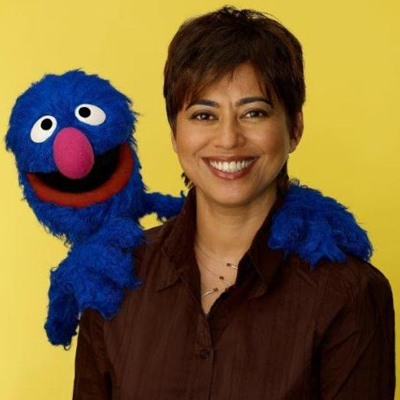
  • ‘Culturally, linguistically diverse India is a test case for us’ : Sesame Workshop India ED Sashwati Banerjee

    ‘Culturally, linguistically diverse India is a test case for us’ : Sesame Workshop India ED Sashwati Banerjee

     For both Sesame Workshop and its newly-appointed executive director for Indian operations, Sashwati Banerjee, India is a big challenge. The US-based Sesame Workshop might have revolutionized pre-school education through various initiatives, including the path-breaking TV show Sesame Street, but replicating a global model here will be a tough task.

    Rather, if communications expert Banerjee is to be believed, Sesame Workshop is adopting an entirely new game plan for India, apart from innovating on some aspects that incorporate what it has done in other parts of the globe. She agrees that India may become the incubator for a model that could be replicated elsewhere too.

    Founded in 1968, Sesame Workshop changed television forever with the legendary Sesame Street. Today, the Workshop continues to innovate on behalf of children in 120 countries, using its proprietary research methodology to ensure its programmes and products are engaging and enriching.

    For Banerjee, who’s dabbled in various assignments from India to Hong Kong to the US, the changeover to children’s education from healthcare communications is a step that was not taken easily. But after initial doubts were cleared by Sesame Workshop CEO Gary Knell, it has been hectic work for the lady who grew up and studied in Delhi, but spent quite a few years in Hong Kong doing “this and that”, as she would modestly say.

    In this conversation with Indiantelevision.com’s Anjan Mitra, Banerjee spells out her priorities and gives a glimpse into Workshop’s plans for India. She also cribs a bit on procedural delays and lack of readily available comprehensive data/research on government-aided education initiatives and child behaviour.

    Excerpts:

    What’s the aim of setting up Sesame Workshop India?
    Sesame Workshop India would primarily be the outreach arm to promote early childhood initiative and the educational curriculum of Galli Galli Sim Sim (the Indian version of Sesame Street) through a multi media platform, especially to children who are most in need or underserved. The educational curriculum of Galli Galli… has been designed by Indian educators, researchers and writers keeping in mind India’s cultural and social diversity and needs.

    How will that be done?
    What Sesame Workshop really brings to the table is technical knowledge and expertise in early childhood education and development. These are the two broad areas we are working with. How will it go about doing it? One arm of the education initiative is the television show Galli Galli… which is going to be broadcast on Cartoon Network, Pogo and (terrestrial broadcaster) Doordarshan. The other aspect of the initiative is to see how we can extend and reinforce that learning through a variety of other activities with the help of technology to bridge the digital divide.

    The target audience is children aged between two to six years and their caregivers, which include parents and teachers using educational materials that are fun and make learning engaging “because all children deserve a chance to dream and discover, to understand the world and their place in it, to reach their highest potential…”

    We would be working with other organizations that are already active in this field and our mandate is to help them develop programmes that will take such initiatives forward.

    Seed Funding has been provided by Turner India

    How would Sesame Workshop leverage Galli Galli…?
    Television is just one of the ways in which the educational curriculum will be delivered is television. Sesame Workshop India will help to deliver Galli Galli… across other mediums – from print, training, interpersonal communication to high technology initiatives like the internet. While the television series is expected to reach audiences across India, there is still a large population who have limited or no access to television. It is through Sesame Workshop India’s outreach efforts that this population will be reached.

    Moreover, research has shown that children who watch Sesame Street or its various local versions in countries round the globe are better prepared for school in terms of cognitive learning and the show has helped prevent children from dropping out of school.

    When is Galli Galli Sim Sim likely to make its debut on Cartoon Network and Pogo?
    Galli Galli Sim Sim will premiere on Cartoon Network in mid-August after which it will be aired on Pogo. But for those broadcasting details, Turner is best placed to provide more information.

    How is Sesame Workshop funding its initiatives in India?
    Seed Funding has been provided by Turner India (a Time Warner company). Sesame Workshop India, like any other not-for-profit organization, will raise funds to support its activities in India.

    When Indiantelevision.com spoke to Sesame CEO Gary Knell, he had said corporate houses too would be roped in for funding activities. Has any development taken place in this regard?
    Those things would take place after we set up shop formally and get our basic act in place. Presently, we are in the process of getting our clearances from various government agencies.

    However, we’d like to tap big corporate houses for funds as part of a corporate’s social responsibilities. There are quite a few business houses that are involved in educational initiatives and we’ll look at partnering with them in various ways.

    What role would the Indian government play in Sesame’s scheme of things? What are those few things that Sesame must consider as it goes forward?
    In order to understand the critical priorities of the Indian government – where Sesame Workshop can collaborate, and highlight areas of concern – Sesame Workshop had organized a workshop that brought together a cross-section of relevant stakeholders in New Delhi in early December 2005.

    Briefly, the discussions were participative and each government department and agency, professional educational bodies, and the voluntary sector brought their own set of issues to the fore providing for comprehensive inputs towards future planning and strategy. In fact, there was a consensus around the fact that the media can help overcome constraints posed by the existing administrative structures across the country, which are highly segmented.

    We are hoping to work with diverse partners, develop and create innovative materials and build capacity at all levels. Our vision is to reach as many children as possible in India by partnering with government’s Sarva Shiksha Abhiyaan or Universal Education programme with material that will make learning joyful and help the government in reaching its educational objectives.

    Considering Turner International India had provided the money for a corpus, what would be its role?
    Turner is the TV series’ co-producer and distributor of Galli Galli Sim Sim. Together, Sesame Workshop and Turner are committed to making Galli Galli Sim Sim a break-through educational programme and brand. Sesame and Turner are working closely to ensure that India’s children will have access to this new show and its educational messages, and are actively pursuing promoting the show on multiple platforms across India.

    Is the telecast deal with Turner exclusive or can it be done with other broadcasters in other Indian languages too?
    As far as the agreement with Turner is concerned, all I can say is that it’s for at least five years or five seasons of Galli, Galli… I cannot hand out any financial details or presently comment on the fact whether we can work with other broadcasters or not.

    Generally, Sesame Workshop works with the public service broadcaster of the country concerned, but there had been some initial problems with Doordarshan, which, I am told, have been sorted out now by Turner India.

    India is a vast country and getting educational initiatives in all the local languages would not be possible. But we would certainly be exploring at least one South Indian language, if not two, apart from Hindi. The details haven’t yet been worked out and would be done in consultation with Turner.

    Will the Indian ops undertake merchandising activities too?
    We are focusing on the launch of the show and have nothing to announce at the moment.

    How are such merchandising activities done elsewhere in the world?
    Sesame Workshop operates in 120 different countries. The modus operandi varies from country to country and partner to partner.

    How is the revenue generated from such activities used and what will be the game plan for India?
    Like I said, Sesame Workshop is a not-for-profit organization. Any revenue generated through merchandising or licensing go towards providing quality early childhood education and development around the world – to those who are most in need.

    How important is India as a market for Sesame?
    Of the 103 million children aged 2-6 years, over 35 per cent in rural areas and 48 per cent in urban areas can’t access Early Childhood Care and Education. Roughly 100 million live in urban slums alone, which have no access to Integrated Child Development Scheme (ICDS) that is the primary vehicle for Early Childhood Care and Education in India.

    While Early Childhood Care and Education is definitely a felt need and lot of efforts have been put in by the government and private institutions, other issues like malnutrition and child heath take precedence for ICDS. Demand has never been an issue in education. Supply is what we need to focus on.

    Does Sesame Workshop feel that the Indian regulatory environment requires too many procedural clearances impeding quick start of operations?
    Actually, the Indian regulatory environment has been extremely supportive for us. We have had representation from the government and other public education bodies right from conceptualization to production of Galli Galli Sim Sim, which is being produced for Turner by Miditech. We work closely with Indian educators to arrive at the educational curriculum that looks at ‘whole child’ approach and is very much in line with the education policy of this country.

    However, India is a test case for Sesame Workshop as it is uniquely ahead of most developing countries in terms of market and economy and the size of population. More importantly, India is not a donor funded country as sizeable infrastructure is being built by Indians. Then in India, we are not working primarily with the terrestrial broadcaster, unlike in other countries. We do hope that the time block on DD will continue airing Galli Galli… for a long time to come.

    I don’t see Galli Galli… broadcasting in 22 Indian languages. What we can do is to take the essence of educational initiatives and roll it out in outreach that can happen in multiple languages.

    In those terms, India is a learning experience for Sesame to see what kind of partnerships work best and how sustainable models can be built up for impact in a country that is culturally and linguistically diverse.

  • SET to simulcast key Champions Trophy & World Cup matches on Max, Sab

    SET to simulcast key Champions Trophy & World Cup matches on Max, Sab

    MUMBAI: Sony Entertainment Television (SET) India is gearing up full on for the Champions Trophy in October and the World Cup in West Indies early next year. The target this time round is to be armed cap-a-pie, thus leaving no stone unturned to garner maximum eyeballs and revenues.

    With an aim to eat into the viewership of Doordarshan, SET will simulcast key India matches, the semi-finals and the finals of both tournaments on Max and Sab.

    While the feed on Max will be in English with its own set of commentators for Extraaa Innings, the feed on Sab will be in Hindi. “Today DD gets 30 per cent of its viewership from cable and satellite homes, where people prefer to watch the matches because of the Hindi commentary. Now with Sab having a Hindi feed, we will be able to eat into the C&S share of DD during the matches. It is a huge chunk of the market, which we want to own,” SET India executive vice president (ad sales & revenue management) Rohit Gupta tells Indiantelevision.com.

    “DD was getting its viewership for cricket matches not just from UP and MP but even from Delhi. Our aim is to own the entire Hindi C&S space with the upcoming tournaments in our kitty and that is the proposition we are giving to advertisers. In a way we are also looking at eating into the revenue shares of DD,” he asserts.

    Apart from this, a lot of brands that were buying air time space on Max, were also doing so on DD during the earlier matches. But now with a combination of Max and Sab, they don’t need to do that barring some brands like Lifebuoy, which have a specific rural focus, Gupta argues. The Champions Trophy, it is worth noting, will be held during the festive season (7 October to 5 November), which is when most brands will be active to the hilt. Even the World Cup in March-April will see a slew of brands upping their advertising before the peak summer months, he adds.

    Brands such as Maruti and Hero Honda, to name a few, who were buying 300 – 500 seconds of advertising time on DD, need not buy more than 100 seconds now because of the package that they will be getting in Max and Sab, is the point that Gupta and his team will be trying to drive home to advertisers in the coming months.

    “While the television universe extended to 35 million homes the last time the Champions Trophy was played, this time it has increased to 70 million homes. We expect to see Sab hitting a different level with this because of the sheer viewership,” says Gupta.

    What’s more, in order to encash on the scaled viewership post the Champions Trophy, Sab will be launching a slew of new shows. “The idea is to use cricket as a platform to take Sab to a different level,” he states.

  • CN gets on to DD with a branded block

    CN gets on to DD with a branded block

    NEW DELHI: Not content with ruling the kids’ space in India via satellite, Cartoon Network now wants a slice of terrestrial viewership too.

    On Monday, it announced a new one-hour programming block, Cartoon Network Duniya, on Doordarshan National.

    Starting 8 July, the new block will air every Saturday from 10:30 am to 11:30 am. and will feature two of Turner’s most popular and successful original productions, M.A.D. (Music, Art and Dance) and Codename: Kids Next Door.

    Cartoon Network Duniya will also showcase other popular series, including Turner’s most awaited original production, Galli Galli Sim Sim, the Indian version of globally renowned pre-school series, Sesame Street.

    “Doordarshan’s extensive reach across India will enable kids in non-C&S homes to enjoy Turner’s engaging original production that has so far been limited to C&S homes. In the preliminary stage, the highly rated M.A.D. and popular animation series, Codename: Kids Next Door will serve as the perfect introduction to new viewers,” an official statement quoted Turner International India MD Anshuman Misra as saying yesterday.

    Misra added that later in the year Galli Galli Sim Sim will further enhance the appeal by showcasing content that is both educational and entertaining in nature.

    M.A.D. is an off-the-wall, interactive journey for 8-12 years olds and their families and is filled with fun tabletop ‘makes’, dynamic performances, a bit of humour and some art stunts.

    Galli Galli Sim Sim is an initiative undertaken by globally recognised, Sesame Workshop and Indian kids’ entertainment leader, Turner India.

    The show is aimed at serving the 157 million children under the age of six in India and is committed to supporting India’s Sarva Shiksha Abhiyan or universal access to education.

  • PMO sets up panel to develop policy paper on radio, TV & digital tech

    PMO sets up panel to develop policy paper on radio, TV & digital tech

    MNEW DELHI: The Prime Minister’s Office (PMO) has set up a committee to develop a policy paper for radio, television and digital technology to be covered under the 11th Five-Year plan.

    The high-profile panel’s first meeting will be held on 21 June. B.A.G Infotainment CEO and convener of Association of Radio Operators in India Rajiv Mishra and Times of India group’s AP Parigi are among the private sector nominees to the working group.

    The following activities will be covered by the newly-constituted group:

    # To suggest approaches for formulation of plans and programmes for radio and TV, keeping in view the emerging trends in technology, convergence issues, IP multimedia and IT-enabled media applications.

    # To recommend measures for optimum expansion of transmission network of radio and TV through appropriate technologies to hitherto uncovered areas.

    # To put in place the basic policy framework, fiscal incentives and workout a mission mode project for moving from analogue transmission to digital transmission before 2015.

    # To develop a mission mode project for implementation mobile media solutions by establishing requisite infrastructure for transmission in, say, 700 MHz band in association with mobile service providers and technology partners.

    # To identify excess spectrum and bandwidth arising through migration to digital transmission and work out strategies for its redeployment/farming.

    # To assess the total investment required in hardware and to suggest measures to stimulate greater private investment in this sector.

    The members of this group also include Prasar Bharati CEO, director-generals of Doordarshan and All India Radio, head of Broadcast Engineering Society of India Ltd, Planning Commission’s advisor of communication and information and IT software industry body Nasscom’s chairman Kiran Karnik.

  • BBC World Service Trust releases music album on AIDS awareness

    BBC World Service Trust releases music album on AIDS awareness

    MUMBAI: BBC World Service Trust, National AIDS Control Organisation (Naco) and national network Doordarshan have joined hands to spread awareness about AIDS through a music album Haath Se Haath Milaa (HSHM) or let’s join hands.

    The music video and album, released yesterday, is also being supported by multiplex major PVR Cinemas, which will screen it in all its 68 screens across India.

    Though the association of PVR Cinemas with BBC World Service Trust is only for three months, the multiplex company CEO (digital) Sunil Patil is optimistic to maintain the relationship for a longer period of time.
    According to the director of the video Anu Malhotra, “All the stars have generously contributed to the cause by filming for this video completely pro bono.”

    The album, produced by Music Today and consisting of eight soundtracks, will be available in music stores and sold commercially across the country.

    In an official statement, all profits from sales will be donated to non-governmental organization Salaam Baalak Trust and Committed Communities Development Trust (CCDT).

    BBC World Service Trust director general Andrew Whitehead said, “The selections of songs were done from the Music Today catalogue.”

    The launch ceremony was graced by Bollywood actress Shilpa Shetty who said that the video would appeal to all and help combating AIDS and the stigma attached to it.

    BBC World Service Trust supports a reality television series on DD, titled Jasoos Vijay where the central theme revolves around spreading awareness about AIDS.

    The third series of Jasoos Vijay will finish its run by end September and HSHM will end by February 2007.