Tag: Doordarshan

  • FTII gearing up to face the digital challenge

    FTII gearing up to face the digital challenge

    NEW DELHI: Doordarshan will telecast live the closing ceremony of the Mumbai International Film Festival for Documentary, Short and animation films ending tomorrow.

    The telecast on the national channel will be from 5 pm, from the National Centre for Performing Arts (NCPA) in Mumbai.

    Meanwhile, Film and Television Institute of India (Pune) Director D J Narain said today that the Institute was gearing itself for the digital challenge in film making.

    “A fortnight ago, Kodak has filed for bankruptcy and the writing is on the wall. Digital technology is the future and FTII is seized of the developments and restructuring accordingly”, he said in a press conference in MIFF 2012.

    Narain said a Group of Experts constituted by the Governing Council of FTII has prepared a Detailed Project Report for the Institute, laying down the path to be followed. As part of modernisation plan, FTII proposes to have additional facilities in terms of introduction of new technologies, screening theatres, studio floors, classrooms and hostels for the existing and proposed new courses.

    At the same time, the Information and Broadcasting Ministry is also working on getting the FTII declared a ‘Centre of Excellence‘ through an Act of Parliament.

    Narain said the FTII‘s courses are being restructured and all one-year courses are being converted into full fledged three-year courses, consisting of one-year foundation training and two years of specialisation. While new courses will be introduced keeping pace with changes in film-making, the grammar would continue to remain same.

    “Digital technology is capable of breaking the stranglehold of heavy capital investment, but creativity needs to be nurtured in an institutional framework”, Narain said.

    He admitted that while Government control ensures equity, some of the rules and regulations act as constraints in attracting the best talent for the teaching faculty. As a result, FTII has to depend heavily on visiting guest faculty from Mumbai.

    Narain said, “while FTII alumni are part of who‘s who of the film industry, the present crop is no less talented”. He said three films – Khara Karodpati by Piyush Thakur, One Two by Prantik Basu and Light Animation by the Animation batch – are in Competition section of the Festival.

    The FTII has also sent 15 other films in the Retrospective made by legends like Kumar Shahani, Girish Kasarvalli, and Rajan Khosa among others.

    Meanwhile, more than 10 films from the Public Service Broadcasting Trust – which is partly funded by Prasar Bharati – are being screened in various categories of the Festival dealing with diverse subjects. They include Sumit Khanna‘sAll Rise for Your Honour, Bit of Both – the Disappearing Horizon, Umesh Agarwal‘s Brokering News (on the menace of paid news), Eer.. Stories in Stone by Shri Prakash on tribal art, Journey to Nagaland (an animation film by Aditi Chitre), Arun Chaddha‘s Mindscapes of Love and Longing (exploring the sexuality of people with disabilities), Shabani Hassanwalia and Samreen Farooqi‘s Online and Available (on social networking sites), Sab Leela Hai by Nirmal Chander, So Heddan So Hoddan by Anjali Monteiro and K. P. Jayasankar, and Lalit Vachani‘sTales from Napa which is the remarkable story of a little village that resisted the forces of Hindu fundamentalism during the 2002 anti-Muslim riots in Gujarat.

  • Haqeeqat being readied in colour

    Haqeeqat being readied in colour

    MUMBAI: Haqeeqat, the Chetan Anand film that aroused the spirit of nationalism with the song ‘Kar Chale Hum Fida’ way back in 1964, is being readied for release in colour.


    Though the film was made in black and white, it was Anand’s dream to see the film in colour. “I got the idea when my father and I were shooting Paramveer Chakra, a series for Doordarshan in 1998-99 in Ladakh. There‘s a point where the film was shot and it was named Haqeeqat by the Indian Army. We were shooting at the same point again. Chetanji saw it on the monitor and said, ‘It looks so beautiful in colour. I wish I could picturise this beauty on screen as well. I wanted to make his dream a reality,” averred his son Ketan in a statement.


    The colorization process took a grueling three years for Ketan to realise his father‘s dream. The entire process cost almost Rs 30 million with a lot of natural colours used for the film.


    The coloured version of Haqeeqat is an Indo-Australian venture.

  • TV Today CEO Krishnan quits

    TV Today CEO Krishnan quits

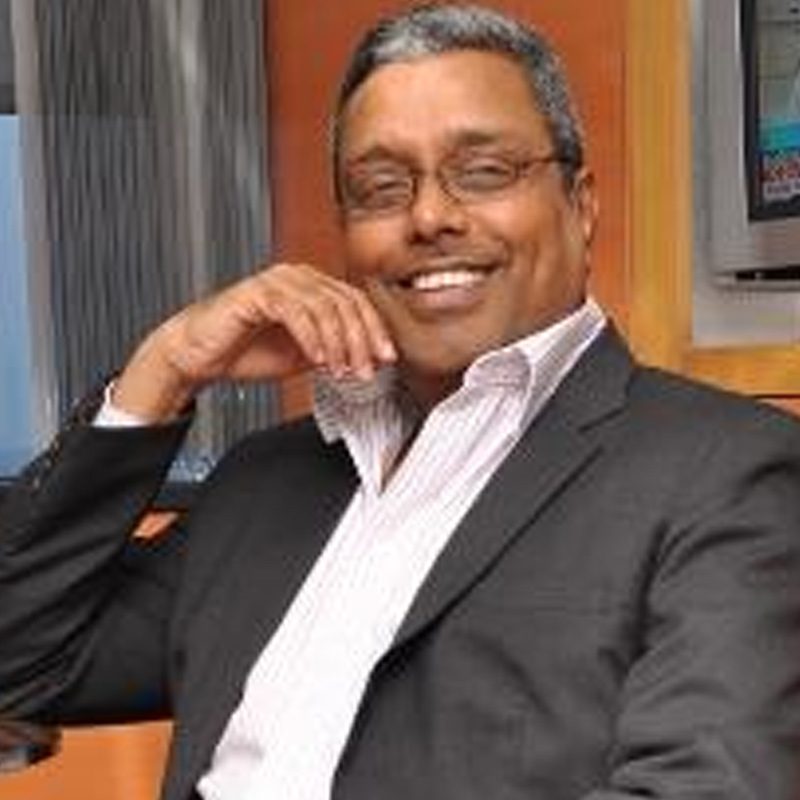
    MUMBAI: TV Today Network chief executive officer and executive director G Krishnan has quit the organisation.

    Krishnan, who served for 16 long years, ended his stint on 1 September. His direct reports will now report to TV Today Network founder-promoter Aroon Purie,

    “This is to inform you that G Krishnan has resigned from the services of the company with effect from 1 September. All his direct reports will report to me until further notice,” Purie stated in an internal communication.  
         
      TV Today owns and operates a string of news channels including Aaj Tak, Headlines Today, Delhi Aaj Tak and Tej.

    Krishnan joined the India Today Group in 1995 and was involved in the journey of Aaj Tak from a daily TV news bulletin on Doordarshan to a full-fledged Hindi news channel in 2000.

    During his earlier stint at Bennett, Coleman & Company, Krishnan was instrumental in launching India’s first private FM channel, Times FM, in 1993.

    Krishnan has been occupied in various roles – chairman of Media Research Users Council (MRUC), a member of the Board of Governors of the Advertising Standards Council of India (ASCI) and founder Director of the Indian Broadcasting Foundation (IBF).
      

  • WC: Tale of record ratings and advertisers

    WC: Tale of record ratings and advertisers

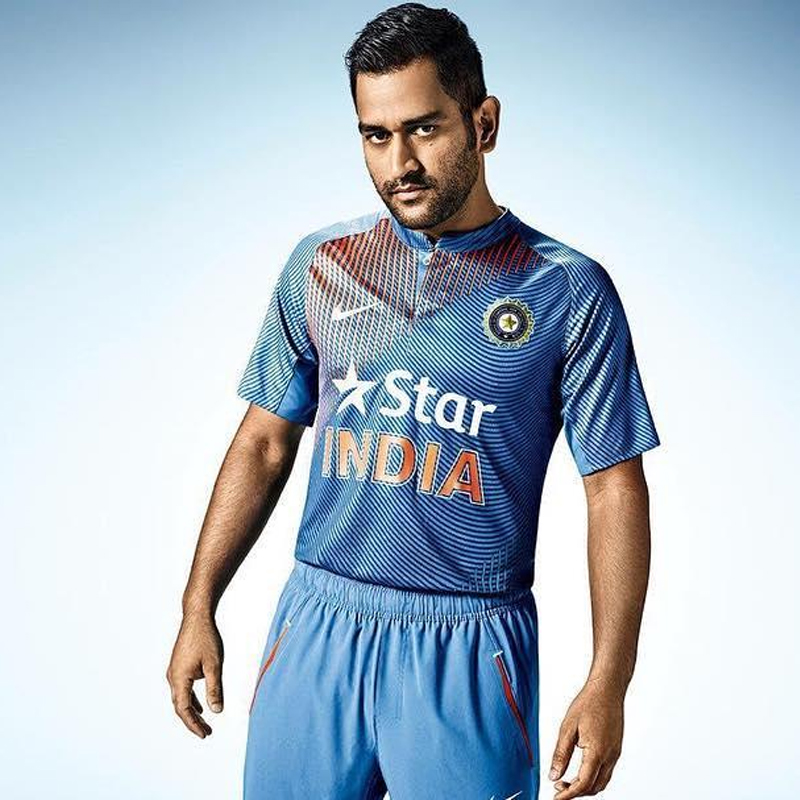
    MUMBAI: When MS Dhoni hit a towering six to seal India‘s victory at the World Cup final, it was mass India watching a piece of history being created after 28 years.

    In a whole new era of India‘s superpower status in the cricketing economy, what counted was how many television viewers the game attracted and to what extent sports broadcasters could turn profitable amid high acquisition costs in a country that views a single sport with religious frenzy in constant regularity.

    The ratings created history. The ‘Men in Blue‘s‘ final battle drew in a record 135.4 million viewers and it peaked with a TVR of 35.91, demonstrating to advertisers that if there was one mass medium available it was cricket.
     
    The final contest fetched an average rating of 23.21, surpassing the classical duel between India and Pakistan that got an average TVR of 21 and peaked at 34.46 with 115 million viewers tuning in.

    The semifinal between New Zealand and Sri Lanka got a rating of 4.31 and a peak TVR of 12.87, making it the highest rated for a non Indian match. Seventy million viewers watched it, according to data from Tam Sports (C&S4+).
     
     
    The 2011 World Cup fared better than its 2007 edition. The final between Australia and Sri Lanka had earned a TVR of 4.53 and a reach of 33 million. The two semi finals had got an average of 2.55 TVR in 2007.

    Overall, the event got a TVR of 3.86 compared to 2.02 in 2007. The India versus Sri Lanka final this time around got a rating of 11.1 TVR on Star Cricket, 8.13 TVR on Star Sports and 4.35 TVR on Doordarshan.

    Maharashtra, Uttar Pradesh and West Bengal watched the World Cup tournament the most this time. India‘s nine matches delivered a TVR of 12.07 TVR. In 2007, the three India matches had got an average of 10.33 TVR. The non India matches got a TVR of 1.29 compared to a TVR of 1.43 in 2007.

    Dentsu Media CEO Sai Nagesh said that the performance of the event has been exemplary. “The amount of time that people spent viewing a game has been a revelation. It was thought that people would only watch the last couple of overs. That has not been the case. The non India games also did well. The fact that India was in a tough group which saw teams like Ireland do well boosted the event‘s performance.”

    What about the ad rate hike after India stepped into the semifinal stage? “The incremental increase in the performance of the final over the India versus Pakistan semifinal was expected. The rate of Rs 2.2 million a spot was worth it for the final for clients who came in at the last moment,” said Nagesh.


    Top Five India Matches Top five non-India matches
    Final India versus Sri Lanka – 23.21 TVR Semifinal New Zealand versus Sri Lanka – 4.31 TVR
    Semifinal India versus Pakistan – 21 TVR Pakistan versus Sri Lanka – 3.28 TVR
    Quarterfinal India versus Australia – 12.34 TVR Quarterfinal England versus Sri Lanka – 2.92 TVR
    India versus England – 10.97 TVR New Zealand versus Pakistan – 2.45 TVR
    India versus South Africa – 10.11 TVR Australia versus Pakistan – 2.28 TVR

    From the advertiser point of view, the series has been a rewarding one with most of them reaping a good return-on-investment. PepsiCo India executive VP – marketing, Cola Sandeep Singh Arora expressed satisfaction about the response it got for its ‘Change the Game‘ campaign which ran during the event.

    “The campaign broke the clutter and connected with the youth, which is our core audience. Innovative cricket shots such as the Helicopter Shot, Palti Hit and Upper Cut have become a part of today‘s cricketing lingo, underlining the campaign‘s success and helping brand Pepsi take ownership of everything that is unorthodox about the game of cricket. Going forward, we will continue to come up with exciting concepts and game changing campaigns that connect with Youngistaanis,” he said.

    The success of the World Cup has shown that there is enough steam left in the ODI format and it won‘t get killed by the T20 invasion. “What this event has shown is that all three formats will be viable for a long time in India. There is no danger to ODIs from the Twenty20 format,” Reliance Communications group head brand and marketing Sanjay Behl said.

    Behl said the delivery of the event as a whole was 40-50 per cent more than what had been expected earlier. “It delivered more efficiency. We were the most visible brand during the World Cup. We did innovations in terms of digital boards. The future brand recall of India winning will be attributable to Reliance,” he claimed.

    Now with the Indian Premier League about to begin, will advertisers be willing to put big monies there also?

    Media experts believe more advertisers would walk into the sport over the next few months. “There will be a premium paid. However at the same time, it is not that clients will stop spending on other genres. What the World Cup has shown is that cricket is a huge platform,” a media buyer said.

    For brands involved with the World Cup, there has been a big rub off in terms of brand loyalty. “The performance has been spectacular. Companies in categories like telecom already do a lot around cricket. This will continue. In some cases, this could intensify,” a media analyst said.

    Many of the advertisers have already booked slots on IPL. LG CMO LK Gupta said, “We already have our hands full. With the IPL, we are an on-air sponsor and the aim is to have the media share of voice. With the World Cup, it was about building a consumer connect on the ground and creating engagement.”

    Gupta said that throughout the event LG brand got good exposure. “It wasn‘t just about the fact that India won the final. The respect and stature of the brand grew, thanks to our association with this event.”

    The World Cup has thrown up an iinteresting trend with FMCG companies betting their ad monies on cricket.

    “Brands will want a piece of the pie. More companies will want to ride the bandwagon. Already you are seeing some FMCG companies advertising on cricket, which they did not do earlier. This is due to the fact that increasingly women tune in to cricket. While this is due to the rise of T20, the effect has spilled over to the ODIs. You are also seeing categories like cement and inverters starting to use cricket to generate eyeballs. This activity might speed up due to the World Cup win,” Gupta said.

  • WC: Ratings of non-India matches stay a concern

    WC: Ratings of non-India matches stay a concern

    MUMBAI: The cricket World Cup is showing the first signs of softening in ratings compared to its previous edition in 2007, though in terms of reach it is far ahead.

    The first 20 matches have yielded an average TVR of 1.92, much less than the average TVR of 2.48 that was recorded in the same period of the 2007 World Cup.

    However, India has played a match less compared to the earlier edition. For the two matches involving Bangladesh and England, the matches clocked a TVR of 7.47 and 10.97 respectively.

    In the 2007 World Cup, India had played three matches out of 20 and clocked a TVR of 8.85 against Bangladesh, 10.10 against Bermuda and 12.06 against Sri Lanka.

    The epic India-England match, which ended in a tie, is the top-rated contest so far as an astronomical 82 million viewers tuned in. The match got a peak TVR of 20.96 and an average TVR of 10.97, according to data from Tam Sports (All India, C&S 4+).

    Star Cricket earned a TVR of 5.3 for that match while Star Sports, which has a Hindi feed, got a TVR of 2.75. Doordarshan managed a TVR of 1.95 and ESPN a rating of 1.07.
     
    Experts believe that a combination of one-sided matches and rain in a crucial encounter between Australia and Sri Lanka resulted in the average ratings for the World Cup falling below 2 TVR for the first time. While the contest between Australia and Sri Lanka got a 0.10 TVR, 23 million viewers tuned in for it, showing that there was interest to watch the duel.

    Interestingly, the average ratings for the non-India matches have stood flat at 1.10 TVR, like in the previous World Cup.
     
    A media buyer expressed disappointment at the fact that the non-India match ratings have stayed flat. “While the reach has gone up, we were hoping that since the event was in India there would be added interest that would boost ratings,” said a buyer on condition of anonymity.
     
    The England versus Ireland encounter, which the Irish won in a famous run chase, has fared well. It got a TVR of 1.78 and a reach of 32 million.

    Pakistan continues to attract interest among viewers, even if they are playing against a weak team. Their match against Canada got a TVR of 1.69, while 38 million viewers tuned in.

    In 2007, a Pakistan match against Zimbabwe got a TVR of 1.01 and a reach of 21 million.

    This time only 14 million viewers tuned in to see a one-sided Netherlands versus South Africa match which got a TVR of 0.40. In 2007, a match between South Africa and Scotland got a TVR of 0.55. Eighteen million viewers had tuned in for that match.
     

  • Prasar Bharati: A year of controversies

    Prasar Bharati: A year of controversies

    The successful and neat coverage of the Commonwealth Games on the one hand and the messy affair of the B S Lalli ouster dominated a major part of the activities of Prasar Bharati during 2010, the only other tremor being the lightning mass casual leave towards the end of the year.

    Lalli‘s woes

    Following a reference to her by Prime Minister Manmohan Singh, President Pratibha Devisingh Patil finally gave her consent early in December to an inquiry by a Supreme Court judge into financial irregularities by Prasar Bharati chief executive officer Baljit Singh Lalli.

    The Central Vigilance Commission had in mid-November established four of the seven charges by the Central Vigilance Commission (CVC) against Lalli. The charges were related to contracts for management of advertisement revenue arising from the telecast of cricket matches on Doordarshan during 2007; the non-telecast by Doordarshan of T-20 cricket World Cup matches held in South Africa in September 2007; engagement of legal entities to represent Prasar Bharati; purchase of radio broadcasting rights for 13 cricket series held during 2007-09; and hiring of transport and accommodation for the conduct of the Commonwealth Youth Games in Pune in 2008.
     
    Though this initially led to Lalli’s wings being clipped with a three-member committee with the Members (Personnel) and (Finance) along with the CEO being asked to run the pubcaster, it was ultimately decided to suspend Lalli and Information and Broadcasting Ministry additional secretary Rajiv Takru was appointed the officiating CEO of Prasar Bharati, pending inquiry by a Supreme Court judge.

    As Takru who is an Indian Administrative Service officer of 1979 batch is a senior Ministry official, this raised the issue about whether this implied a complete takeover of the autonomous pubcaster by the Ministry.

    The Board also formed five committees dealing with the subjects of finance, personnel, production and content, project monitoring and implementation and strategy and vision with a view to streamline the functioning of the national broadcaster.

    CWG and its aftermath

    Though the coverage of the Commonwealth Games in October went off without any hitch despite fears, Prasar Bharati‘s total revenue from the Commonwealth Games stood at Rs 581 million, falling far short of the expected target of Rs one billion.

    Of this, Doordarshan posted revenue of Rs 559.9 million, contributing to a major slice of Prasar Bharati‘s income during this period.

    Doordarshan had earned only Rs 36.98 million from the Olympic Games in Beijing in 2008, Rs 1.3 million from the Commonwealth Youth Games in Pune in 2008, and Rs 360,000 from the World Military Games in 2007 in Mumbai and Hyderabad.

    The pubcaster is attempting to get exclusive telecast rights in the country of the Olympic Games 2012 in London.

    The Commonwealth Games were covered by Prasar Bharati in agreement with UK-based Satellite Information Services (SIS) Live. The British broadcasting group had been shortlisted out of the two consortiums which had filed their bids when the last date closed for this purpose.

    Disgruntled Staff

    Prasar Bharati was jolted out of its complacency when a majority of the staff of Doordarshan and All India Radio went on a lightning mass casual leave under the aegis of the National Federation of Akashwani and Doordarshan employees on 23 and 24 November, affecting transmission for around 48 hours.

    NFADE, an umbrella organisation of 21 service associations, was protesting against the ‘mess created in Prasar Bharati over the last two years’ and seeking a repeal of the Prasar Bharati Act 1990 on the ground that it has no relevance in today’s context.

    While radio was badly affected and beamed repeat programmes, Doordarshan kendras managed by taking the feed from Delhi.

    The NFADE had threatened a second round of 72-hour mass casual leave from 13 to 16 December, but this was prevented almost at the last minute after hectic negotiations, and the pubcaster setting up a committee headed by V Shivakumar, Member (Personnel) in the Prasar Board, which will have representatives of the Federation to examine the various grievances raised by them.

    The Ministry assured NFADE that it was prepared to examine various clauses of the Prasar Bharati (Broadcasting Corporation India) Act 1990.
     
    The Group of Ministers on Prasar Bharati is already dealing with the issue, although Minister Ambika Soni said that repealing the Act as demanded by the NFADE would be counter-productive and the United Progressive Alliance would be accused of trying to control the media.

    Government to continue support to Prasar Bharati

    The Group of Ministers (GoM) attached to Prasar Bharati, reconstituted early in 2010 with Home Minister P Chidambaram at its head, recommended in mid-December that the level of government support should be maintained for the public service broadcaster for the next five years from 2010-11 to 2014-15.

    This support will be reviewed after this period is over. However, the GoM has also said 50 per cent of the annual operating expenses of the Prasar Bharati should be borne by the pubcaster from its internal extra budgetary resources while the remaining 50 per cent will come from government grants.
    The GoM also recommended that the accumulated arrears of space segment and spectrum charges of the pubcaster up to 31 March 2010 should be waived, and future charges would be included in the total operational expenses.

    The GoM is also clear that plan capital funding by government to the pubcaster may be in the form of grant-in-aid and not in the form of loan. The loan-in-perpetuity and capital loan should be converted into grants, and the interest on loan-in-perpetuity, capital loan and penal interest should be waived.

    The ban on recruitments should be relaxed and the GoM set up a four-member Committee of Joint Secretaries to look into various demands of employee organisations. This is in addition to the Committee under Prasar Bharati Board Member (Personnel) V Shivakumar after the mass casual leave by employees.

    In addition, a scheme of Rs 6.2 billion has been approved for Doordarshan and Rs 9.08 billion for All India Radio for the purpose of digitisation under the Eleventh Plan and is already under implementation.

    Clearly, this was done because the pubcaster is under financial stress. Prasar Bharati has posted revenue of Rs 4.66 billion for the six-month period ended September, while expenditure stands at Rs 12.05 billion.

    Prasar Bharati had posted revenue of Rs 11.76 billion for the fiscal ended March 2010 while expenditure stood at Rs 29.49 billion.

    Staff shortage

    Despite long agitation by various sections of staff in Prasar Bharati and even strong strictures by Parliamentary Committees, All India Radio and Doodarshan continue to suffer from massive shortage or sanction of trained manpower.

    A total of 46 low power transmitters are presently relaying partial transmission (including ten each in Andhra Pradesh and Orissa) and activities at 22 Doordarshan studio centres are limited.

    Similarly, a total of 24 stations of All India Radio in different parts of the country are only working as relay kendras, while another five – Dharmanagar and Longtherai in Tripura, Dungarpur in Rajasthan, Rairangpur in Orissa, and Suryapet in Andhra Pradesh – are technically ready but not commissioned because of shortage or sanctioning of trained operational and maintenance staff.

    Doordarshan at present has 66 studio centres and 1415 transmitters. In the case of AIR, stations are functioning at a total of 238 places. AIR has a total of 380 transmitters (177 FM, 149 MW, and 54 Short Wave).

    Some of the AIR transmitters are working sub-optimally as they have outlived their useful life of more than 20 years. Problems have also been faced in AIR because of shortage of staff. The old transmitters are being replaced in phased manner with state-of-the-art Digital Technology Transmitters. Replacement or upgradation of 34 FM Transmitters, 40 Medium Wave Transmitters, and five Short Wave transmitters have been taken up in the Eleventh Plan, and the quality is expected to improve after this work is completed.

    Early in 2010, Prasar Bharati had been reprimanded by the Parliamentary Committee on Empowerment of Women for its lethargy in not finalising recruitment rules and failing to make recruitment in the Indian Broadcasting (Programme) Service started in 1990 to train a separate cadre of employees for All India Radio and Doordarshan. Towards the end of the year following an agitation by employees, a task force was set up to go into manpower and recruitment problems.

    While the Committee welcomed the decision that all Central Government employees recruited for Akashvani or Doordarshan until 5 October 2007 are to be deemed as on deputation with effect from April 2000 until their retirement, it regretted that its recommendation in 2009 for finalisation of recruitment rules to implement this within three months had not been complied with.
     
    The Prasar Bharati Amendment Bill 2010 giving effect to the recommendation of the GoM for treating all government officers and employees recruited by All India Radio or Doordarshan as on 5 October 2007 to be on ‘deemed deputation‘ with effect from April 2000 till the time of their retirement was introduced in Parliament towards the end of the year.

    It had observed in 2009 that there was a shortage of 44.8 per cent of the sanctioned strength in group ‘A‘ and about 40 per cent in Group ‘B‘ in Doordarshan, and 58.8 per cent of the posts in Group ‘A‘ were vacant in All India Radio. As many as 4629 posts in Doordarshan and 6433 posts in All India Radio remain unfilled.
    It noticed that recruitment to the post of programme executives was last made 18 years earlier in 1991. The case is no different in various other categories of AIR and Doordarshan.

    However, Soni said towards the end of the year that the government was considering a roadmap for taking new initiatives in the Prasar Bharati set up. The initiatives would aim to firm up the mandate given to Prasar Bharati as a public broadcaster, Soni added.

    Though the Prasar Bharati (Broadcasting Corporation of India) Act was passed in June 1990, it was notified as a statutory corporation only from November 1997. Section 11 of the Act had given employees the option to decide whether they wanted to join the Corporation or go back to the government, but no action was taken as the rules for various categories of employees have not been drawn up in the past 12 years.

    After a long gap of almost 20 years, the Ministry sent a proposal to the Union Public Service Commission for reviewing of the Departmental Promotion Committee for the year 1990 to 1993 for promotion of programme executives and other feeder grades of the Indian Broadcasting (Programme) Service.

    The much-delayed action was taken on the directions of the Principal Bench of the Central Administrative Tribunal (CAT) in New Delhi for promotions to Junior Time Scale of the IB(P)S.

    DD Modernisation

    Early in 2010, the Union Cabinet gave the green signal on the proposal for digitisation of transmitters and studios in the Doordarshan network during the 11th Plan, and Prasar Bharati got a plan allocation of Rs 6.2 billion to begin work on 40 digital terrestrial transmitters and other equipment.

    The approval by the Cabinet Committee on Infrastructure covered the networking of DTT through satellite, augmentation of Digital Media centers (DMCs) by providing the following: equipment and facilities for maintaining the digital infrastructure; five sets of digital measurement equipment at zonal offices; 60 UPS at High Power Transmitters to ensure uninterrupted power supply, R&D and Training; digitalisation of 31 partially digitalised and 8 analogue studio centers; digitalisation of archiving facilities; and digitalisation of news automation system and e-governance and IT scheme.

    Earlier, Doordarshan had set aside an amount of Rs 12.09 billion of a total approved outlay of Rs 13.69 billion just for digitisation in the 11th Five Year Plan (2007-2012).

    The Ministry had prepared a proposal for Rs 6 billion to Doordarshan for completing digitisation. The Government is confident of meeting its deadline of complete digitisation of the electronic media by 2017.

    The DD Urdu channel, which had failed to take-off despite being included for mandatory carriage by all cable operators, is set for a revamp and re-launch. The channel, which was launched on 15 August 2006, had initially begun beaming with sponsored programmes or those taken from other channels of Doordarshan. It has begun commissioning of new programmes.

    Additionally, the channel had allotted a daily slot to the Maulana Azad National Urdu University for the telecast of informative and educational programmes produced by its Media Research Institute after a five-year MoU that continues till 2012.

    The channel is telecast on INSAT 4A satellite and has also been brought on the Digital Video Broadcast – Hand-held (DVB-H) mode.

    DD Urdu presently telecasts a fresh band from 5 pm to 11 pm and the shows are then repeated on the channel.

    The channel has been riddled by a number of controversies. Initially, it had been found that blank tapes had been submitted by producers who had failed to complete the shooting of their 13-episode series when the channel was first launched. Later, there were complaints of lack of trained staff.

    AIR Modernisation

    While the Planning Commission in a report had said that a sum of Rs 59 billion would be required over the next ten years for digitisation of All India Radio, the Information and Broadcasting Ministry has prepared a proposal for Rs eight billion for expediting digitisation in AIR.

    Doordarshan and AIR, which beam terrestrially to reach all over the country, have both stepped up the process of digitisation, which will free up spectrum currently used for analogue transmission, allowing more channels to come in.

    All India Radio has 374 transmitters as compared to 299, when Prasar Bharati was formed. But 200 new AIR transmitters have been approved in spillover schemes under the 11th Five Year Plan.

    The Planning Commission, in its report on Going Digital presented in October 2006, decided to go in for 100 per cent digitisation of FM radio and five short wave radio stations. Thus, Prasar Bharati would require Rs 94.31 billion over a period of ten years.

    As far as AIR is concerned, an outlay of Rs 36.8 billion is meant for the infrastructure required for digitisation, which includes Rs 5.35 billion for external services (short wave transmission).

    The Commission said the revenue generation capacity is expected to increase and it is expected that just over Rs 169 billion would be earned by Prasar Bharati during this period.

    At present, AIR employs transmission in MW, SW and FM band in analogue mode only. Only one Low Power DAB transmitter at Delhi has been set up for experimental purposes.

    Keeping in view the worldwide trends of transition in digital mode, AIR plans to introduce Digital Radio Mondale (DRM) transmission below 30 MHz – MF and HF band – by upgrading its existing DRM compatible transmitters. All new transmitters including the replacement of old transmitters would be done by DRM compatible transmitters. For transmission, above 30 MHz introduction of DRM + and DAB are being examined.

    However, all digital transmission as and when introduced, will be in simulcast mode for about 10 years. This would be necessary as receivers in the beginning may prove costly. Once the receivers become affordable by the masses, the simulcast mode would be phased out.

    With a view to provide digital quality direct sound broadcast to the listeners, it is proposed to expand the existing DTH services during the 11th Plan.

    AIR has plans to introduce its audio multimedia contents both in satellite and terrestrial mode to the mobile hand held devices in DMB/ DVB-H/ other standards.

    It is proposed to use the Internet platform to serve listeners having internet connectivity. This will support non-linear listening. Though no additional spectrum is required for DRM transmissions in MW and SW band, additional spectrum would be required for DRM transmitters in FM and VHF band as well as ‘L’ Band.

    During the migration from Analogue to Digital Radio, new frequency assignments are to be identified to facilitate smooth migration and for some time, both the existing analogue transmissions as well as new digital transmissions would continue. Hence, there will be spectrum constraint during this transition phase. Also, the spectrum for digital migration may need to be identified for both Prasar Bharti as well as private FM broadcasters.

     
    The Telecom Regulatory Authority of India (Trai) had suggested a three-stage process of digitisation: Tier One cities by 2013, Tier Two cities by 2014 and Tier Three cities by 2016. But this needed indepth study and consultation with the stakeholders including cable operators, multi-system operators, and broadcasters, the regulator said.

    Meanwhile, All India Radio is all set for an exponential growth. Presently broadcasting FM channels from 172 stations, AIR has commissioned another 320 FM radio stations. As many as 246 of these will be transmitters beaming programmes from other centres.

     
    Of the AIR FM stations under implementation in various parts of the country,
    Uttarakhand is to get the largest number with seven. Following this will be Andhra Pradesh, Uttar Pradesh, Assam and Maharashtra who are to get six channels each. Arunachal Pradesh and Orissa will have five each and the other states will get two to four channels each.
    A sum of Rs 1.44 billion has been allocated in the Eleventh Plan for expansion and revamping of the FM transmitter network while a sum of Rs 3.85 billion has been approved for expansion and revamping of the Medium Wave channels of All India Radio.

    In addition, there is a non-plan allocation of Rs 900 million from Internal Extra Budgetary Resources (IEBR) for programme activities, and Rs 100 million for development of programmes under the Software Plan Scheme.

    A scheme of Rs One billion has been approved by the Government for strengthening the transmission of broadcasting signals in Jammu and Kashmir to counter hostile propaganda from across the border.

    AIR also received a boost with the Government deciding to permit relay of All India Radio news (unaltered) by private FM radio channels on such terms and conditions as worked out with Prasar Bharati. The government, thus, rejected the view of Telecom Regulatory Authority of India (Trai) that news should be allowed to be accessed from AIR, Doordarshan, Press Trust of India, United News of India, and any other authorised news agency or television news channel.

    Controversies

    The year was not without its share of controversies as far as Prasar Bharati was concerned. Doordarshan issued disconnection notices to seven channels to make place for the high definition channels that were launched to coincide with the Commonwealth Games on DD Direct Plus which is the only free to air direct-to-home platform.

    But Doordarshan was forced by the Telecom Disputes Settlement and Appellate Tribunal (Tdsat) to let channels of the Zee group, Enter 10 Television and Seven Star Satellite remain on DD Direct Plus.

    The country‘s only free-to-air DTH platform has a capacity of 59 channels while it beams 57 TV channels, apart from 21 channels of All India Radio. The TV channels include 21 Doordarshan channels.

    The augmentation of the capacity of the country’s only free direct-to-home platform DD Direct Plus to 97 channels will cost Rs 554.3 million. The augmentation in the first phase will be completed on 31 March 2011. The plan is to increase DD Direct Plus‘ capacity to 200 by the end of the financial year 2011-12.

    In yet another controversy, CEO Lalli denied any move to change the frequency of the popular All India Radio FM Gold from 106.4 to 100.1 MHz. Lalli blocked any move to change the frequency, when it was brought to his notice on 31 October.

    Asked why FM Gold was on the same frequency which was used by Radio Dhamaal in 10 other cities, Lalli said this was the work of the Wireless Planning and Coordination (WPC) wing of the Department of Telecommunication. However, he said he had already made a noting in this regard for the reference of the Information and Broadcasting Ministry. FM Dilli on 100.1 MHz had been launched especially to carry commentaries of the Commonwealth Games, and the channel has been shut down.

    Indo-Bangla Treaty

    India and Bangladesh agreed in 2010 to exchange programmes through their respective radio and TV organisations and provide facilities for visiting radio and TV persons in each other’s country associated with the development of broadcasting.
     
    The two countries will also exchange two journalists each including those engaged in dissemination of Government information. This followed the signing of a Cultural Exchange Programme for 2010-2012 to promote cooperation in the fields of art and culture, youth affairs and sports, and mass media.
  • 2010 a year of wait for FM radio

    2010 a year of wait for FM radio

    For the private FM radio broadcasters, 2010 was more of a wait for positive government policies that would fuel the sector’s growth that has been somewhat stunted.

    But the year ended on a positive note that things would move in 2011 – at least as far as permitting news and launching Phase III of FM radio was concerned. And some steps were also taken towards taking a decision on increasing foreign direct investment in the radio sector.

    Besides, some positive steps were taken towards revenue sharing on copyright of radio and other music, though this still needs to be ironed out with the music industry not too happy with the outcome so far.

    With the Group of Ministers (GoM) on FM radio Phase III finalising the e-auction model, the radio sector is poised for an exponential growth in India. The e-auction will also pave the path for a transparent process much along the lines of the 3G auctions held last year.
     
    There is a proposal for allowing 806 private FM Radio stations in Phase III in addition to the 245 channels at present. In addition, All India Radio (AIR) is getting ready to launch a total of 320 FM radio stations.

    The GoM headed by Finance Minister Pranab Mukherjee decided against the conventional open auction model and instead chose the e-auction method.

    A total of 216 cities and towns are to get private FM radio for the first time in Phase III, out of the 302 identified by the Government and split into four categories. Of the 86 cities and towns which have private FM radio channels, 67 are to get additional channels.

    Among the four main metros (which fall in first category), Mumbai will get two more channels while Delhi and Chennai will get one each. Kolkata has filled its quota of nine private FM channels.

    The GoM also extended the licence period for the radio stations to 15 years from the existing 10 years. Some decisions were also taken with regard to Prasar Bharati rentals and music royalty by the GoM.

    The GoM accepted the Government proposal to permit relay of All India Radio news (unaltered) by private FM channels on terms and conditions worked out with Prasar Bharati, thus rejecting the view of the Telecom Regulatory Authority of India and the industry-led Federation of Indian Chambers of Commerce and Industry (FICCI). The regulator had recommended that news should be allowed to be accessed from AIR, Doordarshan, Press Trust of India, United News of India, and any other authorised news agency or television news channel.

    In the absence of a regulatory authority with a localised presence and absence of monitoring arrangements for private channels and in view of the sensitivities involved, the Government feels it is not possible to allow complete freedom to broadcast news even though the news may be sourced from authorised sources. There was a possibility of sensationalising news by the private channels in their presentation.

    However, it is clear that the issue has not ended since some private FM operators are contemplating taking up the issue with the government.

    However, no final decision has been taken so far on lifting the foreign direct investment (FDI) cap on the sector to 26 per cent from the current 20 per cent. Trai had initially proposed to raise the FDI limit to 49 per cent but cut it down to 26 per cent in its June recommendations last year. A meeting of the Committee of Secretaries headed by the Cabinet Secretary had towards 2010-end decided the note prepared by the Information and Broadcasting Ministry should be referred to the Union Cabinet. The current foreign investment limit in FM radio stands at 20 per cent.

    With FM Phase III expanding to smaller tier ‘D‘ cities, it is likely to provide greater freedom and multiple ownership, promotion of local content, talent and culture. Formats like talk shows, dramas, classic and folk music concerts, programming specifically for children, short stories and plays with a social message too are likely to be incorporated.

    Currently, the radio sector generates annual revenues worth $49.5 million and is growing at around 20 per cent annually,

    according to the joint report by KPMG and Ficci. The radio advertising industry is projected to grow at a CAGR of 12.2 per cent over 2010-14, reaching $ 342.7 million in 2014 from the present $192.8 million in 2009, as per PriceWaterhouseCoopers.

    Meanwhile not too happy with the growth of community radio, the government is organising consultation workshops in different parts of the country to increase awareness of the advantages of local radio stations.

    The country at present has a total of just over 100 community radio stations (71 with Educational Institutions, 24 with non-Governmental Organizations, and eight with Krishak Vigyan Kendras and agricultural

    science universities though the scheme was announced in April 2005.

    The Ministry says it encourages setting up of the Community Radio Stations as CRS promises to provide opportunities to the local communities to express themselves, and empower women. The main aim of starting the CRS in educational institutions is to provide different and useful information to the people in nearby villages.

    Although community radios were allowed since April 2005, the Central Government in December 2006 had liberalised the Policy on Community Radio by bringing in the civil society and voluntary organisations, agricultural universities, ICAR institutions, Krishi Vigyan Kendras etc, under its ambit. The policy was liberalised to allow greater participation by the civil society on issues of development and social change. Earlier, only educational institutions were permitted to launch community radio channels. Under the new guidelines, limited advertising and announcements relating to local events, local businesses and services and employment opportunities has been allowed up to a maximum duration of five minutes per hour of broadcast.

    A total of 48 Community Radio Stations are presently functioning in 16 states and union territories which included 42 from educational institutions and six from non-governmental organisations. Twenty letters of Intent have been issued in 2009, taking the total to 189 LoI so far.

    A total of 584 applications, including 240 applications from educational institutions, have been received from various organisations for setting up CRSs. While 79 had been rejected, a total of 316 applications were under process.

    Tamil Nadu has the largest number of CRS – 26 (up from ten at the end of 2009), followed by Uttar Pradesh with 13, Maharashtra with ten, Karnataka with nine, and Delhi with six. The number of stations in other states – Andhra Pradesh, Bihar, Chandigarh, Gujarat, Haryana, Kerala, Madhya Pradesh, Orissa, Puducherry, Punjab, Rajasthan, Uttarakhand, and West Bengal – varied between one and five.
    Clearly waiting for Phase III, no new FM channel has been launched in the country over the past 18 months. There are just over 245 private FM radio channels in the country, and the government earned revenue of Rs 1.33 billion between 2006 and September 2009 from private FM radio stations.

    FM Radio broadcasting was first launched in the country in 1999.

    Maharashtra has the largest number of private FM stations – 31 – followed by Uttar Pradesh and Tamil Nadu with 21 each and Rajasthan with 19.

    Kerala has 17 stations, while Gujarat and Madhya Pradesh have 16 each. West Bengal has 15 channels, Karnataka has 14, Andhra Pradesh has 13, Punjab has 12 and Delhi has ten stations.

    Permission given to 20 FM channels has been revoked by the Information and Broadcasting Ministry for various reasons. Of the channels that were revoked, nine belonged to Century Communications, eight to Pan India Network Infravest, two to Kushal Global, and one to Singla Properties.

    While the majority of these were refused because the channels were not operationalised within the prescribed time, the others commenced but after some time remained non-operational for a period of more than six months.

    While the Government gave permission to 266 channels including the 20 revoked later, one could not be operationalized in Aizawl in Mizoram as the Common Transmission Infrastructure is not yet ready. Under the Grant of Permission Agreement, the channels are expected to commence operations within one year of such agreement.

    Meanwhile, the Copyright Board sought to resolve the friction between the music companies and the FM radio, laying out a revenue share model for the industry that was earlier working on a fixed cost structure. FM radio companies will have to share two per cent of their net advertising revenues (total ad income minus agency commission and government taxes) with the music companies as royalty, according to the Copyright Board directive.

    The new revenue share model will work in favour of the FM radio broadcasters, while upsetting the music companies who are already weighing legal options as they see their earnings from the sector shrink.

    The FM radio broadcasters coughed out Rs 1.2 billion, or 18 per cent of their net ad revenues, as music royalty in FY‘10, according to industry estimates. A two per cent share, as the Copyright Board has directed now, would mean the music companies would have taken away just Rs 140 million in FY‘10.

    In May 2008, the Supreme Court authorised the Copyright Board to decide on the royalty rates for the industry. The Copyright Board had asked the radio and music companies to file evidence supporting their stand on the royalty issue earlier this year.

    The year 2010 ended with the music industry serving notices to various hotels and pubs in many cities and towns to pay requisite music licence fee to play music, events at these venues to mark the end of the year. Following intervention by the Phonographic Performance Ltd. (PPL), legal notices were issued to venues that have not paid the requisite music licence fee to play music at their year-end events. PPL plans to initiate strict legal action against defaulters in case the licence fee does not get paid ahead of their planned events.

    Under the statutory sanction of section 35 in the Indian Copyright Act, playing commercial music in public without paying the requisite licence fee is an offence liable to contempt of court. Section 35 grants exclusivity to PPL to issue licences to hotels/pubs for playing music during the events in their respective premises. The tariff is calculated on the basis of the number of hours the music is to be played and the number of people expected to attend the event. The penalty can be imprisonment for three years and a fine of up to Rs 200,000.

    For the sector that is under severe revenue crunch, 2011 could be the turning point as the government opens up new geographies under Phase III.

  • Maintain sobriety instead of presenting news in a sensational manner: Lalli

    Maintain sobriety instead of presenting news in a sensational manner: Lalli

    NEW DELHI: In India’s highly cluttered private satellite television news market, the Prasar Bharati chief executive officer BS Lalli has a message: maintain sobriety instead of presenting news in a sensational manner.

    While applauding the move by the TV news industry to self-regulate in a purposeful fashion, Lalli stressed on the need to maintain the sensibilities of the people in a widely pluralistic country.

    “I am happy to note that news channels have been fairly responsible in their coverage and have been indulging in self-regulation of content. Sobriety rather than sensationalism should be the requirement of the hour,” Lalli said here today, while inaugurating the third Indian News Television (NT) Summit.

    He said DD News, which airs 16 hours of live news daily, continued to remain the only bilingual news channel telecasting in Hindi and English, apart from bulletins in Urdu and Sanskrit.

    The primary aim of the government and the public broadcaster was to reach those large areas still uncovered by television so that citizens could be “empowered with objective facts and dispassionate analysis” since this was the “heart and hallmark of a democracy”.

    Lalli said TV had seen phenomenal growth in the country and from just Doordarshan in the early nineties, the country now had over 500 channels being downlinked to Indian viewers, opening up the skies to rapid expansion.

    All India Radio had added around 122 news bulletins over the past few years in different languages, he added.

  • Prasar Bharati warns news channels over unauthorised use of Olympic footage

    Prasar Bharati warns news channels over unauthorised use of Olympic footage

    NEW DELHI: In a latest development, it is being learnt that Prasar Bharati which comprises Doordarshan and All India Radio, as the official broadcaster of the Beijing Olympics in India, has issued a letter to news channels for unauthorised use on Olympic footage from Doordarshan.

    According to the footage sharing law, any channel is free to air 20 seconds of footage of any event borrowed from any other broadcaster.

    The news comes in after Doordarshan made a clear announcement that it would not share the feed for Olympics with any other private broadcaster or news channel.

    Says DD coordinator marketing and sport Sukhjinder Kaur, “We had decided earlier that we will not share the feed for Beijing Olympics this year with any other private broadcaster. We had got several enquires related to sharing of feed but we had made clear before the event had started.”

    At the moment, DD has just issued a letter to all those news channels who have been found guilty of using the footage of Olympics and feels if the situation persist further action will be taken against the news channels.

    Doordarshan deputy director general – sports Ashok Jailkhani adds, “At the moment we have just issued a polite letter to news channels asking them to stop the unauthorised use of Olympic footage as Doordarshan is the official broadcaster of the event. If this practice continues then we will not hesitate to take legal action against those news channels that will be found guilty.”

  • INX News ropes in Karan Thapar’s ITV as editorial advisor

    INX News ropes in Karan Thapar’s ITV as editorial advisor

    MUMBAI: INX News has appointed Karan Thapar’s company Infotainment Television Pvt Ltd (ITV) as editorial advisor to NewsX, the soon-to-be-launched English news channel.

    The advisory services will comprise a review of progress to date and consultancy on future editorial development of the channel.

    INX News head of newsroom Arup Ghosh said, “I am very pleased that Karan’s ITV has come on board as editorial advisor to NewsX. With its experience and reputation, I am sure ITV will contribute immensely to our vision of a world-class news channel for NewsX.”

    Commenting on ITV’s appointment as editorial advisor to NewsX, Thapar added, “ITV is delighted to accept a project from NewsX to advise it on how to become one of the most exciting news channels available in India.”

    INX News chairperson Indrani Mukerjea said, “With the expertise of the editorial and operations team at NewsX, we are ready to provide the highest quality of intelligent news for today’s audience.”

    Established in 2001, ITV has worked for the BBC, Channel News Asia, CNBC TV18, CNN-IBN and Doordarshan, among other channels.