Tag: Doordarshan

  • Information and Broadcasting: An uphill journey all the way

    Information and Broadcasting: An uphill journey all the way

    NEW DELHI:  For any person who takes over the mantle of the information & broadcasting ministry (MIB), the handling of the portfolio will be full of potholes created by his or her predecessors, primarily because of the failure to take strong decisions.


    By some mischance or deliberate choice, the MIB has remained without a working head since Priya Ranjan Dasmunshi was forced to leave because of sickness. While Ambika Soni did her best to put into operation plans worked out by the ministry’s bureaucrats or the Telecom Regulatory Authority of India (TRAI), both she and her successor Manish Tewari remained primarily spokespersons of the ruling party.


    Perhaps this was not entirely their fault, but that of the party which failed to realise that the ‘Information’ portfolio does not imply giving party inputs or the media which insisted on only raising party issues whenever these two met the members of the fourth estate.


    There is also no gainsaying that the lower priority given to the MIB – from a full-fledged minister with assisting ministers of state to a single minister of state with independent charge – also contributed to this.     


    With the new government in place, the speculation about who the new minister will be and what expectations can be had will be of considerable interest.


    If the government decides to hand over the portfolio to someone who takes interest in the information and broadcasting sector, then the choice zeroes down to a handful of names. But it is clear that politicians of the standing of Sushma Swaraj or Arun Jaitley who have held this portfolio earlier will not go back to it, and Shatrughan Sinha who has earlier served in the government as minister in-charge of two ministries will agree only if made a full-fledged minister and the chances are that he will want a more important portfolio than the MIB.


    Consequently, the choice falls upon someone like Smriti Irani, unless the Bharatiya Janata Party picks on someone from its allies.


    I&B MINISTRY


    It would help the government if the decisions being taken by the MIB are transparent, and the concerned officials are easily accessible to the media which represents the aspirations of the people.


    While it is true that senior ministry officials are generally reluctant to speak during a session of Parliament, there is no reason for their not doing so at other times.


    Perhaps the secretary of the ministry should designate certain officers to be available to the media at certain hours every day, on phone, if not in person.


    PRASAR BHARATI


    Notwithstanding who will hold the portfolio, it is clear that it will be no less than being at the edge of the twin-edged sword. Interestingly, one of these two edges was conceived by the erstwhile Jana Sangh (now BJP) which was then part of Janata Party and L K Advani at the head of this MIB.


    Even as B S Lalli was removed from the post of CEO of Prasar Bharati under a cloud of corruption and mismanagement, his successor Jawhar Sircar has taken up cudgels against the ministry on the ground that the public service broadcaster is an autonomous body.


    On the other hand, the government feels that since it pays the salaries, has waived spectrum fee and given other concessions, and has initiated the laying down of rules and regulations regarding employees, it cannot be wished away and has to have a say in the working of the pubcaster.


    The new incumbent in the ministry will therefore have to work out certain ground rules within the ambit of the Prasar Bharati Act 1990 drawing clear lines about its role. Clearly, autonomy does not mean freedom to do anything, but at the same time lays certain constitutional norms or reasonable restrictions.


    In the light of Article 19(1)(a) about freedom of speech and expression, it becomes abundantly clear that the government should not have any control over the content broadcast by All India Radio or telecast by Doordarshan unless this violates the Reasonable Restrictions laid in the Constitution or the Codes under the Prasar Bharati Act or the Cable Television Networks (Regulation) Act 1995. But it may be difficult to stop the government being the financing agency from interfering in the management of the pubcaster.


    In view of this, it is also clear that the spending of the budget laid aside by the ministry for content creation should be left to DD and AIR without day-to-day monitoring by the ministry.


    Furthermore, there has to be greater transparency and quicker decision-making both by the government and by AIR and more particularly Doordarshan about the programmes it wants to commission or broadcast. It is understood that some proposals from independent producers have been pending in DD for almost a decade.   


    The Sam Pitroda Committee on Prasar Bharati is generally repetitive of the provisions of the Prasar Bharati Act, but may help to speed up some processes. The new Minister will therefore have to immediately hold wide-ranging consultations with all stakeholders and take action on the report.


    There is little doubt that DD and AIR are today broadcasting programmes that no private operator dares to do because of the loss of eyeballs (TRPs).


    DOORDARSHAN


    While Doordarshan has made appreciable progress in terms of popularity in semi-urban or urban areas even as it holds the top spot in rural India, there is urgent need to take steps to market the channel even better. While its programmes have become entertaining even as they serve the public by sending out direct or indirect messages, the general perception is to the contrary.


    DD also needs to bring certain channels that are only known in certain regions to the national level. These include DD Bharati, DD Urdu, DD Kashir, and the DD channels in the north east. Greater facility for dubbing popular serials in Hindi would help in this effort.


    AIR


    The audio wing of Prasar Bharati has been treated in a somewhat step-motherly fashion since DD began to grow. There is urgent need to reverse that by getting more people to tune in to radio just the way they tune in to DD.


    This can clearly be done by bringing All India Radio’s National channel and the popular Vividh Bharati channel onto the FM networks so that it is heard in the same way as private FM channels or FM Gold and FM Rainbow.


    AIR has already spent crores of rupees on creating the basic infrastructure for Digital Radio Mondiale, which can make medium-wave or short wave programmes accessible to listeners. The only lacunae appear to be the absence of reasonably priced receivers, and the reluctance of the present Prasar Bharati CEO to the growth of this medium.


    While manufacturers have come forward to produce reasonably priced receivers for use on mobiles, cars or at home, the Government is pushing ahead its programme for the third phase of FM Radio expansion and this is the right time to pursue as DRM sets are also FM compatible. 


    TELECOM REGULATORY AUTHORITY OF INDIA


    Of late, far too many cases have been going to the Telecom Disputes Settlement and Appellate Tribunal (TDSAT) with relation to broadcasting but the problem has been complicated further by the judgment of the Supreme Court that TRAI regulations should not be adjudicated upon by TDSAT.


    Clearly, there is need for TRAI to pay greater heed to its regulations relating to the broadcasting and cable sectors. But since its primary objective has always been telecom, the government will have to consider whether there is need for a separate Broadcast Regulatory Authority of India (BRAI), something which has been tossed around for the past 15 years.


    Allegations are that broadcasters tend to get the TRAI’s hearing more. But in recent times it has been reaching out to more and more cable TV operators when they come up with a logical discussion and argument flow. Perhaps a new BRAI – also provided for in the proposed Broadcast Services Bill – with clearer objectives may help overcome not only the prejudices that are alleged against TRAI.


    The new body could also look at the high taxation down the line – from that levied on manufacturers, broadcasters, cable and other service operators like DTH and HITS, and the consumers (viewers).


    BARC


    The Broadcast Audience Research Council aimed at replacing the outdated present TAM system needs to be expedited.  This may also help the broadcasting industry overcome the hurdles created by the 12-minute ad cap since it will bring in greater transparency.


    SELF-REGULATION


    Self-regulation is healthy as the TV channels will accept decisions of their own ilk more easily than those dictated by the government. It seems to be working well, and it’s best left like that. Content regulation is any way the MIB’s domain, and it can step in and bang its fist on the table if things get out of hand.

    One option being mentioned is that the Inter-Ministerial Committee of the Information and Broadcasting Ministry be vested with greater powers and also made more broad-based with representatives of more ministries, while permitting some civil society intellectuals apart from representatives of News Broadcasting Services Authority (NBSA), the Broadcasting Content Complaints Council (BCCC) or the Advertising Standards Council of India (ASCI) as ex-officio members.


    Furthermore, all the decisions taken by the NBSA, BCCC or ASCI should be finally whetted by the IMC before being made public. The primary purpose of this move would be to ensure that even channels that are not members of these bodies can be covered if the directive comes from the Ministry’s IMC.


    DIGITAL ACCESS SYSTEM


    There is little doubt that the experience of the first two phases of DAS has shown that around 30-40 per cent of the cities covered are still broadcasting on analogue mode. Clearly, there has to be re-think not only on whether the next two phases should be combined (as planned by the outgoing government) or relaxed into more phases with a greater time span, and on whether the regulations drawn up by TRAI in this regard need to be looked at again, since both the consumers and the cable operators appear unhappy.


    DAVP


    Presently, the DAVP gives advertisements to help small and medium newspapers or to propagandize the programmes of the government. It has also introduced short films for television channels or cinema houses, but the rates it pays to the media have remained almost static, since the increases are more symbolic than actual whenever a new advertising policy is announced. It may be worthwhile for the government to consult all stakeholders including the Press Council, ASCI, Indian Broadcasting Foundation, News Broadcasters Association, the Film Federation of India and other film bodies before bringing out the next advertising policy. The recent move by the Supreme Court of setting up a three-member panel to discuss what constitutes advertising and propaganda will be helpful.


    FM BROADCASTING


    The initiative to allow transmission of AIR news on private FM radio on a as-is-where-is basis is a welcome move, but guidelines can be drawn up to permit discussions on entertainment or sports etc. by the channels themselves.


    Even as the process of the third phase has begun, it should be ensured that while on the one hand it is expedited, and on the other it does not clash with the DRM programme since that would force viewers to buy two different receiver sets.


    Undoubtedly, the third phase will help cover almost the entire country, but it has to be ensured that once the auctions are over, the procedures for clearing the channels should not only be speedy, but the annual fee should be affordable.


    COMMUNITY RADIO


    While the pace of the growth of community radio has not been good, the new programmes to provide finance to prospective entrepreneurs may help.  The introduction of awards for Community Radio has been a welcome step.


    Similarly, All India Radio programmes can be made available either free of cost or on a barter basis to channels that make good programmes.


    FILM INDUSTRY


    Although the film industry was given the status of an industry, little else was done to follow this up with positive action. And although it is one of the highest taxed industries in the country, the government has paid little heed to help filmmakers come up with original work. For this reason, the studio system that ruled the industry till the late fifties appears to be coming back with large corporate producers funding and producing films and independent filmmakers still facing an uphill task to find funds.


    The National Film Development Corporation though led by a dynamic leader Nina Lath Gupta has been constrained by a crunch in funds from the MIB. Gupta totally restructure and reinvented NFDC a few years ago until some distrust from the MIB saw funds drying up last year. It needs to have more money at its disposal, and it should be allowed to live up to its mandate of encouraging independent film makers and build a pipeline of more films every year.


    To overcome Manish Tewari’s view that the Films Division (FD) has outlived its existence, it would be a good idea to convert the FD into both a production body for its own producers and a funding body for independent documentary, animation and short films.  The government has to implement the decision of the Apex Court given almost two decades earlier that film magazines of the FD have to be compulsorily exhibited in cinema houses.


    But perhaps the most important problem is the high taxation by the government which still treats cinema as a service industry under the Shops and Establishment Act which treats lotteries on the same footing. Lower taxes – and abolition of entertainment tax – will not only help filmmakers, but also bring in more entrepreneurs to build cinema houses which have depleted to just around 10,000 for a country which has a population that is much larger.  


    FILM CENSORSHIP


    The Film Certification Guidelines under the Cinematograph Act 1952 were last amended in December 1991. If films have become more lax in showing violence or sex-oriented scenes, it is because society all around has changed and so have the members of the Central Board of Film Certification. It is therefore necessary for the new Minister to ensure that the guidelines reflect the level of acceptance of certain norms in society that were a taboo two or three decades earlier.


    Phew! Undoubtedly, all this presents a daunting task for the government. But good governance is known by what it does, not by what it claims it will do.
  • Doordarshan revamps afternoon slots

    Doordarshan revamps afternoon slots

    NEW DELHI: The General Entertainment Channels (GECs) may not be too keen on adding fresh content to their afternoon slot, and this is where national public broadcaster has found an opportunity. DD National has launched a dedicated slot for afternoon shows of all colours, genres and emotions called ‘DD Dopahar…Aapke Ghar.’


    The slot, which commenced last week from 12 noon to 3.00 pm, has serials produced and directed by the big-wigs from the television and film fraternity, including Harry Baweja, Karan Razdan, Paintal, Sudhir Pandey and Maninee Dey.


    The bouquet is being showcased by DD National back to back, said Director General Tripurari Sharan, adding: “We are bringing in good programmes that are entertaining as well as socially relevant, with a slew of these new mid-time shows. Doordarshan is all geared to engage people by serving them a complete package, while fulfilling its role as a public service broadcaster.”


    The shows have a sprinkle of varied genres ranging from family drama, social dramas, romance to sitcoms, where issues like women empowerment and gender equality have been given unique place.


    The ‘DD Dopahar’ shows that aim to capture the heart and mind of the Indian viewers are six shows – Amrita, Lakeerein Kiismat Ki, Ghanteshwar Prasad Ghantewale, Chitthi Tere Naam Ki, Anudamini and Yeh Shaadi Hai Yaa Sauda.


    Amrita at noon is a heart-warming story of a widow, directed by Karan Razdan. The tale revolves around her obstacles of facing the cruel world and how she succeeds in the end. Watch out how Amrita personifies the saga of an Indian woman.


    Directed by Paintal, Lakkerein at 12.30 pm is a story of Asha, an honest lawyer and Sohanlal, her father. It is a saga of human emotions, of family ties, of circumstantial upheavals, of the weak fighting the strong and emerging as the winner.


    Ghanteshwar Prasad Ghantewale at 1.00 pm brings with him ladles of emotions, cups full of humour and a palate of wholesome entertainment.  It’s an entertaining sitcom with Sudhir Pandey playing the lead, staged in a ‘Halwai Ki Dukaan’.


    Chitthi Tere Naam Ki that follows is a romantic drama staged around a mystery of an undisclosed ‘letter’ found in a bottle in mysterious conditions by the main protagonist, Shivani.


    Anudamini at 2.00 pm is a family drama, with turns and twists, showcasing how Indian parents marry off their daughter’s without focussing much on their education and well-being.


    Yeh Shaadi Hai Yaa Sauda which follows this is a social drama, questioning the evil practices of selling daughters in the name of marriage. Plot revolves around Ambika, the lead protagonist, making women aware of their rights.


    Sharan added: “As we are aware of the viewership base during the targeted mid-prime time, we are well equipped and ready with our new shows thus hitting the right chords at the right time.”


  • Will private channels make ‘Godaan’ or ‘Mirza Ghalib’, asks Gulzar

    Will private channels make ‘Godaan’ or ‘Mirza Ghalib’, asks Gulzar

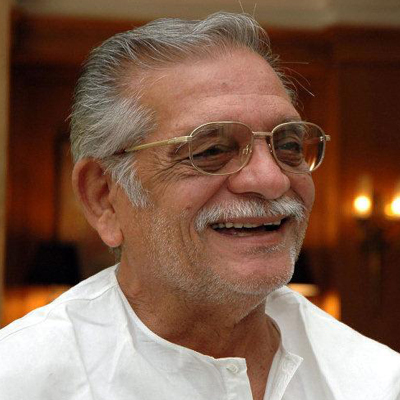
    NEW DELHI: Eminent lyricist and filmmaker Gulzar, who has been awarded the film industry’s highest Dada Saheb Phalke award for Life Time Achievement, has said that cinema is a mirror and only reflects what is happening in the society.


    He said that cinema cannot play the part of reformer but merely show through celluloid the ills in society and if these have a positive effect on society, it is incidental. Furthermore, cinema does show the mirror in a somewhat exaggerated manner to get the message home.


    Gulzar was speaking after releasing the DVDs of two telefilms – ‘Nirmala’ and ‘Godan’ based on Munshi Premchand’s novels – which he had directed for Doordarshan.


    Answering questions, Gulzar who will turn eighty later this year said that he had always learnt from his seniors and particularly paid a tribute to the late Bimal Roy who had given him his break in writing songs, and to music directors like Sachin Dev Burman and Madan Mohan.


    Referring to a question about the songs of yesteryears and those of today, he said what lyricists were today was not their fault since society itself was changing. He said a song like ‘Mora gora rang lailey, mohey Shaam rang daidey’ would have no place in a society which gladly accepted songs like ‘Bidi jalai-ley’.


    He said it was not true that he had only made films based on renowned novels or stories. He referred in this connection to two of his films which were his own – ‘Maachis’ which had won National Awards and ‘Hu Tu Tu’.


    Asked if there was something he regretted not having done, he cryptically said: ‘I miss what I have not been able to make.’


    He said in reply to a question about why DD was not changing the way private channels were changing by asking a counter-question: “Do you think any other channel would have made serials or telefilms like ‘Godaan’, ‘Nirmala’ and ‘Mirza Ghalib’?”


    Earlier in his speech, he said his attempt of making ‘Nirmala’ had been to show that society had not changed since Premchand had written the novel almost a century earlier. The effort was to bring Premchand live before the viewers. At a time when people do not read classics, making the novel for television was one way of making people aware of these classics.


    He said renowned authors should not only be read, but should be translated in different languages.


    He noted that finding a village where there were no television antennae or modern gadgetry was not very easy for the setting of ‘Nirmala’. Although he found such a village on the border of Gujarat and Maharashtra, he said he was saddened that sixty years after independence, these villages had remained as cut off from modern society as during the British rule.


    Earlier, DD director general Tripurari Sharan said DD had been fortunate to have got two eminent persons – the ‘Kahani ka jadugar’ (the magic weaver of stories) Premchand and the ‘Shabdon ka jadugar’ (magic weaver of words) together for these two telefilms.


    DD additional director general VK Jain described Gulzar as an institution who was an inspiration to all. But he was particularly surprised at the manner in which Gulzar always managed to re-invent himself.


    Gulzar besides being an acclaimed poet, writer and director, has contributed immensely to Hindi and Urdu literature. In addition to his songs and films, he has penned multiple collections of poems and short stories. Some of his previous works for Doordarshan include the title song for the ‘Jungle Book’ series, ‘Mirza Ghalib’, ‘Potli Baba Ki’ and ‘Guchche’ TV series.

  • “Cuts in Modi interview on DD made internally”

    “Cuts in Modi interview on DD made internally”

    NEW DELHI: The Information and Broadcasting ministry has denied any knowledge of the fate of the interview conducted by Doordarshan of Bharatiya Janata Party prime ministerial candidate Narendra Modi on the public broadcaster.


    I& B secretary Bimal Julka told indiantelevision.com that the matter was not raised before the ministry and therefore, there was no question of any cuts or changes to the interview conducted by DD.


    He said the ministry was not aware of the letter reported to have been written by Prasar Bharati CEO Jawhar Sircar to board members where he is reported to have written that failure to give autonomy to the public broadcaster was the main reason for this.


    In a letter to the board members, Sircar accepted that certain portions of the interview on DD were ‘apparently edited’. He wrote that he had received a large number of queries about this and blamed the entire episode on the ministry, saying the government can interfere in the form of transfer, appointment and punitive action against Prasar Bharati officials.


    DD News director general also told imdiantelevision.com that the decision to delete certain portions was taken internally and there was no interaction with the ministry in this regard. In fact, he said the ministry was not even aware of the interview until it was telecast.


    Sircar said in the letter: “It appears that while portions critical of Doordarshan were telecast, certain comments on other personalities were apparently edited in the Modi interview telecast on 27 April,” he said.


    He wrote that the board has taken several resolutions in the last two years, seeking more operational autonomy from the ministry, but without success. “In a way, therefore, the MIB lost the opportunity to convince a young minister (Manish Tewari) to break this long traditional linkage between the ministry and the News Division, which has continued unabated since PB was born and assigned its distinct role in 1997.”


    Sircar noted that after the DD team got the interview with Modi, there were concerns that they had not yet managed a counter-interview with Congress vice president Rahul Gandhi. “I gave DG News the strength to go ahead and telecast the interview, even though there were concerns that a balancing interview from the other side could not be procured, despite best attempts of DD News,” Sircar said.


    He said, “Another pertinent initiative of the PB Board to bring in external professionals met with some degree of success, but where the post of the director general of Doordarshan and AIR are concerned, it did not succeed.” 


    “The Recruitment Rules still ensure that only government and quasi-government persons can occupy the post, which is pegged at approximately Rs 22 lakh per annum against sharply higher market rates. I have tried my best to explain that these need to be reviewed because times are changing, but I have not succeeded. If there had been some degree of fresh thinking in these two proposals, we may not have faced the type of public criticism that a single interview has invited,” he added.


    Doordarshan had reportedly edited out some parts out of Modi’s interview where he had referred to Priyanka Gandhi Vadra and to Congress President Sonia Gandhi’s Political Advisor Ahmed Patel.

  • Doordarshan Sahyadri NAVRATNA AWARDS 2014

    Doordarshan Sahyadri NAVRATNA AWARDS 2014

    MUMBAI: Doordarshan Kendra, Mumbai has been felicitating nine prominent Maharashtrians every year by honoring them “Sahyadri Navratna Awards”. These awards are presented at a lavish function in the Kendra itself in the presence of several prominent Films, TV personalities and other celebrities from the field of Education, Art & Culture.


    The Honorable Governor of Maharashtra K. Sankaranarayanan will grace the occasion as the Chief Guests for this evening.


    The following eminent personalities will be awarded at this event with the “Navratna Awards”.


    1st Award – Jeevan Ratna – Shri Bhalchandra Pendharkar (Lifetime Achievement Award)

    2nd Award  – Swarratna  – Pt.Hridaynath Mangeshkar (Field – MUSIC)

    3rd Award  – Kalaratna – Shri Vasudeo Kamat (Field – FINE ART)

    4th Award – Chitranatha – Smt.Asha Kale – Naik (Field – CINEMA)

    5th Award – Sevaratna –   Shri Achyut Gokhale (Field – SOCIAL WORK)

    6th Award – Shikshan Ratna – Dr.Madhav Chavan (Field – EDUCATION)

    7th Award – Vaibhav Ratna – Shri Vithal Kamat (Field – INDUSTRY)

    8th Award – Ratna Sharda – Dr.Rohini Gavankar (Field – WOMAN OF SUBSTANCE)

    9th Award – Sahityaratna – Shri N.D.Mahanor (Field – LITERATURE)

    10th Award – Ratnadarpan – Shri Madhukar Bhave (Field – JOURNALISM)

  • Doordarshan Sahyadri Prerna Puraskar 2014

    Doordarshan Sahyadri Prerna Puraskar 2014

    MUMBAI: Doordarshan’s Sahyadri Channel will be commemorating “Mother’s Day” on 11th May,2014 with the telecast of a special event “Prerna Puraskar,2014” which will be a special awards function showcasing the unique bonding of “Mother-Daughter” as well as focusing on the theme of “Ladki Padhegi to Ladki Badhegi. This year the whole event has been designed in a way to extract a commitment from leaders of all sections of the society to support girl child education so that it paves the way for her all round success and progress in life. The event proposes to tie up with people from cross section of society and NGO’s who work towards girl child progress.


    This event is strongly supported and sponsored by “Clinic Plus “a brand that celebrates the relationship between a mother and a daughter. It signifies this evolving dynamic of a mother-daughter relationship, and acts as a true companion strengthening their bond. Prerna Puraskar identifies the role of Doordarshan as a public broadcaster; it had also won the Bronze Lion Award at the Cannes International Advertising Festival in 2006.


    The following mother-daughter personalities will be awarded at this event with the “Prerna Purasakar, 2014”.


    Daughter, Poorvi Bhave & Mother, Varsha Bhave

    Varsha Bhave an artist, composer and teacher of Hindustani Classical Music. She is the founder of “Kalangan” an organization which seeks to make children aware of their inclination for the performing arts – including music, theatre, dance and moulds them in to being good artistes. Recipientof Natyadarpan Award for her outstanding performance in the field of natya-sangeet.  Poorvi Bhave started her career as a News Anchor with Star Majha and currently hosting popular shows like “Ghe Bharari” “Mejwani Paripoorn Kitchen” “Jallosh Suvarnayugacha”. She debuted in Mrathi Film “Pitruroon” last year.


    Daughter, Ms. Sohaa Kulkarni & (Mother) Neena Kulkarni

    Neena Kulkarni is veteranfilm actress and producer. She has appeared in many Hindi and Marathi movies viz., Garam Masala, Nayak, Dum, Guru, Dum, Paheli. She is a popular face on Indian television and theatre. In 2006, she produced a Marathi Film “Shevri” which won the best film & best actor award at The Pune International Film Festival. Her daughter, Ms. Sohaa Kulkarni is currently The Creative Head for Dashami Creations Production House. She has also been the Executive Producer with the entertainment channels like Zee Marathi & Sony.


    (Daughter) Tejashree Walawalkar & (Mother) Jagruti Walawalkar

    Tejashree is one of the most popular child artists in Marathi Cinema & Television. She started her career with Marathi Film “Aaji Ani Naat” and won the audiences with her performance as “Ramabai Ranade” in “Unch Maza Zoka”, a popular television show. Her mother, Jagruti works for LIC of India and have been awarded by Pune Muncipal Corporation as the best LIC Agent.


    Daughter, Ms. Shubhada & Mother, Manik Varadkar

    Shubhada is a fine exponent of Odissi and a cancer survivor. Shubhada was awarded prestigious awards like “Singar Mani” “Priyadarshini” “Maharashtra Gourav” by some of the leading organisations. Recently Shubhada has received a prestigious “Mahari” Award 2011 of Orissa. Shubhada has been teaching, performing and conducting workshops in India and abroad for more than a decade. Shubhada is an empanelled artiste of Indian Council for Cultural Relations. Her mother, Manik Varadkar is a social activist, working relentlessly for poor, needy and downtrodden children. She believes that every one of us must give back to the society in any way possible, be it voluntary or monetary services.


    Daughter, Manaswini Lata Ravindra & Mother, Lata Pratibha Madhukar

    Manaswini is a young theatre person who was recently invited by the Royal Court Theatre in London to participate in a workshop for young playwrights. Manaswini believes that the only way to help and change society is to engage with social service. Theatre, she realized was an entertaining, engaging and a challenging medium to raise social issues. CIGARETTES, was her first full-length play and then she wrote Alvida, Mazy Vatanich Kara Khura, Ekmekaat and Lakh Lakh Chanderi. Copywriter with Big 92.7FM, Columnist in Sakaal, Kalamnama & Scriptwriter for various daily soaps like Eka lagnachi Dusri Gosht, Lek Ladki ya gharachi. Owing to her mothers’ involvement with some of the key social activist movements in India (for 10 years Manaswini’s mother, Lata helped Medha Patkar with the ‘Narmada Bachao Andolan. Mrs. Lata is a Social Activist, Researcher & Trainer.


    Daughter, Anijali Kirtane & Mother, Padmini Govind Biniwale

    Anjali is a Creative Writer, Researcher and Short Film Maker. Popularly known for her creative writing she has written books like Passion Flower, Hirvi Gani, Cherry Blossom & Dr. Anandibai Joshi: Kaal Aani Kartutwa which was converted in to a short film which won the Best Documentary Award of Maharashtra State. The film was also selected in the Baltimore Marathi Convention in U.S.A. She has inherited the writing skill from her mother Mrs. Padminin who is Lecturer, Marathi Poetess & Fiction Writer. Her writing includes tremendously well written Marathi books like Ranatla Diva (Story Book), Midas (Poems) and many more.


    Daughter, Janhavi Deepak Vartak & Mother, Jyoti Vartak

    Janhavi is a 14year National Level Gymnastic Champion. In the year 200,0 she participated and won the national championship in Sub Junior level, under 10group at Jodhpur in Gymnastics. She also plays Kabbadi for Maharashtra Kabaddi, Association. Her mother, Jyoti is a home maker and has inculcated in her children the invaluable traits of determination, courage to fight all odds and the determination to win.


    Daughter, Vidya R. Thakur & Mother, Anusya Padir

    Vidya is a renowned ENT Surgeon having vast experience of working with leading hospitals in Mumbai. Her mother Ansuya Padir hails from a tribal village Kotwal Wadi situated in the dense forest of Raigad Dist. Social Activist, Anusya has been instrumental in providing basic facilities at Khandas Tribal Area under Gram Sadak Yojana, Housing under Adivasi Gharkul Niwas scheme,Bore wells etc. She also runs a HPCL retail outlet Pursharth Auto Services at Kalamboli.


    Daughter, Tejashree Amonkar & Mother, Bharti Amonkar

    Tejashree is a singer and the granddaughter of Kishori Amonkar. Though a degree holder in fashion technology, 27-year-old Tejashri has gained firsthand knowledge of the techniques and execution skills of Hindustani vocal music. She also performed solo at the Arohi festival where music lovers found her performance likable and acceptable. Her mother, Bharti Amonkar is a fine exponent of Odissi. She has been performing at state level since last 30 years.


    Daughter, Rupali Ambure & Mother, Pratibha Khairmode

    Rupali is the first women to be appointed as DCP in Indian Railway. She is a woman of principle, attitude and courage. The famous Jalgaon Cyber Crime case was cracked by her and she made sure that the accused was arrested. Her mother, Pratibha Khairmode was a State government employee for her children being her ultimate life, in order to develop their career; she struggled a lot but fulfilled all her duties with a smile & vigor.


     Telecast of “Prerna Puraskar 2014” on Doordarshan Sahyadri Channel on 11th May, 2014 (Sunday) from 3.30pm onwards.

  • AIR, DD to give live coverage National Film Awards ceremony

    AIR, DD to give live coverage National Film Awards ceremony

    NEW DELHI: The 61st National Film Awards for 2013 will be presented by President Pranab Mukherjee on 3 May, the date on which India’s first feature film ‘Raja Harishchandra’ by D G Phalke was released commercially in 1913.


    The Dadasaheb Phalke Award to the eminent poet, lyricist, and filmmaker Gulzar will also be presented the same day.


    Both Doordarshan and All India Radio will have live broadcast of the awards ceremony from the stately Vigyan Bhavan from 5.45 pm on that day on their national channels.


    Prior to that, All India Radio will carry an interview of Directorate of Film Festivals director Shankar Mohan at 8.15 pm on 1 May on its national hook-up.


    It will have a featurised programme as the curtain-raiser to the awards on 2 May at 8.15 pm with an interview with Information and Broadcasting Ministry secretary Bimal Julka.


    Later on 3 May at 9.30 pm, AIR will broadcast a report on the award ceremony on its national hook-up.

  • “Phase III and IV should be broken into three phases”: Ashok Mansukhani

    “Phase III and IV should be broken into three phases”: Ashok Mansukhani

    Having served as Indian Revenue Service Officer in the income tax department for 22 years, Ashok Mansukhani’s last government posting was as Doordarshan deputy director general (1992-96), during which DD metamorphosed from being a single channel broadcaster to a multilingual and multichannel regional entity reaching over 100 million homes in the country.


    Mansukhani’s association with the cable TV industry started in 1996 when he joined IndusInd Media and Communications Limited (IMCL), the media wing of Hinduja Ventures Limited (HVL), as director. Over the years, he became executive director and then president of Hinduja TMT before taking on the mantle of whole-time director of HVL.


    In his present capacity, Mansukhani is preparing IMCL for a future that is essentially about pay-per-view, video-on-demand and triple-play services, even as his contemporaries grapple with the initial phase of digitization. With his vision and experience, Mansukhani has also been appointed president of the MSO Alliance.


    In a t?te-?-t?te with indiantelevision.com’s Seema Singh, Mansukhani, who is just back from a week-long holiday, talks about the way the industry is moving in terms of digitisation, plans for IMCL, and the growing need for communication among its various stakeholders.


    Excerpts:


    IMCL underwent huge reshuffling a couple of months back. What was the reason behind it?


    There is a new digital era that has come in and the board and promoters may have felt that it would be good to bring in fresh talent, to get professionalism in the analogue regime as we transit to the digital era. And what has really been done is that a new team has been brought in that not only understands media but will be able to carry the media assets of the Hinduja group in the next 10 years. So, it is from that point of view that changes may have been made.


    The company recently got the licence for taking forward its Headend In The Sky (HITS) project. How far has the work progressed?


    Every possible step will be taken to meet the December 2014 deadline. There are certain permissions which are statutory in nature and which need to be taken. There could be perhaps a three to four week lag factor because of elections. But post 15 May, the process will get fast forwarded and personally, I would like to see it operational before the end of the year.


    Will HITS play a major role in phase III and IV markets? How will IMCL cope with these phases?


    Yes it will, because it is meant to really take advantage of the fact that in phase III and IV, there are hardly any MSOs that operate. But there are 6,000 independent operators and 60,000 LCOs and a majority of them are in phase III and IV. Now they will find it tough to meet digital regulations, quality of service norms, subscriber management system, conditional access systems and sourcing of STBs.


    It is a tough task for a small guy, but if he continues to be the proprietor of his network and is helped by a HITS platform to be able to supply high quality 300-500 channels in MPEG 4 capacity, then surely it will cause excitement. To add to it, it will be a prepaid model, having complete transparency.


    Yes, HITS will play a major role, but that doesn’t mean that Indigital will be left behind. From the group’s perspective, both will be developed and both are being developed.


    Incable exists in phase III, but not in phase IV. For phase III, there are already specific cities for which plans are being drawn up. Incable is also pioneering the concept of digital feeds, which is fibre optic based feeds. Because it may not make sense in a city like Udaipur to put up a digital headend of Rs 10 crore, but it may make sense to take a city like Bhopal and set up a headend and the rest of the state can well be served by fibre optic feed, because then the cost of transmission goes down.


    Incable anyways has thousands of kilometres of installed fibre optics of its own, which many others do not have. So we have the capacity and we will now utilize that. Even in phase II, we have digital feeds running through fibre optics. There have been regulatory issues like broadcasters having a different view, but our say to broadcasters is that in digitisation when every box is accounted for and every customer is paid for, then surely the mode by which we transmit should not be the problem of the broadcaster, but should be left to the MSO to work out the best cost effective model.


    Digitisation means that you can use a mix of both. Currently, fibre in India is to the colony gate and in the time to come, it will be to home and when that happens, there will be quadra-play. We will have cable telephony as well coming in, but these are far away, at least 3-4 years away.


     Will we see investments in IMCL as well by the group?


    IMCL is currently being funded by HVL through a preferential share capital based on its requirements for phase III and consolidation of phase II. IMCL will not suffer from shortage of money. That’s not the issue. The issue is that IMCL has to cope with change and with that change, whatever support is needed is available.


    SitiCable has launched local cable TV channels. Is IMCL treading that path? If you have to launch a channel, what kind of content will you have?


    We are the pioneers as far as local content is concerned. In Mumbai for example, we had In Mumbai channel which we started way back in 1995-96. It was operational for a couple of years and was very popular. It had a mix of news, local events, interviews and it was more of a city-specific channel. At one stage, almost every city that Incable was operating in had a local channel and even today there are local channels, but it has typically not been run by the company in the recent past, but has been run by people who had perhaps bought time on the channel or have agreed to share a part of their advertising revenue.


    So basically, they source the content and not the company, since our focus had shifted more on distribution. But today, with a fat distribution pipe being created and video on demand on the way, with two-way to happen with broadband, localization of content, in my view, has a strong public demand.


    It also helps in stickiness in terms of vast competition in MSOs and DTH. So at one stage, when In Mumbai was part of Incable, it was a reason that people stayed with us, because they wanted to watch it. Also we had In News which ran in five languages.


    Localisation, not on the Siticable model, but perhaps reviving the In Mumbai model, may take place.


    While news and sports are important, I feel localized content, like local events, regional events, festivals and community events, have been neglected. The vast progress that we have seen internationally is more of a mom and pop show in India.


    This area can undergo an upgrade, both in terms of quality and quantity. It is an interesting area to look at. Animation is again an interesting area that can be tapped.


    Content can be self generated, syndicated or can be brought in and then re-created. What we have seen recently is that there is enough competition in every sphere of television and yet there is scope. Therefore, our sister company in entertainment will look at it and take advantage. There are 30 million cable TV homes with boxes, another 100 million to follow. 2014 is an ambitious year. Even if we can achieve 50 per cent of this, there will be 80-90 million cable TV homes to tap. 24 hours of programming is needed. It is not easy to really supply that content, so perhaps it’s easier to create content or to source it and then re-purpose it for your own audience.


    The Telecom Regulatory Authority of India (TRAI) recently came out with its regulation on tariff rise in non DAS areas. How does it impact the business of MSOs?


    This simply means that the cost of television has gone up by 27 per cent. When the consultation had started, I had personally taken it up with TRAI and told them that the price shock, if it has to be given, must be in phases. It was expected and long due and in the long run, as long as packaging is sensibly done, a la carte channels are offered, it will benefit all the stakeholders.


    In the beginning, customers will be hit by the price shock, but after that, they will adjust.


    Time has come for MSOs to discipline themselves. The MSO today has to take a stand that it doesn’t make sense for a non-paying or a zero paying LCO to have the signal.


    Every change is resisted initially, but once it happens, things fall into place.  There is a need for more communication in the industry.


     When do you see gross billing starting in Mumbai for phase I? By when will digitisation of 38 cities in phase II be completed?


    There have been discussions and there are amendments in the entertainment tax acts, but the notification has not been issued as yet by the entertainment tax authorities. According to me, in whichever way gross billing has to happen, it will take a couple of weeks more.


    The 38 cities that comprise phase II should be completed by 30 June.


    When do we see packaging of channels taking place in phase I and II cities? Why is it taking so long? What kind of packages can one expect?


    The initial task of installing 30 million STBs was tough. Today, attention has shifted to packaging which will also be a function of the prices at which packages can be obtained from the broadcaster. There is disaggregation that will happen soon, which will lead to re-pricing of packages, possibly from July 1.


    Packaging has to be a joint exercise of broadcasters and MSOs. Currently, it is not. So that’s another aspect which needs to be kept in mind that at the end of the day, it is the product of the broadcaster and the distribution is ours.


    What if packaging teams were to be set up between MSO Alliance and IBF as an example? They could then get together and do a customer research and find out who wants to do what.


    New models for packaging need to come in. Why should I pay ‘X’ amount for sports throughout the year, when during the year, there will be only three times that we watch Sports channels,. So can’t we have variable pricing, say during the world cup?


    The second phase of digitisation will happen when the market will mature. And all this will happen in 2014-15 and 2016.


    DTH today has a much better hold on packaging, than the MSOs. Regional packages need great attention and especially for national MSOs. The need of a customer in Bengaluru is different from that of a customer from Gujarat. Packaging requires research and customer connect. The customer is being currently taken for granted and they do not like it.


    We still need to move to the CPS model and once that happens, the MSO can collect the money and pay the broadcaster. There are people who are still working with an analogue mindset in the digital era.


    One way is to sell the channels on an a la carte, the other way is to shrink the package and the third is to say that I will give you growth, but cannot give the growth you demand which has no relation with the actual size of my network.


    Why is there resistance from broadcasters, every time a new packaging model is suggested? 


    When status quo is disturbed, things change. Also when a particular channel is not available in a package offered to most, then the broadcaster may lose the advertisement support. But in time to come, we will move to a 50:50 regime, in subscription and advertisement.


    What is the impact of the TRAI regulation on disaggregation on MSOs?


    The regulation has given a great level playing field for independent MSOs like IMCL. So far, there has been clear favoritism towards MSOs who are owned by broadcasters and therefore, independent MSOs have had tough times or litigation times and that has taken away from further move to say digitisation. This is a welcome move and yet, sufficient safeguards have been given to the broadcasters. They have got 27 per cent tariff hike. The order should be accepted in the spirit. It is to increase digitisation and not to harm anyone.


    Are you looking at enhancing broadband services, like Hathway Cable & Datacom did recently?


    We have broadband services and that will be a key focus area in the years to come and what I personally look forward to is: pay per view, video on demand and triple play services. But these will take time. These services will be possible more in the prepaid era.


    We always have been operating broadband as we have the ISP licence.


    We don’t want to ape Hathway. They have their own focus point, we have ours. We want to develop digital best practices, keeping in mind what the customers want.


    How would you look at phase III and IV markets? Will Incable compete with HITS in these areas?


    It will be in phases. We will first concentrate on phase III, where we already have a reach, so we will see which cities to cover there. Then we have to decide which cities will be covered by the HITS platform. Which cities will have headend and which will have fibres. These are things that the IMCL management is working on.


    No, the two will not compete with each other, as the markets will be different. There could be synergies in best practices but not in market.


     Should phase III and phase IV of digitisation be taken at the same time? Do you think it can be completed within the deadline of December 2014?


    My view is phase III and IV should be broken into three phases. If it took two phases to do 30 million homes, how can one expect 100 million homes to be done in two phases? The statistics don’t work and then currently, there is no movement in phase III.


    While TRAI gave a start date for implementing digitisation, there is no need to give an end date. The regulator should incentivise those who digitise faster. Tax holiday or tax benefit or a better rate in terms of 42 per cent guideline of the Supreme Court, would work better than giving deadlines.


    Phase III and IV is huge and untapped. The industry needs to be recognised as a small industry. Also there is a need for bank financing, formation of cable cooperatives and associate ventures. This is the reason that IMCL has pioneered joint ventures which exist is smaller towns and cities.


    Dish TV launched its new Zing service in February; does it bother the MSOs in any way?


    90 per cent of cable TV homes in phase I and II remained with MSOs. While the customers may have switched MSOs, they largely stayed with being a cable TV home. And this, when everyone thought that DTH players will have a smooth walk in these cities. DTH is an expensive proposition.


    If DTH players think of launching something which is less expensive, it can lead to cannibalizing DTH itself and not necessarily an MSO. The MSO already has a sunken asset. We are just looking at stickiness of consumers and return on investment. Such moves will not affect MSOs.


    Post elections, there can be a regulation on the cable TV monopoly. Do you think that will impact MSOs?


    It may affect the regional MSOs, but not the national ones. These are proposals, but what comes out in the fine print will finally determine our way to look at it. I expect lighter facilitative and not restrictive regulations and I think TRAI is moving towards that.


    What are the biggest challenges for you today?


    The ability to harness the latest technology with the fastest way in which you can bring in specialty content at the cheapest possible cost in such a way that every member of the value chain is made happy with the money he retains after all taxes are paid is the real business plan challenge that industry needs to work on and which we are also working on. Ultimately, we should be able to run a profitable business.


    Do you see the ARPUs going up? If so, by how much, and when?


    The ARPUS will go up by 20 per cent in the next 12 months.

  • Big Magic gets Partha Dey to head non-fiction programming

    Big Magic gets Partha Dey to head non-fiction programming

    MUMBAI: Reliance Broadcast has made a new appointment to enhance its programming content on two of its channels- Big Magic and Big Magic Bihar & Jharkhand. Partha Dey will spearhead the national channel’s non-fiction programming content as the non-fiction head and also the entire programming portfolio for its regional channel as the creative and programming head.


    He will be involved in driving the regional channel’s performance by building on consumer insight for developing strong content.


    Dey will report to Reliance Broadcast TV business COO Lavneesh Gupta. Prior to this, he was heading the creatives and operation for the Mahuaa Network for six years including the planning, designing and launch of its three channels Pragya, Mahuaa and Mahuaa Bangla. He is a documentary filmmaker and has produced and directed documentaries, features and programming software for various agencies such as the Indian Air Force, ARC RAW and OHM-Holland and Doordarshan. 


    Commenting on his appointment, Gupta said “Partha’s vast experience and in-depth market understanding makes him an asset to the organisation. We are happy to have him on board and are confident of him leading Big Magic Bihar & Jharkhand through its next growth phase.”


    On his appointment Dey said, “Big Magic is among India’s most vibrantly growing brands, which has displaced long standing players in a very short period of time especially in the regional markets. The brand has an exceptional potential for growth and I look forward to working with the very talented team, to make this vision a reality.”  


    Currently the regional channel has just one non-fiction show Hindustan Ka Big Star and is looking at getting many more in the coming months.

  • Aamir Khan – The National Icon of ECI for 2014 General Elections

    Aamir Khan – The National Icon of ECI for 2014 General Elections

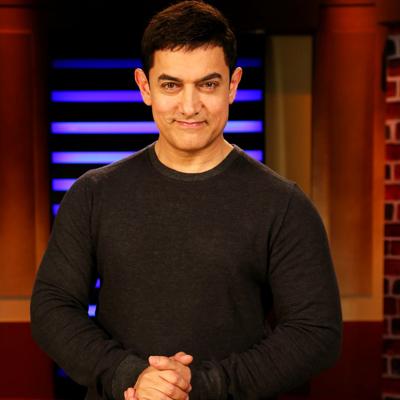
    MUMBAI: The Election Commission of India has nominated Actor, Aamir Khan as the National Icon of Election Commission of India in connection with the upcoming National Elections in 2014.


    The National Broadcaster’s of India – Doordarshan is entrusted with the job of making this campaign and in this regard a shoot was organized to record Actor, Aamir Khan’s message at Doordarshan’s Mumbai Kendra on 27th April 2014, under the guidance of Shri Mukesh Sharma – Addl. Director General Programming, West Zone.


    This campaign makes voters aware to realize value of their invaluable vote for strengthening democracy.It highlights, The Right to vote and the exercise of this franchise by eligible citizens which is the pulse of every democracy.


    It is focused on bringing a positive change in our country by voting  the right person and makes an appeal not to mortgage your interest nor to sell your vote.It potrays a sense of pride to be a citizen of  India, the largest democracy of the world,which holds this right as the most precious attribute of the Indian Parliamentary democracy.