Tag: Doordarshan

  • DD News stirs a storm by telecasting live RSS annual day event

    DD News stirs a storm by telecasting live RSS annual day event

    NEW DELHI: Doordarshan has come under fire from various political parties and social media activists for telecasing live-for the first time – the speech by Mohan Bhagwat, the chief of the Rashtriya Swayamsevak Sangh to the organisation’s cadres.

    The RSS is the ideological parent of the ruling Bharatiya Janata Party; it describes itself as a cultural outfit devoted to the betterment of the nation and upholding Hindu values.


    Almost all the opposition parties, which describe the RSS as anti-secular, said the telecast of the speech amounts to misuse of state television by the government.

    However, DD News Director Archana Dutta justified the telecast, saying: “It is a news event for us and that is why we covered it like any other newsworthy event.” However, this event has never been covered live, and in previous years including the years when Mr Atal Behari Vajpayee was Prime Minister, it was reported on by a stringer and not by a DD correspondent.”

     “DD is run by public money. So how is government using it to broadcast the RSS chief’s speech?” said Rashid Alvi of the Congress. “The RSS uses the occasion to propagate its Hindutva ideology,” said the CPI (M) declaring Doordarshan “has no business” in broadcasting the speech.

    The BJP’s Shaina NC defended the broadcast, stating, “I am glad that this speech has been highlighted and people realise that if there is one cadre in the country today that has genuinely contributed to patriotism and nation-building, it is the RSS.”

    The annual Vijaya Dashami or Dussehra speech by the RSS chief has never been telecast before by Doordarshan. The address articulates the organisation’s vision and agenda for its 4.5 million volunteers, who played an invaluable role in the electoral victory of Prime Minister Narendra Modi in May, who was an RSS volunteer for many years before joining the BJP.

    Congress leader Salman Khurshid said that the decision was unacceptable, adding that the Congress refused to accept the RSS as ‘above board’ in the national discourse of India. “What they (the RSS) want and what they believe in is not in tune with the values of this country,” he said in comments to the media.


    The CPI-M also said it was an instance of the “public broadcaster being misused by the Modi government.”


    Prominent historian Ramachandra Guha called the decision a “dangerous misuse of the state machinery”, a tweet that has earned him an editorial in Niti Central, titled Ramachandra Guha’s hypocrisy on Doordarshan.


    The decision has also sparked a massive debate on Twitter with those for and against it clashing on the social network. Questions are being asked whether DD will also air speeches by the Chief of the Golden Temple, VC of Darul Uloom or the Archbishop of Sacred Heart Cathedral. 

  • Surat Misra is back at Prasar Bharati as consultant

    Surat Misra is back at Prasar Bharati as consultant

    NEW DELHI: Surat Misra, who retired from Doordarshan in September 2008 at a time when she was looking after its publicity, has been appointed as consultant for media and public relations at All India Radio.


    Misra, a sociologist and media analyst, was former deputy director (PR) and chief protocol officer at the directorate general of Doordarshan.


    She will handle social media and public relations.


    In DD, she commenced her work as audience research officer from 1985 to 1997 after which she was given the charge of public relations.


    She has also made several public service films on different subjects like introduction of sex education for children with the National Council for Research and Training.


    She was senior investigator, backward classes development division of the Home Ministry from 1972 to 1975 and prior to that was the director of census operations. 

  • Special programmes on DD Bharati to mark Gandhi Jayanti and Dusherra

    Special programmes on DD Bharati to mark Gandhi Jayanti and Dusherra

    NEW DELHI: DD Bharati will present a special play, “The Poet And The Prophet”, to mark Gandhi Jayanti on 2 October.


    The telecast will be at 05:30 pm, repeat telecast at 01:30 am and 09:30 am. The play is based on the exchange of letters and articles between Mahatma Gandhi and Rabindranath Tagore over a period of 25 years with the Indian freedom struggle as the backdrop. 


    The dance drama “Mohan and Rambha” on Mahatma Gandhi is another programme being telecast on 2 October at 10:00 pm, repeat telecast at 06:00 am and 02:00 pm. The telecast is a tribute to the memory of the late Prof. Ramchandra Gandhi and shows how Mahatma Gandhi was initiated into the chanting of Rama-Nama.


    On the basis of Mahatma’s own account on his initiation into chanting Rama-Nama by maid servant Rambha, writer-philosopher late Prof Ramchandra Gandhi has explored the meaning of this extraordinary testimony in ‘Mohan and Rambha’. It is contemplation on enquiry and illumination, love and martyrdom, homage to the power (‘shakti’) which sustains sages. The extraordinary creative partnership between late writer-philosopher Prof Ramchandra Gandhi and eminent danseuse Shovana Narayan formed the pioneering effort in opening the doors to dance-plays highlighting the narrative tradition of Kathak and also for its unique quest into unknown yet so relevant facets in the lives of contemporary sages.


    Narayan brings out with equal prowess the relation of faith and belief between the maid servant and young Mohandas. Through questions asked, she has touched upon many issues relating to women, untouchability and human discrimination which were so close to Mahatma’s heart.


    DD National and DD News will telecast live the Dussehra proceedings from Ram Lila Maidan where Prime Minister Narendra Modi will be present.


    On the occasion of Dussehra, DD Bharati presents live telecast of Radhotsavam from Hyderabad at 7:00 am on 3 October. The Rathotsavam festival is a highly emotional event known for the flow of bhakti sangeet, keertans, bhajans and full pitched rendering by the devotees who accompany the procession of the deity. The Rathotsavam of Tirumala is significant for its salient features. The Rath is dragged by devotees and temple staff with the help of secure four-inch thick jute ropes all along the thiru mada streets surrounding the temple shrine. The Rathotsavam has a special spiritual message embedded in the Kathopanishad which compared it to blending of the soul with the body.


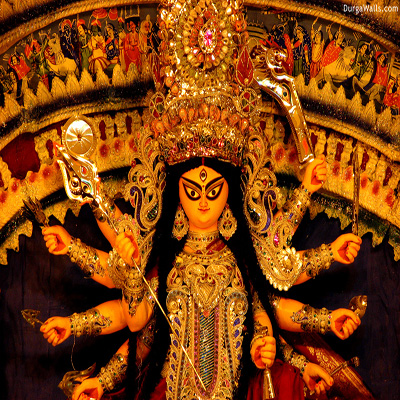
    DD Bharati will present in association with the External Affair Ministry “Devi Durga” on 3 October at 05:00 pm, repeat telecast at 01:00 am and 09:00 am. This programme traces the genesis of the Durga Pooja. The film explores the amalgamation of cultures and racial features in the facial features of the goddess. The film journeys through time to present how the imagination and the image of the goddess have kept up with the changing times. Today the goddess is global; worshipped across the globe and across India.


    Another programme being telecast in the documentary section is “Almoriana” at 06:00 pm, repeat telecast at 02:00 am and 10:00 am. “Almoriana” is a film by Vasudha Joshi and the film is a cinematic document of the Dussehra festival in the Himalayan town of Almora in Uttaranachal.


    DD Bharati will also telecast live Mysore Dasara Procession at 01:00 pm on 4 October with the Nandi Dhwaja Pooja which marks the start of Mysore Dasara Procession from Mysore Palace Premises. There will be live telecast Of the Torch Light Parade at 07:00 pm on 4th October from Bannimantap Grounds.


    On Vijayadashami, the traditional Dasara procession (locally known as Jamboo Savari) is held on the streets of Mysore city. The main attraction of this procession is the idol of the Goddess Chamundeshwari which is placed in a golden howdah on the top of a decorated elephant. This idol is worshipped by the royal couple and other invitees before it is taken around in the procession. Colourful tableaux, dance groups, music bands, armed forces, folklores, the royal identities, decorated elephants, horses and camels form a part of the procession which starts from the Mysore Palace and culminates at a place called Bannimantap, where the Banni tree (Prosopis spicigera) is worshipped. According to a legend of the Mahabharata, Banni tree was used by the Pandavas to hide their arms during their one-year period of Agnatavasa (living life incognito). Before undertaking any warfare, the kings traditionally worshipped this tree to help them emerge victorious in the war.


    The Dasara festivities would culminate on the night of Vijayadashami with an event held in the grounds at Bannimantap known as Panjina Kavayithu (torch-light parade).

  • News channels to telecast Durga Puja live

    News channels to telecast Durga Puja live

    KOLKATA:  With the arrival of Durga Puja in Bengal, the biggest festival in the state, India’s national broadcaster, Doordarshan along with other regional Bengali channels will telecast the grand festival from Kolkata and other parts of West Bengal live for the next four days.


    Channels planning live telecast of the celebrations include 24 Ghanta, Akash Bangla, Star Ananda, Tara News, ETV News, Channel 10, Ne Bangla and Kolkata TV among other channels.


    Talking about the same, a Focus Bangla official said, “We will invite singers to our studios. We will also visit a celebrity’s house for the puja and be a part of their home experience.”


    Adding to that, a 24 Ghanta reporter added, “Each year, organisers come up with new themes and try to better their previous attempts. We try to cover all the important pujas from different locations so that old people and the young alike can enjoy the live puja from indoors.”


    The 10-day festival which started on 25 September will conclude on 3 October.


    Festooned with lights, giant cardboard cut-outs and clay figures adorn the entrances to lanes. The city has also been decked up like a bride to welcome the goddess.


  • IDOS 2014: Alternative platforms eye growth in phase III and IV of digitisation

    IDOS 2014: Alternative platforms eye growth in phase III and IV of digitisation

    MUMBAI: With digitisation being delayed for phase III and IV of digitisation, alternative platforms such as HITS and OTT will see their importance rising. Speaking on the growth of alternative video platforms were Doordarshan deputy director general CK Jain, IMCL MD and CEO Tony D’silva, JAINHITS MD Ankur Jain and Zenga TV MD and CTO Shabir Momin moderated by indiantelevision.com founder, CEO and editor in chief Anil Wanvari and Media Partners Asia executive director Vivek Couto.


    Couto started off by asking how the digitisation delay will impact DD’s DTH service Freedish to which CK Jain responded by saying that it won’t hurt Freedish or DD much because most of DD’s audience is in phase III and IV markets. “There are still many households that don’t yet have a TV set but I’m sure that the new households are likely to have DD Freedish as the connection or our upcoming DVB T2 service. So even if we lose out on some numbers, we will most likely make them up with the new ones,” he said.


    Ankur Jain was then asked to explain a bit about his HITS model to which he highlighted that JAINHITS has 253 services out of which 140 are free to air (FTA) for which no subscription is charged. However, the road wasn’t easy for them. He said that most broadcasters refused to give content on the pretext of geo fencing and piracy. “It took six months of TDSAT and High Court. But we still have one of the highest content rates in the industry as most of them are on RIO which we subsidise for our partners,” he said.


    JAINHITS has signed up with nearly 300 partners in 240 districts that have an analogue base of 2.7 million customers. As far as digitisation delay is concerned, Ankur Jain said, “The Minister had started making noise around the delay a while before it was announced and indiantelevision.com wrote the first story on it and it spread like wildfire. But we haven’t seen any real change in business volumes, demand for STBs, headends etc.”


    According to him, this model acts like an aggregator for the smaller operator and for bigger ones, an opportunity to reach smaller markets where they don’t have fibre or reach. When questioned about the challenges a HITS operator has to face, Ankur Jain said that it was the pressure to keep STB cost low. But eventually, it was seen that the STB that was sold to the LCO at Rs 2300 was being sold by the LCO to the customer either at Rs 2300 or Rs 2500. “The cable guy was cribbing that we would make him bankrupt. But they have the money and ability to talk to consumers and in most cases, they market the price up and sell it,” he pointed out.


    Mindset is also an issue while dealing with content companies because some of them want average revenue per user (ARPU) to go up while some want to selectively distribute and keep ARPU low and charge good rates.


    On the other hand, D’silva feels that the Hinduja ideology for launching HITS is different. “One of the major issues of phase I and II was that we aren’t getting fair share. The reason why we are looking at HITS is to bring order in disorder and we are spending considerable money to upgrade and take this network itself up,” he said. Content, however, remains an issue but according to him the way forward is to take content and make universal bundles.


    D’silva claims that for cable operators nearly 60 to 65 per cent of revenue comes from phase I and II, which is about 30 million with another 100 million lying in phase III and IV. With this, bundling dynamics will have to change. The Hinduja HITS model is looking at launching prepaid from the first day along with services such as VAS, TV Everywhere etc.  “It is not about delaying or advancing digitisation. It is whether we make the same mistakes or learn from it,” he said.


    He also said that he isn’t convinced about digitisation being mandated solely to increase ARPU as according to him ARPU is a function of the derivatives that are put in.


    Addressing Momin, Couto asked him to highlight a bit about the digital model. Momin started off by saying that digital has always been taken either as a threat or as inconsequential.  “We are building for a leapfrog future. I have to worry about 19 formats (devices). Our advantage is lack of hierarchy leading to more growth,” he said.


    The dynamics of digital is different where success is measured by minutes watched. Momin says that for digital platform, the important thing is to establish reach through good content. “I run two companies, Zenga TV and One Digital, both of them PAT positive. Sitting in India, we have a global platform with about 40 per cent revenue coming from international which has only 10 per cent viewership because their CPM rates are higher,” he said.


    Couto asked whether advertising revenue from India was sufficient and if it was coming out of TV and whether this will lead to a subscription based model for OTT anytime soon. Momin feels that the last few years have seen content makers rip people off by giving low quality product, thereby losing trust. “Very few people will say that I don’t want to look at an ad, I want to pay for quality content,” he said while stating that brand integration was an important means of revenue.


    Momin said that brands that were spending about Rs 50 lakh last year are now spending Rs 3 crore to Rs 3.5 crore but the important thing is brands mandating agencies to look at digital more. As far as ad rates are concerned, they aren’t the best in the world because of lack of good ad formats.


    Coming to an end to the session, Couto asked the HITS players to highlight their value in the ecosystem. Ankur Jain said that JAINHITS is helping digital India plan, DOCSIS and two way cable be a reality while D’silva said that broadband would be a success when entertainment is added as an important quotient to ‘roti, kapda aur makaan’. 
  • IDOS 2014: ‘Customer is the King and not the Content’

    IDOS 2014: ‘Customer is the King and not the Content’

    GOA: Content is the king is a passé; in today’s world it is the customer which rules.


    Businesses across the world understand that involving their customers will help them innovate and provide better products and services. The same goes for the Indian cable television industry. The players believe that the core intention of digitisation was not just converting the analogue signal into digital one, but to offer choice to the customers.


     “One key element, which we all missed out in the phase I and II of digitisation is the customer, itself. Customer is the king and not the content. Customer decides whether ARPUs will go up or not. Hence, a methodology needs to be found by all the stakeholders,” said Hinduja Group MD and IMCL CEO Tony D’silva while adding that if  a customer wants broadband, VAS or cable, we have to give it to him/her as per the need.


    He was speaking at a panel discussion on ‘Digitisation: The phase III and phase IV Challenge’ held at IDOS 2014.


    Ortel Communication CEO BP Rath said that the core intention of digitisation was not to decrease the carriage fee but to increase the ARPUs. “The aim was to offer choice to the customers; those who want more services, will pay more or otherwise,” he said and added that he is happy with the delay in dates for digitisation in phase III and IV as the players would get more time to understand the needs of their clients.


    “It was inevitable. Most of the people sitting here don’t know what India is. The lessons are simple. Except for seeding boxes in phase I and II, nothing much has been done. Customers’ choice was not taken into consideration in earlier phases,” he said.


    Instead of taking the top-down approach, we should work from customers’ perspective and integrate those into our plans, suggested Rath.


    Speaking in the same tone, CSG International south Asia vice president Letchu Narayanan said that customer experience matters the most. The industry should shift focus to customer as it is a customer-driven industry.


    Essel Group’s Dish TV CEO RC Venkateish feels that in phase III and IV there is a need for regional and low price offerings in around 70-80 million cable TV homes, which are yet to be digitized. He said that even though the players have different models, customer addressability is the need of the hour.


    On the content and the challenges to be handled in phase III and IV, Venkateish said the DTH players are working on different packages as per the customers need. “The road for better revenue can be achieved if all solve the problem together,” he said.


    Talking about the Dish TV business model, he said India is a big market and there are different needs. The company reports around 55 per cent of its revenue from the mass as only 15-20 per cent customers go for HD channels. “It all depends on the purchasing power,” he said.


    Maharashtra Cable Operators Foundation (MCOF) president Arvind Prabhoo said the players are mulling to offer choices to customers by not only providing network, Wi-Fi but also ensuring that the up-gradation is done before the next rollout.


    Agreeing with others Sagar E-Technologies executive director Sudish Kumar further elaborated that by understanding the needs of the customers, the industry players can establish the market well. “Every cable TV home in our network will connected with internet. If a customer will get a taste of it then it will contribute to the ARPU. We might not charge for cable, at all,” he proposed.


    The public broadcaster, Doordarshan, also has the same opinion that customer has to play a key role in digitisation. Doordarshan deputy director general CK Jain said, “Doordarshan is trying to ensure that people, who can’t afford the subscription of cable and DTH, we will provide value to them.”


    Cable TV Operators Association (COA) president Nassir Hassan Anwar talking about the preference of the customers in the southern region of the country said the demand for Hindi channels among the customers is comparatively less hence, the packages are designed keeping that in mind.


    So, going forward if customers’ needs are addressed, cable digitisation in India offers huge opportunity for all the stakeholders.


  • DD appoints Tauquir Zaidi as ad sales head

    DD appoints Tauquir Zaidi as ad sales head

    MUMBAI: The public broadcaster has added another executive to strengthen its advertising and sales division. Tauquir Zaidi has been appointed as network sales head.


    The move is in coherence with its aim to roll out its full fledged professional advertising and sales team. Zaidi will be based in New Delhi.


    He said, “Most of us have grown watching DD and the programs are still fresh in our minds. Serials like Buniyad, Mahabharat, Humlog, Nukkad and so many others are still a cult of this industry. This is the only organisation that believes in ‘finite fiction’ without falling into the trap of TVTs. Today all GECs start a fiction without planning its end /climax. The length of the serial depends on the ratings it gets, which does no justice to the story. Call of the hour is to put an effective strategy and recruit right team to implement those strategies.”


    He will be first developing a promotional strategy to identify core target markets and setting measurable goals to multiply revenue. According to him, the success of an organisation is to implement a well-thought marketing plan by providing feasible solutions to clients.


    Zaidi has over 17 years of experience in the field of ad sales with companies such as Star India, NDTV and Times Television Network

  • Best of Indian cinema on DD Bharati every Saturday

    Best of Indian cinema on DD Bharati every Saturday

    NEW DELHI: Doordashan’s cultural channel DD Bharati, which has been telecasting some gems from the Best of Indian Cinema every week, is slated to telecast the Marathi film Shevri and the Kannada film Kanasemba Kudureyaneri during this month.


    Under this series, Doordarshan along with the West Bengal government had telecast six Bangla films earlier this month – for the first time in a hall. It featured some award-winning and renowned films like ‘The Last Lear’ by Rituparno Ghosh, ‘Nishhabd’ by Jahar Kanungo, and ‘Kalbela’ by Goutam Ghose. Other films are ‘Prohor’ by Subhadro Choudhury, ‘Ellar Chaar Adhyay’ by Bappaditya Bandopadhyaya, ‘Mahul Banir Sereng’ by Sekhar Das. Some of these are slated to come on DD Bharati shortly.


    Under the series launched to coincide with the centenary of Indian cinema, the films are telecast every Saturday at 8.30 pm and repeated at2.30 am and 20.30 pm the next day.


    Under this section, the films have to be either winners of the Swarna Kamal Award for the Best Feature Film of the Year, a National Award winner for Best Direction, the Rajat Kamal Award for the Best Feature Film in any Indian language/dialect (including Hindi, Urdu and English), or have won the Indira Gandhi Award for the Best Film of a Director or it should have been selected for the Indian Panorama of the International Film Festival of India (IFFI).


    Films that have participated or showcased in any of 16 prominent International Film Festivals can also be screened. These festivals are- Cannes, Berlin, Venice, Toronto, Locarno, Karlovy Vary, Nantes or Festival de 3 Continents, Rotterdam, Fribourg, Munich, Busan, Hong Kong, Tokyo, Rome, and Sydney.


    Shevri is a Marathi film made in 2006 by the renowned Gajendra Ahire and produced by Neena Kulkarni. Noted Marathi actress Neena Kulkarni’s maiden production venture, Shevri (wisp of cotton) is a sensitive portrayal of the havoc played by divorce in a simple middle class woman’s life. The ‘Shevri’ in the title is embodied in the films protagonist Vidya Barve played by Neena herself, a helpless little soul drifting along with winds of change in her life, without a strong will or desire of her own. The title ‘Shevri’ suggests an insignificant wisp of cotton. Her coming to terms with her state today and becoming present to her life is what gives essence to the film which will be telecast on 13 September.


    Girish Kasaravalli’s adaptation of Amaresh Nugadoni’s ‘Savaari’ is a film connoisseur’s delight.  Kanasemba Kudureyaneri (Riding a Stallion of a Dream) is a 2010 starring Vyjanath Biradar, Umashree and Sadashiv Brahmavar in lead roles. It won the National Award for Best Screenplay and for Best Feature film in Kannada. Kasarvalli’s use of non-linear narrative for the first time succeeds in building the audience’s curiosity. Engagingly convincing, Biradar and Umashree are seen throughout the movie in tattered clothes, getting every inch into the characters. The film will be telecast on 27 September.


  • I&B Ministry may relax FTA channels from proposed 10+2 ad cap

    I&B Ministry may relax FTA channels from proposed 10+2 ad cap

    NEW DELHI: The News broadcasters, music channels as well as a few general entertainment channels are still fighting the case against the 12 minute advertising cap per hour proposed by the Telecom Regulatory Authority of India (TRAI). While they await the decision of the Delhi High Court, news is that the Information and Broadcasting Ministry (I&B) may consider a relaxation in the proposed ad cap for the Free to Air (FTA) channels as these channels depend only on commercials for survival.


    A source from the Ministry confirmed the news to indintelevision.com while adding that the ad cap fixed under the Cable Television Networks (Regulation) Act, 1995, was in view of the international practice in other countries.


    It was in March 2013, when the TRAI had notified the regulations, which restricted advertising time on TV channels to a maximum of 12 minutes per hour. The Regulator had then said that the move was to protect the interest of consumers and quality of service being offered to them.  


    I&B Minister Prakash Javadekar has assured the FTA channels at various forums that he would favourably consider their plea of scrapping the proposed 12 minute ad cap.


    The FTA channels claim that as they are pitted against pay channels, that also get subscription fee, there is a need for the government to intervene to create a level-playing field.


    Of the 810 channels approved by the government as of 31 August 2014, close to 548 are FTA, which include both news and non-news channels.