Tag: Doordarshan

  • Doordarshan appoints C. Lalrosanga as interim DG

    Doordarshan appoints C. Lalrosanga as interim DG

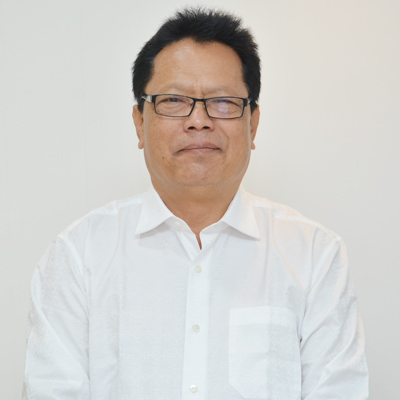
    NEW DELHI: Veteran broadcaster C. Lalrosanga has been appointed as the interim director general of Doordarshan following the retirement of Vijayalakshmi Chhabra.


    Until now, Lalrosanga was holding charge as additional director general in All India Radio.


    Chhabra had been named the interim DG of Doordarshan in July 2014. She had earlier been ADG Programmes in AIR.


    Prasar Bharati sources told indiantelevision.com that the process of appointing a final DG will be undertaken as soon as the four vacancies of part-time members of the Prasar Bharati Board are filled.


    According to DD sources, contenders for the post of DG include current interim AIR DG F Shehryaar, Aparna Vaish, Deepa Chandra, Dr Rajshekhar Vyas, Mukesh Sharma and Mahesh Joshi.
     
    Lalrosanga has rich and diverse experience in broadcasting, both in sound and visuals.


    One of the most onerous tasks await the interim DG as he has taken charge of the public broadcaster in challenging times, especially considering the proposed launch of the ‘Kisan Channel’.


    Other tasks include four channels for the north eastern region and increasing the growth of DD‘s direct to home Freedish service.


    Lalrosanga joined the North eastern service of All India Radio (NES) Shillong as director after getting selected by Union Public Service Commission in 1991. Prior to that, he was assistant news editor (ANE) at AIR in Aizawl.

  • DD’s live show to propagate traditional medicines to go on air

    DD’s live show to propagate traditional medicines to go on air

    NEW DELHI: Doordarshan is to commence telecast of a new weekly half-an-hour live phone-in show called Ayushman Bharat on traditional methods of medicine, from 28 March.


    The show will be telecast every Saturday at 6 pm. The programme will be telecast in nine regional kendras of DD as well in their respective languages. 


    Ayushman Bharat aims at popularising traditional Indian medicines among the masses and creating a health conscious India through ancient systems of medicine and treatment.


    Through this programme, people can interact with experts of Ayurveda, Yoga, Naturopathy, Unani, Siddha and Homeopathy and people will be able to get solutions to their problems. 


    In the first episode of the programme, AYUSH (Ayurveda, Yoga and Naturopathy, Unani, Siddha and Homeopathy) minister Shripad Yesso Naik will brief the masses about the schemes, programmes and benefits of AYUSH Ministry. 


    Being produced in collaboration with the AYUSH Ministry, this is a one-of-its-kind show envisaged to be a single window offering solutions for all Doodarshan viewers who are seeking answers to diverse health and lifestyle concerns.


    The live phone-in show will feature a panel of experts, success stories from all across the country. The show will be a platform for direct interface of the audiences with the AYUSH doctors and experts who share with them the enchanting age-old treatments to cure the health problems.


    Elaborating on the planned show, Doordarshan director general Vijayalakshmi Chhabra said, “We at Doordarshan feel that programmes like this would go a long way in creating awareness about Indian forms of medicines.”


    Taking a step forward in reviving traditional medicine, Prime Minister Narendra Modi had elevated the AYUSH Department to an independent Ministry with effect from 9 November last year.


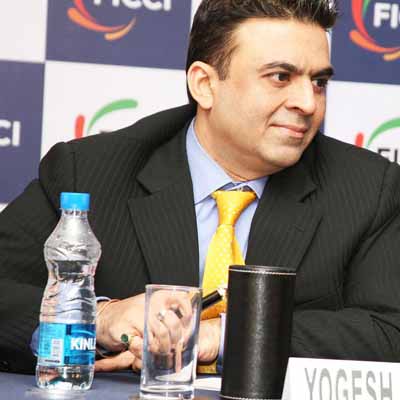
  • “Ad cap should have been restricted to only pay channels”: Yogesh Radhakrishnan

    “Ad cap should have been restricted to only pay channels”: Yogesh Radhakrishnan

    A veteran in the cable TV industry, someone who dabbled in the sector almost three decades back, Yogesh Radhakrishnan, now the MD and CEO of Pioneer Channel Factory, has seen the sector grow from the scratch.


    Known for setting up businesses, Radhakrishnan has been the man behind building IndusInd Media and Communication Limited, ETC and ETC Punjabi, rejuvenating Zee Cinema, setting up Zee Middle East, launching the first HD movies channel with Times Television Network – Movies Now and the first HD music channel – MTunes.


    Radhakrishnan, who has seen the sector emerge from a mere video-tape business to entering the digital era, talks to Indiantelevision.com’s Seema Singh about the emergence of cable TV in India, the first satellite channel, the emerging music sector and more…


    Excerpts:


    How did you get into the cable industry? How was the sector then? Why did you move out of it?


    In an era when the only form of entertainment was Doordarshan, I was fascinated how it could capture loyal viewership despite old, dusted black and white movies they telecast. I sensed that if people were given the option of better quality of movies on their own TV sets without the hassle of VCR or cassette which was prohibitively expensive there would be a huge demand for it. Thus was born the idea of launching cable TV in India. However re distribution of home video cassettes was illegal so in the year 1988, I pioneered the launch of India’s first copyrighted cable content with my three other partners under the brand name Cable Master. This gave the entire cable TV trade a flip and a legal straw to hold on to as the Government was yet to announce licensing policy for cable TV operators.

    In the next stage of evolution from cable to satellite TV, in the year 1992, we were all geared to launch a channel but lost out the lone transponder on Asiasat 1 to Zee. Those were the days  of quotas and licence raj and we had to partner with an established business house to do business in India.


    At that time the Hinduja group was on the verge of launching IndusInd, and so we partnered with them to create a media division and that is how the IndusInd Media Communications was created as a joint venture.

    Incable emerged to be the largest consolidator at that time to bring in the economies of scale in a city like Mumbai which had more than 8000 cable operators. We were the biggest players across most of the states in the country.

    Under IndusInd, we launched India’s first cable channel In Mumbai and a 24 hour movie channel CVO.

    Recognising the strength of ground distribution that our company had, we got many offers for joint ventures from the likes of HBO, Time Warner Cable, TCI etc. A huge multi million dollars offer from Rupert Murdoch didn’t go through due to valuation differences between the Hinduja’s and News Corp.


    In 1997, the cable industry got into a turmoil and that was the day I decided to move out of cable.


    You went on to launching ETC which you later sold to Zee? What’s the story behind that? How did Movies Now and the distribution venture with BCCL happen?

    In the year 1998, the concept of a 24 hour music channel was a need I saw and that is when I launched ETC, a channel focusing on new releases, as has been established nowadays the exposure of songs on TV plays a big role in the box office success of a film. ETC became the number one Hindi music channel followed by MTV, which was then a Hinglish channel.


    ETC was the second listed company after Zee and after the successful launch of the channel, we also pioneered the daily live telecast by securing the rights to the telecast of Gurbani from the Golden temple and thus ETC Punjabi was born which went on to become the No.1 Punjabi channel and continues to be in that position till date in its other avatar PTC Punjabi.


    After music and Punjabi channels, we saw the gap for 24 hour Hindi news channel, and that is how ETC News was conceived even before Aaj Tak was launched. But Technology wasn’t in place at that time a camera cost Rs 20 lakh, which today is close to Rs 50,000. Editing equipment, bandwidth for news feeds had to be sourced from DD, all in all, it was an expensive proposition. Hence, a 24 hour news channel had to be put on hold.


    Subsequently in 2002 when we got a good offer from Subhash Chandra, we sold ETC Networks to Zee.


    And then my association with Zee began, which was also an exciting time. I was a partner with Zee Middle East. Subsequently, I went on to build a strong company in Zee Middle East, which till date is one of the strongest markets for ZEEL.


    In 2008, I sold back my equity to Zee and wanted to return back to India where the action really was. Former Times Television Network CEO English channels Ajay Trigunayat, was in Dubai then. We got together with our project to launch India’s first ever English Movie channel in HD.


    I had discussions with BCCL MD Vineet Jain and a JV was formed in 2010 to launch four channels and then we further got into launching a distribution venture together called Prime Connect.


    Movies Now was one of most successful TV channel launch. It went on to becoming the No. 1 channel in the first week of its launch. Finally, in 2012, I exited the company by selling my equity back to BCCL.


    Then you moved on to setting up Pioneer Channel Factory? How is MTunes doing?
     

    Following the trend of people wanting to go to multiplexes for the pleasure of enjoying quality production of Hindi cinema and their desire to watch songs in its full glory, I set out to launch MTunes, india’s first Bollywood music channel in HD on the premise of Bollywood music like never seen before. Our songs were carefully selected to ensure they lived up to the channel premise.
     

    Acknowledgement from advertisers came as we got many campaigns exclusively on our channel due to its HD premise. Today, MTunes delivers far greater HD audiences than English movie, entertainment or even sports for that matter.


    Our second music channel Music Express resonates well with the industry, we package music with Glamour and Gupshup. Bhakti Sagar is our foray into the spiritual space.


    How will digitisation help the music channel industry?

    In analogue what was important was opportunity to see (OTS). In digital, all the channels are blocked in one category. The advantage for us is that we are in HD and so we got the advantage of the four million eyeballs. Our reach is good in HD and we are also available on SD. So for our advertisers it is a win win situation.


    How big is the music channel industry currently?


    If you take 14 music channels on an average, advertising and promo put together, we would be around Rs 700-Rs 900 crore.


    Unless and until you can differentiate yourself, you will not be able to grow majorly. If you see the broadcast business, be it GEC, sports or music, it’s very unfortunate that you are operating in the world’s cheapest advertising market (CPT) and cheapest pay TV market and this growth is slow.


    What is your take on music channels turning into youth general entertainment channel? Are you looking at foraying in the youth space?
     

    No way. It is a lovely genre to be in and is growing. Youth programming will drive this market to a large extent.


    But I don’t look at great economics that really works in any GEC space, unless and until there is good subscription that one is getting. If you strip off the subscription from all these channels and make them play pure advertising driven GECs I think each of them will lose money.


    Where do you see the music channel industry heading, considering music is easily available, you think there is still a market for music channels?

    Linear television will always have its market. Music will continue to be in a market where there is a television population which is very huge. There are a lot of people who watch content online and for them we are present online. There is still a large market and it will continue to be that way.


    Television is larger than life, especially music channels like MTunes which is very current and new and which plays new music and promos and that is what people look forward to rather than online where you need to make searches for content, while here content just keeps flowing.


    Why did music and news channels not follow 10+2 ad cap?


    US is such a free market and FCC is very strict in terms of regulation, but they do not have an advertising cap. Why should the government intervene on how much of advertising air time one should carry. For a moment Pay channels could be directed but definitely not the FTA channels. And that’s what we argued in the court. In short people will not watch your channel, if you put too much of advertising. So why is it that the government wants to intervene with channels and that too for free to air channels. We are not charging customers any money, its free.


    If we put in excess advertising, anyways our ratings will fall as no one would watch the channel, and that would affect our business.


    Ad cap should have been restricted to only pay channels, as India is the only country, where the pay channels are getting paid from both subscription and advertising.

    Government needs to create level playing field. Currently as independent networks, it is a difficult situation.


    How do you think music channels can start generating more revenue?
     

    Carriage is the biggest drainer. Network channels have the advantage of either not paying carriage or less carriage. Advertising is stuck in the low rate game. Cartelization is a good experiment that we all can get into in order to get decent rates. But, with the plethora of channels available, advertisers have a lot of options.

    It’s not just the music channels, but with new GEC launches, competition is getting tough even in the GEC space.

     

  • AIR and DD channels to simulcast PM’s ‘Mann Ki Baat’

    AIR and DD channels to simulcast PM’s ‘Mann Ki Baat’

    NEW DELHI: This month’s Mann Ki Baat by Prime Minister Narendra Modi on All India Radio (AIR), addressed to farmers and rural India, will be broadcast at 11 am on 22 March.


    It will also be simultaneously broadcast live on Doordarshan (DD) channels. The address can also be heard on Vividh Bharati, FM Gold, and FM Rainbow radio. The programme will also be live-streamed on the Prime Minister’s official website.


    This is the sixth edition of the radio programme in which Modi shares his thoughts with Indian citizens. The focus of PM’s address will be on farmers and allied issues. He had invited citizens to share their ideas and thoughts on the subject in the Open Forum of MyGov.in.


    The Prime Minister has already interacted directly with people in the earlier five editions of Mann Ki Baat, the last one being addressed to children and young people sitting for their final examinations in March and April.


    Modi has dwelt upon several issues close to the hearts of the people such as Swachh Bharat Abhiyan, promotion of khadi, skill development, scholarship for disabled children, infrastructure for educational institutions, and menace of drugs.


    The Prime Minister also shared the Mann Ki Baat forum with the US president Barack Obama during his visit to India where the two leaders interacted with the people on a host of issues.


  • No plans to launch a separate DD channel for documentaries: Jaitley

    No plans to launch a separate DD channel for documentaries: Jaitley

    NEW DELHI: The Government today said that Prasar Bharati has no plans to launch an exclusive Doordarshan (DD) channel for documentaries.


    It may be noted that earlier, the Films Division and the Indian Documentary Producers Association (IDPA), in separate proposals, had urged the Information and Broadcasting Ministry to launch a separate documentary channel.


    However, DD is soon launching a 24×7 channel exclusively for farmers and rural population of India, DD Kisan, which will be an educational-cum-entertainment channel encompassing all facets of life of a farmer.


    Information and Broadcasting Minister Arun Jaitley said DD has also planned to launch an new additional 24×7 satellite channel for North East Region called Arunprabha.


    Meanwhile, consequent to the bifurcation of former Andhra Pradesh State into Telangana and Andhra Pradesh, a new channel named Saptagiri from Vijayawada was inaugurated on 27 September last year to cater to the population of the state of Andhra Pradesh. 

  • PM Modi’s ‘Mann Ki Baat’ to address farmers’ issue in March

    PM Modi’s ‘Mann Ki Baat’ to address farmers’ issue in March

    NEW DELHI: Prime Minister Narendra Modi will be talking to farmers and their families in his next Mann Ki Baat on 22 March.


    Modi conveyed this through a tweet saying he would be talking to his farmer brothers and sisters through the programme on All India Radio (AIR).


    In a subsequent tweet, Modi asked farmers and others to send in their views and questions and wanted them to write letters C/O All India Radio’s Delhi office.


    Last month, he had addressed students in schools, colleges and service exams in Mann Ki Baat.


    Although the broadcast is on radio as Modi feels it reaches more people than television, Doordarshan and other TV channels are expected to simulcast the audio with suitable videos or stills.


    Interestingly, the broadcast comes a day before the soft launch of Kisan TV, which is expected on 23 March. The channel will be formally launched on Baisakhi day (14 April) as it marks the start of the sowing season.


    Kisan TV, to be managed by Doordarshan, will be a 24-hour channel devoted to farmers and rural India. The channel was earlier supposed to launch on Makar Sankranti (14 January) but I&B Minister Arun Jaitley has been assured that all arrangements would be completed by mid-April.

  • DD invites bids to conduct e-auction of vacant slots on Free Dish

    DD invites bids to conduct e-auction of vacant slots on Free Dish

    MUMBAI: On behalf of Prasar Bharati, Doordarshan has invited technical and financial bids from interested agencies to conduct e-auction of Direct To Home (DTH) vacant slots of DD Free Dish platform. 


    Prasar Bharati has decided to hire an agency for providing a secured e-auctioning platform to bring more transparency in the auctioning and process and allotment of DTH vacant slots of Free Dish to private channels on annual or monthly basis, which would enable legitimate bidders to participate in auction through internet using digital certificates (DSC). No physical presence of bidders would be required at DD premises at the time of bidding.


    Offered e-auction platform should be envisaged not only for time saving, but bring in transparency, cost effectiveness and efficiency in allotment of vacant slots of Free Dish, which would fetch better revenue for Doordarshan. 


    Interested bidders are expected to submit the “Financial and Technical” bids along with an Earnest Money Deposit (EMD) of Rs 1 lakh through demand draft/bankers cheque drawn in favour of “PB, BCI, DG: DD New Delhi” on any scheduled commercial bank payable at New Delhi to be enclosed with the technical bid. The last date for submission of the bids is 10 April, 2015. The opening of the financial bids will be intimated later to all technically qualified bidders.


    The bids will have to be submitted to  Facilitation Counter, Tower ‘A’, Doordarshan Bhawan, Copernicus Marg, New Delhi 110001.


    The Free Dish DTH platform is being expanded by increasing the capacity from the current 64 channels to 112 channels. The expansion would provide a total of 64 MPEG-2 channels and a total of 48 MPEG- 4 channels. Therefore more slots will be available on the Dish TV platform in future for private channels and all the vacancy will be filled purely on the basis of television.


    The successful bidder is expected to design, structure and implement the overall process of e-auction on a simultaneous, controlled, ascending basis including the e-aspects with the approval of Prasar Bharati.


    Further details can be availed here

  • Team India’s winning run against the West Indies scores 13.1 TVR

    Team India’s winning run against the West Indies scores 13.1 TVR

    MUMBAI: Three weeks on and still in the league stage, the viewership for the ICC Cricket World Cup 2015 rose to over half a billion viewers. The cumulative reach of the ongoing World Cup touched 534 million viewers after the first 29 matches (TAM data CS4+ extrapolated to the universe using a standard conversion factor).  


    With the defending champions on a roll, the India versus West Indies game rated 13.1 TVR across the Star network and DD (TAM M15+ ABC). The match rated 10.9 TVR on Star network and 2.2 TVR on DD (TAM data M15+ ABC). Close to 262 million viewers (TAM data CS4+ extrapolated to the universe using a standard conversion factor) tuned in to watch team India chase down the West Indies’ total to register their fourth consecutive win in the ongoing ICC Cricket World Cup 2015. 


    Viewers across the country cheered for team India across multiple feeds with Hindi, English and Tamil emerging as the preferred languages. Hindi and regional language contribution continued to be high with 80 per cent of the viewership coming from the non-English feed. 


    Star extended the ‘Mauka’ campaign for the India West Indies game incorporating the festive celebrations on the occasion of Holi receiving overwhelming response from the fans. The India West Indies promo was watched by over 2.7 million fans as the campaign overall crossed over 17 million online views. 

  • Prasar Bharati makes 55 essential appointments for AIR & DD

    Prasar Bharati makes 55 essential appointments for AIR & DD

    NEW DELHI: In what it terms as a victory, Prasar Bharati has managed to appoint around 55 people in one stroke in All India Radio (AIR) and Doordarshan (DD).


    The pubcaster has been permitted such a large number of appointments in one go after 21 years. These appointments, said to be the first batch, have come after the pubcaster struggled for three years to get clearances.


    Prasar Bharati CEO Jawhar Sircar said in a tweet that the pubcaster had more than 2000 units to man and there were over 17,000 vacancies.


    The government had told Parliament last week that 3067 of the 3452 identified as essential category posts in AIR and DD, to be filled through direct recruitment, have already been revived.


    Another 38 middle/senior level programme posts have already been revived through deputations, Minister of State for Information and Broadcasting Rajyavardhan Rathore said.  


    The Minister admitted that there are 16,764 vacancies in AIR and DD as against a sanctioned strength of 46,756.  


    He said the Sam Pitroda Committee had recommended a complete manpower audit of the pubcaster and also draw up a re-deployment scheme. The Ministry had already asked Prasar Bharati to prepare an action plan in this connection, the Minister said.  


    Earlier in June last year, the then I&B Minister Prakash Javadekar had given his clearance in principle to setting up Recruitment Boards for Prasar Bharati, and Indiantelevision.com had learnt that a total of 1154 technical posts had been cleared by the relevant selection committees.


    These include programme executives, transmission executives, technicians, engineering assistants and duty officers, sources in Prasar Bharati said.


    The pubcaster has not had any senior-level recruitment since it came into being in September 1997, and the sources said that those posts which could not be filled out of these were held up because there is no Prasar Bharati Recruitment Board.


    As of early 2013, there were 1362 vacancies in Group A, 1,584 in Group B, 4863 in Group C and 2272 in group D in All India Radio. In Doordarshan, 724 posts are vacant in Group A, 1140 in Group B, 2871 in Group C, and 1451 in Group D.


    AIR and DD had total staff strength of 33,800 against a total sanctioned strength of 48,022, leaving a gap of 14222 posts.


    The most critically affected areas were the Programme Wing and the News Services Division (AIR)/DD News.


    The Committee for Information Technology in 2012 regretted that Prasar Bharati had failed to live up to the assurance given by then Prasar Bharati CEO that the Recruitment Boards for Prasar Bharati would be set up by 31 March, 2011.


    It is understood that the Union Public Service Commission and SSC had both refused to select for a non-Governmental organization, thus creating a new problem for the Ministry as well as Prasar Bharati.


    The proposal for setting up a Prasar Bharati Recruitment Board was approved by Prasar Bharati Board on 21 July, 2010 and discussed in the Ministry. A final proposal was referred to the Department of Personnel and Training on 15 February, 2011. DOP&T concurred with the proposal in June 2011 and the comments of the Department of Expenditure (DOE) were also received on 28 September 2011.


    The DoE had requested that a separate proposal be formulated for creation of posts for the secretariat of Prasar Bharati Recruitment Board and also requested for drafting of agreement containing terms and conditions of the members of the Board. This had been done and the proposal sent to DoE in February 2012 and then to the Law Ministry.  

  • Apex Court yet to decide on matter of inducting DD correspondents in Indian Broadcasting Service

    Apex Court yet to decide on matter of inducting DD correspondents in Indian Broadcasting Service

    NEW DELHI: The Supreme Court is still to decide on an appeal by the Government against orders of the Central Administrative Tribunal (CAT) Hyderabad and Andhra Pradesh High Court that television news correspondents and assistant news correspondents in Doordarshan should be considered to be inducted into the Indian Broadcasting (Programme) Service.


    The orders of November 2000 and March 2014 of CAT and the High Court respectively also said these staff should be provided with all benefits of service and be considered for promotion to JAG in accordance with their experience, eligibility and suitability. The High Court had stayed the matter with regard to taking the news correspondents into the IB(P)S.


    Minister of state for Information and Broadcasting Rajyavardhan Rathore told the Rajya Sabha today that TV NCs /TV ANCS were engaged as Artists on Casual contract basis for a period of six months in 1988. In March 1989 it was decided to engage them as “Artists” on a fresh contract of five years. In May 1993 they were declared as regular temporary Government Servants with retrospective effect from 1988.


    In the absence of Recruitment Rules for this cadre, they could not be granted promotion. However, eligible officers were given Assured Career Progression/Modified Assured Career Progression.


    Two posts of Special News Correspondent and one post of Principal Correspondent were created on 27 August 2010 to open the promotional avenues in the cadre in pursuance of the order of the Principal Bench of CAT in Delhi. No appeal was filed by the Centre.


    The Recruitment Rules for these employees have been notified on 24 March 2014 which provide for promotion to the higher grades.