Tag: Doordarshan

  • Narendra Modi’s Mann ki Baat on 26 April

    Narendra Modi’s Mann ki Baat on 26 April

    NEW DELHI: Prime Minister Narendra Modi’s Mann ki Baat will be aired live on 26 April simultaneously on all channels of All India Radio and Doordarshan. 


    The program will also be live-streamed on the Prime Minister’s official website. 

    In a tweet he said, “Looking forward to ‘Mann Ki Baat’ on the 26th of this month.” This is the seventh edition of the radio program in which PM shares his thoughts with the citizens. 
     

    Modi has already interacted directly with the people in the earlier six editions ofMann Ki Baat. He has dwelt upon several issues close to the hearts of the people such as Swachh Bharat Abhiyan, promotion of khadi, skill development, scholarships for disabled children, infrastructure for educational institutions, menace of drugs and the issues related to farmers.


    In the last edition broadcast on 22 March, he shared the concerns of farmers and said that the government will take proper and prompt steps to resolve their problems and do its level best to help them tide over difficult situation. 
     

    In another earlier edition, Modi urged students to shed their examination stress and develop a positive attitude.


    He also shared the Mann Ki Baat forum with US President Barack Obama during his visit to India in January when the two leaders interacted with the people on a host of issues. 


    Modi has from time to time invited citizens to share their ideas and thoughts on the subject in the Open Forum of MyGov.in. The programme has generated an encouraging response from citizens across the country. 

  • DD to air Australian pre-school kids series ‘Bananas in Pyjamas’

    DD to air Australian pre-school kids series ‘Bananas in Pyjamas’

    NEW DELHI: Doordarshan is all set to commence telecast of a children’s series later this month in collaboration with Australian Broadcasting Corporation.


    The series, Bananas in Pyjamas will be telecast on DD National every Sunday at 10.30 am from 26 April.


    To promote the programme, the two loveable children’s characters from the series are presenting their first Banana in Pyjamas live shows in Delhi this week. While the first was held on 16 April, the second will take place on 18 April. The live shows have already been presented in Mumbai.


    B1 and B2 as they are known have been among the most successful child characters on television to have come out of Australia. Sold to more than 80 countries around the world, the two Bananas have been invited to the White House, helped open the Sydney Olympic Games and are loved by missions of pre-schoolers the world over.


    The series feature stories and music that are fun and playful and is set in Cuddlestown where the Bananas live with their friends the teddies, Lulu, Morgan and Amy and the mischievous Rat in the Hat.


    From 26 April, they will be joined on DD National by another set of Australian child characters – Giggle and Hoot. Jimmy Giggle and his own pal Hoot live in a world where curiosity and imagination rule and where the ordinary is extraordinary.


    The Bananas in Pyjamas and Giggle and Hoot are produced by the Australian Broadcasting Corporation and has been brought to DD National by ABC’s International Broadcasting Service Australia Plus.


    Prasar Bharati CEO Jawhar Sircar said, “The launch of Australia Plus Kids’ programming on DD National is a joyous occasion for it would help Indians better appreciate Australia and its culture. I also look forward to ABC helping us in getting across to Australian audience to let them closely know and understand India, its heritage and its culture.”

  • DD to air special documentary on film legend Mrinal Sen

    DD to air special documentary on film legend Mrinal Sen

    NEW DELHI: Doordarshan will telecast an exclusive documentary on the life of living legendary filmmaker Mrinal Sen titled Celebrating Mrinal Sen.


    This documentary will be shown in four episodes and is scheduled for telecast on 18, 19, 25 and 26 April at 9 pm on DD National. 


    The archival documentary is primarily based on conversations between the maestro and film critic and analyst Sameek Bandyopadhyay. The conversation is interspersed with relevant excerpts from his memorable films and comments from actors and associate crew members, who worked with him in his different projects. 


    The last episode is a free flowing conversation between Sen’s only son Kunal and his parents. Almost all the living actors, who have been associated with this iconic director have talked about Sen and their personal experiences of working and interacting with him. 


    A DVD of this documentary was handed over recently to Sen and his wife Gita Sen by Prasar Bharati CEO Jawhar Sircar.


    It will later be telecast across other national and regional channels of Doordarshan like DD Bangla, DD Bharati etc, with dubbing and subtitling. 


    Born on 14 May, 1923 and now aged 91, Sen is often considered to be one of the greatest ambassadors of Indian parallel cinema on the global stage. Along with Satyajit Ray and Ritwik Ghatak, his cinema is known for its artistic depiction of social reality and the three directors were responsible for starting a wave of parallel art cinema in West Bengal.

  • Parliamentary Committee to review Prasar Bharati working, wants feedback from govt

    Parliamentary Committee to review Prasar Bharati working, wants feedback from govt

    NEW DELHI: The Parliamentary Standing Committee will review the working of Prasar Bharati ‘in due course’ particularly with regard to human resource and financial problems. The committee has also asked the pubcaster to apprise it of the action taken so far on the Sam Pitroda Committee recommendations.


    The Parliamentary Standing Committee on Information Technology, which also examines issues relating to Information and Broadcasting Ministry (MIB) has noted in its recent report that it is aware that the Government is also undertaking a study following responses received from various stakeholders to the Sam Pitroda Committee report being placed on the website of the Ministry.


    The Committee noted that Prasar Bharati has been suffering from financial problems as well as human resource related issues ‘for the last so many years’.


    The Sam Pitroda Committee had given its report in January 2014, the Standing Committee noted. Pitroda had submitted 26 recommendations in the areas of (i) Governance and Organisation, (ii) Funding, (iii) Human Resources, (iv) Content, (v) technology, (vi) Archiving, (vii) Social Media and (viii) Global Outreach.


    The recommendations address issues of financial and administrative autonomy of Prasar Bharati to ensure that it is approximately positioned to execute its role as a genuine public broadcaster.


    The Standing Committee also took note of the fact that the MIB had asked Prasar Bharati to prepare an action plan for undertaking certain reviews, studies and audits suggested by the Sam Pitroda Committee, which have a critical bearing on future action plan of the Government. 


    The high-level committee under veteran technocrat Sam Pitroda had stressed the need for constituting a Parliamentary Committee as originally envisaged in the Prasar Bharati Act 1990 to ensure that the pubcaster discharges its duties in accordance with the provisions of the Act and Government defined duties.


    It recommended reorganization of the pubcaster Board to make it a professionally managed body and make it more effective in guiding the organisation.


    Noting that Prasar Bharati’s vision must be to become a genuine ‘public broadcaster’ as against a ‘government broadcaster,’ the report said there is need to effect complete transfer of ownership and management of assets and Human Resource to Prasar Bharati ‘to make the organization administratively and financially autonomous of Government.’


    A Regulatory Body has to be set up to ensure public accountability of Prasar Bharati with respect to all content broadcast on its television and radio networks. The Regulatory Body should be a sub-committee of the Prasar Bharati Board.


    Interestingly, the Committee has suggested setting up of Prasar Bharati Connect (PBC) as the third arm of the public service broadcaster, independent of Doordarshan and All India Radio, to expand the social media. PBC should be mandated to manage the various social media initiatives of all the wings of Prasar Bharati. It also wants Prasar Bharati’s social media strategy.


    The Committee was set up in 28 January, 2013 and had decided to set up 11 working groups on different issues and has come out with a report on eight main areas: governance and organization, funding, human resource, content, technology, archiving, social media and global outreach.


    The Committee suggests amending the 1990 Act where necessary so as to impart genuine and effective autonomy to the organization.


    Referring to funding, the report said that there is need to undertake a professional study to develop a funding mechanism for Prasar Bharati that addresses the need for autonomy with financial accountability. Such a funding model should include government funding, internal resource mobilisation and private investment. There is need to monetise all available archival and other assets of Prasar Bharati as soon as possible to enhance funding, and augment funding of social messaging through cross-subsidising such content through entertainment-led programming and by co-opting industry through their corporate social responsibility (CSR) budgets.


    Pitroda had said in reply to a question after submitting his report that the time of licensing TV or radio sets as was being done around five decades earlier could not be revived at it was an old concept.


    Referring to Human Resource, he said the pubcaster should be enabled with the power to frame rules and regulations for its employees without seeking prior approval of the Government.


    The committee said there was need to create an effective recruitment system to attract the best talent and allow the hiring of skilled professionals and encourage and initiate steps for absorption of Government employees as full-time employees of Prasar Bharati, after an appropriate screening process. The ones who remain in Government may be considered for absorption in other departments within the government as is done in other cases.


    Referring to content, Pitroda stressed the need to scale up allocation of funds for content generation to 50 per cent of the total expenditure within a period of five – seven years. The Committee wants a review of all existing channels and content of DD and AIR, based on their relevance, output and viability and phase out those where there is sub-optimal utilisation of resources.


    There should be encouragement of outsourcing of content creation to external producers to attract high quality and diverse programming and creation of distinct brand identities for different TV and radio channels, and define the content strategy for each.


    Referring to Technology, the Committee wants expansion of the satellite and digital cable TV operations to meet the obligation of public service broadcasting. There is need to digitalise the present AM radio system to a new digital radio transmission after due evaluation subject to cost and availability of DRM receivers. In the transition period, FM may be expanded according to demand.


    It stressed the need to selectively digitalize terrestrial TV operations based on commercial viability.


    Any further expansion of and investment in digital terrestrial telecast should be suitably evaluated after field reviews and assessment of developments in the telecom sector, it said.


    Interestingly, the Committee wanted involvement of the private sector to expand the broadcasting market with a view to effectively utilise the infrastructure being built by Prasar Bharati to enable faster growth in the receiver ecosystem.


    On archives, it recommended state-of-the-art digital archives for consolidating and preserving DD and AIR’s content: both existing as well as that being currently generated. There is expansion of scope to make it the National Audio-Visual Archives so as to consolidate and support all other government initiatives.


    The Committee wants dedicated, multi-platform channels created for dissemination of Prasar Bharati’s archival products: both open access and for monetization.


    Referring to Global Outreach, it wanted the creation of a world-class broadcasting service benchmarked with the best in the world using next-generation opportunities, technologies, business models and strategies.


  • Kisan channel launch postponed yet again, trial runs on

    Kisan channel launch postponed yet again, trial runs on

    NEW DELHI: Kisan TV, which was earlier slated to launch on Baisakhi Day (14 April), has been postponed to May. This is not the first time that the launch date of the 24-hour channel, devoted to farmers and rural India, has been pushed forward. The channel, which will be run by Doordarshan, was initially slated for launch in Makar Sankarti Day on 14 January.

    Information and Broadcasting Minister Arun Jaitley said that the delay had been caused as Prime Minister Narendra Modi was not in the country, though DD sources had earlier informed Indiantelevision.com that the channel may be launched on 21 April.

    Jaitley said the preparations for the launch of the channel were at an advanced stage and that the trial runs were on.

    A budget of Rs 100 crore had been set aside in July last year in the Budget but a sum of Rs 90 crore had been allocated for this in 2015-16.

    Jaitley was speaking after inaugurating Delhi’s Vividh Bharati channel of All India Radio (AIR) on FM Mode.

    The Parliamentary Standing Committee on Information Technology, which also examines issues linked to I&B Ministry said in a recent report that emphasis should be laid on local dialect on regional basis so that farmers all across the country are able to access the channel in their local language/dialect, thereby getting benefited by this laudable initiative of the Government.

  • Senior BSNL official being moved as Member (Finance) in Prasar Bharati

    Senior BSNL official being moved as Member (Finance) in Prasar Bharati

    NEW DELHI: Senior Indian Administrative Service Officer Rajiv Kumar Singh is expected to join the Prasar Bharati Board as member – finance early next week.


    Prasar Bharati sources told indiantelevision.com that Singh was being moved from the Bharat Sanchar Nigam Ltd (BSNL).


    With this, the source said that the list of permanent members in the Board will be complete as Suresh Chandra Panda assumed office late last month as member (Personnel).


    With this, the permanent members of the Board are CEO Jawhar Sircar, J S Mathur who is additional secretary in the Information and Broadcasting Ministry, and director general F Sheheryar and C Lalrosanga of All India Radio and Doordarshan respectively who are ex officio members. Dr A Surya Prakash is chairman of the Board.


    Part-time members are filmmaker Muzaffar Ali and Professor S K Barua of the Indian Institute of Management in Ahmedabad.


    It is learnt that the Selection Committee headed by Vice President Hamid Ansari is to meet shortly to fill the four vacancies of part-time members in the Board.


  • DD to set up four new channels in the north eastern part of India

    DD to set up four new channels in the north eastern part of India

    NEW DELHI: Pubcaster Doordarshan is working towards launching four channels in the north east in the near future.


    Three of these channels will be in Guwahati, Imphal, Arun Prabha (Itanagar), and “Ma-Mi-Na” (Aizawl).


    While presenting his budget in February, Information and Broadcasting Minister Arun Jaitley who also holds the Finance Portfolio had said Prasar Bharati was actively working on a 24×7 television channel for the north-east, for which the clearance of the Standing Finance Committee headed by the I&B secretary had been forwarded to the pubcaster on 24 September.


    The channel was expected to provide a strong platform to rich cultural and linguistic identity of the region.


    However, Prasar Bharati has proposed that the existing north east channel be trifurcated by launching two additional 24X7 satellite channels for north eastern region designated as Arun Prabha Itanagar and “Ma-Mi-Na” Aizawl.


    The proposal is under finalization for circulation to appraisal agencies.


    The proposed Arun Prabha channel will cater to the states of Arunachal Pradesh and Sikkim and the second channel will cater to the states of Nagaland, Mizoram and Manipur and the third to Assam and Meghalaya.


    While applauding this move, the Parliamentary Standing Committee on Information Technology which also examines I&B said recently that these projects are needed to be implemented on a priority basis and specific time-frames be prescribed within which the channels would be operationalised. The Committee wanted to be apprised of the progress.


    It can be noted that at present there is a single 24X7 north east channel which is inadequate to meet the aspirations and needs of the vast north eastern region of the country, comprising eight states where multiple languages and dialects are followed.


  • Kisan TV set for launch by April third week; soft launch next week

    Kisan TV set for launch by April third week; soft launch next week

    NEW DELHI: Kisan TV, earlier slated for formal launch on Baisakhi Day – 14 April, is now expected to go live in the third week of April.


    Kisan TV is a 24-hour channel devoted to farmers and rural India.


    DD sources said that the channel may now be launched on 21 April. This is because Prime Minister Narendra Modi will not be in the country on Baisakhi Day. Sources also told Indiantelevision.com that a trial run had already commenced but a formal soft launch may come within the next few days.


    Initial plans were to launch the channel, which is to be run by Doordarshan, on 14 January (Makar Sankranti Day).


    A corpus of Rs 100 crore had been set aside in July last year in the Budget. However, this year’s budget showed an allocation of Rs 90 crore for the same in 2015-16.


    Meanwhile, the Parliamentary Standing Committee on Information Technology, which also examines issues linked to Information and Broadcasting Ministry said in a recent report that emphasis should be laid on local dialect on a regional basis so that farmers all across the country are able to access the channel in their local language/dialect, thereby getting benefited by this laudable initiative of the government. DD sources had earlier told this website that the content on DD Kisan will be in Hindi with regional dubbing.


    The members appreciated the decision to launch a channel for farmers and said it would await efficacy of the channel in delivering utility services to the target groups.


    The Committee noted that the Empowered Finance Committee (EFC) Memo pertaining to the launch of the channel was under finalization for circulation to appraisal agencies and the process is on for content identification.


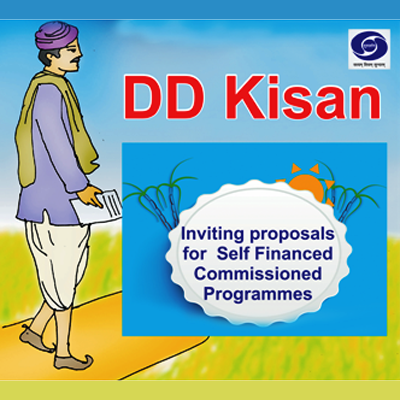
    Noting that the proposed Doordarshan Kisan is a dedicated channel for the farmers to give them information targeted to address the wholesome edutainment needs of a farmer to adopt and adapt to modern scenario, the national broadcaster had in early December invited proposals for programmes under the Self Financing Commissioned (SFC) Scheme.


    As per DD sources, the content expected for DD Kisan will primarily address the developmental needs of the farmer addressing ‘Core Agriculture’, ‘Critical Support’ and ‘Essential Ancillary’ areas, keeping in mind the varied Agro-Economic Zones, Climatic Areas, Different Crops and the need to address the target audience spread across various states but will have to be entertaining and engaging.


    The genres for which it invited proposals are: Documentaries/Features (Field Based); Magazines/Docu Dramas (Field Based); Cookery Shows/Biographies; Daily Soap/Fiction Serials/Family Serials/Thrillers; film song based programmes; Reality Shows/Game Shows; and Mandi Bhav/Bazar Bhav/Agro Based Bulletins.


    In addition, DD Kisan will have a new segment for iconic characters plus content packaging where animation characters will convey the agricultural themes and desired messaging. It is expected that the participants under this category will also provide layouts of the channel’s packaging.


    It will also have a segment for edited feature films where the entire film will be capsuled with anchor-based presentation for 60 minutes.


    Prasar Bharati will also take inputs from different agricultural universities and institutes to develop rich content for the channel and the same would be disseminated among the farmers.

  • Subscription is biggest contributor to TV industry revenues: TRAI

    Subscription is biggest contributor to TV industry revenues: TRAI

    MUMBAI: India is one of the most profitable and growing markets when it comes to the television ecosystem. In terms of the broadcasting sector consisting of television and radio, India has the world’s third largest TV market after China and USA.


    The annual report of Telecom Regulatory Authority of India (TRAI) for the year 2013-14 has detailed out activities of the Authority, which was presented in the Lok Sabha and the Rajya Sabha in March this year.


    According to the annual report, as on March 2014, of the 270 million households, around 169 million have been projected to have television sets catered to by cable TV systems, DTH services, IPTV services and the terrestrial TV network of Doordarshan, put together.


    While DTH has 64.5 million registered subscribers (37.2 million active subscribers), IPTV caters to around half a million subscribers. On the other hand, cable TV is estimated to have around 99 million subscribers, whereas the terrestrial TV network of Doordarshan covers about 92 per cent of population of the country through a vast network of terrestrial transmitters. The broadcasting and cable television services sector consists of 55 pay broadcasters, an estimated 60,000 cable operators, 6000 multi system operators (MSOs) (including 144 MSOs registered in DAS), six pay DTH operators, apart from pubcaster – Doordarshan, having free-to-air DTH service.


    There were 793 TV channels registered with the Ministry of Information and Broadcasting at the end of financial year 2013-14 out of which 187 were SD pay TV channels and 34 HD Pay TV channels. India’s TV industry grew from Rs 37,010 crore in the year 2012 to Rs 41,720 crore in the year 2013, thereby registering a growth of around 12.7 per cent.


    “The subscription revenue accounts for the major share of the overall revenue of the TV industry. The subscription revenue grew from Rs 24,500 crore in the year 2012 to Rs 28,100 crore in the year 2013. The advertisement revenue in the TV sector in India grew up from Rs 12,500 crore in the year 2012 to Rs 13,600 crore in the year 2013,” states the report.


    The last decade has significantly changed the dynamics of the Cable and Satellite (C&S) TV market. One of the most significant developments has been the digitisation of the cable TV sector in India. The process of digitisation is underway, in a phased manner. By the March 2014, more than 22 million Set Top Boxes were deployed. While implementation of digitization with addressability is going to be a game changer and would drive the growth of the broadcasting and cable TV services in the country, the DTH sector is registering a growth of around one million subscribers per month. This clearly indicates the growing popularity and acceptability of digital addressable platforms, which have a lot more to offer to all the stakeholders.


    Stakeholders in cable and satellite TV service sector


    As of March 2014, the total number of TV channels registered with the Ministry of Information and Broadcasting was 793, which include 187 SD pay channels, 34 HD pay channels and four advertisement free pay channels. These channels are owned by around 350 broadcasters (content owners), out of which 55 are the pay TV broadcasters.


    Satellite TV channels


    The number of satellite channels permitted by MIB has grown from 449 in 2009 to 793 in 2014. The number of pay SD channels has grown from 130 in 2009 to 187 in 2014. The report states that there are total 33 operational HD channels in India till 2013.


    DTH Services


    Since its inception in 2003, DTH operators have been adding new subscribers at a rate of around one million per month, attaining a registered subscriber base of around 64.82 million subscribers of pay DTH services catered by the six DTH operators by March 2014. This is besides the viewership of the free DTH services of Doordarshan. In March 2009, there were a total of 13.09 million DTH subscribers. This number grew to 21.30 million, 35.56 million, 46.25 million, 56.48 million to 64.82 million subscribers for the years 2010, 2011, 2012, 2013 and 2014 respectively.


    Cable TV Services


    Cable TV service is the largest television service sector with an estimated subscriber base of around 99 million subscribers. From 52 million subscribers in March 2004 it has risen by 58 million, 66 million, 72.5 million, 80 million, 84 million, 88 million, 92 million, 94 million and 99 million cable TV subscribers from 2005 – 2013 respectively.


    Digital addressable Cable TV systems


    As per data provided by various MSOs, there were around 85 lakh STBs deployed in the first phase areas of DAS implementation covering four metros namely Delhi, Mumbai, Kolkata and Chennai. In the second phase of DAS implementation, covering 38 cities, approximately 142 lakhs STBs were deployed as on March 2014.


    Trends in the tariff in the Broadcasting sector


    In order to provide cost effective broadcasting services to the consumer, TRAI has laid down regulatory framework, from time to time, in the form of tariff orders. The tariffs for areas served through non-addressable systems, notified DAS areas, and that for the addressable systems such as DTH, HITS and IPTV etc are governed by respective tariff orders issued by TRAI.


    Further, the wholesale pricing has been prescribed with a certain cap, linked to non-addressable platforms tariff ceilings. With these provisions at the wholesale and retail levels, a trend is likely to emerge where the subscription pattern is consumer specific rather than defined by the service providers.

  • DD National to launch ‘Main Kuch Bhi Kar Sakti Hoon’ season 2

    DD National to launch ‘Main Kuch Bhi Kar Sakti Hoon’ season 2

    NEW  DELHI: Doordarshan’s Main Kuch Bhi Kar Sakti Hoon is all set for its second season after the success of season one, which was telecast last year with 52 episodes.

    The new season will commence on DD National from 4 April at 7:30 pm with a curtain raiser of the show. It will be aired every Saturday and Sunday.

    The half hour show challenges prevalent social norms on child marriage, early pregnancies, contraceptive use, women’s education, health and empowerment in an effort to change existing mindsets to bring forth a positive change in the society.

    According to TAM and IRS data, the serial was watched by over 58 million viewers and PFI received as many as 600,000 phone calls from people across the country, wanting to engage on the issues it had raised, and to share their own experiences.

    Season two of Main Kuch Bhi Kar Sakti Hoon focuses on Sneha’s (the protagonist) continuing story, the drama, and dreams as she moves on from Maanavta Hospital to serve her community.  She starts the Manaavta Health Centre and brings people together to aspire for better lives. Preeta, Sneha’s younger sister starts a girls’ football team. These young women use sports to demand for equal opportunities and rights for girls. In the process, Preeta is attacked, but the girls team fights on in spite of family pressure, ridicule and threats of violence and they go on to win the football tournament.

    Running parallel, there are dimensions of deceit, violence, corruption and romance all rolled into this entertainment pot-boiler.

    The serial is scripted, produced and directed by renowned director Feroz Abbas Khan. He said, “Main Kuch Bhi Kar Sakti Hoon is not just a television series; it is entertainment with social responsibility. Through season one, people realized that there was more to family planning methods than sterilization. And that prenatal care is necessary to ensure healthy pregnancy. People were able to find the voice to protest against the gender based violence and mobilize support. The story of Main Kuch Bhi Kar Sakti Hoon revolves around the inspiring journey of Dr Sneha who represents the young Indian woman of today, emotionally torn between family and society, professional aspirations and personal commitment. Her struggles and triumphs form the core of this memorable soap opera. It will make you laugh, it will make you cry, but it will also make you think. It is a television series like you’ve never seen before.”