Tag: Doordarshan

  • Prasar Bharati CEO Jawhar Sircar pooh-poohs ‘budget hike’ reports

    Prasar Bharati CEO Jawhar Sircar pooh-poohs ‘budget hike’ reports

    NEW DELHI: The Indian pubcaster has been a soft target since time immemorial. In the light of media articles citing ratings data by the Broadcast Audience Research Council (BARC) India, which say that Doordarshan’s viewership has been poor despite a hike in budget and hiring of expert consultants, Prasar Bharati CEO Jawhar Sircar pooh-poohs it all. 


    In an exclusive interaction with Indiantelevision.com, Sircar informs that the pubcaster has not even received full reimbursement of government salaries for employees recruited prior to October 2007.


    Sircar goes on to point out that as per a decision by the then Group of Ministers (GoM), which was looking into the financial status of Prasar Bharati, it had been decided during the tenure of the previous government that the Central Government will bear the salaries and other allowances of all employees in service as on 5 October, 2007.


    Sircar says, “As a result, our own revenue funds that are meant for ‘Content’ have gone to meet this salary gap.” He said that Prasar Bharati had been stressing this fact for the past three years. However, it seems like its voice fell on deaf ears.


    At the outset, Sircar says, “I still cannot understand why some people are always raising this question of “hike in budget”? What budget? All the money we get is for paying salaries of 29,000 government servants, who were recruited by the Information and Broadcasting Ministry some 30 to 35 years ago. The government has to pay their salaries as long as they are in service and Prasar Bharati is mainly their administering body and the Ministry passes this salary bill on to Prasar Bharati, who had to engage these persons to disburse their government-scale salaries, without any leeway or choice.”


    He added that while the Ministry used to set aside a sum of approximately Rs 80 – 100 crore for several years for creating content for “special areas,” this funding had also stopped, leaving behind several liabilities. 


    With the choked fund pipeline for content, Sircar asks, “How does content improve? One way out is to offer our ‘time bands’ to external producers provided they cover our costs.” 


    “We are waiting patiently for our funds to be returned. Since these issues are coming out publicly through vague terms like ‘an I&B Ministry official said,’ I would welcome an open debate on this question though we prefer to discuss these matters across the table. But after all, DD is a public institution and it is ready to face any public scrutiny,” Sircar opines.


    No longer in a mood to take things lying down, Sircar posed a few pertinent questions:


    1) Can we cut down costs on the huge infrastructure, some of which appears to be meaningless?


    2) Do we really need to have analogue TV transmission in this satellite age?


    3) Why do we spend so much to strengthen short wave and medium wave radio, when it is FM that is in demand?


    “I have raised these questions as no one was raising them and many in this organization are not happy at all,” he adds.


    Specifically referring to the media reports, he says, “If the programmes that DD has paid for (‘Commissioned’ or ‘SFC’ in DD’s language) do not appear to be attracting enough eyeballs, then we have to reach out to better producers like we used to do for MahabharatRamayan and Buniyaad, etc. DD did not produce its own programmes then or did not decide to pay or commission producers to make programmes for DD. We are seriously thinking about it. But we will have to go over this option very carefully.”


    Drawing a comparison between the British Broadcasting Corporation (BBC) and the Indian pubcaster, Sircar says, “There is a box in the news that advises DD to stay out of the numbers game and become a popular brand distinction like BBC. Do you have any idea of what this means? Every British citizen pays Rs 15,000 per year for the BBC’s quality programmes. But in India, Prasar Bharati struggles to earn its ‘content funds’ through content generated revenue against fierce competition.”


    According to Sircar, as per calculations done by the Sam Pitroda Committee, in India the cost per person works out to a mere 31 cents or approximately Rs 20 by way of support to Doordarshan and All India Radio (AIR). “BBC gets Rs 35,000 crore per year from the exchequer,” he adds. 


    Signing off, Sircar says, “So why do we make such meaningless comparisons and indulge in wishful thinking?”

  • Narendra Modi invites inputs for ‘Mann Ki Baat’ on 26 July

    Narendra Modi invites inputs for ‘Mann Ki Baat’ on 26 July

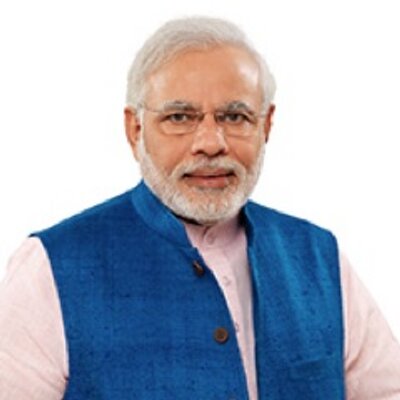
    NEW DELHI: Prime Minister Narendra Modi has invited inputs from the people for his next ‘Mann ki Baat’ radio broadcast on 26 July.


    The inputs can be sent on MyGov.in.


    In a message, Modi said, “Looking forward to share ‘Mann Ki Baat’ this Sunday. Share your inputs and ideas for the programme.”


    Unlike earlier this year, Modi has declined for the second month in a row to spell out the subject for his broadcasts on All India Radio.


    Earlier, he had in his broadcasts dealt with students going to examinations, or farmers’ issues.


    Observers felt that this was because Modi wants to avoid taking up subjects that might turn controversial.


    The broadcast at 11 am will be carried by all stations of AIR and also by Doordarshan and several private television channels.   

  • Amitabh Bachchan denies contract with DD to endorse Kisan TV

    Amitabh Bachchan denies contract with DD to endorse Kisan TV


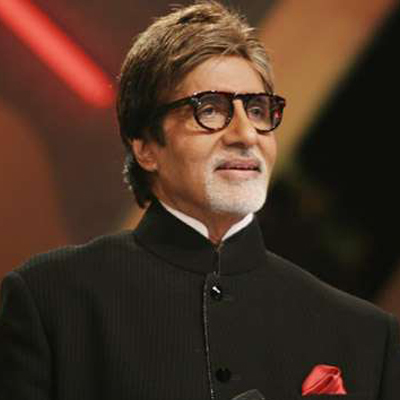
    MUMBAI: Actor Amitabh Bachchan has denied signing any contract with Doordarshan for endorsing its recently launched television channel Kisan TV.


    In an official statement, Bachchan denied a media report, which stated that he had taken a sum of Rs 6.1 crore to endorse the channel.


    “I wish to state that I have not entered into any contract with Doordarshan, on the endorsement of their channel DD Kisan, and neither have I received any money from them. I worked with the advertising agency Lowe Lintas on the campaign for DD Kisan, and have not entered into any contract with them either, nor have I received any money from Lintas, as being stated,” the statement read.


    “My ‘deliverables’ on this campaign have been executed by me many days ago.


    I work pro bono on various issues and DD Kisan Channel is one of them. If there is any evidence or proof to the contrary, please forward them to me for verification,” Bachchan’s statement further read.


    It may be recalled that Doordarshan’s Kisan TV was launched by Prime Minister Narendra Modi earlier this year on 26 May.


  • Prasar Bharati doesn’t need a Green or White Paper, it needs action & implementation

    Prasar Bharati doesn’t need a Green or White Paper, it needs action & implementation

    If you think you know what your purpose is, but can never seem to gain satisfaction from it, then it’s probably not the purpose you’re destined for.”


    Perhaps these lines by Canadian author who penned the fantasy series Morningstar aptly sums up the confused state of Prasar Bharati, which will be completing two decades in the next two years having been operationalised in 1997.


    For although the Government keeps claiming Prasar Bharati is a fully autonomous public service broadcaster, it interferes whenever it wants including in senior level appointments, which should have been left to the Prasar Bharati Board the moment the Corporation was operationalised in September 1997.  But irrespective of the political party ruling the nation, the state of the public broadcaster has not changed.


    In comparison, the British Broadcasting Corporation (BBC) – arguably having the most diverse, exciting and long history – keeps examining and re-examining its role as a public service broadcaster and independently takes its decisions about changes it wishes to make to reach out to more and more viewers in an era of increasing competition from private broadcasters.


    Once again, the BBC, which will be marking its centenary in 2022 has come out with a Green Paper that examines whether it is failing audiences, whether it should be advertisement-funded or take licence fee as it has been doing, and even whether it should be putting on air certain shows that have drawn the ire of the general public.


    Not merely that, but the 86-page document has been made public for the viewers to react as that would help it to decide its future course.


    In India, although there were some reports on autonomy of the public broadcasters Doordarshan and All India Radio even before the Prasar Bharati Act of 1990, there has been just one report after the pubcaster was operationalized: the Sam Pitroda Committee Report.


    Unfortunately, this report came out with nothing new that was not already being done by the broadcaster or had not been said by the Parliamentary Standing Committee in report after report, year after year. However, the real test is whether the Sam Pitroda Committee’s recommendations have been implemented. And there, sadly, the answer is in the negative. Because the biggest stumbling block to the pubcaster moving ahead is the government, which does not leave it free to move on its own and instead believes in the general principal of he who pays the piper plays the tune.


    If there has been any movement within Prasar Bharati – like the recent appointment of a number of fresh talent to fill the huge number of vacancies or putting some popular radio channels on FM – it has been due to the individual action of the different CEOs or the chairmen of the Board.  


    At a time when the country has around 800 operational television channels and around 245 private FM radio channels – with the auctions for a massive 900+ beginning soon – it is necessary for the pubcaster to wake up and smell the coffee.


    Doordarshan and All India Radio cannot be complacent by just telling themselves that they are the most seen and heard broadcasters in the country – particularly since their viewers are rural and they have failed to make much headway in urban areas, except for the FM radio channels.


    Even after the media keeps pointing out these failures, DD for example has still not been able to ensure that the private DTH players or even its own FreeDish carries the name of the programme and a basic summary – something which the DTH players do for all the major private broadcasters.


    In its report, the BBC has asked whether it is failing audiences and notes, “The BBC remains highly valued and well-used by the majority of people within the UK. But there are variations across different groups and there are particular challenges in reaching black, Asian and minority ethnic audiences and in meeting the needs of younger age groups who increasingly access content online, rather than via the traditional platforms of television and radio. There is also variation across the nations and regions of the UK. Charter Review will consider the extent to which the BBC is meeting the needs of these different segments of the domestic audience.”


    Surely, if the oldest broadcaster is worried by such concerns, the younger pubcasters like Prasar Bharati need to wake up. The Naxal or Marxist movements or separatist movements in some states, could be curbed if the pubcaster played its role well.


    BBC’s Green Paper admits that although there are funding options like advertisement-funded, licence fees, funding through general taxation, or a universal household levy, or mixed public funding and subscription fee, “no funding option is perfect and all involve trade-offs.” The Green Paper even discusses whether licence fee can be shared with private broadcasters.


    Unfortunately, this aspect has never been discussed in detail in India for the simple reason that the majority of Prasar Bharati employees want government funding as that ensures them pensions etc. In India, the concept of licence fee was given up sometime in the late sixties.


    While the Green Paper suggests some core values that the BBC must have, and undoubtedly the Prasar Bharati Act and Programme and Advertising Codes in India also swear by this, the core value that prevails is a rosy picture of the political party in power – at least as far as Doordarshan goes. 


    In fact, the Paper also discusses the issue of whether and how BBC should be regulated. 


    A close look at the Prasar Bharati Act would show that successive governments have deliberately failed to look at the clauses relating to a Broadcasting Council or a Committee of Parliament, as that would not suit the ruling party at the centre.


    Unlike BBC, India has far more complex problems in view of the number of competing private channels, the large number of languages, and the cultural values, which change almost every fifty kilometers.


    However, this does not mean that Prasar Bharati should sit comfortably, waiting for the Ministers or Secretaries to dole out instructions.


    What Prasar Bharati needs is a serious look at the Sam Pitroda Committee recommendations to find out why these recommendations were not implemented when they were under consideration much before the Committee came on the scene, and also to radically examine the relationship of Prasar Bharati with the Government or the ruling party. 


    Additionally, the rule of the Indian Administrative Service babus has to stop with professionals from the Indian Broadcasting (Programme) Service or – since this service never really took off – of the Indian Information Service till the IB(P)S officers can take over!  

  • MIB appoints Mukesh Sharma as director general of Films Division, Mumbai

    MIB appoints Mukesh Sharma as director general of Films Division, Mumbai

    MUMBAI: The Information and Broadcasting (I&B) Ministry has appointed Mukesh Sharma as director general of Films Division, Mumbai. This is in addition to his regular responsibilities as Doordarshan additional director general (WZ & CRD).


    Sharma’s career took flight from the Children‘s Film Society in 1980 under the chairmanship of stalwarts like Dr. V Shantaram, ShabanaAzmi, Jaya Bachchan and AmolPalekar, who shaped his thinking and work ethic. He produced over 50 films during his tenure with CFSI. He also directed the film AnokhaAspatal, which won a special mention at the National Awards in 1990 from the President of the Republic of India, during the sixth International Children’s Film Festival.


    The nation’s first Indo-Mauratius co-production venture was initiated by Sharma and this film on Operation Pink Pigeon –  Ankur Maina Kabutar won him the National Award in the best Children’s Film category in1990, from P. Venkataraman, the then President of India.


    Sharma is also responsible for organizing various children‘s film festivals in India and abroad and was actively associated with the marketing of these children‘s films.


    Under his leadership, in 2001 Doordarshan Mumbai Kendra received the Best Doordarshan Kendra (T.V. Station) Award, which was presented to him by the former vice president of India Krishna Kant and DD Sahyadri became a household name in every nook and corner of Maharashtra.


    Sharma has contributed 35 years of his experience in working as a public service broadcaster and still feels the thirst to produce rich content informing, educating, connecting and entertaining the vast sections of population, especially those living in remote corners of towns and villages as he feels that it is the right of every citizen of India.

  • Doordarshan to air tribute to Mukesh in ‘Sapne Surile Sapne’

    Doordarshan to air tribute to Mukesh in ‘Sapne Surile Sapne’

    NEW DELHI: When he passed away suddenly on 27 August, 1976, one of last century’s foremost filmmakers Raj Kapoor had lamented, “I have lost my voice.”


    This was because a majority of songs rendered on screen by Kapoor had playback by Mukesh.  


    To pay tributes to this legend who was born on 22 July, 1923, Doordarshan will telecast a nine-part series called Sapne Surile Sapne from 21 July primarily featuring a musical programme held earlier this month to honour this Delhi-born singer.


    The programme was organized by the Delhi Kendra of Doordarshan in association with the Directorate of Film Festivals on 5 July. The show will be telecast on DD National at 8 am and 4 pm, except on Saturdays and Sundays. It is also scheduled to telecast on DD Bharati at 10 pm the same day.


    The programme was attended by Prasar Bharati chairman A Surya Prakash,   Information & Broadcasting secretary Bimal Julka, Law Commission chairman Justice A.P. Shah, the singer’s son Nitin Mukesh, playback singer Manhar Udhas and other notable guests. 


    Nitin Mukesh and Manhar Udhas rendered some selected songs of Mukesh on the stage, thoroughly enthralling the audience. 


    The selection of other participants for the show was done by auditions after wide publicity on Doordarshan. Hundreds of people from different parts of the country came to Doordarshan Delhi’s studios at Mandi House to participate in the auditions. The aspirants included all strata of people from painters to vegetable sellers and from tea vendors to rickshaw pullers.  


    The auditions were judged by a panel of judges including Delhi Police special commissioner of traffic Muktesh Chander, who is an established and talented flautist, Ghazal singer and composer Jitender Singh, Sufi singer Mahendra Pal and semi classical singer Pradeep Pallavi including others. 


    The orchestra for the programme series was the ‘Do-Re-Me Orchestra’ conducted by Satish Popli. 


    Doordarshan Delhi also utilized the services and expertise of singer Gururaj from Bangalore who has been helping to coordinate and manage the orchestra for the Delhi shows on the lines of the shows done in DDK Bangalore. 


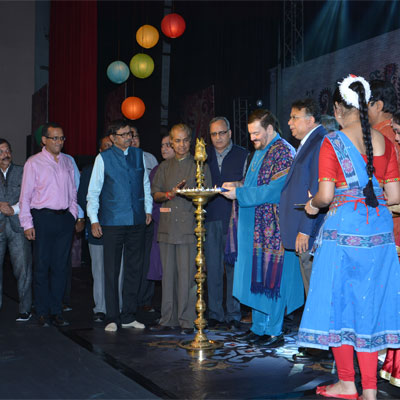
    The musical tribute was inaugurated by Udhas along with Nitin and Namrata Mukesh. Law and Justice Minister D.V. Sadananda Gowda and Justice Shah were the special guests for the evening along with chief guests Surya Prakash, Julka and Delhi BJP president Satish Upadhyaya. Former Test cricketer and legendary leg spinner B.S. Chandrashekar, who is an ardent Mukesh fan, was the guest of honour along with Dr Rajeev Shrivastav biographer of Mukesh and Doordarshan DG C. Lalrosanga. 


    The first programme in the musical tribute series produced by Delhi Doordarshan was   Tum Mujhe Yun Bhul Na Paoge on the legendary Mohammed Rafi and was recorded in FICCI auditorium on 26 July 2014. This was followed by Smarananjali, a special musical tribute to our Martyrs on 30 September 2014 at the Siri Fort Auditorium.  Gaate Raha Mera Dil dedicated to Kishore Kumar was then organized at the Manekshaw Auditorium, Delhi Cantt on 30 November 2014. This was followed by Tujhko Chalna Hoga, a tribute show for Manna Dey at Siri Fort Auditorium on 12 April 2015. 


    The Delhi Kendra of Doordarshan has been planning and recording musical evenings and telecasting them as a series coinciding with important dates in the life of music legends. 


    The programmes are being produced in fulfilment of Doordarshan’s role as a Public Service Broadcaster and in order to improve its image, encourage new talent, strengthen Doordarshan’s viewership base. These efforts are part of Delhi Doordarshan’s strategy to reach out to the people, provide them a platform to showcase their talent.


    The idea for these shows emanated from DDK Bangalore’s popular music show series Madura Madura Vee Manjula Gana and is the brain child of Doordarshan additional director general Mahesh Joshi who is now based in Delhi. Joshi feels that in today’s changed scenario, where the public has more than 500 channels to choose from, special efforts are required from Doordarshan to remain in the public eye. He believes Doordarshan has to become Samik Darshan and reach out to the hearts and minds of people.

  • DD completes first phase of automating commercial ops

    DD completes first phase of automating commercial ops

    MUMBAI: Doordarshan (DD) has successfully implemented the first phase of automating its commercial operations in the first week of July this year.


    It may be recalled that last year DD decided to upgrade from its semi-integrated software that handled its different departments manually, to Broadcast Air Time Scheduling System (BATS) software provided by Media Nucleus, which integrates all the departments online.


    Indiantelevision.com was the first one to report that in June 2014, DD had officially launched the BATS traffic and billing software, which would connect its Delhi and Mumbai offices. The pubcaster was looking at completing the integration in three phases.


    Speaking about the completion of the first phase, Doordarshan deputy director general CK Jain says, “Phase one was to implement the DD channels and automating the entire commercial operations. The first phase has been completely implemented and by the end of this month we are going to start rolling out the second phase.”


    The aim of phase one was to complete the integration of all 67 DD kendras.


    The benefits from phase one are as follows:


    .  Less of manual intervention.


    .  Able to release bills on time. 


    .  Promptly reconcile receipts of dues and payments. 


    .  Enable agencies to make online payments.


    .  Generate reports in multiple ways.


    According to Jain, it has built a strong Management Information System (MIS), which helps generate reports in a convenient manner. It also helps the network to analyse its revenue pattern and Twitter forecast etc. 


    “We can generate revenues as per our convenience. For instance, we can generate how much revenue we have earned from a particular show or total revenue earned in a particular week or month. It has made our lives much easier,” asserts Jain.


    The network, which was supposed to implement its commercial operations in the month of February this year had to face problems leading to the delay of the launch. “We started working from June last year. There were some issues, which were unexpected and changes were required with the customisation of software with the agencies we work with. Whatever we wanted to improvise, we implemented in phase one, as we have different operations as compared to private broadcasters. That’s one of the reasons why it took us longer than usual to implement the first phase,” informs Jain.


    Moreover, DD had to undergo a lot of changes due to agencies’ requirements as well. “Every agency issues their Receiving Order (RO) in a different format, so we had to work with different agencies to ensure that their RO format was similar. They are also quiet excited about the changes,” he says


    He further adds that while the completion of phase one does not see any improvement in the network’s financials, but it does however improve the satisfaction level of the agencies with whom the network works. “Sometimes a few agencies were dissatisfied with the services that we offered, so this kind of operation will make the advertisers happy,” he says.


    Future of the second phase


    The network plans to start the second phase of automating its commercial operations by the end of July. It plans to implement the remaining five national channels – DD Urdu, DD News, DD Bharti, DD Sports and DD Kisan – in their respective cities, eight remaining commercial revenue divisions (CRDs) and 15 regional channels. 


    The network also plans to automate its commercial operations of its 22 channels, except for DD National in the second phase.


    For the record, the aim of the BATS software is to provide satisfactory services to the pubcaster’s clients and advertising agencies. Inaugurated by Prasar Bharati chairman Dr A Surya Prakash, the application will integrate all the departments of scheduling, sales and billing, which were earlier being handled manually causing delays and several disputes with agencies.


    The decision of upgrading the backend was taken since Doordarshan, with its wide network of kendras and regional channels across the country, was facing difficulty to monitor its outstanding revenue initially, as it was done manually.

  • KBC’s 15 years: A dash of nostalgia

    KBC’s 15 years: A dash of nostalgia

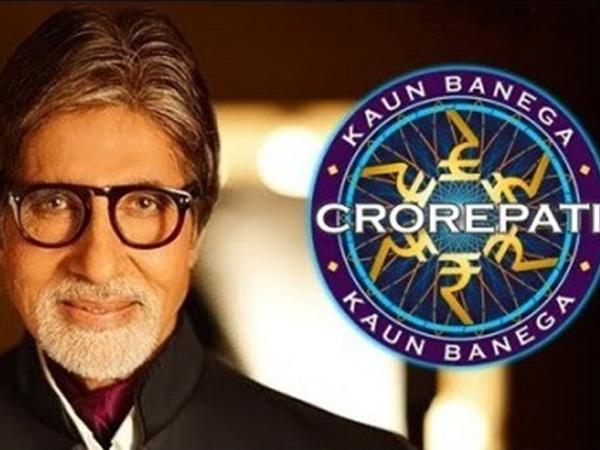
    MUMBAI: 3 July, 2000 is a date Indian television industry folks will not forget. It was on this day that a new show hit TV screens on a channel called Star Plus which was a straggler in the Hindi general entertainment channel (GEC) sweepstakes.


    It was hosted by an ageing actor who was a superstar a decade before.  Amitabh Bachchan on the Indian adaptation of Who Wants to be a Millionaire? Kaun Banega Crorepati? caught Indian TV viewers’ imagination.


    Television had in the past experimented with film talent hosting or acting or directing shows. In the eighties, Ramesh Sippy, BR Chopra and Ramanand Sagar had managed to get the Indian TV audiences riveted in front of their TV sets with their ensemble consisting of film actors and some newbies. And it had worked – worked incredibly well.


    But Mr Bachchan was not at his peak.  He had begun his fall down the cliff. The buzz was that his star was on the descendant, his health had failed him and his business ventures had capsized, he had defaulted on payments and loans and he owed a lot to people.


    Hence, no one really expected Mr Bachchan and the new show to work. Excepting two executives: Sameer Nair, who was then programming head at Star and Steve Askew, his senior colleage out of Star Asia, HongKong. And Peter Mukerjea who headed Star India then. He had replaced the flamboyant former government bureaucrat Rathikant Basu.


    Packaged intelligently with Kaun Banega Crorepati were two other shows: Kyyunkii Saas Bhi Kabhi Bahu Thi and Kahaani Ghar Ghar Ki. Both talked about families and values of a bygone era, yet they seemed very contemporary because probably they were. And these three powered Star Plus very soon to the number one spot in the GEC space, polevaulting over the well entrenched Zee TV, Sony and Doordarshan.


    It was a spot it held on to for almost seven years, earning for News Corp billions of dollars, and becoming the brilliant stone of its Asian crown.


    Today, the network is headed by Uday Shankar who has expanded it into the regional space, niche content, sports, OTT services. It still leads the Indian market as probably the most valued Indian entertainment company. Some may argue that it’s Zee which is at the top, but that’s an argument that no one will possibly win.


    On 3 July, however, who were associated with the channel and the show at that time got nostalgic on social media.


    It began with a post by the then Star entertainment channel programming head Steve Askew: “15 years today since the beginning of the Indian Television revolution for STAR Plus! Thanks to Big Synergy, Balaji and of course Sameer Nair.”


    Sameer in turn went on to thank Big B and a host of others from Star associated with the show at that time.  Big Synergy promoter Siddhartha Basu then raised a toast stating: “Here’s to the crystal anniversary of the show that brought in the millenium, and everybody who was part of making it happen, cheers !”


    Star Plus marketing executive Mubina Ansari then posted a comment on her Facebook page which attracted several comments like bees to a honeypot.


    Said she:  “I will never forget 3.7.00. Rains like never before and a 1000 promoters on the streets of Mumbai asking people to tune in to KBC.”


    To which another Star Plus marketing had Vidyuth Bhandary (currently with Fremantle India) responded: “Yep !! How 15 years have passed !! I still remember behaving like a typical client with Roshan Abbas and Karan Chettri, as I was overlooking the Delhi onground promotions on 3rd July 2000 !! That was a mammoth operations and nothing has come close to it even today !!!”


    Remembering the old times Roshan Abbas who ran an event agency then added: “Oh I remember ! With Siddharth Roy Kapur (currently CEO UTV-Disney) in Lucknow, Vidyuth Bhandary Mubina Ansari all manning the streets ! And then came the biggest revolution in TV and Star Plus.”


    Sumantra ‘Sumo” Dutta (currently based in Dubai with a telecom company) who headed sales at that time piped in  “Seriously fun times. Game changing times. High risks too.”


    “Everything was planned up to the last detail,” revealed Samson Jesudas (in the distribution of Star India then). “Be it programming, marketing, distribution, advertising, branding, etc etc. I have yet to see a launch like this… No wonder today, if one picks up any channel, advertising firm, agencies, MSO, etc, one will find a ex Star guy/girl working for them. Amazing experience.”


    Jesudas also elaborated the role that distribution played in making the show visible to Indian viewers. He remarked in his response to Mubina: “Guys u forgetting the distribution team who ensured that Star Plus runs in prime band in all cable networks. I remember that we bought all cable guys under one roof on 3.7.00, so that there’s no sabotage and blackout of Star Plus and even if there’s one, we have the cable owner in front of us to rectify the same.”


    He finally ended by saying it was “teamwork” which made it happen.


    KBC, ran for only three seasons on Star Plus (2000-2001, 2005-2006 and 2007) but it helped chart a new course for Murdoch’s Indian entertainment venture. It moved to Sony in 2010 and has run for five seasons (2010, 2011, 2012, 2013, and 2014).  The format has undergone a metamorphosis with more reality elements being added. Hopefully, its sixth season will do the trick for Sony.

  • Archival Neglect

    Archival Neglect

    It is a matter of prime cultural concern in any nation of heritage to preserve its invaluable assets of antiquity and inherited monuments of fine arts that pass through generations of artistic brilliance.   Traditionally, a culture rich nation plans and preserves its monuments of immense cultural value with pride, adequate funds and a sustainable infrastructure.  Alas! India has hundreds of so-called protected monuments, but in fact have none to actually guard and protect them and prevent unruly defacing of artefacts that once laboriously were sculptured by efficient hands devoting weary long years.


    A population which does not realise the intrinsic value in cultural terms does not even object visitors writing their names or of their loved ones indiscriminately on the walls of our monuments. Our predecessors could not prevent the Portuguese soldiers from using the statues and carvings of immense historic value and elegance as targets for shooting practice in the Elephanta Caves without remorse and defacing cultural treasures on stone preserved for centuries.


    The criminal disintegration and powdering of Bamiyan Buddhas in Afghanistan by Taliban rebels could not be averted even by a well meaning and civilised world community.  Stealing of deities in stone from the sanctum sanctorum of celebrated Indian temples for money continues even today.  India in fact is fortunate to get back its famous dancing Bronze Nataraja Statue of Chola era from the Australian Museum illegally smuggled by cultural traffickers.


    India is replete with examples of events missed in history running to thousands of years due to our national character not giving due importance to preservation of invaluable historic cultural works and monuments for varieties of religious and reasons of cultural conflicts. We owe rediscovery of most of our treasures to British pathfinders and inquisitive soldiers, be it Ajanta, Ellora or so many monuments of Buddhist origin. 


    With preservation of our historical assets not being our national priority and character, we already have lost substantial works of wisdom of our ancestors in Indigenous Medicines, Astronomy, Mathematics and other applied sciences.  But the present scientific tools that enable easy preservation of great monuments through chemical and mechanical means and digitisation of potential audio and video materials are being fruitfully utilized the world over.  The information technology with its current scientific leap has immensely enabled the world community to preserve great works in print through digitisation instead of managing huge libraries of printed books.


    The advent of new media and possibility of preservation of digitised content in cloud form has eased archiving process with excellent networking and retrieval arrangements.  Given the wealth of skilled human resource in IT available in our own country, the delay in archiving assets of audio and video content of Prasar Bharati is inexplicable. 


    The sound archives of All India Radio (AIR) came into existence in April 1954 and can well be termed as the National Audio Archives of the nation being the treasure house of precious recordings in more than 53,000 tapes comprising music and spoken words. 


    The library has invaluable collection of prayer speeches of Mahatma Gandhi recorded in 1947 at Sodepur Ashram, Kolkata and in 1948 at Birla House, Delhi in addition to his famous broadcast from the Broadcasting House, New Delhi on 12.11.1947.  All India Radio has recordings of all the Presidents and Prime Ministers of India besides important voice recordings of eminent personalities like Gurudev Rabindranath Tagore, Constitutional architect, Dr. B.R. Ambedkar, Bismarc of India, Sardar Vallabhbhai Patel and Nightingale of India Ms Sarojini Naidu and many others.


    The library is further enriched with numerous radio drama features, documentaries, memorial lectures and radio autography of eminent personalities from various walks of life.  Although release of archival materials of All India Radio started in April 2002 under the banner ‘Akashvani Sangeet’, only 76 Albums containing legends of Hindustani and Carnatic Classical and light music have been released so far. This despite AIR holding the richest cachet of sound recordings of almost of all genres of Radio Broadcasting including the rare recordings of freedom fighters, unforgettable and resounding voices of great maestros like Bade Ghulam Ali Khan, Abdul Karim Khan, Krishna Rao Shankar Pandit, Begum Akhtar, Siddeshwari Devi, Rasoolan Bai, Ariayakkudi, Chembai Vadyortha Bhagavatar and others.


    On instrumental music, there are invaluable recordings of Pandit Pannalal Ghosh, Dwaram Venkataswamy Naidu, Pandit V.G. Jog, T. Chowdiah, Pandit Nikhil Banerjee and the like preserved for posterity.  There are oral histories which provide direct insight into lives and creative process of great writers and artists.  In the realm of dramatics, the greatest contribution of radio is Radio play which evolved into an independent creative genre in the hands of very eminent directors and writers.


    As of today, AIR has been able to digitize only 6,000 hours since 2002 out of a total of 75,000 hours of archival materials available with Prasar Bharati.  The archives have rare collections of speeches by Quaid-I-Azam Muhammad Ali Jinnah and sensational addresses during ‘Bangladesh Liberation’ by Bangabandhu Sheikh Mujeebur Rahman and Ms Indira Gandhi.


    Doordarshan archives started in 2003 involving digital restoration, preservation, digitisation of the content, creation of meta-data for easy access and retrieval of archived programmes.   The laborious process of cleaning and finally preserving digitised content in file format through Media Assets Management (MAM) saving files on Linear Tape Open (LTO-4) format is on for a very long time.


    Doordarshan has digitised programme in 38 subjects to include animation and puppetry, ballot, documentary series, environment and ecology, fair and festival, game show, interview and conversation, light music, literature and poetry, variety entertainment, etc.  Out of 21,000 hours of digitised content, Doordarshan is able to bring out only 77 DVDs so far.


    The process of digitisation is painfully slow with no technical road map, finalised plan for marketing digitised content as also making free accessibility of speeches by great national leaders to the world at large as decided by Prasar Bharat Board. 


    Other developed nations which have successfully archived their contents like NHK, Japan and Deutche Welle, Germany in High Definition have their Central Archives networked with programme generating facilities dealing with a single or couple of languages with few dialects. But India suffers from a complex need to document archival materials available in multiple languages and hundreds of dialects in stations and kendras spread over the length and breadth of the nation as also link them up.


    Learning from its experience, Prasar Bharati needs to create meta-data at the time of programme production itself, secure produced content online and avoid piracy with a central archive in New Delhi networked with regional centres of rich cultural content.  It would be worthwhile for Prasar Bharati either to create a vertical for archives or expedite digitisation of its archival content of historical and monetary value by outsourcing to reputed media houses or facilities with domain experts without any further delay to save on precious tapes from open wooden shelves and gunny bags exposed to vagaries of adverse weather conditions.


    While Prasar Bharati Board has conceptually cleared creation of a well-networked data house on the programmes of AIR and DD stations all over India, procurement of equipments connected to MAM needs to be compatible.  Piecemeal procurements due to lack of funds should be avoided at all costs and avert resultant obsolescence of technology.  Aggressive strategy and an action plan to promote products released by AIR and DD could earn huge dividends and benefit Prasar Bharati monetarily.


    The revenue receipts of DVDs and footage sale of Doordarshan has declined by 70 per cent in the year 2015.  Despite its rich archival content, Prasar Bharati has been able to earn about only Rs 50 lakh in the last financial year compared to its revenue of Rs 1.5 crore in 2012. 


    Fast tracking of digitisation and archiving of its audio and video content is workable by an active national level steering committee duly monitored by Prasar Bharati Board on monthly basis for speedy accomplishment of digitisation of born content as also legacy content in gramophone records and analogue magnetic tapes.


    Prasar Bharati does not have a recruitment mechanism and in the absence of a statutory body, Prasar Bharati Recruitment Board, there is an emergent need to put dedicated personnel in place to supervise handling of invaluable archival content with inherent security even if outsourced for digitisation to private players.


    Establishing an exclusive web portal for AIR and DD archives with a payment gateway for purchase of archived programmes and expeditiously installing digital kiosks of Prasar Bharati in airports and railway stations to access its popular archival content would enable Prasar Bharati Archives self sustain. Prasar Bharati Board on its part had already cleared development of ‘Leaders of India’ website with facility to download famous video clippings and sound byte free of cost.


    Training of staff at grass root level with proficient archival procedures would enable Prasar Bharati to achieve its archival goals in a shorter duration. The nation could expect speedy action on the archival front especially with an ex-Secretary of Culture, Jawhar Sircar, CEO who initiated the process and is leading from the front. 


    (The views expressed here are purely personal views of Prasar Bharati principal advisor, personnel and administration VAM Hussain and Indiantelevision.com does not necessarily subscribe to them.)
  • AIBMDA announces 2nd Broadcast and Media Technology Exhibition in Chennai

    AIBMDA announces 2nd Broadcast and Media Technology Exhibition in Chennai

    MUMBAI: Broadcast & Media Technology 2015, second International Exhibition on Broadcast Equipment & Technology, will be held on 17 & 18 July at ITC Grand Chola, Chennai. Organised by All India Broadcast Manufacturers and Distributors Association, the exhibition is approved by ITPO and supported by FICCI, Prasar Bharati, Audio Engineering Society India and many other Indian and foreign organisations. Over 100 companies from 20 countries will showcase the latest products and technologies related to radio and TV broadcasting as well as film in the exhibition. Jawhar Sircar, CEO, Prasar Bharati will inaugurate the exhibition on 17 July.


    Addressing a press conference in New Delhi recently, Satish Aggarwal, President, AIBMDA said the response to the exhibition was very encouraging and most leading equipment manufacturers and distributors including AGIV India, Aditya Infotech, Barbizon Lighting, BECIL, Black Magic Design, CAT-5 Broadcast, CDM Technologies, Canara Lighting, Canon, Carl Zeiss, Cineom Broadcast, Comcon Technologies, Datapoint Impex, Datavideo, Delta4cast, Digital Solutions, Dolby, Essel Shyam, Falcon Technologies, FOR-A, Hansa Cine Equipments, Harman International, Hytech Communications, Ideal Broadcasting, Lamhas Satellite, MediaGuru, Modi Digital, Netweb Technologies, Panasonic, Pranav Mediatech, Primetech Communications, Real Image, Rohde & Schwarz, Ross Video, SRSG Broadcast, Sconce Global, Semyung India, Setron India, Singh World and Visual Technologies India had confirmed their participation in the exhibition while many others like  Vitec and Yasuka Corporation were in the process of doing so.


    S. C. Oberoi, Secretary , AIBMDA added that Broadcast & Media Technology 2015 was the biggest  broadcast technology show in South India. The show this year would be 40% bigger than the one held last year. He said arrangements were being made to invite engineers and professionals working in the broadcast and film industry including  AIR and Doordarshan from Chennai, Hyderabad, Bangalore, Kochi and Thiruvananthapuram  to the exhibition. Care is being taken to provide good value for money to exhibitors by creating an atmosphere conducive for fruitful interaction between buyers and sellers during the exhibition.