Tag: Doordarshan

  • Modi’s Mann ki Baat on 28 February will be the 17th consecutive broadcast

    Modi’s Mann ki Baat on 28 February will be the 17th consecutive broadcast

    NEW DELHI: The 17th instalment of Prime Minister Narendra Modi’s ‘Mann Ki Baat’ will be broadcast on 28 February, just a day before the presentation of the Union Budget for 2016-17 by Finance Minister Arun Jaitley.

    The broadcast will be at 11 am over the entire network of All India Radio. The broadcast will be relayed by all AIR stations, all AIR FM channels (FM Gold and FM Rainbow), local radio stations, Vividh Bharati Stations and five community radio stations. 

    The regional versions of the ‘Mann Ki Baat’ will be originated by the capital AIR stations in non-Hindi speaking zones at 8 pm on the same day. The regional versions will be relayed by all AIR stations including local radio stations in the respective states.

    It will also be broadcast by Doordarshan and other private TV and news channels in India and broadcast simultaneously.  Similarly, radio in private sector patches and all DTH operators will also carry it.

    It will also be streamed live for global audience and is accessible through mobile app All India Radio Live and on pmindia.nic.in.

  • Modi’s Mann ki Baat on 28 February will be the 17th consecutive broadcast

    Modi’s Mann ki Baat on 28 February will be the 17th consecutive broadcast

    NEW DELHI: The 17th instalment of Prime Minister Narendra Modi’s ‘Mann Ki Baat’ will be broadcast on 28 February, just a day before the presentation of the Union Budget for 2016-17 by Finance Minister Arun Jaitley.

    The broadcast will be at 11 am over the entire network of All India Radio. The broadcast will be relayed by all AIR stations, all AIR FM channels (FM Gold and FM Rainbow), local radio stations, Vividh Bharati Stations and five community radio stations. 

    The regional versions of the ‘Mann Ki Baat’ will be originated by the capital AIR stations in non-Hindi speaking zones at 8 pm on the same day. The regional versions will be relayed by all AIR stations including local radio stations in the respective states.

    It will also be broadcast by Doordarshan and other private TV and news channels in India and broadcast simultaneously.  Similarly, radio in private sector patches and all DTH operators will also carry it.

    It will also be streamed live for global audience and is accessible through mobile app All India Radio Live and on pmindia.nic.in.

  • Supriya Sahu & F Sheheryar to take over as full-time DGs of Doordarshan and AIR

    Supriya Sahu & F Sheheryar to take over as full-time DGs of Doordarshan and AIR

    NEW DELHI: Former Joint Secretary (Broadcasting) in the Information and Broadcasting Ministry Supriya Sahu, and F Sheheryar, who has been holding additional charge for two years, have been named as the new full-time Directors-General of Doordarshan and All India Radio respectively.

    This decision is understood to have been taken after the Prasar Bharati Board today interviewed 10 candidates for the two posts.

    Sheheryar, Deputy Director General, had taken over as interim DG in February 2014 in AIR, while C Lalrosanga was inducted in April last year as interim DG in Doordarshan. Thus, Sheheryar has been confirmed for the post he was holding as additional charge.

    Prasar Bharati sources told Indiantelevision.com that there were six persons from the Indian Broadcasting (Programme) Service, three from the Indian Information Service, and one from the Indian Administrative Service.

    The interviews were held in the backdrop of a decision by the Board earlier last year that the posts for full-time DGs would not be held until the composition of the Board would be complete.

    With two part-time members being appointed, the strength of part-time members of the Board is now complete.

    While Shashi Shekhar Vempathi, former Principal Architect of Infosys Technologies, who now heads an online media company Niti Digital, formally joined the Board today, actor Kajol will join when she comes back from overseas where she is shooting for a film.

    Under the Prasar Bharati Act, the pubcaster should have six-part time members on its Board, which is headed by its chairman.

    Early last year, chairman Dr A Surya Prakash had informed this website that he had made it clear to the Information and Broadcasting Ministry that there would be no full time appointments for the posts of the two Directors-General until the composition of the Board was completed.

  • Supriya Sahu & F Sheheryar to take over as full-time DGs of Doordarshan and AIR

    Supriya Sahu & F Sheheryar to take over as full-time DGs of Doordarshan and AIR

    NEW DELHI: Former Joint Secretary (Broadcasting) in the Information and Broadcasting Ministry Supriya Sahu, and F Sheheryar, who has been holding additional charge for two years, have been named as the new full-time Directors-General of Doordarshan and All India Radio respectively.

    This decision is understood to have been taken after the Prasar Bharati Board today interviewed 10 candidates for the two posts.

    Sheheryar, Deputy Director General, had taken over as interim DG in February 2014 in AIR, while C Lalrosanga was inducted in April last year as interim DG in Doordarshan. Thus, Sheheryar has been confirmed for the post he was holding as additional charge.

    Prasar Bharati sources told Indiantelevision.com that there were six persons from the Indian Broadcasting (Programme) Service, three from the Indian Information Service, and one from the Indian Administrative Service.

    The interviews were held in the backdrop of a decision by the Board earlier last year that the posts for full-time DGs would not be held until the composition of the Board would be complete.

    With two part-time members being appointed, the strength of part-time members of the Board is now complete.

    While Shashi Shekhar Vempathi, former Principal Architect of Infosys Technologies, who now heads an online media company Niti Digital, formally joined the Board today, actor Kajol will join when she comes back from overseas where she is shooting for a film.

    Under the Prasar Bharati Act, the pubcaster should have six-part time members on its Board, which is headed by its chairman.

    Early last year, chairman Dr A Surya Prakash had informed this website that he had made it clear to the Information and Broadcasting Ministry that there would be no full time appointments for the posts of the two Directors-General until the composition of the Board was completed.

  • Who defines prime time – Advertisers or viewers?

    Who defines prime time – Advertisers or viewers?

    MUMBAI: For those who have wondered and often cribbed about why popular channels have mostly nothing original to offer in the afternoon, and later had reluctantly resigned to watch re-runs of shows, The Content Hub 2016’s session on ‘Redefining Primetime’ was the place to be.


    The question of the hour was whether there is a need to redefine what we call ‘prime time’ on television. And who better to answer it than those who dabble in the general entertainment channels’ (GEC) prime time of Indian television i.e, Doordarshan ADG Mukesh Sharma, Colors CEO Raj Nayak, Balaji Telefilms CEO Sameer Nair, Reliance Broadcast Network CEO Tarun Katial and Havas Media Group CEO – India and South Asia Anita Nayyar.


    Moderator for the session and Indiantelevision.com founder, editor-in-chief and CEO Anil Wanvari struck at the nerve of the issue by posing the pertinent question — What defines the prime time of a Hindi GEC channel? 


    While most viewers are oblivious to it, there is a whole science — or as Nayak had pointed out during the discussion — ‘pure economics’ to it. 


    “The phrase ‘Kill for prime time’ is what we broadcasters are often heard using. As we don’t have the budget to program for all 24 hours of the day, we prepare content for five to six hours and that becomes our prime time. If we can get good traction for a new show during that time, it may also get an equally good viewership ratings for its reruns as well,” said Nayak.


    “There isn’t anything fixed called prime time. It is how broadcasters define it. When we started off, 8 pm to 10 pm was prime time, then we stretched it to 8 pm to 11 pm, and now 6.30 pm to almost 11.30 pm is what we define as prime time. It is a question of content and the availability of a large section of the audience in front of the television. Therefore, by definition it is post evening hours,” he added.


    With the advent of digital however, this staple idea of prime time is changing as the audience has access to entertainment media almost all hours of the day at their own convenience via the second screen. “The prime time we are talking about is a very TV thing. OTT audience is not defined by prime time although there are surges in viewership at certain times of a day. For them, anytime is prime time. But that ‘anytime’ isn’t a feasible option for advertisers,” opined Nair.


    Getting into the crux of the matter, it is the advertiser who defines the prime time. Because depending on whether a show is coming on prime time or not, the advertising rates are decided. Throwing light on how premium rates for ad slots are determined, Nayyar shared, “The logical way an advertiser defines the prime is when there is content and there is an audience for it. A cricket tournament for example, which can happen at 4 pm in the afternoon will have traction and therefore will attract advertisers as well. So prime time is basically where the eyeballs are. From an agency perspective as well, we look at where and when content is viewed the most and that becomes prime time.”


    On the prospect of growing the time band of ‘prime’ shows, Nayak retrospected, “There was a time when Doordarshan used to air only India cricket matches. When ESPN and Star Sports launched, none of the advertisers initially were willing to pay for the non-India matches and test matches. Until in 1996, during the Safari India South Africa series, we decided we will not sell any slots until advertisers are willing to buy it all in a package. For the first three days of the tournaments there were no advertisers. But things have changed now, haven’t they?”


    One would think that going by the same logic of ‘viewers will lap up any good content,’ if creativity is not a hindrance with several content creators and writers waiting to get exposure, broadcasters can find reason in allowing relatively small budget shows to redefine a new prime time band with day part programming.


    Television being an advertiser dependent medium where a 3 rating in the evening is worth 10 times that of the same rating in the afternoon, broadcasters, especially that of Hindi GECs find the stakes to be too high to take the risk.


    “At Star TV there were some original shows in the afternoon time band, which got even better ratings than the evening prime time shows. While the shows worked, its return on investment did not because irrespective of viewership ratings, advertisers were attracted to only to shows aired from 6 pm onwards. The fact remains that the same advertisers, for the same rating at two different times of the day were not willing to pay the same price for the ad slots,” Nayak stated. 


    This also paints a sad picture of the broadcast business in south India where there is an ongoing trend of remaking Hindi TV shows into regional languages. Producers are asked to create the same content for half, or even one fourth of the production cost that the same Hindi GEC show had incurred as advertisers are not willing to pay for that region, observed Nair.


    “Down south they are remaking Hindi shows at approximately Rs 1 – 1.5 lakh per episode. In the Bengal and Marathi regional markets, it’s even lesser. All this brings me to the advertisement driven industry we have, which eggs on this unfair practice. This in turn makes me wonder how advertisers categorise their consumers in the market and where they place them in terms of ad spends,” said Nair.


    Bringing a whole new perspective to it was RBNL’s Katial, whose comedy channel Big Magic is largely dependent on kids for viewership and ratings and therefore the channel’s definition of prime time also varies. 


    “We have two channels, which are both very unique in their target audiences. One targets Bihar and Jharkhand, which are mostly dominated by semi urban and rural landscapes. People essentially wake up early and go to bed early, therefore 70 per cent of our GRPs comes from the morning programming. While infrastructure too plays a role, I feel it is our viewers who ultimately define our prime time,” Katial informed.


    Citing another example of a non-traditional concept of prime time, Katial added, “On our comedy channel our entry point is kids. We feel it is a good way to expand visibility with mothers and other family members. Therefore we have to build a prime time where there are more kids available than others. Therefore once you define your audience and geography, you have your prime time.”


    Taking a queue from Katial and concurring, Nayyar said that from a media planner’s perspective, there are times when it’s more efficient to buy an afternoon ad slot for an advertiser at a lower rate than prime time slots.


    “For a client of ours, McDonald’s, we used to buy afternoon time slots because it was far more cost efficient. We were catering to the housewives and mothers, who watched TV shows with their kids. I feel that it rides a lot more on how broadcasters pitch or sell shows. I feel the media industry needs to come together and give the products what they deserve,” quipped Nayyar.


    As the panelists dived deeper into the issue, several varying perspectives ruled the discussion, each leading to a different conclusion. However, media heads present on the panel unanimously agreed that even though Indian television was one of the cheapest markets for advertisers to operate in, it was undervalued, be it from talent or financial standpoint. 


    The consensus was that rather than thinking of how to get production costs down, the way to bring a change was by coming up with ways to increase ad rates as well as by investing more in original content leading to more hours of it on television, which in turn would lead to a redefined prime time.
  • Who defines prime time – Advertisers or viewers?

    Who defines prime time – Advertisers or viewers?

    MUMBAI: For those who have wondered and often cribbed about why popular channels have mostly nothing original to offer in the afternoon, and later had reluctantly resigned to watch re-runs of shows, The Content Hub 2016’s session on ‘Redefining Primetime’ was the place to be.


    The question of the hour was whether there is a need to redefine what we call ‘prime time’ on television. And who better to answer it than those who dabble in the general entertainment channels’ (GEC) prime time of Indian television i.e, Doordarshan ADG Mukesh Sharma, Colors CEO Raj Nayak, Balaji Telefilms CEO Sameer Nair, Reliance Broadcast Network CEO Tarun Katial and Havas Media Group CEO – India and South Asia Anita Nayyar.


    Moderator for the session and Indiantelevision.com founder, editor-in-chief and CEO Anil Wanvari struck at the nerve of the issue by posing the pertinent question — What defines the prime time of a Hindi GEC channel? 


    While most viewers are oblivious to it, there is a whole science — or as Nayak had pointed out during the discussion — ‘pure economics’ to it. 


    “The phrase ‘Kill for prime time’ is what we broadcasters are often heard using. As we don’t have the budget to program for all 24 hours of the day, we prepare content for five to six hours and that becomes our prime time. If we can get good traction for a new show during that time, it may also get an equally good viewership ratings for its reruns as well,” said Nayak.


    “There isn’t anything fixed called prime time. It is how broadcasters define it. When we started off, 8 pm to 10 pm was prime time, then we stretched it to 8 pm to 11 pm, and now 6.30 pm to almost 11.30 pm is what we define as prime time. It is a question of content and the availability of a large section of the audience in front of the television. Therefore, by definition it is post evening hours,” he added.


    With the advent of digital however, this staple idea of prime time is changing as the audience has access to entertainment media almost all hours of the day at their own convenience via the second screen. “The prime time we are talking about is a very TV thing. OTT audience is not defined by prime time although there are surges in viewership at certain times of a day. For them, anytime is prime time. But that ‘anytime’ isn’t a feasible option for advertisers,” opined Nair.


    Getting into the crux of the matter, it is the advertiser who defines the prime time. Because depending on whether a show is coming on prime time or not, the advertising rates are decided. Throwing light on how premium rates for ad slots are determined, Nayyar shared, “The logical way an advertiser defines the prime is when there is content and there is an audience for it. A cricket tournament for example, which can happen at 4 pm in the afternoon will have traction and therefore will attract advertisers as well. So prime time is basically where the eyeballs are. From an agency perspective as well, we look at where and when content is viewed the most and that becomes prime time.”


    On the prospect of growing the time band of ‘prime’ shows, Nayak retrospected, “There was a time when Doordarshan used to air only India cricket matches. When ESPN and Star Sports launched, none of the advertisers initially were willing to pay for the non-India matches and test matches. Until in 1996, during the Safari India South Africa series, we decided we will not sell any slots until advertisers are willing to buy it all in a package. For the first three days of the tournaments there were no advertisers. But things have changed now, haven’t they?”


    One would think that going by the same logic of ‘viewers will lap up any good content,’ if creativity is not a hindrance with several content creators and writers waiting to get exposure, broadcasters can find reason in allowing relatively small budget shows to redefine a new prime time band with day part programming.


    Television being an advertiser dependent medium where a 3 rating in the evening is worth 10 times that of the same rating in the afternoon, broadcasters, especially that of Hindi GECs find the stakes to be too high to take the risk.


    “At Star TV there were some original shows in the afternoon time band, which got even better ratings than the evening prime time shows. While the shows worked, its return on investment did not because irrespective of viewership ratings, advertisers were attracted to only to shows aired from 6 pm onwards. The fact remains that the same advertisers, for the same rating at two different times of the day were not willing to pay the same price for the ad slots,” Nayak stated. 


    This also paints a sad picture of the broadcast business in south India where there is an ongoing trend of remaking Hindi TV shows into regional languages. Producers are asked to create the same content for half, or even one fourth of the production cost that the same Hindi GEC show had incurred as advertisers are not willing to pay for that region, observed Nair.


    “Down south they are remaking Hindi shows at approximately Rs 1 – 1.5 lakh per episode. In the Bengal and Marathi regional markets, it’s even lesser. All this brings me to the advertisement driven industry we have, which eggs on this unfair practice. This in turn makes me wonder how advertisers categorise their consumers in the market and where they place them in terms of ad spends,” said Nair.


    Bringing a whole new perspective to it was RBNL’s Katial, whose comedy channel Big Magic is largely dependent on kids for viewership and ratings and therefore the channel’s definition of prime time also varies. 


    “We have two channels, which are both very unique in their target audiences. One targets Bihar and Jharkhand, which are mostly dominated by semi urban and rural landscapes. People essentially wake up early and go to bed early, therefore 70 per cent of our GRPs comes from the morning programming. While infrastructure too plays a role, I feel it is our viewers who ultimately define our prime time,” Katial informed.


    Citing another example of a non-traditional concept of prime time, Katial added, “On our comedy channel our entry point is kids. We feel it is a good way to expand visibility with mothers and other family members. Therefore we have to build a prime time where there are more kids available than others. Therefore once you define your audience and geography, you have your prime time.”


    Taking a queue from Katial and concurring, Nayyar said that from a media planner’s perspective, there are times when it’s more efficient to buy an afternoon ad slot for an advertiser at a lower rate than prime time slots.


    “For a client of ours, McDonald’s, we used to buy afternoon time slots because it was far more cost efficient. We were catering to the housewives and mothers, who watched TV shows with their kids. I feel that it rides a lot more on how broadcasters pitch or sell shows. I feel the media industry needs to come together and give the products what they deserve,” quipped Nayyar.


    As the panelists dived deeper into the issue, several varying perspectives ruled the discussion, each leading to a different conclusion. However, media heads present on the panel unanimously agreed that even though Indian television was one of the cheapest markets for advertisers to operate in, it was undervalued, be it from talent or financial standpoint. 


    The consensus was that rather than thinking of how to get production costs down, the way to bring a change was by coming up with ways to increase ad rates as well as by investing more in original content leading to more hours of it on television, which in turn would lead to a redefined prime time.

  • DD Free Dish woos regional channels with special reserve price of Rs 2 crore in 26th e-auction

    DD Free Dish woos regional channels with special reserve price of Rs 2 crore in 26th e-auction

    MUMBAI: With Doordarshan’s free to air (FTA) direct to home (DTH) service DD Free Dish expected to acquire the capacity to carry more channels, the pubcaster has made a conscious effort to attract regional television channels.

    For the very first time, DD has reserved regional language DTH slot to attract regional channels to its bouquet and has fixed a lower reserve of Rs 2 crore even as the price for the other channels remains Rs 4.3 crore in its 26th e-auction, which is scheduled to take place on 15 February.

    The Online e-auction will be held for filling up of slot reserved for regional language channels and the general slots for DD Free Dish. This has been done considering the tremendous reach of DD Free Dish in semi-urban and rural areas all over the country.

    The reserved slot for regional language channel includes only non-Hindi channels (news or non-news). Bhojpuri channels and Hindi regional channels have been kept as part of the general slots.

    The participation amount (EMD) of reserved slot for regional language channel is Rs 50 lakh. Incremental amount will be Rs 5 lakh for reserved slot and every e-auction will be of 15 minutes duration as in previous auctions.

    The participation amount (EMD) of general DTH slot is Rs 1.5 crore and incremental amount of general DTH slot will be Rs 10 lakh.

    The non-refundable processing fee will be Rs 10,000 for reserved regional language DTH slot and general DTH slot.

    Currently, DD Free Dish has 64 channels including its own channels, and Lok Sabha and Rajya Sabha TV. But with acquisition of its new technology by the end of next month, it hopes to have a capacity of carrying 112 TV channels.

    The successful regional language channels are required to deposit Rs 50 lakh (first instalment) of reserve price within one month from the placement of the TV channel on DD Free Dish along with service tax at 14.5 per cent on the total bid amount. The second instalment amounting to Rs 50 lakh has to be deposited by the successful channel in the second month from the placement of the channel. 

    The successful general DTH channel is required to deposit Rs 1.10 crore within one month from the placement of the channel on DD Free Dish along with service tax at 14.5 per cent on the total bid amount. The second instalment of Rs. 1.10 crore has to be deposited by the successful channel in the second month from the placement of the channel.

    The balance bid amount for both the regional language and general DTH channels should be deposited on or before six months from the placement of the channel on Free Dish platform failing which the deposited amount will be forfeited and channel will be discontinued from the platform after serving 21 days discontinuation notice.

  • DD Free Dish woos regional channels with special reserve price of Rs 2 crore in 26th e-auction

    DD Free Dish woos regional channels with special reserve price of Rs 2 crore in 26th e-auction

    MUMBAI: With Doordarshan’s free to air (FTA) direct to home (DTH) service DD Free Dish expected to acquire the capacity to carry more channels, the pubcaster has made a conscious effort to attract regional television channels.

    For the very first time, DD has reserved regional language DTH slot to attract regional channels to its bouquet and has fixed a lower reserve of Rs 2 crore even as the price for the other channels remains Rs 4.3 crore in its 26th e-auction, which is scheduled to take place on 15 February.

    The Online e-auction will be held for filling up of slot reserved for regional language channels and the general slots for DD Free Dish. This has been done considering the tremendous reach of DD Free Dish in semi-urban and rural areas all over the country.

    The reserved slot for regional language channel includes only non-Hindi channels (news or non-news). Bhojpuri channels and Hindi regional channels have been kept as part of the general slots.

    The participation amount (EMD) of reserved slot for regional language channel is Rs 50 lakh. Incremental amount will be Rs 5 lakh for reserved slot and every e-auction will be of 15 minutes duration as in previous auctions.

    The participation amount (EMD) of general DTH slot is Rs 1.5 crore and incremental amount of general DTH slot will be Rs 10 lakh.

    The non-refundable processing fee will be Rs 10,000 for reserved regional language DTH slot and general DTH slot.

    Currently, DD Free Dish has 64 channels including its own channels, and Lok Sabha and Rajya Sabha TV. But with acquisition of its new technology by the end of next month, it hopes to have a capacity of carrying 112 TV channels.

    The successful regional language channels are required to deposit Rs 50 lakh (first instalment) of reserve price within one month from the placement of the TV channel on DD Free Dish along with service tax at 14.5 per cent on the total bid amount. The second instalment amounting to Rs 50 lakh has to be deposited by the successful channel in the second month from the placement of the channel. 

    The successful general DTH channel is required to deposit Rs 1.10 crore within one month from the placement of the channel on DD Free Dish along with service tax at 14.5 per cent on the total bid amount. The second instalment of Rs. 1.10 crore has to be deposited by the successful channel in the second month from the placement of the channel.

    The balance bid amount for both the regional language and general DTH channels should be deposited on or before six months from the placement of the channel on Free Dish platform failing which the deposited amount will be forfeited and channel will be discontinued from the platform after serving 21 days discontinuation notice.

  • Manipuri film bags top award at Mumbai International Film Festival

    Manipuri film bags top award at Mumbai International Film Festival

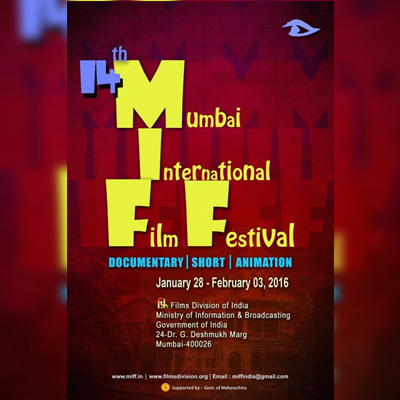
    MUMBAI: The Manipuri documentary film Phum Shang has won the Golden Conch Award for the Best Documentary Film (upto 60 minutes) at the 14th Mumbai International Film Festival for Documentary, Animation and Short Films, which concluded here today.

    The Swiss film My Name is Salt and Indian entry Placebo shared the Gold Conch award for the Best Feature length Documentary Film.

    Debanjan Nandy’s animation film Chhaya bagged the first prize in the Animation Category of International Competition. Mumbai filmmaker Devashish Makhija’s Agli Baar  shared the Best Short Fiction Film honours with the UK entry Solo Finale by Ingo Putze.

    The Dadasaheb Phalke Award for the Best Debut Film of a Director went to Far From Home by Copenhagen, Denmark based film maker Nitesh Anjan.

    The Festival organised by the Films Division every second year in collaboration with the Government of Maharashtra and the Indian Documentary Producers Association had commenced on 28 January.

    The main awards were given away by Maharashtra Governor Vidyasagar Rao in the presence of Maharashtra Culture Minister Vinod Shreedhar Tawde, filmmaker Ramesh Sippy, brand ambassador Jackie Shroff and Festival director Mukesh Sharma.

    Speaking on the occasion, Rao said that he would like documentaries to transform themselves from those for a young India since the average age of the Indian today was 29, which was far below that of the United States or China.

    He also wanted the Films Division to explore new talent from remote parts of the country and even economically weaker sections. Rao urged the Division to work with universities and schools in the state to ensure that films are made by students and also shown there.

    “The documentary format is important as these films help to understand the complexities of the situation in all parts of the world,” he said.

    He wanted Doordarshan to reserve a one-hour slot every week for documentary, short and animation films.

    Rao also rooted for more women filmmakers to emerge and said MIFF should encourage innovation and new ideas.

    Tawde said that documentaries provoked governments to action when they exposed ills in society and thereby played an important role. “MIFF should be held every year, and the state government can host it in the intervening year in case the Information and Broadcasting Ministry at the centre is not inclined to do so,” he added.

    Sippy said that commercial cinema was glamorous but the real challenge lay in making documentary or short films. “This should be encouraged,” he said.

    Shroff said he had come into the Festival as the brand ambassador but was leaving as a student who had learnt so much about documentaries and shorts. He also wanted the Festival to be made an annual affair. Answering a question by presenter Sameera Gujjar, he said that commercial films were dreams whereas the documentary were facts. Asked about national and international cinema, he said feelings were the same everywhere.

    Biju Dhanapalan who had been a member of the national jury said that special awards should be instituted for investigative documentaries, and those which have archival value, apart from making a strong appeal for restoring the Silver Conch award for the second best film. He also wanted the event to made into an annual feature. He said the national jury saw 27 films.

    Ashish Kulkarni, who headed the Animation and New Media Jury, said that films by professionals and students could not be clubbed together and there had to be separate awards for these. He also wanted more awards for new media category. He said that the jury saw 21 animation and 32 new media films and was impressed with the way the filmmakers combined various mediums.

    A total of 385 documentaries, shorts and animation films were shown at the Festival from around 20 countries out of the 850 received.

    The 52 minute documentary Phum Shang directed by Hao Bam Pabankumar who is an alumnus of the Satyajit Ray Film & Television Institute, Kolkata, critically examines the serious environmental problems faced at the Loktak lake. The largest fresh water lake in North East India characterised by its unique floating biomass, known as ‘Phumdi,’ is today considered a dying lake due to unchecked human activity. Pabankumar won the Golden Conch Award and a cash prize of Rs 3 lakhs.

    My Name is Salt directed by Mumbai born and Zurich based Farida Pacha is a film about the journey of thousands of families to the Rann of Kutch to extract whitest salt in the world. Chandigarh based film maker Abhay Kumar’s 96 minutes film Placebo explores the stress and pressure faced by medical students.

    My Name Is Salt also won the Best Cinematographer award for Lutz Konermann, while Placebo, which won the Award for Best Editor, was also declared the Most Innovative Film in the competition section.

  • Manipuri film bags top award at Mumbai International Film Festival

    Manipuri film bags top award at Mumbai International Film Festival

    MUMBAI: The Manipuri documentary film Phum Shang has won the Golden Conch Award for the Best Documentary Film (upto 60 minutes) at the 14th Mumbai International Film Festival for Documentary, Animation and Short Films, which concluded here today.

    The Swiss film My Name is Salt and Indian entry Placebo shared the Gold Conch award for the Best Feature length Documentary Film.

    Debanjan Nandy’s animation film Chhaya bagged the first prize in the Animation Category of International Competition. Mumbai filmmaker Devashish Makhija’s Agli Baar  shared the Best Short Fiction Film honours with the UK entry Solo Finale by Ingo Putze.

    The Dadasaheb Phalke Award for the Best Debut Film of a Director went to Far From Home by Copenhagen, Denmark based film maker Nitesh Anjan.

    The Festival organised by the Films Division every second year in collaboration with the Government of Maharashtra and the Indian Documentary Producers Association had commenced on 28 January.

    The main awards were given away by Maharashtra Governor Vidyasagar Rao in the presence of Maharashtra Culture Minister Vinod Shreedhar Tawde, filmmaker Ramesh Sippy, brand ambassador Jackie Shroff and Festival director Mukesh Sharma.

    Speaking on the occasion, Rao said that he would like documentaries to transform themselves from those for a young India since the average age of the Indian today was 29, which was far below that of the United States or China.

    He also wanted the Films Division to explore new talent from remote parts of the country and even economically weaker sections. Rao urged the Division to work with universities and schools in the state to ensure that films are made by students and also shown there.

    “The documentary format is important as these films help to understand the complexities of the situation in all parts of the world,” he said.

    He wanted Doordarshan to reserve a one-hour slot every week for documentary, short and animation films.

    Rao also rooted for more women filmmakers to emerge and said MIFF should encourage innovation and new ideas.

    Tawde said that documentaries provoked governments to action when they exposed ills in society and thereby played an important role. “MIFF should be held every year, and the state government can host it in the intervening year in case the Information and Broadcasting Ministry at the centre is not inclined to do so,” he added.

    Sippy said that commercial cinema was glamorous but the real challenge lay in making documentary or short films. “This should be encouraged,” he said.

    Shroff said he had come into the Festival as the brand ambassador but was leaving as a student who had learnt so much about documentaries and shorts. He also wanted the Festival to be made an annual affair. Answering a question by presenter Sameera Gujjar, he said that commercial films were dreams whereas the documentary were facts. Asked about national and international cinema, he said feelings were the same everywhere.

    Biju Dhanapalan who had been a member of the national jury said that special awards should be instituted for investigative documentaries, and those which have archival value, apart from making a strong appeal for restoring the Silver Conch award for the second best film. He also wanted the event to made into an annual feature. He said the national jury saw 27 films.

    Ashish Kulkarni, who headed the Animation and New Media Jury, said that films by professionals and students could not be clubbed together and there had to be separate awards for these. He also wanted more awards for new media category. He said that the jury saw 21 animation and 32 new media films and was impressed with the way the filmmakers combined various mediums.

    A total of 385 documentaries, shorts and animation films were shown at the Festival from around 20 countries out of the 850 received.

    The 52 minute documentary Phum Shang directed by Hao Bam Pabankumar who is an alumnus of the Satyajit Ray Film & Television Institute, Kolkata, critically examines the serious environmental problems faced at the Loktak lake. The largest fresh water lake in North East India characterised by its unique floating biomass, known as ‘Phumdi,’ is today considered a dying lake due to unchecked human activity. Pabankumar won the Golden Conch Award and a cash prize of Rs 3 lakhs.

    My Name is Salt directed by Mumbai born and Zurich based Farida Pacha is a film about the journey of thousands of families to the Rann of Kutch to extract whitest salt in the world. Chandigarh based film maker Abhay Kumar’s 96 minutes film Placebo explores the stress and pressure faced by medical students.

    My Name Is Salt also won the Best Cinematographer award for Lutz Konermann, while Placebo, which won the Award for Best Editor, was also declared the Most Innovative Film in the competition section.