Tag: Doordarshan

  • AIR revenue has shown gradual growth; DD has not: Govt

    AIR revenue has shown gradual growth; DD has not: Govt

    NEW DELHI: In a digital age when most entertainment is downloadable and proliferation of television has made information easily accessible to general public, it’s heartening to note that pubcaster radio is holding its own against public-funded television.

    Minister for Information and Broadcasting (MIB) M Venkaiah Naidu informed Lok Sabha (Lower House of Parliament) that All India Radio, managed by pubcaster Prasar Bharati, has shown a gradual increase in revenues.

    The MIB minister added that on the other hand Doordarshan’s revenue generation has been below par.

    According to Naidu, operational cost of Doordarshan and All India Radio, however, is going north as a result of increased manpower hiring and resultant hike in remunerations and benefits given to government officials.

    Though Prasar Bharati is an autonomous body, the government has been providing non-plan support for meeting 100 per cent expenses towards salary and salary-related expenses and under planned expenditure for technical capital requirements.

    Prasar Bharati has received a total of Rs 9486.52 crore between 2013-2014 and June 2016 as plan or non-plan grant from MIB.

    During these years, the amount peaked in 2015-16 when the total grant was Rs 2795.89 crore.

    Year-wise Details of total expenditure and Revenue of DD and AIR during last five years are given as under:

    (Rs. in crore)

    All India Radio

    Year        Total expenditure          Revenue earned (Exclusive of Service Tax)

    2011-12   1213.58                                       325.01

    2012-13   1322.06                                     319.50

    2013-14   1460.33                                     367.50

    2014-15   1615.70                                     435.10

    2015-16   1710.08                                     447.76

    (Rs. in crore)

    Doordarshan

    Year       Total expenditure          Revenue earned (Exclusive of Service Tax)

    2011-12    1381.38                                              735.32

    2012-13    1501.64                                            1025.78

    2013-14     1602.94                                           1043.13

    2014-15     1815.22                                             911.01

    2015-16     1863.60                                            755.79

    Meanwhile, Naidu added that AIR has no mechanism to undertake audience measurement at regular intervals through field surveys.

    In the year 2014, DD National’s all-India audience ratings were 0.17%. In the year 2015, the ratings percentage dropped to 0.10% owing to the fact that the ratings agency did not cover 100 per cent of DD National on an all- India basis, MIB minister explained to Parliament.

    Government also admitted that increasing reach of other TV channels, mainly privately-owned, into rural areas has eaten into the share of DD viewership.

    In the current year, till the 27th week of 2016, ratings percentage of DD National was 0.11% as per data generated by Broadcast Audience Research Council (BARC), which is an industry initiative.

    EXPENDITURE ON TRANSMITTERS: Over Rs 1,033 crore has been spent by DD on maintenance of low-power and very low powered transmitters.

    The total expenditure incurred by Doordarshan during the last three years was 2013-14 Rs. 318.16 crore; 2014-15 Rs. 349.66 crore and

    2015-16 Rs. 365.65 crore.

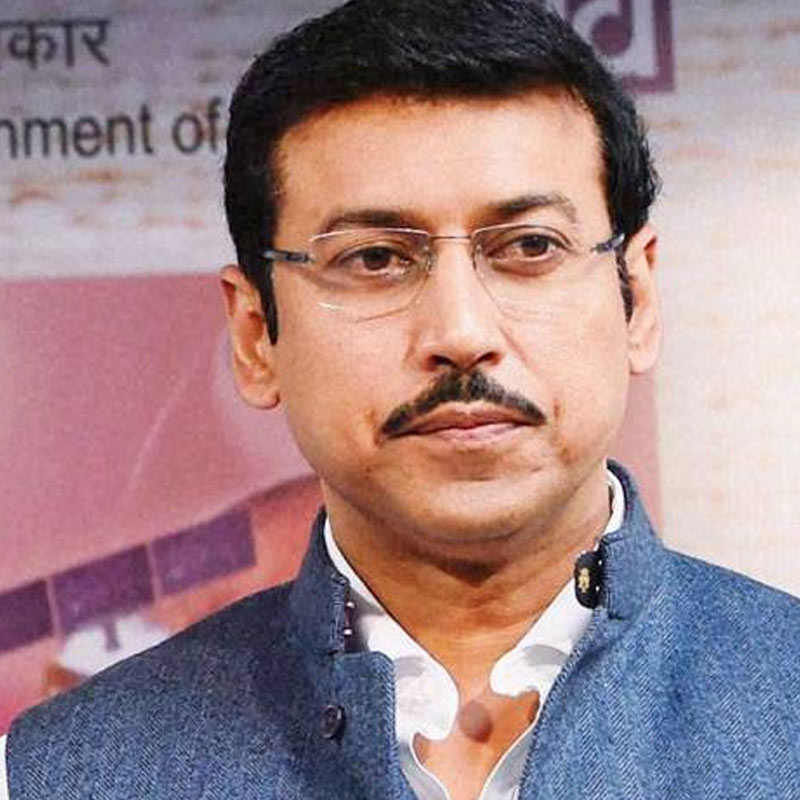
    Minister of State for Information and Broadcasting Rajyavardhan Rathore told the Lok Sabha that Prasar Bharati has 368 very low power TV transmitters (VLPTs) in the country.

    The junior MIB minister said that while no in-house survey has been conducted to assess LPT (low power transmitters) viewership by DD, BARC too doesn’t provide such data.

    Prasar Bharati has decided to close four LPTs as they lie in the coverage zone of nearby high power transmitters (HPTs) in Madhepura (Bihar); Simri Bakhtiarpur (Bihar); Khagaria (Bihar); and Kalna (West Bengal).

    Rathore also added that upgradation/modernization of Doordarshan Kendras is a continuous process.
     

  • AIR revenue has shown gradual growth; DD has not: Govt

    AIR revenue has shown gradual growth; DD has not: Govt

    NEW DELHI: In a digital age when most entertainment is downloadable and proliferation of television has made information easily accessible to general public, it’s heartening to note that pubcaster radio is holding its own against public-funded television.

    Minister for Information and Broadcasting (MIB) M Venkaiah Naidu informed Lok Sabha (Lower House of Parliament) that All India Radio, managed by pubcaster Prasar Bharati, has shown a gradual increase in revenues.

    The MIB minister added that on the other hand Doordarshan’s revenue generation has been below par.

    According to Naidu, operational cost of Doordarshan and All India Radio, however, is going north as a result of increased manpower hiring and resultant hike in remunerations and benefits given to government officials.

    Though Prasar Bharati is an autonomous body, the government has been providing non-plan support for meeting 100 per cent expenses towards salary and salary-related expenses and under planned expenditure for technical capital requirements.

    Prasar Bharati has received a total of Rs 9486.52 crore between 2013-2014 and June 2016 as plan or non-plan grant from MIB.

    During these years, the amount peaked in 2015-16 when the total grant was Rs 2795.89 crore.

    Year-wise Details of total expenditure and Revenue of DD and AIR during last five years are given as under:

    (Rs. in crore)

    All India Radio

    Year        Total expenditure          Revenue earned (Exclusive of Service Tax)

    2011-12   1213.58                                       325.01

    2012-13   1322.06                                     319.50

    2013-14   1460.33                                     367.50

    2014-15   1615.70                                     435.10

    2015-16   1710.08                                     447.76

    (Rs. in crore)

    Doordarshan

    Year       Total expenditure          Revenue earned (Exclusive of Service Tax)

    2011-12    1381.38                                              735.32

    2012-13    1501.64                                            1025.78

    2013-14     1602.94                                           1043.13

    2014-15     1815.22                                             911.01

    2015-16     1863.60                                            755.79

    Meanwhile, Naidu added that AIR has no mechanism to undertake audience measurement at regular intervals through field surveys.

    In the year 2014, DD National’s all-India audience ratings were 0.17%. In the year 2015, the ratings percentage dropped to 0.10% owing to the fact that the ratings agency did not cover 100 per cent of DD National on an all- India basis, MIB minister explained to Parliament.

    Government also admitted that increasing reach of other TV channels, mainly privately-owned, into rural areas has eaten into the share of DD viewership.

    In the current year, till the 27th week of 2016, ratings percentage of DD National was 0.11% as per data generated by Broadcast Audience Research Council (BARC), which is an industry initiative.

    EXPENDITURE ON TRANSMITTERS: Over Rs 1,033 crore has been spent by DD on maintenance of low-power and very low powered transmitters.

    The total expenditure incurred by Doordarshan during the last three years was 2013-14 Rs. 318.16 crore; 2014-15 Rs. 349.66 crore and

    2015-16 Rs. 365.65 crore.

    Minister of State for Information and Broadcasting Rajyavardhan Rathore told the Lok Sabha that Prasar Bharati has 368 very low power TV transmitters (VLPTs) in the country.

    The junior MIB minister said that while no in-house survey has been conducted to assess LPT (low power transmitters) viewership by DD, BARC too doesn’t provide such data.

    Prasar Bharati has decided to close four LPTs as they lie in the coverage zone of nearby high power transmitters (HPTs) in Madhepura (Bihar); Simri Bakhtiarpur (Bihar); Khagaria (Bihar); and Kalna (West Bengal).

    Rathore also added that upgradation/modernization of Doordarshan Kendras is a continuous process.
     

  • TRAI extends time for views on opening up DTT to private players

    TRAI extends time for views on opening up DTT to private players

    NEW DELHI: With sharing of Prasar Bharati infrastructure remaining a ticklish issue, the Telecom Regulatory Authority has decided to give more time to stakeholdes to respond to its consultation paper on the issue of Digital Terrestrial Transmission (DTT), which has until now remained a monopoly of the public broadcaster Doordarshan.

    Sakeholders can now respond with comments by 5 August and counter-comments on12 August, and Trai has said no further time would be given.

    The paper issued on 24 June 2016 was aimed at examining opening up DTT to private players in an effort to reach the largest audiences in the country.

    indiantelevision.com had earlier reported that the government was in the final stages of this exercise. Later, the website quoted Prasar Bharati Chief Executive Officer Jawhar Sircar has saying that the pubcaster had itself cleared this more than a year earlier, even while pointing out that this would necessitate use of the Prasar Bharati infrastructure.

    DD, which presently has exclusive domain over terrestrial broadcasting, ranks amongst the world’s largest terrestrial television networks. It has a network of 1412 analog transmitters that provide TV services through two national channels namely, DD National and DD News. In addition to this, the network also broadcast several regional TV channels over the terrestrial network in a time sharing mode to meet the local and regional needs of people in different parts of the country. All TV channels provided by DD are free-to-air.

    DTT for broadcasting TV programme services was first introduced in the UK in 1998 by deploying the first generation DVB-T standard developed by the European Digital Video Broadcasting (DVB) group. Since then, Trai says many new standards have evolved and at this juncture implementation of the second generation standards are underway. The DTT broadcasting spectrum has been harmonized with earlier analog spectrum allocation and therefore DTT makes use of similar analog channel allocations. Latest DTT technologies provide a number of advantages over analog terrestrial broadcasting technology, of which some include better quality TV reception – with enhanced picture and sound performance; eEfficient use of frequency – one DTT transmitter can broadcast multiple TV channels; frequency reuse possible – a single frequency network (SFN) can be implemented to cover a large geographical area; efficient reception of TV channels in portable environment such as on moving vehicles; TV channels can also be received on mobile phones and handheld devices; and the 7 or 8 MHz TV frequency band can accommodate 10-12 Standard Definition (SD) TV channels or it can be employed as a data pipe to deliver different type of services including radio services.

    The DTT platform is flexible and content format agnostic – newer formats of TV channels such as HD TV, 3D TV, UHD TV, data and radio services etc. can thus be delivered with reduced transmission power requirements. Digitization also allows for government bodies to reclaim spectrum and repurpose it.

    With standardized DTT transmission and clear advantages in terms of effective frequency utilization as well as enhanced TV quality, many countries the world over have laid down clear roadmaps to switch-off analog terrestrial TV transmission with a transition to DTT. In India, though work for changeover from Analog terrestrial transmission to digital terrestrial transmission by DD has already commenced, a clear roadmap is however unavailable.

  • TRAI extends time for views on opening up DTT to private players

    TRAI extends time for views on opening up DTT to private players

    NEW DELHI: With sharing of Prasar Bharati infrastructure remaining a ticklish issue, the Telecom Regulatory Authority has decided to give more time to stakeholdes to respond to its consultation paper on the issue of Digital Terrestrial Transmission (DTT), which has until now remained a monopoly of the public broadcaster Doordarshan.

    Sakeholders can now respond with comments by 5 August and counter-comments on12 August, and Trai has said no further time would be given.

    The paper issued on 24 June 2016 was aimed at examining opening up DTT to private players in an effort to reach the largest audiences in the country.

    indiantelevision.com had earlier reported that the government was in the final stages of this exercise. Later, the website quoted Prasar Bharati Chief Executive Officer Jawhar Sircar has saying that the pubcaster had itself cleared this more than a year earlier, even while pointing out that this would necessitate use of the Prasar Bharati infrastructure.

    DD, which presently has exclusive domain over terrestrial broadcasting, ranks amongst the world’s largest terrestrial television networks. It has a network of 1412 analog transmitters that provide TV services through two national channels namely, DD National and DD News. In addition to this, the network also broadcast several regional TV channels over the terrestrial network in a time sharing mode to meet the local and regional needs of people in different parts of the country. All TV channels provided by DD are free-to-air.

    DTT for broadcasting TV programme services was first introduced in the UK in 1998 by deploying the first generation DVB-T standard developed by the European Digital Video Broadcasting (DVB) group. Since then, Trai says many new standards have evolved and at this juncture implementation of the second generation standards are underway. The DTT broadcasting spectrum has been harmonized with earlier analog spectrum allocation and therefore DTT makes use of similar analog channel allocations. Latest DTT technologies provide a number of advantages over analog terrestrial broadcasting technology, of which some include better quality TV reception – with enhanced picture and sound performance; eEfficient use of frequency – one DTT transmitter can broadcast multiple TV channels; frequency reuse possible – a single frequency network (SFN) can be implemented to cover a large geographical area; efficient reception of TV channels in portable environment such as on moving vehicles; TV channels can also be received on mobile phones and handheld devices; and the 7 or 8 MHz TV frequency band can accommodate 10-12 Standard Definition (SD) TV channels or it can be employed as a data pipe to deliver different type of services including radio services.

    The DTT platform is flexible and content format agnostic – newer formats of TV channels such as HD TV, 3D TV, UHD TV, data and radio services etc. can thus be delivered with reduced transmission power requirements. Digitization also allows for government bodies to reclaim spectrum and repurpose it.

    With standardized DTT transmission and clear advantages in terms of effective frequency utilization as well as enhanced TV quality, many countries the world over have laid down clear roadmaps to switch-off analog terrestrial TV transmission with a transition to DTT. In India, though work for changeover from Analog terrestrial transmission to digital terrestrial transmission by DD has already commenced, a clear roadmap is however unavailable.

  • Govt earns over Rs 2,400 crore as licence fee from DTH players in 3 years: Rathore

    Govt earns over Rs 2,400 crore as licence fee from DTH players in 3 years: Rathore

    NEW DELHI: A sum of Rs 2400.45 crore has been earned by the government from licence fee from the six private direct-to-home players in the last three years.

    Lok Sabha was told in a written reply by Minister of State for Ministry of Information and Broadcasting (MIB) that while “there is no restriction on the total number of DTH licenses, no new application has been received in the Ministry for grant of DTH license.”

    He said that a sum of Rs Rs.836.52 crores was earned in 2014-15, while the revenue from licence for 2015-16 was Rs.816.15 crores and for 2016-17 was Rs.747.78 crores.

    The Ministry has granted license to six private companies: Dish TV India Limited; Tata Sky Limited; Sun Direct TV Pvt. Limited; Reliance BIG TV Limited; Bharti Telemedia Limited and Videocon d2h Limited

    In addition, pubcaster Doordarshan provides a free-to-air DTH services in the country from its platform Freedish, which only requires a one-time investment in purchasing the dish and linked set-top-box.

    DTH licenses, under the DTH guidelines, are granted to those companies which fulfill the eligibility criteria, terms and conditions and are subject to security clearance and technical clearances by the appropriate authorities of the government. The details are available on the website of this Ministry at www.mib.gov.in.

    In a related development, broadcast carriage regulator TRAI has set in motion a consultation process to explore whether the private DTH operators and other distribution platforms can share infrastructure so as to optimise their usage and reduce overall cost.

    The TRAI proposal has elicited mixed response from DTH operators till now, while Hong Kong-based Asian pay TV industry organisation CASBAA has opposed any government or regulator mandated sharing on the ground that consumers will not benefit ultimately, apart from other reasons.

  • Govt earns over Rs 2,400 crore as licence fee from DTH players in 3 years: Rathore

    Govt earns over Rs 2,400 crore as licence fee from DTH players in 3 years: Rathore

    NEW DELHI: A sum of Rs 2400.45 crore has been earned by the government from licence fee from the six private direct-to-home players in the last three years.

    Lok Sabha was told in a written reply by Minister of State for Ministry of Information and Broadcasting (MIB) that while “there is no restriction on the total number of DTH licenses, no new application has been received in the Ministry for grant of DTH license.”

    He said that a sum of Rs Rs.836.52 crores was earned in 2014-15, while the revenue from licence for 2015-16 was Rs.816.15 crores and for 2016-17 was Rs.747.78 crores.

    The Ministry has granted license to six private companies: Dish TV India Limited; Tata Sky Limited; Sun Direct TV Pvt. Limited; Reliance BIG TV Limited; Bharti Telemedia Limited and Videocon d2h Limited

    In addition, pubcaster Doordarshan provides a free-to-air DTH services in the country from its platform Freedish, which only requires a one-time investment in purchasing the dish and linked set-top-box.

    DTH licenses, under the DTH guidelines, are granted to those companies which fulfill the eligibility criteria, terms and conditions and are subject to security clearance and technical clearances by the appropriate authorities of the government. The details are available on the website of this Ministry at www.mib.gov.in.

    In a related development, broadcast carriage regulator TRAI has set in motion a consultation process to explore whether the private DTH operators and other distribution platforms can share infrastructure so as to optimise their usage and reduce overall cost.

    The TRAI proposal has elicited mixed response from DTH operators till now, while Hong Kong-based Asian pay TV industry organisation CASBAA has opposed any government or regulator mandated sharing on the ground that consumers will not benefit ultimately, apart from other reasons.

  • Producers question DD’s decision to call of prime time slot  auctions

    Producers question DD’s decision to call of prime time slot auctions

    MUMBAI: When Prasar Bharati had announced that it would auction its prime time slots between 7 pm to 11 pm on Doordarshan, the leading production houses in the country had received it with enthusiasm. Here was a chance for them to expand their audience base through DD’s terrestrial distribution network and reach the rural market that so many brands are vying to address. Some of the big name production houses did send in their bids including Balaji Telefilms, Keylight Productions, and Shakuntalam Telefilms. And it seemed that DD was going to get back in the ratings game after all.

    But then suddenly a couple of days later, the pubcaster once again announced that it was calling off the entire time slot privatization process after receiving applications for the bid scheduled on 17 and 18 July. DD’s move was met with much skepticism and disappointment.

    “The auction being called off was very unfortunate.  At the end of the day, these (channels under Prasar Bharati and its content) are all national assets that need to be taken care of in the best possible manner,” says one of the producers who had put in his bid. “If you initiate something like this, you would want the broadcaster to see it through its logical conclusion Though I am sure DD has had its reasons, and that the impact will be felt more on its part, I feel that it’s the nation’s loss.”

    The reason for nixing the auction that DD gave was because several applications did not meeting its eligibility criteria, and many defaulted on the application fee of Rs 5000 for the bid —  as reported by media. To this, many producers who had applied for the auction have raised their eyebrows.

    “I really can’t ascertain the reason. The fact that top producers wanted to bid to enter the auction and be a part of the DD story was reason enough to qualify them. There was no reason to disqualify them on technical grounds. What is the point of having made all the effort and getting disqualified over a Rs 5000 entry fee? I find this reason baseless,” expresses another disgruntled producer.

    It is to be noted that Prasar Bharati required eligible bidders to have logged a revenue of at least Rs 5 crore per annum in each of the past three financial years and to have  produced at least 300 hours of Hindi general entertainment programming in the past two calendar years.

    Undoubtedly, in a bid to ‘introduce fresh programming to get eyeballs back,’ DD had placed its bets high.

    But were the promised returns from the said deal as lucrative for the production houses?  “When I went through the request for proposals (RFP) document earlier, we found the proposal very unavailable at that point,” divulges a major contributor to India’s Hindi general entertainment channels who chose to opt out of the auctions after going through the particulars of the deal.

    “I had personally requested for certain changes in the RFP document, to which DD had answered saying that it can’t be done. DD must have had its own point of view on the matter and I am not denying them of it. Having said that I am not surprised it was  called off. The issue was more financial than creative, for that matter. We felt the producers should have been given more space on how to produce, what to produce and the terms of slot retention as well. Given the broadcaster’s parameters, it is best that DD maintained and ran its own prime time,” he further opines.   

    Seconding this opinion, another veteran producer  of the television world (who had been approached to bid but declined) explained why the idea was dubious from the start.

    “I knew that the entire process would be botched up right from the start,” he says. “The thinking in DD needs to change. When it is inviting private sector producers to produce content, then it needs to give them what private channels would do in exchange for air time barter deals. At one stage, DD could get by with its high demands from advertisers, and media agencies because it was the only player in the rural areas and had huge audiences. Now the scenario has changed and other broadcasters also have their share of the viewership.

    “DD’s processes are bureaucratic and antiquated and it is not responsive to market demands like the private channels are. For us, it didn’t make economic sense to invest in the time slots and produce content for the channel without any guarantee of returns on them. Moreover there is no clarity to DD’s marketing and promotional strategy for the shows. It doesn’t have a system in place for cross promotional marketing between its shows, something very important and inherent to the current broadcast business. Then there is the issue of dealing with DD’s inhouse producers who are too scared and go only by the rules and some of them also misuse the rules.”

    After this singular failure of the time slot auctions, observers wonder whether DD will be able to once again go down that street. And whether it will be able to gain the producers’ trust and confidence if it does make another try.

    The new DD director general Supriya Sahu has her task out and she has to decide on whether the broadcaster should take the commercial route or stick to its knitting of public service broadcasting and forget about generating revenues. If it is the latter, then she needs to simply ask for more government funds and improve the quality of public service programmes by retraining its pool of existing in-house talent.

    Industry is watching to see the path she chooses.

    DD officials spoke to indiantelevision.com off the record after the story was published. This is what they said: “Those who sent in names for bidding were disqualified on some ground or other as they failed to fulfil the rules and regulations for the auctions. The auctions have not been cancelled, but suspended for the present.The Prasar Bharati Board will meet on 26 July where it will take further decisions on the matter – this may include some changes in rules and regulations.”

    (Updated on 20 July 2016 3:26 pm)

  • Producers question DD’s decision to call of prime time slot  auctions

    Producers question DD’s decision to call of prime time slot auctions

    MUMBAI: When Prasar Bharati had announced that it would auction its prime time slots between 7 pm to 11 pm on Doordarshan, the leading production houses in the country had received it with enthusiasm. Here was a chance for them to expand their audience base through DD’s terrestrial distribution network and reach the rural market that so many brands are vying to address. Some of the big name production houses did send in their bids including Balaji Telefilms, Keylight Productions, and Shakuntalam Telefilms. And it seemed that DD was going to get back in the ratings game after all.

    But then suddenly a couple of days later, the pubcaster once again announced that it was calling off the entire time slot privatization process after receiving applications for the bid scheduled on 17 and 18 July. DD’s move was met with much skepticism and disappointment.

    “The auction being called off was very unfortunate.  At the end of the day, these (channels under Prasar Bharati and its content) are all national assets that need to be taken care of in the best possible manner,” says one of the producers who had put in his bid. “If you initiate something like this, you would want the broadcaster to see it through its logical conclusion Though I am sure DD has had its reasons, and that the impact will be felt more on its part, I feel that it’s the nation’s loss.”

    The reason for nixing the auction that DD gave was because several applications did not meeting its eligibility criteria, and many defaulted on the application fee of Rs 5000 for the bid —  as reported by media. To this, many producers who had applied for the auction have raised their eyebrows.

    “I really can’t ascertain the reason. The fact that top producers wanted to bid to enter the auction and be a part of the DD story was reason enough to qualify them. There was no reason to disqualify them on technical grounds. What is the point of having made all the effort and getting disqualified over a Rs 5000 entry fee? I find this reason baseless,” expresses another disgruntled producer.

    It is to be noted that Prasar Bharati required eligible bidders to have logged a revenue of at least Rs 5 crore per annum in each of the past three financial years and to have  produced at least 300 hours of Hindi general entertainment programming in the past two calendar years.

    Undoubtedly, in a bid to ‘introduce fresh programming to get eyeballs back,’ DD had placed its bets high.

    But were the promised returns from the said deal as lucrative for the production houses?  “When I went through the request for proposals (RFP) document earlier, we found the proposal very unavailable at that point,” divulges a major contributor to India’s Hindi general entertainment channels who chose to opt out of the auctions after going through the particulars of the deal.

    “I had personally requested for certain changes in the RFP document, to which DD had answered saying that it can’t be done. DD must have had its own point of view on the matter and I am not denying them of it. Having said that I am not surprised it was  called off. The issue was more financial than creative, for that matter. We felt the producers should have been given more space on how to produce, what to produce and the terms of slot retention as well. Given the broadcaster’s parameters, it is best that DD maintained and ran its own prime time,” he further opines.   

    Seconding this opinion, another veteran producer  of the television world (who had been approached to bid but declined) explained why the idea was dubious from the start.

    “I knew that the entire process would be botched up right from the start,” he says. “The thinking in DD needs to change. When it is inviting private sector producers to produce content, then it needs to give them what private channels would do in exchange for air time barter deals. At one stage, DD could get by with its high demands from advertisers, and media agencies because it was the only player in the rural areas and had huge audiences. Now the scenario has changed and other broadcasters also have their share of the viewership.

    “DD’s processes are bureaucratic and antiquated and it is not responsive to market demands like the private channels are. For us, it didn’t make economic sense to invest in the time slots and produce content for the channel without any guarantee of returns on them. Moreover there is no clarity to DD’s marketing and promotional strategy for the shows. It doesn’t have a system in place for cross promotional marketing between its shows, something very important and inherent to the current broadcast business. Then there is the issue of dealing with DD’s inhouse producers who are too scared and go only by the rules and some of them also misuse the rules.”

    After this singular failure of the time slot auctions, observers wonder whether DD will be able to once again go down that street. And whether it will be able to gain the producers’ trust and confidence if it does make another try.

    The new DD director general Supriya Sahu has her task out and she has to decide on whether the broadcaster should take the commercial route or stick to its knitting of public service broadcasting and forget about generating revenues. If it is the latter, then she needs to simply ask for more government funds and improve the quality of public service programmes by retraining its pool of existing in-house talent.

    Industry is watching to see the path she chooses.

    DD officials spoke to indiantelevision.com off the record after the story was published. This is what they said: “Those who sent in names for bidding were disqualified on some ground or other as they failed to fulfil the rules and regulations for the auctions. The auctions have not been cancelled, but suspended for the present.The Prasar Bharati Board will meet on 26 July where it will take further decisions on the matter – this may include some changes in rules and regulations.”

    (Updated on 20 July 2016 3:26 pm)

  • DTH channels being launched by September to impart education: Javadekar

    DTH channels being launched by September to impart education: Javadekar

    NEW DELHI: Even as there is little possibility of Gyan Darshan getting revived on the television screen, 32 Direct to Home (DTH) Television Channels are to be used for providing high quality educational content to all teachers, students and citizens across the country interested in lifelong learning.

    The 32 channels are proposed to be launched before September 2016. Initially the programmes will be in English but with the passage of time the programmes will be launched in regional languages as well.

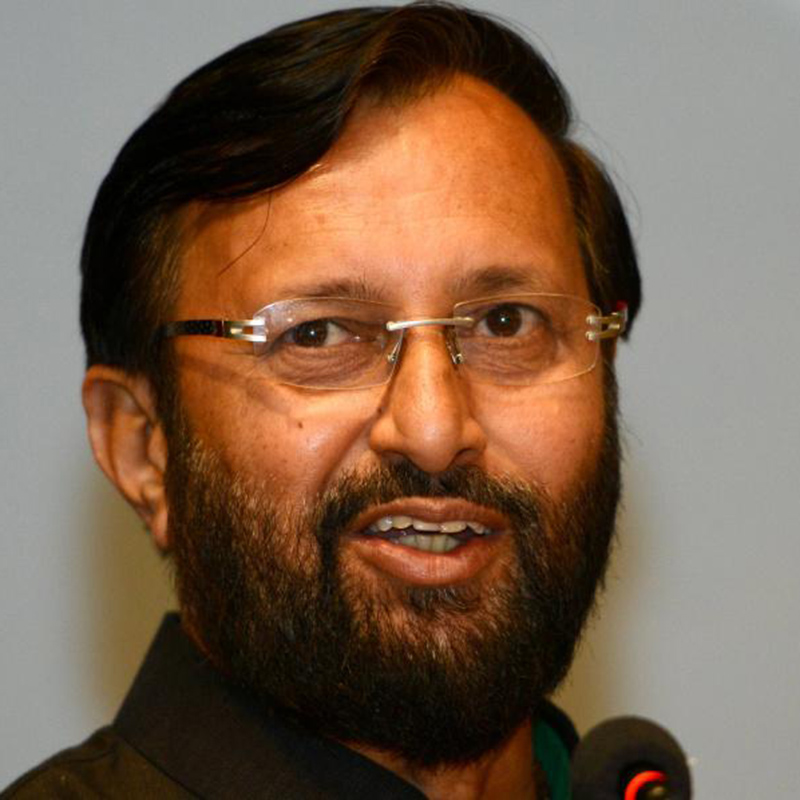
    Human Resource Development Minister Prakash Javadekar told the Lok Sabha today that the Government has approved a project to launch the ‘SWAYAM Prabha.’ There will be new content of four hours every day, which would be telecast six times a day allowing the student to choose the time of his/her convenience.

    The main features of SWAYAM Prabha would be curriculum based course contents covering diverse disciplines such as arts, science, commerce, performing arts, social sciences and humanities subjects, engineering, technology, law, medicine, agriculture etc.

    It would also cover all level of education: School education, undergraduate, postgraduate, engineering, out of school children, vocational courses and teacher training.

    Gyan Darshan and Gyan Vani had been stopped on Doordarshan and All India Radio respectively when the Indira Gandhi National Open University failed to clear huge dues to the pubcaster for these channels.

    However, these channels were later launched on the web, which was felt to be a bad alternative as the majority did not have access to internet.

    IGNOU owed more than Rs 21.6 crore to All India Radio when it was shut on 30 September after the university failed to pay the outstanding dues for three years (for their 37 stations).

    Gyan Darshan had been stopped even earlier in the beginning of 2014. It was also learnt byindiantelevision.com that IGNOU had applied to WPC for a licence to run television channels, but had been refused by the Department of Telecom which had told them that only Doordarshan can apply for such a channel. DD had refused to apply for the channel on behalf of IGNOU in view of the report by the Telecom Regulatory Authority of India which bars allotment of licences to government bodies to start their own channels.

  • DTH channels being launched by September to impart education: Javadekar

    DTH channels being launched by September to impart education: Javadekar

    NEW DELHI: Even as there is little possibility of Gyan Darshan getting revived on the television screen, 32 Direct to Home (DTH) Television Channels are to be used for providing high quality educational content to all teachers, students and citizens across the country interested in lifelong learning.

    The 32 channels are proposed to be launched before September 2016. Initially the programmes will be in English but with the passage of time the programmes will be launched in regional languages as well.

    Human Resource Development Minister Prakash Javadekar told the Lok Sabha today that the Government has approved a project to launch the ‘SWAYAM Prabha.’ There will be new content of four hours every day, which would be telecast six times a day allowing the student to choose the time of his/her convenience.

    The main features of SWAYAM Prabha would be curriculum based course contents covering diverse disciplines such as arts, science, commerce, performing arts, social sciences and humanities subjects, engineering, technology, law, medicine, agriculture etc.

    It would also cover all level of education: School education, undergraduate, postgraduate, engineering, out of school children, vocational courses and teacher training.

    Gyan Darshan and Gyan Vani had been stopped on Doordarshan and All India Radio respectively when the Indira Gandhi National Open University failed to clear huge dues to the pubcaster for these channels.

    However, these channels were later launched on the web, which was felt to be a bad alternative as the majority did not have access to internet.

    IGNOU owed more than Rs 21.6 crore to All India Radio when it was shut on 30 September after the university failed to pay the outstanding dues for three years (for their 37 stations).

    Gyan Darshan had been stopped even earlier in the beginning of 2014. It was also learnt byindiantelevision.com that IGNOU had applied to WPC for a licence to run television channels, but had been refused by the Department of Telecom which had told them that only Doordarshan can apply for such a channel. DD had refused to apply for the channel on behalf of IGNOU in view of the report by the Telecom Regulatory Authority of India which bars allotment of licences to government bodies to start their own channels.