Tag: Doordarshan

  • Prasar Bharati invites applications for acquisition of ready-made TV content

    Prasar Bharati invites applications for acquisition of ready-made TV content

    Mumbai: Public broadcaster Prasar Bharati has invited applications for acquisition of ready-made TV content. The applications should be submitted via the content acquisition portal of Prasar Bharati by 7 February.

    The broadcaster has specified that the content must be targeted towards an audience of children and young adults up to the age of 18 in the languages specified on the portal. The applied content should not have been aired either fully or partly from any free-to-air distribution platform like DD Free Dish in the territory of India through terrestrial, cable or direct-to-home mode during the previous three calendar years.

    The content should be about half hour or one hour long and for a license period of one year or three years or on a perpetual basis for multiple telecasts on multiple channels of Doordarshan and should be provided in XDCAM 4:2:2 format on a hard disk.

    The applicant is required to submit a non-refundable processing fee of Rs 10,000 plus 18 per cent GST in respect of each proposal. The processing fee is not payable in respect of proposals from ministries/departments/undertakings either of central government or state government.

    The content rights holder who got themselves registered at the content acquisition portal in response to the notification on 11 October 2021 issued under policy guidelines for acquisition of licensed ready-made audio-visual content need not register again.

  • DD channels reached over 680 million viewers in 2021: MIB

    DD channels reached over 680 million viewers in 2021: MIB

    Mumbai: Prasar Bharati, through its twin network of Doordarshan and All India Radio has reached millions of viewers in India and worldwide in 2021, according to a statement issued by the ministry of information and broadcasting (MIB) on Friday. Reaching more than 190 countries and 790 cities across the globe, Prasar Bharati’s NewsOnAir app clocked a listenership of over 214 million, it said.

    In the year gone by, DD channels across the country together clocked a viewership of more than six billion, reaching over 680 million viewers to deliver content in various regional languages and dialects.

    With audiences spanning across 190+ countries, more than 185 YouTube channels of Doordarshan and All India Radio together registered more than a billion views in 2021. Their watch time for the entire year was 94 million hours, said the statement.

    [[{“fid”:”1054319″,”view_mode”:”default”,”fields”:{“format”:”default”,”alignment”:””,”field_file_image_alt_text[und][0][value]”:false,”field_file_image_title_text[und][0][value]”:false},”link_text”:null,”type”:”media”,”field_deltas”:{“2”:{“format”:”default”,”alignment”:””,”field_file_image_alt_text[und][0][value]”:false,”field_file_image_title_text[und][0][value]”:false}},”attributes”:{“height”:351,”width”:624,”class”:”media-element file-default”,”data-delta”:”2″}}]]

    [[{“fid”:”1054329″,”view_mode”:”default”,”fields”:{“format”:”default”,”alignment”:””,”field_file_image_alt_text[und][0][value]”:false,”field_file_image_title_text[und][0][value]”:false},”link_text”:null,”type”:”media”,”field_deltas”:{“3”:{“format”:”default”,”alignment”:””,”field_file_image_alt_text[und][0][value]”:false,”field_file_image_title_text[und][0][value]”:false}},”attributes”:{“height”:351,”width”:624,”class”:”media-element file-default”,”data-delta”:”3″}}]]

    [[{“fid”:”1054339″,”view_mode”:”default”,”fields”:{“format”:”default”,”alignment”:””,”field_file_image_alt_text[und][0][value]”:false,”field_file_image_title_text[und][0][value]”:false},”link_text”:null,”type”:”media”,”field_deltas”:{“4”:{“format”:”default”,”alignment”:””,”field_file_image_alt_text[und][0][value]”:false,”field_file_image_title_text[und][0][value]”:false}},”attributes”:{“height”:351,”width”:624,”class”:”media-element file-default”,”data-delta”:”4″}}]]

    [[{“fid”:”1054349″,”view_mode”:”default”,”fields”:{“format”:”default”,”alignment”:””,”field_file_image_alt_text[und][0][value]”:false,”field_file_image_title_text[und][0][value]”:false},”link_text”:null,”type”:”media”,”field_deltas”:{“5”:{“format”:”default”,”alignment”:””,”field_file_image_alt_text[und][0][value]”:false,”field_file_image_title_text[und][0][value]”:false}},”attributes”:{“height”:228,”width”:829,”class”:”media-element file-default”,”data-delta”:”5″}}]]

    Other than general entertainment and news, the public broadcaster also delivered on its mandate of ensuring that Covid-19 awareness messages, free consultation with doctors, and important government guidelines reach every person in the remotest corners of the country.


  • Prasar Bharati to monetise its premium and archival content

    Prasar Bharati to monetise its premium and archival content

    Mumbai: Prasar Bharati has approved a policy on monetisation of archival and premium content of All India Radio, Doordarshan and new units of the public broadcaster.

    “This policy will ensure that archival and premium contents of Prasar Bharati are syndicated to third parties through an open and transparent mechanism of e-auction, in order to fetch maximum market value of content on-demand basis,” it said in a statement.

    The broadcaster observed that TV channels as well as new channels on OTT are looking for good saleable content. This has created a demand for programme content of Prasar Bharati in India and overseas for the purpose of broadcast as well as streaming. The possibility for monetising this content requires a well-defined content syndication policy, it noted.

    As per the policy, the public broadcaster will monetise its available content through e-auction to third parties for linear broadcasting (TV/Radio) and on-demand viewing/listening through internet platforms. The available content will be curated into compelling catalogues for the purpose of syndication at the catalogue level.

    An online portal will be created for the management of the entire life cycle of the syndication from registration to grant of rights, payment and content sharing. The e-auction may be held for global linear broadcast rights, global on-demand rights, India linear broadcast rights and India on-demand rights, it said on Thursday.

  • PM’s ‘Mann Ki Baat’ generated over Rs 30.80 cr revenue since 2014: I&B ministry

    PM’s ‘Mann Ki Baat’ generated over Rs 30.80 cr revenue since 2014: I&B ministry

    New Delhi: Prime minister Narendra Modi’s monthly radio show, Mann Ki Baat has generated over Rs 30.80 crore as revenue since it began in 2014, with the highest of over Rs 10.64 crore earned in 2017-18, according to the ministry of information and broadcasting.

    The data was shared by union minister Anurag Thakur in Rajya Sabha on the first day of the monsoon session. Thakur said, 34 DD channels and around 91 private Satellite TV channels broadcast this radio program throughout India. “Mann Ki Baat has achieved 11.8 crore viewership and 14.3 crore reach in 2020. This has created renewed interest and awareness in traditional radio,” he told the Parliament.

    According to data shared by the ministry, the programme fetched Rs 1.16 crore as revenue in 2014-15, which rose to Rs 2.81 crore in 2015-16. The overall revenue crossed Rs 5.14 crore in 2016-17 and reached the highest mark of Rs 10.64 crore in 2017-18. However, the revenue has fallen since then. In 2018-19, it generated Rs 7.47 crore revenue in 2018-19, which came down to Rs 2.56 crore in 2019-20. In the pandemic torn 2020-21, it collected an overall revenue of Rs 1.02 crore, the lowest since 2014.

    The programme is broadcast at 11 am on the last Sunday of each month through various channels of the All India Radio and Doordarshan. Prasar Bharati has broadcast 78 episodes of the programme till date on its AIR and Doordarshan network. It has also undertaken the translation and re-broadcast in 51 languages/dialects, he added.

    As per the audience data measured by the Broadcast Audience Research Council (BARC), the cumulative reach of viewership of the programme has been estimated to range from approximately six crore to 14.35 crore during the period 2018 to 2020.

    “The main objective of ‘Mann Ki Baat’ programme of the prime minister is to reach to the masses across the country through the radio,” said Thakur, “The programme also provides every citizen the opportunity to connect, suggest, and become part of participatory governance through the prime minister’s radio address.”

    The minister said Prasar Bharati produces ‘Mann ki Baat’ leveraging existing in-house resources with no additional expenditure. “In-house staff is leveraged for production and existing translators engaged on assignment basis for language versions,” he added. 

  • TV show Shree Ganesh returns to Doordarshan after 19 years

    New Delhi: Mythological shows gained immense popularity among television viewers during the pandemic. After Ramayan’s dream run in 2020, another mythological show – Shree Ganesh is all set to return to the small screen this summer. 

    The show produced by Zuby Kochhar and directed by Dheeraj Kumar was first launched on Sony in 2002. Starting 21 June, viewers will be able to watch the reruns of the show on Doordarshan. 

    “The show gained a peak rating of 3.4 and maintained an average of 2.5 ratings in its original telecast on Sony on Sunday morning slot,” recalled the director of the show, Dheeraj Kumar. “People did not miss a single episode because of thorough research and great content and making. We are glad that viewers will get to see the show again on Doordarshan national network.” 

    JageshMukati played the lead role of Ganesh, Vishal Lalwani as child Ganesh, Sunil Sharma as Shiva, and Priyanka as Parvati in the show. Created by Creative Eye Ltd, the show is a Namah Shivay venture. It will also be re-telecast daily from Tuesday to Saturday at 9 am on Doordarshan.

    In 2020, Ramayan went on to shatter all records when it came to the TRP game and led to a golden, albeit brief, dream run for the state-run Doordarshan channel on which it aired. It managed to beat the worldwide popular series Game Of Thrones to become the most-watched TV show. According to reports, 7.7 crore viewers watched Ramayan, breaking the record of GOT which had 1.9 crore people watching the show together in 2019.

  • In nostalgia trip, Tata Sky Seniors brings back hit DD show Swabhimaan

    In nostalgia trip, Tata Sky Seniors brings back hit DD show Swabhimaan

    New Delhi: The 90s’ hit Doordarshan soap Swabhimaan directed by Mahesh Bhatt and Debaloy Dey has returned to the TV screen after a long gap of 25 years. The show is being exclusively aired on Tata Sky Seniors.

    The iconic drama that ruled the afternoon primetime on television screens in the 1990s was the first TV serial to finish 500 episodes. Scripted by the columnist and novelist Shobha De and Vinod Ranganath, Swabhimaan brings back the story of succession rights and property entanglements that made waves with its original telecast in 1994.

    It is supported by a stellar cast including Rohit Roy, Manoj Bajpayee, Ashutosh Rana, Achint Kaur, Tanaaz Currim, Rajeev Paul, Anju Mahendru, Kitu Gidwani, Deepak Parashar and many more. The show narrates the story of its protagonist, Svetlana, who finds herself in a battle where there are no real winners. Insecurity, suspicion, and fear threatens to erode her vivacious spirit as she struggles to come to terms with her position – that of a pampered mistress whose tycoon patron Keshav Malhotra dies leaving her to cope with the ugly aftermath of the tragedy.

    Actor Rohit Roy said, “The audience has seen and appreciated me in several roles and characters over the years but every actor has a special show and character in his life that changes his life forever and for me, that was the character of Rishabh Malhotra in the show Swabhimaan. This iconic show returns on the TV screens, on Tata Sky Seniors, after 25 years and it is a dream come true not only for me but for a lot of people who have awaited the return of the show. Thank you so much for 25 years of love. It's time we give it back to you.”

    The show is exclusively available on Tata Sky Seniors on channel no. 505 from 19 April, Monday to Friday at 12 pm and 9 pm, with a repeat telecast at 7:30 pm on Sundays.

  • Throwback2020: DD’s importance stood out this year

    Throwback2020: DD’s importance stood out this year

    NEW DELHI: 2020 was a challenging year for public broadcasting. But it was also the year when public broadcasting made its presence felt and reminded people of the reason it exists. That the mission was fulfilled at the peak of the pandemic, when everything was paralyzed, but Doordarshan and All India Radio (AIR) continued their services uninterruptedly.

    Unfortunately, we lost some colleagues to the pandemic. Our reporters tested positive for the coronavirus while they were out in the field. So in that sense, public broadcasting went through the test of times.

    One key area where public broadcasting came through was in delivering social messages and creating awareness about the pandemic. Doordarshan emerged as the top five social advertisers, which underscores the value of public messages put out by us. We also saw record viewership ratings in the early days of the lockdown.

    Then, the tele-classes on Doordarshan ensured that the academic year did not go waste for students from far-flung areas. India is blessed with the only free to air satellite platform DD FreeDish, reaching thirty-five million plus households. With thirty plus Doordarshan channels and fifty-one educational channels, we have eighty-six channels delivering tele-classes across different languages.

    This year reminded us why people tune into Doordarshan. It remains the only platform where the entire family can come together and watch iconic content, no matter which region they belong to. This will be our focus going forward- to create selective iconic content that is not only a part of the heritage of the country but will appeal to the entire population and becomes a benchmark for the decades to come. Content like Mahabharata, Ramayana, Shaktimaan, which have a recall value that spans decades.

    But it’s not just content, but also a question of production values. People, especially youth, have high expectations. The benchmark is, what they call ‘over the top (OTT) quality,’ coupled with the latest use of technologies, graphics, and visual effects. We will try to ensure that the projects we work on bring in those elements.

    At the same time, we need to acknowledge that public broadcasters operate on public funds. There are constraints. So it cannot invest in the same manner that a private sector media house could do.

    NewsOnAir application proved to be a dramatic game-changer this year on the radio front, just like DD FreeDish proved to be a game-changer on the television front. It ensured that traditional radio listening is no longer restricted to the terrestrial reach of the transmitters. Now, it does not matter where you are, you can listen to your favourite channel. It has changed radio listening habits for audiences across the world.

    It also brought all radio services of AIR under one umbrella. Unlike TV where everything is uplinked in the satellite so you can monitor what is going on, with radio, it used to be restricted to that particular radius of a few kilometres. But, now we can tune into any of the radio stations among the 200 livestreams. It has also brought a degree of transparency and accountability.

    We also saw Doordarshan regional channels discovering life beyond the satellite way of traditional broadcasting. From our TV rating standpoint, they may be struggling with the private channels, because there are hundreds of channels, so it’s a huge challenge for a public broadcaster to stand out. However, on the digital side, each of these channels has acquired a distinct place. Several of them crossed half a billion subscriber base on YouTube, because of teleclasses being available on demand.

    I have a special mention for north-east Doordarshan because it saw dramatic growth in the news this year. The news was available in languages that were otherwise not available in Garo, Khasi, and Assamese. DD News Guwahati and DD News Shillong performed very well digitally as youth increasingly consumed content through the internet and smartphones.

    Apart from that, the most interesting thing has been the DD archives. In order to take full advantage of the nostalgia, we had started putting the archival content online, digitising it and making it available online. Old plays, old serials, old songs, all content will be made available. So it has driven renewed interest in regional languages.

    On the revenue side, the income was fairly steady, except for some disruptions, on the radio side. There were some hiccups for DD FreeDish too and some channels had to leave, but many new channels came on board, including three movie channels in the recent auction. Overall DD FreeDish remains on a steady path and a source of substantial revenue.

    On the advertising side, we definitely saw an uptick in commercial advertising because of the renewed interest in Mahabharata. But some of the biggest sporting events did not happen, so that was a disappointment. Hopefully, we will catch up in 2021.

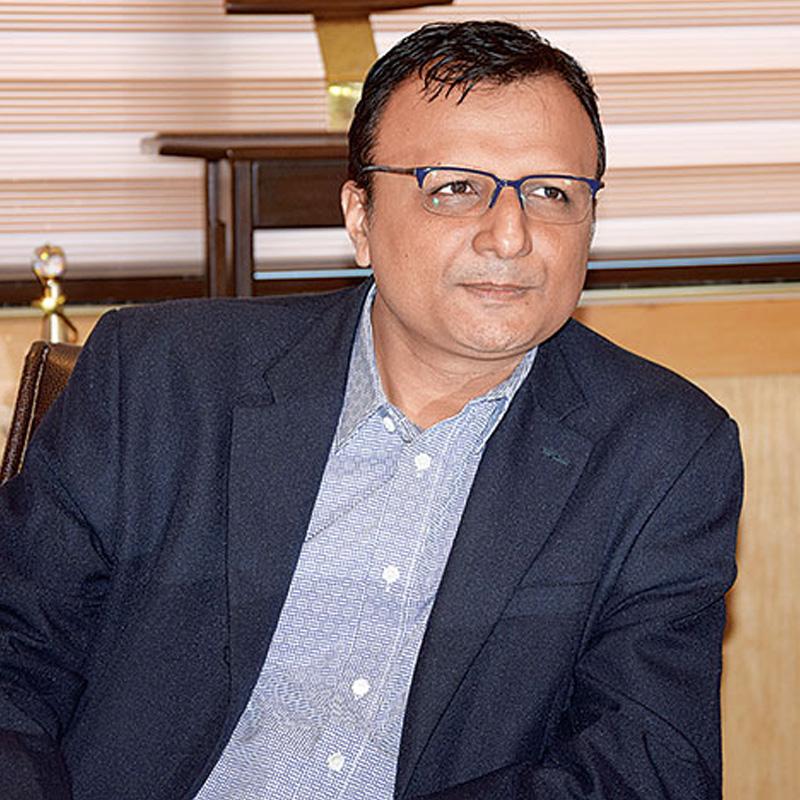
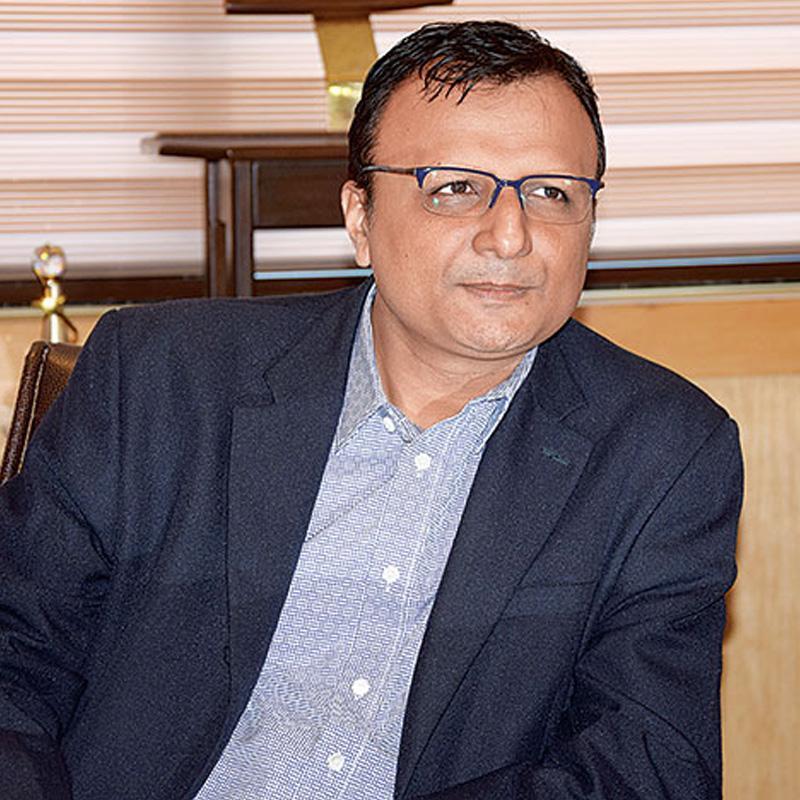
    (Shashi Shekhar Vempati is the CEO of Prasar Bharati. This is an excerpt from a conversation he had with Srishti Choudhary)

  • #Throwback2020: The year of reruns

    #Throwback2020: The year of reruns

    MUMBAI: Covid2019 was undoubtedly the biggest story of 2020, but it also gave new life to several well-loved stories of the past – more precisely, vintage TV shows. As productions came to a halt with the announcement of lockdowns, television broadcasters had to quickly come up with ways to fill up their time slots. As well as find ways to keep those at home engaged enough so as to not step out and possibly expose themselves to the novel Coronavirus.

    With no fresh episodes being churned out, successful TV shows went off air. TV programming executives started going through their back catalogue deciding what series and programmes to put on air once again. Doordarshan boss Shashi Shekhar Vempati took the high ground and made some audacious bets. He brought back the classics of the eighties – Ramanand Sagar's Ramayan and BR Chopra's Mahabharat.  The difference: unlike in the past when the episodes aired on Sunday mornings, Vempati put the two mythologicals on air every evening and in the afternoons. His decision worked like a charm.

    The Indian public, fearful of the havoc that Covid was wreaking on all and sundry, found solace in the two shows. The viewers swelled into millions and it seemed like all of India had connected with the story of a king and his exile and the victory of good over evil, and that of five brothers who fight adversity from their own family, go into exile only to come back and regain their rightful kingdom.

    Doordarshan regained its lost glory;  after nearly three decades of ceding ground to cable TV, it became India's most-watched channel again.

    In its heyday, the streets would be empty during showtime, and people formed queues outside shops to watch their favourite show on the pubcaster. Some people would even garland their TV sets in awe. In fact, the actors playing Ram and Sita would often be treated like  gods in public. The tables turned with the launch of satellite television in the mid-90s, and the explosive growth of private channels that followed.

    But bringing back Ramayan and other old favourites like Shaktiman and Buniyaad – created when DD monopolised TV broadcasting – forged an inexplicable and instantaneous connection with audiences. BARC has attributed the telecast of Ramayan and Mahabharat as the reason for DD’s climb to the top of the ratings chart. 

    Not only did Doordarshan succeed in chalking up record viewership, but it also generated online chatter – from memes to nostalgia posts from viewers. For many, it was a trip down memory lane.

    During an interaction, BARC India CEO Sunil Lulla remarked, “[Repeat telecasts of] Ramayan and Mahabharat, in my view, is a stellar move. It’s a nostalgia moment for people who are born in the 80’s. Because the entire family is sitting together with elders at home, it was the best thing to watch on TV. But shockingly, younger audiences were also watching the show. More of the urban audience, rather than rural, tuned in.”

    The buzz around these shows has led to an increased brand recall for Doordarshan. India’s iconic dairy brand Amul also went retro and re-released its old advertisements on the channel. 

    According to SEMrush (an online visibility management platform), ‘Ramayan’ became India's most searched term in the entertainment category in April 2020.

    Nielsen and BARC had reported that in the initial weeks of reruns, Ramayan episodes got 42.6 million tune-ins and garnered 6.9 billion viewing minutes on average.

    On 17 April, Prasar Bharati (the parent body of DD and All India Radio) announced in a tweet that Ramayan was the highest-watched entertainment programme globally, recording a viewership of 77 million. Even though the show attracted many advertisers, it irked viewers who wanted uninterrupted content. Some, bizarrely, even accused Doordarshan of streaming the show from a Moser Baer DVD.


    Certain sections of the public appealed to the government to curb the TV spots. In response, Vempati in a tweet said, "Would request everyone's patience with the advertisements. Brands reaching out to a large audience spurs consumption and economic activity at this critical juncture. Also, every rupee of commercial revenue to DD is a rupee of taxpayer money saved."  


    When I&B minister Prakash Javadekar posted a photo of himself watching Ramayan reruns during the lockdown, he was immediately panned for his “let them eat cake” moment while millions were struggling to make ends meet.

    But in the weeks that followed, public sentiment changed. Following the runaway success of the two shows, the state broadcaster went beyond mythological shows and tapped into its programming archive.  Buniyaad, Byomkesh Bakshi, Gora, Circus (starring a baby-faced Shah Rukh Khan), Shrikant (starring the late actor Irrfan Khan), Shaktimaan, Dekh Bhai Dekh, Shrimaan Shrimati, The Jungle Book, and more were back on telly – and viewers were hooked.

    Other broadcast networks followed suit. Viacom18-owned Hindi GEC Colors brought back shows such as Balika Vadhu, Jai Shri Krishna, Mahakali, Ram Siya Ke Luv Kush, Dance Deewane, Bigg Boss, Comedy Nights with Kapil, Sidharth Shukla-Rashami Desai-starrer love story Dil Se Dil Tak and comedy series Belan Wali Bahu.

    Zee TV played reruns of Jamai Raja, Pavitra Rishta, Jodha Akbar, Sa Re Ga Ma Pa Li’l Champs 2017 and Hum Paanch, Kumkum Bhagya, Kundali Bhagya, Ram Kapoor's Kasam Se, and Brahmarakshas.

    The classic sitcom Office Office was being broadcast on Sony SAB and Star Plus’ Mahabharat and Siya Ke Ram were back on TV too.

    Star Sports started showing historic cricket matches like India’s 2011 World Cup win, India vs Pakistan series, previous editions of the IPL, Formula 1 races, football and kabbadi.

    The audience's retro romance continued for three months. Almost every channel saw spikes in viewership; sadly, advertisers stayed away as overall economic and consumer sentiment had sunk to a new low.

    Came end July and governments gave the go-ahead to productions to start again under strict operating procedures. Shoots commenced and viewers rejoiced that fresh programming was back. However, none regretted the joy that reruns gave them for the three months of the initial period of the lockdown.

  • Guest Column: A tribute to ‘Masala King’ Mahashay Dharmpal Gulati Ji

    Guest Column: A tribute to ‘Masala King’ Mahashay Dharmpal Gulati Ji

    Mumbai: "Never retire in your life. Be positive, things will always change. Do better and you will get the best out of life. You have to share the wealth to society, it's a cycle,” these are the lessons I had learnt from Mahashay Dharmpal Ji. His journey of building from scratch India’s most valuable spices brand was truly honest; a life lived to the fullest with values and commitment. 

    I remember meeting him for the first time at his Delhi factory. He welcomed me with a warm gesture like he had known me for years. He offered me sweets and asked what he can do for me. Such was his simplicity.

    And to my surprise, he also agreed in a jiffy when I requested him that I would like to work with him and his brand. He patted me on the back, showered his blessings on me and asked if I liked the actor for my MDH film. We instantly burst into laughter. I was overwhelmed with his greatness and this ability of his to make instant connections with anyone. 

    Within a few days, he was in Mumbai for the shoot. I went to him asked if he is comfortable. To which he replied, “Don’t worry… Just tell me what time do I have to come for the shoot and what should I wear.”

    Even on the shoot, he did most of the takes smoothly but constantly urged for retakes as he felt he could do better. After the shoot, he humbly asked if I liked the shots or he was willing to do it again. I was so nervous that I couldn’t say anything at that time. But to me that was his unbridled passion for work; his zeal to do the best in life. 

    Our next meeting was in Delhi for the dubbing of the film and he enjoyed the whole process thoroughly. He truly taught me how important it is to love what you do to be the best at it. 

    When I presented him the final film, he called all of his staff, the peons, his cook and told me the ad will only be approved if all of them liked it. It is the very vision that took his brand to heights of greatness. 

    In the next many meetings, I have seen him making the masala and tasting himself. He worked on the formula again and again till he was satisfied. That is perfection. 

    He was not only an entrepreneur of the finest calibre but also a true Indian at heart. He always used to perform havan at home before coming to the office, daily.

    His fitness and energy were tremendous. Apart from being regular with his morning walks and exercise, even at the age of 97, he was a big workaholic, too. He used to work more than 12 hours daily even at this age. 

    He made his brand without showing and obscene or vulgar pics and he was the face of the brand for more than 35 years. Still, we all have childhood memories of those MDH ads that ran on Doordarshan.

    His passion for work and commitment to society was commendable. He has founded many schools and hospitals through his trust and served the people. He was truly a visionary who lived with honesty, worked till his last breath boots on and served the society with his social service and humanity. That’s why he was rightly awarded the Padma Bhushan for his service to people and society.

    He always inspired everyone who came in his contact and I am privileged and honoured to have worked with him.

    My sincere tributes to the legend, Mahashay Dharmpal Gulati Ji.

    (The article is written by filmmaker and ad guru Prabhakar Shukla. Indiantelevision.com may not subscribe to his views.)
     

  • Pay DTH subscriber base perks up a bit

    Pay DTH subscriber base perks up a bit

    BENGALURU: The latest DTH subscriber numbers released by Telecom Regulatory Authority of India (TRAI) must bring cheer to the private television direct to home (DTH) industry. TRAI recently published quarterly subscriber data as on 30 June 2020. According to the data, the number of pay DTH subscribers using services provided by private DTH operators had declined from a peak of 72.44 million as on 31 March 2019 to a low of 68.92 million during the very next quarter end date – 30 June 2019 because of a change in the way of reckoning active DTH subscribers. Till March 2019, the subscription figure of the total active subscribers included inactive and temporarily suspended subscribers for not more than the last 120 days. However, as per new regulatory framework of Broadcasting and Cable TV Services, the total active subscribers are now counted to include only those subscribers who are inactive/ temporarily suspended for not more than the last 90 days. 

    Since 30 June 2019, the number of pay DTH subscribers using services provided by private DTH service providers has been increasing slowly until 30 June 2020. As on 30 June 2020, the number of pay DTH subscriber using services provided by private DTH service providers stood at 70.58 million. This is in addition to the subscribers of DD Free Dish (free DTH services of Doordarshan). 

    Please refer to the chart below:

    Further, as on March 2019, the number of private DTH subscribers had fallen to four from five previously. Also, TRAI commenced publication of break up of market share to an accuracy of two decimal percentage places from the quarter ended 30 September 2019 onward. Extrapolating the overall number of pay DTH subscribers using services provided by private DTH operators with the total number of pay DTH subscribers (provided in millions, to two decimal places) and the share percentage of the service providers reveals that except for Dish TV, the other three providers had seen subscriber numbers grow. Besides Dish TV’s slow but steady decline in subscriber numbers during all the four quarters for which data is available, the largest service provider in terms of number of subscribers – Tata Sky witnessed a decline in subscriber numbers in the quarter ended 30 June 2020. Please refer to the figure below:

    Cable TV operators

    TRAI reports state that the country has achieved 100 percent digitization of cable TV network. This is a stupendous achievement making India the only large country where 100 percent digital cable has been achieved through mandatory regulations.

    As on 30 June 2020, there were 1,666 MSOs registered with the ministry of information & broadcasting (MIB) as compared to 1,613 MSO registered as on 31 December 2019. Further, as per the data reported by MSOs/HITS operators, there were 12 MSOs and one HITS operator who had a subscriber base of more than one million. Details of the total active subscribers of these 12 MSOs and one HITS operator are given in the following table. Please refer to chart below:

    In the case of cable TV, the largest player Siti Networks seems to be witnessing a slow but steady loss of subscribers since the quarter ended 31 December 2019. Two other players have also witnessed a subscriber declines – Fastway Transmissions Pvt Ltd and Asianet Digital Network, while most others have gained subscribers during the four quarters in this report.

    Satellite TV Channels

    A total of 909 private satellite TV channels have been permitted by the MIB for uplinking only/ downlinking only/both uplinking and downlinking, as on 30 June 2020. The quarter-wise figures of the total number of TV channels is depicted in the chart given below.